Home Blog Page 6656

Insolvency and Bankruptcy Code Impact : Another Industrialist finds the money to clear dues

The promoters of stressed realty developer Jaypee Infratech has come out with another proposal to save its cash-strapped company from resolution process under the Insolvency and Bankruptcy Code. The proposal has come under section 12A of IBC, while state-owned NBCC and realty firm Suraksha group are already putting bids to acquire the company. The promoters of the company have suggested that they will settle the dues of lenders.

Insolvency and Bankruptcy code has been proving itself a boon by saving defaulting firms turn into NPAs. Jaypee Infratech was dragged to National Company Law Tribunal by Industrial Development Bank of India, to which the debt-ridden company owes ₹4,334 crore. It is one the most-closely watched insolvency proceedings, as it also involves 32,000 housebuyers of Noida and Greater Noida, who have been slid into a state of limbo after the company defaulted.

NCLT had appointed Anuj Jain as insolvency resolution professional or IRP, to overlook bids coming for the company. In May last year, the lenders rejected Lakshadweep, which is part of the Suraksha Group, bid of ₹7,350 crore to acquire the firm, as it was felt to be rather lower than the firm’s net worth and assets. Then, in October 2018, IRP Anuj Jain started a fresh initiative to invite bids for the company. Hence, this is the second round by IRP and lenders to conclude the insolvency process.

In April last year, Jaypee Infratech had made an offer of ₹10,000 crore to lenders, which was promptly rejected, as section 29A bars defaulting promoters and connected parties from bidding for their asset. The section is considered contentious by promoters of many firms, but it was upheld by Supreme court in January this year.

This time, the debt-ridden realty firm has made an offer, in accordance with section 12A, which allows the company to withdraw the insolvency case if 90% of lenders agree. The proposal was presented before the committee of creditors on Monday.

The proposal put forth by Jaypee Infratech seems unlikely to be accepted by lenders and homebuyers as the NBCC and Suraksha group have already made their financial bids.

Armed with IBC, the government has motivated numerous companies to hurry up and clear their dues. In May last year, it was reported that fearing government crackdown, 2100 companies had rushed to clear their dues to the tune of ₹83,000 crores.

During the speech of Union Budget 2019, interim finance minister Piyush Goyal had stated that through IBC, the government has managed to recover ₹3 lakh crore worth NPAs or bad loans. It also prevented many defaulting firms from turning into stressed assets.

Uttar Pradesh: Congress appoints 6 AICC secretaries to ‘support’ JM Scindia and Priyanka Gandhi

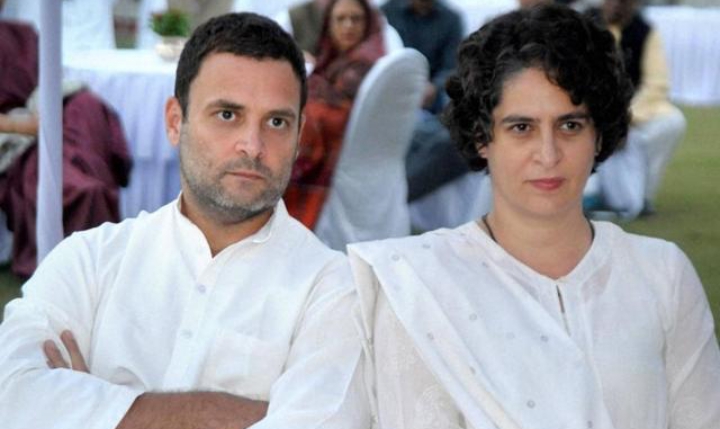
Though some sections of the mainstream media are swooning over Priyanka Gandhi Vadra’s unproven mettle, the Congress party including Rahul Gandhi have appeared to place low bets on her leadership abilities. After attaching Jyotiraditya Scindia with Priyanka Gandhi for UP, now the party has attached 6 new AICC secretaries to Scindia and Gandhi for managing the state.


The 6 AICC secretaries are being divided into two teams- Scindia’s and Gandhi’s. Assigned under Jyotiraditya Scindia for UP West are Rana Goswami, Dhiraj Gurjar and Rohit Chaudhary, while Zubair Khan, Kumar Ashish and Bajirao Khade have been appointed as AICC secretaries for UP East and attached with Priyanka Gandhi.

Rana Goswami is from Assam and has past experience of working in Uttar Pradesh. Zubair Khan who hails from Rajasthan is a former MLA from state’s Ramgarh constituency also has worked in Uttar Pradesh as convener secretary in Bundelkhand region. Dhiraj Gurjar is another former MLA hailing from Rajasthan. Rohit Chaudhary has served as Chairman of the NSUI. Khade is currently working as Maharashtra state convener of Rajiv Gandhi Panchayati Raj Sangathan (RGPRS).

Kumar Ashish, who has been elevated to the position of UP East AICC secretary under Priyanka Gandhi had worked as former chief of Bihar Congress committee. However, his name also cropped up in leaking question papers in Bihar in 2005. Ashish’s appointment, however, betrays that his previous criminal tendencies have either been ignored or not granted the required significance by the Congress President Rahul Gandhi.

Notwithstanding the fact that the secretaries are appointed to shore up the declining fortunes of Congress in Uttar Pradesh, they might well be used as scapegoats in the event of party’s failure in the state in the upcoming Lok Sabha elections, thereby buffering dynasts JM Scindia and Priyanka Gandhi Vadra’s from being accountable for the defeat.

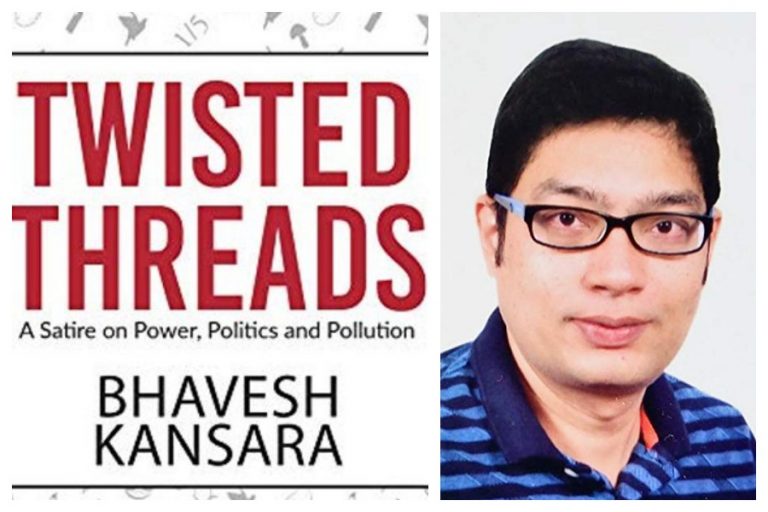
Twisted Threads: A brilliant work of satire by Bhavesh Kansara that is bound to leave readers LLRC

‘Twisted Threads: A satire on Power Politics and pollution’ is the first book by author Bhavesh Kansara. Popular on Twitter for his brilliantly sarcastic Tweet threads on Indian politics and current affairs, Kansara has turned some of his most popular threads, characters and narratives into a book that is not only sharp on wit and narration but also manages to bring out some really uncomfortable realities of our times.

The book’s characters come in all shades. Some of them are inspired by real political figures, like ‘She Who Shall Not Be Named,’ Vivekanand Modi, Amulya Gandhi and his pseudo-RW namesake, Amulya Easwar, among others and some remarkable characters that the reader eventually realises are not actual persons but the embodiment of some particular phenomena, or narratives that have been in play in post-independence India.

The most hilarious characteristics in the book are the acronyms, brilliantly crafted and fitted to such perfection that would put even the master acronymist Mr. Vice President to shame, these acronyms range from the names of associations formed by MRI machines and EVMs that have been mysteriously awakened into sentient consciousness by some strange happenstance, and also include vicious attack strategies mastered by the mushroom maker Peter Subramani to defeat Vivekanand Modi.

Here are some examples:

SPAMMING: Spread And Publish Anti Modi Messages Influencing Narrative on the Ground

MEMRI: Ministry for Establishing MRIs

DIX: Democratic Idea of X-Rays

The sheer wit and sarcastic narration of the events are bound to leave the reader ‘LLRC’.

Another aspect of the book that causes hearty laughs and also forces a reader to marvel over the sharp wit of the author is the names and descriptions of some of the characters.

Sitasurya Chammach, for example, is an eminent historian while Vijay Singh competes with Shankar Fai and others for grabbing the attention of ‘She Who Shall Not Be Named’ and her son, Amulya Gandhi.

In one instance, when Amulya Gandhi asks his darbaris about information on Gita, to win over Hindu votes, Vijay Singh’s first reaction is that Gita is a “Sau Taka Tunch Maal”.

Reprimanded for his ‘Neech’ remarks by Shankar Fai, Vijay Singh soon corrects course and suggests, “Why do you want to know about Gita, Amulya Ji?  Let us release a book titled ‘Gita Ki Saazish’ and I will invite my friends Mahesh and Zakir too, it will be a blockbuster before anyone finds out.”

We also get a glimpse of the inside of Amulya Gandhi’s mind:

Strewn across the mental landscape were thoughts on velocities to escape from planets,politics inside torn apparels,wrong sizes of countries and continents, malapropisms and spoonerisms,sources of milk, dog tricks, interconnected imaging devices, designs of modern alchemical machineries that can turn vegetables into golden ingots, ideas about how to provide pleasure to every person in india, and seven out of five thoughts were just variations of the rss and the bjp.

The character of Abdul Malik, very popular among the followers of Kansara’s threads, displays the sheer brilliance of the author in representing how a vague idea of victimhood and entitlement has been used by many of the ‘Idea of India’ believers for not only creating fortified fake narratives but also enables the transfer and propagation of ideological attack methods on the ‘landmass that had no name before 1947’, because, the author reminds us, ‘it was yet to be discovered by Nehru’.

The book is remarkable for not only for its sheer brilliance but also for the classy and clean narrative style. The author not only manages to make readers ‘LLRC,’ but he also compels to think about the weaknesses, the lags and the fault lines of our current political system that is allowing the Peter Subramanis and Sankhya Sifars to get what they want.

Kansara does not limit his book into mere satirical pot shots at political figures, in his unique style, he also brings to the fore the issues of education, development and cultural degradation that have managed to bring the civilisational rot we find ourselves in. He provokes thoughts, pokes the conscious mind and highlights why ‘Vikas’ remained stunted and starved while ‘Tina’ has grown into a plump, happy child.

From Tamil movies to statues of Lenin in God’s own forsaken country, from Delhi fog and the Supreme Court to the green ghost roaming in Kashmir, the TRP hungry media wallahs, and their driver cum opinion makers to the minister of apology demands, Kansara does not spare anyone. A sharp, witty and brilliant satire on today’s politics in India, Kansara’s book is a must-read.

Bhavesh Kansara’s book ‘Twisted Threads: A satire on Power Politics and pollution’ is available on Amazon.in in both paperback and Kindle versions. It is also available on Google Playstore books.

Mandya: Actor-turned-politician Prakash Raj attends funeral of Pulwama martyr, villagers expose his hypocrisy towards Armed Forces

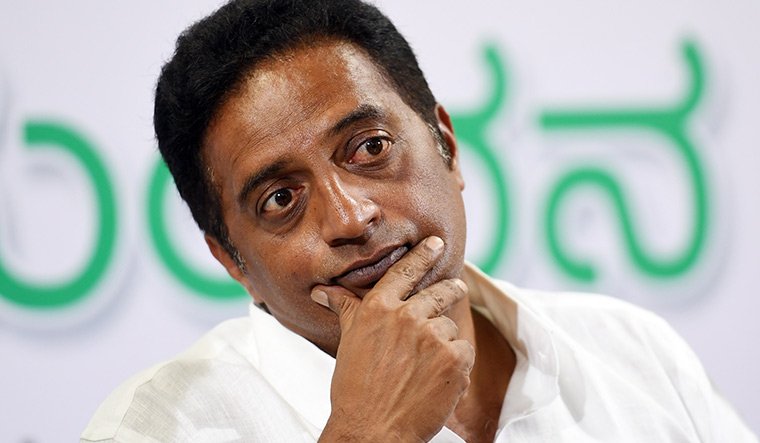
On his visit to Mandya, Karnataka to offer his respects to a deceased CRPF soldier, the actor-turned-politician Prakash Raj faced severe embarrassment after a group of villagers exposed the actor’s hypocrisy towards India’s Armed Forces.

According to reports, Prakash Raj had visited Maddur Taluk, Mandya district of Karnataka to take part in the funeral of CRPF soldier H Guru, who was martyred during the Pulwama terror attack. During his visit to Mellahalli where the soldier was laid to rest, some angry villagers objected to the presence of Prakash Raj and reportedly protested against him.

However, the actor reportedly waited till the evening to meet the bereaved family of martyr Guru and also claimed to help the family of the martyr. Meanwhile, Prakash Raj travelled to the KM Doddi village of the district in the evening to address a group of villagers who had assembled at the spot.

Prakash Raj delivered a speech stating that people should forget their differences and unitedly fight against evil forces that whenever such attacks or atrocities happen. The hypocrisy of the actor-turned-politician seems to have angered the villagers as one of the villagers present in the crowd questioned Raj’s dubious standards, pointing out that he speaks in favour of the soldiers only when such incidents happen and remembered Prakash Raj that how he abuses the armed forces rest of the time.

[youtube https://www.youtube.com/watch?v=GFZ54fq7xd8]

Soon after he was exposed, Prakash Raj went on to argue that he spoke about the issues of farmer every day and said that people who are using this event to further their political agenda are the real ‘traitors’. Angered by such comments, the villagers assembled at the spot started chanting pro-Modi slogans further embarrassing Prakash Raj. The chants of Bharat Mata ki Jai were also chanted leaving Prakash Raj furious, who then fled the spot.

Prakash Raj, the ultra-left wing ideologue, who is often known for joining hands with the left-liberals to express their hate towards Hindus and the BJP, has plans to contest the upcoming general elections from Bengaluru Central Lok Sabha constituency. Raj is also eyeing to be the joint Mahagathbandhan candidate of the opposition party to take on the incumbent BJP MP PC Mohan. Raj had recently met Delhi CM Arvind Kejriwal to seek the support of his party for his candidacy.

Prakash Raj had stoked a controversy recently after he had foul-mouthed against the Hinduism stating that he had “no respect” for the religion which “prevents women from worshipping” by falsely bringing reference of age-old custom of Sabarimala temple. With no respects for facts, Prakash Raj had deliberately insulted Hinduism to further his hate towards Hindus.

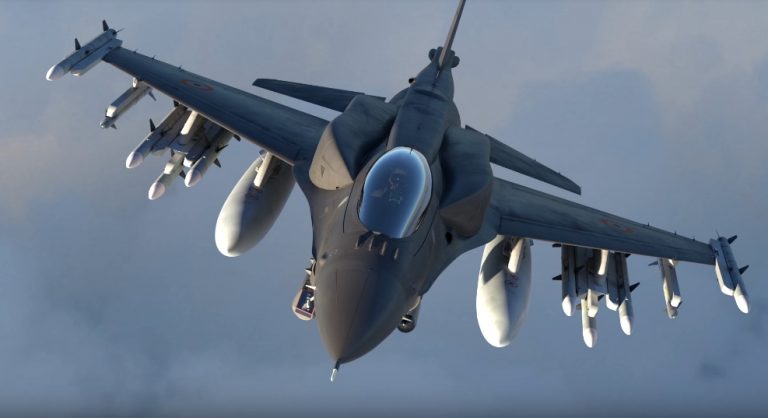
Lockheed Martin unveils F-21, a different multirole fighter aircraft specifically configured for Indian Air Force

0

Underlining the emergence of India as a major defence customer in the world, US aviation major Lockheed Martin has offered India a new fighter jet, designated F-21. The company made the announcement about its offer at the Aero India show in Bengaluru today. The single-engine fighter plane has been designed specifically for Indian Air Force, in an effort to win the multi-billion deal for fighter planes that India will buy.


Vice president of Strategy and Business Development for Lockheed Martin Aeronautics Dr. Vivek Lall said that “the F-21 is different, inside and out. The aircraft is specifically configured for Indian Air Force requirements”. This new offering highlights the company’s commitment to delivering an advanced, scalable fighter aircraft to the Indian Air Force that also provides unrivalled industrial opportunities and accelerates closer India-US cooperation on advanced technologies, Lall said.

The company also unveiled a video of the aircraft today.

Lockheed Martin will build the plane in collaboration with Tata Advanced Systems, the company announced. Tata Advanced Systems is already a strategic partner of Lockheed Martin, and wings of F‑16 jets are being made in India under this partnership.

As India’s bid to buy 126 Medium Multi-Role Combat Aircraft (MMRCA) was cancelled in 2015 and the Modi government opted to purchase 36 Rafale jets directly from France as a stop-gap measure, the Indian Air Force has invited Request for Information (RFI) for the purchase of 110 fighter jets. Seven contenders have responded to the RFI, Boeing F/A-18E/F Super Hornet, Dassault Rafale, Eurofighter Typhoon, Saab Gripen, Russian United Aircraft Corporation’s MiG-35, Su-35, while initially Lockheed Martin had offered the F-16 Falcon jet. Other than the Su-35, the other six were the contenders in the earlier bid for 126 jets too, which was won by Rafale before the deal was cancelled.

As per the RFI for 110 jets, 15% of the aircraft should be delivered in flyaway condition and the rest 85% will have to be manufactured in India by a Strategic Partner.

Although Lockheed Martin has said it is a different aircraft from both outside and inside, and has given it a new name, F‑21 is not a completely new design. The aircraft is most probably an upgraded version of the F‑16V Block 70. The numbering of 21 is significant, as it is just below 22, the number allotted to the Lockheed Martin F-22 Raptor, a two-engine fifth generation aircraft used solely by US Air Force. The Raptor cannot be exported outside the USA due to a ban by the federal government to protect its stealth and other hi-tech features. The India specific F21, like the F16V, will share several components of the F22.

UNHCHR: A hypocritical, biased and defunct institution that deserves only ridicule and condemnation

The United Nations High Commissioner for Human Rights (UNHCHR) Michelle Bachelet has condemned the Pulwama Terror Attack and has called upon authorities to bring those responsible to justice.

“The High Commissioner strongly condemns the suicide bomb attack against Indian security forces in Pulwama district of Jammu and Kashmir on 14 February and calls on authorities to bring those responsible to justice,” spokesperson for the Office of the High Commissioner for Human Rights (OHCHR) Rupert Colville said.

The UN Human Rights speech also expressed concerns about the escalating tensions between India and Pakistan and hoped that the events “will not add further to the insecurity in the region”.

Intriguingly, however, Colville said the High Commissioner is also “concerned” by reports from India that “some elements” are using the attack as “justification for threats and potential acts of violence” targeting Kashmiri people living in different parts of India.

“We acknowledge actions taken by the Indian authorities to tackle these incidents and we hope that the Government will continue to take steps to protect people from all forms of harm that may be directed at them on account of their ethnicity or identity,” he added.

The duplicity of the UNHCHR is revealed by the fact that its sermons are reserved only for India while countries that commit the most heinous of human rights violations are given a free pass. As we had reported earlier, the UNHCR had condemned India for deporting 5 Rohingyas while it maintained a stoic silence when Saudi Arabia was busy deporting hundreds of them.

As the UNHCHR’s statement on the fictional narrative of “Kashmiris under attack” shows, it has become an institution that seeks to superimpose itself upon nation states, thus undermining their authority. The Indian government has been providing Kashmiris around the country with adequate security. The only verified instances of ‘attack’ against them are incidents where legal action is being pursued against them for celebrating the deadly terror attack which quite naturally violates the sensibilities of our people. That the UNHCHR cannot condemn the Pulwama attack without mentioning the fictional narrative of “Kashmiris under attack” only reveals its utter moral bankruptcy.

Pakistan’s quite overt support to terrorists has also escaped the attention of the organization, it appears. For decades, Pakistan has been nurturing Jihadists in its soil and yet, the UNHCHR has been unable to put forth an unequivocal condemnation of the country’s political dispensation. If there was any institution on the face of the Earth which had lesser credibility than the Pakistani government, then its the Human Rights division of the United Nations.

Last year, the United States quit the UNHRC calling it a “cesspool of political bias”. Nikki Haley, the then US envoy to the UN called the institution “hypocritical” and that it “makes a mockery of human rights”.

Not just the UNHRC, the United Nations, on the whole, is proving to be a defunct global institution that serves no useful purpose. It has been utterly unable to prevent any human rights violations or wars and has been shown to bark only at those who threaten the status quo of the global order. China hasn’t been made to suffer any consequences for the tremendous human rights violations it commits, Saudi Arabia suffers no consequences for its inhuman war on Yemen, the US and other western countries have walked away without suffering any consequences for destabilizing the entire Middle East. The verdict on the matter is clear, if you have enough power, the UN will bow down and lick your feet. If you are a rising power, it will do everything in its limited capacity to thwart your ambitions.

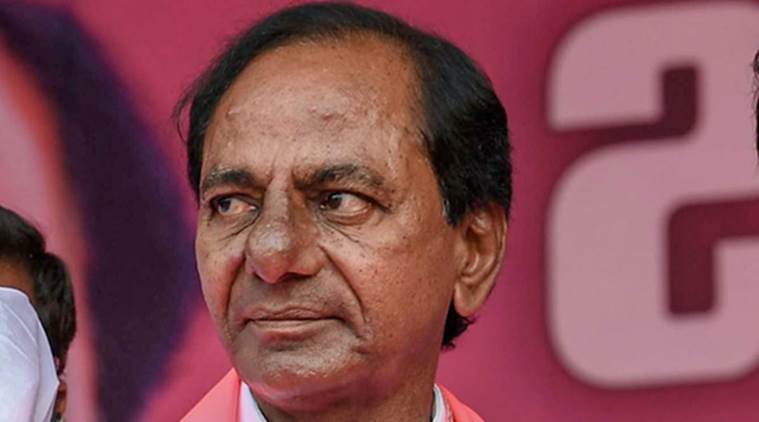
No woman minister in the second cabinet also of KCR in Telangana, which was expanded from 2 to 12 after 66 days

Almost two months after the Telangana Rashtra Samiti was elected for its second term in the assembly elections, the state cabinet was expanded, with 10 ministers being sworn in on Tuesday. Chief Minister K Chandrasekhar Rao retained several key portfolios like Finance, IT, urban development and information and public relations.

A simple swearing-in ceremony was held at the Raj Bhavan for the Telangana cabinet expansion.

While there were 16 ministers during the TRS government’s first tenure, the cabinet, as of now, has twelve ministers including the CM and the Home Minister.

Among those who were inducted into the council of ministers were six new faces, S Niranjan Reddy, Koppula Eashwar, Errabelli Dayakar Rao, V Srinivas Goud, Vemula Prashanth Reddy and Ch Malla Reddy. Whereas, A Indrakaran Reddy, Talasani Srinivas Yadav, G Jagadish Reddy and Etela Rajender, who were part of the cabinet in Rao’s previous term, returned as ministers.

However, in a surprising turn of events, KCR’s son KT Rama Rao and nephew T Harish Rao were left out of the cabinet.

Meanwhile, it is speculated that the cabinet will be further expanded post the Lok Sabha elections which are expected to take place in March-May this year. As of now, both of KCR’s trusted associates, KTR and Harish Rao, have been tasked with winning 16 out of the 17 Lok Sabha seats in Telangana. Following the Assembly elections, the CM will take a call on either inducting them into the cabinet or give them a role to play at the national level.

Rao, who had taken the oath as chief minister a little over two months ago, delayed the cabinet formation. All this while a two-member cabinet, including the Home minister Mohammed Mahmood Ali and KCR himself, ran the show until finally a 10 member cabinet was sworn in a few days ahead of the budget session of the Assembly. After the expansion, the strength of Telangana council of ministers has risen to 12.

None of the woman members could make it to the Council of Ministers. Rao’s first Cabinet also did not have any woman minister.

Andhra Pradesh and Telangana Governor ESL Narasimhan administered the oath of office and secrecy to the newly-inducted ministers at Raj Bhavan, in the presence of the Chief Minister.

On December 11, 2018, the Telangana Rashtra Samithi came back to power after winning 88 seats out of 119 assembly seats. On December 13, KCR took the oath as the Chief Minister along with Mahmood Ali who was sworn in as the Home Minister.

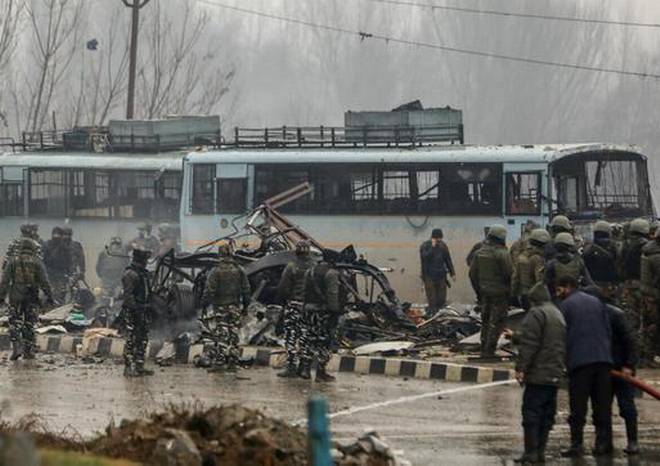
Kashmiri student writes ‘This was not a terrorist attack, this is returns of what you did to Kashmiri people’, gets rusticated

0

Kashmiri medical student studying at SGT Medical College in Gurugram, Haryana, was rusticated from her college after her social media post in support of Pulwama terror attack which claimed lives of 44 CRPF soldiers.

In her post, the student identified as Sadaf Zaffar, a second-year student of Bachelor of Radiology and Imaging Technology had reportedly posted “I don’t like this incident but if you rape Kashmiri women, use pellet guns, kill innocent people and make Kashmiri children blind with needles, what will you get? This was not terrorist attack. This is returns of what you did with Kashmiri people. Use love not guns against Kashmir.”

She also posted a photograph of the blast site and said, “not 40, but 400 must have been killed.”

The Office of Registrar of the institute said that the university shall not tolerate any such indiscipline inside the campus and rusticated her with immediate effect. Zaffar was then asked to leave the hostel immediately following the protest.

Read also: Scroll whitewashes celebrations of Pulwama attack, instead targets those who complained about celebrations

Following the ghastly attack on the CRPF convoy in Pulwama on February 14, even as people across the country expressed grief and mourned the dead, there were a few who were busy celebrating the terror attack. Following complaints raised by many social media users as well as the colleagues of those who were celebrating, many students and employees were suspended and arrested for the celebratory posts.

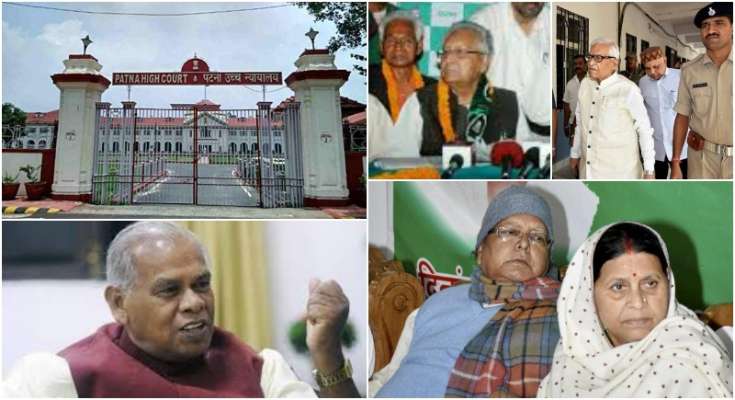
Patna HC slams ‘lifetime entitlement’ rule of Bihar government, asks former CMs to vacate bungalows

The Patna High Court on Tuesday quashed a bill which enabled the former Chief Minister’s to live in government bungalows for life. Calling the bill as “unconstitutional and a drain on the exchequer”, a division bench of the court headed by Chief Justice AP Shahi, ordered former Bihar chief ministers to vacate their bungalows.

The HC order comes as a major setback to Rabri Devi and Lalu Prasad, who have been living at 10, Circular Road. Former CM Jitan Ram Manjhi has been staying at a Strand Road bungalow. Also, Jagannath Mishra and Satish Prasad Singh, are expected to comply with the order and vacate the government bungalows provided to them at Hardinge Road in Patna’s VVIP area.

However, the HC said that a former CM may not need to vacate a bungalow if he or she is entitled to the same category.

The Patna HC reportedly came down heavily on the rules and cabinet resolution of the Bihar government which had ensured that former CMs continue to enjoy sprawling bungalows and other perks for their lifetime.

The HC bench of Justices AP Shahi and Anjana Mishra termed the rules as “predatory instincts for misuse of public exchequer and an act of the state government going beyond its ethical and legal limits”.

The High court had also served a notice on CM Nitish Kumar but withdrew it after the state government told the court that the said bungalow on 7, Circular Road, is allotted to the Chief Secretary.

The Patna HC’ order came keeping in view the Supreme court order, which last year, struck down section 4(3) of the UP Ministers (Salaries, Allowances, and Miscellaneous Provisions) Act, 1981, which granted permanent accommodation to former chief ministers (CMs), saying that they aren’t eligible for government bungalows. The Supreme Court had said that the former chief ministers cannot be granted such facilities as they aren’t holding offices and asked former chief ministers in Uttar Pradesh to vacate the bungalows allotted to them when they were in power.

Following the last year’s order, former UP chief ministers Narayan Dutt Tiwari, Mulayam Singh Yadav, Kalyan Singh, Mayawati, Rajnath Singh, and Akhilesh Yadav had to vacate their official houses.

The decision by the Patna HC has come to further add to the bungalow worries for the family of Lalu Prasad Yadav. His sons, Tej Pratap Yadav and Tejaswi Yadav were both ordered to vacate their government allocated bungalows after RJD fell out of power. While Tej Pratap had left his bungalow claiming that CM Nitish Kumar had unleashed ghosts to haunt him in the building, Tejaswi had tried to hold on to his bungalow by taking legal measures.

Recently, the SC had rejected Tejaswi’s plea against the Patna HC order to vacate the bungalow immediately and also pay Rs 50,000 as a penalty.

Article 370 must go: BJP can’t pussyfoot any longer

There is no reason why Article 370 of the Indian Constitution in favour of Jammu and Kashmir must not go.

Before we debate the legality/feasibility of abrogation of Article 370, it’s important we bring home to readers its misuse which neither seems to concern the Centre nor to the pseudo-secular gang who control the discourse in this country.

The Jammu and Kashmir assembly lasts for six years. It has a separate text for oath. Its constitution doesn’t have “secularism” or “socialism” words in its preamble. And don’t you think that Prevention of Corruption Act (1988); Indian Penal Code, Domestic Violence Act, Religious Act of 1988, Protection of Wild Animals Act, Forest Rights or Urban Land Ceiling Acts apply to J & K. Central Bureau of Investigation (CBI) can’t operate without the approval of the J & K government or the High Court. Supreme Court can only hear cases on appeal.

Further, the People’s Representation Act doesn’t apply to the state. Jammu may have more population, more voters and a larger area but it’s Kashmir which has more assembly seats: 47 to Jammu’s 37. Mandal commission report has no mandate in the state. Reservations to SC/STs, provided only in 1991, still don’t allow them representation in politics and the state assembly (Ever seen Mayawati agitated on the matter?).

Says Prashanth Vaidyaraj in Swarajyamag: “Though 73rd (provision for Panchyat Raj, 1993) and 74th (provisions for local administrative bodies, 1993) Amendments in J&K have been made, the state government has refused to enact them into laws. So there is no democratic decentralization. The Panchayat Elections are still held under its archaic 1989 laws. The J&K Right to Information (RTI) Act gives more power to the state government than provided for in the Central Act. (So there remains no accountability to special employment packages or Prime Ministers package regularly provided for)”.

The subsidy to J&K meanwhile is grossly uneven even at the state level. The Kashmir Valley gets financial allocation more than what Jammu and Ladakh divisions put together are provided for. The per-capita subsidy to J & K is 16 times more than West Bengal and 12 times more than Bihar.

Freedom of press to cover legislative assembly proceedings doesn’t work in J&K. The ministers’ quota on education and employment may be 15% elsewhere in the country, in J&K it’s 30%.

And what do you think Article 370 does to Sikh or Hindu minorities?  These minorities who migrated from West Pakistan in 1947 are not considered citizens of J&K under Article 6 of the state’s Constitution as they came from outside the undivided J&K. Meanwhile, those, who left Kashmir for Pakistan during the Partition, are welcomed back and could claim their properties or suitable compensation.

About 150 families from the Valmiki Samaj were brought in 1956 for cleaning works with the assurance they would be granted the status of state’s subject. But it has come only in the case of “bhangis” (sweepers).  Presently, their residential colonies remain un-regularized. Even the interlocutors’ report of Government of India is silent on the matter. Human Rights Activists have no problem that the “Protection of Human Rights Act, 1993” is not applicable to J&K.

So what’s this Article 370 which allows J&K to function much against the national (or for that matter, it’s own) interests?

When Pakistan sent its infiltrators to J&K in 1946-47 and illegally occupied parts of it, the matter went to the United Nations (UN). But since the state’s functions couldn’t be postponed, Article 370 was temporarily introduced. It limited the power of the Parliament to make laws for J&K, but for Defence, External Affairs and Communications. Noticeably, it doesn’t make provisions for the state to have a separate Constitution.

In due course, Article 35A and Presidential Order of 1954 were added. In Article 35A, the state government of J&K has defined the term “Permanent Residents” which bars non-residents from purchasing land in J&K or access to public sector jobs or welfare schemes. This article was illegally inserted in the Constitution by Pt. Jawaharlal Nehru, who made president Rajendra Prasad to amend the Constitution through his fiat instead of getting the Parliament’s mandate. The presidential order for 1954 provides that no bill to increase or diminish the area of the state or altering its boundaries can be introduced in the Parliament without the consent of the state legislature.

Article 370 was only an additional legislative measure to facilitate the transition of J&K’s accession to the Union of India. In 1950, the Government of India clarified the effect of Article 370 in a white paper on Indian states. Importantly, the Constituent Assembly was to make a recommendation to the President to either abrogate Article 370 or “direct that it shall apply with such modifications and exceptions as he may specify.”

Thus, Article 370 arms the President of India to make amendments without seeking the approval of the Parliament. Article 368 also empowers the Parliament to amend the Constitution with an additional provision in Article 370 (1) (b) and Article 370 (3).

Article 370 makes a mockery of Article 14 which guarantees equality before the law and the principles of liberty: as we have seen, not everyone living in J&K can vote in the election to the state assembly. As Supreme Court ruled in Keshavananda Bharati vs State of Kerala case, any law which interferes with the “basic structure” of the Constitution (equality of status and opportunity to all citizens of India) will be struck down as void. Further, Article 15 prohibits discrimination on the basis of religion, case, sex, place of birth or race.

In view of the Pulwama attack, it’s as good a time as any for the Bharatiya Janata Party (BJP) to take an aggressive stand on the matter. But what could you expect from the party which doesn’t harp on abrogating the 370 Article since 1998?

Clearly, the idea of providing Kashmiris with the fruits of Indian secularism is not working. Instead, the clamour of “Azadi” has gone up.