The United States of America’s first Hindu House representative, Tulsi Gabbard, has announced her campaign for the Presidency in 2020. She is the first US member of Congress to have taken her oath on the Bhagavad Gita.
When we stand together, united by our love for each other and for our country, there is no challenge we cannot overcome. Will you join me? #TULSI2020https://t.co/bymLSiaRkF
Gabbard has an interesting profile that could pose her at odds with much of the Democratic voter base. She is not as averse to President Donald Trump-like other leaders of her party. She is anti-interventionist, emphasizes bipartisanship and was not depressed when Trump defeated Hillary Clinton like much of her voter-base.
Another aspect of her personality that is expected to come under close inspection is her Hindu identity and her warm relationship with and opinions of Prime Minister Narendra Modi. During her visit to India, she had gifted Narendra Modi her personal copy of the Bhagavad Gita.
“It is said that the greatest gift you can give someone is that which is of the greatest value to you because it is a personal sacrifice to give up something which is very dear to you. So my presenting of my personal Bhagavad Gita to the Prime Minister was my way of expressing just how deep my affection and love is for India, for the Prime Minister, and for the people of India who he represents,” she had stated in her Facebook post in September 2014.
Gabbard had vocally opposed the US government’s decision to deny Narendra Modi a VISA following the 2002 Gujarat riots in which Modi was accused by opposition parties of personal involvement. She had called it a “great blunder”.
In November 2013, she opposed a House resolution that demanded “religious freedom and related human rights to be included in the United States-India Strategic Dialogue and for such issues to be raised directly with federal and state Indian government officials.” She said it would hamper the relationship between the two countries.
Gabbard condemned the resolution, saying the “417 weakens, rather than strengthens, the friendship between the United States and India. The resolution runs counter to all the hard work that the American people, particularly those in the Indian American community, have done to improve the relationship.” “Throughout history, India as a nation has been home to many religions, and has protected many as well, including Tibetan Buddhists, Jews, Christians, and Muslims,” she added in a statement.
The Hindu Congresswoman has also not shied away from using the term ‘Islamic Terrorism’. She had lambasted the Obama administration’s refusal to use the term. In one interview, she stated, “the vast majority of terrorist attacks conducted around the world for over the last decade have been conducted by groups who are fueled by this radical Islamic ideology.” She has repeatedly insisted that refusing to use the term “Islamic Terrorism” scuttles the ability to deal with the issue effectively.
Despite her Hindu background from a mixed-race family, Gabbard is a paradox in the Democratic party. Her stance on several issues also have changed over the years. Although she is now pro-same-sex marriage, she had resolutely campaigned against it in the past. In her faith, she belongs to the Bhaktivedanta school of thought popularized by Swami Prabhupada who, in the increasingly liberal American society, popularized an ultra-conservative movement.
Gabbard’s stance on Pakistan will also be music to the ears of Indians. “People within the Pakistani government continue to provide tacit and overt support for terrorism. This is not new – this pattern of attacks has been occurring now for the past 15 years, and it must end. That’s why I’ve continued working in Congress to cut back US assistance for Pakistan and increase pressure on Pakistan to stop this violence. In the past, the US government took steps to increase pressure on Pakistan, and it’s time to revisit that approach,” she said in a statement.
The first Hindu to run for President, Gabbard has regularly defended India against elements in the States who accuse our country of religious bigotry while excusing the real bigotry displayed by Islamic countries. She spoke about India, “To my knowledge, [discrimination against Muslims] does not exist in India. If India were to enact government policies that punish their citizens simply for being a ‘minority religion,’ I would condemn that.” She said this was in contrast with countries like Pakistan, Saudi Arabia and Iran where it is government policy to discriminate against people of other faiths.
All in all, Gabbard has the necessary identity to appeal to the Democratic voter base. She is a woman, she belongs to a religious minority, she is of mixed African descent and is symbolic of the ‘women power’ that the Democrats endorse. Other things that go in her favour is her charming personality and the genuine success that she has achieved during her long political journey that began when she 21 years old.
Her detractors would focus on her close ties to Hindus and her favourable opinion of Narendra Modi and the Bharatiya Janata Party. In fact, Ram Madhav from the BJP had even attended her marriage ceremony which was conducted as per Vedic rites. She also has close ties with Hindu American Foundation the critics of which accuse it of peddling the ‘Hindu Nationalist’ agenda. Her bipartisan attitude in an era where the Democrats have become increasingly partisan may also dampen her chances. And especially, her refusal to publicly denounce Trump may work against her even though she has severely criticized the POTUS when his policy did not align with her views.
Could it be that the first Woman to be the President of the United States also be the country’s first Hindu President? Only time will tell.
An 18-year-old girl who left her family about nine months ago to marry a man of her choice has returned to her home in Barmer. The girl had alleged that her husband, a resident of Jammu and Kashmir’s Srinagar, forced her to eat cow meat and read namaz.
The young woman had also alleged that Gulzar, a resident of Jammu Kashmiri who worked in a café in Barmer, was blackmailing her with an edited photo. When he called her to Jammu and Kashmir, she went there out of the fear. There he intimidated her and forged false documents of marriage. He also pressurized her to eat beef, and to pray namaz. The victim claimed that other members of his family too had expressed lustful intentions towards her.
As per the girl’s complaint, she got the wind of how Gulzar and his brother were preparing to sell her in Dubai, she ran away from Srinagar and came to Barmer. After this incident, the victim’s family has now demanded protection from the police while describing a threat to their life. The family has levelled a serious charge of ‘Love Jihad’ against the perpetrator. Days after she heard Gulzar and his brother Iqbal talking about selling her to Dubai, she stole some money from Gulzar’s wallet and booked a flight ticket to Ahmedabad. After landing in Ahmedabad, she called her relatives in Barmer and described her ordeal to them.
The girl went missing from Barmer on March 16, 2018, while she was on her way from Barmer to Vadodara on a bus. She alighted the bus in Ahmedabad and took a connecting flight to Srinagar via Delhi. The family had also accused Gulzar of kidnapping their daughter and pressuring her to convert into Islam.
A case has been registered in Kotwali police station. Gulzar, on the other hand, had claimed that he has married the girl with her consent and has furnished a video uploaded by him on Facebook corroborating it. After this, the girl’s father filed a petition in the High Court challenging the veracity of the video and documents furnished by Gulzar. According to the father of the victim, the dates on which the marriage documents have been issued, the girl was in Barmer and Vadodara. The girl has also claimed that the video uploaded by Gulzar was shot under coercion and was edited at least 20 times.
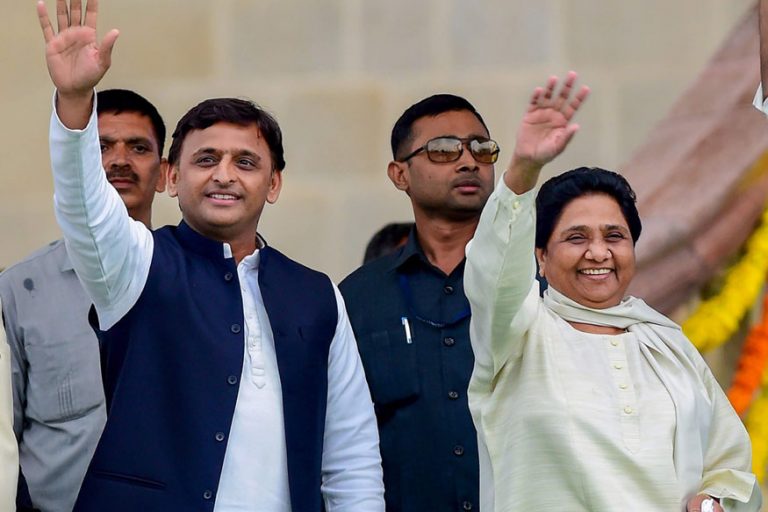
Today is their day. The much-anticipated press conference of Mayawati and Akhilesh Yadav sitting side by side. Promising that their big alliance will unseat Modi by denying him Uttar Pradesh.
We’ll see.
There is a moment of clarity here for every Indian. Remember our intellectual class? Our liberals? The ones who pretend they want to ask the big questions: about freedom of expression, about poverty, about social justice, about the environment. They are the ones who are celebrating today what they think is a victory over Modi.
What kind of politics do Akhilesh Yadav and Mayawati represent? On one side, an ex-Chief Minister who rose to power as a privileged dynast. He lived it largely on public money while his term lasted. When he was voted out, he took with him even the tap fittings from the bungalow that the people of Uttar Pradesh had given him. On the other side, another ex-CM who built statues of herself all over the state. With public money. Who wears thick garlands made of bundles of cash.
But liberals will applaud this. They will applaud anything as long as an opponent of Modi is doing it.
What else can our liberals applaud? Let me show you. Here is Akhilesh Yadav interviewed by Ravish Kumar at NDTV Yuva Conclave from 2018.
Akhilesh: The controversy that you are talking about, that a mail came out, I said to that man yesterday that it is my fault that I did not file an FIR and send you to jail.
NDTV Yuva Conclave audience : (Applause.)
Ravish Kumar: You will send people to jail now, you will also do what others do?
Look at fearless reporter Ravish as he challenges Akhilesh Yadav on the matter of sending a critic to jail. Gently scolding him. And even in his scolding, Ravish inserts ‘whataboutism’ by asking Akhilesh is he will “also do what others do”.
Meanwhile, NDTV Yuva Conclave audience is applauding at the prospect of youth icon Akhilesh sending a dissenter to jail.
Wait, this is going to get a lot worse. Akhilesh is going to say much worse stuff and the applause from the NDTV Yuva Conclave audience is only going to get louder. Let’s continue.
Akhilesh: I called a big journalist from Delhi to Lucknow. I told him ‘You have taken the money and referred to me as Aurangazeb in your writings. I am ready to pay you twice as much, you should have told me.’
Nice! Akhilesh Yadav boasts openly that he is ready to bribe journalists. Honest journalist Ravish Kumar, who is sitting right in front of him and holding a mike, is barely audible.
Of course. Let’s go on.
Akhilesh: But I let that man also go. This is the mistake I made. I should have also pulled out a sword like Aurangazeb and killed the man on the spot.
NDTV Yuva Conclave Audience: Massive round of applause.
Yes, massive applause for an ex-CM saying he should have pulled out a sword and murdered a critic!
Thankfully, Ravish Kumar, somewhat embarrassed, meddles at this point.
Ravish: You are talking of violence now.
NDTV Yuva Conclave Audience: (Applause for Akhilesh Yadav continues)
Ravish: (repeating) You are talking of violence. How can you talk like this?
I’ll tell you Ravish why Akhilesh has the courage to talk like this. Because the NDTV Yuva Conclave audience is applauding him and egging him on. And because he knows he has the license of “secularism” to say whatever he wants.
If ever there was a time for blackening the screen, for shutting down the broadcast immediately, this would have been it. But Akhilesh Yadav knew that Ravish would never do that. That’s why he was talking like this.
Can you believe it still goes on? And gets worse?
Akhilesh: I am speaking out of anger because somebody compared me to Aurangazeb!! And I told that man… I will tell you his name someday if you ask me in private … aur … (inaudible).
NDTV Yuva Conclave audience : (Laughter then applause)
Even Ravish was smiling. The audience was laughing. To them, this context is really really funny. Believe it or not. They just can’t stop laughing and applauding. Remember Akhilesh just spoke of killing a person!
Ravish: But please don’t talk about killing somebody.
Very well Ravish. Thanks for the sage advice. I will remember your big smile right before you said this.
If you watch Ravish Kumar’s show, you will think he hasn’t smiled in five years. All because of internet trolls who post insulting comments about him. But for Akhilesh Yadav’s words, he smiles, before gently reprimanding him.
Who cares about dissent? Who cares about free speech? What about intolerance?
Imagine if Modi had spoken like this. About people who have compared him to Aurangazeb and Hitler and much worse. Or for that matter, if any BJP leader or any family member of any BJP leader or any business partner of any family member of any BJP leader had spoken like this. It would have been news for days. It would have been in international media as well, raising alarm over growing “intolerance” in India.
But for Akhilesh Yadav they applaud.
In this laughter and applause from the NDTV Yuva Conclave audience lies the key to understanding Indian secularism and Indian liberalism. That there is really no such thing. Only some self-interested partisans who use these high sounding words to justify their politics. And to grovel before a Dynasty.
One of the biggest ironies of the manufactured debate on the pricing of Rafale deal is that no one from Indian English mainstream media (MSM) has tried to do a dispassionate analysis and present a complete picture. This is not to say that they’ve not presented data or analysis on the subject. However, what has happened is that either part numbers or analysis has been done or number has been presented in a manner so as to further a point-of-view and a certain agenda. But for the gravity of the subject, it is almost comic that these disparate numbers when looked at together, do give a fairly accurate picture.
In this analysis, I use publicly available data, shared by various newspapers and reporters at a different point in time, to present a comparison between the old and new Rafale deal. Considering that the old deal had 18 Rafale aircraft in flyaway condition and the new one includes all 36 aircraft in a flyaway condition, the price comparison is between these two sets.
Unless required, I have stuck with Euro or Dollar figures. The problem with using Rupee figures is the exchange rate issue. Wherever the sources used in the report have used Euro and Rupee figure using a certain exchange rate, both have been shared as such.
Data Point 1: Fantasy Deal Size – $ 10.4 billion
When the Medium Multi-role Combat Aircraft (MMRCA) deal was announced, for some reason, the deal size was expected to be $ 10.4 Billion. If I assume the average Euro/Dollar exchange rate for 2007 (0.7), this deal comes out to be Euro 7.6 Billion.
Considering 126 aircraft order, this works out to be Euro 60.3 Million per aircraft. Or, $82.5 Million per aircraft. As analysis later-on will show, this is an absolutely absurd number for a full deal covering the unit cost, weapons, logistics, maintenance and other heads.
When we compare this value with what was the winning bid (~Euro 20 Billion; more on this later), we realize how grossly unprepared Ministry of Defence (MOD) under UPA-1 and UPA-2 was for this deal.
Simply because if the actual expenditure is going to be more than 2X of your estimate, how are you going to properly budget and pay for the deal?
Is it any wonder that then Raksha Mantri under UPA-2 had said in February 2014 that UPA-2 did not have money that year for the deal [1]? And that it will have to go into the next financial year?
Data Point 2: The French Connection
While undertaking an internal review of the whole Rafale program, the French Senate in 2013-2014 presented detailed break-up of the costs involved (at 2013 prices).
The total Program Cost has been divided into two broad categories:
Development Cost – The money spent on Research & Development of the program and to bring the aircraft to a level at which it can be inducted into the French Air Force/French Navy
Unit Flyaway Cost – The cost of producing a single unit of each type of Rafale aircraft without considering the weapons, logistics, maintenance and other add-ons. Just the plain Rafale fighter.
Key numbers from the French Senate report are as follows:
Total program cost: Euro 45.9 Billion
Total Flyaway Cost for 286 planned jets: Euro 20.8 Billion (refer to the table above)
Average per unit flyaway cost: Euro 72.9 Million
Total Development Cost (1-2): Euro 25.1 Billion
Average per unit development cost: Euro 87.6 Million
Average total cost (flyaway + development) per unit: Euro 160.5 Million
There are three major takeaways from the above numbers:
Per unit flyaway cost mentioned above is the lowest which the vendor (Dassault) was giving and this is available only to the French Air Force and French Navy. The same type of Rafale being sold to any other country would be more expensive than the deal available to French armed forces.
The development cost per unit is 20% higher than per unit flyaway cost. This is because the development cost is spread across a smaller number of aircraft which were planned to be inducted into the French armed forces. This tells you why French defence equipment, as compared to the US, are more generally more expensive.
A part of the above development cost can be expected to be loaded onto the price of Rafale being exported to countries like Egypt, Qatar and India.
One more point – Assuming India was to get 126 fighters at an average flyaway cost per unit of Euro 72.9 Million. The total cost for only the aircraft would’ve been Euro 9.2 Billion. This is 21% higher than the initial estimated price of Euro 7.6 Billion for the whole deal (aircraft, weapons, maintenance, logistic, support) in 2007.
Shows how far off the mark initial estimates were!
Data Point 3: The Escalation Clause
The present government has claimed that the flyaway cost of the Rafale jet in 2015 is 9% cheaper than the flyaway cost of Rafale mentioned in 2007 RFP. How could this be?
In a news report written by Sushant Singh [2] in The Indian Express and dated 1st March 2018, the following explanation was given for this by government ‘sources’:
The per unit flyaway cost of Rafale fighter in 2007 bid, which was opened in 2011, was Euro 79 Million.
It further adds and I quote:
“As per the in-built escalation formula, the 2007 bid for each of the 18 Rafale would have amounted in 2015 to Euro 100.85 million (Rs 765.4 crore at 2015 exchange rate of 1 Euro = Rs 75.90), sources said. Similarly, the 2007 bid price for every Eurofighter would in 2015 have worked out to be Euro 102.85 million, higher than that of the Rafale.
In comparison, the price of each of the “bare” 36 Rafale bought in 2016 was Euro 91.7 million (Rs 696 crore at the 2015 exchange rate), lower than both the earlier Rafale and Eurofighter bids”
Looking at the figures given above, it can be surmised that the 2007 bid price increased at the rate of 3.1% per annum (compounding).
Another reference to this escalation clause can be found in an interview by Finance Minister Arun Jaitley to rediff.com on 29th August 2018 [3]. While the finance minister does not mention the exact price and escalation percentage, he gives clear indication that such a mechanism existed and how it worked.
I quote the relevant parts of the answers given by him.
(a) Exhibit 1:
Arun Jaitley:
The basic price was, let us say X.
The basic price X had an escalation clause that till such day each aircraft is delivered, the price will keep escalating.
If in 2012 they had come to an agreement, the first would have been delivered in 2017.
From 2007 to 2017 the escalations would have gone up, along with a foreign exchange variation.
So there is India specific add-ons and the foreign exchange variants.
Let us first see the basic price of the aircraft without add-ons.
Is the Congress party aware that if you take the 2007 L1 offer and the escalation clause without the add-ons, the price negotiated in 2015-16 is cheaper?
How did this arise?
Point (7) mentioned above is exactly the methodology mentioned in the report by Sushant Singh in The Indian Express, which has been quoted earlier.
(b) Exhibit 2:
Interviewer– The price that the NDA government negotiated is cheaper than the 2007 one with escalations. How can that be possible?
Arun Jaitley: That is factually correct. I am making an assertion.
Interviewer– Even an apple costs more than what it did six years ago.
Arun Jaitley:
To the apple, you add the escalation.
So 2007 price, plus, let us assume this contract is signed in 2016.
From 2005 to 2016, take the basic price, the escalation and the foreign exchange cost.
In 2015, the Indian prime minister and French president agreed that you will have 36 fully-loaded aircraft being given to India.
They will not be manufactured in India, and these will be given on terms cheaper than the 2007 terms, better terms.
I am asking a basic question, you can take the simple aircraft and the fully loaded aircraft.
The 2007 offer had both.
What was negotiated from 2015 to 2016 and finally executed in 2016, with the escalation and the currency variations, the basic aircraft price turns out to be 9 per cent cheaper.
During the recent debate in the parliament on the Rafale deal, the Finance Minister had repeated this very argument again. In addition, the Finance Minister also stated that the loaded/weaponized aircraft was 20% cheaper in the new deal when compared to the escalated price of 2007 winning bid.
To summarize –
The flyaway cost in 2007 Dassault for Rafale was – Euro 79 Million (this is an important figure and we’ll return to it again)
Per annum escalation in fly-away cost – 3.1%
2015 escalated value of 2007 flyaway cost – Euro 100.85 Million
The flyaway cost in 2015 deal – Euro 91.7 Million.
By benchmarking the 2015 deal flyaway cost with 2007 cost (after factoring into account escalation), the government is claiming 9% saving.
Weaponized aircraft in 2015 deal is 20% cheaper when compared with the escalated cost of 2007 winning bid.
Data Point 4: The New Deal
While the government has refused to give the exact break-up of the Rafale deal citing security reasons, the broad price break-up of the deal has been in the public domain. And has been shared by many journalists.
Writing in Business Standard, dated 27th November 2017, Ajai Shukla had presented a break-up of the Rafale deal. I below reproduce the price break-up table from his blog [4]. For presentation purpose, I’ve modified the format a bit:
From the above figures, the weighted average flyaway cost of 36 aircraft comes out to Euro 91.7 Million.
This is the same figure mentioned in the report carried in the Indian Express mentioned earlier. Hence, we’ve corroboration of this figure from multiple sources.
Further, if we consider the cost of fighters, India specific enhancements and weapon systems, we find that per aircraft value comes out to be Euro 158.4 million.
Per aircraft deal for the entire contract comes out to Euro 218 million.
Data Point 5: The Old Deal!
The entire debate has been around what the Congress claims the price was as per the old bid, price as per the new deal and how Narendra Modi government has grossly overpaid for the aircraft. This argument, taken to its logical conclusion, insists there is corruption in the deal.
Now, common sense would tell you that since UPA-2 government never managed to close a deal, there is no benchmark price available to undertake apple-to-apple comparison. However, common sense seems to have been the first casualty in this politically manufactured, and patently wrong and absurd, controversy.
However, that has not prevented resourceful journalist like Ajai Shukla to first, get hold of details of the winning bid by Dassault and using that as a benchmark for the price obtained in 2015 deal.
I again quote Ajai Shukla from his blog entry dated 9th November 2018 (this piece also appeared in Business Standard) [5]:
“Two senior defense ministry officials who were directly involved in contract negotiations with Dassault from 2012 onward, have revealed to Business Standard that Dassault’s winning bid amounted to Euro 19.5 billion for 126 Rafale fighters.
The Euro 19.5 billion quote averaged out to Euro 155 million per aircraft.
In comparison to that Euro 155 million average cost per Rafale, the National Democratic Alliance (NDA) government’s September 2016 purchase of 36 Rafale fighters for Euro 7.8 billion works out to Euro 217 million per Rafale – exactly 40 per cent higher than Dassault’s 2012 quote.
It is not clear how the NDA government – including Defense Minister Nirmala Sitharaman and Finance Minister Arun Jaitley, backed by senior IAF officials – has claimed that the 36-Rafale contract with Dassault in 2016 cost the IAF nine-20 per cent less than Dassault’s 126 Rafale offer”
From the above report:
Dassault’s winning bid in 2007: Euro 19.5 billion
Per Plane (for 126 planes): Euro 155 million
If we use Euro 79 Mn as per unit Flyaway Cost (from Indian Express Report), we get total Flyaway Cost for 126 planes – Euro 9.95 billion
Balance Cost (for services, maintenance, weapons, other add-ons) – Euro 9.5 billion
Balance Cost/Aircraft – Euro 75.8 million
Ajai Shukla uses the overall per unit number (Euro 155 million) to compare with the overall per unit cost of the new deal.
For some reason, Ajai Shukla does not mention the escalation clause which we’ve come across earlier. As we’ll see later, this escalation has a massive impact on the actual pricing and benchmarking the two deals.
The article goes on to make other assertions as well. Which in my considered opinion are quite ludicrous. But we won’t be going into them in this article.
Summarizing the Numbers
First, let’s summarize the key figures which we’ve come across so far. I’ll use them to undertake a detailed analysis later on.
Analysis
The most important takeaway from the Indian Express report, interview of Arun Jaitley and recent parliamentary debate are that there was an escalation clause in the winning bid submitted by Dassault in 2007. Because of this winning bid, the basic flyaway cost of an aircraft rose from Euro 79 million in 2007 to Euro 100.85 million in 2015. Working backwards, the escalation comes out to 3.1% per annum.
Escalation in flyaway cost
Does the escalation apply to only flyaway cost?
Considering the figures at hand, the 2007 winning bid numbers can be divided into two broad categories – Flyaway Cost /aircraft and Balance Cost/Aircraft.
We’ve already applied the price escalation to Flyaway Cost/aircraft. What about the price escalation for the balance part? Does it apply to the other components of tender?
The balance component of the 2007 bid would’ve consisted of ammunition, spare parts, logistics, training and other paraphernalia. Common-sense tells you that the price of all these items will also see an escalation. Just like the cost of producing a new aircraft would increase over time, cost of producing ammunition and spare parts would also increase.
And there is enough precedence within India of price increase in defence contracts with time being the deciding factor. For example, when India first envisaged interest in the US made M-777 ultra-lightweight howitzers, the same were offered in 2010 at $647 million. However, the deal could not go through because of myriad reasons. When the deal was revived in 2013, the price had increased to $885 million. However, the deal was not concluded by the UPA-2 government. After the NDA-2 government came in 2014, it revived the negotiations and concluded the deal in 2016 at $ 750 million.
Therefore, if we apply the same escalation per annum, 3.1%, to the overall 2007 Dassault bid, we have the following increase till 2015:
The escalation in overall 2007 deal for 18 aircraft to be made in France
The per unit flyaway cost increases from Euro 79 million in 2007 to Euro 100.9 million in 2015
The per unit balance cost increases from Euro 75.8 million in 2007 to Euro 96.7 million in 2015
The overall per unit cost increases from Euro 154.8 million in 2007 to 197.6 in 2015
Price Benchmarking
While the government has already claimed and proven that the flyaway cost in 2015 is 9% cheaper than 2007 cost, we also compare the overall per unit cost between these periods.
The overall per unit cost in 2015 deal is Euro 218.1 million
This is only 10.2% higher than the overall price per unit of 2007 deal. And not 40% as claimed in the report by Ajai Shukla.
Another important aspect is the comparison of price break-up between the two deals. The following graphs show the same.
What we see is that in the new tender, a larger percentage of money has been committed towards India specific enhancements, spare parts, ammunition and logistics support.
High upfront investment in spares and logistics support means better sustenance and operations of the Rafale fleet by the IAF.
Especially on PBL (Performance-Based Logistic front), the current deal has a better provision as compared to the earlier deal. To quote the Indian Express article mentioned earlier:
“The IAF told us that because we were buying only 36 Rafale and not 126, they needed them to be more potent. Meteor missiles, 75 per cent serviceability and some special requirements were insisted upon by the IAF.
It even asked for two separate maintenance support flights for redundancy. These imposed additional costs which were not even thought of in 2011. They are two separate packages,”government sources said.
While in the earlier deal, the high flyaway cost meant that the balance component of the deal was compromised to some extent.
However, as we shall see in the subsequent section, the biggest benefit is that we’re getting a fighter aircraft with enhanced features.
So, why does the new deal cost a bit more? Because we’re getting the F3R standard Rafale!
Simply because we’re getting a better plane with more potent systems, capabilities and weapon suite.
While the government has claimed that the two aircraft in both the deals are same, this statement is both true and false.
It’s true because the baseline aircraft is the same while the reality is that we’re getting the F3_R standard aeroplane. Compared to this, the earlier deal involved F3 standard aeroplane.
So, what does F3R standard involve? In the words of Dassault [6]–
In January 2014, the F3R standard development contract for the Rafale combat aircraft was announced. The F3R standard is an evolution of the Rafale “F3” standard. It is part of the on-going process to continuously improve the aircraft in line with operational requirements. It will enable Dassault Aviation to integrate the following equipment and weapons onto the Rafale:
The European Meteor long-range air-to-air missile produced by MBDA. This high-performance missile will achieve maximum effectiveness thanks to the “active array” radar which equips all production Rafale aircraft delivered since mid-2013. The first guided firing of a Meteor was conducted from a Rafale in April 2015. Qualification firing was performed in April 2017, paving the way to service entry.
The Thales Talios new-generation targeting and laser designator pod. Primarily used for air-to-ground strikes, in daylight or darkness, this pod will further enhance the high degree of precision that the Rafale has achieved since its first engagements (in 2007 in the Afghan theater).
F3R also includes upgrades to Rafale sensors and to systems ensuring total interoperability.
A November 13, 2018 report by Janes [7] says this about the F3R upgrade:
The Direction Générale de l’Armement (DGA), the French procurement agency, on 9 November announced that it had qualified the new-generation F3R standard for the Rafale combat aircraft on 31 October, in line with the January 2014 contract awarded to Dassault Aviation, Thales, MBDA, and Safran.
Earlier in October, the DGA launched the F3R upgrade for all 144 Rafales in service. The first 10 Rafale F3Rs, four of which will be delivered by the end of 2018, will be used by the French Air Force and French Navy to fine-tune the upgrade, as already begun by DGA testing teams.
Like previous versions, the F3R involves major software and hardware upgrades, according to the DGA. The agency said two new capabilities would “change the game”in combat aviation: the use of the MBDA Meteor beyond-visual-range air-to-air missile together with the Thales RBE2 electronic scanned array (AESA) radar, and the Thales TALIOS long-range airborne targeting pod improves target detection, reconnaissance, and identification, day and night, for high-precision air-to-ground strikes.
France had committed Euro 1 billion for R&D towards F3R standard in 2014; at the time of writing this article, the French Navy had received its first Rafale jet upgraded to F3R standard.
Basically, we’re a getting a much more evolved fighter aircraft at a marginally increased overall cost as compared to the earlier deal.
It is important to note that had a deal been signed with Dassault basis 2007 RFP (when we were getting F3 standard Rafale), India would’ve had to pay over and above the bid to upgrade its aircraft to F3R standard.
And just how capable and potent is the METEOR air-to-air missile? As Shiv Aroor wrote on his website [8]
India’s Rafales will operate the MeteorBVRAAM, which enters service with the French Air Force soon. France’s Direction Générale de l’Armement (DGA) announced two weeks ago that a final live guided firing of the Meteor from a Rafale had been successfully conducted at the Biscarrosse missile test range near Bordeaux in southwest France.
In twin loadouts with the SCALP cruise missile that India has opted for, the two weapons give the IAF an unprecedented stand off air-to-air and air-to-surface capability in conflicts on either front with Pakistan and China.
The timing of Rafale deliveries to India is such that the Meteor will be concurrently operational with both the French and Indian air forces.
Rafale with Meteor AAM and Scalp Air-to-ground missileRafale firing a Meteor air-to-missile
Meteor missile is today the most potent medium-range air-to-air missile. Given the capability, it is also a very expensive missile as compared to other medium-range air-to-air missiles
Conclusion
The data available in the public domain clearly shows the present deal represents a beneficial deal for the country and the Indian Air Force. A dispassionate analysis brings forth the fact that we’re getting a more capable fighter aircraft at a very competitive price.
However, with narrow political interests guiding the discourse on the subject, by both political parties and many ‘analysts’, the true picture has got lost. And deliberate misinformation is being peddled.
I hope this article can dispel some of the myths surrounding the deal, counter the misinformation and present a more complete picture.
After Supreme court gave a nod to National Green Tribunal’s decision to reopen the copper smelting plant in Tuticorin, Vedanta group has announced welfare projects worth Rs 100 crore for the residents of the district. This scheme was also promised by Sterlite to the panel of NGT hearing the pleas for reopening of the plant. According to reports, the welfare schemes will be rolled out in the district in the span of the next 3 years.
According to reports, the announcement was made in an event organized by Sterlite plant’s stakeholders and local residents. There are 6 projects that will be undertaken during the rollout scheme.
The scheme includes a multi-specialty hospital, equipped with 100 beds, operation theatre, a maternity ward and also a child care facility. It will reportedly benefit around 1.5 lakh people in need of medical facilities. In addition to this, an announcement has been made that group will also be opening a school for around 1500 students.
A desalination plant will be installed to meet civil and industrial, needs. Vedanta group has also announced that, in order to boost women empowerment, it will launch a scheme for 5000 women, and provide them with microcredit and also help in enhancing skills. In addition to all of this, Sterlite plant has announced a ‘Green Tuticorin’ initiative, under which 10 lakh saplings will be planted in the district.
At an event organised by Sterlite Copper, the group asserted that so far, they have contributed around Rs 564 crore under Corporate Social Responsibility (CSR). Vice-President of Sterlite Copper D. Dhanavel has said that some projects will take more time than others. But he has assured that school and hospital will be ready in next 12 months. Dhananvel also said that welfare schemes have been made in accordance with the opinions revied by local residents.
Earlier this month, Supreme Court had refused to stay The National Green Tribunal’s order and had set aside the plea of state government against reopening of the plant. The Sterlite plant was accused by NGOs and pressure groups of contaminating the local environment by discharging various harmful waste, an allegation that the company claimed was baseless. In May 2018, 12 protestors had died in police firing when the protests had turned violent.
This had promoted Tamil Nadu’s AIADMK government to permanently ban the copper plant. However, the order was reversed by NGT’s order, which said that the Vedanta group was denied proper time to defend the case.
As goes the old-adage, Politics makes for strange bed-fellows. BSP supremo Mayawati announced her party’s alliance with the Samajwadi party at Lucknow today. The alliance has decided to contest 38 seats each in Uttar Pradesh, which is, according to them, expected to decide the fate of Narendra Modi in the General Elections later this year.
The alliance has left two seats for the Congress party, the traditional Gandhi dynasty bastions of Rae Bareili and Amethi. It is perhaps an opportune moment to discuss Mayawati’s past history with Samajwadi Party and the BJP.
In 1995, Mayawati decided to withdraw her support from the Mulayam Singh government in the state. The decision came after a series of conflicts between the two parties which had formed the government with support from the Congress. That fateful day, a leader from SP attempted to assault Mayawati at the VVIP house, Meerabai Guest House, in Lucknow where she was meeting MLAs from her party. And it was the BJP MLA from Farukkabad, Brahma Dutt Dwivedi, who had come to her rescue.
Senior BJP leader, Rajendra Tiwari, recalls, “Mayawati had locked the door from inside and SP workers were outside. The then BJP MLA from Farrukhabad, Brahm Dutt Dwivedi, rescued Mayawati. He also contacted Atal Bihari Vajpayee. The BJP took Mayawati to Governor House, extended support to BSP, and Mayawati took oath as CM the next morning.”
There are different accounts of what transpired that day. It is said by many that the goons from the Samajwadi party locked Mayawati in a room and thrashed her. It is said that even her clothes were torn apart. It is at that moment that RSS Swayamsevak Dwivedi reached her, risking his own life, and rescued her from the imminent threat to her life and modesty.
That incident sparked an animosity that lasted over two decades until Narendra Modi came to power. Mayawati has made no secret of her animosity towards Akhilesh’s father, Mulayam. In 2011, the BSP government in Uttar Pradesh arrested scores of SP leaders, including Akhilesh, to settle scores. In 2012, when Akhilesh succeeded her as Chief Minister, he promises an investigation into alleged financial irregularities during Mayawati’s government.
The BJP, too, has referred to the incident while attacking her decision to form an alliance with Akhilesh. “Is she expecting respect from those who had shattered her pride and dignity in the infamous 1995 Guest House case?,” said BJP leader Rakesh Tripathi.
For her part, Mayawati appears to have a genuine regard for Dwivedi. When the BJP leader fell victim to a political murder, it is said that the BSP supremo wept bitterly. When Dwivedi’s widowed wife contested the elections, she did not field any candidates from her party and campaigned for her.
In the aftermath of the incident at Meerabai Guest House, Mayawati formed the formed the government with support from the BJP.
However, all of that appears to be in the past. The alliance between the two parties only goes on to show that in the world of politics, opportunism reigns supreme. In fact, today, Mayawati eluded to the incident too and said that she was looking past it and forming an alliance with Samajwadi Party only for the ‘betterment of the nation’. However, perhaps the politics took precedence and she failed to mention that it was a swayamsevak who risked his own life to rescue her from SP goons.
Today, she derides RSS and the BJP while allying with the very people who treated her in the most unspeakable manner. Mayawati’s journey from Meerabai Guest House to Hotel Taj is complete. And it has all been done in the name of ‘betterment of the Nation’.
SP and BSP have announced the alliance in Uttar Pradesh. It was declared in a joint press conference done by BSP supremo Mayawati and SP chief Akhilesh Yadav. The alliance’s sole agenda, according to both leaders, is to keep BJP out of power.
It has been declared that SP-BSP will fight on 38 seats each in Uttar Pradesh. RLD and other parties will have only 2 seats to contest. The alliance will leave two seats of Amethi and Rae Bareli for Congress to contest, although they declared that Congress is not a part of the alliance.
The share of seats has been announced, but which candidate will fight on which seat, is to be ascertained and announced later. The leaders asserted that agreement on seat sharing was decided after deliberation by both parties on January 4, at New Delhi.
The conference was started by BSP supremo Mayawati. She started by saying that the alliance in Uttar Pradesh will deprive the PM Modii and BJP President Amit Shah duo of sleep. She said that she is treading the path of socialist leader Ram Manohar Lohia, and the alliance is just another step in that direction. She accused BJP of playing casteist and communal politics in the country and accused BJP of exercising capitalist and dictatorial attitude in the county.
However, she did not even spare Samajwadi Party and reminded them of their past deeds. She made reference to 1995 Lucknow Guest House case, in which many BSP workers and Mayawati herself, were heckled by Samajwadi workers, during SP-BSP government in UP, which was headed by Mulayam Singh Yadav. She said that she is allying with SP, only to further the interest of the nation and deprived classes of Uttar Pradesh. In mentioning this incident, Mayawati was economical with the truth since she failed to mention the RSS swayamsevak who risked his own life to rescue her.
Mayawati reiterated the allegations against BJP and said that central government and incumbent state government of UP is indulging in fake promises over issues like Ayodhya. She talked about the combining of backward classes and Muslim class, so as to clean sweep in the next elections.
It was followed by, blatant attacks on the Congress party. She accused Congress, of turning a blind eye towards regional allies, in states where the national party is strong. She said that BSP-SP will do same with Congress, and keep them aside in the elections. Mayawati embarrassed Congress by saying that in previous elections, Congress lost deposits and they only performed in the Gandhi bastion of Amethi and Rae Bareli.
The BSP supremo said that both central dispensation of BJP and Congress, are complicit in Defence scams. She said that Rafael issue will be the Bofors moment of Congress. BSP supremo said that both BSP and SP have tasted the bitter results, of allying with Congress. She made reference to BSP-Congress alliance of 1996 and SP-Congress alliance of 2017. Mayawati said that Congress is bad at transferring of its votes to allying party.
She then condemned CBI action against SP Chief Akhilesh Yadav in the Uttar Pradesh mining scam. She said that central is using CBI to further its interest against the opposition. She also said that BSP-SP alliance will sweep Uttar Pradesh. Mayawati however kept an out for herself by pre-emptively asserting that they will UP if BJP doesn’t tamper with EVMs. It is clear that if they fail to break the Modi juggernaut, the poor EVMs are all set to take the blame for it.
SP chief Akhilesh reiterated Mayawati’s words and added that BJP is indulging in caste-based politics. He accused BJP of asking for a person’s caste before registering an FIR, and before admitting patients in hospitals. He also said that BJP is not only dividing people but also Gods. Concluding his speech, Akhilesh Yadav said that SP workers must get the message that from now on, insult ofMayawatii is also his insult.
Both leaders warned workers against the party formed by Shivpal Yadav, who defected from Samajwadi party. They also, in unison slammed Congress party and have made it clear that they won’t ally with Congress or any other party like it.
As we had reported earlier, this alliance between SP and BSP and the ensuing drama of ousting Congress could just be shadow-boxing between the parties to get their caste equations right. It seems that the alliance of BSP-SP and Congress could be all set to form a post-poll alliance once the 2019 elections have been concluded.
As Congress President Rahul Gandhi poses himself to be the champion of freedom of expression in Dubai, his party workers have resorted to vandalism in a bid to protect the first family of the Congress dynasty from facing facts and criticism.
Congress President Rahul Gandhi who is on a visit to the United Arab Emirates addressed a rally in Dubai. While using a foreign soil to attack the Prime Minister of the country, Rahul Gandhi went on to lament the so-called intolerance in India. Targetting the Prime Minister, Congress President claimed that India had been witnessing four-and-a-half years of “intolerance”.
Interestingly, while Rahul Gandhi was defaming the country by accusing it of being intolerant in the last four and a half years, his own party workers were involved in disrupting the theatres which were exhibiting the movie ‘The Accidental Prime Minister‘. In an absolutely deplorable display of hooliganism, Youth Congress leaders of Kolkata created a ruckus outside Hind Inox at Central Kolkata and torn down the screen in two places as an act to stop the screening of the movie.
In another incident, in Madhya Pradesh’s Indore, Congress and Youth Congress had declared opposition to the screening of the movie, which had led local police to tighten the vigilance in the region. The Maharashtra unit of Youth Congress leaders had sent a letter to the producers of the movie The Accidental Prime Minister, asking for a special screening for them before the theatrical release of the movie, so that they can censor it.
Apart from vandalism and disruption, the Congress ecosystem has also tried to stop the movie from getting released by filing several petitions in the court. A Congress leader from Punjab had moved the Punjab and Haryana High Court to stall the release of the movie. On January 3, a lawyer named Sudhir Kumar Ojha filed a case against the actors of the movie for ‘damaging the image of some top people’. A similar plea was also filed at Delhi High court by a fashion designer, Pooja Mahajan through lawyer Arun Mattri.
These incidents point towards the dubious standard of the Congress party in upholding the freedom of expression, which the Congress Party President Rahul Gandhi claims to protect. It is a bit of a rich for Rahul Gandhi to speak on the issue of upholding civil and political liberties while his party itself being intolerant to the uncomfortable truth it has to face every day for the misdeeds it committed over the past 70 years.
The movie “The Accidental Prime Minister” is a biopic on Former Prime Minister Dr Manmohan Singh, based on a book with the same name by Sanjaya Baru, who was media advisor of Dr Singh. Other than Anupam Kher, the movie stars Akshaye Khanna playing the role of Sanjaya Baru and German actress Suzanne Bernert as Sonia Gandhi has acted in the biopic. The movie was released on January 11, 2019.
An image of a newspaper clipping is circulating widely on Social Media these days. The image claims in the headline that the UP government is going to distribute five lakh condoms in the upcoming Kumbh Mela. We saw the image shared by a page named ‘Jaunpur Shahar’ on Facebook.
Via Facebook
Upon searching ‘Kumbh main condom’ in Hindi on Google and Facebook, one of the first results was a Facebook post shared by a user named Kiran Yadav, who had written, “The UP government is spending millions of Rupees from the taxpayers’ money for the lust of certain **(an abusive term for sex workers). The money should have been spent on eradicating poverty from the lives of millions.
Via Facebook
Kiran Yadav’s post was shared by over four hundred Facebook users. The user Kiran Yadav has over 91 thousand followers on Facebook.
When team OpIndia tried to search the veracity and spread of this so-called ‘news’ we found that on the internet, two websites, namely, ‘Azad Sipahi‘ and ‘The Voices’ have published the report. No other mainstream media portals seemed to have published the news.
Interestingly, every word of the ‘news’ clip shared on Facebook and the web pages with the story were exactly the same. Even the error of repeating ‘Is Baar’ twice in the second sentence was replicated in the clipping and the websites.
The VoicesVia Azadsipahi
To confirm the veracity of the claims, team OpIndia contacted the Director, Informations of the Kumbh Mela, Shri Shishir. He stated that the claims made by the viral news clip and the websites mentioned here are totally false. He also stated that there is no such government circular about the distribution of condoms and this is an attempt to spread malicious propaganda to defame the mega event.
Based on our fact-finding, we concluded that the claims made by the viral image of the paper clipping and the websites mentioned above are completely false. There is no such circular by the UP government and the reports of the distribution are fake propaganda to malign the religious sanctity of the event.
The above fact-check can also be read in Hindi here.
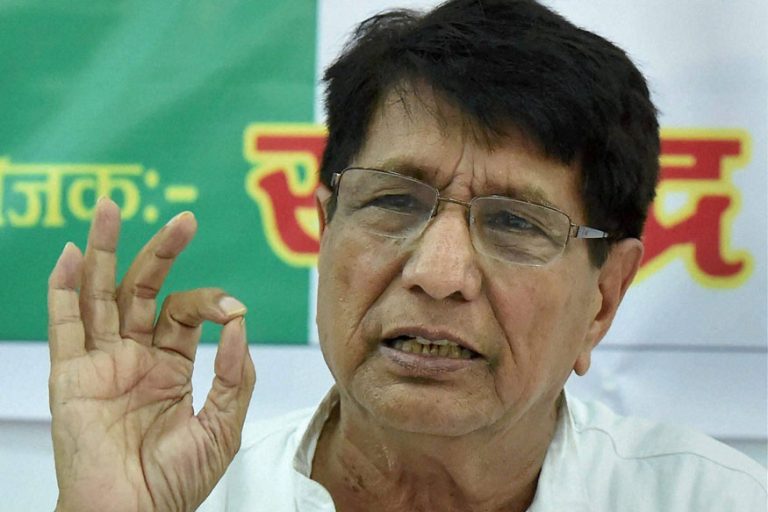
In yet another political low, Rashtriya Lok Dal president Ajit Singh has shockingly referred the Prime Minister Narendra Modi, Uttar Pradesh Chief Minister Yogi Adityanath and Union minister Smriti Irani as “bull, calf and cow”, triggering a row.
According to the reports, Ajit Singh speaking at an event called ‘Kisanon se Samvad-(dialogue with farmers)’ at Kosi Kalan in Mathura on Thursday went on to take a dig at PM Modi and Uttar Pradesh CM Yogi Adityanath while resorting to a sexist slur against Union Minister Smriti Irani by calling her “Hatti-Katti gai”- a well-built cow.
“I read in newspapers these days that your cows, bulls and calves (gai-bail-bachhde) are roaming around a lot, You are locking them up in schools and colleges. People call them Modi-Yogi. Is that right?” said RLD Chief Ajit Singh. “Some people also say that a ‘hatti-katti gai’ (well-built cow) has come. Smriti Irani is also moving around,” Singh said.
Chanting slogans like ‘”Modi Haye Haye” and “Modi Bye Bye”, Ajit Singh said that the Modi government was responsible for the problems faced by farmers, and businessmen after the demonetisation.
However, BJP leader Yogesh Goswami said the RLD chief had insulted the Constitution. “The prime minister, the chief minister and the Union textiles minister are political figures holding constitutional posts and making indecent comments on them is like insulting the Constitution,” Goswami said.
There has been a growing trend of leaders belonging to opposition parties resorting to personal abuses against Prime Minister Narendra Modi and other ministers of the NDA government. Congress leaders have often used sly remarks to target the humble background of the Prime Minister.
Mani Shankar Aiyar, known for his abusive statements against Prime Minister Modi, had referred PM Modi as “neech aadmi” during Gujarat elections in December 2017. This was not the first time Aiyar had made such casteist and elitist remarks. Mani Shankar Aiyar is widely believed to have helped Modi in his 2014 campaign when he used the term “chaiwala” (tea seller) as an insult for the then BJP Prime Ministerial candidate.
However, Smriti Irani has been the latest victim of such personal abuse as it appears that the rise of Smriti Irani in recent times has given a scare to the opposition parties, especially the Congress party. Smriti Irani, who had contested the 2014 Lok Sabha polls from Ameti against Congress president Rahul Gandhi has garnered substantial support in the constituency since the Uttar Pradesh state elections, which has led to severe targetting of Smriti Irani by the Congress party and its ecosystem.
Recently, we had reported on how the Telegraph, a leftist media organisation had tried to defame Smriti Irani by deliberately misinterpreting statements made by her against Congress President Rahul Gandhi and had claimed that Smriti Irani had actually questioned the Congress party’s ‘manhood’.