Home Blog Page 6767

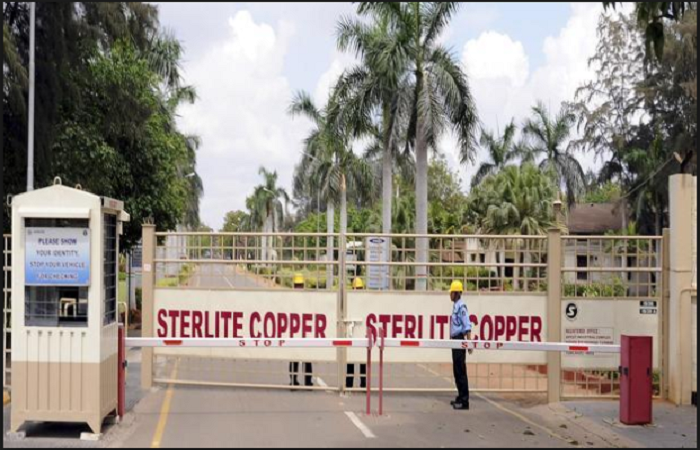
SC refuses to stay the NGT order on Tuticorin Sterlite plant reopening

0

The apex court on Tuesday declined to stay an NGT order to reopen the Sterlite copper smelting plant in Tuticorin, a coastal city in southern Tamil Nadu.

A bench comprising of Justice RF Nariman requested a response from Vedanta on the state government’s appeal against the National Green Tribunal’s order to reopen the plant. The state had earlier moved to the top court, stating that the NGT had “incorrectly” set aside various orders passed by the Tamil Nadu Pollution Control Board (TNPCB) last year with regard to the Sterlite plant.

In May last year, the Tamil Nadu government had passed an order to shut down the copper smelting plant owned by Vedanta in Tuticorin. 13 protestors had died and several others were injured when protests against the plant had turned violent.

In December 2018, the National Green Tribunal quashed the Tamil Nadu government’s decision to close the copper plant. The Green court had then directed the Tamil Nadu state pollution regulator to pass fresh order of renewal of consent for the smelter within three weeks and instructed the company to spend Rs 100 crore within 3 years for the welfare of the people in the area.

However, the Madras High Court later countered it and ordered temporary closure for a month. The Madurai Bench of the Madras High Court comprising of Justice K K Sasindhran and Justice P D Audikesavalu ordered ‘status quo’ in Sterlite Copper plant case, staying the National Green Tribunal’s permission of reopening it.

Mounting an attack on the government, chief of the MDMK party, Vaiko said that Chief Minister Edappadi K Palaniswami’s government did not take a policy decision on the plant. He accused the AIADMK government of being in cahoots with the Sterlite management.

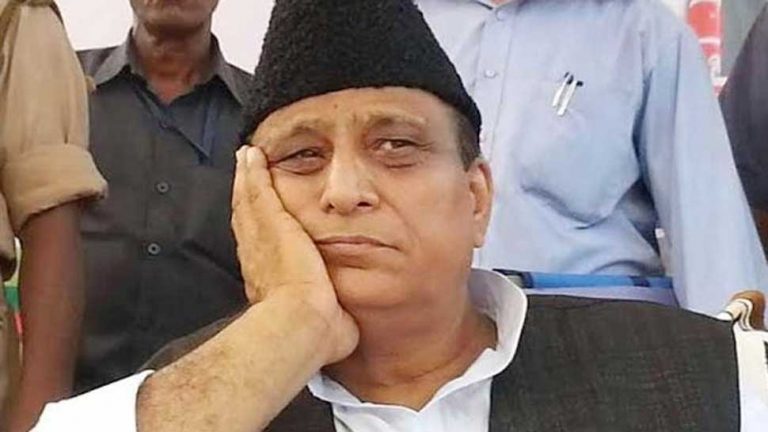
SP leader Azam Khan demands that 5% out of 10% quota for the poor be reserved only for Muslims

The decision of Prime Minister Narendra Modi to provide 10% reservation in jobs and higher education for the unreserved poor and underprivileged section seems to have put the opposition parties on the back foot ahead of the general elections.

After getting caught off guard, Samajwadi Party leader Azam Khan has now demanded that the government should reserve five percent to Muslims out of the proposed 10% reservation promised for the people belonging to the economically weaker section, reported Zee News.

According to the reports, controversial leader Azam Khan questioned the Modi government on the new reservation policy stating that the BJP government decided to bring in the new policy after it suffered losses in the recent assembly elections. Questioning the Modi government, Azam Khan asked that how much quota will be provided for the Muslims in the new reservation policy.

“If there is no thought about providing reservations for the second largest population of this country in this new policy, then what does this reservation mean? Once again, the Communal card is being played at the time of the election. This is not a masterstroke, we demand that we should be given 5% to give preferential treatment to us,” said Azam Khan.

Azam Khan said that Muslims should have been given reservations in the past and it is too late now to offer them any reservation. Interestingly, Azam Khan asked Muslims to be put in the Scheduled Caste category as the conditions of Muslims in this country have not improved.

The Narendra Modi government on Monday had announced its historic decision to provide an additional 10% to unreserved people from the general category apart from the existing 50% reservation. The proposition would require a constitutional amendment to increase the cap on reservations to 60% from 50%. The government reportedly plans to bring an amendment in the Parliament shortly.

The move by the NDA government gathers special significance as it was widely speculated that Upper Caste anger over the SC/ST Act amendment bill led to BJP’s downfall in recent state elections. It was speculated that Upper Caste disenchantment with the BJP led to its demise in these state elections.

The move for 10% reservations is likely to woo back people from the Upper Castes who had deserted the party. Their support will be absolutely essential to secure a victory in the elections this year.

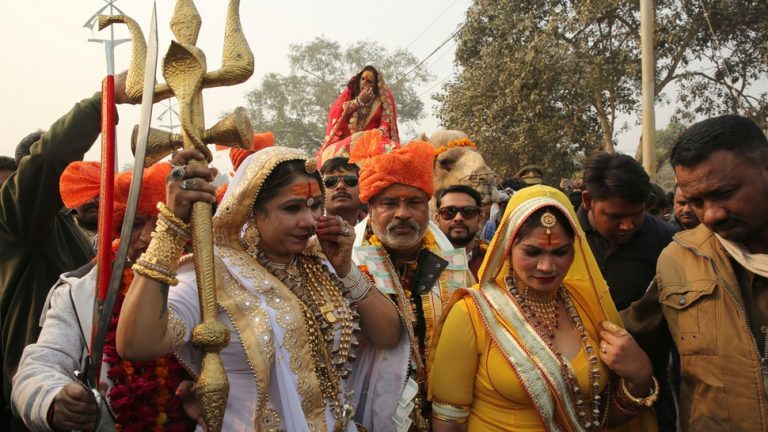
History created as transgenders take out a procession in Kumbh Mela

In a first, transgenders took part in the religious royal entry procession called ‘Peshwai’ on 6th January for the ‘Kinnar Akhara’.

Kumbh Mela
History created as transgenders participate in a procession (image courtesy: BBC)

The world’s largest spiritual congregation at the confluence of Ganga, Yamuna and the now extinct Saraswati at Prayagraj (formerly called Allahabad) is recognised as ‘intangible cultural heritage of humanity’ by the UNESCO. In the days leading to the main event, Hinduism’s 13 official akharas take out processions to mark their arrival at the festival.

Kumbh Mela
This year, the Kumbh Mela will take place at Prayagraj, at the confluence of Ganga, Yamuna and now-extinct Saraswati rivers (image courtesy: BBC)

The procession which took place on Sunday, along with the Sadhus, were transgenders. In September last year, the Supreme Court in a historic verdict decriminalised homosexuality under section 377 of the Indian Penal Code. Lakshmi Narayan Tripathi, who headed the transgender congregation at the Kumbh, said, “Those were significant victories but now the fight to get us social acceptance and our presence at the Kumbh is another step in that direction.”

Kumbh Mela
The Kumbh Mela will take place in Prayagraj (image courtesy: BBC)

“The Kumbh is a place where everybody is welcome and we welcome transgender people as well. But they can’t be recognised as an Akhara,” said Vidyanand Saraswati, spokesperson of the Juna Akhara, which is the biggest of the 13 Akharas.

The Kumbh Mela is the largest congregation of devotees in the world. (image courtesy: BBC)

Despite being recognised recognition by the Akhara Parishad, comprising of the 13 main Akharas, the procession stole the show by drawing one of the largest crowds. “We don’t need certification from the 13 Akharas. We are Sanatani Hindus and are demi-gods as per the Shastras. We are here despite the efforts to keep us out,” Tripathi added.

Massive preparations are underway for the Kumbh which will begin from 15th January. The Kumbh Mela is believed to be the largest religious gathering on earth and alternates between Nasik, Prayagraj (previously Allahabad), Ujjain, and Haridwar every three years.

The one held in Prayagraj comes in every 12 years and is considered the holiest of them all.

The SC verdict on CBI Director is not a ‘blow to the government’, don’t let pliant media fool you

The judgement is out in the CBI vs CBI feud. The Supreme Court, that had earlier reinstated Rakesh Asthana, has today reinstated Director Alok Verma, but with several terms and conditions. The Supreme Court has, in essence, asserted that the manner in which Alok Verma was asked to go on leave was incorrect. The SC reinstated Alok Verma with clipped wings, saying that he won’t be able to take any major policy decisions till the High Powered Committee comprising of Chief Justice Gogoi, Prime Minister Narendra Modi and Leader of Opposition decides his fate.

Several journalists were quick to comment on the verdict asserting that this Supreme Court decision was a major blow to the Modi government.


While the pliant media has seemingly decided to ignore the fine nuances, in reality, the Supreme Court verdict is anything but a ‘blow to the Modi government’.

The Supreme Court has essentially only ceremoniously reinstated Alok Verma as the Director of CBI with no power to take any policy decisions till the decision of the High Powered Committee comprising of Chief Justice Gogoi, Prime Minister Narendra Modi and the Leader of Opposition. The decision is reportedly to be taken within a week. Essentially, the Supreme Court reinstated Alok Verma on a technicality, saying that the government should have referred to the Select Committee consisting of the Chief Justice of India, Prime Minister and Leader of Opposition to initiate Alok Verma’s removal.

The High Powered Committee may as well uphold Verma’s ouster and that fate remains to be seen. So on that count alone, to say that this decision is a blow to the government is incorrect. If, in fact, the government wanted Verma to not take any policy decisions, as claimed by several journalists, then the government has been granted its wish.

One must also remember that Alok Verma is set to retire on 31st January 2019. With only weeks to go for his retirement, to paint this ceremonial reinstatement as a ‘blow to the government’ is ridiculous.

Another aspect of the CBI vs CBI feud is that the very media that is painting this technical verdict as a ‘blow to the government’ has not yet commented on the same Supreme Court’s order on appointment of Rakesh Asthana. According to the same media, the Modi government had preferred Asthana over Verma. In December 2018, The Supreme Court had dismissed a curative petition challenging the appointment of IPS officer Rakesh Asthana to the post of CBI special director. The apex court decision came while hearing a curative petition filed by Prashant Bhushan representing NGO Common Cause. Bhushan had filed the plea to reconsider the Supreme Court’s November 2017 judgment upholding the appointment of IPS officer to the CBI, and it was the third petition filed by him in the case.

Rahul Gandhi had gone all guns blazing against Rakesh Asthana just a while before the SC judgement.


Supreme upholding the appointment of Asthana, who is considered by the opposition as PM Modi’s ‘blue-eyed boy’ was far more comprehensive than that of Alok Verma whose fate still hangs in the balance.

The aim of the Modi government in sending both Asthana and Verma on leave was to ensure the sanctity of CBI doesn’t get tainted by the feud between the two, and to ensure a fair enquiry into the allegations of both the officers of CBI. CVC had alleged that Verma was not cooperating in its investigations against him. In fact, it was CVC which had recommended that both the officers should be sent on leave, so that probe against them can be conducted smoothly. With CVC already completing the probe against Verma, that purpose of sending Verma on leave was already served.

Trouble mounts for Congress’ son-in-law as ED files fresh money laundering case against Robert Vadra’s firm

The Enforcement Directorate (ED) has filed a fresh money laundering case against the firm, Skylight Hospitality, linked to Congress’ Sonia Gandhi’s son-in-law, Robert Vadra in connection with financial and other irregularities in land deals in Haryana’s Gurgaon in 2008.

The ED’s case has been registered under the under the Prevention of Money Laundering Act (PMLA). The new case registered, according to sources is a criminal FIR, known as enforcement case information report in official parlance.

These new charges were on the basis of an FIR, under sections 420(cheating), 120(hatching conspiracy), 467,468 and 471(forgery) of the IPC, filed by Haryana police in September last year.

A resident of Gurugram named Surendra Sharma of the Rathiwas village had filed an FIR against Robert Vadra, Bhupinder Hooda and others in September 2018, alleging that Vadra’s firm Skylight Hospitality had bought 3.5 acres of land in Shikohpur village (Now Sector 83) in Gurugram from one Omkareswar Property for 7.5 crores in 2008. The FIR had alleged that massive irregularities had happened in the deal and Hooda had favoured Vadra costing the exchequer huge losses.

After procuring a development licence with the influence of Hooda, Vadra’s Skylight Hospitality sold this land to DLF at a price of Rs 58 crore, thus making a profit of Rs 50 crore, which Robert Vadra has been denying.

In return, the state government under Bhupinder Hooda, who also held the portfolio of town planning and county planning ministry, allegedly allotted 350 acres of land to DLF at Wazirabad in Gurgaon in violation of rules, the police had claimed. In the alleged quid pro quo, DLF made Rs 5000 crore, it had said.

This fresh case against Robert Vadra and his associates, follow searches conducted by ED in December last year in connection with its probe into alleged “commissions received by some suspects in defence deals” and illegal assets stashed abroad.

While conducting the raids, ED had told media that the persons being raided had received money in their bank accounts from defence suppliers.

It was alleged that Robert Vadra has close links with arms dealers. One of his close associates, Sanjay Bhandari had tried to partner with Dassault Aviation. But Dassault had refused his offer after learning about Bhandari’s association with Vadra.

The Enforcement Directorate (ED) had earlier moved a Delhi court on January 5 seeking issuance of an open-ended non-bailable warrant against Robert Vadra’s executive assistant, Manoj Arora, who was allegedly the middlemen and lobbyists in this arms deals.

In the process of procuring an open-ended non-bailable warrant against Arora, the ED had also established in the Delhi High court, that Vadra was the virtual owner of a £ 1.9 million flat at 12, Bryanston Square in London.

Apart from these two cases, Robert Vadra is also accused in another land money laundering case related to a land deal in Bikaner, Rajasthan. It is alleged that Vadra had “fraudulently” acquiring land in Bikaner meant for rehabilitation of poor villagers through his company Sky Light Hospitality Pvt Ltd.

ED had sent three summons to Vadra to appear before them, in Bikaner land deal money laundering case but he had ignored all the three summons, calling it a ‘political witch-hunt’ maintaining that the investigation agencies have an agenda to tarnish his reputation.

In yet another case, Hooda and 33 others were charge-sheeted by the CBI in February last year, in the 1500 crore Manesar land deal case.

The predicaments seem to be mounting for the Congress’ son-in-law and it would be interesting to see, for how long does this dynasty entitlement help him to escape the clamps of the Indian judicial system.


Reservation for the poor: Promised by Congress in 3 election manifestos, delivered by the Modi government

In what was dubbed a political masterstroke yesterday, the Union Cabinet had approved a bill for 10% reservation, reportedly for the economically weaker sections in government jobs and education.

The proposition will require a constitutional amendment to increase the reservation cap from 50% to 60%, for which the union government plans to table the bill in the parliament today.

The bill, after the cabinet approval yesterday, created a massive stir in political and media circles. Many political parties and prominent leaders, visibly agitated over the move, went on to call it a Jumla.


Congress spokesperson Randeep Surjewala stated in a press conference that the move by the central government just a few months before elections is a question mark on the government’s intentions.


Several political leaders, who have themselves made their present positions over caste-based politics, have proceeded to call it a ‘Jumla’. Hardik Patel, Tejaswi Yadav and many others joined in.

However, the Congress questioning the timing of the move is a bit rich, for the party had itself tried desperately to lure Jats before the 2014 general elections. The UPA-II under Manmohan Singh had decided to include Jats under the OBC category in March 2014, barely weeks before the general elections.

The Jat reservation move was struck down by the Supreme Court in 2015.

Nevertheless, Congress will still be shooting on its own foot if it attempts to stall the government’s move, because Congress, in its elections manifestos through 2004, 2009 and 2014 had promised reservation for the economically weaker sections, (EWS) without compromising the reservation quota for SC, ST and OBC.

This is the relevant portion of the Congress’ 2014 manifesto:

Congress manifesto 2014

The first point in page 22, under the section ‘Empowering Scheduled Castes, Scheduled Tribes and other backward classes, states that the party aims to provide reservation in education and employment for the EWS without in any way affecting existing reservations for SC, ST and OBCs.

In the 2009 Election Manifesto as well, Congress had promised the same reservation. Here is the relevant portion of the party’s 2009 election manifesto:

Congress 2009 manifesto

The 2009 manifesto states in the para 7, page 16 that the party pledges to carve out reservation for the EWS without prejudice to the existing reservations for SC, ST and OBCs.

Even in the 2004 manifesto, Congress had made the same promise of providing reservation for the EWS from the sections that are not entitled to reservation currently.

It is interesting that what Congress has promised since 2004 had now seen the light of day under the Modi government. Essentially, in the entire 10-year tenure of Congress from 2004 to 2014, the Congress government had vowed to bring in reservation for the Economically backward but had never done it. The Modi government has delivered in less than 5 years of its tenure.

It is evident that the Modi government in its recent move is finally delivering what the Congress had promised since at least 15 years and had failed to uphold in a decade of being in power since 2004. Any counter comments by Congress leaders over the move is only going to be an embarrassing self-goal.

Reliance Telecom-Ericsson case: Anil Ambani defended by Congress leader Kapil Sibal in Supreme Court

Supreme Court has delivered a setback and served a contempt notice to the chairman of Reliance communications Anil Ambani, for failure to repay the due of Rs 550 crore to Sweden-based telecommunication company Ericsson. SC also refused to exempt the chairman from the physical appearance in the court in the next hearing.

Anil Ambani was represented by Congress leader Kapil Sibal and Former Attorney General Mukul Rohatgi. Both advocates tried hard to convince the court to exempt Ambani from physical appearance, but the court refused to budge from its stand.

Congress leader has defended Ambani in many hearings of the case in past too. In October last year, Kapil Sibal had asserted in court that the delay in repayment on behalf of its client company is due to non-issuance of NoC for Sale of Assets by Department of Telecommunication.

RCom offered bank drafts worth Rs 118 crore, net of tax, to Ericsson in court, in order to settle a part of the principal amount owed to Ericcson. But, the advocates representing the Swedish company have refused to accept the part payment. Ericsson is also pursuing insolvency proceedings against RCom. The next hearing of the insolvency proceeding is on January 22.

The court has also attended RComm’s contempt plea against the DoT, for not clearing the spectrum sale to Mukesh Ambani led Jio. The spectrum deal is in a logjam, after Jio wrote a plea to DoT, that it should hold the deal ’till the time company agrees fully that RComm has complied to priorly-discussed conditions. Both Kapil Sibal and Rohtage have given assurance to Jio, that RComm is ready to comply with every condition discussed before.

Anil Ambani is not only stuck between corporate cases in courts but also is in the middle of the Rafale drama, orchestrated by Congres president Rahul Gandhi and his exponents. The Congress president has been alleging that PM Narendra Modi has given ₹30,000 crore to Anil Ambani, which has no relation with truth of the deal. Rahul Gandhi has been making false allegations that the Rafale deal has been taken away from HAL and given to Reliance, when the fact is that Rafale is being fully made in France by Dassault and Anil Ambani’s company is not involved in manufacture of the aircraft.


On 4 January this year, President Rahul Gandhi had shared a News Article by Economic Times, reporting Ericsson’s demand for strict action defaulter RComm. He labelled Anil Ambani, an “international debt master”. He has also called Anil Ambani, a “failed businessman”. However, President Gandhi forgets to add that, in the very case of Anil Ambani has been defended by his party leader Kapil Sibal.

Rahul Gandhi has been attacking government without regards to fact that SC, last year, had vindicated government and had refuted claims of commercial favouritism in the deal. Earlier, Anil Ambani had written a letter and rebutted the allegations that Rahul Gandhi has been levelling against the government and the Reliance group over the deal.

RComm has so far missed two payment deadlines to pay up. Ericsson has asked the court to detain Anil Ambani in civil prison and bar him from travelling outside the country.

Ericsson had signed a seven-year deal with Reliance Communications in 2014 to operate and manage its nationwide telecom network. After alleged non-payment of dues since 2016, Ericsson moved the National Company Law Tribunal (NCLT) against Reliance Communication and group companies, Reliance Infratel and Reliance Telecom, in September 2017.

Reliance Telecom shut down its mobile phone service in October last year, and later it had signed a deal to sell its assets to pay its dues. But the transaction is not being cleared by DoT, resulting in defaults in payments by the company. Before winding the services, the Company had attempted a merger with Aircel, but that deal was also cancelled due to lack of regulatory approvals.

It is interesting to note while Rahul Gandhi blames the Modi government of favouring Anil Ambani, the reality is completely opposite. The government’s decision ensured that Reliance Telecom had to shut down, and now it is not allowing the sale of its assets to clear its dues. On the other hand, Rahul Gandhi’s own party leader is defending the company in the court.

Hundreds, including leprosy patients, flee an Ashram in Jharkhand after Muslim mob threatens them

43 families have fled an Ashram in Jharkhand on Monday fearing violence by a Muslim mob. As per reports, while police are present on the ground to provide protection, Muslim men have threatened that once the police leaves, they will kill each one of them.

MLA representative of chief minister Raghubar Das, Pavan Agarwal reached the spot to give assurance to the people regarding their safety. However, despite the assurances, as many as 400 people of 43 families have fled.

As reported by News18, the Muslim used to target the Ashram since it housed people with disabilities including leprosy. Reshmi Mahto, a resident of the village said, “Because we are people with disabilities, every few days these people (Muslims) target us and carry out atrocities against us. They overpower us and beat us up. 8-10 women were injured yesterday. Despite police presence, some are still threatening us. They say that police will protect you only for a few days, after which we will come inside your house and kill you.”

The communal clash was triggered after a child went to a Muslim basti to recover his kite which had fallen there. While the initial feud was resolved, a few days later, it turned violent which led to stone pelting. Following the incident, residents of Shree Ram Sevashram reached the police station to register a complaint. They also claimed that Muslim men from the basti would come and make sexually coloured remarks and harass them.

The women in the ashram claimed that they also make casteist remarks and use derogatory and abusive languages towards them. The Muslim men, after boasting their prowess that no one can harm them, they started pelting stones at the temple, claim the women. They reportedly even pelted stones at homes of other residents.

Burma Mines police station in-charge has said that the police is doing its best to provide safety to the people.

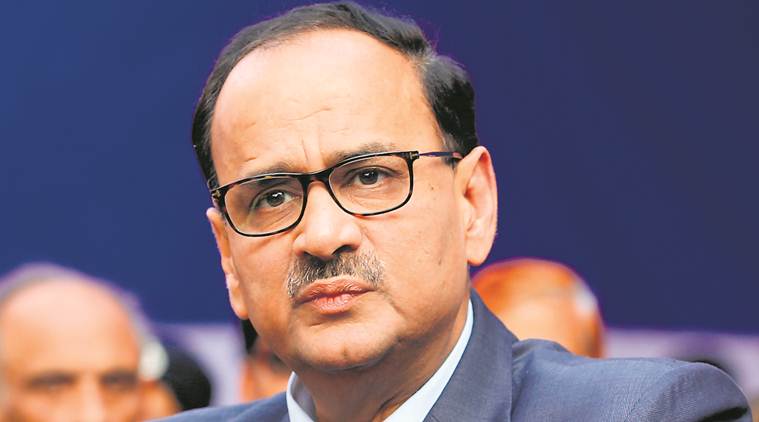
SC reinstates CBI chief without power to take any policy decision, high-powered committee to decide his fate

The Supreme Court on Tuesday reinstated Alok Verma as Director of the Central Bureau of Investigation (CBI), setting aside the Centre’s decision to send him on leave before the end of his term in January this year, reported Bar and Bench.

According to the reports, a bench comprised of Chief Justice of India Ranjan Gogoi and Justices Sanjay Kishan Kaul and KM Joseph. As CJI Gogoi was unavailable today, Justice Kaul pronounced the verdict stating that Alok Verma cannot take any major policy decision until the high power committee takes a decision, Supreme Court

Reportedly, the High Power Committee under DSPE Act to decide within a week to consider Alok Verma’s case. Alok Verma cannot take any major policy decision until the statutory committee takes a final decision. With only weeks left for Alok Verma’s retirement, the decision of the Supreme Court to take away his power to make decisions is a major setback to Verma and his supporters. Alok Verma’s term as CBI director was scheduled to end on January 31.

The high-powered committee will include the Chief Justice Ranjan Gogoi, Prime Minister Narendra Modi and Leader of the opposition and will take a call on his transfer within a week.

The Supreme Court has, in the meantime, reinstated Alok Verma on a technicality saying the government should have referred to the Select Committee consisting of the Chief Justice of India, Prime Minister and Leader of Opposition to initiate Alok Verma’s removal.

The Modi government had sent Alok Verma on leave to restore public faith in the CBI by effectively divesting him of his powers as the Director of the CBI. The DoPT and the CVC issued notices in a midnight move on October 29 announcing this decision. Earlier, the Supreme Court had reinstated Rakesh Asthana as the special director of CBI.

Alok Verma had sought quashing of three orders of October 23, 2018, one by the Central Vigilance Commission (CVC) and two by the Department of Personnel and Training (DoPT), as being without jurisdiction and in violation of Articles 14, 19 and 21 of the Constitution.

AAP-Congress reach alliance in Delhi, to contest 3 seats each with one seat for ‘independent’ Yashwant Sinha: Report

Arvind Kejriwal led Aam Aadmi Party has joined hands with the Congress party to jointly contest in the six out of the seven constituencies in Delhi in the upcoming Lok Sabha polls. The AAP-Congress alliance has also agreed to leave one seat for disgruntled BJP leader Yashwant Sinha, who will contest as an independent candidate, reports DNA.

According to the reports, AAP and the Congress will contest three seats each and decided to leave one for former Union Minister Yashwant Sinha, who has openly shown his disappointment after being denied any position in the BJP post-2014.

AAP will contest in South, East and North East Delhi constituencies and the party is set to field Dilip Pandey, Atishi Marlena and Raghav Chadha respectively. Congress will contest in West Delhi, North West Delhi and Chandni Chowk. Yashwant Sinha may contest from New Delhi constituency as an independent candidate. AAP Rajya Sabha MP Sanjay Singh denied media reports of supporting Sinha as an independent candidate.

“Talks were going on for past three months and it has been decided that both parties will contest on three seats,” a source in Delhi Congress said, according to DNA.

Reportedly, both Congress and AAP are also finalising a seat-sharing deal in three other states of Rajasthan, Haryana and Punjab to fight the BJP in the upcoming general elections.

The coming together of Congress and the Aam Aadmi Party has irked the senior leaders of both the party. Recently, senior Congress leader Ajay Maken had resigned from the party as he had allegedly objected to any such pre-poll alliance between the Congress and the AAP. Similarly, HS Phoolka, a senior AAP leader had resigned after he knew that there were serious talks of AAP-Congress alliance ahead of the Lok Sabha polls.

Some Congress leaders and ground workers do not want the party to align with any political party to fight the BJP. Senior leader Ajay Maken, who had revived the party after the 2014 debacle is also said to be not in favour of Congress alliance with the AAP.

Note: The above report has been updated with the latest information.