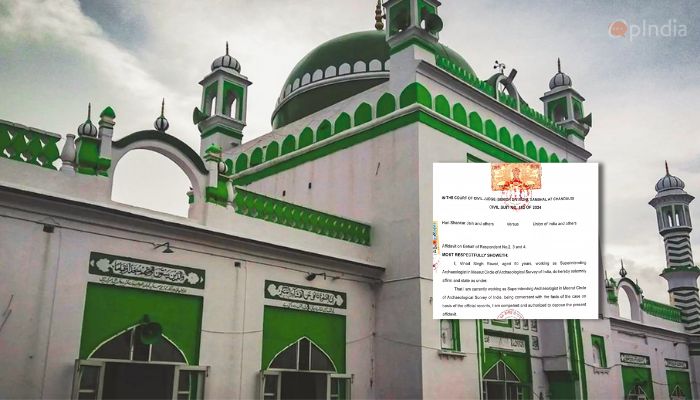
In a major development in the Sambhal Jama Masjid-Harihar Temple dispute, an affidavit filed by Superintending Archaeologist in the Meerut circle of the Archaeological Survey of India (ASI) Vinod Singh Rawat has revealed that there is a pattern to keep facts concealed in the disputed Sambhal Jama Masjid.
The affidavit says that ASI officers were not allowed to enter the mosque for inspection and that the Jama Masjid management committee has done several interventions and modifications inside the mosque.
It further states that an ASI team had inspected the disputed mosque once in 1998 and then in June 2024. “In response to para 4 and 5 of the petition it is submitted that the situation is also very tough for ASI. Even officers of the ASI were not allowed to enter the monument for the purpose of inspection. However, ASI with the support from District Administration took up inspection of the monument time to time. A team of ASI had inspected the monument in the year 1998. Most recent inspection of the monument by ASI team was done on 25th June, 2024. A copy of the inspection note is also attached herewith as Annexure-I,” the affidavit accessed and shared on X by journalist Rahul Shivshankar reads.
BIG EXCLUSIVE BREAKING: There is a pattern to the attempts at keeping things under wraps at the Jama Masjid in Sambhal. Here is a sworn Affidavit of Mr Rawat the superintending Archaelogist in the Meerut Circle of the ASI. This clearly says that even in the past it was very… pic.twitter.com/RW73SsgNDX
The Superintending Archaeologist of ASI’s Meerut circle submitted that the Sambhal Jama Masjid management committee has carried out various interventions and modifications in the disputed mosque. Moreover, Rawat said that the masjid management committee has restricted the ASI team from carrying out inspection and thus, the ASI is unaware of the present status of the mosque, in addition, the ASI also does not have any information on whether any additions were made to the mosque.
“In response to para 32 and 33 it is submitted that the Masjid Management Committee involved in the monument has carried out various interventions, additions, modifications etc. at the monument. The inspection undertaken by ASI officers in the month of June, 2024 records some of the interventions done at the monument. A copy of said inspection note may please be seen at Annexure-I. However, there are restrictions on ASI team for inspection, the current status and additions carried out are not known to ASI,” the affidavit reads.
This information is crucial in the case, given the fact that on the 22nd of December 1920, the disputed site was declared a protected monument via a notification issued by the Secretary to the Government of United Provinces under Section 3(3) of the Act. The petitioners in the Sambhal Jama Masjid case have argued that the ASI failed to control the management of the disputed site, despite it being a protected monument. The petitioners argued that it placed the site under the supervision and control of the ASI. Thus, ASI should be the legal custodian responsible for the upkeep, management, and facilitation of public access.
The revelations made in the affidavit raise the question as to how is it legal that an ASI-protected monument is being administered by the Jama Masjid committee and how could they prevent the ASI team from conducting inspection at a monument meant to be protected by the ASI. Most importantly, what exactly has the Sambhal Jama Masjid committee been hiding for so long from the public and why.
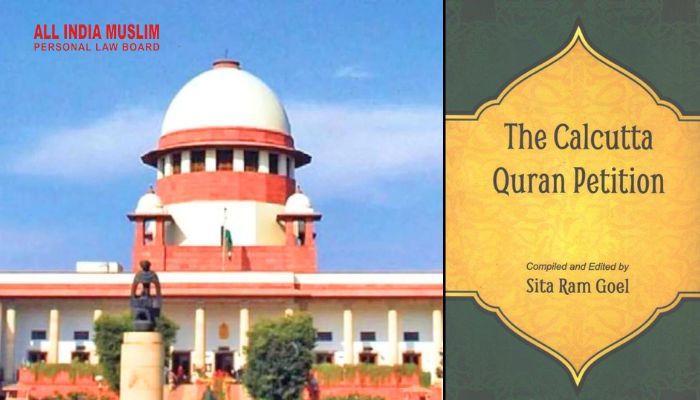
On Thursday (28th November), the All India Muslim Personal Law Board (AIMPLB) fired off a letter to the Supreme Court of India, asking it to direct lower courts in India not to hear petitions on mosques.
The development comes amid the Islamist onslaught in Uttar Pradesh’s Sambhal, following the trial court order to conduct a survey of the Shahi Jama Masjid.
In its letter, AIMPLB sought refuge in the Places of Worship Act of 1991 asked the apex court to not entertain petitions that could expose the true nature of Gyanvapi Mosque, Shahi Eidgah, Bhojshala Mosque, TeeleWali Masjid and Shahi Jama Masjid.
All India Muslim Personal Law Board (AIMPLB) demands Supreme Court to stop lower courts from accepting petitions on claims on mosques and dargahs in various courts across the country. pic.twitter.com/XIwsbCz1Eq
The Islamic body stated, “Dr. Ilyas (national spokesperson) has appealed to the Chief Justice of India to take immediate SuoMotu action in this matter and direct lower courts to refrain from opening doors to any further disputes.”
“Additionally, it is the responsibility of both central and state governments to strictly enforce this law passed by Parliament. Failure to do so could lead to an explosive situation across the country, for which the Supreme Court and the central government would be held accountable,” it warned.
The All India Muslim Personal Law Board essentially suggested that lower courts approving surveys of mosques could result in Muslims rioting, as recently witnessed in Uttar Pradesh’s Sambhal.
However, it is important to note that Muslim mobs have run riots even when High Courts have entertained petitions pertaining to Islamic scriptures. The infamous case of the Calcutta Quran Petition of 1985 is a shining example.
The Calcutta Quran Petition of 1985
An application was filed on March 29, 1985, under Article 226 (power of the High Court to issue some writs) of the Indian Constitution by advocate Chandmal Chopra and one Sital Singh, asking the Calcutta High Court to direct the government to ‘forfeit’ every copy of the ‘Quran’.
The petition argued that every copy of the Quran is ‘liable to be forfeited’ under Code of Criminal Procedure (CrPC) Section 95 (Power to declare certain publications forfeited) when read with Indian Penal Code (IPC) Sections 153A (Promoting enmity between different groups on grounds of religion) and 295A (Deliberate and malicious acts, intended to outrage religious feelings).
It argued that Muslims have been exploiting the laws so far to ban books critical of Islam. Chandmal Chopra and Sital Singh cited direct verses from the Quran, calling for violence against the ‘infidels’.
The matter initially came up before Justice Khastgir J of the Calcutta High Court. Far from dismissing the application, as one would expect today, the learned Judge had entertained the application.
She also issued notice to the contending parties. Communist Party of India (Marxist), Jamait-e-Islami and Kerala Muslim Association of Calcutta were soon up-in-arms. A ‘Quran Defence Committee‘ was set up to strengthen the movement.
The CPIM-led-West Bengal government claimed that the petition was filed with malafide intent and that such a petition has never been filed in Indian history.
The Congress-led-Union government also sided with the Left and opposed the plea. With mounting political pressure, Justice Khastgir dropped it from her list and sent it to the Court of Justice Satish Chandra.
On the advice of state Advocate-General S.K. Acharyya, the matter was transferred to the Bench of Justice Bimal Chandra Basak, who dismissed the petition on May 17, 1985. The Islamist opposition thus ensured that the Court could not rule on the tenets of Islam.
Muslim mob ran riots over the Calcutta Quran petition
As narrated by historian Sita Ram Goel in his book (Pages 26-27), Muslim mobs ran riots in Bangladesh after learning about the Calcutta Quran petition.
Many of them belonged to Jamaat-e-Islami. These extremists set fire to government property and even threw missiles. They also clashed with the police in Chepal Nawabgunj town, prompting the latter to open fire in self-defence.
It resulted in 12 deaths and 100 injuries. A day later, a 20000-strong mob of Jammat-e-Islami carried out violent protests in Dhaka and even tried to ambush the Office of High Commission of India.
In Indian city of Ranchi, Muslims carried out a ‘protest march’ with black flags, banners and hurled anti-government slogans. They also attacked shops with stones and forcibly shut down businesses of small traders.
The fear stoked by them prompted shopkeepers to keep their businesses closed during the following day of protest.
Muslims carried out violence in Jammu and Kashmir’s Srinagar city, ransacked Communist Party of India headquarters, attempted to set a bridge ablaze, forcibly closed schools, cinema halls and shops.
“There could be no greater irony that the Communist Party of India (CPI), a consistent defender of all Islamic causes, had been bracketed with ‘Hindu communalists’ by Muslim mobs. But mobs are mobs, and the responsibility for what they do rests on those who mobilize them ever so often,” Sita Ram Goel noted in his book.
AIMPLB is indicating that Muslim mobs can riot again if courts continue to hear petitions pertaining to surveys about the true character of mosques built atop Hindu temples.
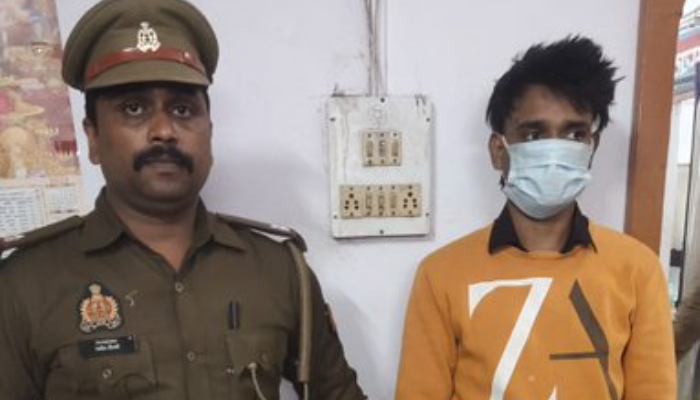
A case of grooming jihad has come to light in Dariyapur Vikku village in Shahabad tehsil of Uttar Pradesh’s Hardoi. Hasan, the son of Gulfam trapped a 16-year-old girl in Delhi in a romantic relationship and tied the knot. He kept her hidden for 2 to 3 months in the national capital before returning to his hamlet where he took her to a mosque, made her embrace Islam and married her. As soon as the matter came to light, the police registered a case on the orders of the Superintendent of Police (SP) and took him into custody. The minor was also recovered safely.
#HardoiPolice थाना शाहाबाद पुलिस द्वारा मु0अ0सं0 597/24 धारा 27 बीएनएस व धारा 3/5(1) उ0प्र0 विधि विरुद्ध सम्परिवर्तन प्रतिषेद 2021 से संबंधित अभियुक्त को हिरासत में लेने के संबंध में क्षेत्राधिकारी नगर द्वारा दी गई बाइट।- UPPolice pic.twitter.com/2qWSeLmaWY
The accused and the victim used to study in a private school in Delhi. The district president of Kesariya Hindu Vahini, Pawan Rastogi reported the issue to the authorities after he learned about it. The police reached the village on the orders of the SP on 27th November at around 2 pm and rescued the girl, however, the offender fled from there. The cops relentlessly searched for him while further investigation was underway.
Meanwhile, Pawan Rastogi disclosed that heavy police force was deployed but the youth managed to escape owing to a little delay. His family was already aware of it. However, the girl was found. He stated, “I discovered in the morning that a cleric (hafiz) who had taught the girl in Delhi had brought her to Shahabad, converted her to his faith, and married her at Dariyapur Vikku hamlet, which is under the Shahabad police station.”
He added, “These incidents are being actively addressed by our organization. We shall make every effort to guarantee legal action in such cases. We have already written to the SP and spoken with the Shahanbad police station in charge. We will even approach Chief Minister Yogi Adityanath if needed. Legal action should be taken in response to such punishable activities. This is our priority.”
Circle Officer Hardoi City, Ankit Mishra also confirmed the occurrence and declared that the perpetrator has been booked under section 27 Bharatiya Nyaya Sanhita (BNS) and section 3/5(1) of the Uttar Pradesh Prohibition of Unlawful Conversion of Religion Act, 2021 by Shahabad police station. The cops continued to hunt for the primary culprit, Hasan, who was also eventually nabbed.
The Maharashtra caretaker government has withdrawn its recent decision to allocate ₹10 crore to the State Waqf Board, following political opposition and internal party concerns. The state government has claimed that the order was issued due to an administrative mistake. The decision comes amid opposition to the grant by Hindu groups and the question over a caretaker government issuing such an order.
Chief Secretary Sujita Saunik clarified that the government resolution was issued inadvertently without proper scrutiny, leading to the erroneous approval of funds for the board.
On November 28, 2024, the Minority Development Department of the Maharashtra government issued a government resolution (GR) allocating ₹10 crore to the State Waqf Board for the financial year 2024-25. This fund was intended to enhance the board’s infrastructure and management. The allocation was part of a broader budgetary provision of ₹20 crore for the Waqf Board, with ₹2 crore disbursed earlier in June 2024.
The decision faced immediate backlash from opposition parties and Hindu organizations. Shiv Sena (UBT), led by Uddhav Thackeray, criticized the grant, calling it a politically motivated attempt to consolidate minority votes. Shiv Sena (UBT) leader Priyanka Chaturvedi criticized the move, labelling it as “hypocrisy” and questioning the caretaker government’s authority to make such policy decisions. Party leader Sanjay Raut also remarked on the irony of the government making such a grant.
The Vishwa Hindu Parishad (VHP) also expressed strong objections, accusing the government of appeasing a particular religious community. Mohan Salekar, VHP’s Konkan region secretary, stated, “This will never be tolerated.” He warned that if the decision was not reversed, the ruling coalition would face backlash from the Hindu community in upcoming elections.
Mohan Salekar said, ‘Mahayuti government is doing what even the Congress government did not do. The government is appeasing the religious community. If this decision is not withdrawn, then Mahayuti parties will have to face the wrath of Hindus in the upcoming elections of local bodies and assembly.’
Maharashtra BJP spokesperson Keshav Upadhyay also questioned the decision of the allocation, saying that a caretaker govt does not have the authority. He said, ‘At present there is a caretaker government in Maharashtra and this government does not have the authority to take policy decisions. It seems that the decision regarding the fund has been taken at the administrative level, so it is expected that the administration will amend its decision.’
In response to the criticism, the Maharashtra caretaker government withdrew the ₹10 crore allocation. The development comes at a politically sensitive time, with the new CM of the state yet to be announced, and local body elections looming.
Russia’s attack on Ukraine on 24th February 2022, marked a significant escalation of the Russo-Ukrainian War, which began in 2014. This war, the largest and deadliest conflict in Europe since World War II, has caused hundreds of thousands of military casualties and tens of thousands of civilian casualties. However, since the West, especially the United States has openly supported Ukraine with weapons and billions of dollars in aid in the armed confrontation with Russia, the situation is only getting worse with time.
Ukraine’s military used several long-range ATACMS provided by the United States to strike a military and civilian airfield in the Kursk area of Russia on 25th November and a few days later on 27th November, it launched a barrage of the United Kingdom’s Storm Shadow cruise missiles into Russia, marking a significant tipping point in the struggle which entered its 1,000th day this week.
While Kyiv responded that it needs the ability to defend itself by attacking Russian rear sites used to assist Moscow’s assault, the Kremlin warned that employing Western weaponry to attack Russian territory far from the border would be a significant escalation in the conflict.
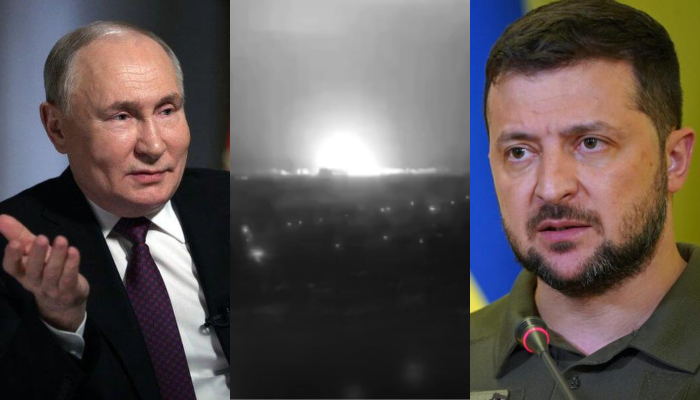
Meanwhile, President Vladimir Putin threatened Kyiv with Oreshnik missiles if Ukraine continues to remain aggressive. On 28th November he stated that Russia might deploy its new hypersonic missile to strike “decision-making centers” in Kyiv in reaction to Ukraine’s firing of Western missiles toward Russian territory.
Notably, Russia has not yet targeted Ukrainian government ministries, parliament or the president’s office during the long 33-month battle. However, the recent development could exacerbate the already dire situation.
Although Kyiv has strong air defenses, Putin declared that the Oreshnik, which Russia fired for the first time on 21st November at the Ukrainian city of Dnipro, cannot be intercepted.
He had earlier conveyed that Moscow tested the latest intermediate-range missile in an attack on Ukraine’s Dnipro region because of “the aggressive actions of NATO countries.” He further emphasised, “The targets for destruction during further tests of our newest missile systems will be determined by us based on the threats to the security of the Russian Federation. We consider ourselves entitled to use our weapons against military facilities of those countries that allow their weapons to be used against our facilities,” in an address on national television.
During a press conference in Kazakhstan on 28th November, he revealed that the Oreshnik is virtually unstoppable by any air defense system. “We will use the means at our disposal. We do not exclude the use of Oreshnik against the (Ukrainian) military, against military industrial facilities, or against decision-making centers, including in Kyiv, bearing in mind that the Kyiv authorities today continue to attempt to strike our vital facilities,” he announced.
⚡️ 'There are no equivalents to Russia's 'Oreshnik' in the world, and none will appear anytime soon,' stated the Russian leader as he highlighted the superiority of the country’s newest missile system during the CSTO summit in Astana. pic.twitter.com/CAA8KqCHHk
Putin clarified that Russia’s new Oreshnik missile isn’t currently fitted with nuclear warheads, however, he highlighted that it had “comparable strength to a nuclear strike” if fired repeatedly on a single target. Oreshnik can drop a nuclear payload and fire several warheads simultaneously.
“The kinetic impact is powerful, like a meteorite falling. We know in history what meteorites have fallen where, and what the consequences were. Sometimes it was enough for whole lakes to form. Dozens of warheads will hit the target at a speed of 3km/second. Everything in the epicentre is broken down into fractions, into elementary particles, essentially turning into dust. The impact is similar to a meteorite strike. There are no equals to Oreshnik in the world, and there won’t be anytime soon,” he pointed out in a statement.
Putin asserted, “Of course, we will respond to the ongoing strikes on Russian territory with long-range Western-made missiles, as has already been said, including by possibly continuing to test the Oreshnik in combat conditions, as was done on 21st November,” to the leaders of a security coalition of former Soviet nations and added, “At present, the Ministry of Defence and the General Staff are selecting targets to hit on Ukrainian territory. These could be military facilities, defence and industrial enterprises, or decision-making centres in Kyiv.”
Oreshnik missile:
– Top speed: Mach 10 (12,380 km/h) – Rapid targeting: Can strike major European cities within minutes – High penetration capability: Effective against heavily protected targets – Strike power comparable to nuclear weapons pic.twitter.com/KmfFvum2q6
“You know, in Soviet times there was a joke about weather forecasts. Here’s the forecast: today, during the day, anything is possible,” he replied when asked if the “decision-making centers” the Kremlin warned it might target are political or military. His statement came after the United States, United Kingdom and France decided to provide Ukraine with long-range missiles, which he regards as a reaction to Russia’s military actions.
What makes the Oreshnik missile so deadly
Putin informed that Russia had launched a “new conventional intermediate-range” missile with the Oreshnik, which translates to “hazelnut” in Russian, in a television speech hours after the hit on Dnipro. He stated that it was tested “in a non-nuclear hypersonic configuration” and successfully struck its objective. “There is no nuclear warhead, and that means there is no nuclear contamination after its use,” he declared characterizing the missile as a “precision weapon” rather than a weapon of mass destruction. However, according to military analysts, the rocket might be equipped with nuclear warheads.
The witnesses disclosed that the assault was exceptional and caused three hours of continuous explosions. One of the missiles used in the attack was so potent that Ukrainian officials later claimed it had the characteristics of an intercontinental ballistic missile (ICBM) while Putin affirmed that the new addition Oreshnik is hypersonic, manoeuvrable and impossible to intercept with existing air defence systems including the sophisticated ones from the Western countries.
He stressed that “there are currently no ways of counteracting this weapon” and the missile travelled at a speed of Mach 10, or 2.5–3 km/s (10 times the speed of sound). The president added that a significant military-industrial facility in Dnipro that produces missiles and other weapons had been struck. The “target was reached” made the attack “successful” in his assessment of the test. A day later, he told top defense officials that the missile would continue to be tested, “including in combat conditions.” Oreshnik can also hit targets all throughout Europe.
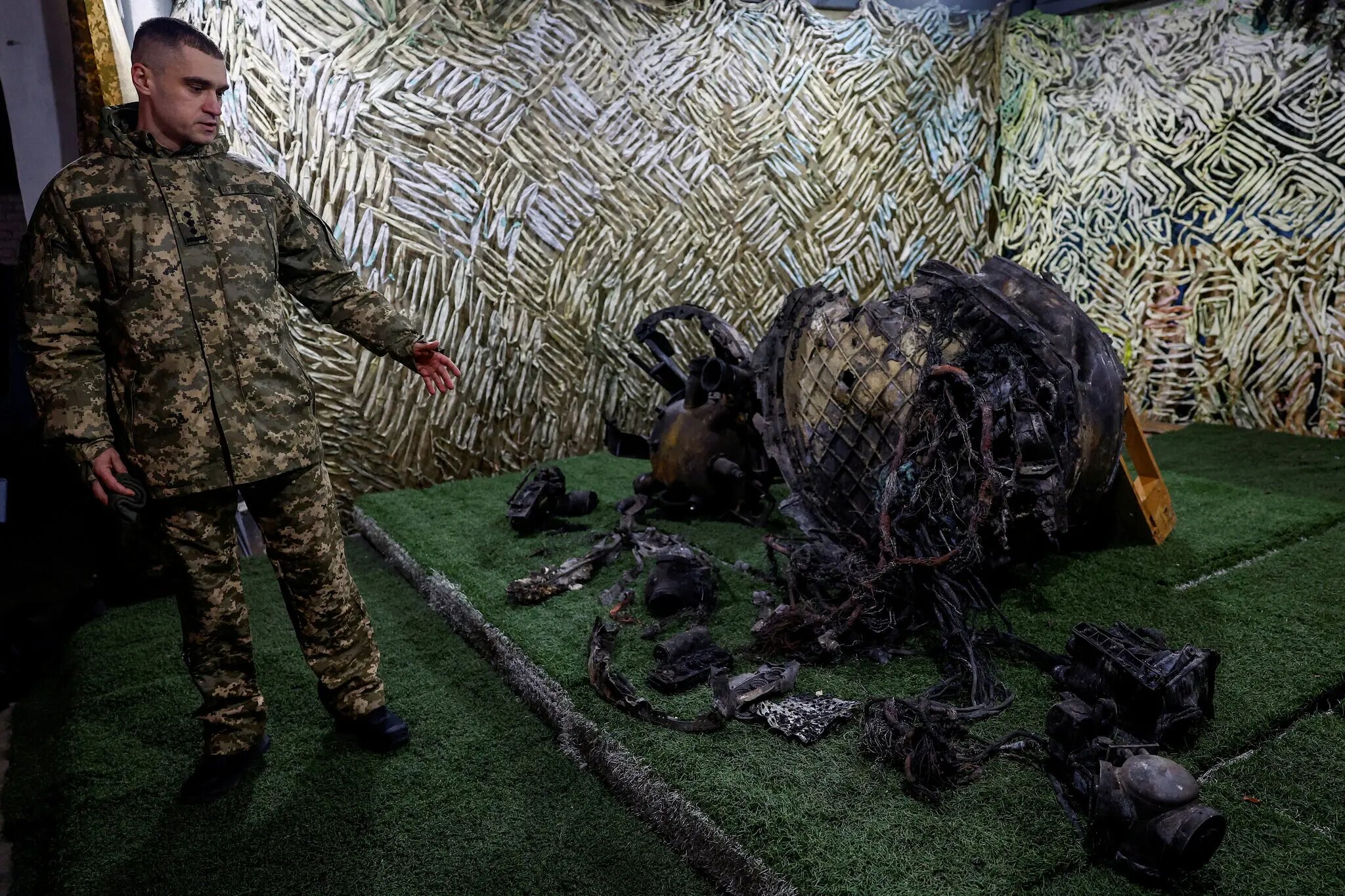
A Ukrainian investigator with parts of a ballistic missile that Russia used in a strike on Dnipro. (Source: Valentyn Ogirenko/Reuters)
The destructive materials inside the missile, which can carry “dozens of homing warheads,” can reach temperatures of 4,000 degrees Celsius, which is equivalent to the surface of the Sun. Putin highlighted its capacity to infiltrate highly secured targets without contaminating them with nuclear material. Experts speculate that Oreshnik could be equipped with nuclear warheads even though it was deployed with a conventional payload in Dnipro. A mass strike with Oreshnik might be as powerful as nuclear weapons, according to both Putin and Sergei Karakayev, commander of missile forces.
On the other hand, according to Ukrainian military intelligence, the missile is a brand-new ICBM called Kedr (cedar). They claimed that it took 15 minutes to reach from the launch location, which was over 1,000 kilometers (620 miles) distant in the Russian Astrakhan region, while traveling at Mach 11. Ukraine established that it attained a maximum speed of 13,600 kph (8,450 mph) as experts claimed the Oreshnik carried dummy warheads rather than live explosives.
They reported that the missile had six warheads, each of which contained six submunitions. A grainy video of the hit has also surfaced. Six flashes against the night sky are clearly apparent, each consisting of a cluster of six separate missiles. The area that was struck is an industrial zone southwest of the city of Dnipro.
The missile is at the upper end of the hypersonic range, which few objects can reach, based on Russia’s description. Speed is crucial because a missile gets to its destination sooner the faster it travels. A defending military has less time to respond the quicker it reaches its target. A ballistic missile typically reaches its target by arcing up into the atmosphere and down towards its goal. The missile is at the upper end of the hypersonic range, which few objects can reach, based on Russia’s description. Speed is crucial because a missile gets to its destination sooner the faster it travels.
However, it gains kinetic energy and accelerates as it descends, and the more kinetic energy it has, the more alternatives it possesses. This enables it to move in the direction of the target by executing a defensive manoeuvre, which makes it more challenging for surface-to-air missile systems (like Ukraine’s US-made Patriot defence system) to intercept it.
Undoubtedly, this is not novel for a military that must defend against such threats, but it grows exceedingly complex as the speed increases. It could be the reason why Putin emphasized speed while announcing the missile. Meanwhile, Pentagon reported that Oreshnik is a modification of Russia’s intercontinental ballistic missile (ICBM), the RS-26 Rubezh, which has been in testing since 2011.
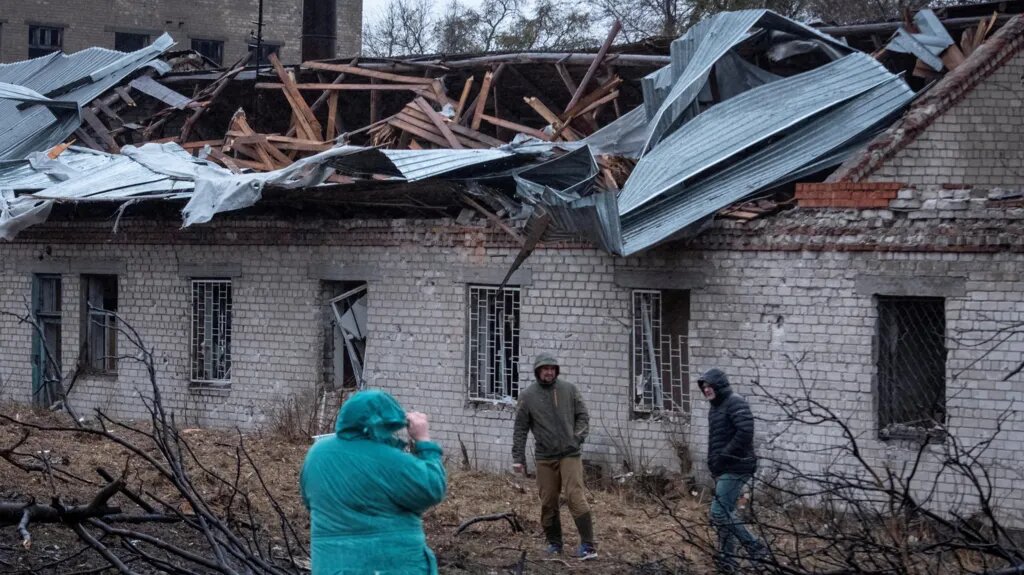
Damage caused by Russia’s Oreshnik and other missiles on Dnipro. (Source: Reuters)
Oreshnik’s range and capabilities
Ilya Kramnik, a Russian military specialist, told the newspaper Izvestiya that the new missile, whose development has been classified up to this point, is probably at the top end of the medium-range missile spectrum. “It is likely that we are dealing with a new generation of Russian intermediate-range missiles (with a range of) 2,500-3,000km (1,550-1,860 miles) and potentially extending to 5,000km (3,100 miles), but not intercontinental,” he unveiled.
“Nearly all of Europe could potentially be within range of Oreshnik”, he added, “It is obviously equipped with a separating warhead with individual guidance units.” He speculated that it might be a scaled-down version of the ICBM Yars-M missile complex. According to reports, Russia began producing a new version of this missile complex last year that featured separate warheads that were far more mobile.
Oreshnik missile: How fast can it reach major European cities?
Approximate travel times for the Oreshnik missile to major European capitals:
Dmitry Kornev, another analyst, told the outlet that the Oreshnik might have been developed using a new generation engine and based on the shorter-range Iskander missiles, which are already frequently employed against Ukraine. He disclosed that the missile might have been an Iskander with a larger engine that was utilized at the Kapustin Yar test site in southern Russia last spring. The same location was used to fire the missile into Ukraine.
Vladislav Shurygin, a military analyst, told Izvestiya that the Oreshnik could defeat any contemporary missile defence system in place. He explained that although there is no proof of subterranean installations being destroyed at the Dnipro plant, it could also demolish well-protected bunkers at considerable depths without the aid of a nuclear bomb. The missile carried several independently directed warheads, based on another Russian specialist, Igor Korotchenko.
He told the Tass news agency that the “practically simultaneous arrival of the warheads at the target” was quite successful. The CEO and founder of Sibylline, a risk consultancy firm, Justin Crump, told BBC Verify that the missile might pose a severe threat to Ukraine’s air defences. “Russia’s short-range ballistic missiles have been one of the more potent threats to Ukraine in this conflict. Faster, more advanced systems would increase that an order of magnitude,” he further mentioned.
Oreshnik was created in 2023 on Putin’s orders and is reportedly a contemporary invention as opposed to a Soviet-era improvement. According to reports, serial production has started, although Ukrainian intelligence alleged that there are only a few prototypes. Notably, the latest addition to the Kremlin’s arsenal has been projected as a testament to Russian technological strength, produced by a local military sector free from Western economic sanctions.
Earlier this week, on 26th November, the Karbi Anglong Autonomous Council (KAAC) in Assam declared that hundreds of Kuki-Zo community refugees who had fled Manipur amid the violent circumstances would be sent back to the state. The KAAC in an official statement said that more than a thousand Kuki people migrated from Manipur and settled in Assam’s Karbi Anglong’s Singhason hills. However, they will be sent to their home state after amicable discussions.
As per the reports, the KAAC stated that it didn’t intend to force the community to leave the state but just intended to facilitate their return to the home state. The Council said that proper discussions with all the stakeholders will take place before the final decision and the issue will be very well addressed.
The declaration was notably made by the KAAC chief Tuliram Ronghang at a land rights distribution event in Japrajan. “We are not going to forcefully evict them. Their return will be facilitated after consultations with social and political organizations, including those from the Kuki community,” he said.
He further clarified that no land rights in Karbi Anglong will be given to those who have migrated to the place, particularly from Manipur. “Land rights in Karbi Anglong would only be granted to permanent residents or those who have lived in the district since its establishment. Individuals migrating from outside the district, particularly those from Manipur will not be entitled to land rights under our initiative,” he said.
In an update to the declaration, it has been learned that around 700 Kuki-Zo community people who had migrated to Assam Hills have already been sent back. The people were notably sent back following discussions with Kuki community leaders and organizations.
Ronghang commented on the matter and said that the travel expenses of the refugees were covered by the council and that the people were sent back in the presence of the security personnel. Now arrangements are being made to send an additional 1000 Kuki-Zo people to Manipur.
Meanwhile, JI Kathar, president of the All Party Hill Leaders Conference (APHLC) commented on the matter and criticized the stand taken by KAAC. He said that Kukis had come to Assam due to alleged displacement caused in Manipur following the violence.
“The Kukis have come to the district in search of shelter and security as they were displaced due to violence in Manipur. The BJP is silent on Bangladeshis and Biharis settling in the district but is indifferent towards the Kukis who have suffered violence,” he alleged.
It is crucial to note that KAAC administers Karbi Anglong and West Karbi Anglong under the Sixth Schedule of the Constitution. Various communities like the Karbis, Kukis, Hmars, and Thadous reside in these districts. Major clashes erupted in the state of Manipur in May 2023 resulting in displacement of around 50,000 persons and death of more than 250. Minor tensions continue to grapple the state, disrupting the normal lives of the locals.
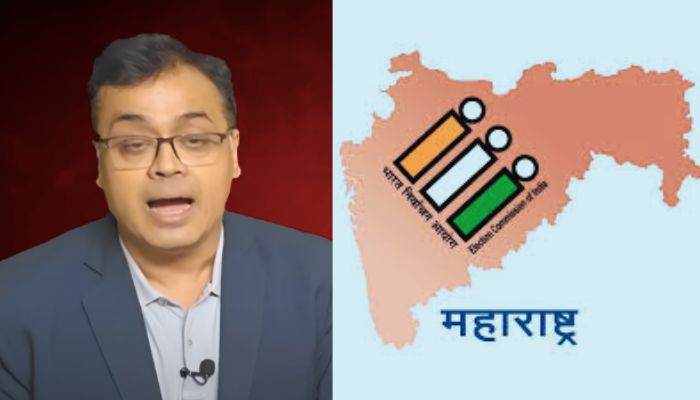
The historic victory for the Mahayuti alliance in Maharashtra has left the Maha Vikas Aghadi in disbelief. Some like Sanjay Raut outright refuse to ‘accept’ the outcome, some like Fahad Ahmed blaming EVM batteries, others are rushing to the Supreme Court to seek ballot paper voting as a coping mechanism. Even after leftist propaganda outlet The Wire’s attempt at giving some empirical backing to those questioning the mandate and still trying to find foul play in the voting process and numbers was debunked by the Chief Electoral Officer of Maharashtra, TV journalist-turned-YouTuber Abhisar Sharma is peddling the same lies.
Fake news started by Wire now viral across ecosystem
Wire removed postal ballots and asked if there is mismatch of ~5 lakh votes
Wire got caught and deleted its tweet
But this video by Abhisar Sharma repeating this rumor has almost 1 million views!
On 27th November, Congress-friendly YouTuber Abhisar Sharma published a video on his YouTube channel in which he repeated the same lies The Wire published in its removed propaganda piece. Much like The Wire, Sharma claimed that the final voter turnout in the Maharashtra assembly elections stood at 66.05%, accounting for 64,088,195 votes cast. This included 30,649,318 female voters, 33,437,057 male voters, and 1,820 voters categorized as “others.” However, Sharma claimed that the total number of votes counted was reported as 64,592,508—an excess of 504,313 votes beyond the total number of votes cast. Citing the incorrect data of several seats including Kannad, Sharma tried to cast aspersions on the integrity of the election commission and accuse them of foul play in the voting process and counting to accuse the BJP-Shiv Sena alliance of winning elections by fraudulent means.
However, CEO Maharashtra had already debunked the more-votes-polled-less-counted and vice versa lies peddled by The Wire and the leftist ecosystem and said, “In this regard, it is brought to your notice that the report is misleading and inaccurate, written and published in haste without accounting for the accurate details. The report has attempted to mislead readers by mischievously comparing two different parameters, as the report has included 5,38,225 postal ballots in the votes counted which was not part of the votes polled data released by CEO Maharashtra. The results portal of ECI displays ‘EVM votes’ and ‘counted valid postal votes’ separately for each AC (assembly constituency). The story has chosen not to add postal ballots in the figure of polled votes on the voter turnout APP (VTA), which was verifiable and thus sensationalised an imaginary mismatch.”
It highlighted that 6,40,88,195 votes were cast in all 288 Assembly seats in the state’s EVM, which has been “mischievously” displayed as the overall number of votes cast and noted, “The fact is that 5,38,225 valid postal ballots were not added in this figure. When we add the 5,38,225 valid postal ballots to the 6,40,88,195 votes polled in EVM; the total votes polled comes out to be 6,46,26,420. The total votes counted on the day of the counting including postal ballots is 6,45,92,508. Hence, the total votes counted are not more than the total votes polled.”
CEO Maharashtra also explained why, in certain ACs, fewer votes were counted than those required by the established procedure and clarified, “The EVM counting is not taken up if Mock Poll Data was not cleared from the Control Unit of the Polling Station before actual start of Poll or if there is non-display of result in the display panel of Control Unit or there was mismatch in data reported in Form 17C and votes recorded in EVM due to clerical or typing human error. In such cases, as the winning margin was higher than the total votes polled in these Polling Stations, counting of VVPAT Slips of these Polling Stations was not done as per instructions contained in Para No.7(iv)(b) of ECIs letter dated 19.07.2023.”
Despite the Election Commission debunking The Wire’s fake claims, Abhisar Sharma peddled the same lies in his video which has not been removed. The propaganda video published by Abhisar Sharma currently has over 9 lakh 60 thousand views.
In the 2024 Maharashtra Assembly Elections, Voting percentage at 5 pm was 58.22% (approximate) and the final voting percentage was 66.05%. This is normal as voting continues even after 6 pm, till the last person who stood at the queue at 6 pm votes. (1/4)
On Thursday, the CEO of Maharashtra further explained the voting percentage maths and said, “In the 2024 Maharashtra Assembly Elections, the Voting percentage at 5 pm was 58.22% (approximate) and the final voting percentage was 66.05%. This is normal as voting continues even after 6 pm, till the last person who stood at the queue at 6 pm votes. Even in 2019, the percentages were 54.43% (approx) at 5 pm and 61.10% at the final. Many voters come in the evening in urban and semi-urban areas, which constitute a large chunk in Maharashtra. It is important to note that two-hourly voter turnout information on the day of poll upto 5 pm is based on oral telephonic communication only. On the other hand, Form-17C which is given at the ‘Close of Poll’ to polling agents, matches with the final percentage and votes counted. Information in Form-17 C is matched by the Candidate’s counting agents while counting.”
A 16-year-old teenager was allegedly raped in an ambulance in the Mauganj district of Madhya Pradesh, police said on Friday.
According to Rewa Division, Deputy Inspector General of Police (DIG), Saket Prakash Pandey, “A 16-year-old girl was raped in an ambulance in the Mauganj district on November 22. The incident came to light after the victim filed a report against 4 people in the police station on November 25.”
Sharing details, the DIG said that the teenager was living at her grandmother’s place when the incident took place.
“The teenager, along with her sister and brother-in-law, was travelling in the ambulance. Two other people, the driver and his accomplice, were also inside the vehicle. While they were roaming around inside the vehicle, the teen’s sister and her husband got off the vehicle. The ambulance sped away and one of the individuals, reportedly the accomplice of the driver, raped the minor in the moving vehicle, ” said the police.
The survivor later narrated the ordeal to her mother, who then approached the police on November 25, following which a case was registered against four people.
The girl’s sister and brother-in-law have also been charged with aiding the crime.
All the accused have been booked under the Protection of Children from Sexual Offences (POCSO) Act and the Bharatiya Nyaya Sanhita.
Further details on the matter are awaited.
Earlier, the Madhya Pradesh police arrested six people, including two women, in connection with the abduction and rape of a minor girl in Indore district, a police officer said.
The action was taken following the 17-year-old girl lodged a complaint at Chandan Nagar police station in the city on Thursday, November 14, the police added.
(This news report is published from a syndicated feed. Except for the headline, the content has not been written or edited by OpIndia staff)
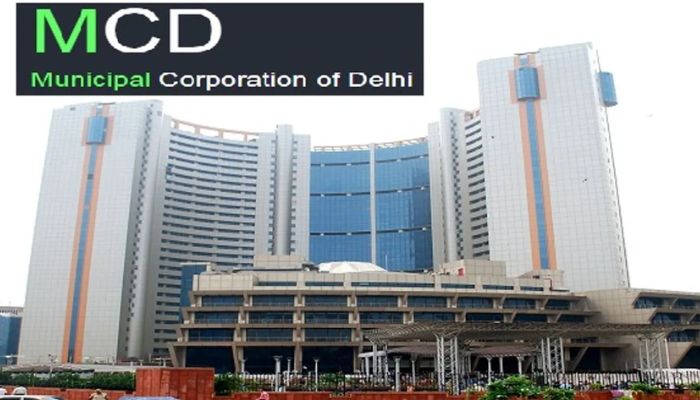
In a shocking revelation, it has emerged that despite a robust budget allocation to the health sector, over 31% of sanctioned posts in hospitals and dispensaries run by the Aam Aadmi Party-led Municipal Corporation of Delhi (MCD) remained vacant in 2023-24.
A report titled ‘Status of Health Issues in Delhi 2024’ released on Thursday (28th November) by Praja Foundation, a think-tank focused on promoting “accountable governance,” found that MCD could only use 36% of its health budget in the 2022-23 fiscal year. Even after this, the allocation climbed by more than 16% in updated budget estimates for 2023-24 and another 12% in 2024-25. Fund usage in fiscal year 2023-24 was not available.
TOI reported that the said report studied healthcare data in Delhi from 2014 to 2023 and found that several hospitals and dispensaries, including those under the state government and MCD, did not submit complete data for various months throughout the study. According to Shreyas Chorgi, associate manager (research) at Praja Foundation, healthcare management faces issues due to inconsistency and a non-functional health management information system that lacks dependable year-on-year data on diseases and fatalities.
“The fragmented nature of healthcare governance in Delhi, split among central, state and city authorities further complicates data collection and analysis. Centralising healthcare information in a single, accessible repository is essential to address these challenges,” Chorgi said.
The report examined factors affecting Delhi inhabitants’ health and well-being, including lifestyle diseases, causes of death, fragmented healthcare information systems, respiratory disorders, and personnel data. From the years 2014 to 2023, the most common causes of death were circulatory system disorders (1,59,129), respiratory diseases (88,159), hypertension (43,487), and tuberculosis (35,800). Dengue deaths increased by 627% from 74 in 2014 to 538 in 2023. Hypertension-related deaths increased by 109% from 1,962 in 2014 to 4,102 in 2023. Meanwhile, death from cardiovascular disorders increased by 66% during the same time span.
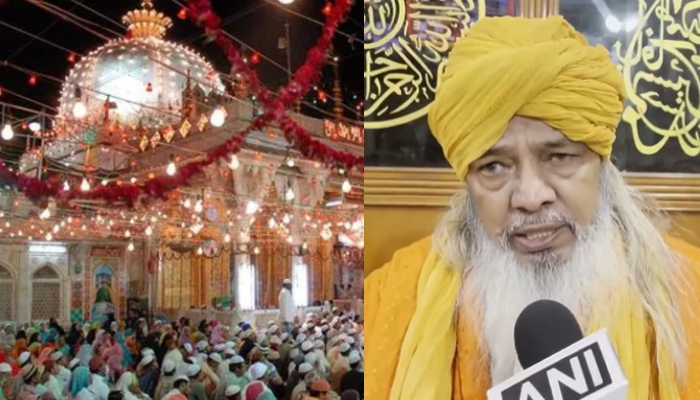
On Friday, 29th November, the spiritual head of the Ajmer Sharif Dargah in Rajasthan, Syed Zainul Abedin Ali Khan condemned the claim regarding the Dargah that the Rajasthan Court has agreed to hear. A couple of days ago, the Hindu Sena claimed that the mausoleum of Sufi saint Khwaja Moinuddin Chishti is made on the top of a Shiva temple. Khan criticizing the claim stated that the petition had been filed for publicity and personal interest.
He said that even the Prime Minister and the Rashtriya Swayamsevak Sangh (RSS) leaders like Mohan Bhagwat and Indresh Kumar have faith in the Dargah and offer prayers here.
“Anyone can go to the court, but a decision can be made only after hearings and evidence production. Anyone can do this (file a petition) for cheap publicity,” Syed Zainul Abedin Ali Khan said. He further indicated that the Dargah and places of worship belonging to specific religions were deliberately being targeted.
“RSS’ Mohan Bhagwat had himself said that people should not find Shivalays under every Dargah. The same thing happened in Sambhal. What happened then? 5 innocents lost their lives unnecessarily. This is such a big setback but nobody is thinking about this,” he added.
#WATCH | Rajasthan: On a suit claiming Shiva temple within Ajmer Sharif Dargah, the Spiritual Head of the dargah, Syed Zainul Abedin Ali Khan says, "Anyone can go to the court, but only after hearings and production of evidence anything can be decided…Anyone can do this (file… pic.twitter.com/xBY0rN6AEI
He reiterated meanwhile that many government authorities like the Prime Minister, Governor, Chief Ministers, etc have been offering ‘chadars’ to the Dargah. He stated that every person who has faith in this Dargah, be it of any religion has been offering prayers here. “Many Hindus also come here to offer prayers and they get hope that all their problems and ailments will be solved if they pray here. Whatever all this is happening, this temple controversy under the Dargah is just for publicity,” he said.
On 27th November, the court in Rajasthan Ajmer agreed to hear a petition claiming that Ajmer Sharif Dargah is a Hindu temple.
The Hindu Sena in September filed a petition at the Ajmer civil court demanding that the Khwaja Moinuddin Chishti Dargah be declared ‘Bhagwan Shri Sankatmochan Mahadev Virajman Temple’. The plea asserted that the Dargah was built on the site of a Shiva temple. The petition said that it is based on facts derived from authentic sources, and demanded that the Sufi shrine be removed from the premises.
Hindu Sena is also seeking direction from the Archaeological Survey of India to survey the site, on the lines of the Gyanvapi survey in Varanasi, and then the reconstruction of a Shiva temple at the site.
The petition says that Khwaja Moinuddin Chishti came to Ajmer with Mohammad Ghori and that Ghori destroyed a large number of Hindu temples, including the Sankat Mochan Mahadev temple in Ajmer, after killing Prithviraj Chauhan. Hindu Sena claims that the design of the main entrance gate of the Ajmer shrine resembled a Hindu structure, and historical records suggested the existence of a Shiva temple at the site.