Home Blog Page 6856

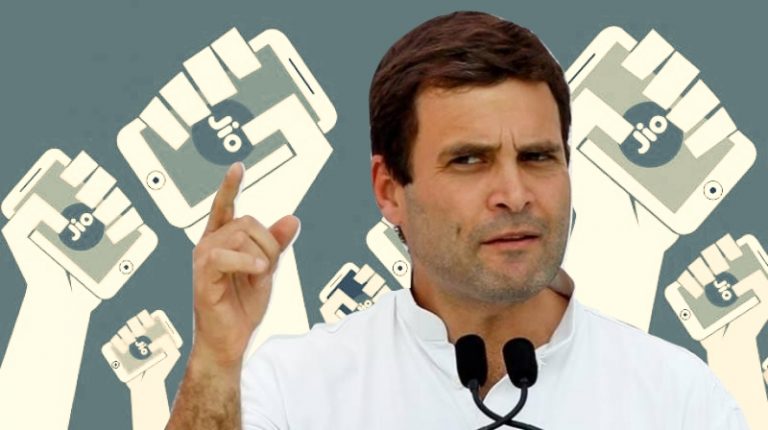
Media and Congress spread lies about Railways tender won by Reliance Jio

In March 2018, Indian Railways issued a tender through Railtel India to supply mobile connections under CUG (Closed User Group) to around 3.78 lakh Railways employees across the nation.

Railways is currently using CUG mobile connections from Bharti Airtel, but the current contract will expire on 31 December 2018. A Railway Board order dated 20 November 2018 announced that Reliance Jio had won the contract to implement the new CUG which would be effective from 1 January 2019.

On 30 November, the official Twitter handle of Congress tweeted a news article alleging that Reliance Jio had violated the tender norms. Congress further claimed that only PM Modi’s ‘friends’ are doing well in this economy.


A similar insinuation was made by a pro-Congress Twitter user @sidmtweets


The article quoted by Congress has been published by a portal News Central 24×7 which was previously caught spreading fake news. The said article, in turn, quotes another article published by The Indian Express to insinuate that Reliance Jio had violated the tender norms. The Indian Express claims:

The contentious clause, a new introduction in the tender process this time, stipulates that “the rates across different plans will not vary more than 50 per cent of minimum data rates quoted in any of the plan.” Sources said some bidders have alleged that the condition restricted their pricing offer while the same did not seem to have been applied on Jio—an allegation the company has denied.

The Indian Express further claims that Bharti Airtel, which was one of the bidders, had highlighted this alleged violation by Jio:

Airtel submitted the second lowest financial bid of Rs 3.37 crore per month excluding taxes, whereas Jio’s offer was for Rs 2.92 crore per month. Sources in RailTel said that Airtel has highlighted the fact that Jio’s top plan for 60 GB data, which is offered for Rs 125, is 86 per cent costlier than its 30 GB plan offered at Rs 67 per month. When contacted, Bharti Airtel declined to comment.

According to this claim, Airtel has claimed violation by Jio because the highest tariff offered is 86% more than the lowest tariff. However, this conclusion is not correct, as we explain below.

OpIndia accessed the tender document to understand this so-called “contentious clause”, which has been mentioned in Appendix B of the document. The appendix contains specifications of four different mobile plans required by Railways. One of them is for bulk SMS while the remaining three are to be used by Railways employees.

It should be noted that Railways required that all the plans must offer unlimited voice calling, roaming and 100 SMS per day for free. The only difference in the plans is the amount of data bundled in the plan.

Appendix B of the tender document

As highlighted above, the clause says, “the rates across different plans will not very (sic) more than 50% of minimum data rates quoted in any of the plans”. By definition, ‘rate’ is always per unit. Thus the term ‘data rates’ means the price per GB of data, i.e. the correct interpretation of the clause is that the difference in the highest and lowest prices per GB of data (across different plans) should not be more than 50% of the lowest price per GB quoted in the plans.

Hence, Airtel’s interpretation of the clause, as claimed by The Indian Express, is wrong as they compare monthly tariffs instead of data rates (price per GB). This is further validated from the sample calculations given in section 3.6.1 of the tender document, wherein the difference between the highest and lowest tariffs is much more than 50%.

Sample calculations provided in the tender document

In Jio’s case, the lowest price per GB of data has been offered in the 60 GB plan, while the highest price per GB has been offered in the 30 GB plan. More importantly, the price highest price variation is 15% of the lowest price, which is compliant with the clause explained above.

Prices offered by Jio as per media reports

OpIndia also accessed RailTel’s responses to the clarifications sought by the tender respondents (Airtel, Vodafone, Jio and BSNL). Interestingly, the only operator which sought more clarification about the rate variation clause was Reliance Jio.

This begs the question: if Airtel had any doubts about the meaning of that clause, why did they not seek more clarification from RailTel? Or did The Indian Express invent ‘sources’ who claimed that Airtel had alleged violation by Jio?

Chattisgarh: Congress chief Bhupesh Baghel booked for protesting outside EC office defying section 144

A case has been filed against Chattisgarh Congress Chief Bhupesh Baghel and some of his party men after they illegally protested outside the office of the Chief Electoral Officer on November 19th, a day before the second phase elections in the state despite the area being under Section 144 of CrPC, reported Dainik Jagran.

According to reports, PCC Chief Bhupesh Baghel and other Congressmen were protesting against BJP’s National General Secretary and state in-charge Anil Jain and BJP leader Saudan Singh claiming that both BJP leaders were overstaying in the state even after election campaigning in Chattisgarh had ended.

The PCC Chief Baghel and others protesting outside the office of the Chief Electoral Officer also claimed that someone had put up posters with an intent to create a caste divide in the state with falsely attributing those posters to Congress. Baghel and others reportedly protested by playing devotional songs at the premises of the Election Commission despite they were prohibited to do so. They had also alleged that a fake letter with names of a state Congress leader is being circulated on social media.

Meanwhile, the State Election Commission had reported to the police officials regarding these incidents, after Congress allegedly created law and order issues even after Section 144 was imposed.

Taking it to cognisance, the Golabazar Police Station has now registered cases against Congress leaders under IPC section 188-Disobedience to order duly promulgated by public servant, IPC Section 151-Knowingly joining or continuing in assembly of five or more persons after it has been commanded to disperse and Section 126 of the of the Public Representation Act, 1951.

Additional SP Prafulla Thakur speaking to the media said that the case has been registered against the Congress leaders for protesting outside the Election Commission office even after the imposition of section 144 of CrPC.

Recently, In Chattisgarh, Congress leaders P L Punia, state head Bhupesh Baghel and others had also registered its first protest with the state Chief Electoral Officer alleging EVM tampering. The Congress party had claimed that a tehsildar and few others had entered the strong room where EVMs were kept before counting.

Elections were held in Chhattisgarh in two phases, the second phase of polls concluded on 20th November. The results will be declared on 11th December 2018 along with other states, Rajasthan, Mizoram, Madhya Pradesh and Telangana.

Congress now uses Amnesty, which is under lens for FCRA violations, to target PM Modi

Congress party, whose association with an agency like Cambridge Analytica which is accused of manipulating voter behaviour using stolen Facebook data, is now an open secret, has again put the gun on a foreign shoulder to attack Prime Minister Narendra Modi.

The official twitter handle of the Congress Party retweeted a tweet of Amnesty UK to target PM Modi. The tweet reads “Strong leaders don’t bully charities”.

Amnesty UK tweet retweeted by Congress

The tweet was posted by the Amnesty UK to highlight protests held by Amnesty International members yesterday outside Indian High Commission against the alleged cracking down of the Indian government on the human rights group in India.

Amnesty’s discontent with the Modi government is not without a reason. It started during the government’s crackdown on foreign-funded NGOs. Since the time the NDA government was elected to power in 2014, it has unregistered 16,000 NGOs and cancelled the FCRA registrations of 13,000 of them. The government had issued notices to more than 10,000 NGOs for failing to submit their mandatory annual returns under the Foreign Contribution (Regulation) Act, 2010 (FCRA 2010).

Amnesty International India along with Rajiv Gandhi Charitable Trust led by Sonia Gandhi also came under the scanner of the government for the alleged violations of the foreign funding laws. In the month of October, Bengaluru head office of the Amnesty International was raided by the Enforcement Directorate for alleged violation of the foreign funding guidelines.

Amnesty International’s soft corner for the Urban Naxals who were arrested by the Pune police for having links with Maoist terrorists is no longer hidden. Recently Amnesty International India had published an article defaming India based on the statement of arrested Urban Naxal Arun Ferreira. Amnesty International India sympathised with the alleged Urban Naxals by calling them human rights defenders and declared the country a dangerous place for them.

Amnesty’s notoriety does not stop at having financial irregularities and defending the left-wing extremists. The organisation had also tried to spread fake news regarding the police encounters in Uttar Pradesh in 2017.


Ever since the NDA government has been voted to power, it has taken a stiff action against the unaccounted foreign money flowing into the country through foreign-funded NGOs, in violation of the FCRA rules. The NGOs which been hit by the action have often resorted to questioning the intentions of the government.

CBI files chargesheet against Gandhi controlled AJL and Congress leaders Bhupinder Singh Hooda, Motilal Vora

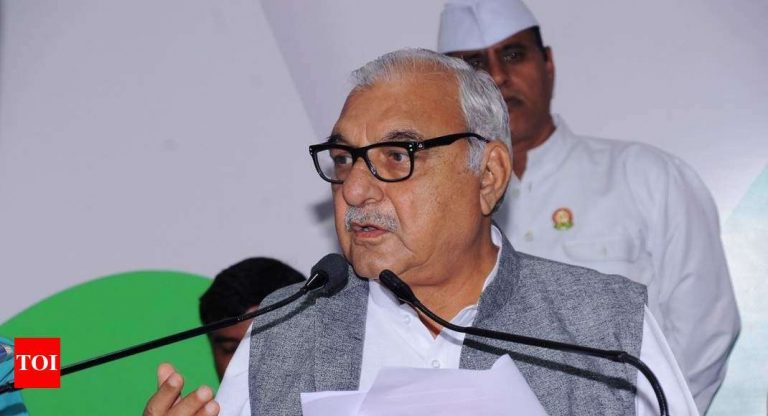
The Central Bureau of Investigation on Saturday has charge-sheeted former Haryana CM Bhupinder Singh Hooda, senior Congress leader Motilal Vora and Associated Journals Limited (AJL) in a case pertaining to re-allotment of an institution plot in Panchkula, Haryana.


The charge-sheet was filed under sections 120B and 420 of the IPC in the court of special Judge Jagdeep Singh. According to the accusations, a plot of land in Panchkula was illegally re-allotted to AJL, which is controlled by senior members of the Gandhi family, including Rahul Gandhi and Sonia Gandhi, through Young India Ltd.

The allegations state that the then Haryana CM BS Hooda, in a gross abuse of power and in contravention to the laid rules, utilised his position to re-allot the plot to AJL in 2005 at original rates plus interest. He committed the act against the legal opinion of authorities and against the suggestion of Legal Remembrancer for re-advertising of the concerned plot. Allotment of the plot at the original rates caused a huge loss to state exchequer and illicit endowment to the company.

The CBI had filed an FIR on April 6, 2017. They filed it under section 409, 420 and 120-B of the Indian Penal Code on the requests made by the Haryana government, Central government and the complaints received by the Vigilance Commission. Recently, Haryana governor Satyadev Narayan Arya had sanctioned prosecution of BS Hooda in the AJL case.

Haryana Vigilance Bureau had filed a case of cheating, corruption and criminal conspiracy against BS Hooda and AJL for alleged incongruencies in the allocation of a plot of land in Haryana’s Panchkula. CBI took over the case from the Haryana Vigilance Bureau in April last year and had sought prosecution warrant in October this year.

The state government had sought CBI’s help in the matter because of the involvement of persons in “high places” and the company’s pervasive presence across the country which would be beyond the purview of State Vigilance Bureau.

The case against Rahul Gandhi and Sonia Gandhi, which has been filed by BJP MP Subramaniam Swamy in the Young Indian Pvt Ltd and National Herald case, is set to come up for hearing on 4th December.

There are severe charges which are being investigated in the Young Indian case as well. Rahul Gandhi is accused of not divulging to authorities that he was the Director of Young Indian Pvt Ltd since 2010.

The ‘tax file’ had then revealed that Rahul Gandhi had hidden from the Income-Tax department that he was a Director in Young India, which is the main company involved in the ‘National Herald case’. He had allegedly hidden the facts from the I-T department. Therefore a whopping amount of Rs 154.97 crore couldn’t be assessed by them. The tax file also revealed that he was also the direct beneficiary of the funds directed at ‘Young India’.

As the judiciary is tightening the strings, things are seeming to take unexpected turns for the Congress party bigwigs. The Gandhi’s seem to be getting jittery. Earlier too, we had reported how the Gandhis’ had tried to oppose the Income Tax’ investigation into the National Herald case. Congress had also earlier reportedly threatened tax officials with legal consequences for asking “irrelevant questions” during their investigations.

In a new low, Shekhar Gupta’s The Print provides platform to a Khalistani to further his agenda

Shekhar Gupta led The Print, on Friday, published an article with the headline, “‘Khalistani’ Gopal Singh Chawla is a terrorist only on Indian TV channels”. The headline is a bit bizarre considering in the article, they do mention the various accusations that have been levelled against him.

The author writes in the article published in The Print, “Chawla found himself at the heart of a political row in India after being photographed with Congress leader Navjot Singh Sidhu at the Kartarpur ground-breaking ceremony in Pakistan on 28 November. He has been accused of being a Khalistani terrorist as well as a close aide of Hafiz Saeed, the alleged mastermind of the 26/11 Mumbai attacks.”

The Print itself states in the article that Punjab Police believes him to be an ISI agent. The article quotes an unnamed Punjab Police officer who says that an arrested terrorist who allegedly planned to attack police stations, police posts and crowded places was introduced to Chawla and two other persons. The Police officer also said that the arrested terrorist was asked “to join more associates and propagate Sikh Referendum-2020 in a big way”.

The Print, however, appears to take Chawla’s words as the gospel truth. They believe him wholeheartedly when he says he does not support terrorism, they believe him wholeheartedly when he says he doesn’t have any connections with the mastermind of the 26/11 terrorist attacks, Hafiz Saeed.

The article quotes unnamed sources in Indian intelligence agencies who claim that Chawla’s name hasn’t popped up in any terror case. Anonymous sources from the intelligence agencies and Chawla’s own words, that’s enough reason for The Print to defend a proponent of Khalistani separatism. The words of the Punjab Police do not matter at all.

What The Print conveniently ignores is the fact that Chawla’s name has figured during investigations into the recent grenade attack on Nirankari Bhawan near Amritsar which claimed three lives. He is believed to be a close associate of Hafiz Saeed as well and there’s a photo of him with the dreaded terrorist in public domain.

Gopal Singh Chawla with Pakistani terrorists Hafiz Saeed

As per reports, Chawla prevented Indian diplomats from visiting a Gurudwara in Lahore and meeting pilgrims from India. He was also involved in posting photos of ‘Sikh Referendum 2020’ outside Gurudwaras in Pakistan where Indian Sikhs were visiting. By all standards, The Print proceeded to whitewash a dreaded anti-India Khalistani.

There is also a video where Chawla can be allegedly seen spewing anti India venom. In the face of such hatred, it is a wonder the Shekhar Gupta would allow his platform to be used by a Khalistani to spread his break India message and whitewash him in the process.


Under such circumstances, it is bewildering that The Print has attempted to whitewash one of the most prominent faces of Khalistani separatism. Not only that, but it has also provided a platform to the Khalistani to sow seeds of division within the Hindu and Sikh communities in India. The Khalistani told The Print, “If Hindus talk of a Hindu Rashtra then they are pure and patriotic but if we Sikhs demand it, then we become terrorists.” It’s quite a concern that an outlet founded by the Chief of the Editors’ Guild of India is providing a Khalistani with a platform to further his divisive agenda.

The Print has committed a series of transgressions in recent times which can be viewed as anti-India. In a republished article by a Pakistani, The Print allowed him to refer to Kashmir as ‘held Kashmir’, in line with the Pakistani narrative.


The Print, in the past, has also advocated rampant persecution of the Rashtriya Swayamsevak Sangh to further their agenda. After Rahul Gandhi compared the RSS to the Muslim Brotherhood (MB), The Print urged the Congress President to learn something from Egypt’s crackdown on the Islamist organization.

As we have reported earlier, the MB was removed from political power by a military coup following which there was a severe crackdown on the organization. It was done with the intention of ensuring that they could never seize power again. The Print whitewashes a Khalistani while advocating for a violent crackdown on the RSS, it appears that its priorities do not align with national interests.

Indian media hasn’t really been a beacon of integrity ever but it’s a new low even for them. Not only is the media and the likes of The Print sowing seeds of divisions within the country to further their agenda, but they are also providing a platform to Khalistanis to assist them in their endeavour.

The Wire comes up with flawed logic to rubbish new methodology which slashed growth rates of Congress regime

There’s a lot of talk around the recently released back calculations as it puts into perspective the growth that India experienced from 2005 onwards. It is interesting to note that the new methodology was appreciated by the Former Finance Minister P. Chidambaram when the 2013-14 estimates were revised from 4.7% to 6.9% according to this methodology.

Thus, when the methodology revised estimates of GDP, the Opposition along with the likes of eminent commentators decided to use this revision as a manifestation of the “strong growth” that India experienced under the UPA-II era. However, when the same methodology was extended to the data from 2005 onwards, all those who hailed the “strong growth” have started to question the same methodology. As hilarious or hypocritical as it may appear, I found the reasons given by the article by the leftist propaganda website, The Wire more amusing as it clearly showed their lack of understanding of data, statistic and above all, of economics.

There is no doubt that the new methodology is a significantly better one as it takes into account the global best practices. Despite that, the article by The Wire talking about the credibility of the numbers tries to unfairly politicize what is a routine exercise by the government.

MK Venu’s argument is that investment as a percentage of GDP was higher under UPA than under NDA so how can growth be greater under NDA than UPA. The article gets the rationale behind the investment to GDP ratio wrong as it assumes that investments today have a direct impact on growth in the same period. Investments have a lagged effect on growth. Money invested today in a plant would take a couple of years to yield dividends for further growth in future.

Another issue is that a firm would invest only when it needs to add more production capacity to meet further demand in the economy. As a result, investments would be realized once there’s an increase in Capacity Utilization.

Most economists agree that the Indian Economy has had spare capacity since 2011 onwards due to the economic slowdown and this spare capacity came due to “over-investment” from 2007 onwards till 2011 which was fuelled by availability of excess liquidity due to the aggressive lending policy followed by banks: and this is what has led to the rise in NPAs and the current “twin-balance sheet” problem that our banks face.

It is amusing to see basic economic logic being completely disregarded by M K Venu in his article for The Wire as he focuses on a flawed logic to suit a convenient narrative, a narrative that stems more from political considerations rather than economic rationale.

The investment as a percentage of GDP graph shows the same story which explains why there was a build-up of excess capacity in the economy which further led to a collapse of the investment cycle post-2011. It is only in 2014 that the capacity started to pick up and once capacity utilization improved, we can witness investments to increase from 2016 onwards.

Thus, the explanation of a high ratio of investment during 2007-11 compared to 2014-18 is not a legitimate explanation for two reasons: investments have a lagged impact on growth and that investment under the UPA was fuelled by excessive credit rather than strong economic fundamentals. This is validated when one looks at the excess capacity build-up that occurred in the economy during the UPA era.

Further, his argument in The Wire of sluggish bank credit due to rise in NPAs further validates how excessive credit under the UPA era led to a boost in the investment figures which did not reflect the economic realities of that period. As a result, the investment far exceeded the growth in demand and this led to unutilized capacities which further led to a reduction in subsequent investments. The problem got amplified when economic growth collapsed post-2011 and the twin balance sheet problem started to originate.

Thus, what this new data tells us has been only strengthened by M K Venu’s article; excessive credit-fuelled investments led to overheating of the economy and this was not sustainable. There is no redemption from the gross mismanagement of the economy by the UPA and no matter how many op-eds TheWire publishes, it is well established that the growth under UPA was volatile, did not create ample jobs, it came with a very high inflation and it collapsed significantly post 2011. All of these facts have been further established by the latest release of the data so it is about time that we end the politicization of this data and find solutions to enter into the “high-growth” path.

Andhra Pradesh government leaked information, making fight against corruption difficult, says CBI

The fight between the Central Bureau of Investigation (CBI) and the Andhra Pradesh government has taken an interesting turn after the CBI accused the state government of leaking information to the Anti Corruption Bureau (ACB) which later claimed credit for the arrest of a central government employee.

According to reports, the CBI on Friday said that the state government not only stopped it from laying a trap against a central government official who was seeking bribe but also leaked the information to its Anti-Corruption Bureau (ACB) which acted on the complaint and laid the trap against the same government official.

The CBI issued a statement on Friday said that such an attitude by the state government will make the fight against corruption “difficult”. The CBI had received a written complaint from a Machilipatnam resident named Lokesh Babu on November 28 alleging that Mukku Kali Ramaneswar, Superintendent of the Central Tax & Central Excise was seeking bribe in a tax-related case.

Soon after receiving the letter, the CBI Superintendent of police, Visakhapatnam had written a ‘top-secret’ letter to the principal secretary of Home department. In its letter, the CBI had requested to keep the information strictly confidential and not to share the information with any other party.

“However, the government of AP did not issue the specific consent as requested by the CBI, instead the details were shared by the home department with state ACB, which laid a trap on 30-11-2018 in the evening against the above Central government employee by using the contents of the above request letter,” the CBI said . The CBI further added that the state ACB also issued a press release as if the complainant has directly approached them.

The CBI revealed that its senior officials have personally called Principal secretary on November 29, and had requested early consent required under section 6 of the DSPE Act to act against the central government official. The CBI had also said that it had sent another letter to the principal secretary with a copy to the Chief Secretary on Friday seeking immediate issuance of consent. But the state government didn’t accede to the CBI request, it said.

The ACB had raided the office of Ramaneswar and had caught him while he was accepting bribe money at his office in Machilipatnam. The ACB officials recovered the amount after he was tested positive in phenolphthalein test.

The Andhra Pradesh government, through an order, issued dated 8 November 2018, has withdrawn the ‘General Consent’ given to CBI to act against central government officials working under the jurisdiction of the state government.

RJD men convicted for a crime that was blamed on RSS by some to claim ‘attack on Dalits’

In Arrah, Bihar, RJD leader Kishori Yadav and his 4 other men have been sentenced to 7 years of imprisonment by a local court for beating up a woman and parading her naked in August this year. 14 other accused were sentenced to 2 years of imprisonment.


The incident had occurred on the morning of 20th August this year after the body of a local youth Bimlesh Sao was found lying near the railway tracks in Bihiya town, some 25 KM from Arrah.

Later, a violent mob from Sao’s village had ganged up started vandalising shops and vehicles, claiming that Sao was murdered. They accused a woman from the red-light area near Bihiya town to have been involved in the murder and beat her up, tore apart her clothes and paraded her naked through the streets.

Videos of the barbaric incident went viral in social media. Soon there were social media posts that claimed that the men who were torturing a Dalit Christian woman, were from RSS and BJP.

Viral video blaming RSS
Via Twitter

It is notable here that on the day of the incident, the violent mob had unleashed heavy violence and vandalism in the area. They had even attacked policemen and passing trains in the locality. After almost an entire day of altercations and violence, the police were finally able to subdue the mob and begin proceedings after extra platoons of forces were called. 2 police officers and 6 other policemen were also suspended for failing to handle the situation.

While media reports did confirm that the woman was a Dalit, there were no reports of RSS being involved and the crime being caste-related. Later, some ‘fact-check’ websites had stated that the crime was falsely attributed to RSS. However, there were no mentions of RJD men being involved.

It was reported later that among the 15 people initially arrested for the crime. 6 belonged to RJD. The main accused, Kishori Yadav was stated to be an active member who had frequently participated in RJD organised bandhs and protests.

Later on the day, ironically, RJD leader and former deputy CM Tejaswi Yadav had tweeted about the incident claiming that Bihar has become lawless.

Via Twitter

Earlier this year, RJD leaders were also accused of attacking and burning down houses of Dalit villagers in Raghopur area in Bihar. Raghopur is Tejaswi Yadav’s constituency.

Robert Vadra, Rahul Gandhi’s brother in law, summoned by ED in Bikaner land scam case

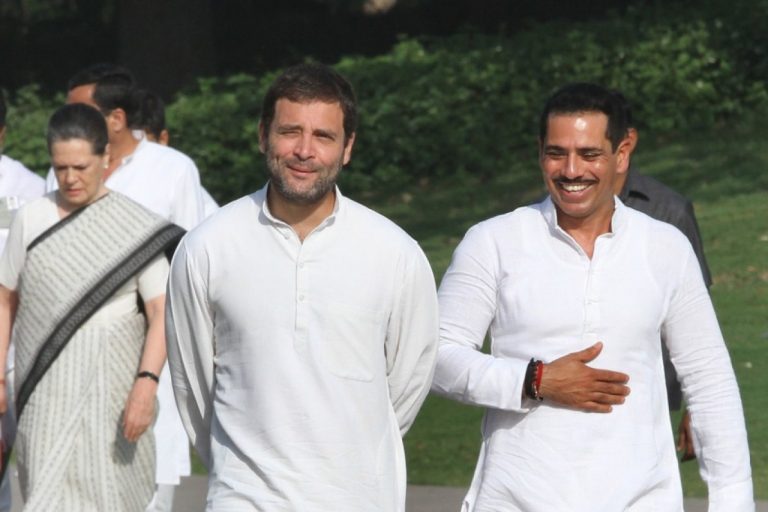
In what is being considered another set-back for the Rahul Gandhi led Congress, Robert Vadra, Priyanka Gandhi’s husband and Rahul Gandhi’s brother in law has been summoned by Enforcement Directorate in connection with the Bikaner land scam.

According to India Today, Robert Vadra was summoned by ED in the first week of November and then again on 24th November, however, he failed to comply.

In September 2015, the Enforcement Directorate had registered a criminal case under the Prevention of Money Laundering Act (PMLA), alleging that Sky Light Hospitality, owned by Robert Vadra, had bought a piece of land in Kolayat, Bikaner, on the cheap and sold it at an extremely high premium through illegal transactions.

The Congress has as usual sprung into action to allege “political vendetta”. Ahmed Patel reportedly said, “As election approaches, such things will be brought up in Parliament. But the law should take its own course. It’s a new trend to defame someone. Things are played on media, even when the probe is underway and there is no evidence.”

However, it would appear that the Congress is on the backfoot with the investigation in several corruption cases against senior Congress leaders seem to be progressing at a feverish pace. Recently, CBI had got the sanction to prosecute P Chidambaram in the Aircel-Maxis case and with each such step, the trouble for Congress only seems to mount.

It is unclear whether Vadra has responded to the summons yet, but with the progress of investigations, the clamour by Congress about these investigations being the result of “political vendetta” is only set to grow louder.

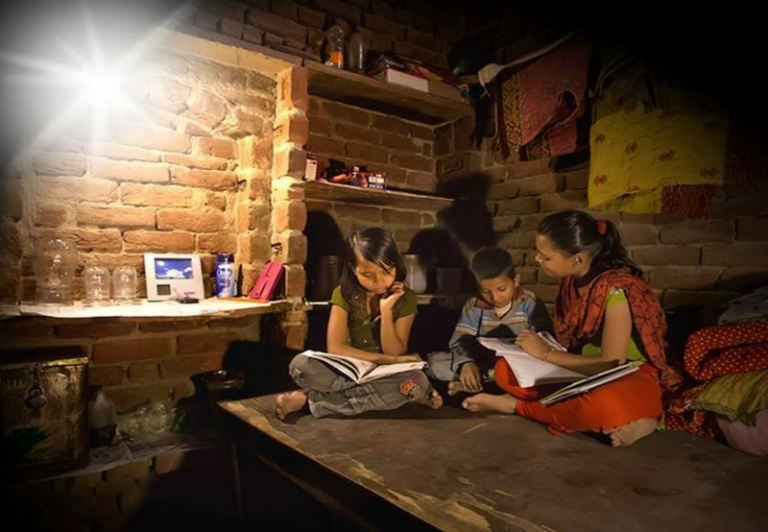
India to be fully electrified by year end under Modi’s ‘Saubhagya’ scheme

In a revolutionary progression, the Centre has announced that 8 more states namely, Madhya Pradesh, Tripura, Bihar, Jammu and Kashmir, Mizoram, Puducherry, Telangana and West Bengal have achieved 100 per cent saturation in household electrification under the Pradhan Mantri “Saubhgya Yojana’. Thus a total of 15 states in India have 100 per cent household electrification, said RK Singh, Union Minister of State (Independent Charge) for Power and Renewable Energy.

The other states, which have already achieved 100 per cent household electrification are Punjab, Gujarat, Andhra Pradesh, Tamil Nadu, Kerala and Goa.

He furthered that India can achieve the target of 100 per cent countrywide household electrification by December 31, 2018, against the earlier target of March 31, 2018. The Minister added that as many as 21 million connections have been made under the scheme so far.

Map showing electrification status as on 30/11/2018. Source: Saubhagya Dashboard

‘Saubhagya Yojana’, also known as ‘Pradhan Mantri Sahaj Bijli Har Ghar Yojana’, was launched in September 2017 aiming to provide access to electricity to all the remaining households in the country.

A small number of un-electrified households which are still left in States like Maharashtra, Uttarakhand, Himachal Pradesh, Arunachal Pradesh and Chhattisgarh are likely to achieve saturation any time soon. At this pace, Indian households are expected to be fully electrified by this year-end, said the Minister.

The 100 per cent success of this initiative taken up by the BJP government would definitely be another feather on the government’s hat, who has been consistently working on various development projects.

The Minister further said that the government is committed to ensuring 24×7 access to electricity for all by March 31, 2019, and their achievement of 100% household electrification in the country would be a major milestone in the direction to achieve 24×7 power for all.

In order to ensure that no household, especially in the states which are already 100 percent electrified, have been left un-electrified, for whatever reason, the government have requested the states to take up a campaign to publicise the achievement all across the areas, so that anyone left out may avail electricity connection under Saubhagya scheme.