Home Blog Page 7030

Congress leader calls K Chandrasekhar Rao a ‘dalal’ of Prime Minister Modi

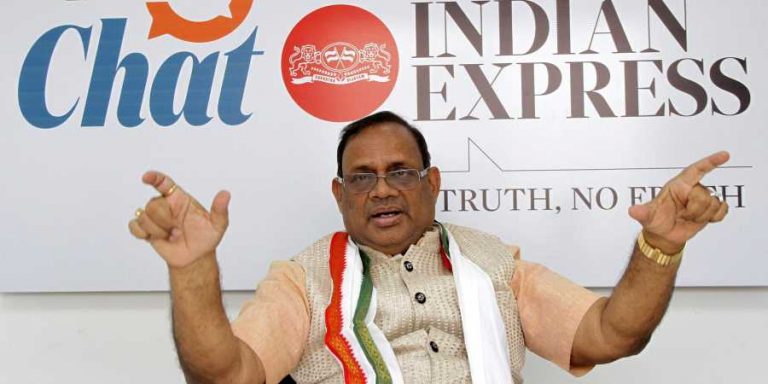
Senior AICC secretary RC Khuntia called the Telangana CM, K Chandrasekhar a ‘Dalal’ of Prime Minister Narendra Modi and said that Telangana came into being only due to Congress and its leader Sonia Gandhi.


Further berating Rao, Khuntia said, “Back then (when the Telangana agitation was going on), Chandrasekhar Rao fell at the feet of Sonia Gandhi while Rahul Gandhi stood by her side and he wanted to dissolve his party and join Congress. But our party did not agree then and that was a mistake.’’

In an interaction with The New Indian Express, Khuntia questioned the TRS government why it failed to generate investments in the State. Listing out failures of KCR-led TRS government, Khuntia said the State government could neither keep up its assurance of granting 12 per cent reservation for minorities nor provide reservations to SC/STs. He furthered lambasted by comparing the State’s investment to that of Odisha saying, “States like Odisha got investments to the tune of Rs 4 lakh crores. In the last four years, what investment has TRS government brought to the State? Presently, there is a burden of Rs 2 lakh crore on the people of Telangana,’’ he said.

Taking a jibe at the IT Minister, KT Rama Rao, senior Congress leader Khuntia alleged that Tech giants like Apple and Samsung who were initially interested in investing in Telangana backed out due to certain ‘conditions’ put forward by the IT Minister. He alleged that corruption, in the form of kickbacks, was the reason for these two companies to back out.

Taking on Chandrasekhar Rao over the Rythu Bandhu scheme, Khuntia said that the caretaker Chief Minister should declare how much money was actually given to farmers and what was the amount he spent only on advertisements for the scheme, both in national and local media. He went on to say that during the TRS rule, sand and liquor mafia have had a field day.

Khuntia continued his attack by blaming the government for mismanagement of government jobs. He said that while nearly 1.5 lakh government posts remain vacant the Government is more interested to fill up the posts in the police department so that they can harass their opponents by registering false cases.

Commenting on the early dissolution of the State Assembly by the TRS supremo K Chandrasekhar Rao, Khuntia said that Rao dissolved the party due to the fear psychosis created by the recent visit of Congress president Rahul Gandhi to Telangana. While expressing confidence that the grand old party would decide on its candidates, alliances and formation of election committees by end of this month, Kunthia superciliously predicted that KCR will also meet a similar fate as many earlier tall leaders, like even Atal Bihari Vajpayee, who had failed miserably after advancing polls.

WHO Director General praises ‘Ayushman Bharat’, terms it as a ‘great commitment’ by PM Modi

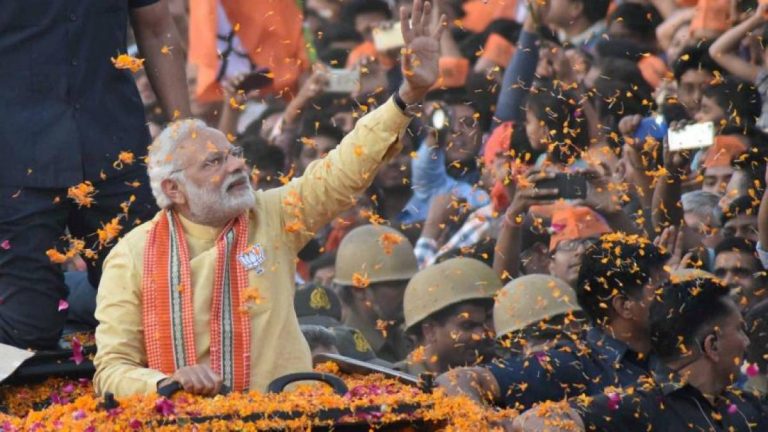
The most ambitious project of the Prime Minister Narendra Modi, Ayushman Bharat has been receiving admiration from across the world. The Director General of the World Health Organization (WHO) has praised Prime Minister Narendra Modi’s Ayushman Bharat and called it a “great commitment”.

Ayushman Bharat- Pradhan Mantri Jan Arogya Yojana (National Health Protection Scheme), a flagship scheme of the present NDA government aims to provide insurance cover of Rs five lakh per annum to 50 crore poor and deprived people, or 10 crore families. Prime Minister Narendra Modi on Independence Day had said that National Health Protection Scheme would be launched on 25th September, on the occasion of the birth anniversary of Pandit Deendayal Upadhyay.

Director General Tedros Adhanom Ghebreyesus has said that he was very impressed with India’s Ayushman Bharat program. In his tweet, he thanked Prime Minister Narendra Modi and praised him for his commitment towards the project.


Jagat Prakash Nadda, the Union Minister of Health in response to Adhanom’s tweet said that it was Prime Minister Modi’s vision to make healthcare “accessible and affordable” to all. He further said that the scheme would provide health coverage to crores of people which is equal to the population of America, Canada, Mexico.


Ayushman Bharat will be the world’s largest state-sponsored welfare scheme in the world, with aims to provide health insurance coverage to more than 10 crore poor families in the country. As per the latest Socio-Economic Caste Census (SECC) data, 8.03 crore rural households and another 2.33 crore urban households will be covered under this scheme.

We had earlier reported that the World Health Organisation recently had praised the present government for its efforts to curb air pollution through one of its flagship schemes of Pradhan Mantri Ujjwala Yojana, which aims to safeguard the health of women and children by providing them with clean cooking fuel. The WHO had also reported that the Swachh Bharat Grameen mission has been able to prevent over 3 lakh deaths due to sanitation-related infectious diseases during 2014 and 2018.

This is not the first time an International forum has lauded the efforts of the Prime Minister. Bill Gates had recently had lauded Modi’s Aadhaar scheme and said that he has funded the World Bank to take the Aadhaar approach to other countries. Similarly, in June this year, the International Energy Agency (IEA) had praised India’s effort in providing power to those who are without it.

Madhya Pradesh Congress withdraws Social Media requirement for assembly election candidates

In a quick rollback, Madhya Pradesh Congress has withdrawn its diktat that had set minimum criteria on social media presence for those who want party ticket to contest the upcoming state Assembly elections. As informed by ANI, the new order issued by state party unit says that its earlier order no 1272/18 dated 2 September 2018 stands withdrawn.


It may be recalled that on 2nd September, the Madhya Pradesh Congress Committee had issued an order that said the aspiring candidates for assembly elections must have 15,000 likes on Facebook pages, 5000 followers on Twitter, and a WhatsApp group of booth-level workers. The mandate had also stipulated that they must retweet and like all Twitter and Facebook posts by Madhya Pradesh Congress’s official handles. This criterion was also made mandatory for all party office bearers and current MLAs of the party also.

This diktat was widely ridiculed on social media. Now it seems the party has decided that perhaps this is not the best way to select the most winnable candidate for the crucial assembly elections next year, where it is hoping to regain power after a sitting in opposition benches in the state assembly for a very long time.

After boycotting local body elections, Farooq Abdullah now threatens to boycott Lok Sabha and assembly elections

After deciding to boycott the Jammu and Kashmir Panchayat and Urban Local Bodies (ULB) polls, the National Conference(NC) today has threatened to boycott the assembly and the upcoming Lok Sabha elections if the Centre fails to clear its stand on Article 35A and 370.

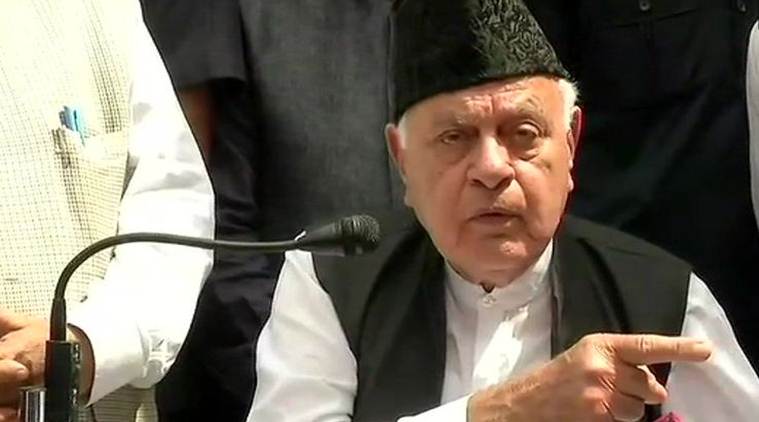
Farooq Abdullah was reportedly addressing the NC party workers at a function in Srinagar to mark the 36th death anniversary of his father and NC founder Sheikh Mohammad Abdullah.


Abdullah lashed out the centre saying that how can they go to their workers and ask them to come out to vote. He demanded that first the centre should do justice to them and clear its stand on Article 35-A. He further threatened that if the centre’s plan is to weaken Jammu and Kashmir’s special position, then they have will go separate way to boycott elections.

“If your plan is to weaken Jammu and Kashmir’s special position, then our ways are separate. Then we cannot have elections. Not only these (urban local bodies and panchayat) polls, but we will also boycott the assembly and parliamentary elections then,” Abdullah stated.

This statements from Abdullah comes after the Supreme Court agreed to hear the petition challenging the constitutionality of Article 35A. The petition seeks the scrapping of Article 35A in the state of Jammu and Kashmir (J&K).

The Jammu and Kashmir state administration has announced plans to conduct municipal elections from October 1 and Panchayat elections from November.

Earlier, an MLA from Abdullah’s National Conference, Javed Rana had threatened to stop unfurling of National flag in Kashmir, if any alterations are made to Article 35A or any attempts are made to abolish Article 370 from the Constitution of India.

Article 35A and Article 370 are two controversial constitutional provisions providing certain benefits to the people residing in the state. Article 35A is a provision inserted into the Indian Constitution in 1954 by the then Prime Minister Nehru, which provides the Jammu and Kashmir legislature to decide who all are ‘permanent residents’ of the State and allow on them special rights and privileges in jobs, acquisition of property in the State, scholarships and benefits of other government schemes and policies.

However, Article 370, a ‘temporary’ provision distinguishes the state of Jammu and Kashmir from the other states of India by providing a special autonomy to it. Most of the constitutional provisions which are applicable for other states are not applicable to Jammu and Kashmir. The state of Jammu and Kashmir even follows a separate penal code than the IPC named the Ranbir Penal Code.

As MP elections draw closer, open feud between Scindia and Kamal Nath haunts Congress

The differences between the senior party leaders in the run-up to state assembly elections in Madhya Pradesh has become even more apparent in the Congress party. In a recent public rally, Jyotiraditya Scindia has declared that the only alternative to Shivraj Chauhan in Madhya Pradesh has to be the Scindia family.


According to a report by India today TV, Jyotiraditya Scindia, who was chosen by Rahul Gandhi as the leader of the Congress poll campaign in the state, has stated in a recent public rally that the people of Madhya Pradesh have only two options when it comes to choosing a leader. Imitating superstar Amitabh Bachchan, Scindia tried to take a dig at MP CM Shivraj Singh Chouhan. He stated that the people of MP have only two options, either to chose the Scindia family, who keep their promise before lives and Shivraj Chouhan, for whom life is more important than a promise.

When veteran Congress leader and MP Pradesh Congress Chief Kamal Nath was asked whether Jyotiraditya Scindia has been chosen to be the CM candidate of Congress against Shivraj Chouhan, Kamal Nath denied and stated that any decision regarding the leadership selection will be taken after the meeting of Congress election Committee. He also added that he cannot say why Scindia has made such a claim.

Fractionalism between Kamal Nath and Scindia supporters over CM candidature was apparent in Madhya Pradesh earlier too. In July, a poster war of sorts had erupted between the supporters of the two leaders where Kamal Nath’s supporters were using slogans like “Rahul Bhaiya ka Sandesh, Kamal Nath Sambhalo Madhya Pradesh” and Scindia’s supporters were using the slogan “Desh Main Chalegi Vikas ki Andhi, Desh main Rahul, Pradesh main Rahul Gandhi.” 

Though the Congress has denied any differences between the leaders, senior Congress leader Digvijay Singh had taken out the ‘Ekta Yatra’ reportedly trying to bridge the gap between Congress workers. However, the factionalism between supporters is more than apparent in the state. In July, the respective supporters of the two leaders were also involved in a hashtag war on Twitter. After Kamal Nath’s supporters ran the ‘Kamal Nath next MP CM’ hashtag, Scindia’s supporters from a certain group called ‘Shrimant Scindia Fan Club’ had trended the hashtag ‘Chief Minister Scindia’ the very next day.

Election campaigning is gathering pace in Madhya Pradesh. While incumbent CM Shivraj Singh Chouhan has been undertaking a statewide ‘Jan Ashirvad Yatra’ covering every constituency of the state, Congress has decided to up its election game by using the power of social media. In recent reports, it was revealed that the party has issued a mandate to potential candidates that to get a party ticket they must possess 15,000 likes on facebook, at least 5000 followers on Twitter and WhatsApp groups of booth-level workers.

Know the Naxals : A brief look at the history

There have been many debates of late on the television, in the wake of the arrests of those who are now increasingly mentioned as the ‘Urban Naxals’. I am both shocked and amused at the same time to look at the audacity of the sympathizers of Naxal terrorism, in all their starched Saris and handloom Kurtas, when they hide behind the same constitution, that they want to overthrow.

They are shrill, sophisticated, eloquent and deriding. They hate the common folks, and their disdain for those who work, create and make a living, peeps through their elitist smiles. They are mostly ideologues (yes, that is some work for sustenance in the modern scheme of things), academics and well, ostensibly, writers and poets. The fact remains that when communism is the scheme of things, Naxal notices mentioning Jan Adaalats in the villages of Chattisgarh too become work of art, and corpses hanging from the electricity poles, become equivalent of artwork on the roof of Sistine Chapel.

The other day, Ms Aruna Roy, came on NDTV to defend those who were arrested by the Government on the charges of conspiring against the state, planning the murder of the Prime Minister and attempting to engineer the riots. Ms Roy’s primary argument which I could gather in the shrill rhetoric of hers was that these commoners have no idea about Naxalism and Communism and therefore are driven by a co-opted media to create a Quixotic windmill out of the kind and benevolent Naxals.

Ms Roy is the daughter of a Government officer, has been herself privileged to be driven in a red beacon vehicle as an Administrative officer and is married to Mr Bunker Roy, a Doon School and St. Stephen’s Alumni. I wonder why all those fighting for the tribal and downtrodden never come from the poor society and are always having a pedigree school, a prized professional background of either an IAS or an IRS and a privileged childhood lurking behind their carefully-crafted “Oh, I do understand poverty” faces.

She was later made the chairman of National Advisory Council, which advised the Government run at the behest of Ms Sonia Gandhi for almost a decade. This was the closest the Maoists came to the seat of power, under the kind guidance of Ms Sonia Gandhi of Congress. This also meant that the outrage they express today was largely muted when UPA Government went about arresting many Naxal sympathizers in the UPA regimes, some of the current ones being the same as those arrested earlier.

Ms. Roy sat through it when Prime Minister Manmohan Singh addressed a conference of Chief Ministers in 2006 and said that the problem is Naxalism is the single biggest internal security challenge ever faced by our country.  She sat through it conveniently when UPA Government went about arresting 7 members of Kabir Kala Manch in 2011. She did, however, resign in 2013. She might have expected to be brought back, as was the case in her earlier resignation attempt. As things turned out, Neither she returned nor Sonia Gandhi after 2014 elections. However, what stood out in her debate in the current outrage on the arrest of people for alleged charges of association with Naxal terrorists, is her claim that people who are justifying the arrests know nothing of the Naxal movement. This is true. We do not know and those who play around with lives of useful idiots capitalize on our ignorance. While in her anger, she might be cursing us for our lack of knowledge; it is the same ignorance which has helped the shrill shape of sophistication which lives in these privileged princes and princesses whose perfumed hearts bleed for the poor, project the terrorists as some kind of Robinhoods and angels. Let us, therefore, learn.

Although Congress under Jawahar Lal Nehru made necessary fashionable noises of socialism, for the poor and downtrodden, all along the years, before independence as Communist Party of India, struggled since formation on December, 26th, 1925 in Kanpur, under the guidance of Soviet Socialists.

This CPI was wound up in 1951. The founder, MN Roy lived a disenchanted man through Indian independence and died in 1954, another founder Abani Roy died in Russia, under the Communist, in a strange twist of times, during the Great Purge. Official figures of the people killed by the Communists during the great purge is around Six-Hundred And Fifty Thousand people, unofficial number hovers around one million people who were put to death by the Communists in the Great Purge of 1930 in Russia.

Not surprising that one of the founders of Communism in India, fell victim of the Communist state he held as his ideal. The independence of India in 1947, not only saw religious bloodletting across the country; it also witnessed a slowly-simmering discontent among the farmers being used by the Communists lamenting having been reduced to “mere appendage to the Congress” to leverage themselves into a prominent role, often failing due to internal conflicts.

Telangana Movement in South and Tehbhaga Movement in the East were the visible tips of the icebergs which were to hit a nation which had just left the port. The Communists always working through various fronts and faces, led the peasants’ movement in Andhra Pradesh under the name of Andhra Mahasabha. While multiple false-faces makes Communism quite confusing and hard to pin, it also causes multiple internal schisms. As we see in this letter written by Andhra Mahasabha to the Central Committee, where they contend that the situation in India is less close to Russia in 1917 and reflects closely to China and therefore, a protracted protest with strikes and demonstrations is less likely to work in India as compared with the Chinese civil war model. It was a fight of Marxist Communism with Maoist Communism.

Well, these are not one and these are not different. If one wants to look at an example of multi-headed hydra and politics, one only needs to look at communism. The then president, BT Ranadive, retorts attacking Mao, “Mao’s formulations are such that no communist party can accept them.”  The then communist party could not resolve and take a clear ideological line. The fountainhead of intellectualism failed and then reached out to the great mind of his time, Joseph Stalin for guidance on existential questions of Communism like who is the enemy? Who are enemy classes? and such. BTR was removed from the Politburo and Andhra Secretariat took over in 1951. BTR was later brought back in the Central Committee in 1956. His nephew Vivek Ranadive is a multimillionaire businessman running TIBCO and another one, Ajit Rangnekar is the dean of ISB. Apparently, those who are a witness of communism from close quarters, refuse to become useful idiots to an anachronistic ideology. Communism in India, leaning at one time on Russia and China at other, makes an interesting history. Unfortunately, history is the biggest sufferer with the communist hegemony of the academia.

Coming back to the Naxal movement. It all began from the farmland of an influential Landlord and a Congress leader in West Bengal, on the foothills of Darjeeling.  The place was a small village called Naxalbari. Tebhaga movement was led by Kisan Sabha. Kisan Sabha was the farmers’ front of Communist party, which had initially started as a non-communist peasant movement under the leadership of Swami Sahajanand Saraswati.

Their key plea was to increase the share of the landless labourer from half to Two-Third. Bigul Kisan was tilling the land in 1967 as a landless labourer. He was a part of Kisan Sabha. Under the Communists, Kisan Sabha decided to reduce the share of the landowner in the crops to Zero. Bigul Kisan was tilling the lands of an influential man in the area, Ishwar Tirkey. It was then he decided to claim those lands which he worked on. He forgot the fact that the man who owned the land at the time was from the Party in power at the centre, Congress. It did not matter to Shri Tirkey that someday, the daughter of the man at the helm of his party, will someday force the word Socialist into the preamble of Indian Constitution. An entitled and influential Congressman, Ishwar Tirkey, promptly sent across his henchmen to beat up Bigul Kisan on 23rd of May, 1967.

The irony of the ironies, United Front Government (a combine of CPI and CPI-M) ruled in the state of West Bengal. We will soon discover that the multi-headed hydra was also a dual-faced Janus. The Communists pushed the unsuspecting farmers to forcefully acquire the lands from the landowners. On 24th of May, 1967, the same Government sent the Police force to arrest the miscreants. Armed police action was responded by the tribal farmers with bows and arrows. Inspector Sonam Wangdi was hit by the arrows and died. The police under express instructions of Communist Home Minister Jyoti Basu attacked the village on the 25th of May, 1967. As the Police sent in by Bad Communists attacked the villagers, the ‘Good’ Communists forced Women and kids walk in the front – a human shield. The police fired and Nine women and children were killed. This was the beginning of the Naxal movement, the errant brother of the gentlemanly Bhadraloks which would in the times to come have to its credit the deaths of around 7000 innocents in past decade only (The year 2000 onward ).

Naxalbari movement marked the giving up of Soviet ideology by the Indian Communists, in favour of the Chinese one. Here it is pertinent to understand the three things, as there is a tendency of painting Indian freedom fighters and attempting to club them with dreaded Naxal terrorists of today. This is not an innocent mistake when people go on social media and tag someone like Bhagat Singh as # UrbanNaxal. There are three things- Socialism, Communism and Naxalism. Socialism is more of an economic principle, a philosophy, coming from Karl Marx. This ideology was not violent about opposition to Capitalism, rather was even accepting towards the need of Capitalism to make socialism possible. It is an ideal Utopia of a classless society. A beautiful but impossible dream since it ran against the principle of survival of the fittest. Men, said Nietzsche, are not equal and our best happiness, as said by Napoleon, is the complete realization of our potential.

This reality of the human race, in specific, and life, in general, makes socialism impossible dream. Communism is more of Russian politics. Here the social change comes about with legit social protests, strikes and such political means. Naxalism is more reflective of an evil forceful armed revolution which neither seeks to convert or convince, rather wants to overthrow the current order to come into power. That is the Chinese order of communism. When the Naxalbari event happened, a watchful and happy Chinese media reported that “By integrating itself with the peasants, the Indian Proletariat will be able to bring about earth-shaking changes in the vast countryside of India and defeat any powerful enemy in a soul-stirring people’s war. Armed struggle is the only correct road for the Indian revolution, there is no other road whatsoever. Such trash as “Gandhi-ism,” “parliamentary road” and they are like an opium used by the Indian ruling classes to paralyze Indian people.” (Ref. Editorial in People Daily, 5th of July, 1967).  The leadership of the Naxal movement, then in September 1967, travels to China, meets Mao and the M in the movement had nothing to do any longer with Marx.

Supported by Mao’s imperialistic desired, Charu Majumdar came back with his faith on complete annihilation bolstered. He had earlier articulated it quite eloquently in August 1966, when he said “the meaning of party activists group today is that they will be combat units. Their main duty will be political propaganda and to strike against counter-revolutionary forces. We should always keep in mind Mao Zedong’s teaching that Attacks are not for the sake of attack merely; attacks are for annihilation only. Those who should be attacked are mainly: 1) the representative of state machinery like Police, military officers 2) the hated bureaucracy 3) Class enemies.

This excessively violent idea did not go down well with the cadre which though wanted to fight for their rights, did not see the oppressors as a homogeneous block to be annihilated. We must remember that unlike Slaves in America, India never had such kind of animal oppression in the social sanctions. Ashim Chatterjee who was one of the initial members of Naxal Movement, aligned with the Bihar unit chief and secretary Satyanarayan Singh; the latter sacked the founder of the movement, Charu Majumder in 1970. In a prompt response, he too was sacked by Charu Majumder. Ashim Chatterjee, Student Naxal leader of Kolkata’s Presidency College, behind the poster campaign in Kolkata, making the slogan, Chairman Mao, is our Chairman, is now a member of Trinamul Congress. This was a big fall for Charu Majumdar who is also often called as the father of Indian Naxal movement. By the media and academics who are sympathetic to the communist causes, these internal conflicts have diligently been kept away from public view, lest the group would look nothing but a band of outlaws.

Charu Majumdar was the son of an affluent landlord and a Congress leader. He joined Tebhaga movement early in 1946 and was promptly sent to the prison, not by the British, but the blessed doyen of democracy, Pandit Jawaharlal Nehru in 1948, for three years after CPI was banned by Congress Government. The same angelic leader again jailed Charu Majumdar in 1962. In 1967, he was at the forefront of Naxalbari’s peasant movement which was to eventually become the Naxal menace, we are struggling with even today.

In 1971, there was Congress government both at the centre and the state. Operation Steeplechase was Launched by Mrs Indira Gandhi government. The nation-wide hunt of Naxals across the country, in which around 8400 Naxals were arrested (compare this with the current arrests made by Narendra Modi government on which there is so much noise and drama in the media), culminated with the arrest of Charu Majumdar on July 16th, 1972 from Kolkata. The man, by then, in his fifties, was declared dead within twelve days of arrest in the Lal Bazaar Lockup. He was allowed brief meetings with the family, twice in the twelve days detention and was not produced in the court. The dead body was not given to the family even for the last rights. The judges in the Supreme court did not take any notice and the democracy was not in danger even when it was thrown under the bus by the all-powerful Indira Gandhi. The voice of protest for the father of Naxal movement was muted, the silence of co-opted ecosystem spoke loudly when we compare it with the so-called brave voices of dissent protesting against the arrest of alleged terrorist sympathizers who are nothing more than courier boys of a failed movement.

Charu Majumdar was no saint. He was the most adamant supporter of the theory of annihilation. Beneath the innocent and cultured demeanor of the Naxal supporters of today, sipping champagne, speaking eloquently in TV studios on the greatness of democracy, invoking Gandhi, there still lies a blood-thirsty supporter of the theory of annihilation of Mao, wanting to gain power by overthrowing the democracy or breaking India, into small pieces to be won over, bit by bit. Another of the initial founding leaders, Kanu Sanyal, was arrested in 1970 after the Congress Government came to power. One of the most prominent ideologues and the one who went into the rough and tumble of the failed revolution was then put into the prison for seven years, in Vishakhapatnam.

He was first arrested and Jailed for showing black flags to then Congress CM of West Bengal, Bidhan Chandra Roy and his meeting with Charu Majumdar in Jalpaiguri Jail would eventually give birth to the most dangerous extremist movement in Independent India. He was on the forefront of the opposition against the land acquisition for the left government’s industrial drive in Singoor. He was found dead on 2the 3rd of March, 2010 in his house in Naxalbari Village. Another one of Initial activists, Shanti Munda, an Adivasi, who barely escaped death as a 23-year-old in the Police Firing in 1967, still lives in a thatched hut in Naxalbari. The world around them moved on, the generals of the Leftist movement moved forward with kids studying in London, leaders getting treated in the United States. The foot soldiers, on whose bravery and sacrifices, poems were written, stories were scripted in the air-conditioned convention halls, remained stuck in the squalid socialist poverty. Those cultivated by the academia and media to play the foot soldiers, those who get front row seats in Press club meetings in Delhi, neither are aware of nor are qualified to share the ideological dreams of the first revolutionaries. As we compare those who initiated the movement and those who represent it now, we find a failed revolution, and failed soldiers capitalized and utilized for the benefit by the generals and ideologues, in the national and state capitals.

It is their predecessors, the predecessors of those elite crusaders of the poor, who on 17th of March 1970, descended on the Sain residence in Burdwan. Sain brothers were Congress loyalists. The three brothers were killed in the most gruesome manner. The eyes of the eldest one were gouged out and the other two were hacked to death. The eldest one was killed in the following year, blind then. The blood of the slain was mixed with rice and force fed to the women of the family, including the mother. This is the face of the Naxal movement, the failed and deserving to fail movement which is currently people are trying to resurrect. What is most striking is that Congress, now out of power, is standing with the terrorist movement, it gave birth to.

The Bhadralok, ever so eloquent, would come on the television in their beautiful attires, speaking in their beautiful accept, acting surprised at the violence, they would claim they had never seen until Narendra Modi government came into power at the centre in 2014. They are counting on our short memory. That is why Aruna Roy admonishes haughtily “What do you know about Naxalism/ Communism?” She counts on the fact that you would not know that there was once a Vice-Chancellor of Jadavpur University named Gopal Sen who was killed within 100 meters of his campus residence merely because he refused to give in to the Maoist demand for a boycott in the university.  People like Rahul Gandhi, Sitaram Yechury, Aruna Roy and Prakash Ambedkar would assume that you would not know that in 1997, then Communist party CM of West Bengal, Buddhadeb Bhattacharjee admitted on the floor of the assembly, the number of political murders in the years between 1977 and 1997 to be 28000 People. They are the same well-dressed people speaking eloquently how one unfortunate death in one obscure place should be a justified reason for the Narendra Modi Government to call it quits, and for India to be shamed internationally.

Let us not be fooled by their charms, and by the desperation of rootless prince of Congress, who do not know where he stands. Difficult times bring out the best and worse of the people. We are looking at it as the political divisions, the loyalty towards the dead, everything is fluid, confused and filled with the stench of mendacity which is strong enough to even overpower the stench of the dead corpses which are sewn along the last five-decade-long journey which began on an ordinary day, in an ordinary village near Darjeeling. We need to stand by our nation, if not by our Government, as this nefarious conspiracy is being unearthed.

Links and References:

Voices of Naxalbari, Caravan, June 2017 (Click Here)

Naxalbari Revisited, The Times of India, 25th April 2015 (Click Here)

Burdwan Sain Bari Massacre: The Times of India, 17th March 2013 (Click Here)

Census of Political Murders in West Bengal under CPI-M rule. Mainstream Weekly, (Click Here)

Charu and Son, Revisiting the legacy of a revolutionary father 70 years after Naxalbari (Click Here)

‘If Kumaraswamy can, I can become CM too’: Akbaruddin Owaisi in Hyderabad

In another interesting turn of event in the ever-unfolding drama that is the dissolution of the Telangana state assembly, Akbaruddin Owaisi made a sensation remark on Saturday. Telangana, after being separated from Andhra Pradesh, held its first state assembly elections in May 2014 where TRS came to power winning 63 out of 119 seats.

This took place after his elder brother and the president of All India Majlis-e-Ittehad-ul Muslimeen (AIMIM) Asaduddin Owaisi praised TRS’s K Chandrashekar Rao for his decision to dissolve the Telangana assembly, Akbaruddin Owaisi made a claim on the Chief Minister’s chair while addressing a gathering of followers in Hyderabad. Akbaruddin, who is also the floor leader of the AIMIM in assembly also made an aggressive remark on Karnataka’s Chief Minister H D Kumaraswamy. Akbaruddin Owaisi had in 2012 delivered a hate speech where the gist of which was that if the police presence was removed for 15 minutes, Muslims could show Hindus who is more powerful.

Akbaruddin while addressing a gathering of followers in Hyderabad stated-

“Our people will be successful, KCR said that elections in November and chief minister in December. To this I want to say that let elections happen in November, in December I will ask that who is supporting us? I will also ask if Kumaraswamy can, I can be CM too? But for now, my friends remember that our leaders used to say that politics was born in our house but for us let us work and they would also say that our condition is such that everyone has become a Commander-in-Chief, my friends being rich is different, being a leader is different, what is being rich in Islam?”.

AIMIM had a total of 7 MLAs in the just dissolved 119 seat Telangana Assembly, all of them are from Hyderabad.

The Telangana assembly was dissolved after the ruling dispensation Telangana Rashtra Samiti decided to dissolve the Assembly on September 6, and CM KC Rao informed the Governor about the same on the same day. Telegu Desam party is all set to hold a crucial meeting at the NTR Bhavan on Saturday. There are talks that TDP may choose to forge an alliance with Congress before the impending elections to increase their chances against KCR’s Telangana Rashtriya Samiti.

It is interesting to note that, in November last year this same Akbaruddin Owaisi had declared that AIMIM and TRS would contest the 2019 state assembly elections together. During a debate in assembly, he had stated that AIMIM-TRS combine had swept the GHMC elections the previous year and that they would repeat the same success in the next assembly elections. His comments had received thunderous applause from the treasury benches and Chief Minister K Chandrasekhar Rao, too, had cheered by thumping his desk.

On November 6th, Chief Election Commissioner OP Rawat made it clear that the dates for election in Telangana will not be announced as per the convenience of any party.

Congress’ dangerous games: Distancing itself publicly while giving tacit support to its leaders fraternising with the enemy

0

Congress leader Navjot Singh Sidhu, who triggered a huge controversy from the moment he showed a keen interest in attending Imran Khan’s swearing-in ceremony in Pakistan and later when Pakistan contradicted his claims regarding the Kartarpur sacred corridor, is now again in the eye of the storm after he refused to comment on Pakistan Army Chief Qamar Javed Bajwa’s speech on the occasion of Pakistan’s Defence and Martyrs’ Day on Thursday.

Bajwa had “vowed to avenge the blood being shed on the border of the country”, and said the Pakistani Army had been ‘valiant’ during the wars of 1965 and 1971.

The aman-ka-tamasha has gone on for as long as one can remember. But after Prime Minister Modi assumed office in 2014, Congress and its functionaries seem to have found an ally in Pakistan after the people of India abandoned them electorally. Sidhu, who had proudly proclaimed that he has “Congress blood” running in his veins and had touched Sonia Gandhi’s feet during the plenary session of Congress is the latest addition to the litany of Congress leaders who are now seen cosying up to the enemy.

Sidhu had clearly displayed his Pakistan love (a country which has always been hostile towards India and uses state-sponsored terrorism as a weapon against India), by extending the ‘controversial hug’ towards General Bajwa and by sitting beside the President of Pakistan-occupied-Kashmir (PoK) at the event. He was highly criticised by many.

Undeterred by the criticism, Sidhu was brisk in glorifying the Pakistan government, now led by ‘Taliban Khan’, by thanking them for the “noble gesture” of making the corridor available for the pilgrimage.

His intentions were questioned. His party was questioned. But Sidhu remained steadfast in his love for ‘Taliban Khan’. Many even wanted to give him the benefit of the doubt. Saying perhaps, it was owing to his cricketing history that he was warm towards Imran Khan. But today, the benefits fade away and only doubts remain as he coyly said “no comments” when General Bajwa indulged in shaming India while indulging in state-sponsored terrorism against the country.

Just as a leopard doesn’t change his spots, Congress and its leaders fraternising with the enemy should come as no surprise.

On several previous occasions, Congress has publicly pretended to disassociate with comments that toed Pakistan’s line but ironically has always chosen to maintain silence when their leaders fraternise with Pakistan’s functionaries which is often, almost always, in direct conflict with India’s interests.

Sidhu’s decision to visit Pakistan was defended by Congress. It was called ‘a step in the right direction’. The Congress also dismissed criticism about Sidhu not just attending Khan’s swearing-in at a time of national mourning over the demise of former PM Atal Bihari Vajpayee but also hugging the Pakistan Army Chief.

Sidhu’s shenanigans aren’t very different from Congress leaders Mani Shankar Aiyar and Salman Khurshid who created a squabble over their remarks in Pakistan criticizing Prime Minister Narendra Modi. Then too, Congress supported its leaders.

Mani Shankar Aiyar, the Congress leader who is supposed to be close to the Nehru-Gandhi family and has been known for his pro-Pakistan statements, courted controversy when he hailed Mohammad Ali Jinnah for his role in the freedom movement and even referred to him as ‘Quaid-e-Azam’. In a bid to defend his statements on Jinnah, he later praised Pakistan for its ‘tolerance’ and prevailing conditions to express his views.

The Congress party’s ‘suspension’ of Mani Shankar Aiyar had then come across as a sham in a bid to control the damage by Rahul Gandhi and was eventually proved right as nine months after this pretence the Congress party chose to revoke the suspension of this party member who has been a frequent visitor to Pakistan and has not shied away from expressing his love for the terror state, Pakistan.

In a similar incident earlier, the controversial Congress leader Sanjay Nirupam had stirred a row by calling the surgical strikes against Pakistan, ‘fake’ and has asked the BJP government to provide proof. That time too, the Congress was quick in exhibiting its pretence. On one hand, displaying their disapproval by distancing themselves from Sanjay Nirupam’s comment saying that the “Congress doesn’t agree with the statements made by Sanjay Nirupam, we have taken a serious note of it” and “The Congress fully trusts the Indian Army,” while on the other hand, advising the Government of India to share evidence to prove that the surgical strike had indeed been carried out. Remarkably, right at the same time, Pakistan was demanding for proof as well.

It will be somehow justifiable if we believe that the Congress has a special proclivity towards Pakistan. Congress has always been inspired by Pakistan at a deeper, stronger level. Their behaviour has in fact been a subtle, slow reflection of Pakistan’s ideologies. Considering this, it is not surprising that not only the out-on-bail Congressman, Shashi Tharoor stood firmly by his ‘Hindu Pakistan’ remarks, but even his party refused to openly condemn it. They just gave an excuse that the remarks were made in Tharoor’s personal capacity.

Earlier, Prime Minister Narendra Modi had also charged Congress withholding a secret meeting with Pakistan delegates. The charges were earlier refuted by the Congress and later after a long spell of silence, a shoddy explanation was provided. Similarly, last year, after repeated denials Congress had accepted Rahul Gandhi’s meeting with the Chinese ambassador amid a border row with China.

Why would India’s principal opposition party meet envoys from Pakistan and China at all? And if they do meet, why should the agenda remain hushed behind closed doors and not revealed to the public. What is the public supposed to assume when Congres leader goes all out to hail Pakistan, because of whose hostility several Indian Jawans and innocent have had to sacrifice their lives, and urges Pakistan to help them ‘remove Modi’ and in the next breath, the Congress has also been viewed holding ‘secret meetings’ with Pakistan envoy?

Sidhu’s drama will hurt the Congress but no more than its own predisposition to being sympathetic towards anyone who might help them regain power, even if the very sanctity of the nation was at stake.

If Court desires respect for law, it must make law respectable by reiterating that nobody is above it

0

For legal fraternity past few days have been very disturbing at least for common advocates and litigants. It seems that the noble conception of “Equality” which forms the basis of legal system and rule of law in the country is dying its own death in India. Those who have access to the high echelons of power in Delhi can overnight innovate an altogether de novo mean to stall the Police investigation which no ordinary citizens of this country even think of.

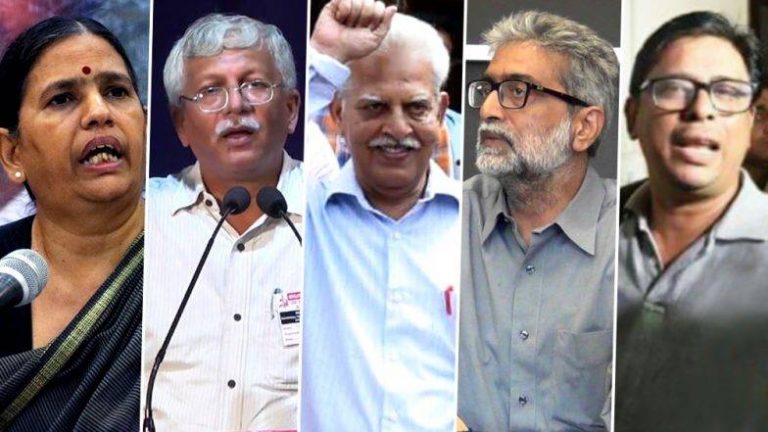
The arrest of few so-called Human Rights activists after unearth of some evidence that they were conspiring and feeding Maoists for the assassination of Indian PM, in past few days unleashed a sequence of events which ended up in the Supreme Court. The Hon’ble Apex Court passed an ex-parte interim order of conversion of their transit remand into house arrest. Instead of being taken into immediate police custody and furthering investigation in this highly sensitive case, special treatment has been given to the urban Naxal cadres by an exception to the provisions of Criminal Procedure Code and normal criminal jurisprudence of Police investigation.

Imagine, if the arrests were of simple ordinary citizens or of persons from troubled areas or from minority communities under the same charges what would be the response of the Supreme Court if the Writ Petition of similar nature has been filed. It is now a well-settled principle after several pronouncements of Hon’ble Supreme Court itself that if there is an alternate remedy available, writ jurisdiction should not be invoked, which in this case is a bail application at the disposal of Magistrate’s Court. Here the case was not of illegal police detention but of simple police transit remand in pursuance of the investigation in the light of certain unearthed evidence after ‘Bhima-Koregaon’ Violence.

The Supreme Court in Sakiri Vasu v. State of U.P., (2008) 2 SCC, in Para 27 itself dealt with this principle of alternative remedy and refrained High Court for entertaining Writ in such cases and withhold the power of Magistrate.

As per Cr.PC, it is a normal routine for Police to investigate a crime and take remand of suspects. It is perhaps unimaginable for any ordinary citizen or even their advocates that the Apex court would come to their rescue in the manner they have in this case, with the ‘dissent is the safety valve of democracy’ argument. The way things furthered in Delhi is in complete derogation to the attributes of The Goddess Iustitia (lady justice) which carries a blindfold, a balance, and a sword as a symbol of justice which is free from differentiation of the status of the parties before it.

Thousands of people in India are arrested every day for several crimes and the provisions of the Criminal Procedure Code deals with them as per the “Law of Arrest”. Interpretation of Supreme Court itself suggests that Arrest forms the part of Investigation. It is an essential component of the Investigation that if facts and circumstances warrant the accused can be taken into custody and rigorously interrogated. Moreover, it is the Judicial Magistrate who decides the extent of Police remand and such custody. If accused wants to be free after Police remand they can apply for a bail before the Magistrate’s Court or Sessions Court.

The Supreme Court in Babubhai v. State of Gujarat, (2010) 12 SCC 254;held in Para 38 that “Unless an extraordinary case of gross abuse of power is made out by those in charge of the investigation, the court should be quite loathe to interfere with the investigation, a field of activity reserved for the police and the executive…”So, the Interim Order of the Court is completely unwarranted, as also there was no any chance of irreparable injury to the Petitioners.

For ordinary citizens, the Hon’ble Apex Court has multiple times decided that higher/appellate Court should not interfere at the very nascent stage of Police investigation and criminal jurisdiction of Lower Courts. Intermeddling with the investigation which is sole dominion of the investigative agencies ought not to be done in a routine and casual manner. Courts are entrusted with the duty of inquiry, not an investigation. Inquiry can only be commenced rationally at the end of the investigation. Freedom of investigative agencies and Magistrate Court is a must for the revelation of truth.

A presumption that the Police and Magistrate’s Court are not doing its duty, without any cogent evidence is bad in law & against judicial morality. Let the authorities do its duty for which it has been entrusted and only if in pursuance of that they commit any illegality then Higher Courts should step in.

What makes the case of urban cadres of Maoist revolutionary different is this presumption by the Apex Court that they are being victimized for their views and hence the Courts should step in with such an exceptional extraordinary route to stall the investigation. The question rather they should ask is what is the fear if they have not committed any illegality? Or, is it Hon’ble Supreme Court has itself lost its faith in the Police and the lower judiciary like of these urban cadres? What was the urgency behind this usurpation of the power of Magistrate Court by the Apex Court of the Country?

The Supreme Court itself in Director, Central Bureau of Investigation v. Niyamavedi, (1995) 3 SCC 601; has held in Para 4 that “…Ordinarily, the Court should refrain from interfering at a premature stage of the investigation as that may derail the investigation and demoralise the investigation. Of late, the tendency to interfere in the investigation is on the increase and courts should be wary of its possible consequences. We say no more.”

The Hon’ble Apex Court has recently in Dineshbhai Chandubhai Patel v. State of Gujarat, (2018) 3 SCC 104; relying on Swapan Kumar Guha ((1982) 1 SCC 561)case held in Para 31 that “…once the court finds that the FIR does disclose prima facie commission of any cognizable offence, it should stay its hand and allow the investigating machinery to step in to initiate the probe to unearth the crime in accordance with the procedure prescribed in the Code.”

Para 397 of Kartar Singh v. State of Punjab, (1994) 3 SCC 569; judgment observed that it is a legitimate right of the police to arrest a suspect on receiving some credible information or material. The interrogation and investigation should be in true sense purposeful to make the investigation effective.

Now what the Hon’ble Supreme Court seems to be doing in this case, is nothing but subverting the entire legal procedure for a group of influential people using its extraordinary power who perhaps can afford a battery of influential lawyers. What is the message of Apex Court to the Lower Judiciary and people of this country? Is it not differential treatment, privileged procedure and a separate set of rules?

If we take judiciary as an extended organ of State within Article 12 of the Constitution, this decision of the Court itself is Ultra-Vires the Constitution as being violative of Article 14 creating an unreasonable classification between two different groups of people, liberal intellectuals and ordinary citizens and privileging one over the other in the Judicial process.

How many people in this country get this privilege of arguing directly before the Apex Court. One must ask if the Hon’ble Court will open its doors for a common man at 2 AM as it did for Yakub Menon or whether the court will protect the “civil liberties” of thousands of undertrials still locked up in jails as it protected in this case. One must ask whether the court will strike off the entire legal provision of arrests from the Criminal Procedure Code itself to bring the parity among all accused of criminal offences and if not, then what is so sacrosanct about Sudha Bhardhwaj or Varvara Rao that they cannot be even interrogated in Police custody. Whether the Hon’ble Court has considered the fact that this delay of not taking them in custody will directly help them to manipulate with the evidence and will dent the entire investigation?

Nobody knows where this liberal romanticism will take us to, but we should keep this in mind that the history of our country is an eye-witness that we have lost not one but two Prime Ministers who have been brutally assassinated. This is an issue concerning the security of our Prime Minister; he is not an individual but an institution.

People in this country usually avoid commenting upon the wisdom of My Lords, but this differential treatment and especially to those who are accused of plotting against the integrity of the country is unpalatable. It seems that protection of freedom to speech is at the radical extreme for those who want to shekel the system of democracy itself. Times will come and go, regimes will change, eras will pass but the credibility of the institution of the judiciary must be sustained, it is the oxygen of a functional democracy amidst the suffocating pressures of suppression.

If the Court desires the respect for law, it must first make the law respectable with an eternal mantra that nobody is above the law; otherwise, an important pillar of our democratic Constitutional setup fears a serious crisis of credibility if it continues with this differential treatment compromising the sanctity of the Institution.

(This article has been written by Ayush Anand, a practising advocate at Supreme Court and Shubham Tiwari, a law student at NALSAR, Hyderabad)

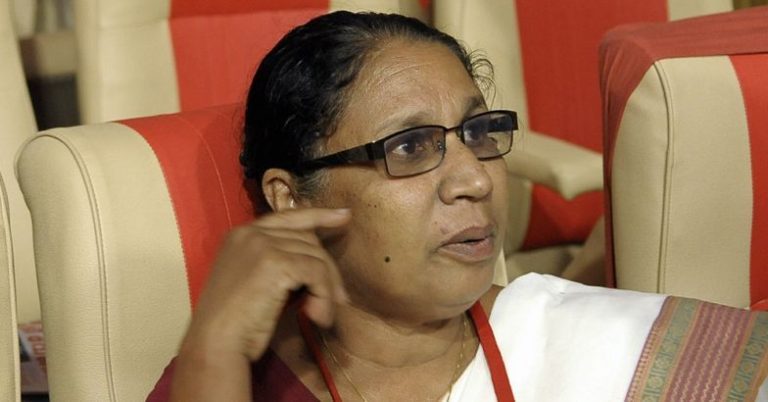
Chairperson of Kerala Women’s Commission calls sexual harassment a ‘human mistake’

0

Towing the infamous stance taken by the ex-Samajwadi Party Supremo Mulayam Singh, the chief of Kerala’s women commission MC Josephine came out in defence of the Communist Party of India (Marxist) MLA who is accused of rape. Josephine termed it a ‘mistake’ and added that such ‘mistakes’ do happen.

The chairperson of the Women’s Commission of Kerala, when asked about comments on the accusation of sexual harassment against the MLA, stated: “mistakes do happen”. PK Sasi the MLA from Kerala’s Shornur constituency is accused of sexual harassment by a woman from the Democratic Youth Federation of India (DYFI). Josephine commenting on the subject shockingly stated

“We are all human beings, mistakes do happen. People inside the party may also have committed such mistakes.”

This statement by the state commission’s chairperson comes on the back of the National Commission taking cognisance of the matter earlier and directing the Kerala Police to begin an investigation. The commission on September 6th tweeted that NCW has written to the Director General of Police and the Chief of the state police, Kerala to ensure proper investigation in the case.


They have also asked the police to keep the commission in the loop about the actions taken in the said case. The commission in its tweet also called for a ‘speedy delivery of justice to the victim’.

Josephine also added that the state women’s panel cannot initiate a probe into the matter even though the National Commission of Women has urged the state police to begin an investigation. Josephine explaining her stance talked about how the woman has yet to file a complaint with the Women’s commission. When asked about the commission’s Suo Muto cognisance, Josephine stated that the state commission is unaware of the nature of the crime thus are not in a position to take cognisance of the said case. According to reports, she insisted that the Marxist party ‘has its own system’ of dealing with such complains.


This is not the first time the state women commission chairperson has taken a controversial stand the subject of sexual assault on a woman. Easier, she had opined that hiding the names of victims of sexual assault is an anti-women approach. She had said that the thinking that hiding the name of victims ensures the safety of women is the result of anti-women consciousness.

The state commission’s behaviour on this issue and the insinuation that state institutions are not required, coupled with the undertone of attempted silencing of the issue by making it an inner-party one paints a grim picture of the state of law and order in Kerala.