Home Blog Page 7212

‘We have funded the World Bank to take this Aadhaar approach to other countries’, says Bill Gates

0

It is not every day, that a government scheme gets high praise from one of the most influential people on this planet and when it’s about one of the most controversial yet revolutionary initiative in our country’s history it deserves to be highlighted.

Bill Gates, founder of Microsoft, while addressing a meeting in Washington talked about how Aadhaar is a commendable effort made by the Indian government and praised its chief architect Nandan Nilekani, the Infosys founder. Gates added that Bill and Melinda Gates Foundation has funded a project for the World Bank which follows the lines of “Aadhaar” and asked the World Bank to find countries where it can be emulated.

“We have funded the World Bank to take this Aadhaar approach to other countries,” – Bill stated.

Gates talked about how this approach is helpful for better governance and ensures faster economic growth which in turn will help the country’s citizens to be empowered.

“Yes, countries should adopt that approach because the quality of governance has a lot to do with how quickly countries are able to grow their economy and empower their people,” he responded to a question.

He talked about the benefits of this approach being very high and negated claims about Adhaar being a privacy issue. He reiterated the core idea of Adhaar, which is to create a biometric id for better governance and transparency. India with the Adhaar scheme has been able to create world’s largest Biometric Id system.

“Aadhaar in itself doesn’t pose any privacy issue because it’s just a bio ID verification scheme,” – Bill Gates stated in response to a question about the concerns of privacy associated with Aadhar.

This is not the first time Bill Gates has praised Aadhar, while giving a lecture on “Technology and Transformation” organized by NITI Aayog on November 2016, he said that Aadhar or projects like Aadhar has never been done before even in the countries with much greater resources than India, Gates also praised Narendra Modi for embracing the idea of Aadhar.

Tripura assured of all possible financial assistance by Arun Jaitley

Tripura Chief Minister Biplab Deb has received an assurance of all possible financial assistance from the centre. CM Biplab Kumar Deb was in Delhi for the 2 days to attend the CMs’ meet organised by the central government. During his stay, the newly elected CM of the North Eastern border state has mee Finance Minister Arun Jaitley and Home Minister Rajnath Singh too.


The promise of implementing benefits of the 7th pay commission was one of the top issues on BJP’s Tripura manifesto and the 2.45 lakh state government employees are expected to gain from it. According to a report in the New Indian Express, the CM also asked for the gap-grant of pre-devaluation of the 14th finance commission for the state to be considered and got a positive response from the Finance Minister. The state reportedly needs Rs 1400 crores extra annually to implement the 7th pay commission benefits.

The CM also reportedly met Union Home Minister Rajnath Singh and discussed border management and strengthening of internal security. Illegal movements along the Bangladesh border and narcotic smuggling were reportedly the key issues discussed. The CM has reportedly called the meetings positive.

Deb was in the CMs meeting that was chaired by President Kovind on schemes to mark the 150th birth anniversary of Mahatma Gandhi. Today he was part of the meeting on the Act East policy chaired y External Affairs Minister Sushma Swaraj.


Biplab Deb had been under media scrutiny recently for his statements and it was reported by some media outlets that he was being summoned to Delhi by the central government. But his office had rubbished the rumours and stated that the CMs’ meet and other meetings were scheduled well in advance.

NASA’s nuclear energy project to power space missions

0

National Aeronautics & Space Administration (NASA) has successfully test demonstrated a new power system which harnesses nuclear energy. This breakthrough experiment could propel future ‘crewed’ space exploration missions to distant space destinations including Mars, and beyond.

NASA & National Nuclear Security Administration (NNSA) had conducted the four-phase experiments for the KRUSTY (Kilopower Reactor Using Stirling Technology) project from November 2017 till March 2018 at NNSA’s (Nevada National Security) Site. The result of the tests was announced on May 2nd in news conference at its Glenn Research Center. The breakthrough experiments were conducted to find a reliable, safe and abundant source of power for future robotics and manned space missions and are expected to be integrated into the Lunar and Mars missions.

Marc Gibson, Kilopower lead engineer, and Jim Sanzi, Vantage Partners, install hardware on the Kilopower assembly at the Nevada National Security Site in March 2018 (Credits: NNSS)

Longer duration travel and deep space missions require a lot of energy which can’t be sufficiently provided by traditional sources. A nuclear-powered source could be sent on the missions which will help refuel the energy needs. This power source will be safe because the fuel isn’t radioactive enough until it is put into use. So it can be transported along with the crew without causing any damage to them or to any component of the spacecraft. Once used it will provide safe power without a lot of human intervention. When long duration and surface stay missions are executed, the Sun can’t be relied upon as a source of power as there will be times when the spacecraft will have to spend a lot of time in space where it doesn’t receive direct sunlight. Longer duration surface stays on the moon requires a lot of energy which can’t be generated directly from Sun as one lunar night equals fourteen days on Earth. On Mars, the received sun’s energy has a lot of variation throughout its seasons. The periodic and violent dust storms can last for months.

Mars fission power system concept. (Credits: NASA)

This new class of power source can stand such tough and extreme environmental conditions. With such nuclear-powered source, the craters in the shadowed part of the lunar surface can also be explored. Setting up such a system on the lunar surface will require a considerable effort. Kilopower is a small, lightweight fission power system which can supply up to 10 KW of electrical power steadily for a minimum 10 years. An outpost could be established with four such units.

A concept of new fission power system on the lunar surface. (Credits: NASA)

Kilopower project

The project is aimed to develop new ideas and technologies based on nuclear fission that could allow future space missions to stay on planetary surfaces for a longer duration. The goal of the project was to develop a nuclear fission space power prototype for NASA which can be considered while making a choice for surface exploration missions to Moon, Mars and even further into the space.

NASA’s Game Changing Development (GCD) program

The Game Changing Development (GCD) program is a part of NASA’s Space Technology Mission Directorate’s (STMD). This program aims to explore new pathways for NASA’s future space missions. It wants to employ entirely new and innovative technologies which can be incubated and developed for NASA’s projects which have the potential to radically change the way in which space missions are executed. The ideas that sound promising will be tested and further developed to take it from laboratory to actual application.

Next Step

This is just the beginning of sending the Kilopower Technology into space. The result of the tests had even surpassed NASA’s expectations. The next mission should be to employ this technology and measure its performance in space. Once successful, the nuclear power system could be enhanced to carry heavy payloads into hitherto unexplored space and reduce the travel time.

The Technical details of the project can be accessed here [pdf].

Forget Jinnah portrait, let Aligarh Muslim University become subject to Indian laws

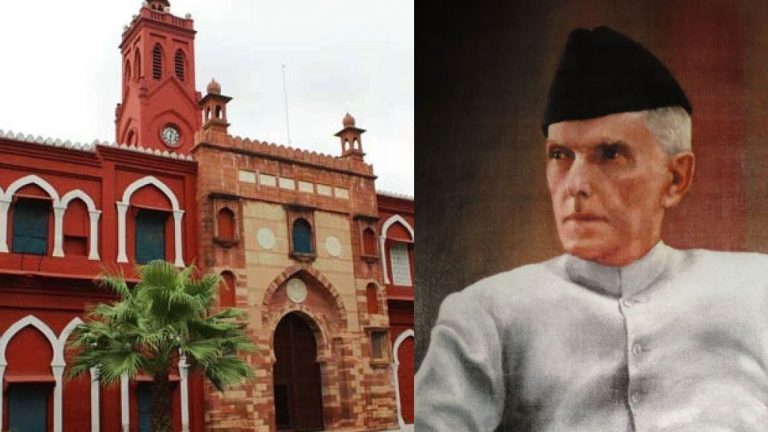
The Aligarh Muslim University is in the news, thanks to the local BJP MP demanding that the 80 year old portrait of Jinnah be removed from its position of honor. Outrageous, I know. They already changed the name of Aurangazeb Road. Now they are demanding that Jinnah’s portrait be removed.

It is curious that the Congress – Communist – Islamist axis has come out so strongly in expressing its desire to honor Jinnah. One comrade was so swept with emotion that he  probably did not realize that he was implicitly putting Mahatma Gandhi and Mohammad Ali Jinnah in the same bracket.

Untitled.png

Have they all forgotten that Jinnah was the main opponent of their Lord Nehru? Have they all forgotten that in Congress mythology which is taught to us as “official history” in schools and colleges, the blame for Partition is placed entirely on Jinnah, leaving Nehru as pure as driven snow?

Shall we conclude then that the ecosystem is tactically conceding that Nehru is also to blame for Partition of India? They really seem to have tied themselves in knots on this one.

Nobody in their right mind would believe that the ecosystem is supporting Jinnah’s portrait out of some exalted sense of historical significance. Who can forget that within 3 months of coming to power in 2004, the UPA government ordered the removal of a plaque commemorating Vinayak Savarkar from the erstwhile Cellular Jail in the Andamans? Mani Shankar Aiyar, then a minister, issued this instruction personally.

They could not let Savarkar have a small plaque on a remote island. But touch the portrait of the villainous Jinnah in Aligarh and they wince with pain.

Like Mayawati and Akhilesh supporting each other, the ecosystem going to bat for an arch rival of Nehru is a symptom of the Congress – Communist – Islamist axis in modern India, an alliance formed against the resurgent Hindus of this nation.

However, my article is not about this portrait. In fact, I say forget the portrait. With the spotlight on Aligarh Muslim University, the time is ripe to correct a much bigger and much more grievous historical wrong at the heart of this Institution.

First, let us bring the Aligarh Muslim University under the purview of laws of the Sovereign Republic of India. Let the Constitution of India apply to its campus. 

What am I talking about? Let me explain.

Have you ever wondered how Aligarh Muslim University can be a public institution and a minority institution at the same time? How is it possible that in a modern secular democracy with freedom of religion, a public institution can also be a religious institution?

Well, it isn’t. So, how is Aligarh Muslim University possible?

This contradiction was easily noticed soon after the independence of India. In 1967, the Supreme Court ruled (Aziz Basha v Union of India) that AMU could not possibly keep its status as a minority institution, since it was established by an Act of Parliament. Open and shut case really.

Only the Government of India then decided to shut its eyes and pretend like the Constitution does not apply to Aligarh Muslim University.

In 1981, the Government passed an amendment allowing for AMU to keep its special extra-constitutional status. There was of course a legal challenge and this dragged on in the courts. Until 2006 when the Allahabad High Court, not surprisingly, found the 1981 act to be ultra vires of the Constitution.

You would hope that the Government of India finally gave up in 2006 after 40 years of trying to stop the Constitution from being applied to a university located on Indian territory. But then you know nothing about the “idea of India.”

The UPA government filed yet another appeal. And can you believe that the case is still pending in the courts? In case you are curious, Modi sarkar has toldthe Supreme Court that it will withdraw the Government’s appeal against the 2006 decision.

So, before we worry about the portrait, let’s get the Constitution of India to apply to AMU.

Don’t let liberals draw you into a much lighter argument about some guy’s picture gathering dust in some corner of the campus. Ask them how it can be that merely implementing the Constitution, buttressed with not one but two clear cut court judgements, one from the Supreme Court and one from the Allahabad High court, can be seen as “malice.”

Untitled.png

Prove where? Before the extra-constitutional trial court of Indian liberalism?

By the way, the intentions don’t even count. The law is the law is the law and it must be implemented.

In fact, if anything, it is AMU that must be put in the dock, along with the governments that supported this unconstitutional demand for decades.

The ongoing minority status of AMU has very real consequences for the running of the institution. The most important of these, of course, is the question of reservation. Until AMU is made compliant with Indian law, SC/ST persons and other weaker sections of Indian society, will not enjoy the constitutionally guaranteed benefits of reservation.

It is AMU that stands accused of malice. What is the prejudice that keeps AMU from throwing open its doors to SC/ST students?

Until the question of AMU is resolved in the evidently constitutional manner, it is secular political parties and the liberal ecosystem that stand accused of malice. What is their pressing need to deny SC/ST students their just representation at AMU? How is this social justice? Beyond all the talk of Dalit-Muslim unity, is there a desire to keep Muslims segregated in minority institutions and a desire to keep Dalits out of education altogether?

Some day I hope these questions will be answered. Some day, I hope that Aligarh Muslim University is brought under the ambit of the Constitution of India. But until then, AMU survives like the Salman Khan of Indian universities. Every few years, we feel that the law has finally caught up with them. But then, they always get bailed out.

Aligarh Muslim University needs to get it. ‘Being Muslim’ isn’t enough. You have to be constitutional as well.


Partition’s main culprit Jinnah cannot be respected in India: Yogi Adityanath on AMU portrait row

Uttar Pradesh Chief Minister Yogi Adityanath has commented on the ongoing row over Aligarh Muslim University housing a portrait of Pakistan’s founding father Muhammad Ali Jinnah, by asserting that Jinnah cannot be respected in India.

As reported by The New Indian Express, CM Yogi was quoted as saying that Jinnah cannot be given respect in India and held him responsible for the partition. With regards to Jinnah’s portrait in AMU, Yogi stated that he had directed the university and the district administration to furnish a detailed report on the basis of which he would take action. He also said that the issue needed to be probed thoroughly owing to its sensitive nature.

India Today quoted Yogi as commenting that how could Jinnah’s achievements be celebrated when he partitioned the country. The Indian Express also carried a statement from Yogi where he was quoted as saying that, “Seems the AMU Jinnah photo might be coming off for good”.

The Aligarh Muslim University situated in Aligarh, Uttar Pradesh has been on the boil for the past few days, after it was reported that BJP MP Satish Gautam has written to the University’sVice-Chancellorr – Tariq Mansoor, asking him to take down the portrait of Jinnah which was reported to be hanging in the Student Union Hall. The MP also questioned as to what was the need to put up the portrait on the University walls.

Soon the issue came garnered public attention, as a result of which clashes broke out between university students and activists who were demanding that the portrait is removed. Later the activists were taken to the police station where the university students later decided to march in hundreds. The Rapid Action Force which was deployed following the clashes failed to control them and it resulted in injuries to 13 cops and 28 students.

The incident also saw RSS activist Mohammad Aamir Rasheed announcing a reward of Rs 51,000 for anyone who managed to remove the portrait. He doubled the award to Rs 1 lakh if anyone managed to replace Jinnah’s portrait with Shivaji, Vir Savarkar or RSS founder Dr Hegdewar’s.

The situation in the area continues to be tense, with section 144 being imposed in town and internet services getting suspended till 12:00 AM on Saturday.

Job creation continues upward trajectory, touches a 7 year high : Nikkei

Nikkei India Services Purchasing Managers’ Index (PMI), in its latest report, shows that job creation in India has continued its upward trend and has touched a 7-year high mark. The growth is driven mainly by an improvement in demand conditions and new placement of new orders supported by well-managed inflation.

The Index rose from 50.3 in March to 51.4 in April, signalling a faster expansion in output at Indian service firms than in the previous month. The 50-point mark being the boundary between growth and contraction. A greater inflow of new work spurred the business activity up. However, the surge was modest than what the series trend. Service industry saw a more intake of new staff as demand conditions and output requirements improved. The manufacturing sector also saw a marginal rise in job creation.

In tune with the rise in business activities across sectors, the Nikkei India Composite PMI Output Index went up from 50.8 to a three month high of 51.9 in April, supported by increased booking of orders in both manufacturing and services sectors. New orders in manufacturing increased for the sixth successive month mainly due to demand creation from new clients. The optimism for manufacturing sector was strongest since the implementation of GST (Goods & Services Tax) in July last year. The survey panel has also expressed confidence of further improvement in economic activities.

Aligarh Muslim University: Little has changed between then and now

Recently, a huge controversy has erupted over Muhammad Ali Jinnah’s portrait being hung at Aligarh Muslim University. Many wondered why even after 70 years of independence does an Indian University honour a person who was integral to the partition of the country in 1947. However, when one looks at the history of the AMU and its founder, it becomes evident that it’s indeed natural for them to have a portrait of Jinnah.

Anand Ranganathan, author and columnist, in his tweet series on Sir Syed Ahmad Khan, the founder of the AMU, exposes the many deplorable views that the man seemed to harbour.


Sir Syed Ahmad Khan also stated that it was the duty of Muslims to be loyal to the British empire. He even called the Revolt of 1857 an act of ‘haramzadgi’. He even asserted that being subjects of the British Empire which was Christian was preferable to being that of the Hindus as the former were ‘people of the book’.


And who could ever forget that Sir Syed Ahmad Khan was indeed the first true proponent of the Two Nation Theory. He even asserted that it was ‘impossible and inconceivable’ for Hindus and Muslims to coexist peacefully and it was necessary for one to vanquish the other.


Under such circumstances, it is only natural for a University that had Sir Syed Ahmad Khan as its founder and continues to eulogize him to continue to have a portrait of Jinnah. It is no wonder that the student organization of a university that recently objected to the administration’s invite to President Kovind for the convocation ceremony continues to have Jinnah’s portrait in its walls, a man who was responsible for millions of deaths.

The manner in which Jinnah’s portrait disappeared after the controversy erupted is really intriguing as well. And more intriguing was the administration’s response on the matter. According to the authorities, the portrait was taken off as clean was in progress. And then, they claimed AMU is a ‘secular’ institute. Of course, nothing proves that it is secular more than the fact that it hung the portrait of an individual who was responsible for the partition of the country.


It is a testament to the perverted vision of secularism in the country that Islamist figures such as Jinnah and Sir Syed Ahmad Khan are eulogized while even legitimate concerns of Hindus are deemed communal. And for the liberals of this country, Jinnah is more of an admirable and respectable persona than the Rashtriya Swayamsevak Sangh. A close aide of Arvind Kejriwal, Ram Subramanian, hailed Jinnah as a freedom fighter and asserted that every Indian should be proud of him.

The same perverted vision of secularism is also displayed when liberals did not utter so much as a whimper when a ten-year-old was raped at a Madrassa and members of a particular community suggested that the minor victim is married off to her rapist. And it is the same perverted vision of secularism when every transgression of the minority community is glossed over while every crime is communalized shamelessly to paint the minority as a victim and the majority as the aggressor.

Mainstream media outlets often wax eloquence on the ‘greatness’ of the man. In their bid to portray him as a ‘rationalist’, they ignore the foundations he laid for the partition of this country. In 70 years of independence, the contribution of the founder of the AMU to the propagation of Two Nations Theory is ignored while Hindutva ideologues are often blamed for the initial propagation of the theory. It is no wonder then that we have arrived at a time when the portrait of a man is hung at a university that claims to be secular.

India worships numerous false heroes who have been put on a pedestal where they cannot be questioned and any effort at scrutinizing their hallowed legacy is dubbed as fascism and bigotry. That the University that Sir Syed Ahmad Khan founded still honours a man who partitioned the country is merely a natural progression of affairs and that secularism in India still romanticizes Islamists and feels little hesitation in allying with Islamists to counter Hindu assertiveness.

Hyderabad High Court upholds life term awarded to Pakistan spy, Ashique Ali

According to a report, Hyderabad High Court has upheld the life sentence awarded by Nizamabad Trial Court in 2005 to Pakistani spy Ashique Ali alias Shahneel for allegedly transferring strategic defence information of India to Pakistani Army through mobile and emails.

Ali, a Pakistani national was arrested by the Nizamabad police on January 26, 2002, from the Jannapally Junction. It was alleged that he had conspired with Major Chaudry Zahid Ahmed, Hawaldar Mahemood and Hawaldar Tahir, all Pakistan nationals, with an intention to collect sensitive and strategic defence information related to Indian Armed Forces.

Ashique was sent to India on June 15, 2001, with a passport bearing No J-970511 and visa No P210841 under the charade of a tourist for 30-60 days to visit Delhi and Kanpur.

After entering Delhi via Samjhauta Express, Ashique destroyed his passport. In violation of rules, he visited Batala, Amritsar and Qadian in Punjab; Hyderabad and Nizamabad in then AP; and Mumbai and Nagpur in Maharashtra. This time, he was mailing sensitive information to Pakistan. Ashique overstayed in Hyderabad to collect Defence information and thereby violated provisions of sections 3 and 14 of the Foreigners Act. Finally, he was caught at a telephone booth while talking with Pakistani masters on the night of January 26, 2002, near Jannapally junction, Nizamabad.

The defence argued he lost his documents and could not go back. But to this, the Bench said, he ought to have informed this to police or concerned authorities to make arrangements for his migration. In absence of such attempts, his argument could not be accepted. The bench said the accused was liable under Section 14 of the Foreigners Act.

The police booked him under Section 121 and Section 121-A of the IPC and Section 14 of the Foreigners’ Act and also under Officials Secrets’ Act.

During the trial, the accused confessed that he communicated in cryptic language using ‘uncle’ as code for 54 division; ‘sons’ as units; ‘house nos.’  as a number of units;  ‘ name of colony’s place’ as code for the location of the units.

However, this not the first time that a Pakistani spy has been arrested for allegedly transferring important information across the border. In fact, in 2016 the Indian government had shared that more than 46 Pakistani spies had been arrested across India between the years 2013-16. Three Pakistani spies were nabbed in 2016 for getting information from people in BSF, taking the count higher. As a matter of fact, the loophole indubitably lies within the system. How do these outsiders get access to such confidential information lies the question?

Madras HC allows Income Tax department to proceed against Karti Chidambaram under Black Money Act

The Madras High Court has allowed the Income Tax department to proceed against Karti Chidambaram and others under the black money act. According to reports, the Madras HC on Thursday granted permission to the I-T department to probe Karti and other directors of the Chess Global Advisory Ltd under the act.

The HC bench comprising Justices V Bharatidasan and N Sheshasayee, however, has reportedly directed the Principal Director of Income -Tax (investigations) to let Karti Chidambaram and the others have a proper opportunity to present their case. The HC bench was hearing a petition filed by Karti and the other directors of the company against a show cause notice issued by the I-T department to them on April 13th. The bench has reportedly posted the matter to June 5th for further hearing.

According to reports, Karti and the other petitioners had also filed another petition challenging the validity of section 50 of the black money act mentioned in the show cause notice against them. The section 50 of the black money act concerns undisclosed foreign assets and income. The Principal Director of the I-T department reportedly had issued a show cause notice to Karti and the others asking why prosecution should not be sanctioned against them under the said act. The alleged undisclosed incomes and assets are related to the investments made by the concerned individuals through the company to Totus Tennis Ltd of UK and Nano Holdings LLC of the US. The petitioners had claimed that the I-T department has issued them the notice despite all the investments, remittances and holdings being disclosed in their I-T returns.

The petitioners had reportedly argued that the black money act can be warranted only if there are ‘undisclosed assets and incomes’. The HC bench in its order has reportedly asked the principal director of I-T to file a counter and proceed with any inquiry or take a decision exercising his powers under the section 55(1) of the black money act.

It is notable here that Karti is already facing probe and is currently on bail in the INX Media case and also under probe in the Aircel-Maxis case. On May 2nd, Delhi’s Patiala House Court had extended his interim protection from arrest till July 10.

Maoists blow up culvert in Bhadrachalam Agency, seek ‘revenge’ against security forces

In a recent incident, The Maoists have again resorted to violence in Bhadrachalam-Charla highway near Telangana-Chattisgarh border. The CPI (Maoist) had called for a state bandh in retaliation to the killings of Naxal terrorists by security forces in Dhandakaranya region. This is a repeated incident in less than a fortnight as they blew up another culvert at Pedamidisileru village in the same mandal on April 24.

The security forces intensified operations against Maoists. The successful operation near Gadchiroli in Maharashtra where more than 40 Naxal terror operatives have been killed has weakened the morale of both terrorists and their sympathisers. In another operation in Bijapur, in Chattisgarh, more than 7 terrorists have been killed. These operations have been considered as one of the best in four decades resulting in massive losses to Naxals.

Since then Maoists have been retaliating on different fronts. In a dangerous trend, posters and banners have been put up in Repanpalli in Maharashtra’s Gadchiroli district vowing revenge for the operations. The CPI (M) blamed the security forces and has warned of severe repercussions. The police have also published advertisements in Newspapers regarding price money of Rs 1.6 crore for information on five naxal leaders.

Banners of revenge

This worrying trend of retaliation is not limited to Naxal forces. Many left leaning journalists have condemned the counter-terror operations. An ex-journalist named Raosaheb Dokhe has called for revenge and urged Naxal forces to kill 400 policemen in responce to the neutralisation their ‘comrades’. In his post uploaded on his Facebook page late on Saturday afternoon, Pune-based Raosaheb Dokhe dubbed the twin anti-Naxal operations as “fake encounters” and said those killed in the two operations were not Maoists. Dokhe had urged: “Let us kill all those police, who killed our comrades brutally.”

A prominent activist and Naxal Sympathiser Nalini Sundar and wife of Siddarth Varadarajan has even mourned for the Naxals. Interestingly Nalini Sundar and four others are accused of the murder of a tribal man in Sukma district of Chattisgarh and she is out on bail.


Other Maoist-infested states besides Maharashtra — Madhya Pradesh, Chhattisgarh, Odisha, Jharkhand, Andhra Pradesh, Telangana are on a state of high alert, ever since the state security forces here launched their biggest anti-Maoist operations in around four decades.