Home Blog Page 7348

Do not fall for these rumours about Budget 2018

0

Any change in law especially related to taxation, always gives rise to rumours. May be some don’t understand the legal language, or some have interpreted the law wrongly. Either ways, we have seen many such rumours especially during the Demonetisation phase. Now here are some rumours you may have heard about the Budget 2018

1. The healthcare schemed for poor 10 crore families is woefully underfunded and hence is just a “jumla”. 

This argument has been made by many such as Activist Prashant Bhushan, who incidentally also uses his twitter account to spread fake news.


Yes, only Rs 2000 crores have been allocated in the budget to this  healthcare scheme for the poor, which has ben dubbed as Modicare. But, the amount has to be understood in the full context, which was later provided by finance ministry officials. Union Finance Secretary Hasmukh Adhia later said that it would perhaps take another six months for the scheme to be worked out and it may not be implemented for the entire financial year. Thus, the Rs 2000 crore is not intended to cover the full year’s premium and maybe covering parts of the year.

Further, although the target is to cover 10 crore poor families, it is common sense that identifying and reaching them will take time. Thus in the first 6 months, the actual premium due will not be that of the entire target, but a smaller subset. Further, Adhia as well as  Union Expenditure Secretary Ajay Narain Jha said that more funds would be provided for the healthcare scheme, if required once details are worked out. Also, it may be noted that the premiums for large group insurance schemes are usually substantially lower. The premium for this scheme cannot be compared to premiums for other retail mediclaim schemes since there will be no middlemen, commission agents and the underwriting calculations will differ.

Hence only based on the budget allocation figure, and comparing the premiums with retail premiums, one cannot call the scheme a “jumla”. Critics would be correct in passing judgement only if the Government fails to implement this promise.

2. Hidden “bomb” in budget: If Tax Returns are not filed in time, tax benefits such as 80C etc will not be allowed.

A Whatsapp message to the above effect is doing the rounds. Is it true? Does the budget state this? The memorandum to the budget, which explains the clauses, states as below:
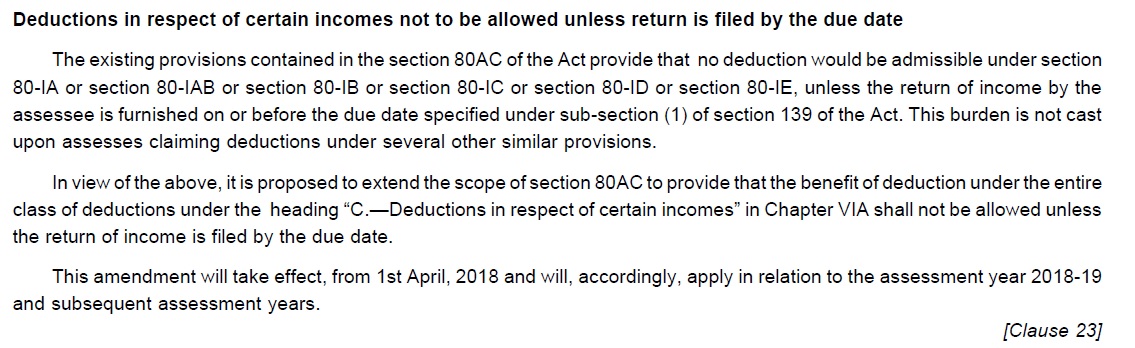
The above clearly states that the deductions under Chapter VIA Section C – Deductions in respect of certain incomes, will not be allowed if a return is filed after due date. Sec 80C etc fall under Chapter VIA Section A. In fact most of the deudtions applicable to common man are housed in this section. Section C covers certain specific deductions for specific industries and businesses, not impacting common man. Many deductions in this Chapter were already allowed only if the returns were filed on time. The Budget has now extended this clause to all deductions under Section C. Hence the common man’s deductions are untouched.

3. Applicability of Long Term Capital Gains on sale of shares/mutual funds, starts from February 2018

This one can be complicated. Many people are under the impression that if one sells shares and mutual funds in February or March 2018, then there would be tax on the resultant long term capital gains. We had done a detailed explainer here, but the intention of the law can be explained with the help of an example:

Assume a share purchased on 30.01.2017 for Rs 100. You hold this share for say 20 months (making it a long term capital asset) and sell it on 30.09.2018 for Rs 150. The market value of the share on 31.01.2018 was Rs 120. The tax will be levied as below:

On Rs 120 – Rs 100 = Profit of Rs 20 – NO TAX i.e. no tax on capital gains till date prior to budget.

On Rs 150 – Rs 120 = Profit of Rs 30 – TAXED AT 10% i.e. tax only on the gains accrued post budget date. Again, this tax will apply only if the total capital gains exceed Rs 1 lakh

In the above example, if the person had sold the share on 28.02.2018 for say Rs 130, it would still be a Long Term Capital Asset. But would the gains of Rs 10 (Rs 130 – Rs 120) be taxed at 10% since the sale happened after the budget was announced? No.

We have to bear in mind, that the budget speech only proposes various tax rules, and the same need to be passed by both houses and then assented to by the President, for them to be enforced. This is expected to happen by 31.03.2018, just in time for the new Financial Year. Thus, they are applicable only for transactions incurred in Financial Year beginning April 2018.

Another question could be: What if the rules were brought in with retrospective effect? Yes that can be done, but in this case, the law clearly states that the change in taxation will be in force only in the next Financial Year. In fact, by using 31.01.2018 as the cutoff, the law actually avoids any unintended retrospective impact, i.e. gains till the date of budget are not taxed.

Frontline does a Quint and scores big points with Pakistan, cooks up another ‘spy story’ of Jadhav

0

Frontline, a publication that belongs to ‘The Hindu’ group has peddled yet another Jadhav ‘spy story’ in its publication. By attributing the contents of the story to former RAW officials, the journalist Praveen Swami has aided the Pakistani narrative on Kulbhushan Jadhav’s alleged espionage activities. A similar attempt was made by The Quint. We had debunked their shoddy journalism earlier.

Praveen Swami, a Pakistani sympathiser?

When the Indian navy had destroyed a boat off West coast in Arabian sea, Praveen Swami had written an article claiming that the destruction of the terror boat was a drama. He said that the people in the suspicious boat could have been ‘small time smugglers.’ He writes :

Less than 48 hours after the Coast Guard destroyed a boat it suspected was ferrying explosives and terrorists from Pakistan into Indian waters, new evidence has begun to emerge that those on board might have been small-time liquor and diesel smugglers, ferrying bootleg cargo from the port of Gwadar to other fishing boats which were to have carried it into Karachi’s Keti Bandar harbour.

There is also a suggestion of use of disproportionate force since the fishing boat did not have an engine capable of outrunning Indian interceptors.

The journalist later appeared on a Pakistani Channel called UNewsTV and bashed the Indian Navy officer for destroying the boat. He also entertained the Pakistani journalists comment that the whole act was part of Modi government’s marketing propaganda. Swami had leaked a video of a Navy officer’s speech to claim that the act of destroying a Pakistani vessel was unnecessary action. The leaked video was also played on the Pakistani channel. Clearly, this journalist seems to love undermining his own country to win some sort of browny points from folks across the border.

‘India’s secret war’ an article with Pakistani narrative, attributed to dubious ‘sources’

The article written by Praveen Swami in Frontline cooks up a fresh story about Kulbhushan Jadhav’s activities in Balochistan. Invents past ‘RAW officials’ as sources and questions the rationale of espionage itself. He writes (emphasis added):

Ever since 2013, India has secretly built up a covert action programme against Pakistan, seeking to retaliate against jehadists and deter their sponsors in the Inter-Services Intelligence (ISI) Directorate. Led by National Security Adviser Ajit Doval, and now by Research and Analysis Wing’s (RAW) Anil Dhasmana, the programme has registered unprecedented success, hitting hard against organisations such as the Lashkar-e-Taiba and the Jaish-e-Muhammad. But the story of the man on death row illustrates that this secret war is not risk-free. Lapses in tradecraft and judgment, inevitable parts of any human enterprise, can inflict harm far greater than the good they seek to secure.

Swami seems to be saying that India should not take any risk. It should allow its citizens to die in terrorist attacks like they did under UPA. We should just ‘live with’ terror as per Swami. Everyone knows that risk is an inherent part of life and nations/individuals must take risks for the right cause. Therefore there can’t be any second thoughts on lowering India’s guard.

Praveen Swami invents a former RAW official to suggest a hypothetical clash of interests between RAW and IB. He says that he was victim of IB’s poor judgement and ambition. He writes (emphasis added) :

“The Navy was extremely worried about the possible consequences of the tasks being assigned to Jadhav by the Intelligence Bureau,” said one officer. “However, we were basically told that since he was there, that was how it needed to be.” Former RAW officials claimed that the push to draw Jadhav into front-line intelligence work was driven by the I.B.’s ambitions to have an independent overseas role. RAW’s own intelligence capacities in the region, they argued, were more than adequate to address emerging threats.

If this supposed former RAW official is so courageous, he must come out of is anonymity and tell the world about the flaws. Why is he hiding? The insinuations of Jadhav’s past through such dubious sources are worrisome because it cannot be verified. These dubious stories also damage the case of Jadhav who is stuck in a Pakistani jail with death hanging over his head.

Praveen Swami also suggests that India’s ‘alleged’ assistance to terror in Balochistan could be ‘equated’ to 26/11. This is reminiscent of the disastrous  Sharm-el-Shaik declaration under the Manmohan Singh government. Praveen Swami’s journalism is toeing the line of UPA’s Pakistan policy and is opposed to NDA’s handling of security issues. One wonders if he is actually doing UPA’s bidding through his journalism. He writes (emphasis added)

“This is an effort to equate acts like 26/11 with Indian covert action,” said a former intelligence officer. “The only reason it has traction, though, is because of the opacity around Jadhav’s employment status. If he is indeed a serving naval officer, that means there are some serious problems with the infrastructure for our covert action programme, which need addressing.”

Praveen Swami indirectly asks India to admit to Jadhav’s alleged spying activities and negotiate his release. Not surprisingly, Pakistani media has picked up story to support Pakistan military’s narrative. He also talks about ‘rumours’ of an ISI agent caught by India and tacitly asks for his release in exchange for Jadhav. Swami has ended up peddling the exact same narrative that Pakistan wants. Swami writes (emphasis added) :

Knowledge of the truth about the Jadhav case, as it emerges, will do little to alter his fate. In a May 18 judgment asking Pakistan not to proceed with Jadhav’s execution, the International Court of Justice recorded that “the Vienna Convention does not contain express provisions excluding from its scope persons suspected of espionage or terrorism”.

Put simply, Jadhav is entitled under Indian law to the assistance of the Indian government—including legal assistance—irrespective of the nature of his activities in Iran or Pakistan. [..]

In both New Delhi and Islamabad, there are rumours the two capitals are working on just such a deal—possibly involving former ISI officer Lieutenant Colonel Mohammad Zahir Habib, alleged to have been kidnapped by India—or a wider deal, which could see the release of multiple espionage convicts.

Not surprisingly, Pakistani media is picking on his article to further spread Pakistan military’s story.


A few days ago, there was a buzz on Social Media that Praveen Swami had left The Indian Express because he wasn’t allowed to carry some story that he wanted to carry. After this story appeared in The Frontline, journalist J Gopikrishnan also pointed out that it was this story because of which Swami perhaps quit the Indian Express.


Should media publish information gathered from ‘anonymous former officials’ which undermine Kulbhushan Jadhav’s case at ICJ and international forum? Should ‘The Hindu’ group entertain this sort of rumour based journalism which asks for a ‘hypothetical’ ISI spy in India’s custody? The government must note this trend in media and enact a tough law against journalists who undermine national interest and wittingly or unwittingly, aid foreign enemies from Indian soil.

Even as IT department slaps 436.8 crore fine on NDTV, ministers and bureaucrats continue to patronise the channel

0

The Income Tax Department has slapped a fine of Rs 436.80 crores on New Delhi Television Limited owned by Pranay and Radhika Roy.

This fine was slapped for the assessment year 2009-2010. According to reports, The IT department had served the order on 31 January under section 271(c) of the Income Tax Act. NDTV in a letter to BSE Ltd has confirmed the same. In the letter, NDTV has said it is currently examining the letter and exploring legal options available to them and they will take necessary actions accordingly. It should be noted here that section 271 (c) of The Income Tax Act provides for levying penalty on a company or individual if they have concealed income particulars or provided inaccurate details.

NDTV has been in deep financial and legal soup for a while. In June 2015, SEBI had imposed a fine of Rs 2 crore on it for delayed disclosure to the stock exchanges about a Rs 450 crore tax demand in early 2014. Last year the Delhi High court The Delhi High Court had vacated a stay granted by the Income Tax Appellate Tribunal (ITAT) on the Rs 525 crore penalty on New Delhi Television Ltd (NDTV). In November 2015, the Enforcement Directorate had issued a show cause notice to NDTV bringing foreign investments of around Rs 2,030 crore. The ED was probing into the matter because it was alleged violation of Foreign Exchange Management Act (Fema) guidelines. The CBI had also conducted raids on NDTV in June last year for wrongful gains made by its promoters, the Roys.

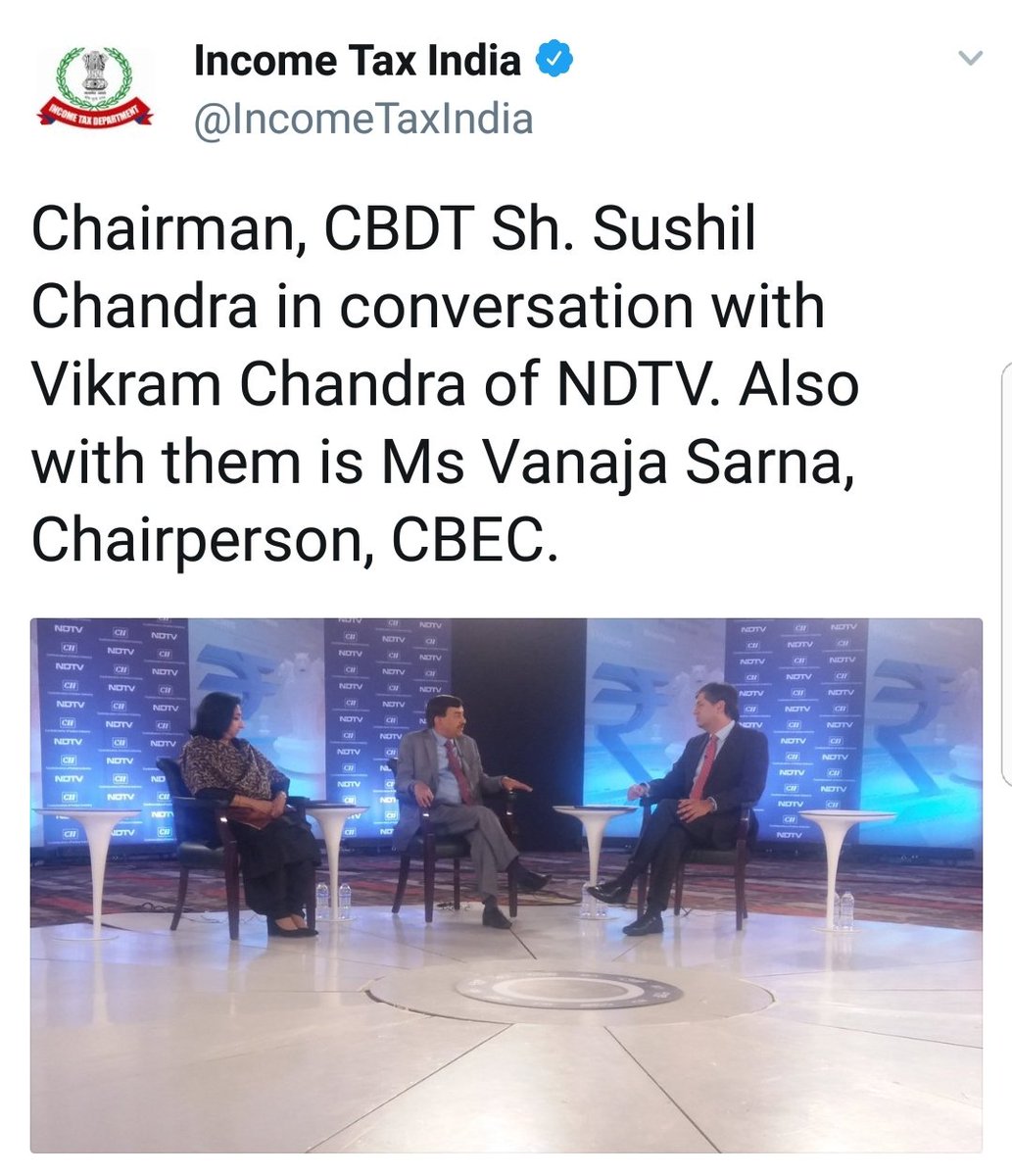
Even as NDTV is under probe for high-level Tax fraud and other financial irregularities, it is quite surprising that many Prominent Government officials and bureaucrats repeatedly choose NDTV to give interviews and ‘share their views’. Just after the 436.8 fine was slapped, Chairman of CBDT Sushil Chandra was seen in an NDTV show.

The channel even flaunts it :


Even the Chief Economic Advisor Arvind Subramanian chose NDTV for an exclusive interview after the Economic Survey.


Mr Subramanian’s appearance on NDTV was severely criticised by many stating that Chief Economic Advisor should not have chosen a channel tainted for tax fraud and irregularities for his appearance.


It is widely being discussed that Government Ministers and bureaucrats should know better than to promote a channel that is being investigated by their own departments. Not only does it put the investigations under suspicion, it also raises questions on the part of the concerned people as to why they should go to such lengths to promote and publicise a channel that has its credentials under probe.

Kerala’s catholic church and its cardinal under scanner for shady land deals

0

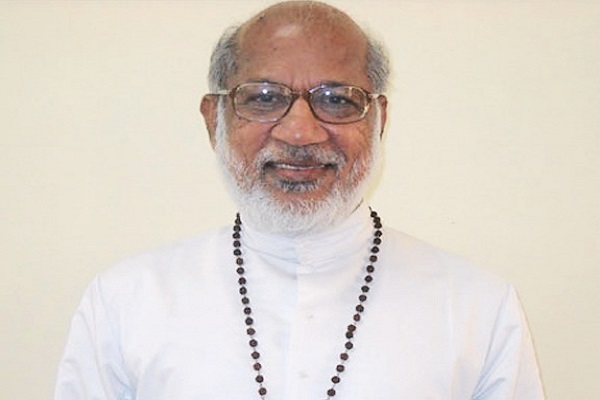
Action has been recommended against Cardinal George Alencherry, the head of Syro-Malabar Catholic Church for causing loss to the diocese. It has been recommended by a church panel probing land deals in the archdiocese of Ernakulam, a case which also involves black money.

Alencherry one of the most important Christian clerics in India, is one of the Indian cardinals who are eligible to elect the pope. Found violating the Church and Civil law, the report against him by the church panel has been sent to the pope.

Apart from Alencherry, two others namely priest Sebastian Vadakumpadan and the finance officer Joshy Puthuva, have been blamed in this case and as admitted by the spokesman of the Ernakulam archdiocese, the charges levelled are grave.

As alleged, the archdiocese had suffered losses since 2015 due to dubious land deals, which involved selling five plots owned by the diocese in the Ernakulam district. Turns out that the sale of these plots broken into 36 parts should have yielded roughly Rs 27 crores but only about Rs 9.13 crores were allegedly received. It has been alleged that the price fixed for these plots was Rs 9.5 lakh per 435.5 square feet, which was far lower than the then prevailing market rate of Rs 15 lakh per 435.5 square feet.

As per the report, this act was dubbed as a “naked act of breach of trust and criminal misappropriation of properties”.

Besides this, unaccounted money was also found during the investigations. Allegedly the receivable value for the land deals was set at Rs 27.15 crores but the value as per the registered deeds as only about Rs 13.51 crores. Such an act of receiving unaccounted money is serious offence in the Income Tax act.

It has also been claimed that the registration of land deeds violated all norms. The Church panel’s report estimates the loss to the diocese to be Rs 46 crores for various land and sale purchases since April, 2015.

The investigation regarding this matter isn’t only restricted to the church’s internal inquiries.

At the start of Jaunary, it was reported that a lawyer had petitioned the police to file a case against the three accused in this matter. This was then forwarded by the IGP (Kochi) P Vijayan to the Kochi city police commissioner for further action.

Karni Sena celebrates BJP’s loss in Rajasthan by-polls, says govt’s stance on Padmaavat led to defeat

0

On Thursday, the day of the union budget, the BJP suffered a blow in the Rajasthan by-polls where it lost two Lok Sabha seats of Alwar and Ajmer. Besides this, it also lost the Mandalgarh Assembly seat in the state. Both the Lok Sabha seats were wrestled back from the BJP, who had comfortably won them in the 2014 polls.

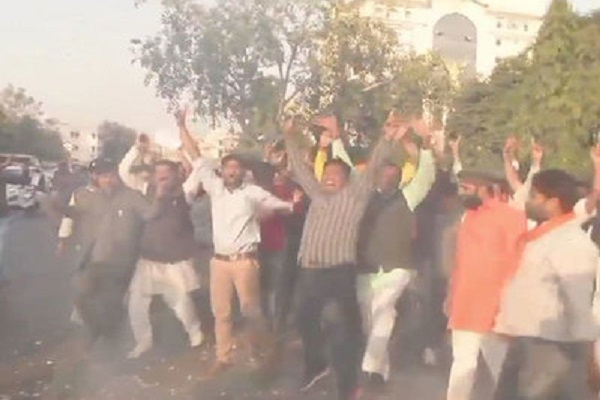
Soon after the results were announced, it was incidentally the Karni Sena which was seen jubilantly celebrating BJP’s loss:


Karni Sena which rose to prominence for vehemently opposing Sanjay Leela Bhansali’s film Padmavaat, as per reports claimed that the government’s failure to stop the film’s release was the reason for the BJP’s poor performance.

As per Lokendra Singh Kalvi, who is the leader of the organisation, it was the first time in Rajasthan, when candidates from the ruling party didn’t win, and suggested that the only solution was that PM Modi bans the movie.

Even though the perception of the Karni Sena was that of a radical protest group, the group has since then turned political by openly supporting the Congress.

We had reported how the Karni Sena had  declared support to the Congress party for the by-polls in Ajmer and Alwar Lok Sabha constituencies held on January 29.

Here it was noted that candidate of the Congress Party from Ajmer, Raghu Sharma, met with leaders of the Rajput community seeking support for the upcoming by-polls. Apart from Karni Sena the other Rajput organisations who declared support included, Shri Rajput Sabha, Marwar Rajput, Rashtriya Karni Sena, Rawna Rajput, Charan Rajput, Pratap Foundation.

Congress’ “flirting” with the Karni Sena though wasn’t limited to the state level. It was also seen that senior Congress leader Digvijaya Singh came out to voice has support for the anti-Padmavat protests, thereby sparking speculation about his possible sympathy towards the Karni Sena and its radical methods.

The ‘Judicial Whistleblowers’ used by Congress in the Judge Loya case have an extremely questionable past

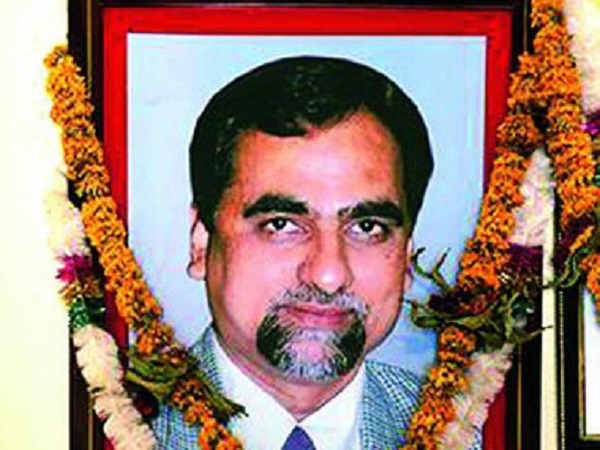
The Judge Loya case has turned into one of the biggest political flashpoints in the recent past. One might ask why a death, which has been repeatedly called natural by people close to the judge, would create such a controversy. The conspiracy theories about the death, which is said to be a cardiac arrest, and the reasons to perhaps paint it as a murder, stem from the fact that Judge Loya was presiding over the CBI court in the Sohrabuddin Sheikh ‘fake encounter’ case. Of course, for the opposition, this is the perfect recipe for a juicy controversy that gives them the opportunity to attack the Modi-Shah duo.

It started with the left-leaning magazine, Caravan, raising questions on the death of Judge Loya. The article in the Caravan extensively quoted some members of the Judge Loya’s family, who were said be suspicious of the circumstances surrounding his death.

Soon, in response to the constant media focus on the so-called mysterious death of Judge Loya, his son Anuj Loya called a press conference where he clarified that maybe the suspicion arose due to initial shock and now they have no concerns about the circumstances surrounding Judge Loya’s death. He also revealed that NGOs, politicians, and activists were hounding his ailing mother and requested them to leave his family alone.

Later, Anuradha Biyani the sister of Judge Loya, whose statement according to Times Now formed the basis of the allegations of foul play in Judge Loya’s death, questioned the report published in Caravan magazine.

Even after all these clarifications and requests, the political opposition, and the lackeys who claim to politically neutral, persisted. Two days ago, Congress went ahead and held a press conference, demanding a probe.


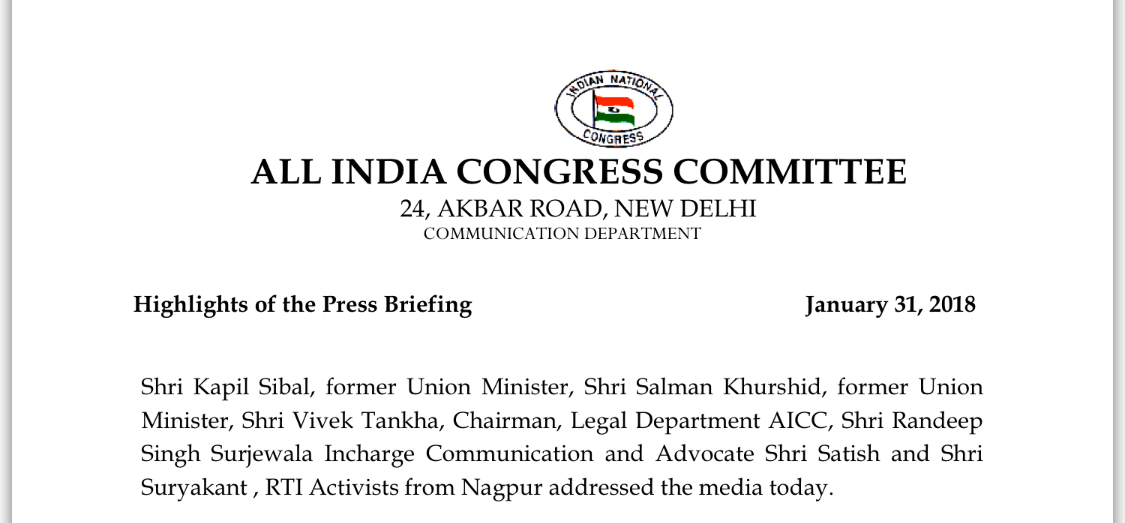
In the events mentioned in the Press Conference held by Kapil Sibal, one name that features prominently in the entire sequence of events, is that of Satish Uke, who was introduced as an Activist, Lawyer and an expert in Medical matters. In all the allegations made by the Congress in the press conference, Uke is a central character, on whom many of the assertions rest.

There is interestingly, another name that comes up in the press conference, but only as someone present at the press conference, and is referred to by only his first name. That of one Mr. Suryakant, an RTI activist from Nagpur.

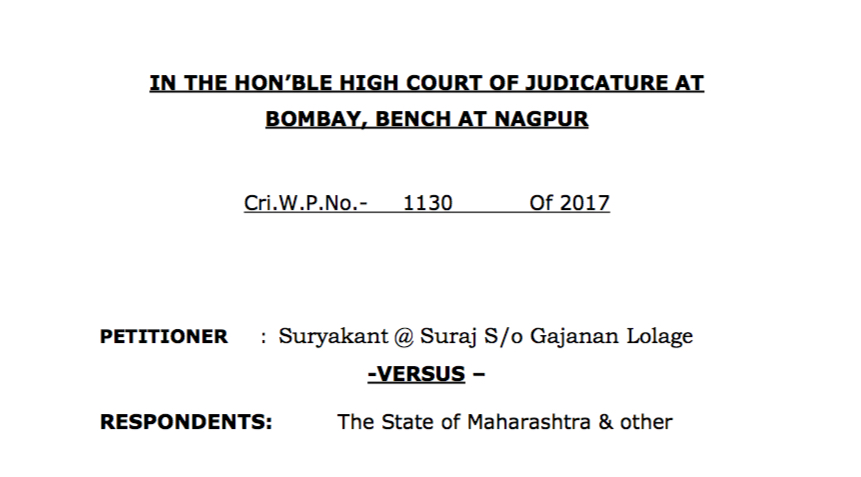
I learned that Mr. Suryakant, who was present at the press conference, is Mr. Suryakant Lolage, which is evident when one goes through the plea in Bombay HC that seeks probe into the death of Judge Loya.

I decided to look further to find out who Mr. Satish Uke and Mr Suryakant Lolage really were, considering the entire conspiracy theory detailed by Congress hinged on statements by Mr. Uke. Though Mr. Lolage was present too during the conference, not much information was presented about him by the Congress party.

During the press conference, Mr. Uke not only claimed that Judge Loya had approached him to tell him that he (Judge Loya) was under pressure to pass discharge offers, he went on to talk about death of another advocate who died ‘mysteriously’ (falling from 8th floor in court premises) and who too had allegedly told Uke about pressure he was facing. Congress press release gives details of these claims made by Mr. Uke, who further claims that death of another judge – who died while traveling in a train – too was ‘suspicious’.

So who is this Mr. Satish Uke, who by his own claims was in touch with almost everyone who was under pressure and who subsequently died ‘mysteriously’?

Satish Uke :

Advocate Satish Uke’s exploits include being held guilty of gross contempt of court only last year. The Nagpur bench of the Bombay High Court had held advocate Satish Uke guilty of criminal contempt and directed him to forfeit Rs.1 lakh of the Rs. 2 lakh he had deposited as security, along with charges for video recording of proceedings.

Interestingly, this was covered by the the mainstream media as well. It is strange how thus far, the media has failed to dig into his past. After being held for contempt, the cops had failed to trace and arrest Satish Uke for 4 months. He was allegedly absconding. The High Court recorded that Satish Uke was in the habit of making frivolous, vexatious, and reckless allegations against everyone including judges of the High Court.

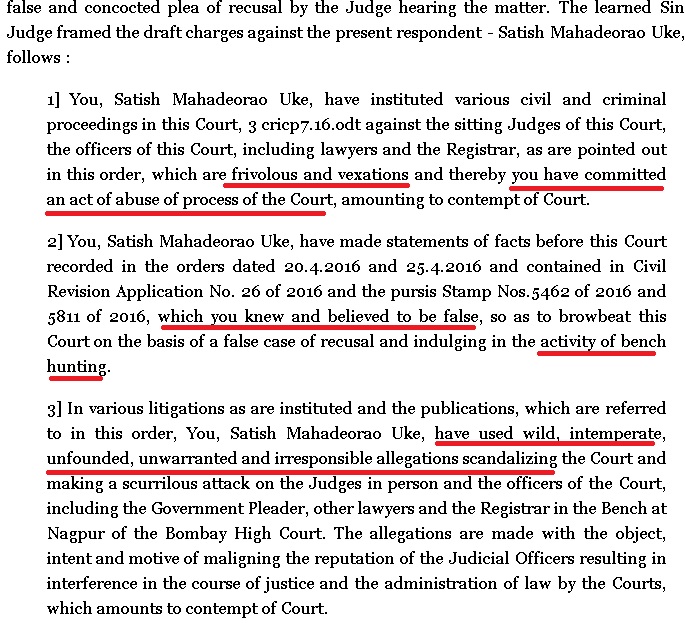
In its judgement, the court observed that Uke had instituted “frivolous and vexatious” proceedings against the judges and officers of the court, thereby committing “an act of abuse of process” and “contempt of court“. The court also said that  he had made statements which he “knew and believed to be false, so as to browbeat this Court“.

Further, the court observed that he had made “wild, intemperate, unfounded, unwarranted and irresponsible allegations scandalizing the Court“:

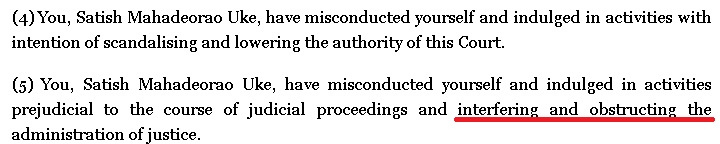
The court also remarked that he had also tried to obstruct administration of justice. The High Court charged him, “You, Satish Mahadeorao Uke, have misconducted yourself and indulged in activities prejudicial to the course of judicial proceedings and interfering and obstructing the administration of justice.”

It is pertinent to mention that Mr. Uke had also filed an election petition against Devendra Fadnavis, Chief Minister of Maharashtra, claiming that the latter had not mentioned criminal cases against himself in his nomination form. Court dismissed the petition in 2015. The High Court of Maharashtra, by a detailed speaking order, held Mr. Uke guilty of contempt and directed 2 months jail term to him.

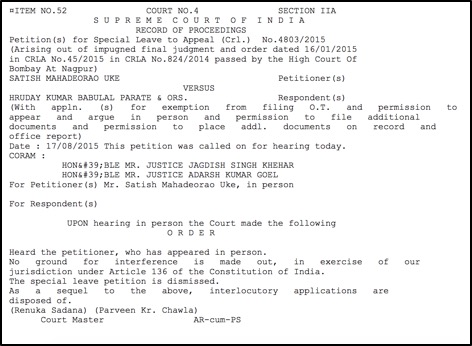
The Supreme Court dismissed the challenge of Uke by the following order:

The Supreme Court, thus, rejected Uke’s special leave petition challenging the High Court’s order which had censored him for tendency of wasting precious judicial time on the basis of “half-baked knowledge of law“.

Suryakant Lolage :

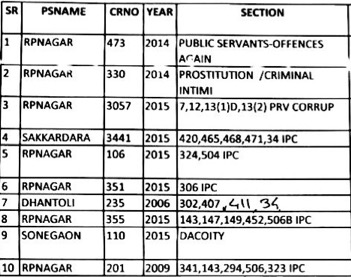
The case of Suryakant Lolage aka Suraj Lolage, who also shared the dais with Kapil Sibal is even more intriguing. Records indicate that he could be an habitual offender who has been charged with the most heinous of crimes including murder, rape, cheating, assault on public servant, instigating suicide, riots, dacoity, etc.

A summary of cases filed against Suryakant Lolage is given below, unless there is another Suryakant Lolage with similar details who has nothing to do with the Suryakant Lolage who filed the petition in Loya case:

It is evident, that not only Satish Uke – the person on whom the entire conspiracy theory peddled by Congress hinges – but also the petitioner in Bombay High Court in the case of Judge Loya’s dath, has sketchy and questionable past to say the least.

Several questions arise from the facts presented by Kapil Sibal in the press conference. Firstly, and fundamentally, why would a Judge of Loya’s standing approach a sketchy “activist” like Uke for any sort of assistance? Secondly, was Mr. Suryakant’s last name left out from the presser so people wouldn’t dig further and discover his questionable past? And thirdly; especially after the news of Congress contemplating moving an impeachment motion against the Chief Justice of India, and the fiasco it created during the mutiny of 4 senior judges, why is Congress trying to subvert the judiciary in the most seemingly sinister manner?

When one attempts to tarnish the highest institution of the country, the players chosen should at least have impeccable credentials themselves. While dragging the judiciary down through the mud for ones petty political games is shameful, perhaps doing so with players who have no credibility themselves, is worse. While the facts of the case, or the lack thereof, are for the court of law to decide, Congress can’t possibly come out of this looking victorious

Congress wins Rajasthan by-polls, warning for the BJP ahead of Assembly Elections

In the by-polls held in Rajasthan on the 29th of January, Congress has won the Mandalgarh Assembly seat and the Alwar Lok Sabha seat and has significant lead in Ajmer. The BJP had won comfortably in these Lok Sabha seats with margins of 2,83,985 and 1,71,983 votes respectively. Today’s defeat of the BJP reflect a shift of over 4 lakh votes in the two combined Lok Sabha seats.

The results will come as a huge jolt to the BJP ahead of the Assembly elections later this year. There have been reports of severe discontentment of the voters with the Vasundhara Raje government in recent times. These results will serve as a much needed wake up call to the Bharatiya Janata Party. The President of the Congress Party, Rahul Gandhi, took to Twitter to congratulate the state unit of the party in Rajasthan.


We had reported earlier that amidst the recent Padmavat controversy, several Rajput organizations swore their unconditional support to the Congress ahead of the by-polls and vowed to avenge the ‘insult’ that the BJP government had meted out to the Rajput community. The results indicate that they have indeed been successful in their attempt to convey their message of resentment and anger towards the BJP. The Congress have cleverly taken advantage of the whole controversy surrounding the movie and successfully turned it to their advantage.

Ashok Gehlot of the Congress remarked they were only taking forward the positive result they achieved in Gujarat.


Complaints about EVM tampering on result day, which have become a tradition in recent times, also seem to have evaporated into thin air as order seems to have been restored with a Congress victory. In other news, Trinamool in West Bengal has won the Noapara Assembly seat and Uluberia Lok Sabha seat that went into the by-polls. The Rajasthan results are warning signs for the BJP of what lies ahead unless there’s some severe course correction from its state unit.

Union Budget 2018: Who said what

Finance Minister Arun Jaitley presented the annual budget for the session 2018-19 during the Budget Session of the Parliament. Prime Minister Narendra Modi and other leaders of the BJP hailed it as a significant reform while opposition parties as expected criticized the budget for not paying heed to the concerns of the middle class. The middle class is disappointed with the budget for not awarding them a tax cut and introducing a long term capital gains (LTCG) tax on investments. The budget displayed Modi Government’s intent of taking the economy forward without handing out SOPs which was the Congress strategy all along and summarised an ambitious plan for ‘New India’.


Expectedly, the opposition, which thrives on negating any and every positive step by the Modi Government and likes to function as not constructive, but destructive opposition, slammed the government for this budget. Rahul Gandhi, President of the Congress Party, commenting on the budget said “thankfully, only 1 more year to go”.


Manish Tewari of the Congress said the government was only paying a lip service to the concerns of the farmers.


Nitish Kumar, Chief Minister of Bihar and ally of the BJP, congratulated the government on the budget and believed the announcements made on the budget will be a boost to the health and agricultural sector.


Yogi Adityanath, Chief Minister of Uttar Pradesh also congratulated the government on the budget and appreciated that the concerns of farmers and senior citizens have been taken care of in the budget.


TDP, which has recently spoken of some tensions with ally BJP, did not have nice things to say about the budget. The Finance Minister of Andhra Pradesh said the concerns of his party were not paid heed to in the budget.


However, President of the Bharatiya Janata Party hailed the budget and said it was in the true spirit of the government’s motto of ‘Sabka Saath Sabka Vikaas’.


All in all, the reactions to the budget have been nothing out of the ordinary. The government hailed it as an exceptional budget, the opposition could not find a single positive with it and as usual, the middle class was left disappointed.

Budget 2018 : Capacity and Performance improvement key focus in Railways

0

Finance Minister Arun Jaitley has presented the Union Budget 2018 in the parliament. Last year the FM ended the traditional practice and had merged the railway budget with the Union Budget. This year too, the railways budget was part of the Union Budget.

No major new trains were announced in this year’s Budget. However, the focus was mainly on capacity improvement and passenger safety measures. The highest ever capital expenditure allocation of Rs 1,48,528 crores was announced by the Finance Minister.

A major chunk of this huge capital expenditure is focused on capacity development. 4000 kilometres of the electrified railway network is slated for commissioning during 2017-18.

600 major Railway Stations will be redeveloped in the fiscal year. The stations that have a footfall of 25,000  will have escalators. All stations are to have CCTV and Wi-Fi progressively. In another major announcement, a specialised Railway University will be set up in Vadodara.

The FM announced that 12,000 wagons, 5160 coaches and 700 locomotives are being procured. He also stated that the Railways Ministry will focus on the safety of the passengers and invest more in the maintenance of Railway tracks. Improvements in the use of technology and fog safety devices are also being focused on.

He has also announced a target of doubling 18,000 km of lines. The FM added that gauge conversion is underway to eliminate capacity constraints. 36,000 km of Railway Track renewal has been targetted and also 4267 unmanned Railway crossings on the broad gauge routes are to be eliminated by next year.

According to Mr Jaitley’s statement, Mumbai‟s local train network will have 90 kilometres of double line tracks at a cost of over Rs.11,000 crore. 150 kilometres of an additional suburban network is also being planned at a cost
of over Rs.40,000 crore, including elevated corridors on some sections. The City of Bangalore is set to have a suburban train network of approximately 160 kilometres at an estimated cost of Rs.17,000 crore.


Minister for Railways Piyush Goyal has congratulated the Prime Minister and Finance Minister for the Development oriented budget.

Budget 2018 suggests that Modi will fight 2019 on performance and not SOPs

0

The budget 2018 has been met with mixed response. Some praise the proposed universal health coverage scheme and allocations for MUDRA and MSME sector. Others point out the crucial MSP related announcement in the finance minister’s speech. The middle class has complained that the Modi government has not given any relief to them. However, there is a serious political message through this balanced budget which has sought to innovate within the boundaries of fiscal deficit limits. It has not offered any major sops to any section of the society,

Finance minister’s confident demeanour

When the finance minister rose present the budget, he began his speech with the following words :

Madam, four years ago, we pledged to the people of India to give this nation an honest, clean and transparent Government. We promised a leadership capable of taking difficult decisions and restoring strong performance of Indian economy. We promised to reduce poverty, expedite infrastructure creation and build a strong, confident and a New India. When our Government took over, India was considered a part of fragile 5; a nation suffering from policy paralysis and corruption. We have decisively reversed this.

It appears that Modi and Jaitley have set out with a purpose driven agenda when the NDA’s term in office began. It is not a matter of rhetoric alone. They have not hesitated to uncover the NPAs in the banking system and offer a transparent legislation to solve it (the insolvency and bankruptcy code). The mess of coal block allocation and spectrum sales left behind by the UPA were swiftly solved.

In spite of huge risk, demonetisation and GST were implemented in the face of stiff political opposition. The satisfaction of having achieved this was reflected in the finance ministers last full budget speech during NDA’s five year term. He said , “The journey of economic reforms during the past few years has been challenging but rewarding.”

Essence of Modinomics , as presented by Shah

Amit Shah captured the essence of Modinomics in a speech to intellectuals eminent citizens of Karnataka in August 2017. In a speech of about 50 minutes he outlined the core principles of his party and contrasted BJP from the main opposition party. He said that all governments of past were stuck in dilemmas which had been overcome by Modi.

All governments of past were stuck in the dilemmas. Whether the government must work on urban development and stick to a rural focus. Modi sarkar has proved that there is no conflict between these two goals, both can be achieved simultaneously. Previous governments were confused between the choice of social sector schemes and reforms. Modi sarkar proved that reforms can happen alongside poverty alleviation. [At 38:00 of the video ]

If one looks at the social sector policies of Modi, one finds innovation, variety and a strong understanding of the fundamental needs of common citizens of India. Swacch Bharat, Saubhagya, Jan Dhan yojana, housing for all, Ujjwala etc have dealt with basic needs of the people. Toilets, electricity, bank account , homes and clean cooking fuel are important for uplifting the poor through empowerment and not enslavement to a party or politician.

At the same time, NDA- II has been able to roll out fundamental economic reforms that improve ease of doing business in India. Thus the myth of contradiction between pro-business vs pro-poor economics has been dispelled. All this has been achieved while maintaining fiscal deficit targets. Probably, corruption free governance and low oil prices in 2014-17 played their role in helping NDA -II achieve this result.

UPA -II happened because of farm loan waiver

Most political observers have admitted that the 50,000 crore farm loan waiver brought UPA back to power in 2009. The SOP offered by the center in their last budget ensured that the rural vote stayed with them. It must be remembered that fiscal deficit was as high as 6% ( 3.3 trillion rupees) in 2008-09. The election was won at the cost of tax payer. The summary of 2008 budget states :

About 3 crore small and marginal farmers and about one crore other farmers to benefit from the scheme; Total value of overdue loans being waived estimated at Rs.50,000 crore and the OTS relief estimated at Rs.10,000 crore.

If the economy had been doing well 2013, the UPA would not have hesitated to deploy a similar sop to get elected again to office.  Unfortunately, the economy was in doldrums in 2014 and the hope of re-election had been already low.

Budget 2018 suggests that Modi will fight on performance and not SOPs 

The absence of any SOP before NDA’s last full budget before 2019 polls indicated that Modi is confident about his performance so far. The finance minister said that the reforms and corrections done under NDA II has poised the economy to return back to 8% growth. Modi has effectively thrown the ball in people’s court.

The message from Budget 2018 is clear : I have done my work, now it is your job to get me re-elected.