Home Blog Page 7441

Muslim mob force UP police to arrest youth for ‘blasphemous’ Facebook post

0

A Hindu boy has been arrested by the Uttar Pradesh Police for putting a ‘blasphemous’ post on Facebook after an enraged mob demanded so. A strong Muslim mob had surrounded the Khiwai police station in Suroorpur, Meerut on Sunday afternoon demanding action against the boy.

Former head of the village, Shamshaad and former head Maulvi, Mustafa, alleged that the Hindu boy had deliberately posted blasphemous content on Facebook in order to vitiate the atmosphere and they reached the police station with a print-out of post demanding immediate action.

The villagers indulged in sloganeering and even attempted to block the Meerut-Badaut road.

The complaint was lodged on behalf of Altaf, son of Hasrat against Hindu boy Mahendra, son of Arun, who are residents of the village.

Reports also allege that the police abandoned the police station and fled from the scene once the mob had surrounded the police station and started sloganeering.

This is not the first time Hindus have been arrested for ‘blasphemous’ social media posts or remarks against Prophet Mohammad or Islam.

In December 2015, Kamlesh Tiwari was arrested under similar circumstances when Muslim mob took to the streets of Saharanpur and Deoband demanding action against Kamlesh for ‘blasphemous’ remarks against the prophet. Even then, the mob had clashed with the police and attempted to block the highway. Muslim mobs in various cities of the country had demanded death penalty to Tiwari even after he was arrested under National Security Act.

The latest incident is also a stark reminiscent of Muslim mob demanding that the ‘blasphemer’ be handed over to the mob for justice in Trombay area of Mumbai’s eastern suburbs earlier this year in March.

Such incidents, while uncountable, are a reminder of how fragile and hollow the debates surrounding Freedom of Expression really are.

In a country where mobs indulge in mindless violence over ‘blasphemous’ posts, it is amusing when our eminent journalists claim Freedom of Expression is being trampled upon by the Government while looking the other way and maintaining strategic silence over such incidents.

While the English language Media has squarely ignored such incidents almost as a matter of policy, our politicians seem equally oblivious and inadequate in dealing with such communal intimidation and arm-twisting that is becoming too frequent of late.

How a faulty metric to calculate global hunger is creating a flawed narrative against India

The poor ranking of India in the Global Hunger Index published by the International Food Policy Research Institute (IFPRI) has created quite an uproar with the opposition claiming it to be a malefic consequence of the present government policies.

Some in the mainstream media made false claims that India slipped in ranking by 45 positions—from a 55th to a 100th— since 2014. The IFPRI, the makers of this index, later clarified that since the list of countries has been widened with inclusion of countries that were ahead of India, its fall in ranking is an indication of a different accounting policy rather than any sudden massive failure of public policy.

Objectively speaking, India registered a steady decrease in hunger over time, from a score of 46.2 in 1992 to 38.2 in 2000 to 35.6 in 2008 to 31.4 in 2017.

India has gradually improved its rank

While the score improved  over time, a general question arises how is this ranking done? And, why is India’s performance so dismal over the years? And, is it Modi government’s policies that are responsible for a reduction in India’s rank?

This global hunger report [PDF] uses the following four parameters to evaluate the hunger index:

  1. The percentage of the population that is undernourished. [weight one-third]
  2. The percentage of children under five years old who suffer from low wasting that is low weight-for-height ratio [weight one-sixth]
  3. The percentage of children under five years old who suffer from stunting that is low height-for-age ratio [weight one-sixth]
  4. The percentage of children who die before the age of five (child mortality). [weight one-third]
The metrics used to calculate the Hunger Index

If we see the percentage of the undernourished population, India is not doing too bad with about 14.5% (FAO data 2014-16) of India being undernourished. We improved from the figure of 16.3% during 2007-09. The corresponding number for China is a bit better at 9.6%. But for North Korea (a country that is ranked ahead of India) that number is a massive 40.8%.

Similarly, the under-five mortality rate in India has also decreased to 4.8% in 2015 down from 6.6% in 2008.  While it is still high compared to many countries, it is not abysmally low.

India’s performance is simply poor regarding percentage of under 5 year old wasted and stunted children. The corresponding numbers for India stand at 21.0% and 38.4%, which are way higher than China (1.8% and 6.3% respectively). While China can be acknowledged to have done better than India, the magnitude is simply too high to convey any meaningful explanation. And, it is this parameter that always goes particularly against India in this hunger index.

The intention of inclusion of these parameters is noble: Children’s undernourishment must be punished more harshly than the adults’ in the index, as children are the future. However, the measurement methodology may simply be wrong, as Arvind Panagariya put forth, in his research article in 2013:

A common continuing criticism of the economic reforms in India has been that despite accelerated growth and all-around poverty reduction, the country continues to suffer from worse child malnutrition than nearly all Sub-Saharan African countries with lower per-capita incomes. This narrative, nearly universally accepted around the world, is false. It is the artefact of a faulty methodology that the World Health Organisation has pushed and the United Nations has supported.

This methodology clubs the height and weight data about all children of the world together and on the basis of that ranking, calls the below average children wasted or stunted.

The relevant question is, what determines height of a child? Is it gene or is it nourishment? The WHO methodology completely ignores the genetic fctors. It is fully possible (as Arvind Panagariya argues in his article) that genetics has some role in determining heights and weights of under-five children. That story would say that an Indian child with healthy nourishment often ends up with less height or weight compared to her African counterpart and thereby he/she is wrongly treated as wasted or stunted.

Panagariya makes his case by comparing Kerala to a Sub-Saharan African country called Senegal. Not only Kerala has more per-capita income compared to Senegal but also much more female literacy (92%) too (Senegal at 29%). Not surpisingly, Senegal has 4.25 times the infant mortality rate of Kerala, almost six times Kerala’s under-five mortality, and 4.3 times Kerala’s maternal mortality ratio. Nevertheless, data wise Senegal has lower rates of stunted and wasted children!

Surely an Impossibility!

This is not an exception but a representative story with respect to India and sub-Saharan Africa. We can observe accordingly that though India fares well in all other objective indicators of undernourishment in Global Hunger Index to an extent, it does poorly with respect to rates of stunted and wasted children (determined by above methodology of WHO). This is what particularly makes India lowly placed below Iraq or North Korea.

In case of India’s performance in 2014-16 compared to 2007-09, India improved its performance for all parameters expect the proportion of wasted children which has gone up by one percent (from 20.0% to 21.0%). Wasting is typically a rather long-term nutritional outcomes (compared to say proportion of undernourished population).

India’s possible failure to improve upon may reflect failure of public policy in the entire last decade (much of which has not been made by the present government). Many suggest sanitation to be an important determinant of reduction in wasting and stunting. If that is true, then a future survey can indicate how far the current government’s emphasis on sanitary issues is successful to make an impact regarding these health issues of children.

BJP social media head gets trolled for downplaying Gurdaspur bypoll loss

0

Following the death of BJP MP, veteran actor Vinod Khanna, Gurdaspur, which is in Punjab, recently held a bypoll where Congress won by a margin of 1.93 lakh votes. BJP social media head Amit Malviya took to Twitter to express apparent glee that while the BJP lost, at least it didn’t fare as badly as the Aam Aadmi Party, whose candidate even lost the deposit.


This did not go down to well, even with BJP supporters, who are often condescendingly referred to as ‘Bhakts’ and also accused of being paid supporters of the BJP.


As many supporters said, perhaps it is time for the BJP to introspect and set the priorities right. And learn a bit of humility and grace to accept setbacks.

What slowdown? The world thinks Indian Economy is on the right track

0

In recent days, speculation has been rife in the Indian media and its intellectual sphere about the nation’s economy suffering a slowdown.

The economy which slowed down to a 3 year low of 5.7% in the 2nd quarter of 2017, led to various reports detailing the steps which the Modi government can take to boost growth. There were also projections about India’s imminent economic slowdown which were blamed on India’s poor macro-economic management over the years.

What fuelled these economic fears further was the article by former Finance Minister and BJP Leader Yashwant Sinha, where he made sweeping charges against the Modi government and its management of the Indian economy. In the whole article he painted a pretty grim picture of the current economic scenario. These claims of his were later rebutted by Rajya Sabha MP Rajeev Chandrasekhar and Aviation Minister Jayant Sinha.

Now various heads of prominent economic bodies too have started to raise their voices to assert that the Indian Economy is on the right track:

  • Christine Lagarde, the International Monetary Fund Chief on Sunday stated that the Indian Economy is on a solid growth track in the medium to long term, thanks to the structural reforms which have been undertaken by the government. According to her the recent slowdown due to implementation of GST and Demonetisation would only have a short term impact.
  • The World Bank President Jim Yong Kim has claimed that the India economy has been growing pretty robustly and even predicted a strong global growth this year.
  • Global financial services firm, Morgan Stanley has also emerged as being bullish about the Indian economy. As per its projections, India which already is on a path of growth, can become the world’s fastest growing economy over the next decade due to its drive towards digitisation. As per the report, this digitisation of the predominantly cash based economy and tax reforms have the potential to amplify India’s growth.
  • Anna Marrs the Regional CEO, ASEAN & South Asia of Standard Chartered was reported as predicting that the Indian Economy has a great promise for growth expansion and called it resilient.
  • The European Commission has also come out strongly in favour of the Indian Economy by asserting that nobody outside India calls a 5.7% as a slowdown. As per its President Jean-Claude Juncker, this 5.7% ”slowdown” would be considered as a major performance in Europe.

How the media spread another lie – government jobs for Dadri murder accused

0

It all started with an October 8 headline in Dainik Jagran, which claimed that the local BJP MLA Tejpal Nagar had negotiated with the NTPC to secure jobs for the men accused in lynching of Akhlaq. However, the main body of the report went beyond the Akhlaq angle. It was a report about job loss and tribulations of a family.

Earlier this month, Neeraj, a resident of Bishahra village in Dadri, had self-immolated at the gate of NTPC to protest against termination of his services. He and four others were fired from their jobs by a contractor who accused them of being drunk. The police said that Neeraj, who was working as a contract labourer at the NTPC complex for the last two years, was the sole breadwinner of the family.

Reports say that Neeraj had gone into depression after his job loss. He was worried about livelihood of his family. He was married two years ago and had a daughter. His father was a farmer who had passed away earlier, so Neeraj had to take care of his wife, daughter, mother, and a younger minor brother, who incidentally has also been made an accused in Akhlaq lynching case. Being the sole breadwinner for the family, the loss of job had a toll on him.

Staring at an uncertain future for himself and his dependent family, Neeraj decided to attract attention of NTPC management by taking an extreme step in form of self-immolation. He put petrol and set himself on fire in broad daylight in front of NTPC premises. He subsequently died in a hospital due to the burn injuries, and as per the Dainik Jagran report, his wife was promised a job and financial compensation by the NTPC.

The report further claimed that the BJP MLA Nagar also negotiated with NTPC officers to provide jobs for the accused in the Akhlaq murder case. Appears that NTPC had to agree to provide compensations as the villagers were angry and had protested against Neeraj’s self-immolation; police had to be deployed at NTPC premises lest situation turns violent.

While the Dainik Jagran headline talked about jobs to the accused in Akhlaq murder case, the report suggested that the agreement was basically about taking back all those who were fired from their jobs by NTPC, and it appears that the accused were among those. The report further suggested that these will be provided jobs in the next three months and there was a written agreement regarding the same.

This part about an agreement between the BJP MLA and NTPC was also reported in brief by Amar Ujala in the following day’s newspaper (9 October), though it was not as detailed as the Dainik Jagran report.

For almost a week after publishing of these reports in local Hindi newspapers, there was no outrage — perhaps because local people know that this was due to Neeraj’s suicide and not Akhlaq’s murder — but things changed when The Hindu published a story on 14th October claiming that the 15 accused men in lynching of Mohammad Akhlaq in Bishahra village in Dadri have landed contractual jobs with state-run NTPC.

The Hindu story completely eliminated the fact that an NTPC worker named Neeraj had killed himself and this entire “job offer” was triggered by that tragic incident. Not only the fact that a suicide had forced NTPC to offer jobs was hidden by The Hindu report, it vaguely quoted an unnamed NTPC spokesperson trying to link it solely with Akhlaq case.

In fact, in The Hindu report itself, the unnamed NTPC spokesperson denies that there was anything to do with Akhlaq case. This is what the unnamed spokesperson was quoted as saying:

“Yes, we have agreed to give jobs to unemployed youths of Bishahra. It has nothing to do with Akhlaq’s lynching. Contractual jobs have been offered to many residents of Bishahra because it is the NTPC’s policy to give jobs to all project-affected persons based on their qualification and expertise.”

So even though the spokesperson, who is not named by The Hindu for some strange reason, clarified that agreement to provide jobs had no relation to the Akhlaq case, The Hindu report tried to insinuate that the jobs were offered because these people were accused of killing Akhlaq i.e. as a “reward”.

This selective reporting of news is not something new to The Hindu and the reporter who filed this story, Mohammad Ali. We had earlier exposed how The Hindu had indulged in spreading fake story on molestation by bystander during the Elphinstone stampede tragedy, which they had to withdraw. The Hindu had also received a show cause notice from Press Council for the same.

This particular reporter Mohammad Ali, too, has a history of selectively reporting facts, hiding an important detail about the story. For example this is how he blamed cancellation of an atheist event on Hindu groups, when there was a clear involvement of groups belonging to other religions too.

Ali has been reporting, in his own style, on events around Akhlaq’s murder for long, and once he had shown his lack of sensitivity, or betrayed his priorities, by positing a smiling selfie outside the home of Akhlaq:

Mohammad Ali deleted it soon after realizing that it gives away what his priorities were around the unfortunate incident.

Following this selective reporting of facts by The Hindu article, multiple media platforms, like Kashmir Observer, ScoopWhoop and Firstpost among others published the story, citing The Hindu as a source. This led to widespread outrage as the tone of these reports, based on The Hindu article, suggested as if the murder accused were rewarded with government jobs (and not compensated after one innocent person was forced to commit suicide).

Finally, on Sunday NTPC trashed the reports. As per the reports, Pankaj Saxena, an NTPC spokesperson said, “No agreement has been ever made to provide jobs to the accused in Ikhlaq’s lynching and none of them have been employed. We have a professional procedure through which people are engaged on a contractual basis.”

Saxena further said that they contact villagers whenever a vacancy for jobs like those of a technician, machine operators, and casual labourers is there, because the organisation had purchased lands from them.

“If employment is provided to the lynching accused, all due rules and regulations will be followed. We will focus on all legal aspects,” the NTPC official told HT.

Hence, even if the accused are provided employment, it will be after following rules and regulations and not as a “reward” of “government job” as implied by the reports and furthered by Congress spokesperson:


Going by the latest reports of denial by NTPC, it seems that Dainik Jagran, with its original story, might have goofed up or there was no formal agreement to provide contractual jobs to the accused in Akhlaq lynching case. NTPC being a govt undertaking will surely have a documentary proof and they will not wrongly deny anything that can be easily exposed by looking at records. What is shocking, however, is the fact that most of the mainstream media stories conveniently ignored the fact that the job was offered to Neeraj’s wife following his self-immolation outside NPTC office.

Perhaps, following the pressure due to self-immolation, NTPC would have in principle agreed to compensate everyone who lost their jobs and this was either spun by the media or the local BJP MLA as written agreement to provide contractual jobs to murder accused. If there was a written agreement, that document should now be in public and NTPC officials should be taken to task for misrepresenting facts.

Nonetheless, the fact that the mainstream media and celebrity journalists did not outrage over the suicide of a guy who lost his job is appalling. He was the lone breadwinner for the family and he was pushed to take this extreme step. Perhaps for the mainstream media, a tragedy in Dadri is worth reporting and outraging upon only when it has a communal angle.

Bengaluru techie brutally attacked by a large mob for reporting illegal cow slaughter

0

In a shocking incident, a Bengaluru techie was brutally attacked by a 150-200 strong mob after she decided to report an instance of illegal cow slaughter happening in the city.

As per reports [1][2], the woman named Nandini was driving past the Avalahalli area in JP Nagar on Saturday where she noticed that about 14 cows were being taken to a secluded street for being illegally slaughtered. In this area many illegal beef shops are also known to operate.

She decided to report this matter to the Talaghattapura police at about 7:30 PM and demanded that immediate action be taken. The police recorded her complaint and claimed that they had sent 15 constables to rescue the cows. But the techie and her friends received no update for about an hour and then decided to go to the location, accompanied by 2 cops.

When they reached the spot, they saw a huge crowd of about 150-200 people. They initially thought that it had gathered after seeing the police vehicles. But it seems, they found no policemen on the spot and soon the mob started throwing stones and bricks at their car which caused damage to the vehicle. The report also claimed that the constables accompanying them, had got down from the car and remained mere bystanders.

Nandini has also alleged that the crowd was shouting pro-Pakistan slogans and their assault resulted in an injury to her right shoulder. While trying to save herself she rammed into a shop and an electric pole. After somehow managing to save themselves, they reportedly went back to the police station where the sub-inspector allegedly shouted at them and refused to take pictures as a proof of the attack.

She has since then alleged that the police were in collusion with the cow slaughter mafia and has also alleged that the whole trap was laid by the police.

The Talaghattapura police on the other hand is singing a completely different tune. According to them, they rescued the cows after receiving the complaint and when Nandini reached the spot to verify, their car hit a small shop and an electric pole. As a result, the locals started to throw stones at them and thus they suffered injuries.

Only a detailed investigation in the matter would help reveal as to which version of events are accurate.

This whole incident has again brought into focus the fact that, even though the Media has focused extensively on the subject of the so called Gau Rakshaks, it has remained virtually silent in its outrage over these illegal cow smugglers.

But we had reported in the past about the pan-India brutality of these smugglers.

In July there were reports of 7 tourists in Odisha getting attacked by cow smugglers because they protested against the atrocities being inflicted by these smugglers on about 500 cows. These smugglers have attacked villagers and even killed a farmer in Uttar Pradesh in the process of stealing bovines.

The brazenness of these smugglers also extend to attacking law-enforcement agencies. In April these smugglers had fired shots at policemen in the Bharatpur district of Rajasthan after they tried to stop a truck carrying cows. In June, the cow smugglers inflicted deep injuries on a BSF jawan after he tried to stop about 5-6 of them from crossing over into Bangladesh via the Meghalaya border.

Fact check: was Aurangzeb a “secular” ruler as his sympathisers claim he was?

0

There seems to be a systematic effort to whitewash the crimes and barbarism of the brutal Mughal rules of India and glorifying them as the patron saint of secularism. Earlier this year, Huffpost carried an article which claimed Aurangzeb was actually a victim of character assassination by Right wingers on social media.


Huffpost got mocked for the ridiculous sounding claim which cited Audrey Truschke, who regularly indulges in glamorising Aurangzeb.


While Truschke maintains that Aurangzeb wasn’t secular, she has regularly tried to soften his hatred for Hinduism by showing how he dismissed all religious celebrations and traditions equally. Recently, following the Supreme Court’s order on banning sale of firecrackers for Diwali in Delhi NCR till 1st November, lot of people shared an order allegedly passed by the Mughal ruler Aurangzeb in 1667 banning fireworks in Diwali.


Also read:

Twitter locks account of True Indology as it exposed NDTV’s distorted claims of communal harmony in Jammu and Kashmir

All stroeis on Trueindology

Aurangzeb Defence League captain Audrey Truschke immediately got into action to show how people are being unnecessarily harsh on the paragon of peace and equal hater of all things religion.


She was again called out on her whitewashing of Aurangzeb’s Hindu-hate.


Aurangzeb was a Sunni Muslim and while Muharram is observed by Shias and Sunnis, it is observed to far lesser extent in Sunnis.


“Read my book” is also how abusive troll masquerading as journalist, Swati Chaturvedi, tries to sell her biopic book I am a Troll.

How can one cite a reference to their own book which has no other reference as proof to claims that Aurangzeb clamped down even on Eid celebrations? Especially when Aurangzeb celebration Eid with a lot of plomp and glory?


What he did ban, was images/idols of animals and birds as they were unlawful.


While the brutality of Mughals is not justified for Muslim hate, pulling the veil over the ruthless reign is not acceptable.

Bangalore potholes: the arrogance and lack of empathy of Siddaramaiah Government

0

There is this popular saying that “Nero fiddled while Rome burned”. Nothing better than this describes the callous attitude of Rahul Gandhi and his Congress party towards Bengaluru and its citizens, which is suffering due to utter failure of urban governance. The citizens today are facing several problems – potholed roads, overflowing sewers, long traffic jams, disappearing lakes, inadequate infrastructure and so on. His party’s government has brought back the famed “city of thousand lakes” Bengaluru albeit with thousands of potholes filled with storm water.

Rahul Gandhi recently made a statement that he needs just six months to solve the problem of unemployment in India. It is interesting that he dares to claim such big things even while his party’s government fails to fix the problem of potholed roads in Bengaluru. Recent rains in Bengaluru have inundated several low-lying areas. There are crater-sized potholes everywhere. In the last 10 days, at least four people have lost their lives in road accidents caused due to potholes.

In the year 2015-16 Karnataka state budget Rs. 5000 crore was promised for Bengaluru’s development under Chief Minister’s “Nagarotthana” special package. Big announcements such as Rs.800 crore for construction of Storm water drain were made to grab the headlines. But people re wondering where did all the money go?

Atleast twice in the past two months, BBMP had promised to fill up holes in 15 days. Chief Minister Siddaramaiah has also promised to make Bengaluru roads pothole free in 15 days. The citizens took to twitter to express their disbelief as one of the tweets said, “Bangalore people, remember the date 25 October 2017.” The BBMP has admitted that there are around 16,000 potholes in the city. But experts claim that there are definitely more than 16000, around 33000 in total, as they are only counting the cater-sized ones. BBMP claims to have issued contracts to fill potholes on 3081.49 KM of road and 2374.79 km of road is pothole free, out of total 13,474.94 km. But Bengalureans are taking these promises with a pinch of salt.


The perpetual tourist Rahul Gandhi should visit Bengaluru to look at the shortcomings of his government rather than speaking about women in shorts. Different agencies splurge over Rs 2,500 crore on Bengaluru roads even while honest tax payers take a bumpy ride on potholed roads. While the civic agency claims to have taken up road works worth Rs. 1,045 crore under the Nagarothana scheme, the PWD says it too has spent Rs. 249 crore on roads in the city. In 2015, the BBMP claims to have spent Rs. 417 crore on road works and the year before that in 2014, Rs. 566 crore.

The Bruhat Bengaluru Mahanagara Palike (BBMP) has spent over Rs 2,000 crore on works related to Strom Water Drainage in the last one decade. But where has all the money spent on remodeling of drains gone? In BBMP limits, there are 633 Strom Water Drainage of 842 km, including primary and secondary drains. According to the data given by BBMP 2,207.33 crore has been released to BBMP under various grants like JnNurm, 14th Finance Commission, Nagarottana and BBMP’s grants between 2006-07 and 2017-18. Of this amount, the Siddaramiah government sanctioned around Rs 1,543 crore. This also includes CM’s Nagarottana special grants in the years 2016-17 and 2017-18. Despite spending crores, there are thousands of vulnerable locations in and around storm water drains because of unscientific works by contractors and engineers.

The Bengaluru Development Minister’s recent statement that Bengaluru is better equipped than New Yok City to handle rains has been a mockery of the city. Mr. KJ George might have misread this incident when the US consulate had to come forward to rescue a citizen. While Bengaluru has been blessed with abundant rainfall this year, residents of the city are overwrought with fear each time the sky turns cloudy. One of the citizen’s house was flooded with water and with no one else to turn the woman made a panic call to the US Consulate at around 8am. They took down her details and numbers of the local officers. The call to the Consulate worked. Within two hours, NDRF and fire department personnel were at her house. Not just one or two, 10-15 men arrived in boats to rescue them. The minister continued his mockery of Bengaluru by claiming that the deaths are not due to potholes and he can’t hold an umbrella over the sky so the rain won’t pour. CM Siddaramaiah however turns a blind eye to these civic issues and continues to protect his money bag steelflyover minister.

Congress has ruled Karnataka for more than 55 years since independence. People of Karnataka have given opportunity to 15 Chief Ministers from Congress party out of total 22 Chief ministers the state had till now. Congress party’s leadership must ensure that their government in the state works towards fulfilling its duties rather than touring Gujarat and attending book release functions. Congress party’s social media in charge Ramya alias Divya Spanda had in her tweets in 2012 claimed that citizens should reclaim their tax money f the government fails to provide good roads. The actor turned politician who has an opinion on every other issue is completely silent about the potholed roads, even though it continues to claim lives of innocent citizens.

Even as I write this article the citizens of Bengaluru have gathered at the freedom park to celebrate their victory against the arrogant Siddaramaiah government to stop the steel flyover project exactly a year ago, which would have otherwise resulted in cutting of 800 trees in addition to the loot of public money. Rajeev Chandrasekhar, the Rajya Sabha Member of Parliament, representing Karnataka has even invited Rahul Gandhi to visit Bengauru to witness the anger of the people.


Rahul Gandhi and his party will soon realize that the citizens are coming together yet again in 2018 to reclaim Bengaluru from vested interests and unholy nexus of builders, politicians and bureaucrats.

References:
http://www.newindianexpress.com/cities/bengaluru/2017/aug/24/bengaluru-floods-over-rs-2000-crore-goes-down-the-storm-water-drains-in-10-years-1647555.html
http://www.thehindubusinessline.com/news/national/karnataka-plans-rs-7300-crore-infra-spend-for-bengaluru-city/article9524983.ece
http://www.deccanherald.com/content/632738/rs-1367-crore-spent-swds.html
https://www.oneindia.com/india/floods-bengaluru-better-than-new-york-says-minister-george-citizens-see-red-2525168.html
http://www.thenewsminute.com/article/couldnt-depend-bbmp-bengaluru-woman-gets-help-us-consulate-flooded-home-69333
https://timesofindia.indiatimes.com/city/bengaluru/BBMP-to-spend-Rs700-cr-for-garbage-collection/articleshow/48115934.cms
https://en.wikipedia.org/wiki/List_of_Chief_Ministers_of_Karnataka

Will 2019 Lok Sabha elections see a repeat of 2004 elections for BJP?

0

I am an Indian who just hopes to see my nation developed and be respected as a global power. I strategically support BJP, as I don’t see any hope in any other political party. I see a lost opportunity for BJP as a lost opportunity for us as a nation.

With this background, let’s try to understand the undercurrents of electoral politics in India, and then we could take a look at the challenges for 2019.

2004 marked the end of NDA rule and beginning of UPA. Even after putting India onto growth track, even after repaying most of the foreign debts the country had, even after winning strategic wars against Pakistan, NDA lost people’s mandate. What UPA had to offer, at that juncture to get into power? Did it have a promising leader? No. Did it offer solutions to the problems? No. Then, how did it win?

Its success lies in not getting mandate for itself, rather in ‘BJP not getting support’.

I have a simple model to propose. Whenever there is a change in the system that comes out of itself, it’s due to ‘Hope that the change will be good’. To relate it to the electoral system, if a group of people or a country supports a change in regime, its driven by the ‘Hope’ that next one is going to be better. If a system continues as is, it’s due to ‘Support it gets from within’.

In other words, if a country votes to stay under the same regime, it only means Trust over the current one is outweighing the Hope generated by the change.

Having said that, in 2004, was the Trust on BJP government lower than the Hope created by UPA? Not in entirety. Another factor that plays a key role in dynamics of Trust and Hope is ‘Inactiveness’ (inactivity). In a democracy, number is power. More the number, more power it has. Any political party which is active in politics has to strategize in such a way to turn ‘Hope’ or ‘Trust’ factor to be advantageous towards it. The third factor is an enabling factor, which can make wonders.

Reasons? ‘Hope’ and ‘Trust’ are actually passive factors, which certainly show the ‘mood’ of the country. But ‘Activeness (~Inactiveness)’ would make the factor count on the day of election by making the support base go out and vote. Out of these three factors, ‘Hope’ factor can influence ‘Inactiveness’ if the magnitude of ‘Hope’ is very high.

We saw this in 2014, ‘Hope’ factor was the ‘Modi Wave’, which influenced people to go to voting booths and cast their vote. The existence of ‘Hope’ was clear from early days of 2013, even before BJP officially announced Modi to be the PM candidate. Strategically, to counter this ‘Hope’ factor by dividing it, other ‘Hopes’ were tried by the opposing forces. Remember AAP fighting in most of the constituencies? Nitish Kumar was being compared with Modi?

What roles did these factors play in 2009? 2009 marked end of UPA-1 and incumbent government getting ‘Support’ from electoral and returning to power as UPA-2. What BJP had to offer? Almost nothing BJP did that raised ‘Hope’ factor. All UPA-1 had to do is just manage ‘Trusted’ voters and keep them happy and they could easily return to power. The statistics of the election clearly show this.

Let’s take a look at 2004, which is very important in the current situation. In 2004, India was in a better condition than it was in 1999. Major infrastructure projects were announced and were being constructed. Major projects like Chandrayan, Delhi Metro were conceived in that era. Ideally, the ‘good governance’ should have risen ‘Trust’ factor, shouldn’t have it? From opposition side, was there any significant ‘Hope’? No. Then what was the reason for NDA losing 2004?

‘Inactiveness’ of people on ‘Trust’ side; these people didn’t vote. Voter turnout was lower than previous elections. Result: India lost couple of decades of growth opportunity. China took over as global power, whereas India became a peripheral player. Indian economy lost steam, Corruption rose and financial losses skyrocketed.

Why 2004 is important as we approach 2019?

Now sooner than we think, we will be in a similar situation. 2019 is closer and its proximity is getting clearer from the noise we hear in the media. Again, back to the game of these factors, how parties or government influence these factors? Using means of advertising, using media (Mass media and Social), grass root workers (block management, booth management etc). Parties in power would like to enhance the ‘Trust’ base and Opposition would work on raising ‘Hope’ base. It doesn’t end there; the third factor will have to be managed, in order to make the base turn into votes.

If they can’t raise ‘Hope’ of people, opposition will have a higher hand if they manage to make the ‘Trust’ base of ruling party to be inactive. This is where the propaganda machine comes handy.

Well oiled ecosystem nourished from past 70 years, by delegating supporters into key roles and plum posts, Congress had made sure that it has some basic skeleton of the machine running all the time, no matter who is in power. These supporters are also sleeper cells, which can be activated on need basis. The machinery also has an ability to maintain ability itself; which makes sure that, people with similar mindset are replacing the old ones.

I just used a term Congress, as it’s easy to denote this ecosystem with Congress. But, Congress weakening gradually over 20 or so years, still is able to run the ecosystem, helped by the fact that it had run governments for two consecutive terms even when the party was not as strong as earlier. It makes me think, there could be bigger enemies (or powers) than Congress who are oiling this machine. Global financing to this machinery cannot be ruled out, but I don’t want to sound like a conspiracy theorist.

Let’s take a look at the current challenges. 2014 marked a phenomenal win for the ‘Hope’. Now in 2019, NDA (BJP) would be seeking mandate in support for its governance from 2014 till election. Many states have either NDA or BJP rule; this may turn to be a liability for BJP than being advantageous. People’s dislike towards the state governments in major states ruled by BJP may adversely impact 2019 plans.

Good old judicial system (also caters to ecosystem), which has grown into a parallel but shadow government with no accountability; may wreck havoc by just pronouncing few judgments against ‘Trust’ base of NDA. Back to back judgments like Cracker Ban during Diwali, allowing Muslims to marry girls below 18 years of age, terming human rights of Illegal Rohingya occupants to be as important as national security are few examples to mention.

Propaganda machine is running at its best capacity currently. Narratives being built, such as ‘economy is in bad shape’, ‘GST is making people pay more’ or ‘Amit Shah’s son is corrupt’ and being repeated multiple times and shared across multiple media to make it an established ‘Truth’. (Remember Bangaru Laxman’s and George Fernandes framed before 2004 and propaganda machine was successful in drawing conclusion that Congress or BJP, all of them are equally corrupt).

Remember, these propaganda are not to establish ‘Hope’ base for Congress, it is for pushing ‘Trust’ base of BJP towards inactiveness. You will be hammered with much such propaganda in near future and repeatedly so. It will be endlessly repeated, till you hang your head in shame for supporting ‘Desh ka gunehgar BJP’ and refrain from voting for it. That’s the whole strategy being worked out.

If you are observing the mood on social media, they are also succeeding in this mission to some extent. How can I say so surely? I have seen many staunch supporters of BJP, turning pessimistic slowly. Another hint, Congress is finally getting ready to elevate Rahul Gandhi to be President of the party. If it doesn’t see hope, it will not waste another important move.

I don’t see a case where BJP supporters would go out and vote for Congress. What I fear is; silent majority of BJP supporters may choose to sit at home in 2019 and the cost India will have to pay for that mistake will be really huge.

Former colleague claims Siddharth Varadarajan suppressed Vadra scam expose for 7 months

Christopher Dodd once said “When the public’s right to know is threatened, and when the rights of free speech and free press are at risk, all of the other liberties we hold dear are endangered”.

And thus the obvious questions to ask would be who threatens the public’s right to know and who is it that ensures that the Press isn’t free after all. Is it then the government? Or is it that establishment, or the ecosystem, that functions with or without the patronage of the government in power?

Recently, online portal The Wire published a story “exposing” Amit Shah and his son Jay Shah’s alleged scam. The story, written by a journalist named Rohini Singh, was so terribly researched that it was shred to bits in the matter of a few hours. The Wire was subsequently forced to correct some elementary errors that shockingly passed editorial checks, and it also received a defamation notice from Jay Shah seeking Rs. 100 crores in damages.

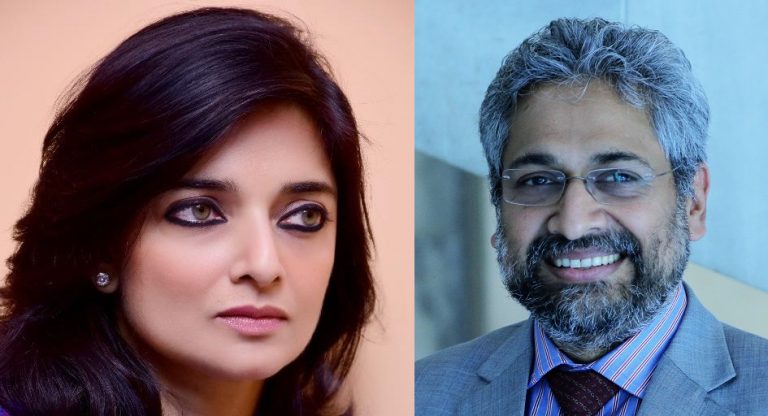
Once the bubble burst, journalist Ms. Rohini Singh and the Editor of The Wire, Mr. Siddharth Varadarajan resorted to victim playing. While Mr. Varadarajan took to twitter and appealed to the good folks to help them fight this “attack on press freedom” by donating generously to The Wire, Ms. Rohini Singh took to Facebook to come up with rhetoric when facts failed:

The portions that I have highlighted in red above is what caught my eye.

While publicising this poorly researched story, The Wire said that the journalist in question wrote about Robert Vadra’s dealings with DLF. This was necessary to pitch Rohini as some upright and ‘neutral’ journalist, especially after some reports, where she was involved as a journalist of The Economic Times, were heavily criticised on Twitter earlier for partisan reporting during the Uttar Pradesh assembly elections. Even if we leave aside Uttar Pradesh reporting controversies, the Vadra episode too is not without controversies. Though this time, the person in question is Mr. Varadrajan.

While Rohini Singh’s story about Vadra’s dealing with DLF did raise some questions about DLF dealings and Shalini Singh herself gave credit to Rohini Singh for her initial reportage, the scam as we know it today, was broken by Ms. Shalini Singh in 2012, substantially building on the information put forth by Rohini Singh, which as the evidence suggests, was not carried by the then Editor of The Hindu, Mr. Siddharth Varadarajan, for 7 long months. All of this leaves a serious question mark on Mr. Siddharth Varadarajan’s professional conduct and his commitment to the truth.

Ms. Shalini Singh had joined the Hindu in February 2012 and she submitted the Vadra story around March-April 2012, after emailing detailed questionnaires to both Mr. Robert Vadra and the DLF. She further says that after she submitted the Vadra report, the editorial team communicated to her that the story wasn’t good enough and couldn’t be carried. As a result, the story remained shelved for 7 months. The Editor of The Hindu at the time was Mr. Siddharth Varadarajan himself. In effect, the onus of the Robert Vadra scam story being shelved for that duration lies squarely on his shoulders.

In an earlier interview, Ms Shalini Singh has said that when she realized that there was no interest in carrying the story, she sought permission to give the story along with the documents to Mr. Prashant Bhushan who was at that time involved with “India Against Corruption”.

Although there were several opportunities to carry the story even then, none were taken. The story was eventually only carried AFTER Mr. Prashant Bhushan’s press conference where he talked about the dubious business deals of Robert Vadra.

The tale doesn’t end here. Even though it was now armed with the safety net of IAC’s allegations, Shalini claims that The Hindu still went ahead and took an editorial decision to add the following caveat to Ms. Shalini’s original article:

Ms. Shalini Singh is a seasoned investigative journalist who prefers to call spade a spade. I personally spoke to her and she confirmed to me that disclaimer of the documents revealing no illegality or impropriety was not her conclusion but an editorial intervention.

Her opinion, as evident from her other articles, television interview, tweets and my conversation with her, was that the scam not only implicated Mr. Robert Vadra but also landed at the doorstep of then Haryana Chief Minister Hooda and Congress President Sonia Gandhi herself. One might then ask – if there was “no illegality or impropriety”, what was the point of first inordinately delaying the the story and then later carrying it with such fanfare?

These revelations bring forth some glaring questions. What was Mr. Varadarajan’s motivation to shelve a story as explosive as this for 7 long months only to publish it after Prashant Bhushan’s press conference, that too with a caveat exonerating Robert Vadra? And if he did, how could he in good conscience, gloat over his credibility by citing how The Hindu broke the Vadra scam (we will see this gloating later in the article)?

Ms. Shalini Singh’s stories have never been questioned. Yet, The Hindu did not stand by her in this case and she eventually left the organization in 2014. It is thus amusing, that today Mr. Varadarajan and The Wire would use the credibility earned by Ms. Shalini to pass off their current shoddy journalism as investigative journalism of merit; to claim that they pursue stories regardless of political color and beyond party lines.

To quote from Ms. Rohini Singh’s Facebook post – “News is something someone wants to suppress. Everything else is advertisement. Intimidation and harassment are tools often used by powerful people to get journalists to toe their line”.

Freedom of Press is said to be curbed when the public’s right to know is threatened. While the usual suspects, including Mr. Varadarajan today, erroneously say that the freedom of press in under threat, was it not, when Siddharth himself ensured that the public’s right to know was trampled upon for 7 long months? Ms. Shalini Singh is no victim. But it would certainly seem like Mr. Varadarajan has a lot to answer for.

Addendum:

After I pursued this story, I felt it would be fair to get Mr. Varadarajan’s version of facts. Hence, OpIndia forwarded a detailed questionnaire to Mr. Siddharth Varadarajan on my behalf to which he graciously responded. Following is the unedited responses of Mr. Varadarajan (my questions in bold and his responses in italics) followed by my observations.

1. Ms. Shalini said she submitted the Vadra Scam report to you on March 2012 and you said that “it wasn’t good enough”. What was wrong with it?

Mr. Varadarajan : I took over as Editor of The Hindu in the third week of January 2012 and was the one who asked her to work on the Robert Vadra stories based on a set of papers that a colleague had received and passed on to me. That was soon after she joined The Hindu, perhaps in February, 2012. The source of the papers had indicated that they disclosed violations of the law by Sonia Gandhi’s son-in-law and I was thrilled to be able to pursue this story as the first big expose of my editorship. She filed a story as per my inbox in April 2012. Since the basic facts of Vadra’s dealings had already been broken by Rohini Singh in the ET in 2011, I had hoped for a substantial follow-up in terms of new material that would justify picking the threads on a story that someone had already broken so many months later. I had hoped for a story that I could use as a big splash. Sadly, the story was not of that calibre and I encouraged her to keep at it, in particular to find details of a transaction or dealing that was illegal or might be illegal.

Okay, so Mr. Varadrajan, now thinks Shalini (then with The Hindu) did not break the Vadra story and it was actually Rohini who did. Then why was he gloating on Twitter that The Hindu broke the Vadra story? See for example his old interaction with senior journalist Kanchan Gupta:


//platform.twitter.com/widgets.jsIt is then amusing that four years ago Vardarajan takes to twitter to bask in the reflected glory of Ms. Shalini’s investigative journalism that he tried to shelve altogether, and now he believes that the same story was not any substantial follow up to Rohini Singh’s story.

Though Mr. Varadarjan likes to insist otherwise, the motivation for which could not be immediately ascertained, a simple comparison of both stories reveals that Shalini Singh’s story is indeed “a substantial follow-up in terms of new material”. It reveals Vadra’s entire bouquet of properties, details financial chicanery, cooking of balance sheets and fraud, particularly “raising questions about his ability to buy so many high value properties with zero capital”, while giving a 360 degrees perspective on the issue by simultaneously shining the light on DLF’s own management integrity and possible financial compulsions. In contrast, Rohini Singh’s story was more about Vadra’s “business acumen “and liberally quotes him celebrating his “own talent”.

2. Ms. Shalini said that you shelved the story for 7 months and then eventually ran the story AFTER Mr. Prashant Bhushan’s press conference. If the story wasn’t good enough, why did you run the exact same story after 7 months?

Mr. Varadarajan : It was “shelved” but remained a work in progress. The problem was not that the story was “not good enough” but it wasn’t good enough for what we had wanted and I kept pushing Shalini to dig deeper, get more details, especially on the violation of laws which I was personally convinced had taken place, but for which we had to demonstrate some evidence. When Prashant Bhushan held his presser, the story dynamic changed, and we ran a story based on whatever she had because even if we never had enough to market our story as a “breaking story” earlier, we certainly had enough to present it as a major backgrounder now that the Vadra’s business deals had come back into the news. We had the biggest package on Vadra, and, more importantly, kept up the tempo as new facts began to tumble out, especially with Ashok Khemka’s revelations. Shalini Singh and Chander Suta Dogra in Chandigarh both reported extensively on various new details that began to emerge.

It would defy common sense for Ms. Shalini Singh to pass on a ‘work in progress’ to a political outfit. One would imagine that IAC’s safety net came from the fact that the documents, on the basis of which they were conducting the presser, were given to them by a seasoned journalist who had independently exposed the 2G scam from 2007 to 2014 and that Shalini Singh had connected all the dots independently.

Ms. Shalini Singh maintains that the story on the basis of which Mr. Bhushan conducted the press conference was given to him by Ms. Shalini herself with Mr. Varadarajan’s due concurrence. How then, did Mr. Bhushan’s press conference “change the dynamic of the story” as he claims now.

Mr. Varadarajan says that the story broken by Ms. Shalini had no merit to begin with, then how would he explain Mr. Khemka swinging into action within days of the release of the story, considering no action had been taken prior to Ms. Shalini’s expose being printed?

3.An editorial decision was taken to add a caveat to Ms. Shalini Singh’s original story that read “Though the documents reveal no illegality or impropriety on the part of Mr. Vadra, they do raise the questions of why DLF – which is a publicly traded company – would enter into multiple business transactions with him on terms that appear highly preferential”.

We spoke to Ms. Shalini Singh and she maintains this was an editorial edit and wasn’t a part of her original article. Her investigation DID NOT lead her to believe that the “documents reveal no illegality”.

Mr. Varadarajan : I edited her story so I take full responsibility for everything it. I don’t have the time to make a comparison but I suspect there were dozens of sentences that would have been rewritten and would have said things that were not in her first draft. That is what happens in editing.

3A. Then why was it added?

Mr. Varadarajan : For one, it is a statement of fact, borne out by the unfortunate reality that  the Modi and Khattar governments have so far failed to file any criminal charges against him. But the second part of the sentence is one that any editor will recognise as one that raised the central question about this deal: that DLF had shown favours to Vadra because of who he was.

This sadly sounds more like the kind of bizarre parallel a politician would make rather than something that could be coming from a senior editor. It is indeed tragic that Mr. Varadarajan has conveniently ignored the fact that the Modi and Khattar governments have initiated inquiries into deals by Vadra, and there is Dhingra Commission Report that details the wrongdoings.

Hooda has obtained a court stay on release of the Dhingra Commission Report. If there was indeed no criminal illegality, why would Hooda seek the shelter of a court stay?

If Mr. Varadarajan was as much of an independent media crusader as he claims to be, surely he should push for the Dhingra commission report to be made public so that the alleged misdeeds are suitably punished, instead of rushing to conclude they are innocent, despite the fact that he himself has published stories that establish illegality? And if Mr. Varadarajan thinks there is inaction on the part of the Modi government, then instead of using that inaction as his shield (considering he is one of PM Modi’s greatest critics), he should perhaps demand action.

3B. Whose decision was it to add the caveat?

Mr. Varadarajan : I don’t recall, to be honest, but the sentence is elegant and so I am happy to take credit for it. Apart from what I have already said about it, the ‘caveat’ was intended to serve the purpose of providing some additional insulation for The Hindu in the event that Vadra’s lawyers attempted to file a defamation case.

3C. Since you were the editor of The Hindu at the time, was it your decision to add the caveat?

Mr. Varadarajan : Yes, I take full responsibility for every word in the published story.

The jury is out on whether in a serious investigative story with such severe political consequences, an editor should comprise on accuracy in favor of “elegant sentences”.

Mr. Khemka acted within days of the story so clearly everyone else could see the merits of the investigative story except for the editor himself. ‘The unfortunate reality’ is that Mr. Varadarajan, instead of being contrite is “happy to take credit” for his error.

After receiving Mr. Varadarajan’s response, I spoke to Ms. Shalini Singh again and asked her if there was anything she would like to say. Following is her official response:

“Everyone is entitled to their opinion of any story, particularly a senior editor like Siddharth Varadarajan, and they must exercise that right. If the story “sadly’ never was, “of that calibre”, why on earth is he taking credit for it on social media?

Also, can he explain why this delayed and “shelved’ story created an uproar and not the earlier ET story? Again, why is my story still under discussion, considering it was done and dusted in 2012 and I am not the one bragging about it?

Allow me to jog his memory about the “calibre’” that perhaps those other than himself could see, including IAC, which launched its political career with this issue.

“Director general, land holdings and land records and inspector general of registration, Haryana, Ashok Khemka in October 2012 set aside the mutation of Mr. Vadra’s property giving effect to the sale deed in favor of DLF. “Mr. Khemka’s decision came in the wake of an inquiry he conducted following the publication of a story, ‘behind robert vadra’s fortunes, a maze of questions,’ in The Hindu on october 8, 2012”.

This is not my version of the outcome of my story but a fact which incidentally, forms the second paragraph of a story in The Hindu itself.

There was no reaction as far as i know to the Economic Times story despite all its “calibre”. But do correct me if I am wrong.”

It is indeed tragic that Mr. Varadarajan has resorted to trashing the very story that he prided himself with. Perhaps Mr. Varadarajan is questioning the authenticity of Ms. Shalini Singh’s expose because it suits his current needs to shift the glory onto other journalists. Perhaps the world of journalism functions on the principles of reflected glory. Either way, it seems like we will never know the real reason why the Vadra Expose by Ms. Shalini Singh was shelved for 7 months and why the public’s right to know was trampled upon then by Mr. Varadarajan.