Home Blog Page 7450

Know your Railways: Why our trains are perennially late

0

In the first article in this series, I tried to explain why Indian trains are still running 1955 technologies on our tracks. In the current article, I will focus on why Indian trains are eternally late.

If I have to list down the number of reasons, in no particular order,  it will look like below

  • Slow trains
  • Mindless populism by netas 
  • Dated signalling system
  • Ageing tracks 
  • Lack of enough tracks

But probably the last point contributes more towards trains running late than the first 4 combined. We will discuss how but let’s start with slow trains.

Slow Trains and More Stoppages

Our trains are not designed for faster acceleration or deceleration. As a result, a lot of time is wasted in stopping or starting the train and bringing it upto speed. One of the major reason for this is, all our long distance trains are conventional loco hauled trains which pull anything between 12-24 coaches and they are all unpowered. The age old self generating heavy battery mounted ICF coaches not helping the cause either. ICF coaches are at least 10 tonnes heavier than their LHB counterparts if we consider AC coaches.

Majority of the world has moved to EMU trainsets where multiple coaches have powered axles providing a faster acceleration but as it is with all of our public utility, no incentive or no passion has left our railways still running 50’s tech where a single locomotive at the front of the rake has to do all the pulling. This is not only inefficient but outdated as well. Mindless addition of non revenue earning stations by netas to massage their egos have left our trains as “super fasts” for the namesake only.

More the number of scheduled stoppages, more is the time wasted in braking and acceleration, not to count the numerous unscheduled halts. IR, at some point of time has to ditch its conventional design and switch to EMU train sets with at least 50% axles powered. That alone will do wonders to the average speed.

18477 Utkal Express being hauled by a Tuglakabad shed WAP7 loco

Dated Signalling System

We are following a very dated signalling system called Fixed Block Signalling System, where trains operate in blocks, having block length varying anywhere between 1 KM – 20 KM.The blocks work on a principle of interlocking where only one train is allowed on a block. A block will be marked by 2 or more signal poles. As a train crosses the 1st signal, it automatically turns red preventing any following train to enter that block. (You can actually see this when your train crosses a signal). This will turn green, only when the train crosses the next signal freeing up that block. Moreover, these signals solely rely on driver’s vision. If you recall trains getting late during fog season in North India, that explains it.

There have been talks of getting in cab signalling which is the de facto signalling system in Europe to India. Also the state-of-art Communication Based Train Control (CBTC) where trains can directly talk to each other. These will allow to put more trains on the existing track and allow them to run at an optimum speed while maintaining a safe braking distance. CBTC alone can add 1000 more suburban trains on Mumbai’s crowded lines, imagine what it can do to the bigger network.

A representative image of Signals used by IR, Image Courtesy IRFCA

Ageing Tracks

Ageing tracks, geography (Ghat sections, old bridges), unavailability of long stretches of straight tracks, curves, temporary speed restrictions for repairs and overhauls, level crossings add to the endless list of woes of the railways. And these are frequent in a populous country like India.

How many times you have seen your train cruising and suddenly dropping its speed for some time before speeding up again. It must be because of one of the above reason or even beyond that. But root cause would be a speed restriction, either temporary or permanent erected in that section causing the train to slow down. Not only that, most of our tracks are not strong enough to support 100+ KMPH speed. And these affect the overall average speed of the train.

Tracks at the Rourkela station

Not Enough Track

Now let’s discuss the main issue plaguing the Indian Railways unpunctuality. Going to be a bit lengthy, so bear with me please. We simply don’t have enough tracks for the number of trains to run on them. But hey, most of our main lines are already double lines or being doubled, right? Not enough. The root problem is, in India, we use the same track to run Rajdhanis, Superfasts, Expresses, Passenger trains, Intercities and freight trains.

Didn’t understand? If you have seen the Mumbai suburban section, you will probably have an idea of what I am talking about.Take the western line for example. They run 2 different services. Fast passenger and Slow. And they have dedicated lines for each of these services. Consider a slow train starts from Andheri, and a fast train follows. The slow train has to stop at the next station i.e. Jogeshwari while the fast train can skip 4 stations and directly stop at Borivali.

Now, imagine there is only one down line like most of our IR network. The fast train has to wait before Jogeshwari even if it doesn’t have a scheduled halt there. Now once the slow train starts again, it will have to be put on a loop somewhere between Jogeshwari and Goregaon to allow the fast train to pass. Now both trains are running behind schedule. Imagine another slow train between Goregaon and Kandivali and compound the problem.

Add freight trains, long distance trains, Rajdhanis, Shatabdis (Which have higher precedence) to this equation. But this doesn’t happen in Mumbai, right? Because they have dedicated tracks for different types of services. So nobody has to wait for another train to pass. Each can maintain their own schedule at their own pace on their own track. However, this is not true for pan India. Plus there are single lines, loco changes, loco reversals adding to the woes. 

Rajdhani barrels past the slow crawling Mumbai local at Goregaon

Consider the infamous Bermuda triangle of Indian railways i.e the Allahabad – Kanpur – Varanasi – Mughalsarai sections. Almost ~500 trains pass through these sections everyday, most of them being freight. This is one train every 3 minutes. There are times, where all loops in a station are taken by freight trains only. Imagine the traffic the section controllers have to handle on these sections everyday with outdated signalling system while trying to maintain timeliness of every train.

As I said, doubling of track in these kind of sections is not going to solve anything. Not even 3 lines. They probably need quadrupling along with dedicated tracks for freight. Of course, the Eastern Dedicated Freight Corridor (EDFC) running from Ludhiana – Dadri – Dankuni (Kolkata) will provide some relief. It travels via MGS-ALD section as well and will take off freight traffic from passenger lines.

Under construction Eastern Dedicated Freight Corridor

These plethora of reasons are enough to mess up all scheduling of trains beyond the the control of section controllers. Surprisingly, some of these factors are already factored into our time table known as “Slack timing”. This is IR officially saying that, there are reasons beyond our control for which trains will run slow or will have to stop. So we have to assign more time to cover the distance between station X and Y. This margin is given to trains to make up for the lost time for one of the above reasons. You can take any non-premier train time table, look at the distance covered between 2 stations and time taken to figure this out.

Take the Puri-NDLS Nilachal SF Express for example. As per its scheduled time table, it is given 2 hours to travel from Bhubaneswar to Bhadrak, a distance of nearly 150 KMs. So 75 KMPH average speed with 2 stations in between.

Now let’s apply the same parameters to a busy section like MGS-Varanasi. In the same time i.e. 2 hours, it is scheduled to run only 60 KMs. Now remember, this is a super fast express, so the schedule must have prepared giving it a higher precedence than a lot of other express and passenger trains, freight trains apart. Imagine the plight of ‘normal’ trains on this stretch which is already Fully Electric Double Line (FEDL). And this is just one example. There are many such smaller Bermuda triangles that exists, and despite it, if your train still reaches on time, you must thank your section controllers and loco pilot.

Now, in for a surprise. Our locos and rolling stock are already capable of doing 100+. We don’t need to import fancy EMU train sets for this. Take the new Agra Gatimaan express for example. It travels from NZM to Agra, a distance of 188 KMs in 1 hour and 30 minutes. An average speed of 125 KMPH. Pretty impressive, isn’t it? Did we upgrade the machinery for this? No. It’s our present rolling stock which is already capable enough. What we have done is to free up track and give it highest precedence over all other trains. 

Conclusion

As you can see, trains and punctuality is a complex mixture of lot of issues. The above example proves that if we don’t have to stop our trains for technical reasons and it only stops at its designated stops, with current rolling stocks, we can achieve 100+ average speed. And what do we need to achieve this? Free up tracks, add more tracks, strengthen existing tracks, don’t announce mindless new trains and upgrade our instruments. The current dispensation seems to be moving in the right direction by not allowing new train announcements in budget, capacity addition being one of the forefront agenda and revised DFC targets from 2021 to 2019 which will segregate freight traffic from passenger traffic. 

Up next, why we need High Speed Railways, Bullet train as they call it and why it can’t wait.

Also read the other two articles in the “Know Your Railways” series:

Part 1: Know your Railways – Rolling Stock and Coaches

Part 3: Know Your Railways – High Speed Rail and why India needs it to progress

Hindu groups defy Mamata to perform shastra puja across Bengal

0

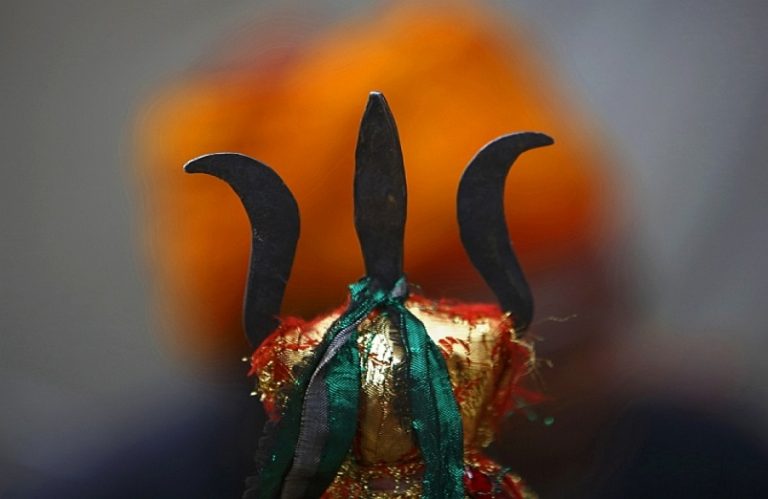
Shastra Puja or Ayudha Puja is an annual Hindu ritual held on Navami-Dashami of the Navaratra festival. Here weapons are worshipped on Vijaydashmi after they are blessed by the goddess.

This ancient religious practice though, is regularly depicted as a political one by a section of the media. We had recently reported as to how a journalist in a possible case of Hinduphobia had called this Shastra Puja as a case of Hindu groups following Nathuram Godse’s lessons.

Even West Bengal Chief Minister Mamata Banerjee who has become notorious for allegedly discriminating against Hindu festivals, too decided to flex her muscles against this Shastra Puja.

On September 4th Mamata had reportedly directed the police administration to “thwart” any attempt to celebrate Shastra Puja or any weapon worship on Dashami.

This led to Hindu groups like the Vishwa Hindu Parishad (VHP) defiantly state that they intended to carry out the Puja at at-least 300 locations across the state and would move to court for obtaining the required permission.

As a result, Joydev Talodhi a priest associated with the VHP filed a petition with the Calcutta Hugh Court wherein he complained, that the Mamata government had not responded to the applications seeking permission for the Shastra Puja. As a result of the petition, the government submitted to the High Court that no permission was required to hold the puja within private premises.

This a result was hailed as a victory by the Hindu groups even though the court ruling did not give permission to street processions, the likes of which were witnessed during Ram Navami and Hanuman Jayanti.

The lack of permission for street procession was objected to by BJP state president Dilip Ghosh who reportedly wondered as to why such restrictions were imposed by the administration against the traditional Hindu festivals when Muslims openly carried arms during Muharram processions.

Now after Vijayadashmi, it has been reported that Shastra Puja was indeed performed in hundreds of locations across the state. Most of the pujas were indeed held indoors in compliance with the Calcutta High Court order.

But according to the report, in Burdwan, Birbhum and West Midnapore districts processions were carried out by various akharas. The report also claimed that the Bajrangi Dal even took the puja to various localities to raise awareness among the Hindus.

Such a widespread observance of the ritual by the Hindu groups might be called an act of defiance as the pujas were carried out even though the Mamata government had openly expressed its antipathy against the practice.

It was recently seen how after the Calcutta High Court had revoked Mamata government’s order to ban Durga idol immersions on Muharram, the government had in-turn made it mandatory for puja administrators to take police permission if they indeed wanted to immerse idols on that day. Plus it was reported that TMC legislators would be “persuading” the pujas organisers to not carry out immersion on that day.

As reported by us, hardly any of the puja organisers sought the required permission, in what was seen as unwillingness to go against the wishes of the Mamata government.

Detaining me at airport shows Mamata Banerjee’s anti-Hindu face: BJP spokie Bagga

0

Following West Bengal Chief Minister Mamata Banerjee’s announcement of restricting Durga idol immersion because of Muharram, BJP Delhi spokesperson Tajinder Bagga had set out a heroic challenge that he will personally go to Bengal and take part in the idol immersion:


However, on the day of immersion, when Bagga arrived at the Kolkata airport, he tweeted that he was detained by West Bengal Police and not allowed to enter the city. He said they the Police had orders from the CM’s office that they cannot let him enter the city:


They did not provide any reason why he could not be allowed in the city while as a citizen of India he can move around freely, without any restrictions, to any part of India.

Bagga further said that this exposed the anti-Hindu face of the West Bengal CM and also proves that she was frustrated with the whole turn of events:


Twitterati came out in support of Bagga and said while Rohingyas, who have been accused of carrying out terrorist activities, are welcome in Bengal, an Indian citizen has to to be ‘deported’ from Bengal.


Of late, Mamata Banerjee has been treating BJP as the main opposition party in the state, as the communist parties have been on decline while the BJP has been on a rise.

Why Hindutva is needed along with Hinduism – a historical perspective

0

“All the major faiths in the world, have been competing for dominance of the world, since recorded history.”

One of the gravest error, I did here, is to paint all the religions with one brush. A faith must be classified on the basis on how it was originated and How it was/is being used.

Hinduism, the most ancient faith system, developed over a course of centuries, which accommodated various local cultural practices, beliefs during and after Vedic period (c. 1500 to c. 600 BCE). The scholars of that time, brilliantly encompassed diversified local practices, deities, and still were able to provide a common narrative. Naturally the narrative resulted a forbearing and tolerant faith system, or way of life, now known as Hinduism.

Deliberately, scope of reform was kept open, that is the reason why, while most of the other religion are rigid with time, Hinduism has gone through many reforms, whenever required by the changing time and society. As the old saying, if you don’t change with time, even the good turns into evil.

It is pertinent to analyze, despite being the oldest faith system, why Hinduism remained limited in geography, and even went through subjugation for centuries in the hands of the new political religions which originated much later (1st to 7th century) and quickly dominated the world.

Those new religions which originated in medieval period, were designed/ originated and used mainly as a political/power tool and used as a means to hoard the masses, stifling the dissenting voices. The most significant feature of these new religions was “Submission” and not “Shastarth” (debate). The doubting voices in Hinduism were encouraged in form of Shastarth, other religion brutally muted them in name of blasphemy.

The new form of religion was brutal, submissive and thus it quickly spread with force of sword. May of Pagan regions, (like old Persia now Iran) were quickly humiliated and converted quickly by end of 7th century. Then started numerous attacks on Indian sub-continent as well, where Hinduism had flourished over the centuries.

Muslim conquests on the Indian subcontinent mainly took place from the 12th to the 16th centuries, though earlier Muslim conquests made limited inroads into modern Afghanistan and Pakistan as early as the time of the Rajput kingdoms in the 8th century. With the establishment of the Delhi Sultanate, Islam spread across large parts of the subcontinent. In 1204, Bakhtiar Khilji led the Muslim conquest of Bengal, marking the eastern-most expansion of Islam at the time.

One of reason of the defeat of the region, where people and the kingdoms followed Hinduism, was the lack of coherent political ideology. Hinduism, as earlier explained, lacked a political/power wing, as it was designed as a path to attain spiritual objectives, unlike other religions where dominance and power over the world is commanded.

With lack of common political narrative, factions emerged among several ruling kingdoms within the Subcontinent. Many of the local rulers compromised and formed nexus with invading forces, thus weakening the resistance and ultimate result was subjugation of entire region by the much smaller invading forces. This can be attributed to the lack of uniform political ideology under the Hinduism, the common religion followed by most of the kingdoms before the Islamic conquests.

But despite the subjugation over centuries (from 12th to 18th century), Hinduism sprung back, even more resilient than before. Isn’t it surprising that whereas Persia was 100% converted within 50 years, Hinduism survived over centuries of being ruled over by the same forces? Why ? Did the invading ideology become suddenly liberal when they came to India, as many falsely believe today? The Reason was simple, Development of political wing in Hinduism, i.e. “Hindutva”.

The history of post-independence is only 70 year old, and the dynamics between the religions is centuries old. Someone who reads history only post-independence (from British Raj) and develops narrative of tolerance/lack of enmity and uniformity in designs of different religions is actually closing his eyes towards 99% of the history, which existed right before that.

“History imparts important lessons, those who fail to pick it up, are treated the same way by the history itself.”

These people naively claim the rise of Hindutva started with Jan Sangh moment in contemporary India, or even during in the current ruling dispensation under Narendra Modi. However even a part-time reader of history, can trace back the peak of Hindutva, during Maratha resurgence in much of 18th century. Even before that It was simmering in the local populace, over centuries of brutal subjugation.

There are people, who praise Hinduism but abhor Hindutva. It is same like praising God of Creation Brahma, but abhorring his creation “the universe”. It is pertinent to note from the lessons learnt in history that without the protection of Hindutva ideology a peaceful/ Hinduism cannot even survive.

The aim still remains the same of entire “Hindu way of life” to strive for spirituality, only it has also learnt to defend itself by carving out a defensive ideology i.e. Hindutva. Without Hindutva, Hinduism was/is and will be vulnerable.

Three types of haters who hate cows and cow lovers

0

An instance of depravity of the left “liberal” cabal started to reveal itself to me on July 3rd 2017. It’s 29th September, and the mockery of my faith hasn’t stopped.

It was on 3rd July that I visited my hometown to participate in the griha pravesh ceremony of our new home. With great enthusiasm, I clicked pictures of the ceremony and posted on Twitter. Weaved in a thread, I put up, what I thought was an informative part of the ceremony.

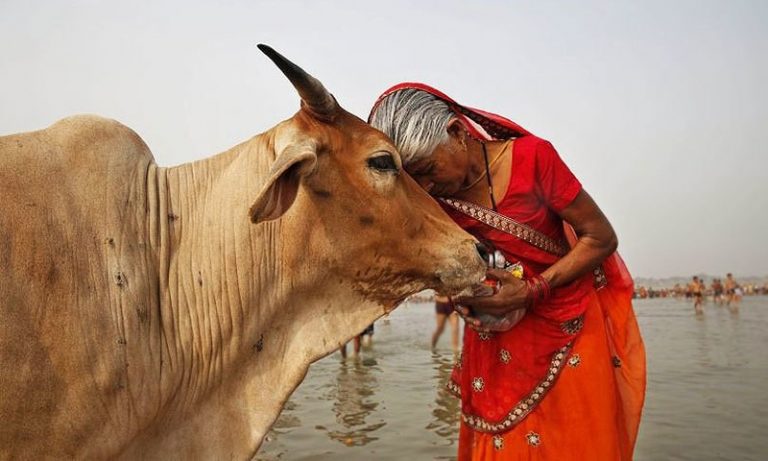
As a part of the ceremony, with great affection, Gaumata along with her calf were the first to enter the home followed by good books, pots of milk, curd, ghee, water, and then some clothes; in that order. While the rest of the puja was being done, in liberal parlance I “dared to post pictures of cows and calves”. And thus, the saga of love and hate, of praise and derision, of deliberate attempts to mock my faith, of vulgarity and bigotry commenced.

While a section of people, mostly the “Right Wing” so to speak, and dharmics as I would call us, expressed their love and appreciation for the pictures, the left “liberal” cabal started trying to use those pictures to hurt. Strangely, this dose of hatred was conspicuously missing when I put pictures with my dog.

I write this article to express my disgust at the left “liberal” modus operandi and double standards.

There is something about cows that Islamists and left “liberals”, who are quite similar in their approach to the Hindu faith, hate. Cows are hated by Evangelists too and beef is fed upon conversion. There are obvious expansionist plans that call for such a strategy.

But why would an Indian, born and brought up in Indian culture mock me for posting pictures with my pet cows, was the obvious question that is puzzling. Specially, when it is these very people who preach the ethics of animal rights, religious tolerance and freedom of faith pretending them to be their original ideas.

A few samples:

Screenshot of the Hinuphobic and hateful tweetScreenshot of the hateful and Hinduphobic tweet - 2Screenshot of the hateful and Hinduphobic tweet - 3Screenshot of the hateful and Hinduphobic tweet - 4Screenshot of the hateful and Hinduphobic tweet - 5

For a moment, let us keep faith aside. If one looks at this episode purely from the lens of what the cabal preaches about animal rights, their hypocrisy is clear. They hold up posters during Diwali, urging Hindus to refrain from bursting crackers because animals get scared, and yet, the thought of a woman posting a picture with a cow, inspired ire.

I wonder then if their animal rights concerns are just tools with which they can hound the Hindu faith? I wonder if it is really the cow, or that my picture represented Hindu piety, that inspired their hate?

If one is born and brought up in Indian culture, however non-religious, atheist or non-conventional one is, there are very less chances that he or she has no love or respect for animals. Compassion and divinity in all things and beings comes naturally to Bharatiya folks. Birds, animals, reptiles all allowed to flourish. What is the cause then that some Indians despite having grown up drinking milk of the same cows show disgust even at the thought of others loving them?

Not just disgust, they up the attack a little and throw steak photos at those posing with their pets:

Hinduphobia and hate on Twitter - 1Hinduphobia and hate on Twitter - 2

They may defend their disdain by saying “cow is just another animal that we mock”. I am sure that for them cow is NOT just another animal because I have never been recipient of their anger when I posted pictures with my other pets, especially my dog. My pictures with my cow particularly caused extreme pain and anguish to folks such as these and that pain makes them spit bile, steak pics, slaughter jokes and cow hate posts.

There can be three possible explanations to their actions:

1. They are expansionist radical Islamists or Evangelists who see the love that Hindus have for cows as resistance to their plan of shaming Hindus of their roots. The mere sight of pious Hindus taking pride in their culture and rituals is looked upon almost as an act of ‘insubordination’. And once the threat is perceived, they proceed to mock the Hindu faith and spread lies.

Hinduphobic Islamist on Twitter - 1Hinduphobic Islamist on Twitter - 1

2. There are also namesake ‘atheists’ and ‘rationalists’ who, in their twisted crusade, are trying to help Hindus get “rid of shackles of seeing divinity in animals”. I say namesake because in my experience, these rationalists are anything but rational, and Atheists who are only meant to be devoid of faith in the existence of god, take it upon themselves to single out and project hate at the only religion that respects atheists are much as theists.

Their shenanigans are of course falling on deaf ears as Hindus continue to look for divinity in all beings, including the cow. Perhaps, this ‘crusade’ is because their campaign to deride the Hindu faith and strip Hindus of their rituals is not reaping results.

Low IQ Hindubphone on Twitter - 1Low IQ Hindubphone on Twitter - 2Low IQ Hindubphone on Twitter - 3

3. There were also some well-meaning folks ashamed of countable violence that happened due to cow vigilantes. And here is where I hold the motivated media responsible which ran an entire malign campaign against gau-rakshaks and completely ignored the violence perpetrated by cow smugglers.

They believe this one-sided skewed narrative and are completely clueless about smuggling rackets and related uncounted gau-rakshak deaths. They are forced to feel so ashamed that they mock cow pictures because:

(a) Narrative about Hindus being violent to protect their property, pets and friends makes them feel inferior, and

(b) they are ashamed of Gau bhakti because media outlets have shamed them of Hindu roots of cow protection. They have internalized the shame that almost every media outlet has peddled overtly and covertly.

Media spreading Hinduphobia -1 Media spreading Hinduphobia -2Media spreading Hinduphobia -3Media spreading Hinduphobia -4

I personally have no sympathy for any of these three varieties.

Radical Islamists and evangelists are contemptible in their hatred for an animal for their expansionism and hatred for the Hindu faith. The self-styled rationalists and atheists are forcing an ill-conceived philosophy on masses that would never work in long term. Faith in divinity of all beings is good for humanity as compared to no faith because latter will eventually lead to disrespect for everything. The third variety of cow haters only get my pity.

I can deal with the  contempt that flew my way. But as a  Hindu, I feel distraught at the amount of abuse the innocent animal has to endure. It is also painful, that it is not only these elements who have indulged in this debauchery, but also political parties that think of these elements as a vote bank.

I don’t expect the left “liberals” to worship or even grant basic dignity to Gaumata, but I wish they could at the least not poke fun at our emotions for our family including our pets. Family is the unit we cherish. Cow is like family to us. Even those who cant afford to really tend to the animal, show reverence because a cow only gives and helps them raise a healthy family.

Nothing positive really comes out of this blind hate. And considering Hindus have endured far worse, our faith is not about to be shaken. What it does, is expose the Left’s double standards and viciousness. Their utter disregard to the very values they pretend to espouse.

There are seven mothers any Hindu respects naturally, perhaps sub-consciously – own mother, Guru mata, Brāhmaṇi, Queen, Gau mata, Nurse and mother Earth. Love for cow isn’t something vulgar or bizarre. It’s basic sanskaar to respect the ones who give us life, nurture us, give us life lessons, protect us, look after us, treat us when we are sick and provide us everything to sustain our lives. It’s a mark of respect to not defile when you can respectfully take from them what is only absolutely needed and nothing more. These values might be extremely complex for some, considering there is nothing sacred that they wouldn’t deride, but I sure hope this is read by these very elements with an open mind.

It’s common sense to be respectful to beings beneficial to us. That’s symbiosis. The whataboutery is needless. The position of cow as a revered being stands independent. And try as they may, our faith shall survive and there is nothing they can do about it.

Locals protest against Pakistani Army atrocities in Pakistan Occupied Kashmir

0

The residents of Neelum Valley in Pakistan Occupied Kashmir again protested against the Pakistani Army raising “Jeena Ka Haq Do” slogans.


The local residents of the valley have been accusing the Pakistan Army of violating human rights since a long time. Earlier this month, Pakistani Army had beaten up and tortured four youths who had gone for seeking work on a work-site owned by Pakistani.


It is said that five Pakistan Army men with the Frontier Works Organisation (FWO) of Pakistan Army were involved in this latest brutality.


When the locals went to file an FIR against the Pakistani Army to the police, the police in PoK said they have no authority to file an FIR against the Army.

In the latest protests, the locals are accusing the Pakistani Army of kidnapping and torturing them. They have accused that the Pakistani Army is forcing the youth from the valley to cross over to Indian territory and spy for them by offering Rs. 500 to Rs. 3,000 for the same.

The villagers also blame the Pakistani Army for forcefully grabbing their land despite showing proof of registration of the property. People living in the border areas of the Pakistan Occupied Kashmir have been facing tough existence as the Pakistani Army continues to exploit them.

No Durga Puja organiser seeks the mandatory permission required to immerse idols on Muharram

0

The vibrant festival of Durga Puja was tainted by politics this year after the Mamata government had decreed that there would be no idol immersion in 1st October owing to Muslim festival of Muharram falling on that day.

This led to PILs getting filed in the Calcutta High Court against this decision. The High Court as a result first pulled up the Mamata government and then later put a stay order on the decision. The court also rebuked the Mamata government by stating that it was exercising extreme power without any basis.

Possibly in-order to somehow circumvent the High Court decision, the Mamata government later ordered that if Durga Puja organisers want to immerse idols on Muharram, they would have to take prior police permissions. These permissions would also have to be submitted “well in advance”. Plus in order to further “persuade” the Puja organisers to take the “right” decision, the TMC legislators were scheduled to convince the organisers to not immerse the idols on 1st October.

Now it seems that the Mamata government has become successful in enforcing an unofficial ban after it has been reported that Bengal Police have received no requests for idol immersions on Muharram till Friday morning. Additional director general (law & order), Anuj Sharma stated that out of the about 25,000 Durga Pujas in the state, none has sent such an application.

A senior officer in the Kolkata police even dismissed the possibility of any last minute application. Plus even though such an application is made, it might well be refused in the pretext that it wasn’t made “well in advance”.

A member of the state cabinet even claimed that the TMC leaders and elected representatives had successfully influenced over 95% of the community pujas to not immerse idols on Muharram. The rest 5% are reportedly controlled by Congress leaders but the state cabinet member expressed confidence that no one would act in a way which would disturb the communal harmony. 

Now 32 “Love Jihad” cases from Kerala come under NIA scrutiny

0

In recent days cases of “Love Jihad”, a term used to lure a Hindu girl into converting and marrying a Muslim boy are becoming publicised from the state of Kerala.

Recently we had reported how the Supreme Court had ordered the National Investigative Agency (NIA) to probe one such case. In the case, the Kerala High Court had declared the particular marriage between the girl named Akhila Asokan and a man named Shafin Jahan, null and void on the petition of her father. The father had alleged that the girl was forced to convert after being abducted and wrongly confined at an illegal Islamic conversion.

Later the plot had turned deeper. It was reported that there was a common link between two Hindu girls, the same Akhila and a certain Athira who were persuaded to join Islam. It has been alleged that a common mentor named Sainaba, associated with the radical group Popular Front of India (PFI), “lured” the two girls into accepting Islam.

Even Athira’s parents had filed a habeas corpus petition in the Kerala High Court regarding the matter and the girl has since then returned to her parents home.

Now it seems that the NIA is taking the whole “Love Jihad” situation very seriously. It has been reported that the agency is scrutinising about 32 such cases in Kerala. The agency has also asked the Kerala police to give details of alleged forced conversions which have been carried out in Therbiyathul Islam Sabha in Kozhikode, which is a religious centre authorised by the Kerala government.

The number of cases seem to be way higher at 92, but the agency is initially only focusing on 32. According to a NIA official, the agency would be unearthing the entire racket, as has been instructed to them by the Supreme Court. Even Kerala police has registered FIRs in these cases based on complaints from family members.

The NIA has also reportedly sent details of 4 terror cases which had the alleged involvement of the same PFI, which is now connected to the love jihad racket. It also is the same organisation whose program was recently attended by former Vice President Hamid Ansari. He had later defended his appearance by claiming that he was ignorant about the fact that PFI was one of the co-organisers of the event.

How a self proclaimed feminist journalist’s behaviour drove a female journalist to attempt suicide

0

A journalist associated with the Left-leaning publication The Wire has been accused of cheating and abusing in a failed love affair, leading the girl to attempt suicide.

A woman journalist associated with the publication Prabhat Khabar, has alleged that one Krishna Kant, a journalist associated with The Wire Hindi, has cheated on her by making false promises of marriage.


In Facebook posts, the girl and her friends have accused Krishnakant, of mentally torturing a woman leading her to attempt suicide. They also raise questions on the publication, The Wire, which regularly raises questions pertaining to feminism and women empowerment, but are maintaining total silence on the accusations put up by the woman on one of their employees. They also raise the issue that the woman journalist, who attempted suicide, is also in the Facebook friends’ list of The Wire chief Siddharth Varadarajan, who chose to remain mum on the issue despite reading the updates he was tagged in.

The girl, who is now out of danger, also accused Krishnakant of gaslighting and fabricating stories to keep up the line.


While we understand what Krishnakant has done is not illegal, the way he behaved may be socially unacceptable, especially when you stand for feminism and are vocally anti-casteism. It just brings out the internal, normalised hypocrisy in the Left ecosystem. This is not the first time the “liberals” have not spoken a word against ‘one of their own’ who is in the wrong.

Surprising is that Krishna Kant is professionally associated with various champions of feminism, like the abusive troll Swati Chaturvedi, who calls herself a journalist.

Earlier, another self proclaimed feminist, who worked another Left leaning online publication, Scroll, as a journalist was accused by a woman of lying, cheating and gaslighting.


The said journalist later confessed on Twitter of his behaviour and repeated the same thing that he is taking therapy (which the woman had accused him of lying about in her previous tweets). She also accused him of not respecting her consent and violating it.


This is not the first time the liberal ecosystem has watched over the backs of sexual predators and cheaters just because they are ‘one of their own’. Earlier, we had said how Kumar Sundaram, from the Left-leaning website “India Resists” was accused of sexual harassment but immediately forgiven by the self proclaimed liberals and feminists just because he ‘apologised’ on a ‘public platform’ like Facebook.

It just goes out to show that just because someone calls themselves “liberals” it does not mean they actually are.

This is how Jayant Sinha and Rajeev Chandrashekhar countered Yashwant Sinha’s article on the Indian Economy

0

Debates over the Indian Economy are a never ending tug of war between various politicians and economic experts who regularly differ over its assessment. A similar “war of thoughts” was recently unleashed by senior BJP leader and former Finance Minister Yashwant Sinha who wrote an article titled, “I need to speak up now”. 

In the article, Sinha makes sweeping charges against the Modi government and its management of the Indian economy. He claimed that what he was about to speak, echoed the sentiments of a large number of people in the BJP who weren’t speaking out due to fear.

After taking a jab at Arun Jaitley having being made the Finance Minister even after losing his Lok Sabha election and for handling more than one important ministry (Like defence) which according to him resulted in lack of focus, Sinha began his economic assessment.

He claimed that Jaitley was lucky with depressed global crude oil prices which put lakhs of crores at his disposal. He claimed that this bonanza should have been imaginatively used but it was wasted and legacy problems like NPAs and stalled projects remained.

He broadly claimed that private investment had shrunk, industrial production has collapsed, services, exports have slowed down, demonetisation was a disaster, a badly conceived and poorly implemented GST had played havoc with businesses and countless millions had lost their jobs.

He also pointed out the declining growth rates which reached a low of 5.7% in Q1 of 2017. Plus he pointed out the fact that the central government had changed the GDP calculation to statistically increase the growth figures by 200 basis points or 2% which might mean that the economy is in an even worse shape than what is currently portrayed.

He claimed that PM Modi is worried by it all and Finance Minister who had promised a growth reviving package, had not yet delivered on that front. He kept going further by claiming that the Small & Medium Enterprise (SME) sector was stressed and also lamented the possible new age Tax terrorism. He finished the article by claiming that the Indian economy was scheduled for a hard landing and also took a parting jab at Jaitley.

Such a damning article by a leader of Yashwant Sinha’s statue who himself had been carried out path-breaking reforms in sectors like petroleum and telecom, meant that the media was sent into a tizzy. The high profile coverage of the article led the Modi government to respond and it cheekily chose Jayant Sinha (Yashwant Sinha’s son) to lead the front.

Jayant Sinha fired the counter-shots via a blog titled, “New economy for new India: Fundamental changes put in place for an open, transparent, competitive and innovation-driven economy”. 

After claiming that “several articles” were written about the challenges being faced by the Indian economy, he claimed that, they drew sweeping conclusions from a narrow set of facts and missed the fundamental structural reforms which are transforming the economy.”

He claimed that these reforms are necessary to create a ‘New India’ and provide jobs for one-billion strong workforce. He also claimed that the new economy which will be created would be, “ transparent, globally cost-competitive, and innovation driven”. Even though for obvious reasons he didn’t provide a point to point counter to Sinha senior’s article, he decided to approach it by listing out his government’s schemes and how they are designed to benefit the nation:

  • He claimed that GST and demonetisation were designed to formalise India’s economy by bringing transactions into the tax net which in the long term would mean more resources at the state’s disposal and less economic friction meaning higher GDP.
  • He claimed that licenses were being allocated transparently and a new bankruptcy code would mean a relief to the bank’s NPAs.
  • He pointed out that FDI had increased from $36 billion in FY2014 to $60 billion in FY2017 which means confidence in the economy.
  • Schemes like direct-benefit-transfer which are designed to bring in transparency, Atal Innovation Mission, Mudra programme, StartUp India and massive infrastructure revamp, found a mention.
  • Drums were beaten about the almost completed achievements like 100% village electrification by 2018 and road construction pace had gone up to 133 KM per day.

Overall this article talked about the designed impact of the government’s schemes on the Indian economy without really being more forthcoming about Yashwant Sinha’s concerns. Though it might be argued that Sinha senior himself didn’t back many of his claims with numbers which made it easier for Jayant Sinha to “conveniently ignore” them.

Today entrepreneur, Rajya Sabha member and NDA Kerala Chairman, Rajeev Chandrashekhar too decided to step into the whole “article wars” by writing an article intelligently titled, “I too need to speak up now”. 

This article which was openly a rebuttal to Yashwant Sinha’s piece, claimed that Sinha had joined others in a desperate attempt to build a narrative of a failing economy which can’t be further from the truth.

He mentioned the ironic embrace of Sinha’s article by Chidambaram and pointed out that Sinha himself had written that he (Chidambaram) presided over the destruction of the economy during UPA 2.

Rajeev also claimed that Sinha’s article was not factual and was dictated by his antipathy to the government. He claimed that Sinha had not compared the relative health of the economy as compared to the “dark and dangerous” UPA days which had meant 12 consecutive quarters of GDP decline, 24 quarters of rising inflation, a record deficit of $400 billion, plummeting investor confidence among others.

He claimed that Modi government after inheriting such a dilapidated economy, slowly built it back over the last 3 years which has meant, GDP and per-capita income growth, high FDI and foreign exchange reserves, end of crony-capitalism in public sector banks and high medium to long term investor confidence.

He claimed that some of the challenges faced by the government are global like disruptive changes in manufacturing thanks to sharp increase in automation leading to loss in jobs.

He also poked holes in Sinha’s claims that “petroleum windfall” wasn’t managed properly. Rajeev claimed that the charge was vague and the government had indeed used the cash to fix the devastated balance sheets of the oil marketing companies, increase public spending in programmes, subsidies and infrastructure.

He took on the badly implemented GST and failed demonetisation charge by Sinha and claimed that short term disruptions were expected and conceded that implementing GST so soon after demonetisation compounded the the short-term-impact. This timing though according to him, was determined more by the oppositions reluctance to let the bills pass earlier.

He also called the criticism of the GST as laughable as all its featured were derived after taking the Opposition in Parliament, state legislatures and the GST council in confidence. Further he claimed that if indeed the heightened compliance rate continued, the tax structure might be simplified in the near future.

While talking about the aspect of low GDP growth, Rajeev stated that government intervention was a legitimate demand but it shouldn’t be a knee jerk reaction which in 2008 resulted in inflation and fiscal challenge.

He concluded the article by claiming that Sinha was off the mark in his assessment of the present situation which was perhaps a case of personal dislikes overcoming facts and reality. 

Finally, one major point which was skipped by both the respondents was about the NDA government changing the GDP calculation which others too have expressed their reservations about. Having said that, it remains to be seen if such counter arguments result in Yashwant Sinha elaborating on his allegations and even possibly responding to the responses that have come his way.