Home Blog Page 7632

“Rising intolerance” of another kind; privilege motion against BJD MP Jay Panda for his opinions

0

6 MPs of Rajya Sabha have filed a breach of privilege notice against Lok Sabha MP Baijayant Jay Panda of Biju Janta Dal (BJD) for his opinions. Of late, Mr. Panda has been arguing for constitutional and political reforms where powers, especially the veto powers of the upper house i.e. the Rajya Sabha are rationalized.

Jay Panda, known for his frank opinions inside and outside the Parliament, has specially argued for reduced powers of Rajya Sabha so that it is not able to block the popular mandate of the day.

His views have become relevant in wake of recent events where the current NDA government has been unable to push legislative reforms because it doesn’t enjoy majority in the upper house.

Last month in Goa, Mr. Panda had argued for the same during the India Ideas Conclave. Having been a Rajya Sabha MP himself earlier, he conceded that the existence of the upper house was necessary for checks and balances, but added that “indirectly elected houses like the UK Lords don’t have a veto, and neither should the Rajya Sabha, unless it becomes directly elected like the US Senate.”

He elaborated upon those views last week in an article for Times of India where he cited examples of US, UK, and Italy to show that globally it was unparalleled the way Rajya Sabha in India could block the popular mandate.

Italy’s upper house had recently voted to drastically reduce its own powers, Panda pointed out, making a case of Indian upper house to rethink its powers to block reforms of a popular government.

In his article, he further argued that if the Rajya Sabha’s veto powers were to be untouched, its selection process should be changed allowing most of its members to be elected directly. “That would make its members’ agendas much less insular, and more broadly aligned with public interest,” he argued.

However, his views have upset some members of the Rajya Sabha, especially of those parties who have been crying about “growing intolerance”, who have decided to move a privilege motion against him.

On Twitter, Mr. Panda revealed names of some of the MPs who ‘could not tolerate his op-ed’. These included Derek O’Brien of Trinamool Congress, KC Tyagi of Janta Dal (United), D Raja of CPI, and Mohsina Kidwali of Congress – all members of parties who have been arguing that ‘intolerance’ is rising while claiming themselves to be tolerant.


Mr. Panda’s ideas are indeed worthy of deliberations as we have recently seen how the current Modi government, despite enjoying an absolutely majority in the Lok Sabha, has been unable to pass bills because it doesn’t enjoy the numeric strength in the Rajya Sabha.

Parties who have lost popular mandate continue to enjoy strength in the Rajya Sabha, and thus are able to block the popular mandate. Mr. Panda just called for a debate if the current state of affairs warranted a political reform. Sadly instead of debate, he has received a notice accusing him of Contempt of House.

R Jagannathan on why he removed his article on Arun Jaitley and his new innings with Swarajya

Noted journalist and former Editor-in-Chief of all Network18 publications Raghavan Jagannathan, popularly known as Jaggi, has joined as Editorial Director of Swarajya magazine – the modern reboot of a magazine started by same name under the patronage of Chakravarti Rajagoplachari or Rajaji.

Swarajya magazine aims to be a ‘big tent’ of right liberal ideas and Jaggi’s association is being seen as an important step towards realizing that goal. He joined the independent media start-up on 1st December and some of his articles are already live on Swarajya magazine’s website.


Even as he settles in his new role, Jaggi took some time out to talk to OpIndia.com about his new innings at Swarajya magazine as well as about his past stint at Firstpost.com, where one of his articles critical of the Finance Minister Arun Jaitley had mysteriously disappeared from the website.

In his exclusive interview with OpIndia.com, Jaggi explained how and why it happened. The interview questions (in bold) and Jaggi’s answers follow:

First of all Congratulations for this new innings at Swarajya magazine and we wish you all the best. Doing a mainstream media, let’s begin by asking,“aapko kaisa lag raha hai?”

First, let me correct you. Today, digital is the mainstream, not print or TV, though they admittedly occupy a lot of mindspace and provide greater access to power.

And yes, to answer your question, mujhe bahut achcha lagta hai. I have always believed that digital is the best game in town, and getting an opportunity to play a role in Swarajya digital rejuvenates me. It is a different space from news media. I will be contributing to Swarajya Magazine, but my main focus is the digital space.

You have an impressive record as Editor of various big publications that includes names like Business Standard, Forbes, Moneycontrol, etc. You could have started another innings with another big media house, but you chose a start-up. What were your motivations?

Having been there done that, it is the size of the challenge that excites me, not the size of my organisation. Starting Firstpost was a challenge and my colleagues, especially Durga Raghunath and several of our lead writers, helped us create one of India’s first digital media brands in the news-cum-views space.

This might be too early to ask, but what will be your focus areas in Swarajya magazine? What do you think are the current strong and weak areas of Swarajya? If you could share a short SWOT analysis of the magazine?

As I said, my focus in on the digital space, which will be key to widening the reach of the print Swarajya brand and growth of its overall franchise. The general idea is to create an alternate voice for truly liberal views that draws from some of our core civilizational values without being hidebound.

Unlike the Lutyens media, we see no reason to be inimical to Indic (especially Hindu) values. In the area of economics, we want to champion market-oriented ideas. We want to provide a counter-point to the so-called Left-liberal consensus, which is essentially about cronyism in the name of the poor. Left is not left, and liberal is not liberal in India.

Many media analysts believe that magazine, in its physical form, is a dying business model. Swarajya has a print magazine offering, and it is a digital product as well. Do you see any need to rationalize this or both the products can co-exist?

Print can come back into its own provided it serves readers. Print appeals to a certain kind of reader, while digital appeals to another – though there are overlaps. We want to build an audience for our ideas, where we need both print and digital. The former will have greater acceptability with readers who are willing to buy subscriptions, as digital will be free in the foreseeable future.

Also, digital publications are still not seen as fully credible. But digital is where you get huge influence and wide reach in the smartphone age.

Your last stint as Firstpost’s Editor-in-Chief had some colorful share of controversies. First let’s talk about the not so controversial one, which is about the quality of some articles that were published. We at OpIndia.com too have attacked Firstpost on occasions for publishing articles without proper fact check or research, and we must admit that on couple of occasions when we brought them to your notice, those were corrected. But why and how did those get published in first place?

It may not be right for me to comment on this when I am not editor anymore, but I will say this: we did make mistakes, and we did try and correct most of them. When you are trying to do news and views in real time, decision-making often happens lower down in the newsroom and not at the top. In print, there is greater top-down control. The top level editors sometimes intervene to correct after something is published. I believe more training and more forceful corrections will improve the sense of responsibility with which web producers hit the publish button.

Do you think digital journalism has made journalists more particular about sticking to facts and figures, or those can still take backseat if one can come up with flowery language that is peppered with personal opinions and garnished with figures of speech?

Unlike print, which disappears from view quickly, and unlike TV, which is viewed and forgotten, digitally published stories have a near-permanent footprint and those who make mistakes or do deliberate distortions can easily be called out. Even if an editor has missed something, the social media and digital citizens can point out errors. This helps keep journalism closer to the truth, but there is also the other side of the coin: if you keep reacting to abusive comments on twitter, you cannot do justice to the truth. So digital has both pluses and minuses.

Firstpost published many articles that we can colloquially describe as typical “Adarsh Liberal” rants. Did you ever feel like putting a veto on those? How comfortable you were in allowing those to be published on a publication you were heading, when we assume that you must not be personally agreeing with the content or arguments, if they can be called so?

Firstpost was conceived as a platform for a variety of views. We broke the print media mould of all views being aligned with that of the editor or publisher. We ended the tyranny of monocultural views. By giving all kinds of contrarian views equal space, we have helped give real space to dissent.

Editors do not have to agree with all the views they print. The editor should not become a censor board.

Let’s now come to the major controversy at Firstpost. There have been charges of editorial interference by the management, which were leveled by the then Executive Editor Lakshmi Chaudhry who quit in July. Reports said that the management didn’t want Firstpost to publish negative news or opinions against BJP’s big three leaders. One of your articles critical of Jaitely was reportedly pulled down. Although we had undertaken a short analysis of this charge (no negative news about BJP’s big three) and we found that those can’t be confirmed, can we now hear from the horse’s mouth?

This is what happened: At one point, two senior representatives of the shareholders met me and said that some of my views were being interpreted as part of the shareholders’ agenda. The Jaitley article in particular, since it went under my byline, was being seen by the powers-that-be as instigated by the shareholder in order to pressure the government on some issues.

Since this was manifestly not the case, and the shareholder was being wrongly blamed for something they did not do, I thought I would compromise and pull my article down and instead put it on my personal blog.

This was something I had to discuss with the executive editor, and she did what she thought was right. However, not all journos I talked to felt I did right in removing my own article. I respect those views, but journalistic freedom is not all black and white. There are areas of grey.

Regarding freedom and interference, the fact is no editor in the country is totally free to write what he wants all the time. We do have to make judgment calls on when to compromise and when not to, especially in an era where politicians and businessmen own large chunks of media, and additionally also deliver lots of ad revenues. The only issue is whether the compromise is of a magnitude where it impacts your credibility.

Any comments on Arun Jaitley and his media relations?

I hear the Delhi media is favourably disposed towards him and I have no quarrel with that. But I do not believe he is the best finance minister currently available to the BJP.

To be fair, I must say he does articulate his views rather well. The problem is Jaitley does not have a capable bureaucratic team assisting him in finance – and this is a pity.

But I may be wrong. Who knows, he may yet produce a truly revolutionary budget in 2016. My regret is he wasted two budgets of the five he can potentially present.

People say that Network18 was bought by Ambani to control narrative and to influence politics. But why would Reliance need to do that as they were already supposed to be controlling media and politics (people claiming the former have been insisting on the latter too)? Do you think the takeover by Reliance was purely a business decision or it had some other aspect too?

I don’t believe ownership of Network18 is in Reliance’s interests at all for the simple reason that Reliance is too big to be invisible and it will be blamed for anything that the network does badly.

For example, if you do a business story on a Reliance competitor, some people will say that the shareholders put you up to it. On the other hand, if you want to actually take Reliance’s side on an issue – like gas pricing, for example – you will be seen as batting for your shareholder’s interests. So Reliance does not benefit either way.

Coming back to Swarajya, its motto says “Read India Right”. In a way, it has declared its ideological position, which is described as right liberal. Do you think other publications should also declare their ideological positions, or you think that some publications can indeed afford to be “neutral”? Having worked in various media organizations, do you think genuine “neutrality” on ideology exists in media; is it a practical thought?

Genuine neutrality does not exist, but collective neutrality exists.

This means while we all have biases, collectively we cancel out each other’s biases. If you read many sources of news and views, you will get a better picture of the truth than by reading only one publication.

Even news based on “facts” can be subtly biased, for the journalist can choose what to highlight. In TV we see this happening regularly. If your editor’s position is, say, anti-BJP, you can call the most inarticulate or incoherent voices from the BJP and make the party look bad.

So neutrality is not about balancing one voice with another, but trying to genuinely trying to get answers to questions.

I think it is a good idea for publications to declare their core ideological principles upfront instead of hiding behind the cloak of neutrality.

Do you believe in O’Sullivan’s law? The law argues that unless a media organization is avowedly right-leaning, it will start leaning on the left side over the time. This is because the left-leaning editors are more intolerant of differing views and slowly they take over the organization, silencing and booting out the right-leaning voices. Did you ever feel this law in action in Indian media? And could it be one reason that now you’ve joined an organization that can be argued as avowedly right-leaning?

Many editors boot out right-leaning views for the simple reason that they are part of the same crony system where politicians and businessmen dole out favours to crony journalists. The eco-system currently helps the corrupt by using the poor as frontman for its mindless statism and excess government role in economic activities.

We keep on hearing about building a “Right Ecosystem”. How would you define it? Do you think publications like Swarajya play in role in building such ecosystem? What else is needed to be done?

The reason why leftism dominates is because there is always a soft corner for the powerless, the poor. Also, it is easy for the left to paint the right as pro-rich, and in electoral democracies, the poor vote in larger numbers than the non-poor. The rich know this, which is why they too prefer leftist politicians, who can get the vote and then offer crony deals to the rich in the name of the poor.

Crony socialism is a problem, and part of the reason for large government spends and wastage. The right is unable to explain how the poor will benefit from a fairer capitalism and less state intervention in economic activity. This is one of the areas we can focus on in Swarajya.

Thanks a lot for taking time out for us, and best of luck again.

Welcome!

Actor Piyush Mishra rejects “growing intolerance” clamor, blames left for maligning Hindus

0

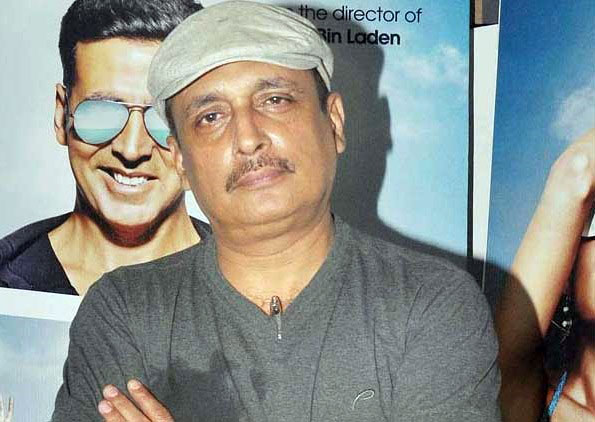
Bollywood actor, theater artist, and poet Piyush Mishra has rejected the claim that intolerance has been growing in India, as claimed by many left-leaning writers and some celebrities including Aamir Khan.

In an interview given to Dainik Bhaskar, Mishra said that claims that intolerance had been growing only after Narendra Modi became the Prime Minister were nonsensical. He said that communal divide and problems had always existed in the country and everyone, including Congress and Left parties, had only worked to widen the divide between communities.

Piyush Mishra
Piyush Mishra (file photo)

He revealed that he was a impressed with leftists thoughts earlier in his life but slowly realized that the left too was guilty of spreading communalism in the country.

“Left teaches that Hindus are bad and Muslims are good. When Babri Masjid was demolished, I had actively protested. I had organized plays in North India and I had created a stir. How are Hindus bad?” Mishra revealed how he got disenchanted with the leftist politics.

“Left never told me about injustice that Kashmiri Pandits had to face. Loudspeakers blared asking them to vacate their homeland within 24 hours, but Left can’t remember these events,” Mishra explained why he considered left guilty of widening communal divide.

The actor claimed that he had even joined the left but he said that he was naive then. Perhaps he too got to realize that while left speaks about all the right issues, their practice never matches what they preach.

Mishra further said that he didn’t care if he was called a Modi supporter or a religious fundamentalist for speaking out on these issues. He added that he was not a Modi supporter and he could even support Congress if they got rid of Rahul Gandhi and propped someone like Sachin Pilot.

He however asked people to be patient and give the government at least those 5 years that it was elected for. “Mess created in 60 years will definitely take at least 5 years to get cleaned,” he said.

Speaking on other issues, the poet-actor called the FTII controversy right and justified the protests by students. However, he rejected the idea of Award Wapsi calling it nonsensical.

As PM Modi talks ‘Climate Justice’ in Paris, Jairam Ramesh denigrates India’s position in COP21

0

As the Modi Wave is weaning, intolerance of the Indian National Congress for Prime Minister Narendra Modi is on the rise! Ever since the Bharatiya Janata Party-led NDA government has come to the power, the INC has been trying every trick to make a political comeback. The propaganda of #SuitBootKiSarkar was one such trick! It is perfectly legitimate for the INC to wage a political war against the BJP and Narendra Modi so long as it is in the national interest and the national interest is not compromised. Unfortunately, the INC has crossed the red-line and gone to the extent of compromising the national interest, for reasons which are purely political in nature; case in point, the recent controversy involving Congress leaders Salman Khurshid and Mani Shankar Aiyar.

When the INC took a stand which was identical to that of Pakistan on the #terrorboat issue, nowhere in the national interest, it did so in order to further its political agenda. The INC is stalling all important bills, such as the GST bill, the Juvenile Justice Act amendment bill, in the Rajya Sabha because Prime Minister Modi and the NDA will get the due credit, even if it means stalling the growth and development of the nation.

In yet another such an attempt, the INC has gone to the extent of siding with the US, compromising the national interest, just to score some political points against the NDA government and Prime Minister Narendra Modi over the Indian approach in COP21, hosted by France in Paris.

In an interview to The New York Times, former Minister of Environment and Forest and a senior Congress leader Shri Jairam Ramesh said: “I think Obama got carried away with Modi, frankly,”. Mr. Modi has made one major breakthrough in talks with Mr. Obama, Mr. Ramesh said, committing “against the advice of everyone in the system” to limit the use of hydrofluorocarbons, or HFCs, a component in refrigerators and air-conditioners. Since then, he said, India’s negotiators have returned to their familiar, confrontational manner.

“India is not an easy country to negotiate with,” Mr. Ramesh said. “We are moralistic, we are argumentative, we are regressive. It has gone back to the old rhetoric, there is no doubt about it.”

Let us nudge Shri Jairam Ramesh’s memory a bit, in order to remind him of an incident during COP15, when two key negotiators threatened to pull out just two days before the Copenhagen Conference as they were not satisfied with India’s stand announced by the then Minister of Environment and Forest (MoEF), i.e. Shri Jairam Ramesh. Veteran negotiators like former IFS officer Chandrashekhar Dasgupta and former Environment Secretary Pradipto Dasgupta had gone public to say India had played its hand too early, so there was “nothing left to negotiate”, though he has been reassured by other members. This was in sharp contrast to Ramesh’s statement in parliament that “India always left its announcements till too late, so there was the impression that it was acting under pressure”. They also alleged that they did not wish to be a part of the delegation as they had not been briefed adequately and feared that India’s stand was being compromised in the name of “flexibility”.

Shri Jairam Ramesh, in a confidential letter (which somehow found its way to the press) to the then Prime Minister Dr. Manmohan Singh, suggested that India should junk the Kyoto Protocol, delink itself from the G-77 countries (coalition of developing nations) and commit to a new deal of emission cuts without any counter guarantee of finances and technology. He also said that this change in stand would help in better alignment with the US and the current stand “takes away from India’s aspirations for permanent membership of the [United Nations] Security Council”.

It is a matter of debate whether these steps would ensure the economic progress and development in our country and whether it was a correct path to realizing India’s long-standing wish to become a permanent member (with or without the veto remains unspecified and only Shri Jairam Ramesh can shed some light over it) of the UNSC, which ironically was waived by none other than Pandit Jawahar Lal Nehru, in a naïve friendly gesture to China, which has proved to be detrimental to the national interest.

Previously, Shri Jairam Ramesh while speaking at the Columbia University, New York said that “India should aim for a low fruit, not be singled out as obstructionist and instead industrialized countries should agree on realistic targets for cutting emissions by 2020″; but Sir, did the US, the biggest polluter in the world whom you were trying to impress, not junk the Kyoto Protocol as it wasn’t in their self-interest? Is it fair to label India as “obstructionist” when it takes a strong stand and doesn’t want to be bullied by the developed nations? What is more disturbing is that Shri Jairam Ramesh was willing to compromise on India’s stand in the climate talks just for a permanent seat in the UNSC. How could the INC led UPA government even afford such a magnificent delusion? He even went on to the extent of saying that “India should not stick with G-77 but be embedded in G-20”.

This alteration in India’s position failed to convince even the members of Prime Minister’s climate change council and the opposition parties, lashing out at Shri Jairam Ramesh’s policy change, termed the move as a ‘sellout’ to the US. Shri Arun Jaitley, the then Leader of the Opposition in Rajya Sabha, called it a “betrayal” of not only India’s national interest but also of all “poor nations”.  He questioned Shri Jairam Ramesh’s stand on 25% voluntary cut in carbon intensity by 2020 and the issue of per capita principle on climate change, saying that this would involve huge costs with no reciprocation from the developed countries. This stand even upset the usually neutral industry body, the Federation of Indian Chambers of Commerce and Industry (FICCI); they wrote a letter to the Prime Minister expressing their “anguish” over India’s position. Following the uproar, Shri Jairam Ramesh had to revert to his original position and agreed to be flexible and non-negotiable on the following three points:

  1. No legally binding emission cut
  2. A peaking year
  3. International review of mitigation actions that are not supported by international finance technology.

This development, however, left many people convinced that the then INC led UPA government did not have the support of negotiators. It also left people wondering whether the announcement was made at the behest of the US and other developed countries!

While Prime Minister Modi, in order to ensure the ‘climate justice’ for India, goes on to assert that the rich world must take greater responsibility for climate change, it is regrettably unfortunate that INC is again acting like a stooge of the US and other developed nations, which are trying everything they could to bully India and other developing nations, just to further its political agenda and score some political points against Shri Modi. One can only hope that the INC would soon realize its folly and refrain from compromising the national interest in order to further its political agenda. The future depends on the articulation of the ‘climate justice’ for India by Prime Minister Modi and his government.

Media Apathy towards Chennai Floods

0

Usually media posts reports which are typically titled “How Twitter reacted to XYZ”, today let us play the same game on media and let us see how Media reacted to#ChennaiFloods.

In the past 24 hours, Chennai, one of the four metropolitan cities of India has been struck with severe rains which have thrown normal life out of gear. Reports suggest that the rains in Chennai have broken a 100 year record and the result is there for all to be seen. Roads and streets are flooded with water levels reaching heights which are enough to submerge vehicles.

In such a grave scenario, many individuals from social media formed coordination groups to provide any sort of help possible to the flood affected in Chennai. A group of driven social media users, have launched a site called chennairains.org. Beside a list of shelters and useful contact details, the website even has a ‘Rescue Form,’ which asks for your contact details, number of people, type of emergency and other details, which is then forwarded to the authorities.

While Social media was trying its best, Mainstream media was once again found sleeping.  Users woke up to abysmal coverage of the deluge in Indian newspapers:


While papers like Times of India and Hindustan Times had reserved a small corner on the front page, Indian Express did not consider it fit to carry anything related to it on the front page.

Meanwhile social media was carrying on all possible efforts to help the people in Chennai. Probably this forced Mainstream Media to start covering this issue, but again, the efforts were not up to the mark. The hashtag #ChennaiRainsHelp for designed specifically for tweets which offered or asked for help, but MSM began abusing this:


And CNN IBN could not stop itself from boasting, even when misusing this hashtag.


If that was not enough, The Hindu, which is head quartered in Chennai itself began spreading misinformation in the form of outdated pictures. It tweeted pictures of 2013, when Delhi had face flood like situation and tried to pass them off as pictures of #ChennaiFloods.

The Hindu Chennai Delhi rains

Not only the official handle, but even Editor of The Hindu also joined in, tweeting some pictures, in the hope of getting a few quick Retweets possibly. These tweets were later deleted when users pointed out the obvious.

d

The problem with such misrepresentation is that people can be misled into believing that such a situation actually exists in their locality and this may cause panic.

Series | Decoding Indian Belief Systems: Does Hinduism believe in one God or 33 crore Gods?

Osho has been one of the most controversial spiritual gurus from India. Among many others, one of the controversies surrounding him was his title of ‘Bhagwan Shree Rajneesh’.  Bhagwan literally means the blessed one or the divine soul but in India, it is also very commonly used to refer to God. The fact that a living human being can term himself God is preposterous and unacceptable to many humble and simple living Indians.

Why would anybody call himself God? To decipher this and to make a fair judgement on Osho’s controversial title, one really needs to understand what the term ‘God’ means in different philosophies. Is there a God? If yes, then who or what is God? Also, what is our individual identity in relation to this God?  Another question that follows – if there is a God, then how many Gods are there? Hindus are known to believe in 33 crore (330 million) Gods – which means roughly, India has one God for one human being in the United States! Is God one or are Gods in millions?

Hindu Gods

The varied answers to these different questions throw light on the nuances between different philosophies within India and how they contrast with each other. As we have already seen in the previous articles of this series, where most Indian thought agrees is that life is circular and we are in a continuous birth-death cycle. Our goal is self-realization and to break away from the illusory circle of life. But the place where these philosophies differ is in the answer to two key questions – who am I, and what is my relation to God if one exists in the first place. Let us explore these answers through the lens of some of the major Indian philosophies – Jainism, Buddhism, and a few major strands of Hinduism.

Who am I?

While Jainism and Hinduism have a very similar idea of who I am, Buddhism differs slightly in its understanding of an individual. This understanding can be illustrated as below:

Jainism and Hinduism


Who am I?

Who am I?

Most Jains and Hindus believe that our existence is composed of multiple layers or sheaths. The outermost layer of our existence is the gross body, followed by the subtler breath followed by the mental sheath involving mind, memory, intellect and ego. This is also the idea behind the popular Panchakosha (5 sheaths) meditation. But beyond all of them and at the very core lies the Atman. It is this Atman which transmigrates into another body along with the mind after death, leading to the infinite cycle of birth and death that we spoke of in our first article. A deep introspection into who am I will lead us to this inner source of pure bliss and joy. Self-realization is nothing but realizing the Atman.

Buddhism

The Buddhist version of who am I is slightly different. Some schools in Buddhism believe in the concept of annata or anatman, which believes that there is nothing called the soul. What really transmigrate are the elements of the mental sheath, but there is nothing like Atman. A deep introspection into who I am will lead to nothingness. Self-realization is the realization of nothingness, which once attained will lead to the end of the life-death cycle.


Buddhism

Is there a God? What is my relationship with this God?

Different philosophies offer very different takes on this question. Within Hinduism itself, there are multiple strands of thought ranging from atheistic (Charvaka philosophy) to theistic (Vedanta philosophy).  Within Vedanta, there are five different schools of thought. We will look at a couple of them in this article. While they may not exhaust all the philosophies within Hinduism, we are using them as indicative of the different belief systems in Hinduism.

According to Advaita school, we all have an Atman inside of us. But at the level of the Atman, all the souls in the Universe are connected and this substratum of the Universe is called ‘Parm-Atman’ (Universal Soul) which is loosely translated in English as God. A frequent analogy used to explain the relationship between man and God is that of a wave in an ocean. Each wave has the same properties as the ocean but it may start believing it is separate from the ocean if it is unable to perceive its true identity. Similarly, the Atman is one with the Parmatman but we may think we are separate because of the sheaths around us (physical and mental). Once the sheaths are transcended, the wave attains unity with the ocean and the Atman unifies with the Parmatman. So, there is one God which is in all of us, and at our deepest essence, we are God. Realizing this truth is our very goal.

wave and ocean

In the Dvaita school however, it is emphasized that Atman and Parmatman are different, and self-realization only takes us closer to the Parmatman. Thus, a wave can never really be the ocean.

Jainism on the other hand states that while we all have an individual soul which is the embodiment of perfection, but there is nothing beyond these souls which strings the entire Universe together. Neither is there any other entity like the Parmatman outside of us. Hence, it is atheistic from the perspective of a Universal God or Universal truth. A good representation of this is the story of 5 blind men describing an elephant based on what part of its body they are touching and describing. For the man touching his ear, the elephant is like a fan, while for the one touching its tail, it is like a rope. Similarly, Jainism believes that each person has his own truth and there is no Universal truth popularly known as the philosophy of anekantavada.

anekantavada

Buddhism, on the other hand, is somewhere between Hinduism and Jainism on the theism spectrum. It doesn’t accept or deny the presence of a universal connection between beings, and remains rather indifferent to the question. Hence, it is an agnostic philosophy.

It might seem extraordinary to many that atheism and agnosticism are so deeply integral to Indian thought. The more shocking fact is that people who regularly and devotedly visit temples and monasteries may be atheists in their belief system. But, this wouldn’t surprise the one who sees that the eventual purpose of everything including ‘God’ and religion is to attain the perfection that lies at the core of the circle – right within us. It is being centred in self-realization that is the ultimate bliss in Indian thought. And believing in God is not a pre-requisite to attaining this peaceful state. In fact, there can be many ways to reach this inner bliss. Hence, it really doesn’t matter if you are atheistic, agnostic, monotheist or polytheist till your belief is helping you enhance your understanding of yourself and keeping you at peace. There are infinite paths to perfection and one can choose to believe in any of them.

If this understanding is kept in mind, one would not be surprised even at the idea of the hundreds of forms of God that many Indians believe in. Each of these forms represents a different element of the inner perfection. While Shiva represents the power of inner transformation of negative to positive, Vishnu characterizes the human potential to maintain inner peace, and Shakti represents the balance between valour of a warrior and tender love of the mother. Each of us might relate to different aspects of the Divine and can focus on the aspect or the divine form which appeals to us the most. Hence each one of us is free to choose his/her favourite God also called as the Ishta-Devta (your personal God) and focus on those qualities to eventually lead to a deep blossoming.

Since the Gods are representative of the characteristics of inner perfection, it is not surprising then that in India people believe in millions of Gods. But how do we believe in exactly 33 crore Gods? While there are many stories which might explain this, one of the stories behind 33 crore Gods goes as such: In Vedic texts, it is mentioned that there are primarily ’33 Koti’ Gods. Koti has 2 meanings – Supreme and crore. While the texts might have meant 33 Supreme Gods (including elements of nature and the abstract aspects of the self), they have been lost in translation and many Indians since then believe that Hinduism has 33 crore Gods. What we all believe to be true might just be a myth after all!

But, whether we have 33 Gods or 33 crore Gods, the message from some popular Indian philosophies is that if the real number of Gods in the Universe were ever to be represented, even 33 crore would fall short of the number. Because the real essence of God is what lies within you and me. From the perspective of many strands of Indian philosophy, each and everyone here is nothing but God. Hence the popular term ‘Aham Brahmasmi (I am that)’.

Since each one of us can attain the ‘God’ state by becoming self-realized and many people viewed Osho as having attained this state, is it alright for Osho to use the title ‘Bhagwaan’? I leave it up to you, the reader, to form your own opinion. I would just like to leave you with the lines of one of my favourite songs that well summarizes Indian thought on this matter: Mann se Raavan jo nikaale Ram uske mann me hai.

written by – @shreyansmehta

National Anthem row: petty fight between two individuals hyped by TV and social media

0

A video was released today morning with headlines reading, “Muslim family thrown out of theatre for disrespecting the national anthem”. By evening, all TV channels were engrossed in heated debates – taking sides based on political affiliations.

National Anthem

What is being shown, debated and dissected is only the last few minutes of the incident. Such clips will never give the full story – never enough to take sides. Never enough for a national television debate. Our prime time was never so cheap.

The incident took place on Friday 27th Nov, in the 9:20 PM show of Tamasha at PVR Kurla. When I was entering the auditorium, the National Anthem was already playing and I stood in the alley waiting for it to get over. When inside, I passed a man “the bald protagonist” and his wife arguing with the man in question. The argument was  – “why did you not stand up for the anthem”. This seemed more like a man-to-man argument, when the person had replied – “meri marji hai” and “you get lost”.

This started heating up and became abusive. Abuses were flying both ways with no party ready to relent. Though our protagonist was intent on teaching a lesson, the other party was being equally provocative.

It was then that the protagonist got the trailers switched off, summoned mall management and people started gathering around him in a show of support. This is when the video starts. The arguments had then shifted to how one must stand up for the national anthem as “hundreds have died for it”. Also, the man being cornered had started relenting by then and argued that he has a knee problem.

What started as an altercation and a matter of ego, ended up in a show of patriotism. It was actually the PVR staff who asked the family to leave the theatre to de-escalate the situation.

Personally, I felt angry. I felt angry that the man had not stood up for the national anthem and then been abusive. I was also angry that he was bullied out of the theatre.

More so, I am appalled by the fact that a partial clip is good enough for national television debate. We can draw parallels with other incidents blown out of proportion in age of TV and social media – say Rohtak girls episode, or Jasleen Kaur one – where we’ve been using individual fights to score political points

– written by Sushant

Newspaper draws piggy bank to show ISIS funding, Muslim groups attack it as pig is “unislamic”

0

Mumbai. Offices of the Marathi newspaper Lokmat witnessed angry protests on Sunday by outraged Muslims who claimed that the newspaper had insulted their faith by publishing a blasphemous picture.

Copies of the newspaper were burnt at various cities in Maharashtra and the protesting men demanded arrest of the editor and the artist who drew the illustration. A couple of offices are reported to have been attacked too, as the editor extended an immediate apology.

Muslim groups protest against Lokmat
One of the various protests organized on Sunday against Lokmat

According to reports, such protests were held at various cities such as Malegaon, Dhule, Nandurbar, etc. in Maharashtra and a campaign – in various cities as well as on the social media – is on to boycott the newspaper.

To keep the situation in control, the police has registered cases against the editor and the writer of the article at Aurangabad, Jalna, Pune, Jalgaon, Parbhani and Yavatmal.

The Muslim groups were angry after they found an article published in the Sunday edition of the newspaper. The article explained how the ISIS – the terror group currently ruling parts of Syria and Iraq, and which claimed responsibility for the recent Paris attacks – was receiving money to fund their operations.

ISIS funding illustration
The “blasphemous” image (source)

The article also carried an illustration that showed symbols of various national currencies – representing international sources of funding – falling into a piggy bank, which was painted like the ISIS flag i.e. black in color with the terror group’s seal depicted in Arabic script.

Since the piggy bank is supposed to look like a pig, and pig is considered a haraam animal in Islam, the Muslim groups claimed that the illustration was blasphemous, for the ISIS seal has elements of the Islamic shahada.

Piggy bank has been historically used as a popular depiction to show banking and financial activities and it has hardly got anything to do with the actual pig or its ways, however such artistic explanations fell on deaf ears as hundreds of protestors turned up at various offices to burn copies of the newspaper, sending the staff into panic mode.

Political parties also joined in with Dhule unit chief of Samajwadi Party Minority Cell taking the lead and asking Lokmat’s resident editor Milind Kulkarni to publish an apology in the newspaper’s earliest issue. Another organization called All India Momin Conference has called for protests against the newspaper after Friday prayers in in Jalna on December 4.

Ironically, the Malegaon Additional Superintendent of Police (ASP) has praised the “peaceful” protests, and expressed concern over the publication of the “blasphemous” caricature. He said that a notice would be sent to the newspaper as early as possible.

Apology by Lokmat
Lokmat has apologized (source)

UPDATE: Following these protests and the police cases, the newspaper Lokmat has published an apology and published it on the front page in their Monday editions.

The apology expresses heartfelt regret to the offended groups. It even claims that “action has been taken” against the responsible persons. It doesn’t clarify what action has been taken i.e. if the writer or the artist were removed from the job or awarded some other form of punishment.

It is also not known if the offended groups have decided to withdraw their FIRs and call off their scheduled protests after this apology.

“Tolerant” people force Literature Festival organizer to quit as they didn’t like his views

0

Bangalore. “Intolerance is rising in India” – it seems that those who have taken an oath to repeat it on every day have now taken it upon themselves to prove it.

In a development that is as ironical as it can get, a group of writers identifying themselves as “liberals” and “tolerant” have forced the Founder Director of Bangalore Literature festival to disassociate himself from the festival because… wait for it… they couldn’t tolerate his views.

Vikram Sampath, an author, musician, and winner of Sahita Akademi’s ‘yuva puraskar’, today stepped down as the organizer of Bangalore Literature Festival after many writers threatened to boycott the event as he had earlier said that he didn’t subscribe to the ‘Award Wapsi’ campaign.

Apart from his views on ‘Award Wapsi’ – a bandwagon he didn’t join despite having a Sahitya Akademi award to his name – what irked this group of writers was his views on Tipu Sultan, where he refused to accept just one view, that of glorification of Tipu.

Vikram Sampath
Booted out of the event he founded and nurtured

Unable to “tolerate” Vikram’s views on such issues, many left-leaning writers declared that they will not attend the Bangalore Literature Festival. Just like the ‘Award Wapsi’ campaign, these set of writers started a ‘Boycott Campaign’, putting pressure on Vikram to quit. And finally he quit today.

Explaining his decision to quit, Vikram said, “In the interest of the organization that I founded and nurtured, which is now being linked to my personal views and targeted, I have taken the painful decision of stepping away from all responsibility of organizing the Festival. Since the protesting writers had a problem with my presence and involvement with the festival rather than the festival’s nature and character – I am sure they would not have agreed to participate in the first place if it was the latter, I am hopeful that my withdrawing of involvement will now make them more comfortable with participating.”

“The festival and the ideals it has stood for are far greater than me or any individual – it would be a shame if because of me, differing views go unheard,” Vikram said, proving beyond doubt who was more tolerant and accommodative of differing views.

This incident has once more proved that the real intolerance on rise is of those people who somehow believe themselves to be tolerant, but can’t accommodate or tolerate a dissenting voice even for a second.

There has been a long history in India of left-leaning writers and activists of forming groups and unions and keeping those with differing views out of the system. People have to submit to the whims and fancies of the left, or give up on their careers.

Vikram Sampath has been forced to give up on organizing an event as of now. It will be interesting to see if this group finally succeeds in forcing him – a young writer and musician – to give up on his career.

Tools Indian Media uses: “Mainstreaming”, “Mean World Syndrome” and “Agenda Setting”

0

The second edition of the India Ideas Conclave 2015 was held in Goa, from November 15th to November 17th. It was organised by the India Foundation, and saw the coming together of policy makers and public intellectuals from around the world. Over 350 intellectuals, professionals, scholars, journalists and social activists participated in this conclave.

There were many official sessions of talks on various topics, but there was one “session” which was not on the schedule. That was by Mr Vamsee Juluri, a novelist, author and professor of media studies at the University of San Francisco. He spoke on the topic of “Changing the media narrative in India” in a closed room environment where many high profile journalists found themselves as the audience.

Mr Juluri spoke on how media studies have evolved in the West, and what the results were from the scientific study of media behaviour. Interestingly, he found some findings from the research done years ago in the West, which had a relevance to the current media scene in India.

Mainstreaming:

Mr Juluri explained the concept of “Mainstreaming”. He said, media studies in the West found that in a typical TV debate on politics, an anchor usually has a representative of the “Left” and one from the “Right”. The connotations of “Left” and “Right” may not be the same as in the West, but these are not relevant. What studies there found that, the person who the anchor presented to be from the “Left”, was in reality more inclined to a Centre-Right ideology. Thus, while viewers were told Mr X is from the Left, he was actually more Centre-Right than Left. What this effectively meant that the core “Leftist” was hidden from view and a more acceptable Centre-Right person was presented as a Leftist.

Mr Juluri observed that in Indian TV studios too, a similar practice was going on, but from the other side. Indian TV panels did show a “Leftist” as a representative of the Left, (although many times the core rabid Naxal-supporting Left is obfuscated), but the person who is supposed to be from the “Right” was more often than not someone from the Far Right. Such individuals from Far-Right would often have views which many people would find extreme. Thus, when a viewer sees a moderate Leftist vs a Far Right speaker, the viewer is bound to feel the Left is more rational in his views.

To quote a relatable example, why does Indian media run behind the Sadhvis and the Sakshi Maharajs? These are people from the Far-Right but due to media promotion, the average viewer would often interpret their views as that of the “Right” as a whole. This inspite of the fact that many on the Right itself would not subscribe to their views.

Mean World Syndrome

Mr Juluri also spoke about another finding from Western Media studies, the “Mean World Syndrome”. This finding said that people who watched more violence-related reports on TV and other forms of media, tended to believe that the world is more dangerous than it actually is.

Again, this is seen quite often in the Indian context. We have MSM constantly focussing on negative stories. The same stories are shown with dramatic music, alarming graphics and on loop for 24 hours. All this amplifies the negative news and a constant focus on such news can create a psychosis that the world is worse than what it is. This was seen during the “Intolerance is Rising” narrative where upto Bihar elections, all sorts of crimes against minorities, dalits were raked up and even some educated people fell prey to the general belief that “Intolerance is rising”.  In fact we had TV anchors prodding and probing every other “celebrity” the could catch hold of, hoping for an answer which would further the narrative.

Agenda Setting

Agenda Setting is another finding from the many studies undertaken on Media and public behaviour in the West. Agenda Setting simply refers to the practice of Media picking up one issue and giving it importance via constant coverage, and how this issue then becomes important for the viewers also, although in reality this may not have been that important to them.

If for example, the public deems Inflation as an issue which is more important than say Cow slaughter, but if the media constantly covers Cow Slaughter rather than inflation, over a period of time, the viewers too begin to feel that Cow slaughter is indeed more important. We see such a practice going on in Indian MSM on so many topics. Indian media frequently has debates on cow slaughter, on censor board, on some other frivolous issues, but very rarely on the economy, or other issues which an average Indian would probably be more interested in.

All the above research points emanate from Media studies in the West, hence Mr Juluri stressed on the fact that such studies need to be done in India as well, to see whether the above issues plague or media, to what extent, and also if we can uncover some other issues which are intrinsic to Indian media.