Home Blog Page 773

How the govt is cracking down on dubious foreign funded NGOs like Oxfam and CPR running ‘sinister campaigns’ under the guise of charitable activities

The Income Tax Department in India has conducted a significant crackdown on several NGOs, including Oxfam India, Centre for Policy Research (CPR)- the Delhi-based think tank run by the daughter of Mani Shankar Aiyar, Environics Trust (ET), the Legal Initiative for Forest and Environment (LIFE), and Care India Solution for Sustainable Development (CISSD). The FCRA licences of these NGOs were subsequently suspended by the Central government.

The Income Tax Department’s probe into these NGOs came after searches conducted on September 7, 2022. These searches were part of a larger investigation into the financial practices, foreign funding, and compliance with the Foreign Contribution (Regulation) Act (FCRA) by these organizations.

The IT Department’s raids focused on uncovering discrepancies in the financial dealings of these NGOs, particularly concerning the utilization of foreign donations. The government has been scrutinizing such organizations amid concerns over their financial transparency and potential misuse of funds. The searches reportedly yielded documents and evidence suggesting violations of tax laws and FCRA regulations.

Following the searches conducted by the Income Tax Department, it was concluded that NGOs, including Oxfam, CPR, Environics Trust, LIFE, and CISSD, had allegedly violated provisions of the 2010 Foreign Contribution Regulation Act (FCRA). The violations were primarily related to discrepancies or a “mismatch” between the NGOs’ annual returns and the statements of their foreign currency bank accounts. Additionally, the NGOs were accused of the “misutilisation” of foreign currency funds, implying that the funds were not used for their intended purposes as stipulated under the FCRA.

According to a report by The Indian Express, in 2023, a year after the raids were conducted, the Income Tax Department issued notices to Oxfam, CPR, Environics Trust, LIFE, and CISSD, under Section 148 of the Income Tax Act. This section allows authorities to reassess the income of entities suspected of evading taxes.

In its letters to these NGOs, which ran in 100s of pages, the department included copies of various agreements, financial statements, emails, minutes and draft notes of board meetings, to substantiate the key allegations levelled against these NGOs.

The letter read that these NGOs receive significant funding from foreign entities. It said that evidence had surfaced showing a coordinated effort by foreign entities to financially support Indian NGOs and trusts. The IT Dept also blew the lid off how the involvement of these NGOs in orchestrating paid protests to stall key public infrastructure and development projects in India’s national interest.

The activities of these trusts “appear to be a systematic effort by foreign entities to stall development projects in India”, the Income Tax department said.

According to the data made public by the Income Tax Department, from 2015 to 2021, NGOs such as Care India, Environics Trust, LIFE, and Oxfam received a significant portion of their funding from foreign sources. Care India allegedly obtained 92% of its funding from abroad, Environics Trust received 95%, LIFE 86%, and Oxfam 78%. Notably, Environics Trust reportedly received 100% of its funding from foreign entities for three out of these six years.

The Income Tax Department also highlighted that these five NGOs are “interconnected” and that their key figures are “interlinked.” The letters sent to four of the five NGOs — Oxfam, Environics Trust, LIFE, and Care India — contained a common section titled “Concerted efforts by connected NGOs,” implying coordinated actions among these organizations. The department’s investigation suggested that these NGOs might have collaborated, raising further concerns about their operations and foreign funding sources.

‘Should work for the benefit of the public as a whole and not the benefit of any particular religious community or caste (the Muslim community)’: IT letter to Oxfam India accuses the NGO of running a ‘sinister campaign’ under the guise of charitable activities

In its 141-page letter to Oxfam India, the Income Tax (I-T) department said that the NGO engaged in activities that deviated from its stated charitable objectives. The letter highlighted Oxfam India’s alleged involvement in supporting Oxfam Australia’s efforts to halt mining operations by the Adani Group.

Citing emails and data from hard drives, the I-T department stated that Oxfam India had a direct interest in “delisting Adani Ports” and described it as part of a “sinister plan” under the guise of charitable activities to target an Indian business group in Australia.

The letter also pointed to Oxfam’s financial involvement in movements like the Van Swaraj Andolan in Raipur in 2019 and its sub-grants to organisations such as Josh (for social health) and Aman Biradari Trust.

It alleged that after the cancellation of its Foreign Contribution Regulation Act (FCRA) licence, Oxfam sought “puppet NGOs” with valid permissions to redirect funds for its causes. Furthermore, the I-T department said that Oxfam India had a “political agenda” and accused the NGO of focusing its efforts on benefiting a particular religious community, specifically the Muslim community, rather than serving the public as a whole.

Notably, Oxfam India has a tendency to work against the central government. On the international platform, Oxfam International is one of the front runners that has worked against the Adani Group in countries like Australia, where the company is investing in coal mines.

It may be recalled that last year, the Union Ministry of Home Affairs had recommended a CBI probe against Oxfam India over alleged violations of the Foreign Contribution Regulation Act. According to reports, a source in the Ministry of Home Affairs said, “Oxfam India continued to transfer Foreign Contributions to various entities even after coming into force of the Foreign Contribution (Regulation) Amendment Act, 2020 which prohibits such transfers. The amendment came into force on September 29, 2020. Oxfam India transferred funds to other NGOs, violating provisions of the FCRA, 2010.”

“Oxfam India received foreign contribution amounting to Rs 1.50 crore (approx) directly into its FC utilization account instead of receiving foreign contribution in designated FCRA account,” added the sources.

Oxfam India was registered under the Foreign Contribution (Regulation) Act 2010 (FCRA, 2010) for undertaking social activities and its registration certificate was valid up to December 31, 2021. The organisation’s FCRA license ceased on January 1, 2022, after it failed to apply for renewal.

In January last year, Oxfam India published a dubious report on how taxpayers are divided among income sections. OpIndia’s report on it can be read here.

IT letter says controversial think tank Centre for Policy Research received foreign funds of Rs 10.19 crore since 2016 

The 115-page letter from the Income Tax (I-T) department outlined several discrepancies related to fund collection and the management of foreign donations by the controversial Delhi-based think tank- Centre for Policy Research (CPR). It alleged that CPR was significantly involved in the Hasdeo movement against coal mining in Chhattisgarh, particularly through its association with the Jana Abhivyakti Samajik Vikas Sanstha (JASVS). According to the I-T department, a staggering 83% of the funds received by JASVS between 2019 and 2023 were sourced from CPR.

The letter further revealed that CPR received foreign funds amounting to Rs 10.19 crore since 2016 specifically for its Namati Environmental Justice Programme, which aims to file “litigation and complaints.” The I-T department characterised CPR as the sole associate of the US-based Namati Inc. in India, claiming that the programme’s ultimate objective is to pursue legal actions rather than conduct specified research or educational activities.

This raised concerns about the true intentions behind the funding and activities of CPR, suggesting a shift away from traditional non-profit objectives, prioritising litigation over community welfare.

For the uninitiated, a report by The Economic Times stated that during the period of October 2022-December 2022, CPR received funds amounting to Rs 10.1 crore from the Bill and Melinda Gates Foundation, the University of Pennsylvania, the World Resources Institute and Duke University.

The think tank is headed by Yamini Aiyar, the daughter of controversial Congress leader Mani Shankar Aiyar.

IT Dept accuses NGO LIFE of being utilized as a tool by the US-based NGO Earth Justice to impede coal mining and thermal power projects in India

The revelations contained within the Income Tax Department’s 86-page letter concerning the Legal Initiative for Forest and Environment (LIFE) Trust raised significant concerns about the organisation’s potential complicity in foreign agendas aimed at obstructing key developmental projects in India.

The letter alleged that LIFE is being utilized as a tool by the US-based NGO Earth Justice to impede coal mining and thermal power projects, casting doubt on the true motives behind its environmental advocacy.

According to the IT Department, communications between LIFE founder Ritwick Dutta and an Earth Justice official indicate that the organisation is aware of its questionable practices and the risks associated with them. Notably, an email purportedly authored by Dutta expresses apprehension about scrutiny from Indian intelligence agencies, highlighting a consciousness of potential legal repercussions tied to their actions. This acknowledgement suggests a troubling awareness of operating on the fringes of legality, as Dutta had previously run a proprietorship that received substantial funding from Earth Justice, amounting to approximately Rs 22 crore over five years.

Environics Trust got 100 per cent of its funds through foreign donations during three financial years — 2016-17, 2019-20 and 2020-21

Similarly, the IT department sent a 104-page letter to Environics Trust in which it outlined some serious allegations against the NGO regarding its funding activities and involvement in anti-corporate protests.

The letter stated that ET provided financial support for protests against the JSW Utkal Steel Plant in Odisha’s Dhinkia, with Rs 1,250 being transferred to the accounts of 711 local residents in 2020. This assertion suggested a coordinated effort to financially incentivise local opposition against significant industrial projects.

Furthermore, the letter alleged that ET colluded with the London-based Survival International to incite protests against Adani’s Godda Plant in Jharkhand, thereby aiming to bolster the anti-Adani movement.

It characterised these actions as a misuse of funds intended for community development, accusing the organization of deliberately stalling developmental projects in India.

Additionally, the letter pointed to ET’s involvement in protests against LG’s polymer chemical plant in Visakhapatnam, specifically following a gas leak incident in 2020. It alleged that an ET employee instigated various groups associated with the Trust to participate in the protests against LG, thereby exacerbating tensions surrounding environmental safety.

The I-T department further asserted that the European Climate Foundation (ECF), in collaboration with Environics Trust, is actively targeting coal and thermal power plants in India. It suggested that ECF is supplying funds with the intent to incite mobilisation and protests against major corporations, including government entities.

The Income Tax (I-T) Department’s investigations into Environics Trust (ET) reveal alarming insights into how the organisation has functioned as a conduit for foreign influence, primarily targeting India’s energy sector and obstructing the nation’s developmental agenda.

The allegations suggest that ET, through its funding and activities, has aligned itself with foreign entities, particularly the European Climate Foundation (ECF), to mobilise protests against significant industrial projects, including coal and thermal power plants. This raises critical questions about the accountability and objectives of such non-governmental organizations (NGOs) within the broader context of national interests.

How these NGOs worked in cahoots to jeopardize India’s economic development

Here it is worth mentioning that the IT department had in an affidavit submitted to the Supreme Court also confirmed that in the case of Environics Trust, survey action was carried out along with some other trusts like the Centre for Policy Research (CPR), Oxfam India, Legal Initiative for Forest and Environment (LIFE) and Care India Solution for Sustainable Development (CISSD) and it was seen that these organisations have close relations with each other.

Moreover, their main persons are interlinked and these NGOs are directly or indirectly involved in agitation or litigation beyond their objects, the department said.

The Income Tax (I-T) Department’s findings suggest a concerning nexus between the Environics Trust (ET) and the Legal Initiative for Forest and Environment (LIFE), both of which are accused of leveraging foreign funds to undermine India’s economic development.

According to the I-T Department, Ritwick Dutta, who leads LIFE, has been instrumental in representing ET in various legal challenges against the Union Government, ostensibly under the guise of environmental protection. However, the department alleged that these legal manoeuvres have primarily served to obstruct critical economic projects, particularly in the coal sector, rather than promote genuine environmental interests.

The department also said that both organizations are part of a broader strategy to impede coal projects in India, effectively stalling initiatives that are vital for the country’s energy needs and economic growth.

The findings from the Income Tax (I-T) Department further indicated a troubling relationship between Oxfam India and the Environics Trust (ET).

The department identified Oxfam India as a “key donor” that has funded ET specifically to mobilise local communities against coal industries, including support for protests like those in Dhinkia. The IT probe cited various banking transactions as evidence of this continuous financial support, concluding that ET functions effectively as a tool for Oxfam’s agitation-oriented activities.

Furthermore, the investigation highlighted a broader pattern of collaboration among various NGOs, including LIFE, Earth Justice, and Greenpeace, suggesting a coordinated effort to influence policy and mobilise public sentiment against developmental projects in India.

Such interconnectedness raises concerns about the potential for these NGOs to disrupt the country’s progress under the guise of environmental activism. As the investigation unfolds, it becomes increasingly important to scrutinize the motivations and activities of these organizations to ensure that their actions genuinely reflect the interests of the communities they claim to serve and that they adhere to the legal and ethical standards expected of NGOs in India.


150 terror infrastructures destroyed in southern Lebanon, command centres of Hezbollah targeted, says IDF

0

Israel said it has destroyed more than 150 terror infrastructures through airstrikes in Lebanon, including command centres of Hezbollah.

The Israeli Air Force said it used precision munitions and engaged in close-range encounters, to neutralise terrorists and destroy terror infrastructure.

“Commando forces, paratroopers, and armoured units, along with aircraft and fighter jets from the Air Force, continue focused operations in several areas of southern Lebanon. Using precision munitions and engaging in close-range encounters, terrorists have been neutralised, and terror infrastructure has been destroyed, the Israeli Air Force stated in a post on X.

“So far, over 150 terror infrastructures have been destroyed in airstrikes, including command centres of the Hezbollah terrorist organisation, weapons storage facilities, and rocket launch positions,” they said.

This comes at a time when the situation in West Asia escalated following Iran’s launch of nearly 200 ballistic missiles towards targets in Israel.US Naval destroyers joined Israeli air defence units in firing interceptors to shoot down inbound missiles.
Israeli Prime Minister Benjamin Netanyahu described Iran’s missile attack on his country as a “big mistake” and said “Tehran would pay for it.”

A day after Iran targeted Israel with a rocket barrage, the Israel Defence Forces (IDF) called on Lebanese civilians in two dozen villages in southern Lebanon to evacuate immediately.

“Hezbollah’s activity forces the IDF to act against it. The IDF does not wish to harm you. For your safety, you must evacuate your homes immediately. Anyone who is near Hezbollah operatives, their facilities or their weapons, puts themselves at risk,” Colonel Avichay Adraee, the IDF’s Arabic-language spokesman, said in a statement on X.

The Israeli military said it will update the civilians when they can return. On Tuesday, the Israeli military issued similar orders to 28 other villages in southern Lebanon.


(This news report is published from a syndicated feed. Except for the headline, the content has not been written or edited by OpIndia staff)

Samantha Ruth Prabhu clarifies her divorce from Naga Chaitanya was mutual and amicable, asks Congress leader Konda Surekha to keep her out of politics

Samantha Ruth Prabhu reacted to Telangana Minister Konda Surekha’s remark linking Bharat Rashtra Samiti chief KT Rama Rao to the separation of Naga Chaitanya and Samantha, and said that her divorce was a “personal matter.”

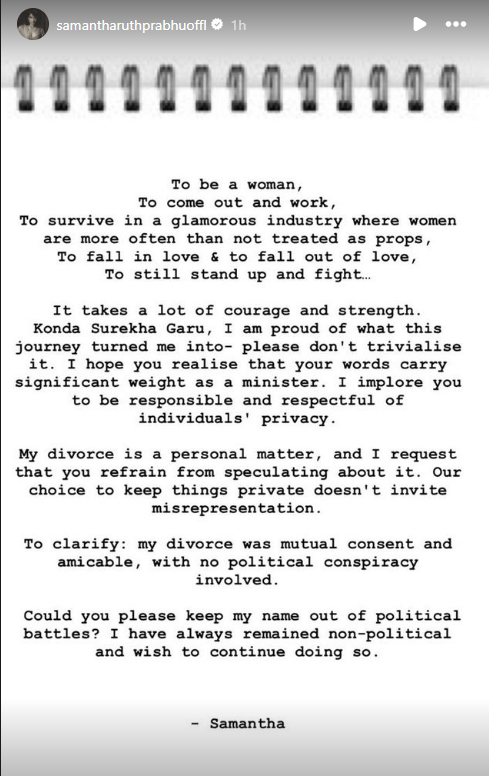
Samantha took to her Instagram story to issue a statement on Wednesday evening. She clarified that her divorce was “mutual consent and amicable” and there was no political conspiracy involved. Samantha also requested people to stop speculating about her divorce.

“To be a woman, to come out and work, to survive in a glamorous industry where women are more often than not treated as props, to fall in love & to fall out of love, to still stand up and fight… It takes a lot of courage and strength,” the statement read.

“My divorce is a personal matter, and I request that you refrain from speculating about it. Our choice to keep things private doesn’t invite misrepresentation. To clarify: my divorce was mutual consent and amicable, with no political conspiracy involved. Could you please keep my name out of political battles? I have always remained non-political and wish to continue doing so,” Samantha added.

This came after Congress leader, K Surekha linked KTR to the separation of Samantha and Naga Chaitanya, and alleged that KTR used to tap the phones of the actresses and blackmail them.

Speaking to the media, Surekha said, “It is KT Rama Rao because of whom (actress) Samantha’s divorce happened…He was a minister at that time and used to tap the phones of the actresses and then find their weaknesses to blackmail them…He used to make them drug addicts and then do this…Everyone knows this, Samantha, Naga Chaitanya, his family, everybody is aware that such a thing happened.”

Surekha’s remarks sparked massive controversy, with several BRS leaders as well as superstar Nagarjuna Akkineni condemning the remarks.

Nagarjuna said that Surekha should not use the lives of movie stars to criticise her opponents, and urged her to respect the privacy of others.

“I strongly condemn the comments of the Minister, Konda Surekha. Don’t use the lives of movie stars who stay away from politics to criticize your opponents. Please respect other people’s privacy. As a woman in a responsible position, your comments and accusations against our family are completely irrelevant and false. I request you to withdraw your comments immediately,” Nagarjuna said in a post on X.

Nagarjuna’s son, Naga Chaitanya, was previously married to actress Samantha Ruth Prabhu. They announced their separation on social media in a joint statement in October 2021.

They urged fans and media for privacy and support during these difficult times. Samantha and Chaitanya maintained that they will always ‘hold a special bond’ between them.

Meanwhile, BRS leader Harish Rao also took to X and demanded an apology from the minister.

“I condemn the derogatory statements made by Minister Konda Surekha Garu and demand an unconditional apology,” Rao said.

BRS MLC and former Minister Satyavathi Rathod condemned the comments of Minister Konda Surekha on KTR.

She said, “We condemn the comments of Minister Konda Surekha on KTR. Sadly, she talks in a way that affects and saddens the families of all the actresses in the cinema industry. This is not right. We warn that they should let go of the habit of defaming others when their graph falls. We will file a defamation case on this. Being a women minister, they should support and stand with women instead of making this kind of comment.”


(This news report is published from a syndicated feed. Except for the headline, the content has not been written or edited by OpIndia staff)

Nagarjuna slams Telangana Congress Minister Konda Surekha for linking Naga Chaitanya and Samantha Ruth Prabhu’s divorce to BRS Chief KT Rama Rao

0

Telangana Minister Konda Surekha, sparked a major controversy after she linked actors Naga Chaitanya and Samantha Ruth Prabhu’s divorce to Bharat Rashtra Samiti Chief KT Rama Rao, with superstar Nagarjuna Akkineni as well as other BRS leaders coming out strongly in condemnation of her remarks

The Congress leader on Wednesday, alleged that KTR used to tap the phones of the actresses and blackmail them.

Speaking to media, Surekha said, “It is KT Rama Rao because of whom (actress) Samantha’s divorce happened…He was a minister at that time and used to tap the phones of the actresses and then find their weaknesses to blackmail them…He used to make them drug addicts and then do this…Everyone knows this, Samantha, Naga Chaitanya, his family, everybody is aware that such a thing happened.”

Superstar Nagarjuna Akkineni condemned Surekha’s remarks, saying that she should not use the lives of movie stars to criticise her opponents, and urged her to respect the privacy of others.

“I strongly condemn the comments of the Minister, Konda Surekha. Don’t use the lives of movie stars who stay away from politics to criticize your opponents. Please respect other people’s privacy. As a woman in a responsible position, your comments and accusations against our family are completely irrelevant and false. I request you to withdraw your comments immediately,” Nagarjuna said in a post on X.

Nagarjuna’s son, Naga Chaitanya, was previously married to actress Samantha Ruth Prabhu. They announced their separation on social media in a joint statement in October 2021.

They urged fans and media for privacy and support during these difficult times. Samantha and Chaitanya maintained that they will always ‘hold a special bond’ between them.

Meanwhile, BRS leader Harish Rao also took to X and demanded an apology from the minister.

“I condemn the derogatory statements made by Minister Konda Surekha Garu and demand an unconditional apology,” Rao said.

BRS MLC and former Minister Satyavathi Rathod condemned the comments of Minister Konda Surekha on KTR.

She said, “We condemn the comments of Minister Konda Surekha on KTR. Sadly, she talks in a way that affects and saddens the families of all the actresses in the cinema industry. This is not right. We warn that they should let go of the habit of defaming others when their graph falls. We will file a defamation case on this. Being a women minister, they should support and stand with women instead of making this kind of comment.”


(This news report is published from a syndicated feed. Except for the headline, the content has not been written or edited by OpIndia staff)

Laddu Row: Andhra Pradesh deputy CM Pawan Kalyan concludes 11-day-long Prayashchit Deeksha at Tirumala

0

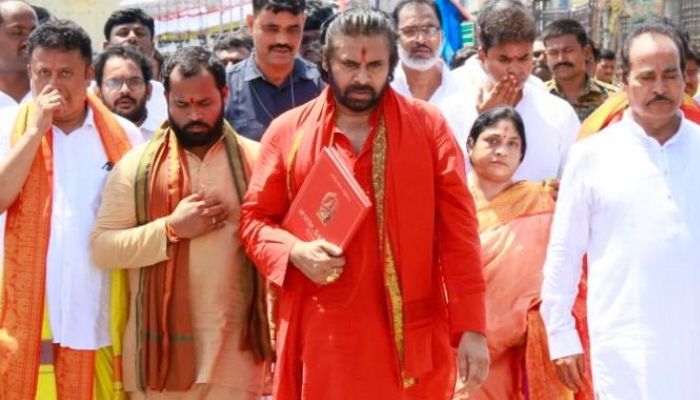
Andhra Pradesh’s Deputy Chief Minister Pawan Kalyan completed his Prpayashchit Deeksha in Tirumala today. Having recently arrived at Tirumala, he stopped by the Srivara temple during the VIP break before formally retiring from the Prayaschitta Diksha, a type of atonement he has been observing since the Tirumala Laddu controversy erupted.

Pawan Kalyan started this atonement initiation on the 22nd of September citing complaints about the purported use of contaminated ghee in the manufacturing of Srivari Laddu. Pawan Kalyan’s commitment to the cause included an 11-day atonement period following allegations that pig fat and other outrageous elements had been used to make the  Tirupati temple prasadam.

Kalyan arrived on foot through the Alipiri staircase on Tuesday night and climbed the 3,550 stairs while chanting Lord Govinda’s name. Following his “Prayashchit”, Pawan Kalyan will stay in Tirumala today and will attend the Tirupati Varahi Sabha on Thursday.

After the darshan, the Jana Sena supremo visited the Anna Prasadam complex and had meals with devotees. He spoke with Tirumala Tirupati Devasthanam (TTD) authorities.

Taking to X, TTD informed about the Deputy CM’s visit and said: “Honorable Deputy CM Sri K. Pawan Kalyan offered prayers at the sanctum sanctorum of Sri Venkateswara Swamy in Tirumala. He received Vedaseervachanam from the Veda Parayanamdars and Theertha Prasadam from the TTD Additional EO. Later, he partook in Annaprasadam at the Matrushri Tharigonda Vengamamba Annadana Bhavan.”

Meanwhile, the Jana Sena Party said: “The Deputy Chief Minister Mr. Pawan Kalyan, who undertook the initiation for the preservation of Sanatana Dharma, visited Tirumala Sri Venkateswara Swamy on Wednesday and ended the initiation. As part of his 11-day-long initiation, it is known that he took the responsibility of protecting Sanatana Dharma in the background of some recent developments. Sri Pawan Kalyan, who reached Tirumala by stairs from Alipiri on Tuesday night, entered the temple through the Mahadwara along with his two daughters Adya Konidela and Palina Anjani Konidela during the VIP break darshan on Wednesday morning and visited the Lord. Shri Pawan Kalyan, who went to visit Swami with his two daughters, performed special pujas and placed the Varahi Declaration at Swami’s feet and participated in special pujas. Later, Vedic scholars blessed Sri Pawan Kalyan in Sri Ranganayakula Mandapam in the temple premises and presented teertha prasada along with Swami’s picture.”

“Reception of Annaprasada: After darshan of Swami, Sri Pawan Kalyan directly visited Matrusri Tarigonda Vengamamba Nityannadana Center run by Tirumala Tirupati Devasthanam. The temple authorities also welcomed Sri Pawan Kalyan at the Annadana Kendra. The pattern of giving food to the devotees was observed. After that, they received Annaprasad along with common devotees,” the Jana Sena Party continued.

Notably, on 22nd September, Pawan Kalyan started ‘Prayaschit Deeksha’ with a puja at the Sri Dasavatara Venkateswara Swamy temple in Nambur, Guntur district. The firebrand leader sought Lord Sri Venkateswara Swamy’s blessings in Tirumala to get strength to purge the sins of the previous Jagan Mohan Reddy-led government. Janasena Party leader said that he was shocked after he came to know about the alleged use of animal fat in Tirupati Laddu Prasadam, adding that he feels guilty for not being able to find out, in the beginning, the sin committed by the previous government.

Samsung India protest escalates as TN police detain over 900 workers: Read why employees of the tech giant have been protesting for the last 22 days

0

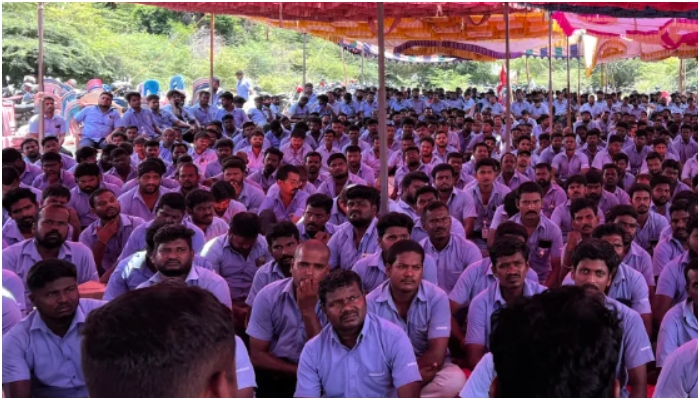
On Tuesday, October 1st, the police in Tamil Nadu detained 912 Samsung Electronics employees and union members. The arrests were executed as the employees organized a street protest at the South Korean firm’s home appliances facility in Tamil Nadu. The protests this week entered into its 4th week. 

Since September 9th, more than 1,000 workers have halted production and demonstrated in a temporary tent near the facility in Chennai. They have requested greater salaries and union recognition at the facility, which will account for one-fifth of Samsung’s USD 12 billion India revenue in 2022-23.

According to Charles Sam Rajadurai, a senior state police official, approximately 850 Samsung employees and 60 workers affiliated with the labour group CITU, which is leading the demonstration, were held because their protest march near Chennai was disrupting the public and was planned without permission.

“They are being detained in four wedding halls,” he said. “A decision will be taken on their release later.” The workers apparently have been released. On September 16th, police held 104 striking Samsung workers for over a day. The protests cast an overt shadow over Indian Prime Minister Narendra Modi’s push for international investors to “Make in India” and are India’s largest such strike in recent years.

Samsung did not comment on the issue. It previously stated that the average monthly income of full-time manufacturing workers at the facility is nearly double that of similar workers in the region, and that it was willing to talk with employees about how to resolve the issue.

The Samsung facility employs over 1,800 people, and over 1,000 of them have gone on strike. The plant manufactures products such as refrigerators, televisions, and washing machines. Meanwhile, another Samsung smartphone facility in the northern state of Uttar Pradesh has not experienced any trouble.

As per the reports, Samsung has scheduled certain contractual workers and apprentices to help reduce the impact on production. In August, Samsung’s largest union in South Korea went on strike for four days, demanding greater wages and bonuses after talks with management failed.

Expressing their concerns, the employees said that the working conditions at the unit are very strict. “Our job requires us to stand all day, except for periodic five to ten-minute breaks. This might cause health problems such as painful varicose veins. We want more breaks. My coworkers have made numerous requests for better working conditions over the years, ranging from set eight-hour schedules to taking time off without fear of losing our jobs,’  he said. 

“However, such demands caused Samsung to remove some of them while warning others to remain silent. In one instance, eight people were sacked without warning. While internal committees are constituted to address issues, they have little actual power,” he added. 

Samsung has warned the striking workers that they risk losing their jobs, and CITU members have claimed in court that the strike is unconstitutional, but the employees disagree and say they will continue to demonstrate until their demands are granted.

Samsung has yet to agree to recognize a union supported by a third-party organization such as CITU, resulting in a deadlock. According to the CITU, Samsung employees earn an average of Rs 25,000 per month and are demanding a raise of Rs 36,000 per month within three years.

Bareilly Court warns of rising threat of Pakistan and Bangladesh-style religious conversions- What the court said while convicting Mohammed Alim of love jihad

On 30th September, in a landmark judgment, one Mohammed Alim was convicted in a “love jihad” case by a Bareilly court for deceiving a woman into a relationship under the false pretence of marriage, subsequently coercing her into sexual relations, and subjecting her to violence and threats. Notably, Alim had introduced himself as “Anand” and appeared to be a Hindu.

The court observed that incidents like this contribute to attempts to create conditions similar to those in Pakistan and Bangladesh, where illegal religious conversions through coercion are rampant. OpIndia accessed the copy of the judgment. Mohammed Alim has been convicted under Sections 376(2)(n), 323, 504, and 506 of the Indian Penal Code.

Sabir, the father of Alim, was also convicted under Section 504 for insulting and threatening the victim. The court strongly criticised such actions and drew attention to the issue of “Love Jihad.” Interestingly, left-liberals, so-called fact-checkers, activists, and Islamists often claim that the notion of “Love Jihad” is a figment of the imagination of Hindu organisations and that no such incidents occur in India. However, the judgment in this case proved that incidents of “Love Jihad” are very much real and need immediate attention from law enforcement agencies and the judiciary.

Detailed background of the case

According to the complaint filed by the victim, she was a student at a computer coaching centre in Bareilly. At the centre, she became acquainted with a man who introduced himself as Anand. He appeared to be a Hindu and wore a sacred thread (Kalawa) on his wrist. The accused would accompany her to and from work. As time passed, a romantic relationship developed between them.

Later, Alim proposed marriage to her, and on 13th March 2022, he took the victim to the Radha Krishna Temple in Bareilly. At the temple, he performed a so-called marriage ritual by applying sindoor (vermilion) to her hairline. He convinced her that they were married according to Hindu customs. However, the court noted that no priest was present at the time when that make-believe wedding took place, and no rituals were performed that were required to make the wedding legal.

After the ritual, Alim took the victim to a friend’s room near Rohilkhand University. In the room, he coerced her into sexual relations. He filmed the sexual act and took indecent photographs of her. He used the explicit material he recorded that day to blackmail her into further sexual relations, often at Rajrani Hotel in Bareilly.

Whenever the victim resisted, he would threaten to make the photos and videos public. When the victim became pregnant, he coerced her into undergoing an abortion. On 5th May 2023, he forced her to take an abortion pill, and on 11th May, with the assistance of his family, he took her to a nursing home in Hafizganj where the victim underwent an abortion.

The ordeal of the victim worsened when she visited his house in Jadaupur, where she discovered that his real name was Mohammed Alim and that he was not Hindu, as he had claimed. Alim’s family, including his father Sabir, pressured the victim to convert to Islam. They physically assaulted her and threatened to kill her if she pursued legal action against Alim. They also insisted that she abort the child before considering marriage. Fearing for her life, the victim left the house and eventually filed a complaint against Alim and his family on 27th May 2023.

As per the court documents, the victim became pregnant in March 2023. She informed Alim about this in April and asked him to take her home, but he refused, saying, “I won’t take you home, get rid of the baby.” In May, he came to Devernia Station and forcibly tried to make her take unwanted pills. When she refused, he started beating her at the station and then left. She followed him.

She reached Jadaupur, and when she arrived at his house, his mother asked, “Who are you?” She asked, “Where is your son Anand?” His mother replied, “There is no such person by that name.” She then showed her the photo and asked again, and his mother revealed his name as Alim. She was shocked upon hearing this; he had claimed to be Hindu but turned out to be Muslim. She told everything to his mother, and his mother said, “Convert your religion.”

Witness testimonies provided crucial evidence

The prosecution’s case was supported by testimony from key witnesses. The hotel manager from Rajrani Hotel testified that the victim appeared distressed whenever she arrived at the hotel with Alim. He also revealed that the victim always stood away from the register, as Alim used to make the entries required to book the room. Interestingly, he used his real identity in the hotel register. This supported the victim’s allegations that she was unaware of Alim’s true identity until much later. Other witnesses, including the investigating officers, corroborated the victim’s timeline of events, strengthening the case against Alim.

Court’s observations: Love Jihad and societal implications

In its detailed judgment, the court categorically labelled the case as an example of “Love Jihad.” The court observed that Alim posed as a Hindu to lure the victim into a relationship under false pretences. The court further observed that Alim’s actions, using deceit to coerce the victim into sexual relations and later pressuring her to convert to Islam, were part of a larger and disturbing trend. The judge remarked, “This is not just a matter of personal deceit; it is an orchestrated attempt to manipulate and exploit vulnerable individuals in the name of religion.”

The court further compared this incident to the situation in Pakistan and Bangladesh, where cases of forced religious conversions are rampant. The judge warned that such incidents need to be curtailed; otherwise, it could lead to a breakdown of the secular fabric of Indian society. The court said, “By allowing such practices to continue unchecked, we risk creating conditions in India similar to those in Pakistan and Bangladesh, where religious freedom is curtailed, and women are systematically targeted for conversion.”

The judgment also criticised the failure to invoke the Uttar Pradesh Prohibition of Unlawful Religious Conversion Act, 2021, in the case. The court noted, “Despite clear evidence of coercion and deceit with the intent of religious conversion, no action was taken under the specific provisions of the law designed to prevent such conversions. This oversight must be corrected in future cases.”

The court also raised concerns about potential foreign funding behind such activities. The court noted that the systematic targeting of vulnerable women for religious conversion through deceit may not be an isolated phenomenon. The judge remarked, “The possibility of foreign funding in such cases cannot be ruled out, as these actions appear to be part of a larger conspiracy aimed at destabilising the social fabric of the country.”

The court made stern observations asserting that incidents like these represent more than individual wrongdoings and pose a serious threat to harmony and secularism. The court said, “The systematic targeting of women under the guise of love to fulfil larger demographic and religious goals is not only a crime against the individual but against the nation’s unity.”

Conclusion: Legal and societal ramifications

While left-liberal groups, the media, Islamists, and so-called fact-checkers often deny the existence of Love Jihad, the Bareilly court’s verdict strongly affirms the opposite. The ruling highlights the fact that deceptive practices, such as those employed by Alim, have far-reaching consequences for the victim and society at large. The court’s observations on the growing threat of illegal religious conversions through Love Jihad need immediate attention from governments, law enforcement agencies, and the judiciary.

Uttar Pradesh: Brothers Mehtab and Shadab operated gang to target, shut down pro-Hindutva handles online and extort money, arrested

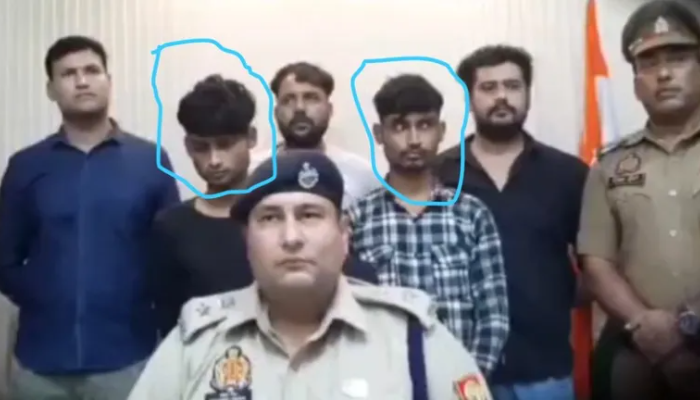
On 29th September the authorities in the Sitapur area of Uttar Pradesh apprehended Mehtab Ansari and Shadab Ansari, who were in charge of a large cybercrime ring. Both used to send strikes to shut down pro-Hindutva handles on social media with the assistance of their network. Afterwards, huge amounts were extorted in the name of restoring the accounts. Hundreds of individuals related to this gang have been discovered to be connected through the accused’s Telegram account.

The case pertained to Kotwali (police station) Dehat (rural area) of the Sitapur district. On 27th September the administrator of Instagram’s @randombrigade profile lodged a complaint with the police and stated that a few days ago he received an audio phone and message from the ID of Instagram username @soloxkakashi. There was a threat to file a copyright strike and have his Instagram handle suspended, in the message. Money was demanded from him when he requested not to do so and a QR (quick-response) code was sent to him.

The bank account linked to it was registered in the name of Mehtab son of Nizamuddin. He sent Rs 500 to the account on 3rd August, however, he was asked to pay more. The accused also threatened to murder him and his family members. On the same day, the victim gave them another Rs 1500 in two instalments, out of fear. He again sent Rs 1000 on 5th August and Rs 750 on 1st September. Mehtab started asking for a present through Amazon or Flipkart worth Rs 70,000, even though he had already collected Rs 3,750 from him.

When he expressed his inability to afford such a large sum, the perpetrator threatened, “I will defame you and ruin your life by declaring your Instagram account as fake copyright.” The death threats and regular extortion troubled the young man who began to worry for his and his family’s safety. He also suspected that Mehtab must have harassed many innocent people like him by creating bogus IDs. He eventually went to the police station and submitted a complaint. He referred to the offender’s actions as illegal extortion and sought strict punishment in the case.

The police registered a case under sections 318 (4), 352, 351 (2), 308 (5) of the Bharatiya Nyaya Sanhita (BNS) and 66-D of the Information Technology (IT) Act and started an investigation. OpIndia has a copy of the complaint.

The profound conspiracy

When Sitapur police started the probe, Shadab’s name also surfaced along with Mehtab. The two are real brothers and are natives of Sitapur. The duo were staying in Agra at present. 3 mobile phones have also been recovered from them. Police revealed that they used to download the APK file of Insta Pro 2 from Google and then lift photos and data from the real Instagram ID of their targets. Afterwards, they downloaded the copyright form of Instagram, filled it and sent it as a complaint to the META platform. They projected the ID created by them as authentic and the other one as fraudulent.

The gang then used to claim copyright on the profile of the person who had the real ID. Payment was also extorted from the victim in the name of deleting the ID. According to the police, Shadab and Mehtab have made similar copyright claims on about 600 IDs so far. Money has also been taken from many of them. @randombrigade was one of them who ended up launching a police complaint against the culprits. Mehtab and Shadab are in police custody and details concerning the total amount of money they received so far are being gathered. Cyber Cell has also been engaged to get to the root of their offences.

Pro Hindutva handles were the targets

Sitapur Superintendent of Police Chakresh Mishra went into great detail about the gang’s illegal tactics. He mentioned that they have Telegram and WhatsApp groups through which thousands of complaints were made to META and X (formerly Twitter) simultaneously against the real profiles. According to him, the tech giants also took action after taking cognizance of these reports. The authorities have considered it a new type of internet crime.

Mehtab and Shadab have been linked to about 20 fictitious handles. The pair utilised Telegram, WhatsApp and Twitter to contact their gang. Moreover, they communicated with one another in other ways as well. The police have also disclosed that mostly right-wing handles have been targeted by Shadab and Mehtab’s gang. The cops are accumulating information on their actions, which were also directed by someone higher up. Other necessary legal action is being taken in the case.

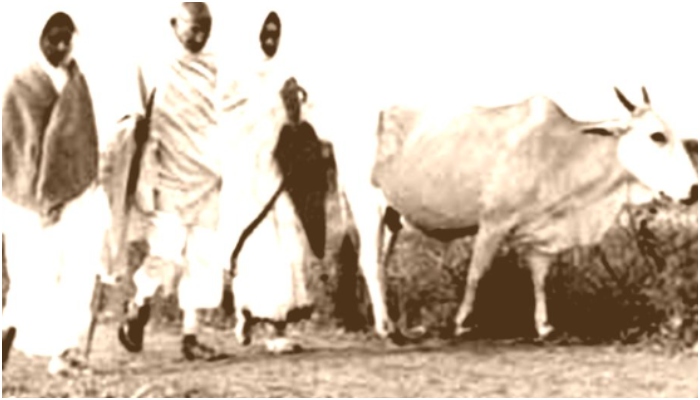
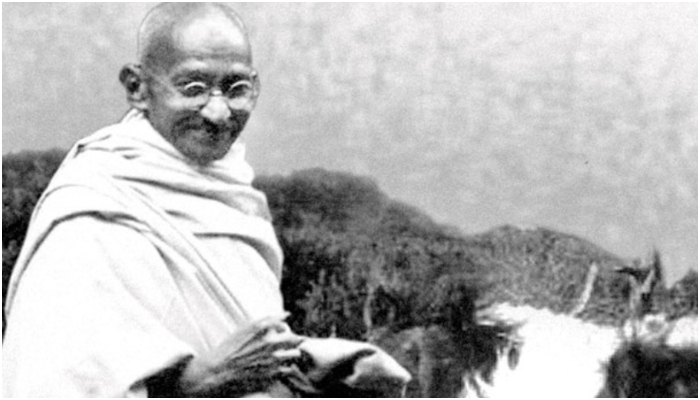
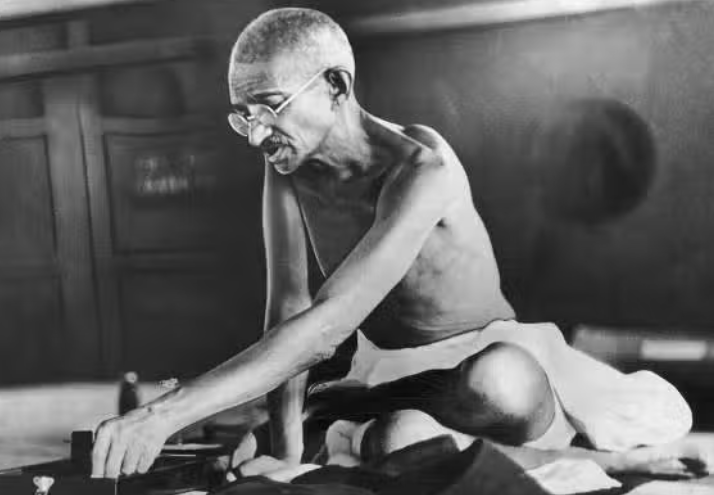
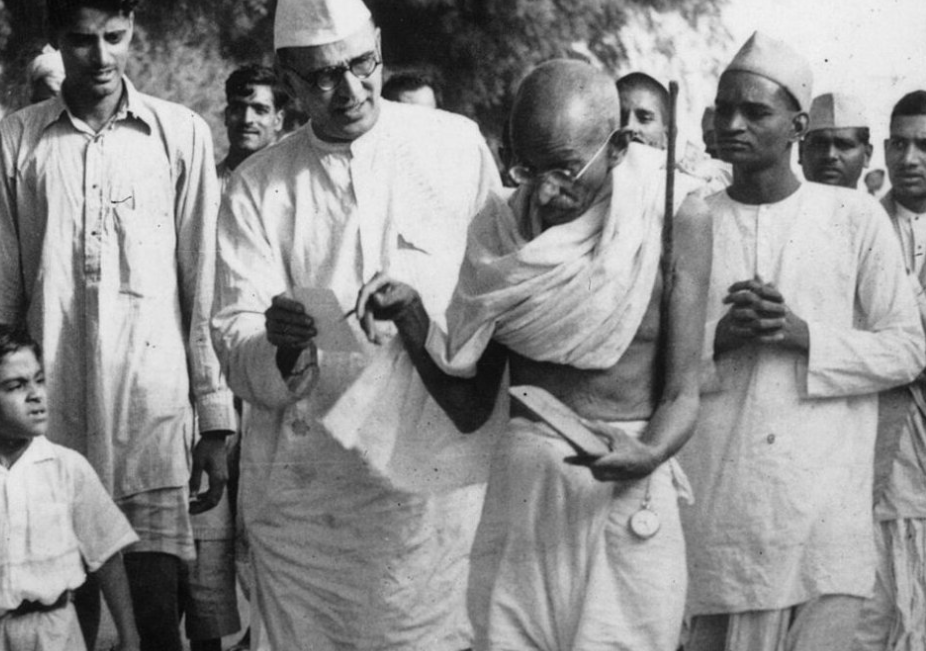
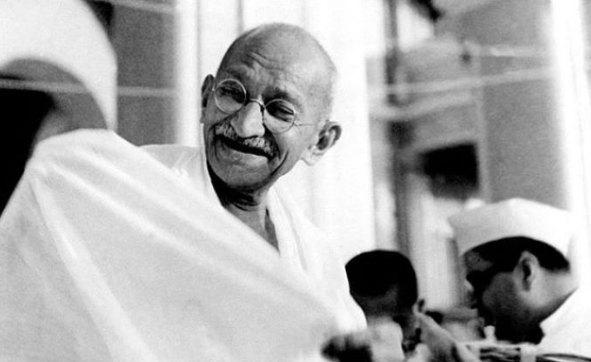
MK Gandhi was against cow slaughter and supported cow protection, but with a shade of Muslim appeasement

Understanding MK Gandhi today entails more than simply engaging with his written works. Researchers from several disciplines have been trying to gain an extensive understanding of MK Gandhi by reading his writings and activities together for decades. The effort to develop an integrated idea of Gandhi is still ongoing on several issues, be it politics, economics, Muslim appeasement, or even cow protection, but truly it’s difficult because behind the popular narrative that has been fed to generations of Indians about the so-called ‘father of the nation’, there lies a complex character whose actions and thoughts seem problematic from certain viewpoints.

Cow protection debates emerge regularly in Indian politics, and whenever they do, people debating over the issue try to strengthen their respective arguments by inappropriately quoting Mohandas Karamchand Gandhi. Supporters typically refer to Gandhi’s statements about the cow whereas opponents point to Gandhi’s efforts to honour the beliefs of a certain percentage of the population, notably Muslims, who usually engage in cow slaughter and the consumption of beef. Here, it can clearly be said that Gandhi has always been against the idea of cow slaughter but he has never respected the sentiments of the Hindu community who kept on demanding a ban on cow slaughter. He believed it was wrong to force anyone to stop slaughtering the cows.

Gandhi championed cow protection but claimed ‘forcing’ Muslims against consuming cow meat would be wrong

In July 1947, lakhs of Hindus had signed a petition in the form of postcards, telegrams, and letters demanding a ban on cow slaughter. The letter was presented to Gandhi by Dr Rajendra Prasad. Responding to the same, Gandhi observed that cows were sacred and needed to be protected at any cost. However, he stated that he could not force any particular community to stop slaughtering the cows or not consume beef. “How can I force anyone not to slaughter cows unless he is himself so disposed? It is not as if there were only Hindus in the Indian Union. There are Muslims, Parsis, Christians, and other religious groups here,” he was quoted as saying.

At times, he asked Hindus to look after the cows. Not only this, he asked them to undertake ‘Goseva’, and worship them. But when it came to supporting their demands to impose cow slaughter at the hands of specific communities, Gandhi stated that ‘forcing’ others to stop cow slaughter would be wrong.

The father of the nation, as Gandhi is known by an ever-shrinking bunch of his supporters, allegedly believed in the principle of community togetherness and the idea of peace, and ahimsa. He believed that every person living in the country of India had the right to follow his/her religion and the freedom to choose their respective way of life. Stating his personal beliefs about cow slaughter, he, in many of his articles stated that he did not believe in the idea of cow slaughter but could not interfere with the freedom of choice possessed by a few specific community members. He believed that though the slaughtering of cows was never even explicitly requited by Islam, it was wise of him to not force anyone who believed that it was part of their religious practice.

Gandhi asked Hindus to practice Gauseva but opined cow slaughter could never be stopped by law

Further, though Gandhi believed that he could not democratically ask the Muslims to stop slaughtering cows, he believed that he could convince them to stop it. Gandhi was certain that he could persuade the country’s Muslims to stop slaughtering cows as he believed that murdering a cow was equivalent to killing a fellow countryman.

“Muslims were under no religious obligation to slaughter a cow. The Koran so far as I have been able to understand it, declares it to be a sin to take the life of any living being without cause. I want to develop the capacity to convince the Musalmans that to kill the cow is practically to kill their fellow countrymen and friends, the Hindus. The Koran says that there can be no heaven for one who sheds the blood of an innocent neighbour,” Gandhi maintained while he wrote in one of his many speeches.

He believed that cow slaughter could never be stopped by law. Knowledge, education, and the spirit of kindliness towards her alone could put an end to it. “It will not be possible to save those animals that are a burden on the land or, perhaps, even man if he is a burden,” he once said. He equated the importance of the life of a cow to that of a human and said that he would never kill a human being for the protection of a cow or would never kill a cow for saving a human life, be it ever so precious.

While keeping this opinion he asked Hindus to protect cows. Writing in Young India in 1921, Gandhi said the protection of cows was at the very centre of Hinduism. “The central fact of Hinduism is cow protection. Cow protection to me is one of the most wonderful phenomena in human evolution. It takes the human being beyond this species. The cow to me means the entire sub-human world. Man through the cow is enjoined to realize his identity with all that lives. Why the cow was selected for apotheosis is obvious to me. The cow was in India the best companion. She was the giver of plenty. Not only did she give milk, but she also made agriculture possible,” he said.

He added that cow protection was a gift from Hinduism to the world and Hinduism would endure as long as Hindus would stand to preserve the cow. “Hindus will be assessed not by their tilaks, not by the exact singing of mantras, not by their pilgrimages, and not by the most punctilious observance of caste standards, but by their ability to defend the cow,” he added.

Was Gandhi ok with Muslims slaughtering cows?

Gandhi meanwhile also presented his thoughts in the economic sense maintaining that slaughtering cows would lead to the creation of a ‘soulless economy’. He observed that dry cows, who give less or no milk and are of no productive use would be slaughtered often by people but even such acts causing disrespect to ‘Mother Cow’ should not be happening in India. “My religion teaches me that I should by personal conduct instil into the minds of those who might hold different views, the conviction that cow-killing is a sin and that, therefore, it ought to be abandoned,” he said in Young India in 1925.

He also stated a few measures that he thought would make cow slaughter impossible in India. He opined that in the open market, the state should outbid every other buyer to purchase all cattle offered for sale. The state should operate dairies in all major towns to ensure an affordable supply of milk. He asked the state to run tanneries to use the hides, bones, and other remains of all dead cattle in its custody and said that it should offer to buy back any privately owned dead cattle on the open market.

He further stated that the state should maintain model livestock and farms, as well as teach individuals how to breed and care for cattle. He wanted the state to also create broad provisions for pasture land and import the top experts in the world to teach people about cattle science.

“The foregoing scheme presupposes the State upkeep of all old, maimed, and diseased cattle. This no doubt constitutes a heavy burden, but it is a burden which all States, but above all a Hindu State, should gladly bear,” he clearly emphasized.

While putting the onus of Gau Raksha (cow protection) on Hindus and the government of India, Gandhi’s views were quite different when it came to the Muslim population. In 1927, during the annual session of the Congress held at Madras, Gandhi agreed to a draft proposal to bring Hindu-Muslim unity, however, he failed to go through the draft in detail that gave general permission to Muslims to slaughter cows. The issue of the protection of cows was eventually ignored to bring about Hindu-Muslim unity in the nation.

Later responding to the matter, Gandhi stated that he remembered the grave mistake committed by him in the night. “I have committed a grave error. I did not read the draft properly. But in the night I suddenly remembered that that draft gave the Mussulmans general permission to slaughter cows and the question of cow-protection was conveniently ignored! How can I bear this? If they slaughter cows, we cannot stop them by force, it is true, but we can at least win their trust by loving service and explaining our point of view to them, can’t we? As for me, not even to win Swaraj will I renounce my principle of cow protection! Go and tell these people that I do not accept that settlement! No matter what the consequences, I will not be a party to cow slaughter!” he conveniently added up.

Conclusion: Gandhi was never clear on what he exactly had to convey

Gandhi has always allegedly favoured the Muslims given the community served as an important power bloc, often in collusion with the British rulers in the then contemporary politics. Gandhi’s first getaway into politics in South Africa and India was a strong collaboration with Muslim businessmen from the Bombay Presidency, as well as hard-line Islamist leaders such as the Ali brothers and Abdul Bari. Whereas, wealthy caste Hindus, particularly Gujarati and Marwari merchants, provided Gandhi with financial support. Cow protection was their preferred cause (as it was for many other Hindu communities, particularly those in the Hindi belt).

Gandhi accommodated upper caste Hindus by using word symbolism to promote cow protection, consistently asserting it to be the most holy responsibility of Hindus. However, in terms of tangible acts, he catered to the group that appeared to be higher up in his power hierarchy – the Muslims – by maintaining the status quo in their favour. He emphasized that Hindus could only plead to Muslims to cease cow slaughter and that they should not bargain or use force to protect cows; he rejected legal bans on cow protection, even where Hindus were in the majority, without Muslim assent.

Given this, it can be stated that Gandhi’s ‘liberal’ and ‘plural’ values took over his Hindu mind which believed cow protection to be the biggest service Hindus could ever adopt. Gandhi failed to stand by Hindus who demanded a ban on the slaughter of cows at the hands of Muslims while he believed that slaughtering the cows was one of the biggest sins anybody ever could commit. He favored Muslims saying that slaughtering cow was their choice of lifestyle but also stated on the other hand that it was nowhere mentioned in the Quran that cow slaughter was an obligation to follow Islam.

There are a few questions to raise here- Gandhi believed in the principle of ahimsa (non violence), so how could he allow his countrymen (Muslims) to practice cow slaughter? He never allowed it, but then he even never advocated for a ban or stopped them from slaughtering cows. Why? Isn’t this a little bit strange and difficult to digest? How could he not stop his loving countrymen (Muslims) from practising ahimsa in the form of cow slaughter, as the former personally believed that murdering a cow was equal to murdering a human life? How could he ask Hindus to protect cows in the name of religion and not stand by them when they demanded a ban on slaughter practised by other communities in the name of religion?

People have selectively been quoting Gandhi to support their respective arguments on the issue of cow slaughter, but they need to understand that the person whom the nation refers to as a ‘father’ was hardly firm and clear on what he exactly had to convey. By reading his views, one comes to thinking that Gandhi’s personal version of Ahimsa was mostly about avoiding conflict with a lot of appeasement of the violent side added to it.

This is not to criticize Gandhi or laud him for whatever he did, of course, people supporting him will praise him for standing by Muslims and people who don’t like him might end up criticizing him for not taking a firm stand for cow protection or standing by Hindus for that matter. This is just to state facts and to accept the idea that even a personality elevated to near-divine status in the popular narrative can be susceptible to flaws.

Israel declares UN chief Antonio Guterres persona non grata, bans him from entering the country

Israel on Wednesday declared UN chief Antonio Guterres “persona non grata”, banning him from entering the country. The decision was taken by the Israeli foreign ministry for failing to unequivocally condemn Iran’s missile attack on Israel yesterday.

Foreign minister Israel Katz announced on social media that he has declared Guterres a “persona non grata” in Israel. He said, Today, I have declared UN Secretary-General @antonioguterres persona non grata in Israel and banned him from entering the country.” Katz added, “Anyone who cannot unequivocally condemn Iran’s heinous attack on Israel, as almost every country in the world has done, does not deserve to step foot on Israeli soil.”

The foreign minister added in his tweet, “This is a Secretary-General who has yet to denounce the massacre and sexual atrocities committed by Hamas murderers on October 7, nor has he led any efforts to declare them a terrorist organization. A Secretary-General who gives backing to terrorists, rapists, and murderers from Hamas, Hezbollah, the Houthis, and now Iran—the mothership of global terror—will be remembered as a stain on the history of the UN. Israel will continue to defend its citizens and uphold its national dignity, with or without António Guterres.”

After Iran launched almost 200 missiles targeting Israel, UN chief Antonio Guterres condemned the “broadening of the Middle East conflict, with escalation after escalation.” He added, “This must stop.  We absolutely need a ceasefire” without referring to Iran firing ballistic missiles towards Israel.

As reported earlier, on 1st October, Iran launched several ballistic missiles targeting Israel as the Middle-East conflict worsens. The Israeli civilians had rushed to bomb shelters after sirens went off in the entire country following the large-scale ballistic missile launches by Iran.

As per the latest reports, 181 missiles were launched by Iran in the strike. Israel Defense Forces said that it intercepted “a large number” of them using the Iron Dome missile defence system. US forces also helped in shooting down many of the missiles.

However, due to the large number of missiles launched at the same time, the system was overwhelmed and many missiles hit locations in Israel, especially in central and southern Israel. As all the residents were rushed to bomb shelters, there were no significant casualties in the attack.

Earlier, on Monday, Israel launched “targeted ground raids” at Iran-backed proxy Hezbollah’s targets across several villages of southern Lebanon. This came just days after Hezbollah Chief Hasan Nasrallah was killed by Israel Defense Forces in an attack on his bunker. Israeli Ground attacks in Lebanon were backed by airstrikes and artillery launches in places close to Israel’s northern border.