Home Blog Page 781

Activist Snehamayi Krishna files complaint against Karnataka CM Siddaramaiah with ED in the MUDA scam

0

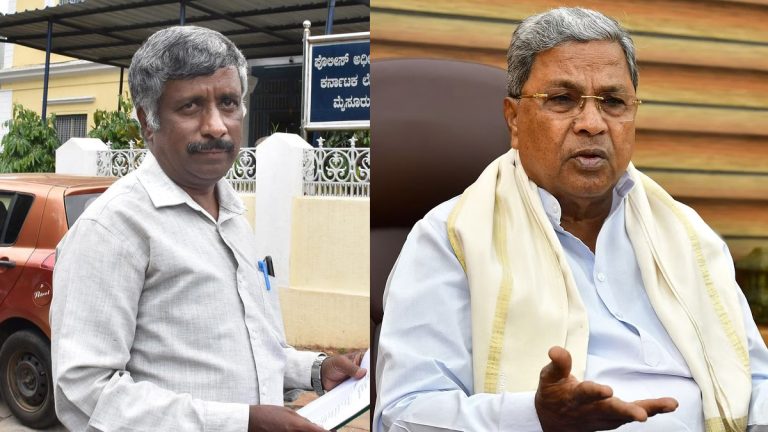
Activist Snehamayi Krishna, who is also a complainant in the MUDA scam case, has filed a complaint with the Enforcement Directorate against Karnataka CM Siddaramaiah, alleging irregularities and corruption related to MUDA.

Earlier, a petition was filed in the Karnataka High Court, demanding a CBI probe against Karnataka Chief Minister Siddaramaiah in the alleged MUDA scam with Snehamayi Krishna, a petitioner in the case, stating that the investigation must be handled by the central probe agency as Lokayukta works under the preview of the government and Chief Minister of Karnataka.

Earlier in the day, Lokayukta Police filed an FIR against Siddaramaiah and others in connection with the alleged Mysuru Urban Development Authority (MUDA) land allotment ‘scam’.The FIR has been filed by the Mysuru Lokayukta under various sections of the Indian Penal Code (IPC), including 351, 420, 340, 09, and 120B among others, they said.

The FIR mentions CM Siddaramaiah, his wife, brother-in-law and others as accused in the case, they added.

This comes after the Special Court in Bengaluru passed an order directing Karnataka Lokyukta to conduct an investigation against Karnataka Chief Minister Siddaramaiah on the allegation of illegalities in the allotment of 14 sites worth Rs 56 crore to his wife Parvathi by the Mysuru Urban Development Authority (MUDA).

BJP has strongly demanded the resignation of the Karnataka CM.

“If he wants a fair and free inquiry and further investigation since Lokayukta and all the police officers are still being posted by the Home Ministry, all the IPS officers are being transferred by none other than the Chief Minister himself. To have a fair inquiry, with this background. Lokayukta should be given a free hand by the present government by him resigning from his CM post,” former Karnataka Chief Minister and BJP MP Basavaraj Bommai said.

It is allegd that MUDA illegally allotted 14 sites to Chief Minister Siddaramaiah’s wife in the prime location of Mysuru city.


(This news report is published from a syndicated feed. Except for the headline, the content has not been written or edited by OpIndia staff)

Iran’s Revolutionary Guard Deputy Commander overseeing Quds Force Operations in middle east killed along with Hezbollah chief in Israeli airstrike in Lebanon

0

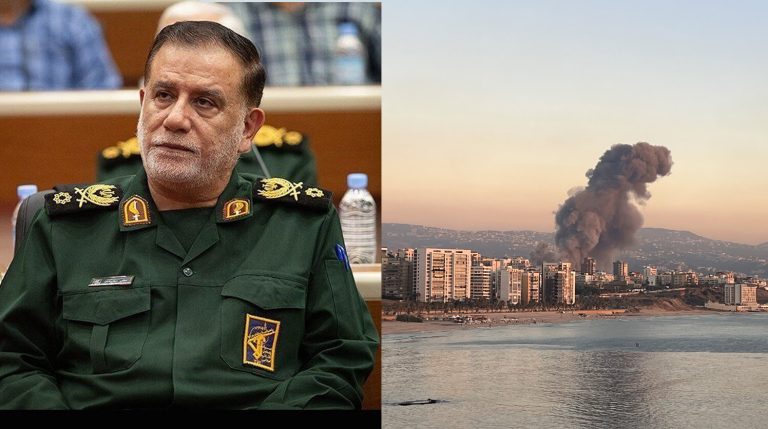
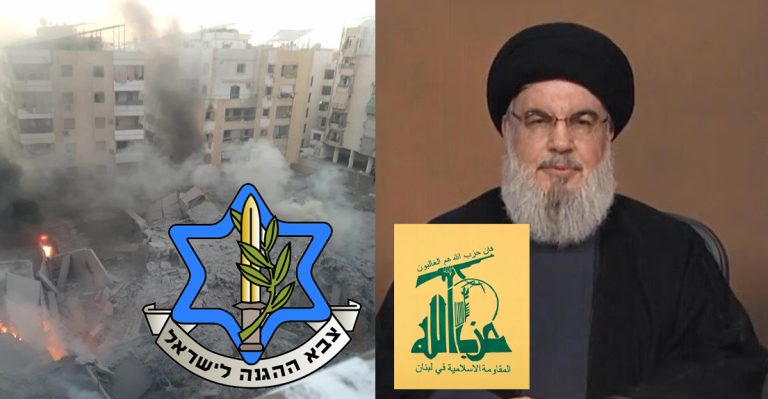
After Lebanon-based group Hezbollah confirmed that its leader Sayyed Hassan Nasrallah was killed in an Israeli airstrike in Beirut, Iranian media reported that a prominent general in its paramilitary Revolutionary Guard was also killed in the same airstrike. Notably, Nasrallah and several other top Hezbollah leaders were killed when Israeli forces bombed the group’s underground headquarters under residential buildings in Beirut on Friday.

Iran’s state-run IRNA news agency reported that Abbas Nilforushan (58), Islamic Revolutionary Guard Corps’ deputy commander, was killed along with Hezbollah leaders in the Israeli operation. “Brigadier General Abbas Nilforoushan was martyred in Israel’s attack on Beirut along with Martyr Sayyed Hassan Nasrallah,” IRNA tweeted.

As per reports, Nilforoushan was overseeing the IRGC’s Operations Command, which is directly involved in various military and security operations. He was responsible various tasks like suppression of protests in Iran and military engagements abroad, particularly in Syria. He was the Acting Commander of Quds Force Operations in Syria and Lebanon.

Confirming the death, the Head of the Judicial Organization of the Armed Forces of Iran said, “We consider the pursuit of justice for this martyr to be the right of the Islamic Republic of Iran under international legal conventions.”

Abbas Nilforushan played a key role in arming various Islamist groups in the middle-east and maintaining coordination among them. He was sanctioned by the USA in 2022, saying that he led a group “directly in charge of protest suppression, which has played a critical role in arresting protest leaders during previous protests.”

In the operation titled “New Order,” Israeli Defence Forces used dozens of bunker buster bombs to hit the underground bunkers of Hezbollah in Beirut’s southern suburb of Dahiyeh on Friday. The group’s headquarters are located beneath residential buildings, and Israel knew that Hezbollah top leadership had assembled there.

IDF said that the airstrike was based on years of tracking Nasrallah along with “real time information”, in which the underground bunkers were hit with bunker-busting bombs fired from F-15 fighter planes. Six buildings were levelled in the attack, and Lebanese Health Ministry said that six people were killed and 91 injured in the strikes.

As per Israel, apart from Hezbollah chief Nasrallah, Ali Karki, the commander of Hezbollah’s Southern Front, and other top commanders were also killed. In a second round of strikes Israeli forces destroyed missiles stockpiled in Hezbollah in buildings in the area.

Israel kills Hezbollah chief Hassan Nasrallah: Know about Hezbollah, the Iranian terror proxy based out of Lebanon

On 28th September, a day after Israel Defence Forces bombed Hezbollah’s main headquarters in Beirut, Lebanon, Israel officially confirmed that Hezbollah chief Hassan Nasrallah died in the operation. Confirming the development, IDF tweeted, “Hassan Nasrallah will no longer be able to terrorise the world.”

As per Israeli sources, Hassan Nasrallah, the leader of the Hezbollah terrorist organisation and one of its founders, was eliminated yesterday in the bombing operation, together with Ali Karki, the commander of Hezbollah’s Southern Front, and additional Hezbollah commanders.

Earlier, 879 Hezbollah members were killed due to explosions of pagers and walkie-talkies. It was one of the largest and most sophisticated attacks by Israel on the terrorist outfit. The conflict between Israel and the terrorist organisation Hezbollah is not new. The terror outfit provided backing to the terrorist organisation Hamas following the latter’s terrorist attack on Israel on 7th October 2023, leading to direct conflict between Hezbollah and Israel.

Introduction to terrorist outfit Hezbollah

Hezbollah, also known as the “Party of God”, is a terrorist organisation with a political base in Lebanon. It was formed in 1982 amidst the Lebanese Civil War and the Israeli invasion. Hezbollah soon transformed from a small militia group into a significant regional force with backing from Iran. In today’s time, the terrorist organisation plays the role of a heavily armed militia and a political player. Its activities extend well beyond the borders of Lebanon.

While it is known as a militia group or a militant group in several circles, many Western countries have designated it as a terrorist organisation, including the United States and the United Kingdom. Hezbollah is particularly known for its links to Iran and it acts as an extension of Iranian influence in the Middle East.

Origins and historical development

Hezbollah came into existence in the aftermath of the 1982 Israeli invasion of Lebanon. Following the military action by Israel, there was consistent tension between the Jewish nation and several militant groups operating out of southern Lebanon. Hezbollah was founded by Shia clerics of Lebanon with the backing of Iran’s Islamic Revolutionary Guard Corps. It was influenced by the Iranian Revolution of 1979. The goal of the terrorist organisation was outlined in its manifesto released in 1985, which included the establishment of an Islamic state in Lebanon, resistance to Israeli occupation, and opposition to the influence of the West in the Middle East.

Hezbollah emerged on the sidelines of the Shia awakening in Lebanon, which was marginalised by the Sunni-dominated Lebanese government. This sentiment was further fuelled by the disappearance of the prominent Shia leader Sayyid Musa al-Sadr in 1978. The wider revolutionary Shia wave post-Iranian Revolution also played a vital role in the establishment of Hezbollah.

Military and political influence

From its early years, Iran’s assistance played a vital role in defining the military prowess of Hezbollah. Iran provided financial support, training, and arms to Hezbollah, which increased its dominance in the region exponentially in a short span. Hezbollah developed a sophisticated military wing which quickly became a formidable force. It engaged in several attacks and wars with Israel. One of the most notable ones was the 2006 Lebanon War. According to information available, in 2021, Hezbollah’s military had over 150,000 rockets, which showcased their strength and dominance as a terrorist outfit in the region against Israel.

In the political arena, Hezbollah grew to become a dominant force in Lebanon’s government. In 1992, it entered Lebanese politics and established its members as political leaders in the parliament. Despite its military nature, its presence in the political landscape made it much easier for Hezbollah to propagate its ideology. When it got integrated into the political landscape, it was seen as a “Lebanonisation” process. However, the political activities of the terrorist outfit did not shift its fundamental commitment to Iranian-backed Shia revolutionary ideas.

Iran’s role in Hezbollah’s growth

Iran was involved in Hezbollah’s growth from the beginning. It was fundamental to Hezbollah’s operations and ideology. Iran provided notable financial and logistical support to the terrorist outfit since its inception. The aim was to use the group to export its Shia Islamic revolutionary propaganda to other parts of the Middle East. The IRGC’s Quds Force played a vital role in supplying arms and training to Hezbollah members. The terror outfit served as a proxy for the regional ambitions of Iran, specifically in the conflicts in Syria and Iraq, where Hezbollah’s terrorists were deployed.

Hezbollah is committed to Velayat-e faqih, the Iranian doctrine that grants political and religious authority to the Islamic jurist. It ties Hezbollah’s loyalty directly to the Supreme Commander of Iran. This ideological alignment strengthens Iran’s influence over the group, with Hezbollah acting as Iran’s long arm in regional conflicts.

The global network and terror activities

Hezbollah’s primary operations have been concentrated in Lebanon and the Middle East. However, the terrorist outfit also has a global network for fundraising and logistical support. It has been linked to terrorist activities in Europe, Latin America, Africa, and Asia. Some of the most infamous Hezbollah attacks include the 1992 bombing of the Israeli embassy in Buenos Aires, Argentina, and the 2012 bus bombing in Bulgaria that targeted Israeli tourists.

Apart from terror activities, Hezbollah also indulges in organised crime, money laundering, and drug trafficking worldwide. Its involvement in the drug trade, specifically in Latin America, drew the attention of the US and international law enforcement agencies.

Role in the Syrian Civil War

Hezbollah was involved in the Syrian Civil War, which became a major turning point in its regional activities. Hezbollah’s terrorists provided support to Bashar al-Assad, which aligned with Iran’s strategic interests in the region. Several thousand Hezbollah terrorists were deployed in Syria, specifically in key battles such as those in Daraa and Aleppo. Hezbollah’s intervention in Syria further solidified its role as a regional player with a pan-Shia focus. However, it also caused internal dissent and criticism from parts of the Lebanese population who opposed the group’s heavy military involvement outside Lebanon.

Financial sanctions

Hezbollah has faced financial pressure from the US sanctions on Iran, leading to fewer funds for the terror outfit. Notably, Hezbollah is a designated terrorist organisation by the US Treasury Department. The US has targeted individuals and entities that have ties to Hezbollah’s fundraising network. Despite the sanctions, Hezbollah continues to maintain significant influence in Lebanon and other parts of the region.

Hezbollah used to hold a high sentimental position among the Lebanese people. However, its domestic reputation took a hit when its name appeared in the 2020 Beirut port explosion. Despite the setbacks, the terrorist outfit did not lose its deeply embedded influence on Lebanon’s political system.

Conclusion

Hezbollah has evolved from a small militia into a significant political and military force, thanks to Iranian support and its ability to navigate Lebanon’s complex political landscape. While it is labelled as a terrorist organisation by many countries, Hezbollah continues to maintain substantial influence in Lebanon and the broader Middle East. However, growing financial pressures, domestic opposition, and its entanglement in Syria’s conflict have raised questions about the group’s future trajectory.


Operation New Order: Hezbollah confirms the death of its chief Hassan Nasrallah in Israeli airstrike, several top leaders of the group killed and its missiles destroyed by bunker buster bombs

Lebanon-based group Hezbollah has confirmed that its leader Sayyed Hassan Nasrallah was killed in an Israeli airstrike in Beirut. This comes after Israel had announced that Nasrallah has been eliminated in the ongoing operation against Hezbollah in Lebanon.

A statement issued by the group said, “Sayyed Hassan Nasrallah, Secretary General of Hezbollah, has joined his great, immortal martyr comrades whom he led for about 30 years.” Hezbollah added that it would continue its battle against Israel “in support of Gaza and Palestine, and in defence of Lebanon and its steadfast and honourable people.”

Gaza based Hamas also confirmed and mourned the death of Hezbollah chief. “We mourn with deep patience and respect for the honourable Sayyid Hassan Nasrallah and his brothers,” the group said in a message on Telegram. The terror group said, “We recall his life’s journey, filled with sacrifices for the liberation of Jerusalem and the blessed Al-Aqsa Mosque, and honour his steadfast positions. His unwavering support for our Palestinian people, our courageous resistance, and our legitimate rights continues to inspire us. We also acknowledge his commitment to remaining at the heroic forefront, supporting our people and our resistance in the Al-Aqsa flood.”

Meanwhile, Israeli forces have said that not just Sayyed Hassan Nasrallah, but several top leaders of Hezbollah were killed in the airstrikes on the group’s headquarters in Beirut. IDF said that alongside Nasrallah, the commander of Hezbollah’s so-called Southern Front, Ali Karaki was also killed in the Friday afternoon strike, along with other top commanders in the terror group.

As per a widely shared infographic, also shared by IDF, Hezbollah has lost almost all of its top leadership in recent Israeli operations. As per it, apart from Abu Ali Rida, the Commander of the “Bader” Unit, ten top leaders of the group have been eliminated. They include four second in command leaders and five third in command leaders, apart from chief Nasrallah.

In the operation titled “New Order,” Israeli Defence Forces used dozens of bunker-buster bombs to hit the underground bunkers of Hezbollah in Beirut’s southern suburb of Dahiyeh on Friday. The group’s headquarters are located beneath residential buildings, and Hezbollah top leadership had assembled there to plan attacks against Israel in light of escalating tensions on the Israel-Lebanon border.

As per media reports, around 85 “bunker-buster” bombs were used in the operation, which are also known as “ground penetration munition”. These are missiles designs to target underground bunkers, they burrow deep into the ground before detonating. Such missiles destroy underground facilities and even reinforced concrete buildings. American F-15 fighter jets of Israeli Air Force were used for the operation, as confirmed by a video shared by IDF spokesperson.

The American GBU-28 bunker buster bomb, some which were sold to Israel, can penetrate up to about six meters of concrete. Israel also uses MPR-500 bombs made by Elbit.

Israel Army spokesperson Lt. Col. Nadav Shoshani said that the operation was carried out based on “real time intelligence”. Israel knew Nasrallah at the Hezbollah headquarters in Beirut, and aimed to eliminate him. Shoshani added that the airstrike was based on years of tracking Nasrallah apart from real time intelligence.

The spokesperson said that despite the loss of senior leaders, Hezbollah’s arsenal remains intact, and Israel will continue to target the group. “This isn’t a threat that has gone away,” he said, adding that it is safe to assume that Hezbollah will retaliate.

After the assassination of Nasrallah, IDF Chief of Staff Lt. Gen Herzi Halevi said Israel would reach anyone who threatened the country and its citizens. “The is not the end of the tools in the toolbox. The message is simple, to anyone who threatens the citizens of the State of Israel, we will know how to get to them,” he said.

Following the strikes on Friday, Israel hit several buildings on Saturday after warning the residents to move away. As per Israeli military, these locations were used by Hezbollah to store anti-ship missiles.

Before the strikes, IDF Spokesman Rear Adm. Daniel Hagari said that IDF will now strike the weapons stored by Hezbollah under the residential buildings. “We will now reveal how Hezbollah places strategic weapons under civilian buildings in the heart of the Dahiyeh. These missiles are a real threat to world shipping lanes and strategic facilities of the State of Israel. In a short while, we will attack the weapons under the buildings. The intensity of the explosion of the weapons under the buildings, will lead to damage to the buildings and could lead to their collapse,” Hagari said.

After giving civilians time to move outside of the area, Israeli Air Force struck the buildings where anti-ship missiles were stored, along with several other Hezbollah sites in Beirut’s southern suburbs. IDF said that the strikes took out six warehouses where the coast-to-sea missiles were stored and maintained, destroying dozens of the anti-ship missiles.

In a video message, Hagari said that Hassan Nasrallah and other Hezbollah leaders were legitimate military targets under international law. “Nasrallah intentionally built Hezbollah’s central headquarters under residential buildings in Dahiya, Beirut—because Hezbollah intentionally uses Lebanese civilians as human shields. While Hezbollah seeks to maximize civilian harm, Israel seeks to minimize it,” he said.

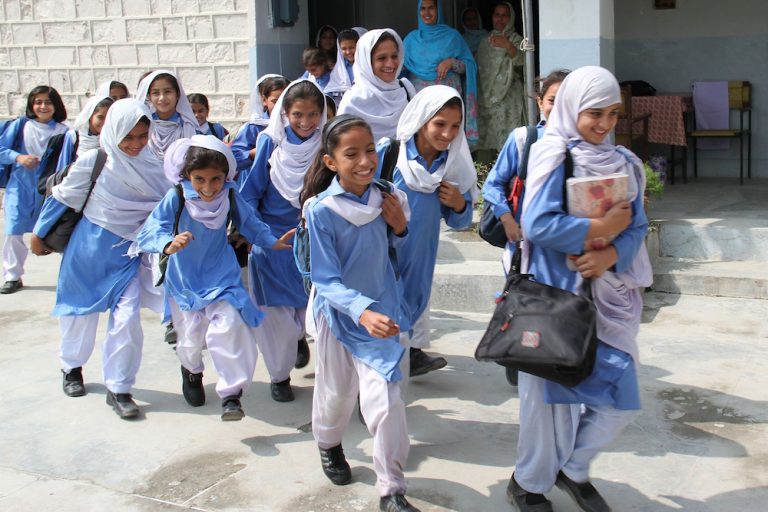
Pakistan: Education for kids in Rawalpindi comes to a grinding halt as state runs out of money to pay the teachers

0

The inability of the Pakistani government to pay adequate compensation to its retired and on-roll teachers has forced the teacher associations in Pakistan’s Rawalpindi to raise their voices by holding protests, The Express Tribune reported.

The teaching fraternity has complained about issues with the latest pension rules, concerns over the privatisation of government schools, and demands for the approval of leave encashment.

Education in schools in Rawalpindi has come to a halt, as the Grand Teachers Alliance has called upon a citywide strike over the concerns faced by teaching professionals, The Express Tribune reported.

The strike has halted operations in 5,610 government institutions across the six districts of Rawalpindi Division, including Rawalpindi, Jhelum, Attock, Chakwal, Talagang, and Murree. The protesters held banners and placards announcing an indefinite boycott of educational activities. Additionally, sports activities have also been cancelled until the strike continues.

The protestors warned that their protests will continue and may escalate, including a potential long march to Islamabad, according to the Express Tribune report. The leaders also warned that the privatisation of schools would lead to increased educational costs and a rise in the number of out-of-school children, which could reach 30 million.

The report further stated that the education department has demanded the list of absent teachers and has warned to issue show-cause notices to 15 educators. However, the protestors have said that the action of the government will be contested, and any officer who issues a suspension letter will face protest.

The protestors, on the other hand, have asserted that they are attempting to prevent the conversion of government schools to private, and the government must support the initiative instead of harassing them. Additionally, the Grand Teachers Alliance leaders like Shahid Mubarak, Malik Amjad Mehmood, and Qazi Imran declared their demonstration was nonpolitical and nonviolent, according to The Express Tribune report.

An agreement between teachers and Punjab Chief Minister Maryam Nawaz during a previous sit-in by teachers in Lahore, where she had promised to address the demands of the teachers, The Express Tribune reported.

However, the protestors claimed that upon taking office, the chief minister had forgotten her commitment, which they argue is detrimental to the educational system.

The alliance also expressed ‘deep concerns’ over the issues of job security faced by the teachers in Pakistan, claiming that the chief minister’s actions threaten their livelihoods and the future of the country’s children.

(This news report is published from a syndicated feed. Except for the headline, the content has not been written or edited by OpIndia staff)

MUDA scam in Karnataka: Allegations were made by Congress party itself – BJP’s Sudhanshu Trivedi

0

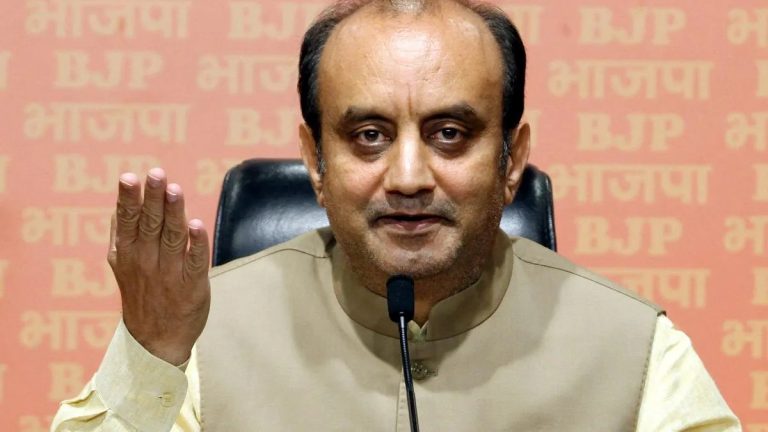
Bhartiya Janata Party MP Sudhanshu Trivedi hit out at the Congress party over the alleged MUDA ‘scam’ and said the allegations pertaining to the case were first made by the Congress itself and the decision has also come in Lokayukta Court of Karnataka.

Attacking the party further, he asked whether Lok Sabha Leader of Opposition Rahul Gandhi and AICC President Sonia Gandhi are supporting “corrupt” leaders.

“In the case of Karnataka Congress CM Siddaramaiah’s MUDA scam, the way his family made huge wealth by misusing land and government authority in the Mysore Urban Development Authority, the court has given this decision in which CM Siddaramaiah has been made accused number one. Is the Chief Minister the first and the prime accused in this? The important thing is no central agency has investigated this and no one has filed an application on their own,” Trivedi said addressing a press conference on Saturday.

He added that the decision has come from the Lokayukta Court of Karnataka because the allegations were made by the Congress party.

“The decision itself has come in Lokayukta Court of Karnataka because the allegations itself were made by Congress. Now I want to ask Rahul Gandhi and Sonia Gandhi whether they are standing with the corrupt politicians and to remember, this case is done by your party members itself. I would like to tell you that Malikarjun Kharge is from Karnataka too and since he has been on post, the corruption in Karnataka has risen twice,” Trivedi said.

The BJP leader further said that Siddaramiah has been trying to “protect himself” from investigation in the case for the last couple of months.

“I would also like to remind you that Siddaramiah has been trying to protect himself from investigation in the case for the last couple of months. This is the few rare cases of history in which a sitting Chief Minister has been accused in a scam,” he added.

A petition has been filed in the Karnataka High Court, demanding a CBI probe against Karnataka CM Siddaramaiah in the alleged MUDA scam with Snehamayi Krishna, a petitioner in the case stating that the investigation must be handled by the central probe agency as Lokayukta works under the preview of the government and Chief Minister of Karnataka.

A Special Court in Bengaluru on Wednesday passed an order directing Karnataka Lokyukta to conduct an investigation against Karnataka Chief Minister Siddaramaiah on the allegation of illegalities in the allotment of 14 sites worth Rs 56 crore to his wife Parvathi by the Mysuru Urban Development Authority (MUDA). 

(This news report is published from a syndicated feed. Except for the headline, the content has not been written or edited by OpIndia staff)

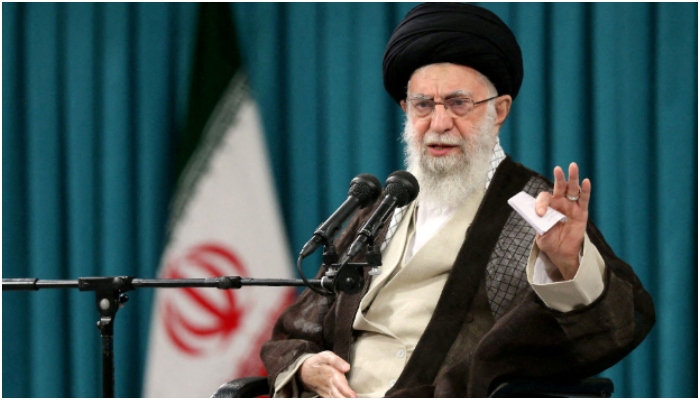
Iran’s supreme leader Ayatollah Khamenei goes into hiding after Israel eliminates Hezbollah chief Nasrallah

On Saturday, September 28, Israel Defense Forces (IDF) confirmed that they have eliminated chief of Iran backed terror organisation Hezbollah, Hassan Nasrallah. Reportedly, Nasrallah was eliminated in a targeted strike in Lebanon by Israel. Following the death of Iran backed Nasrallah, Iran’s supreme leader, Ayatollah Khamenei has gone into hiding to avoid any similar strike by Israel against him.

As per Reuters report, Iran was in constant contact with Lebanon’s Hezbollah and other regional Iran proxy groups to determine the next step after Israel announced that it had killed Hezbollah chief Hassan Nasrallah in a strike on south Beirut. 

Following the killing of Nasrallah, Iran Supreme Leader Ayatollah Ali Khamenei has been moved to a safer place within the country and security has been beefed up for him with the fear that he can be next.

Notably, following the death of Hezbollah chief Nasrallah, Israel’s army chief, Lieutenant General Herzi Halevi, vowed to “reach” anyone who poses a threat to Israeli citizens. Iran has always been against the existence of Israel, and the Ayatollah has been at the forefront of spewing venom against Israel.

Earlier, in response to Hezbollah’s provocation, Israel struck the terror group’s central headquarters in the southern suburbs of Beirut. During the attack, Israel killed the group’s co-founder and current chief Hassan Nasrallah.

As per media reports, Nasrallah’s daughter Zainab Nasrallah, Hezbollah missile unit commander Muhammad Ali Ismail, and his deputy Hossein Ahmed Ismail were also killed in Israel’s attack.

Israel and Hezbollah have always been at war, however, the tensions have escalated since the October 7 terror attack by Hamas in Israel, a terror attack supported by Iran-backed Hezbollah.

Canada: Masked pro-Palestinian protesters deface Maharaja Ranjit Singh statue, spark outrage

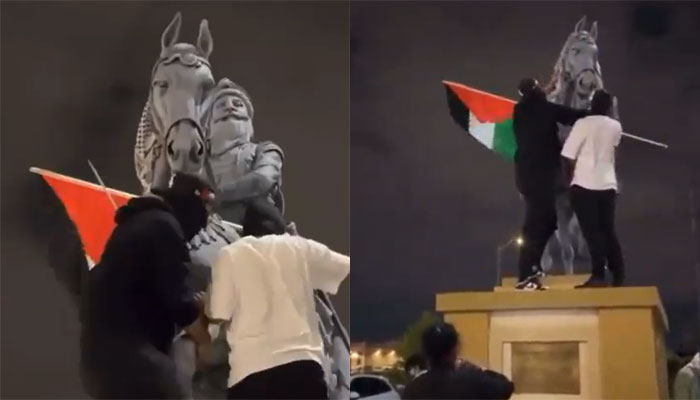
On 28th September, a video of masked pro-Palestinian protesters surfaced on social media from Malton, Mississuaga in Canada, where they were seen defacing the statue of Maharaja Ranjit Singh, founder of the Sikh Empire. The social media user Leviathan, who published the video, identified the person defacing the statue as Hosaam Hamdan, who has a history of defacing statues of cultural significance.

In a post on X, the user wrote, “Frequently masked protester Hosaam Hamdan defacing a statue of Maharaja Ranjit Singh, a massive insult to the Sikh community as he is the first Maharaja & founder of the Sikh Empire. Hosaam Hamdan has a history of defacing statues of cultural significance, so this should not be observed as a 1-off instance.”

Sharing the video, senior correspondent for the National Telegraph, Daniel Bordman, wrote, “Jihadists in Canada attack and deface a statue of Ranjit Singh. Ranjit Singh was the father of the Sikh Empire, the last man to successfully hold Afghanistan and generally loved by all in South Asia. This isn’t about Israel or Palestine, it’s about the destruction of everything that is not part of the Muslim Brotherhood’s worldview.”

The viral video is around 37 seconds long. Two Palestinian masked protesters can be seen on the statue of Maharaja Ranjit Singh. One of them can be seen tying a cloth on the horse of Maharaja Ranjit Singh. The video was shot by several protesters present at the scene. The Peel Police of Canada have been informed about the incident, which is being looked into, but they have not released any official statement.

Vandalism of Ranjit Singh statue by Islamists

Maharaja Ranjit Singh’s statue has been a target of Islamists before. In August 2021, a similar incident occurred at Lahore Fort in Pakistan where a nine-foot-tall statue of Maharaja Ranjit Singh was vandalised for the third time by members of a Pakistani political party. The statue was pulled down by workers of Tehreek-e-Labbaik Pakistan (an Islamist political party). The TLP workers first broke the arm of the statue and then dislodged it completely. The two workers entered the fort posing as a disabled person and his helper. The man, who pretended to have a leg disability, hit the statue with the rod he was carrying.

Who was Maharaja Ranjit Singh?

Maharaja Ranjit Singh was an exemplary and powerful Sikh ruler who successfully repelled numerous Afghan attacks in Punjab and safeguarded the region from invasion. He is often referred to as the “Lion of Punjab.” He was the founder and first ruler of the Sikh Empire, established in the early 19th century.

Maharaja Ranjit Singh lost the sight in one eye due to smallpox at a young age. Despite having only one functional eye, he emerged as a formidable leader and military strategist. He consolidated a vast Sikh Empire and challenged the might of the Afghans. Maharaja Ranjit Singh also resisted the expansion of the British Empire. His administration was inclusive, comprising individuals from various religious backgrounds, including Sikhs, Hindus, Muslims, and Europeans.

Maharaja Ranjit Singh was born on 13th November 1780 in Gujranwala (now in Pakistan), Punjab. He fought his first battle at the age of 10 and ascended the throne soon after. At 18, he conquered Lahore. He ruled for 40 years, keeping the British at bay and ensuring no one came near his empire.

At the age of 12, following his father’s death, the burden of the throne was placed on his young shoulders. He was officially crowned as the Maharaja of Punjab at the age of 20, on 12th April 1801. After his coronation, in 1802, he annexed Amritsar into his empire. By 1807, he had defeated the Afghan ruler Qutb-ud-Din and captured Kasur. In 1818, he seized Multan, and by 1819, Kashmir was under his control. He passed away on 27th June 1839.

Gujarat: Illegal religious structures, including a mosque, a 500-year-old graveyard, and dargahs close to Somnath Temple demolished

0

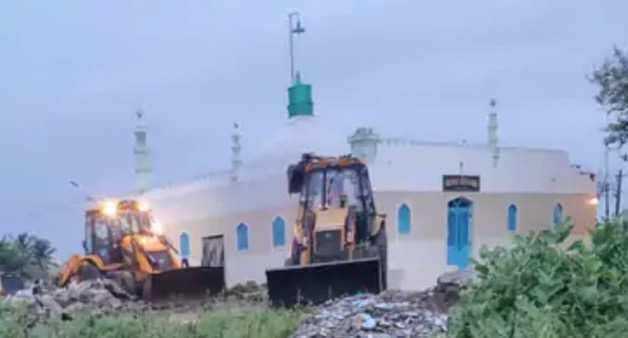
The Gujarat administration demolished Illegal religious structures, including a mosque, graveyard, and a dargah near the hallowed Somnath Temple on 28 September 2024.

36 JCBs, 70 tractors, 5 Hitachi machines, 10 dumpers and 1,400 policemen were deployed by the Gujarat administration as a part of the demolition operation, reported Desh Gujarat, a news organisation based out of Gujarat. 

The operation was in response to illegal encroachments and unlawfully constructed religious structures that had cropped up in Prabhas Patan in Gir Somnath district close to Somnath Mandir.

A bevvy of members from the minority community gathered to witness the spectacle as JCBs and machines rolled to raze down illegal structures. While the operation was conducted in peace and harmony, over 70 people were detained over protests and movements in restricted areas. Among those present at the site included the district collector, IG, three SPs, six DySPs, and fifty police inspectors and sub-inspectors.

A video circulated by the official X account of ‘The Observer Post’, an ‘Independent media organisation’ as per its bio, claimed that bulldozers were used to demolish mosques, graveyards, and dargahs in Prabhas Patan Veraval in Somnath. 

The demolition began early in the morning, around 4 am. Construction of illegal religious structures on government lands is a common site in Gujarat, most notably in coastal regions such as Somnath, which had once been an object of Islamist perversity, repeatedly raided by Mahmud of Ghazni, who not only broke the presiding deity’s idol into four pieces in an attempt to humiliate Hindus but also reportedly sent them to different places; one he took with him to Ghazni (in Afghanistan) where it was deposited at the threshold of the Jama Masjid of Ghazni and the other piece at the court door of his palace. The remaining two fragments were sent to Mecca and Medina to be buried inside the mosques there.

The legendary loot of the Somnath temple brought other Islamic marauders to its shores as well, along with other places of religious import for Hindus, Jains, and other communities, like Dwarka, Girnar, etc. These temples, which were a confluence of trade and religiosity, also brought settlers from places far and wide. Over time, illegal structures mushroomed up alongside these religious shrines, many of which have been razed down as a part of demolition drives carried out by the Gujarat administration in the past in coastal locations like Bet Dwarka, Porbandar, and Jamnagar. These operations have targeted not only encroachments but also instances of land grabbing and activities such as drug trafficking, smuggling, and other threats to national security.