A three-year-old girl was reportedly raped by a man in Telangana’s Siddipet district, according to the police on Wednesday. The suspect, Ajay, has been taken into custody.
The incident occurred on Monday, August 19. Police stated that Ajay, a painter from Uttar Pradesh, worked in the housing complex where the girl resided.
He allegedly enticed the child with chocolates and brought her to his room, where he committed the assault, authorities said.
The incident was reported to the police by the girl’s grandfather, who works as a watchman, resulting in Ajay’s arrest the following day.
The girl is currently receiving treatment at a hospital in Siddipet, and doctors have confirmed that her condition is stable.
Police Commissioner Dr. B Anuradha stated that officials have been directed to expedite the investigation and file a chargesheet as soon as possible. Additionally, steps are being taken to ensure a fast-track trial for swift justice.
Ajay, a native of Uttar Pradesh and a painter in the housing complex where the girl resided was arrested on Tuesday for allegedly raping the three-year-old.
Bangladesh’s leading Qawmi scholars met with leaders of Jamaat-e-Islami during which the participants expressed hope for the establishment of an Islamic State led by Jamaat’s Emir/Ameer (chairman) Dr Shafiqur Rahman. On 18th August, a few representatives of the Qawmi madrasa-based platform Hefazat-e-Islam attended the gathering which took place in a Dhaka auditorium.
Maulana Mufti Mohiuddin Qasemi, Mufti Khurshid Alam Qasemi, Maulana Azizul Haque Islamabadi, Mufti Rezaul Karim Abrar, Maulana Abdul Majeed Athabi, Mufti Azharul Islam, Mufti Fakhrul Islam, Mufti Radesh Bin Noor and Maulana Munir, among others were present during the event, according to a press release from Jamaat-e-Islami. The outfit was formerly a member of the Bangladesh Nationalist Party (BNP)-led administration from 2001 to 2006, however, the coalition wasn’t active in the past few years. Last year, during the anti-government movement, both the BNP and Jamaat-e-Islami witnessed demonstrations at the same time.
The government of the Awami League banned the Jamaat-e-Islami, Islami Chhatra Shibir (its student wing) and other affiliated organizations on 1st August due to their role in the recent terrorist assaults that occurred during the nationwide anti-quota movement. However, the president and the army chief welcomed the group to the talks convened to discuss how to create an interim government after the former Prime Minister Sheikh Hasina Wazed resigned and left the country as her administration collapsed on 5th August. “From now on, we are all for each other. We will all be united like a wall made of lead. I apologize to you if I have hurt you in the past. I hope you will forgive us,” Jamaat-e-Islami’s supremo Dr Shafiqur Rahman stated during the meeting.
“The Jamaat Ameer has blessed everyone by bringing together the scholars of all Markaz. This unity, or a greater unity, will be of no use if we cannot unite in the battle of the ballots. Our country is a democratic country. So we have to move towards a democratic system,” conveyed Maulana Azizul Haque Islamabadi, joint secretary general of Hefazat-e-Islam. “Our party was initiated by Maulana Ashraf Ali Thanvi (RA). The evil force is always united. But there are thousands of disagreements between us. Now we all have to forget all differences and unite,” announced senior Nayeb-e-Ameer of Bangladesh Nezam-e-Islam Maulana Abdul Majed Athari.
“We must be united regardless of party opinion. We should forget all our past differences and should not give any political party a chance,” voiced Shariat Mufti Abu Zafar Qasemi, Ameer of the Bangladesh Khilafat Andolan. Maulana Moniruzzaman Qasemi of Jamia Madania expressed, “We are talking about unity, but we were already united. We drifted apart for some time. We were all oppressed. Now we all have to work together again. The largest Islamic party in Bangladesh is Bangladesh Jamaat-e-Islami. I have met the Jamaat Ameer many times. He is very humble. Therefore, I believe he is the one who can make us all stand on one platform.”
“We all have been able to unite at the call of Bangladesh Jamaat-e-Islami, for that, we are thanking God. According to my knowledge, the Jamaat-e-Islami Ameer fasts every Monday and Thursday. Although it is not right to praise anyone directly, I still want to share this. In my opinion, it will be possible to form an Islamic state through him,” declared Mufti Azharul Islam, another veteran leader of Hefazat-e-Islam.
One of the scholars in the meeting claimed that Jamaat-e-Islami’s head is a sincere person. He spent several months behind bars. At the time, other leaders were incarcerated as well. Everyone imprisoned was invited to attend the event. He clarified that it was not a formal meeting.
Bangladesh has been gripped in violence since June due to the student protests which witnessed hundreds of deaths and injuries across the country. The movement which had active participation from BNP, Jamaat-e-Islami and other jihadi elements later turned into attacks on the country’s minorities especially Hindus, their religious places and properties after Sheikh Hasina’s ouster. Hindus are also being pressured to quit their positions. Now, the extremists are demanding the implementation of Sharia Law in Bangladesh.
On Wednesday (21st August), an unidentified woman’s body with multiple injuries was recovered from behind the bushes at a secluded place at Anandapur on the southern outskirts of Kolkata, the police said. The woman’s body was found near the Nonadanga Sabujpalli area, ward 108 of Anandapur PS and the discovery has created a stir in the area. The development comes amid a nationwide outrage against the horrific rape and murder case of the 31-year-old trainee female doctor in Kolkata’s RG Kar Hospital.
Mamata, your so-called 'Safest City' is drenched in the blood of yet another woman.
Brutalized beyond recognition near Anandapur. How much longer will you let women be slaughtered under your reign? Your government is a FAILURE in protecting women.
According to reports, a local stopped the body when he was out on a morning walk. Soon, locals started gathering there and they immediately informed the local police station about the discovery of a woman’s dead body.
After getting the information, the Police rushed to the spot, took the body into custody, and sent it for post-mortem. The identity of the deceased victim is yet to be known.
The locals could not establish the identity of the deceased woman. According to them, the woman doesn’t seem to be from the locality. They suspect that she was an outsider whose body was dumped there after brutally killing her.
A resident said, “In all probability, she was an outsider and chances are there that her body had been dumped there. Her body had blood marks and injuries at several places.”
According to a Bangla report in ABP News, an eyewitness said that when he passed from the spot at around 5:30 in the morning, there was no body lying there. The locals spotted the body at around 6 o’clock.
According to locals, the murder appears to have taken place several hours ago as the body had become hard. As per reports, the woman’s dead body was wearing a watch and earrings, indicating that it was not a case of robbery or theft.
The City police sources said that the exact reason for the death will be known only after the post-mortem report is available.
A city police official said that an investigation has started into the matter. The Police said that they would analyse the footage of all CCTV cameras installed nearby.
According to locals, they have constantly complained to the administration that the area does not have enough street light arrangements which make it an ideal spot for anti-social activities. They added that dead bodies have been recovered from this area, multiple times in the past as well. They, however, lamented that the concerned authorities did not take any initiative for proper lighting arrangements there.
Step down or be remembered as the leader who failed women: BJP slams Mamata Banerjee, says ‘Women’s Lives Don’t Matter in West Bengal’
After the discovery of the body of an unidentified woman from Anandpur, the Bharatiya Janata Party launched a scathing attack on Trinamool Congress and CM Mamata Banerjee over the issue of women’s safety. The party has demanded her resignation stating that she should step down otherwise she would be remembered as the leader who failed women.
The West Bengal BJP tweeted, “Mamata, your so-called ‘Safest City’ is drenched in the blood of yet another woman. Brutalised beyond recognition near Anandapur. How much longer will you let women be slaughtered under your reign? Your government is a FAILURE in protecting women. Your empty promises have cost lives. ENOUGH is ENOUGH. Step down or be remembered as the leader who failed women!”
Mamata, your so-called 'Safest City' is drenched in the blood of yet another woman.
Brutalized beyond recognition near Anandapur. How much longer will you let women be slaughtered under your reign? Your government is a FAILURE in protecting women.
Union Minister of State and State President, Dr. Sukanta Majumdar wrote, “In the ‘Safest City’ created by Didi, another Nirbhaya faces a tragic end. The assault was so brutal that identifying the victim is impossible.”
Women's lives don't matter in Mamata's West Bengal, Step down or be remembered as the leader who failed to give security to women! @MamataOfficial
Brutalized beyond recognition, women D£ad Body found in Anandapur.
BJP MP Debasree Chaudhuri slammed CM Banerjee stating, “Women’s lives don’t matter in Mamata’s West Bengal, Step down or be remembered as the leader who failed to give security to women!”
It is pertinent to note that the West Bengal government has been facing severe criticism over the handling of the trainee doctor’s rape and murder case which took place earlier this month on 9th August in the RG Kar Hospital, Kolkata. Thousands of women, the medical community and commoners have taken to the streets to demand Justice for Abhaya as well as demand accountability from the West Bengal administration for its initial response in the case.
The Ministry of Electronics and Information Technology (MeitY) on Wednesday instructed the social media platforms to remove all information identifying the victim of the rape and murder incident in RG Kar Medical College and Hospital in Kolkata. The order was issued in compliance with a recent Supreme Court order dated August 20, 2024, in the matter titled Kinnori Ghosh @ Anr. versus Union of India & Ors.
The ministry has asked the social media platforms to remove the name, photographs and videos of the postgraduate trainee doctor who was raped and murdered at the RG Kar Medical College and Hospital, according to the apex court’s order.
The Supreme Court of India vide an injunctive order directed that all references to the name of the deceased, along with any photographs and video clips depicting the deceased, be promptly removed from all social media platforms and electronic media.
A Bench of Chief Justice of India (CJI) DY Chandrachud and Justices Justices JB Pardiwala and Manoj Misra passed the order on 20 August after two lawyers moved the Court against disclosure of the name and identity of the deceased victim. The petitioners pointed out that the photo of the body of the deceased was circulating on social media and the same was violative of the Nipun Saxena judgment of the Supreme Court.
The operative paragraph of the Court’s order reads as follows:
“This Court is constrained to issue an injunctive order since the social and electronic media have proceeded to publish the identity of the deceased and photographs of the dead body after the recovery of the body.
We accordingly direct that all references to the name of the deceased in the above incident, photographs and video clips shall forthwith be removed from all social media platforms and electronic media in compliance with this order.“
In light of this order, Electronics and Information Technology ministry emphasized the importance of adhering to the Court’s directive to safeguard the privacy and dignity of individuals involved, and therefore asked the social media platforms to take immediate action to ensure compliance with this order.
“The Ministry of Electronics and IT urges all social media companies to ensure that such sensitive information is not further disseminated. Failure to comply with the Supreme Court’s order may result in legal consequences and further regulatory action,” a statement issued by the ministry said.
All the social media platforms are also directed to inform the Ministry of Electronics and Information Technology at [email protected] about the action taken in response to the compliance of Supreme Court order.
It happens only in India that the government wants to develop a slum and improve the lives of the slum dwellers, but the very same people oppose it. For years, the Adani Dharavi Redevelopment Project has been surrounded by protests fuelled by anti-development politicians. Recently, the Congress party held a “Dharavi Nyay Yatra” in the slum area against the Dharavi redevelopment project giving a clear indication that a controversy is being stirred to gain political mileage.
As the protests and the politics around it are dead set on stalling India’s development trajectory, it is pertinent to understand what the project is, and how it will transform the lives of the dwellers of Dharavi: Asia’s largest slum.
Dharavi Slum Redevelopment Project and the unending politics
In 2022, the Adani Group won the bid for the project, which plans to refurbish this 2.4 square kilometre slum area in Maharashtra into a modern township with residential, commercial, and industrial spaces. The Adani Group won the bid as it quoted Rs 5,069 crore for the project, while the DLF Group offered Rs 2,025 crore.
On every step, this project and Adani Group had to face the political backlash orchestrated by Shiv Sena (UBT) and the Congress party. In December last year, it was reported that former Maharashtra Uddhav Thackeray led a protest alleging favour to Adani Group in connection with the Dharavi redevelopment project. These allegations, however, were outrightly rejected by the Adani Group which said that the project for the redevelopment of the Dharavi slum in Mumbai was awarded to the Adani Group through a fair, open, and internationally competitive bidding process. The group highlighted that the tender conditions were finalised when the Maha Vikas Aghadi (MVA) government was in power.
Similarly, Congress MP Varsha Gaikwad had levelled land-grabbing allegations against Adani Group’s joint venture Dharavi Redevelopment Project Private Ltd (DRPPL) with the Maharashtra government. However, it was found that land parcels would only be transferred to the state government’s housing department through the Dharavi Redevelopment Project/Slum Rehabilitation Authority (DRP/SRA) and not to the Adani Group.
The Shiv Sena (UBT) and Congress also alleged that the slum dwellers will be uprooted from their shanties and will not be resettled, however, this claim was false and misleading since the state government’s 2022 directive provides for a condition that each tenement holder of Dharavi, will be provided a home regardless of their eligibility. Despite the repeated clarifications, the MVA leaders are hell-bent on peddling falsehoods and attacking the project aimed at transforming the lives of Dharavi slum dwellers. In July this year, Uddhav Thackeray ‘vowed’ to scrap the Dharavi redevelopment project after coming to power, expressing his disdain for the Adani Group, Thackeray asserted that he would not let Mumbai become “Adani City”.
The Adani-led DRPPL has announced that eligible residential tenements in Dharavi will receive flats with separate kitchens and toilets measuring at least 350 sq ft, 17%larger than Mumbai’s other slum redevelopment projects. Alongside residential units, the project will include community halls, recreational places, public gardens, dispensaries, day-care centres, schools and hospitals. Those ineligible would be provided homes in other areas including Kurla and Mulund.
Dharavi’s dense expanse of shanties spread across 240 hectares in a prominent Central Mumbai location, is home to about 800,000 residents and over 13,000 small businesses. Notably, the rehabilitation of Dharavi is estimated to cost around Rs 23,000 crore. The project envisages resettling 650,000 eligible slum dwellers within a 2.5-square-kilometre area, with the whole project anticipated to be concluded in 7 to 8 years.
Notably, the eligibility criteria set by DRPPL states that ground-floor tenants who resided in Dharavi before 2000 will receive a free flat measuring at least 350 square feet. Higher-floor dwellers, or those who resided there between 2000 and 2011, would receive a 300-square-foot home for a single payment of 250,000 rupees, located within 10 kilometres of Dharavi. Those who relocated to Dharavi after 2011 will be given a 300-square-foot home within the same radius, but they must pay rent to the government.
Dharavikars should live in poverty so the MVA can come into power
Merely boasting the $1 billion annual turnover of Dharavi’s informal economy does not change the fact that the slum dwellers live in cramped shanties under challenging conditions including those pertaining to gas, water, electricity, sanitation, drainage etc. It is claimed that the flats the DRPPL would provide to the Dharavikars would become dirty even though it would be human fault and that the space in the 350 sq ft. flats would not be enough. Exploiting such concerns Shiv Sena UBT leader Aditya Thackeray recently announced that MVA will scrap the Dharavi redevelopment project if residents are not provided 500 sq ft houses.
While Dharavi has witnessed a reduction in crimes compared to the era of organised crimes in the 1980s-90s, criminal activities in the slum area remain a concern, especially drug peddling. Even as the people of Dharavi grapple with the grim realities of the slums, the MVA politicians want to polish their politics by inciting the local people by various means.
Source: Owlcation
These political leaders want the people of Dharavi to rot in poverty yet celebrate it in the name of the “industrial hub” like how the suffocating struggle in jampacked metro trains and overcrowded stations is passed off as the “Spirit of Mumbai”. While the BJP-Shiv Sena government led by CM Eknath Shinde and the Adani Group want Dharavi to produce millionaires without the “slumdog” prefix, the anti-development parties want the Dharavikars to become their “slumdog vote banks”.
Probably, the opposition wants the illegal criminal activities and disgusting “slum tourism” to thrive and Dharavikars to live in squalor while they remain ensconced in their high-end residences in posh areas. While the movie “Slumdog Millionaire” brought Dharavi to the centre of global attention, tour and travel agencies have literally launched a new segment of tourism in the state. They are earning a handsome income out of showcasing the poverty of Dharavi.
The opposition leaders and those who benefit from the current state of Dharavikars are capitalising on genuine concerns and uncertainties among Dharavi residents regarding evacuation and rehabilitation. While some of the concerns may be valid and DRPPL should address their concerns, the politicisation of the project hints at a deliberate attempt to stall the project as its potential success might benefit not only the Dharavikars but also the ruling government. Ironically, the Congress party which literally won elections on the “Gareebi Hatao” slogans does not want the same to happen in Dharavi.
Shiv Sena (UBT) and its perpetual opposition to crucial development projects
Incidentally, this is not the first time that the Uddhav Thackeray-led Shiv Sena has opposed a much-needed infrastructure project in the state. Back in 2020, Mumbai Metro Line 3 project required the construction of a car shed for maintenance and operations. The original plan was to build this car shed in the Aarey Colony which would have improved the public transportation system in the city., however, several ‘activists’, Bollywood stars and the Shiv Sena (UBT) vehemently opposed the project in the name of saving the “green lungs” of the city. The liberal ecosystem had lauded then-state minister Aaditya Thackeray for “saving” the Aarey Forest. The step taken by the then-Maharatra government led by the Maha Vikas Agaadi (MVA) alliance was celebrated by environmentalists and elite Mumbaikars.
Aditya Thackeray at Aarey protest site in 2022 (Image via @AUThackeray)
While in a classic case of “If you can’t build it, stall it”, the MVA stalled the Aarey project leaving the Mumbaikars grappling with traffic congestion, it was only after BJP and Eknath Shinde-led Shiv Sena came to power that the project was shifted back from Kanjurmarg to Aarey. This decision was later cleared by the Supreme Court. Presently, the project has neared completion. Other than the Aarey Project, the Uddhav Thackeray-led government had also caused delays in the Mumbai-Ahmedabad Bullet Train Project which would have immensely benefitted the people.
Dharavi needs development, not dirty votebank politics
Votebank politics has become an inextricable element of Indian politics. So much so, that even much-needed infrastructure development projects are opposed by stoking imaginary apprehensions and peddling lies. Studies show that the life expectancy in Dharavi is around 40 years while the urban life expectancy in Maharashtra is around 75 and the national average is around 67 years.
Life expectancy in India (Source: WHO)
If not the above discussion, these numbers should raise the eyebrows. Beyond “slum tourism” and the “spirit of Mumbai”, Dharavi’s hub of legal and illegal businesses offers hazardous working conditions for the slum dwellers working as artisans, or recycling plastic etc in small places. In most cases, there are no separate work and living spaces. It has been reported how in a single hutment multiple businesses are run with substandard safety measures in place. Besides, several reports say that in Dharavi there are only 1000 toilets for 1 million residents.
Workspaces in Dharavi (Source: Swarajya)
While there is a genuine concern that 300 sq ft flats are sufficient for residing but for work, the people need bigger spaces and this needs to be effectively addressed by the authorities, demanding the scrapping of the project or stalling it is absolutely unacceptable. Calling the plight of Dharavikars some sort of “spirit” is nothing but a mockery of their deplorable lives and serves no purpose beyond politics. Beyond building new houses, the Dharavi redevelopment project is about building new and dignified lives for those compelled to live in the squalor.
Dharavi has the potential to become another Bandra Kurla Complex which once was a marshland. If the project manages to deliver the promises made in the project by transforming the “Slumbai” of Mumbai into a modern city alongside preserving and promoting the local micro-enterprises and small industries, the Dharavi redevelopment project will become a template for future slum development initiatives.
With its effective execution, the Dharavi project could serve as a model for redeveloping other huge slums in India, demonstrating how urban places can be altered while assuring the rehabilitation of their existing residents. Dharavi’s redevelopment has the potential to considerably enhance Mumbai’s economy further bolstering Maharashtra’s economic growth. The development of new housing, commercial spaces, and infrastructure will boost employment opportunities and economic activity, cementing Mumbai’s reputation as a global commercial hub.
Most importantly, the project has the potential to significantly improve the lives of lakhs of people by providing improved housing, sanitation, and healthcare. Moreover, it may lead to improved educational and job opportunities for residents, thus narrowing the socioeconomic split. Furthermore, it will serve to reduce, if not eliminate, criminal activities in the Dharavi slums. Also, since Dharavi is situated in a prime location in Mumbai, its redevelopment has the potential to leave a positive impact on the real estate market.
All this, however, is possible only when the project’s stakeholders including the government, the Adani Group and the people of Dharavi have clear communication and resolve the issues that arise. Meanwhile, the opposition needs to shun its hallmark “anti-development” approach aimed at building vote banks in the name of nurturing the so-called ‘spirit’ of Dharavi and cooperate with the authorities in the much-needed transformation of Dharavi and the lives of Dharavikars.
On Wednesday (21st August), Former Jharkhand CM Champai Soren announced his plans to form a new political party ahead of the state assembly elections due later this year. While he has categorically ruled out retirement, the former state CM has kept his doors open for alliances.
The development comes days after the JMM leader shared a long post in which he said that he had a humiliating experience when he was unceremoniously ousted from the post of state CM. Notably, he was appointed as the 12th Chief Minister of the state, after Hemant Soren resigned from the post before being arrested by the ED in a land scam case. However, after the Jharkhand HC granted him bail in that case, Hemant Soren returned as the state CM, ousting his own party leader.
Stating that the development was a major blow to his self-respect, Champai Soren had hinted about quitting the party. Regarding his future options, he had said that he was open to all three options – retirement, forming a new political party, or joining a party.
On Wednesday, Champai Soren told reporters, “I had mentioned three options – retirement, organisation, or friend. I will not retire; I will strengthen the party, a new party, and if I meet a good friend on the way, then will move ahead with them.”
VIDEO | Former Jharkhand chief minister Champai Soren (@ChampaiSoren) announces to float a new political party, and also keeps doors open for alliance.
"I had mentioned three options – retirement, organisation or friend. I will not retire; I will strengthen the party, a new… pic.twitter.com/LfQABpo6Lh
#WATCH | Former Jharkhand CM & JMM leader Champai Soren says, "I will not retire from politics. In the new chapter that I have started, I'll strengthen the new organisation and if I find a good friend in the way, I'll move ahead with that friendship to serve the people and… pic.twitter.com/Q8VwIK694o
When a reporter reminded him that he did not have much time left to establish a new political party before the state went to polls, Soren replied, “That’s not your problem.” He added, “When 30,000-40,000 workers can arrive within a day, then what problem will I have in forming a new (political party).” He added that everything will become clear in a week.
Earlier on Sunday, he visited Delhi, at a time when speculations were rife about his joining the BJP. However, a day later, Jharkhand BJP chief Babulal Marandi ruled out having any discussions with him regarding his potential switch to the BJP.
Marandi had said, “No talk was held yet with Champai Soren. He is a seasoned politician and has been part of the separate Jharkhand movement. He will himself decide his own path.”
On Wednesday (21st August), the Delhi High Court extended anticipatory bail (interim protection from arrest) of former trainee IAS officer Puja Khedkar. The extension remains in effect till 29th August.
Notably, Khedkar is accused of falsifying and misrepresenting facts in her application to the Union Public Service Commission (UPSC). After irregularities and allegations of forged documents were levelled against her, the UPSC cancelled Khedkar’s candidature and debarred her from future exams.
On Wednesday, while extending relief to the former trainee IAS officer, Justice Subramonium Prasad of the Delhi High Court instructed the investigation agency not to arrest her while the matter is under consideration, noting that immediate arrest is “not deemed necessary”.
Both UPSC and Delhi Police had opposed her anticipatory bail plea asserting that the move could significantly hinder the ongoing investigation.
‘Puja Khedkar not entitled to OBC and non-creamy layer reservation benefits’: Submissions of the Delhi Police while opposing her anticipatory bail plea
The Delhi Police said that Puja Khedkar’s anticipatory bail could result in her affecting the probe by providing misleading information or pressurising others to alter records or testimony.
In its status report to the Delhi High Court, Delhi Police said that Puja Khedkar was not entitled to OBC and non-creamy layer reservation benefits. It added that a well-planned conspiracy was hatched to help her misrepresent information in her application for the UPSC Civil Services Examination, 2022. The submissions also revealed that more people could have been involved in Khedkar’s identity fraud case.
In its status report, the Delhi Police said, “The case has wider implications for public trust. It directly impacts the fairness and integrity of the entire examination and selection process. There are other forms of evidence, such as emails, text messages, physical records (that are) not yet submitted to authorities, or even personal records. Khedkar could alter or destroy these if granted protection at the initial stage of investigation.”
The Delhi Police added that this could lead the former IAS trainee officer to create a “consistent narrative, cover up their tracks or manipulate remaining evidence”.
The Police further stated, “This would significantly hinder the investigation’s ability to uncover the complete scope of the fraud.”
Puja Khedkar lied about her parent’s divorce: Report
The investigation has revealed that in her UPSC application, Puja Khedkar had mentioned that her parents were legally separated by a decree of divorce and it was done to avail reservation benefits, India Today report added.
However, in reality, Khedkar’s parents were not separated rather they were living together. According to the analysis of the Call Data Record (CDR) of Puja Khedkar and her family, the parents were in constant touch with each other and their location was also the same most of the time.
Additionally, in her application to the Sports Authority of India (SAI), Puja Khedkar mentioned that she lives with both her parents in Pune which was contrary to her claims in the UPSC application where she said that her parents were divorced, and that she lived separately with her mother. Khedkar had joined SAI as an assistant director in 2022.
Furthermore, her father, Dilip Khedkar retired as the director of the Maharashtra Pollution Control Board (MPCB) in 2023. However, he did not submit any information about his separation or divorce to his employer at any point in time.
UPSC’s submissions before the Delhi High Court
While opposing her anticipatory bail plea, UPSC argued before the High Court that granting the relief to Puja Khedkar “would not only impede the investigation process” but also “embolden individuals with criminal intent to exploit and abuse the law”.
In its affidavit, the UPSC said that “the gravity of fraud committed is unprecedented”. It not only affects a constitutional body but also the public at large and people who could not be appointed despite being eligible and qualified.
It added that Khedkar’s false statements about the number of attempts and her suppression of other information could not have been possible “without the assistance and helping hand of several other individuals, all of which requires to be unearthed by custodial interrogation”.
In its affidavit, UPSC highlighted Khedkar’s alleged fraudulent actions, including attempts made beyond the permissible limits, name changes, and applying under various reserved categories (OBC and people with disabilities).
Stressing that she is ‘influential’ and could tamper with the investigation, the UPSC affidavit further stated, “The fact that the accused is in a position to collude with others even before her selection as a Civil Service officer speaks volumes about her influence. It is not far-fetched to suggest that even the medical reports claiming disability benefits may have been tampered with or obtained through unfair means. There is a prima facie indication of a complex scheme devised by Khedkar to further her intentions in collusion with others. The calculated manner in which the offences have been committed over time indicates that the investigation cannot rely solely on documents.”
It is pertinent to note that the ongoing probe against Khedkar involves several inquiries, such as verifying the authenticity of the disability certificates and cross-checking Puja Khedkar’s claims with other institutions (educational or medical).
Malaysian Prime Minister Anwar Ibrahim stated that he is “open to any evidence” from India concerning its request for the extradition of controversial Islamic preacher Zakir Naik. In an exclusive interview with India Today, Anwar emphasised that Naik has not made any controversial statements against India while in Malaysia.
“As long as Zakir Naik does not cause problems or pose a security threat, we will let the matter rest. However, we are open to considering any evidence provided by India for his extradition under the law,” said Ibrahim, who is visiting India for the first time since becoming Prime Minister in 2022.
The Malaysian Prime Minister mentioned that External Affairs Minister S Jaishankar brought up the issue of Zakir Naik’s extradition during their discussion.
Zakir Naik, originally from Mumbai, left India in 2016 following accusations of promoting hatred and money laundering. The previous Mahathir Mohamed administration in Malaysia granted him permanent residency, which displeased India. His Islamic Research Foundation (IRF) has been banned in India.
Kashmir is a purely domestic issue of India: Malaysian PM
The Malaysian Prime Minister declined to comment on the Kashmir issue, labelling it as a “purely domestic issue” of India. “We have not taken an open stance on Kashmir. Our focus is on maintaining peace and security while reducing tensions,” he stated.
This remark follows heightened tensions between India and Malaysia after former Prime Minister Mahathir Mohamed criticised India’s decision to revoke Article 370 in Jammu and Kashmir and the enactment of the Citizenship Amendment Act (CAA).
However, Anwar Ibrahim did voice concerns about the treatment of religious and ethnic minorities in India. “Just as India has the right to raise questions about Malaysia, we also have the right to express concerns over the situation of religious and ethnic minorities,” he remarked.
During his bilateral meeting with Prime Minister Narendra Modi, Ibrahim extended an invitation to Modi for the ASEAN Summit in Kuala Lumpur next year, which PM Modi accepted.
At the meeting, India and Malaysia elevated their relationship to a comprehensive strategic partnership and signed eight agreements.
Addressing the Rohingya refugee crisis, Ibrahim acknowledged the challenges it poses for Malaysia. “We must protect them, but accommodating 200,000 refugees in Malaysia is creating difficulties,” he said.
Malaysia has become a favoured destination for Rohingya refugees escaping persecution in Myanmar and Bangladesh. Although Malaysia does not grant official refugee status, the country currently hosts over 180,000 refugees and asylum seekers, with thousands more residing there illegally after arriving by sea.
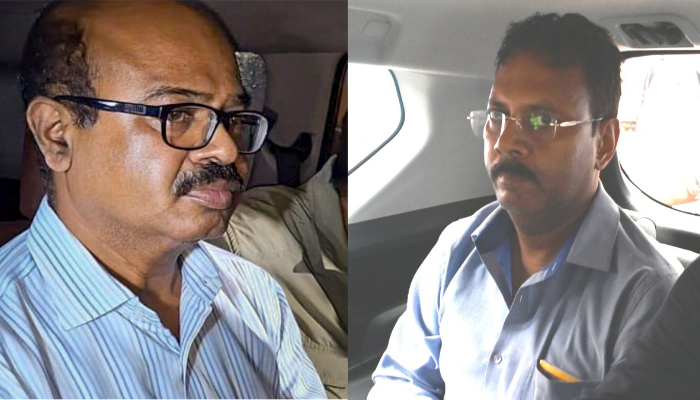
Following the fall of the Sheikh Hasina government in Bangladesh, a crackdown on everyone perceived to be close to the Awami League continues under the interim government. On Wednesday, a journalist couple was arrested from Dhaka’s Hazrat Shahjalal International Airport while they were leaving for Paris. They were earlier fired from the the News Channel where they worked, and the student group leading the protests called for banning them.
Former Ekattor Television head of news Shakil Ahmed, and his wife Farzana Rupa who was the principal correspondent of the news channel, were detained before they could board a Turkish Airlines flight to Istanbul at 6.20 AM, from where they were scheduled to proceed to Paris.
Airport sources said that after Rupa and Shakil went to the airport to board Turkish Airlines flight TK-713 to Istanbul, the Immigration Authorities stopped them. The Immigration police said that they didn’t have clearance from the City Special Branch of police because they are wanted in some cases filed at Shahbagh police station.
“We completed the immigration but they were wanted in cases. A requisition was given by the Detective Branch (DB) against the case, and they were taken to custody from the airport,” an official was quoted by Daily Star. However, the nature of cases against them have not been revealed.
The couple was then taken into custody by a team from the Dhaka Metropolitan Police’s Detective Branch, and they were taken to the Detective Branch office for questioning.
Notably, Shakil Ahmed and his wife Farzana Rupa were fired by Ekattor TV on 8th August, following allegations of being pro-Awami League against them. The channel had told the media, “Our management has unanimously reached this decision. The HR department will formally notify them.”
Incidentally, the names of Shakil Ahmed and Farzana Rupa were featured in a list of journalists ‘blacklisted’ by the Anti-discrimination Student Movement, the student group that toppled the government. Abdul Kader and Abdul Hannan Masud, coordinators of the group, had sent a letter to the National Press Club on 10th August that included a list of 51 journalists, accusing of supporting police and the ruling party during the protests that led to the fall of the govt.
The student body said, “Press Club is a national institution. This press club has always come forward in the difficult times of the nation. But during the Awami League government, this institution became a party institution.” Referring to the journalists listed in the letter, they added, “We think that their activities under the guise of journalism were against the national interest and against the state.” They demanded that the journalists be expelled from the press club and banned from the media field, adding that they have already asked the govt to initiate legal action against them. At least one journalist in the list was accused of being an Indian Intelligence Agency Agent in the letter.
On 18th August, Muhammad Yunus-led interim government of Bangladesh released the chief of the Al-Qaeda-inspired terrorist organisation Ansarullah Bangla Team (ABT) chief Mufti Jashimuddin Rahamani from Kashimpur High-Security Central Jail in Gazipur. Speaking to the media, Subrata Kumar Bala, senior jail superintendent of Kashimpur Jail said, “We released Rahmani around 1:15 pm on Sunday as he obtained bail in all cases filed against him.”
Following his release, prosecution lawyers and counterterrorism officials expressed their concerns as Rahamani is a prominent figure. According to the experts, his release would increase terror threats and cause hurdles in the trials of the cases filed against him under the Anti-terrorism Act.
On 12th August 2013, Rahamani was arrested in Barguna in connection to inciting people to commit violence. 30 members of the Ansarullah Bangla Team were also arrested. Since his arrest in 2013, Rahamani has remained in jail. He is facing six different cases and a charge sheet has been filed by the police in all the cases against him.
On 31st December 2015, a Dhaka court sentenced him to five years in jail in a case related to the murder of blogger Rajib Haider. The case was filed at Pallabi Police Station. He has completed his sentence in the case. Apart from this case, two other cases were filed at Mohammadpur Police Station, one at Gulshan Police Station, one at Barguna Sadar Police Station and one at Uttara Paschim Police Station. The trial is pending in all these cases. In two cases, he was granted bail by the Anti-Terrorism Special Tribunal of Dhaka in 2020 and 2022. In 2022, 2023 and January 2024, he was granted bail in other three cases.
Speaking to the media, the chief of the Counter-Terrorism and Transitional Crime unit, Md Asaduzzaman said that his release was a matter of concern for the security agencies. “We are now trying to track down Rahmani and he will be under our monitoring. And we believe we will be able to avert any untoward situations,” he said.
Assistant public prosecutor of the Anti-Terrorism Special Tribunal in Dhaka, Golam Sharuar Khan, said that his release would impact the ongoing trials. He said, “As Rahmani has been released on bail … it is likely to impact the trials. Prosecution witnesses may become afraid of going to court to testify against the accused. We will try to produce the witnesses before the court and complete the trials of the pending cases as soon as possible.”
Ansarullah Bangla Team made headlines with the murder of Rajib Haider in February 2013. In May 2015, the Government of Bangladesh banned the organisation. Reportedly, the group has killed at least four bloggers and writers. They were also involved in the murders of LGBT rights activist Xulhaz Mannan and his friend Khandoker Mahbub Rabby Tonoy in 2016.
Ansarullah Bangla Team in India
Notably, in 2017, five ABT terrorists were apprehended in Assam trying to create a foothold in India. In July 2022, two modules were busted in Assam linked to ABT. Again in 2022, two imams linked to ABT were arrested. The two Imams were arrested by the Goalpara Police in Assam as part of a broad anti-terror operation against the Ansarullah Bangla Team (ABT) and the Islamic terrorist group Al Qaeda Indian Subcontinent. After being questioned by police for many hours, Jalaluddin Sheikh (49), the imam of Tilapara Natun Masjid, and Abdus Subhan (43), the imam of Tinkunia Shantipur Masjid, Mornoi, were both taken into police custody.
When the two Imams’ residences were searched, authorities said they found a significant quantity of evidence related to Al Qaeda Indian Subcontinent (AQIS), as well as Jihadi literature, posters, books, and other materials including mobile phones, SIM cards, and ID cards. The two people who were arrested were in contact regularly with the Ansarullah Bangla Team (ABT) units in Barpeta and Morigaon.
In August 2022, Assam Chief Minister informed in a press conference that several jihadi modules of Bangladeshi immigrants have been busted by the police. He said that Ansarullah Bangla Team, which is affiliated with Al-Qaeda in the Indian Subcontinent, had been most active in the state. In the last six months, five modules of ABT have been caught in the state. These groups were busted based on intelligence inputs gathered by both Assam police and central agencies.