Ten days after a woman was assaulted by TMC goons for supporting the BJP in Cooch Behar, the Ghoksandanga police directed the victim to submit her clothes for the purpose of ‘investigation’ on Thursday (4th July).
The development was confirmed on social media by BJP leader Suvendu Adhikari. He shared a notice issued by Senior Inspector Avijit Sarkar of the Ghoksandanga police station to the woman under Section 91 of the Code of Criminal Procedure (CrPC).
As per the notice, the victim has been asked to submit her saree, blouse and petticoat (shaya), which she was wearing at the time of the incident, to the police station on Saturday (6th July) at 10 am.
Classic case of Victimising the Victim !
Just imagine the audacity of Mamata Police. They are asking the Lady; BJP Minority Morcha Leader, who was completely disrobed, molested & brutally beaten up by TMC goons in Cooch Behar district, to submit the torn clothes which were… pic.twitter.com/m3RWvRH8xC
While slamming the police, Suvendu Adhikari tweeted, “Classic case of Victimising the Victim! Just imagine the audacity of Mamata Police. They are asking the Lady; BJP Minority Morcha Leader, who was completely disrobed, molested & brutally beaten up by TMC goons in Cooch Behar district, to submit the torn clothes which were forcefully stripped off from her by the perpetrators while executing the heinous crime.”
He emphasised, “When the lady was found by her family members, she was lying unconscious on the ground, almost in a stark naked condition. This has been mentioned clearly in the FIR. In my earlier posts, regarding this incident, I have also raised the issue.”
Suvdendu Adhikari further pointed out, “I had also demanded that the case should be transferred to the CBI so that there is a fair probe, as because the intention of the Police was never to bring the perpetrators to justice, rather protect them. The victim’s only fault is that she is associated with BJP and has worked extensively during the recently concluded Lok Sabha Elections.”
“This disgraceful and disgusting act of the Investigating Officer (IO) has only made this clear that the Police is only trying to hound the victim. The IO & the Officer-in-Charge of the Ghoksadanga PS should be immediately suspended for their skewed and biased attitude and the humiliation they have tried to inflict upon the victim,” he concluded.
The Background of the controversy
On 25th June, a woman was stripped, dragged for 1 km by her hair and thrashed for over an hour by goons for supporting the Bharatiya Janta Party (BJP).
The incident took place in Ruidanga village in Matha Bhanga-II block in Coochbehar district of West Bengal. As per reports, a group of TMC goons attacked the woman for being a worker of the Opposition BJP in the State. The victim’s father had filed a complaint with the police.
According to the police complaint, the local TMC cadre had prevented the woman from stepping out of her house since the Lok Sabha elections were announced on 4th June 2024.
The victim was assaulted when she was en route home from a nearby park. A group of TMC goons attacked her, stripped her and then dumped her clothes in a river.
They had also threatened to break her house if she dared to step out again. The Cooch Behar police had detained 4 people, including the primary accused Shafiqul, in connection to the case.
Shafiqul was accused of capturing the naked picture of the victim during the assault and disseminating it on social media platforms.
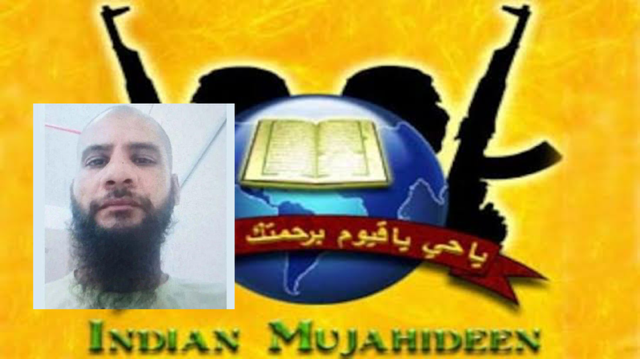
Madhya Pradesh Anti-Terrorism Squad (ATS) arrested Faizan Sheikh, a suspect of the banned terrorist organization Indian Mujahideen (IM), from Kanhar Mohalla of Khandwa and placed under five days of remand. During interrogation, he confessed that he wanted to avenge the killings of eight Students’ Islamic Movement of India (SIMI) terrorists. His only motive was to harm the security forces and their families. He carried out a recce of security force bases in Kashmir, Pathankot, Mumbai and Delhi, fourteen times in the last three years.
He further disclosed that he was planning to execute lone wolf attacks to exact revenge and also purchased pistols and cartridges. He clearly stated to the ATS authorities that he would consider himself fortunate if he was able to injure even one member of the security forces and didn’t care about being caught or killed. He even searched videos of terrorist training camps and their operation tactics most of the time on the Internet. ATS has found evidence of the same on his mobile.
Sheikh isolated himself from society for the last seven to eight months. He had stopped going to any kind of event or occasion. However, had multiple meetings with the families of the SIMI terrorists who were eliminated in an encounter in 2006. He revealed himself to be close to the terrorists. “Faizan used to post jihadi posts related to Indian Mujahideen on Facebook. He was propagating the ideology of IM/ISIS. He shared posts on the Mujahideen training camps in Pakistan, speeches of Maulana Masood Azhar (founder of Jaish-e-Mohammed), Lashkar-e-Taiba, the story of Kandahar plane hijacking, Mullah Omar’s statements and Al-Qaeda affiliated Ansar Ghazwat-ul-Hind (AGH) on social media,” informed Dr Ashish, ATS IG (Inspector-General).
He added, “Under the leadership of Chief Minister Dr Mohan Yadav, the state has adopted a zero-tolerance policy towards terrorism and anti-national activities. The arrest is part of an ongoing effort to maintain heightened surveillance across Madhya Pradesh.”
On 4th July, the ATS arrived at Saluja Colony in Khandwa around 4 am and apprehended 34-year-old Faizan Sheikh, son of Hanif Sheikh. The ATS had received information about his association with Indian Mujahideen. A large quantity of jihadi literature related to IM, ISIS and other terrorist outfits has been recovered from him along with 4 mobiles, a pistol and 5 live cartridges as well as membership forms for the SIMI group. He has been booked under various sections of the Unlawful Activities (Prevention) Act (UAPA).
Sheikh aspired to be recognised as a prominent mujahideen Indian Mujahideen’s Yasin Bhatkal and SIMI chief Abu Faisal. He was contacting local illegal arms dealers and people outside the state to acquire pistols and cartridges. The ATS is now also finding out about his other associates. An official noted, “Faizan had been meticulously planning a lone wolf attack, monitoring and tracking the movements of security force personnel and their families. His objective was to emulate terrorists like Yasin Bhatkal of Indian Mujahideen and SIMI chief Abul Fazal, aspiring to gain recognition. To execute his plan, he was also in the process of acquiring more pistols and cartridges through connections with local illegal arms dealers and individuals from outside the state.”
Chief Minister Mohan Yadav commended the police on the development and announced that the state administration has communicated with central agencies to disseminate information regarding the accused’s network. He conveyed, “We will not tolerate any such activity in Madhya Pradesh. We were able to arrest a dreaded terrorist and have also come to know of his secret plans. I am sure the police action will break the backbone of their network. We took timely action against him and thus foiled a major terror plan.” The Intelligence Bureau has also been notified by the state government of Faisal Sheikh’s arrest and it will also conduct an inquiry into the matter.
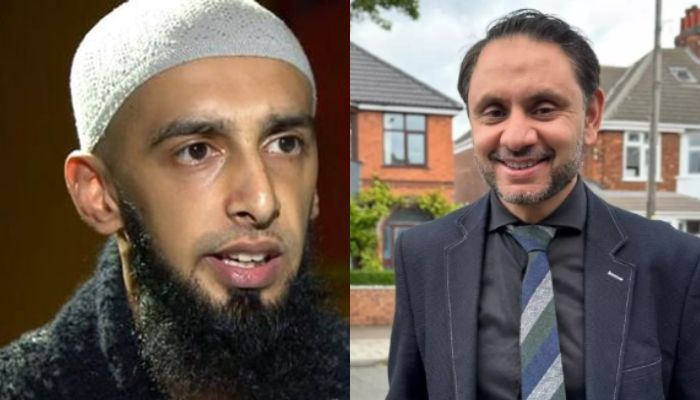
On Friday (5th July), an Indian-origin independent candidate named Shockat Adam Patel was elected as a Member of Parliament (MP) in the United Kingdom from the Leicester South constituency.
Shockat ran his election campaign on a pro-Palestine agenda and defeated Jon Ashworth of the Labour Party by a margin of 979 seats.
“We as a city have done this. We as a city are a shining example to the rest of the world that it is the people that matter, not those that rule over (us). This is for the people of Gaza,” he made his intentions clear soon after the election results.
“This is for Gaza.”
Shockat Adam, the newly elected independent MP for Leicester South, addressed the crowd, calling for unity and dedicating his win to Gaza. Adam has unseated Labour shadow cabinet minister Jon Ashworth. pic.twitter.com/11KYHbWfpb
The 51-year-old has been associated with a radical Islamic outfit named ‘Muslim Engagement and Development’ (MEND) for quite a long time, even holding the position of ‘Leicester Chair.’
An article published by The New York Times in October 2022 however identified Shockat as a resident of Leicester and a ‘volunteer’ at MEND.
Interestingly, the American newspaper tried to whitewash the organisation as “a charity that fights against Islamophobia.”
MEND has been flagged for 'promoting extremism'. Henry Jackson Society has termed MEND as "Islamists masquerading as Civil Libertarians". 4/14 pic.twitter.com/ao4DduC4sL
— Stop Hindu Hate Advocacy Network (SHHAN) (@HinduHate) September 30, 2022
MEND was exposed as early as 2017 by the ‘Henry Jackson Society’ as “Islamists Masquerading As Civil Libertarians.”
According to the think-tank, MEND provided a platform to extremists with a history of sympathising with terrorists, inciting violence, support corporal punishment against Jews, homosexuals and ‘disbelievers’.
“Several of the organisation’s employees and volunteers, including senior figures, have publicly expressed a range of disturbing views on terrorism and anti-Semitism. This has included expressing support for terrorists overseas, dismissing recent terror attacks in the UK, promoting anti-Semitic conspiracies and even calling on British Mosques to hold prayers for the Mujahedeen,” the Henry Jackson Society emphasised.
Peddling ‘Muslim victimhood’ narrative during 2022 Leicester violence
OpIndia had extensively reported on the violence carried out by radical Muslim mobs in Leicester in England’s East Midlands region in 2022. We also pointed out how widespread disinformation was weaponised to justify the targeted attacks against the Hindu community.
At that time, Shockat Adam had attempted to downplay the violence carried out by his co-religionists by labelling it as a ‘reaction to provocation.’
During his interview with The World in October 2022, the new MP from Leicester South claimed, “The Muslim community didn’t just start going and beating up Hindu individuals. This was in response to what they felt was provocation for a sustained period.”
After trying to justify the actions of his radical co-religionists, Shockat tried to undo the damage. “There’s absolutely no condoning of any form of violence and innocent people have been caught up in it, which is unacceptable,” he added.
At the same time, he also promoted the conspiracy theory about mass influx of Hindus associated with the RSS from India to Leicester which set the stage for violence.
“I was saddened, heartbroken almost, but not shocked unfortunately. We have seen, for the last decade, a change in how people were behaving to each other. We were becoming a lot more ghettoized with people living in different communities. And there’s been an influx of a new community that has come from a very nationalistic India,” Shockat Adam told The World.
Even though such a baseless theory was popularised by Islamists amid the Leicester violence, the British Broadcasting Corporation (BBC) grudgingly conceded that there was no evidence to back such a claim.
Lies about RSS and BJP
In one interview with Byline Times in 2022, Shockat Adam further amplified the lie about rise of Hindu nationalism in Leicester.
“There has been an undercurrent of the RSS (Rashtriya Swayamsevak Sangh) and [Hindu] nationalism creeping into our city. Some of these members of the new community have come to this country from an India which is in the fervour of nationalism, and the RSS, so they have come with a background of [Hindu] supremacy,” he claimed albeit without evidence.
The MP from Leicester South also glossed over the fact that a large section of Muslims in India voted for the creation of an exclusionary Islamic country ‘Pakistan’ in 1947 based on a divisive concept of ‘Two nation theory.’ He then tried to guilt-trip Hindus for seeking their own State.
“The BJP is the political wing of the RSS. This was a result of colonialism and from a time when India was finding its feet. The narrative was out there that there is a state for every other religion, so therefore India should be for the Hindus. That was that ideology. Whereas the forefathers of India at independence were passionate that India should be a secular country, and it should be for all and for all religions, the RSS oppose that ideology,” he claimed by shrewdly omitting the rationale and context behind the creation of Pakistan.
Anti-India Propaganda
Shockat Adam also did not shy from carrying out anti-India propaganda from the United Kingdom. Through the radical Islamic outfit ‘MEND’, he organised a webinar titled ‘Indian from Partition to Persecution’ in December 2020.
He had roped in a serial fake news peddler CJ Werleman to spread canards about his country of origin. During the webinar, Shockat said, “Our discussion in the show revolves mainly around how India, from its post-colonial birth 73 years ago, after 200 years of imperial subjugation, has now gone through a process where individuals on the ground, commentators, political commentators and human rights activists are saying that they are subjugating their own people.”
“Indian citizens are almost second to third class graded people in their own country, leading to blatant discrimination and even persecution,” the Leicester South MP alleged.
During the webinar, he also pleaded with his fellow co-religionists to donate to MEND so that he could continue to further radical Islamic propaganda in the country.
“I also implore you to support organisations like MEND which are 100% community-funded, community-inspired and a community-run organisation that is tackling Islamophobia in this country and raising awareness of Islamophobia around the world so that we can ensure that what is happening in certain parts of the world will not happen to maybe not ourselves but maybe to our children or even to our children’s children,” Shockat Adam was hear saying.
Majid Freeman and his support to Shockat Adam
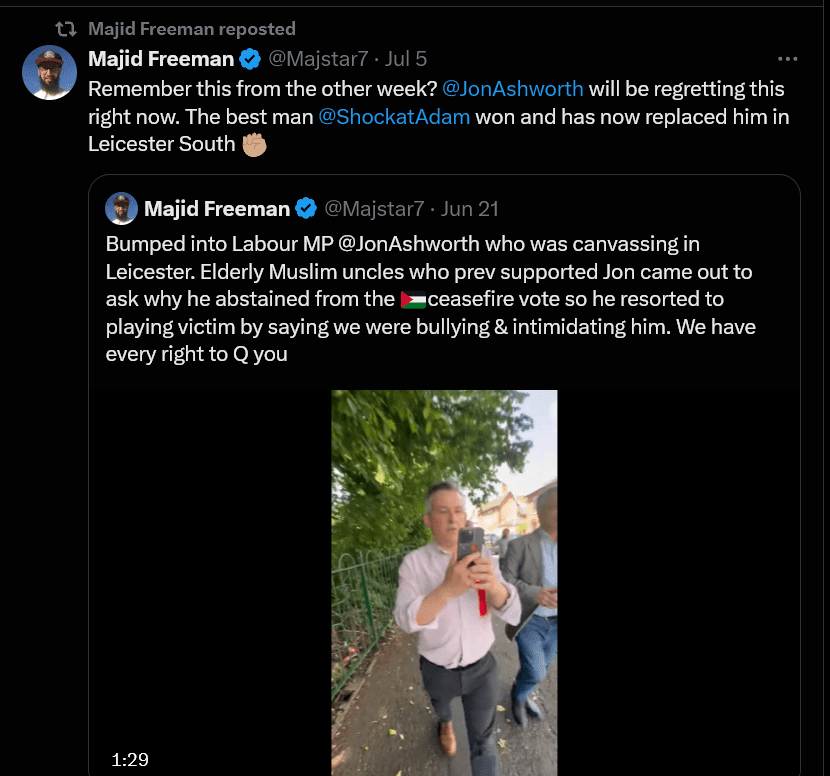
Majid Freeman, a rabid Islamist who was at the forefront of instigating violence against Hindus during the 2022 Leicester episode, extended his support to pro-Palestine Shockat Adam.
In one tweet, he said, “Remember this from the other week? @JonAshworth will be regretting this right now. The best man @ShockatAdam won and has now replaced him in Leicester South.”
Just like Shockat Adam, Majid Freeman left no stone unturned to rationalise the violence carried out by frenzied Muslim mobs. Freeman took it a level further by constantly peddling fake news and instigating his fellow co-religionists to ‘teach Hindus a lesson’.
Screengrab of the tweet by Majid Freeman
In September 2022, the rabid Islamist alleged that 3 men had tried to abduct a teenage Muslim girl. “CONFIRMED: An incident took place this morning not far from a college in Leicester,” he tweeted.
“A Muslim teenager was approached by 3 men but she ran away into the school. The college & police are aware of it and the family have been given an incident number by Leicester Police,” he claimed.
The conspiracy theorist even claimed to have met the family of the girl, who was traumatised by the alleged kidnapping attempt. “The girl is very shaken but she is ok alhamdulillah. They’ve reported the incident to the police. Hopefully, we’ll get to the bottom of this and the people behind it are caught,” he said.
Screengrab of the tweet by Majid Freeman
Screengrab of the tweet by Majid Freeman
The fake news was then amplified by other Islamists, who alleged the role of the Rashtriya Swayamsevak Sangh (RSS) in the alleged abduction attempt. The Hindu man, falsely accused of kidnapping the Muslim girl, was doxxed on Facebook and his residential address was leaked on social media.
Later, the Leicester police debunked the disinformation through a press release. It said, “Yesterday we issued an appeal following a report that a teenage girl had been approached by three men in the area of Richmond Way, Leicester, on Monday morning.”
“A full investigation has been carried out. Following extensive enquiries, we have established that the incident did not take place and no offence was committed,” the cops confirmed.
Islamists also tried to use the trope of provocation to justify their attacks on the Hindu community. They claimed that Hindus raised anti-Islamic slogans whereas they only chanted ‘Jai Shri Ram’ and ‘Vande Mataram.’
Majid Freeman was yet again at the helm of this fake news.
Second Claim: Racist Hindu mob raised anti-Islam slogans on streets was widely shared by Islamists & local media (without any evidence).
Fact: Mob was shouting slogans of ‘Vande Mataram’ & ‘Jai Shri Ram’ to protest the violence against them, indicating no communal angle.
Interestingly, Majid Freeman was also interviewed by the BBC to set the narrative in favour of the perpetrators.
A @LeicsPolice statement has confirmed that Majid Freeman lied about Hindus acting against Muslims in Leicester. Why are the BBC interviewing someone who has already been proven a liar? Why no interview of the Hindu community who suffered the attacks from #Islamists for weeks? pic.twitter.com/tBHDu9FkEz
The deliberate attempt by Majid Freeman to stoke hysteria in the Muslim community and lay the foundation of violence against the Leicester Hindus did not stop the then city Mayor from arranging a meeting with him.
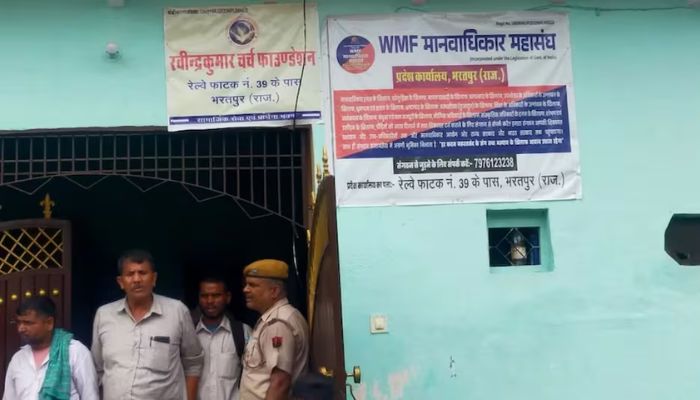
On Friday (5th July), Police in Rajasthan’s Bharatpur detained 28 people, including 20 women, from a house on a complaint that an organised forced religious conversion event was taking place at the ‘religious congregation’. It is reported that around 100 people were lured to attend the religious congregation in the house which was being held under the banner of the Church foundation.
After receiving information about the religious conversion event, the Mathura gate police reached the spot and detained 28 people, including 20 women.
DSP Sunil Sharma said, “A complaint was received that people had gathered at a house in RIICO area for religious conversion following which some people have been detained and are being questioned. The matter is being further investigated.”
According to reports, the incident unfolded in a housing board colony in the Mathura Gate police station area. According to the VHP members, Christian missionaries were running the center to convert Hindus. They had lured the Hindus by promising to give them Rs 500 to attend the event and allegedly offered Rs 10,000 every month for converting to Christianity. Later, Police also reached the spot and took the people into custody.
According to media reports, Niranjan Singh, son of Lakshman Singh, resident of Bhavanpura, STC Housing Board filed a report at Mathura Gate Police Station.
In the complaint, he stated that on 5th July at around 11 am, Rabindra Kumar, his wife, and others were doing Changai Sabha in a house. About 100 men, women, and children participated in the gathering. It is alleged that these people were doing religious conversion of people from the lower economic strata who were lured to the event. The accused also offered them money saying that those who convert to Christianity will be given a bonus of Rs 10,000 every month.
The people present inside the house said that they were given Rs 500 to attend the event. As per reports, the house belongs to Ravi Kumar, who was evicted from his native village because he insulted Hindu gods and goddesses. It is alleged that he threw the pictures of the Hindu deities into a drain.
It is further alleged that he has been living here for the last 4 years and doing proselytization. Meanwhile, among those arrested, one person identified himself as Alwar CMHO’s brother.
Speaking to reporters, Vishwa Hindu Parishad (VHP) district president Lakhan Singh said that information was received that religious conversion was going on in a house in the Mathura Gate police station area. He added that about 100 people had gathered at the congregation.
He added that the Christian missionaries were luring Hindus to convert their religion into Christianity. He further said that when they sent the VHP member to the house, a woman claimed that they were running a library there, but a religious conversion event was going on. The team then informed the Police about the incident and demanded action in this matter.
Lakhan Singh added that earlier a case of forced conversion also came to light from Sonar Haveli. The administration had formed an SIT team to investigate the case but no action has been taken so far.
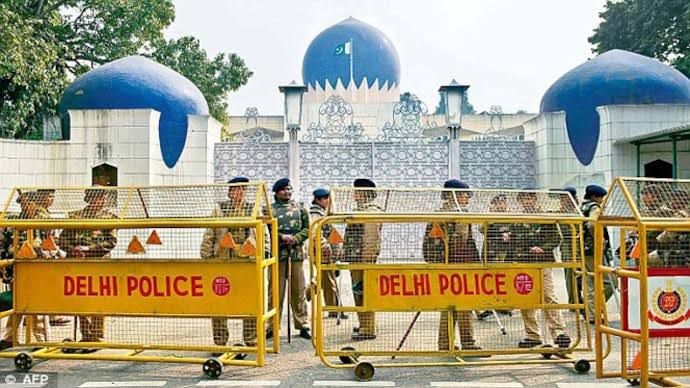
An FIR has been registered in Delhi against 54-year-old Pakistani national Minhaj Hussain for molesting an Indian woman. Hussain was working as the cook at the official residence of Saad Ahmad Warraich, the Charge D’Affaires at the Pakistan High Commission in New Delhi.
The victim, an Indian national, was working as a domestic help at the Tilak Marg residence of Warraich. She was living in the servant quarters of the Pakistan diplomat’s official residence. Minhaj Hussain was also living in the same servant quarters and was troubling the woman ever since his arrival in India in February this year. Hussain was constantly making sexual advances on the victim.
As per news reports, after Minhaj attempted to molest the woman, she complained to Saad Ahmad Warraich but instead of taking any action, the top diplomat quietly sent Hussain to Pakistan on the pretext of the Islamic festival of Bakrid. Following that, Pakistan High Commission asked the victim woman to leave the job at Warraich’s house and vacate the servant quarters by June 30.
Following that, the woman, who is a widow with children, went to Tilak Marg Police Station on June 28 and filed a complaint against Minhaj Hussain.
Delhi Police have registered an FIR under Section 354 of the Indian Penal Code (IPC) against Minhaj Ahmed Hussain on the basis of the complaint.
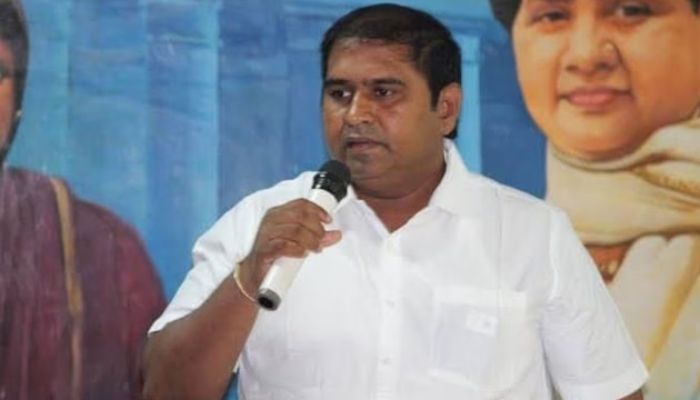
On Friday (5th July), K Armstrong, the Tamil Nadu chief of the Bahujan Samaj Party (BSP), was hacked to death by six bike-borne attackers near his house in Chennai. Some of the attackers were reportedly dressed as delivery agents and used sharp weapons during the attack. They attacked Armstrong when he was holding discussions with his party functionaries near his house in the city’s Sembium area. Following the attack, they fled the crime scene. Responding to the gruesome killing, BSP Supremo Mayawati demanded “punishment for the guilty”.
Armstrong’s family immediately rushed to the spot where he was lying in a pool of blood with severe injuries to his head and neck. He was taken to a hospital where he was declared brought dead.
In a statement, the Chennai Police said, “On July 5, evening, while Armstrong (52 years), State President Bahujan Samaj Party, was standing in front of his house at Venugopal Samy Kovil Street, Perambur (K-1 Sembium PS limits), unknown persons assaulted him with knives. Due to the assault, he sustained bleeding injuries, and subsequently police admitted him at Apollo Hospital with the assistance of the passersby. Doctors who examined him declared that he was dead.”
According to the Police officials, this could be a case of revenge killing which could be linked to the murder case of a gangster named Arcot Suresh which took place last year. Speaking with NDTV, a senior police officer said, “We are conducting an investigation. The murder seems to be linked to an earlier killing.”
The Police have formed ten teams and have detained around 8 suspects in this case.
Senior Chennai police officer Asra Garg said, “In the murder case, we have secured 8 suspects so far. This is a preliminary investigation. Ten teams have been formed by us. We are on the job to bring the offenders to light. After the interrogation of these suspects, we will be able to find the motive behind the murder. Some sharp weapons have been used.”
#WATCH | Chennai: On murder of Tamil Nadu BSP president Armstrong, Addl COP, Chennai North, Asra Garg says, "In the murder case we have secured 8 suspects so far. This is a preliminary investigation…Ten teams have been formed by us. We are on the job to bring the offenders to… pic.twitter.com/VxdNvh2yUc
While it is being reported that the attackers posed as food delivery agents, police are yet to confirm this.
K Armstrong was a lawyer by profession. In 2006, he served as a corporation councillor and later became the state president of the BSP next year. He contested from the Kolathur constituency in the 2011 Tamil Nadu assembly elections but lost. Two years ago, he came to the limelight, when he organised a mega rally in Chennai and invited BSP chief Mayawati.
(Image Source – Tamil Nadu BSP unit’s Facebook page)
Opposition parties lambasts DMK-led government over the issue of ‘Law and Order’
Reacting to the killing of BSP’s Tamil Nadu Chief, Mayawati condemned the ‘gruesome’ killing and demanded actions. Taking to X, she wrote, “The gruesome killing of Mr. K. Armstrong, Tamil Nadu state Bahujan Samaj Party (BSP) president, outside his Chennai house is highly deplorable and condemnable. An advocate by profession, he was known as a strong Dalit voice in the state. The state Govt. must punish the guilty.”
The gruesome killing of Mr. K. Armstrong, Tamil Nadu state Bahujan Samaj Party (BSP) president, outside his Chennai house is highly deplorable and condemnable. An advocate by profession, he was known as a strong Dalit voice in the state. The state Govt. must punish the guilty.
BJP Tamil Nadu President, K Annamalai expressed shock and extended his prayers to the bereaved family. He also lambasted the DMK government over the issue of Law and Order and asked the state Chief Minister to introspect whether he has the moral responsibility to continue as the CM of the state.
He emphasised that violence and brutality should not have any place in society but under the DMK regime, it has become a norm.
Deeply shocked by the news of the brutal murder of the State President of the Bahujan Samaj Party, Thiru Armstrong avl, in Chennai today. Our thoughts and prayers are with his family & the cadres of the Bahujan Samaj Party at this time.
AIADMK Chief and Leader of Opposition (LoP) in Tamil Nadu assembly, Edappadi Palaniswamy said, “What do I say when the state chief of a national party is murdered? The law and order is shameful. There is no fear of law or the police”.
On Friday, July 5, Uttar Pradesh Police arrested the main accused in the Hathras stampede case, Mukhya Sewadar Dev Prakash Madhukar, an aide of Surajpal alias Bhole Baba, from Delhi. Madhukar surrendered before the Police in Delhi, as per his lawyer AP Singh. He was arrested from Najafgarh.
Hathras Superintendent of Police Nipun Agarwal confirmed Madhukar’s arrest and added that he was being brought to Hathras to be presented in the court there. Madhukar is the only accused named in the FIR while there are 21 unnamed accused. Earlier, 6 other sevadars of the satsang were also arrested by the Hathras Police.
Madhukar’s lawyer AP Singh said, “Madhukar is a heart patient and was undergoing treatment in Delhi. After doctors said that his condition is okay, we got him handed over to the police.” He further added that Madhukar’s health should be taken care of in custody and that they did not file any anticipatory bail plea.
Hathras stampede tragedy
On Tuesday, July 2, a stampede at a private religious event in Hathras claimed 121 lives, leaving many others injured. The stampede took place during a Satsang for Sant Bhole Baba. Most of the dead in the tragedy are women.
A religious congregation was organised at Phulrai village in the district in which a large number of devotees were present. There was a stampede at the end of the congregation when hundreds of devotees tried to leave the venue together leading to a stampede.
The venue was small and overcrowded. Because of the suffocation in small areas in hot and humid weather, the devotees rushed out as soon as the Satsang ended, leading to the stampede.
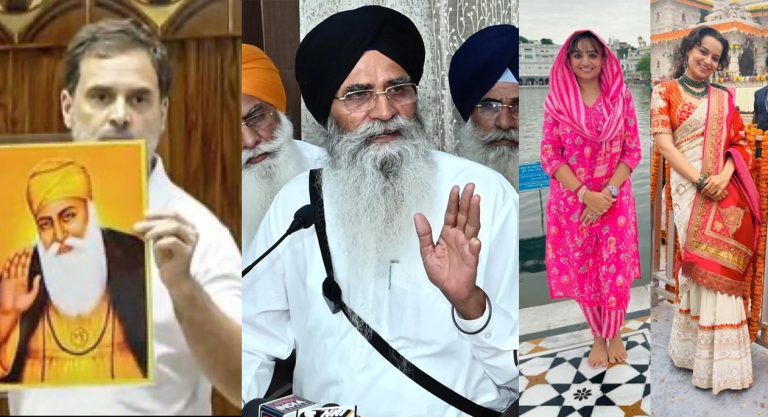
The Shiromani Gurdwara Parbandhak Committee (SGPC) today slammed Congress MP Rahul Gandhi for claiming that Abhay Mudra also exists in theSikh religion. Several key announcements were made after a meeting of SGPC in Amritsar, and after the meeting, SGPC president Harjinder Singh Dhami held a press conference announcing the decisions.
Dhami condemned Rahul Gandhi for claiming in Lok Sabha that the Abhay Mudra, associated with Hinduism and Buddhism, is present in religions, including Islam, Christianity and Sikhism. The SGPC president said that they have taken strict notice of the comments made by Rahul Gandhi.
The official ? handle of SGPC tweeted, “Strict notice of Rahul Gandhi’s statement in Parliament of linking Abhaya Mudra to Sri Guru Nanak Dev”.
ਸੰਸਦ ’ਚ ਰਾਹੁਲ ਗਾਂਧੀ ਵੱਲੋਂ ਅਭਯ ਮੁਦਰਾ ਨੂੰ ਸ੍ਰੀ ਗੁਰੂ ਨਾਨਕ ਦੇਵ ਜੀ ਨਾਲ ਜੋੜਨ ਦਾ ਲਿਆ ਸਖ਼ਤ ਨੋਟਿਸ Strict notice of Rahul Gandhi's statement in Parliament of linking Abhaya Mudra to Sri Guru Nanak Dev@VPIndia@ombirlakota@RahulGandhipic.twitter.com/kA3qwX7Cc9
— Shiromani Gurdwara Parbandhak Committee (@SGPCAmritsar) July 5, 2024
The SGPC also strongly objected to Rahul Gandhi holding a picture of Guru Nanak during his reply to the motion of thanks to the president’s address in Lok Sabha. Dhami said that the Gurbani and teachings of the Gurus should not be made part of political debates without full knowledge. He added that Rahul Gandhi’s claim that Abhay Mudra is mentioned in Sikhism is completely wrong.
Yoga in Darbar Sahib
Regarding its police complaint against Archana Makwana for performing Yoga inside Golden Temple premises, saying that they will never forgive her. Harjinder Singh Dhami said that mistakes can be forgiven, not mischief. He reiterated that the influencer doing Yoga in Sri Darbar Sahib Prakrama on International Yoga Day on 21 June has hurt Sikh sentiments, and they will take action against her.
Dhami said, “Many people have given their opinion on this incident and she has also sent a written apology. But every religious place has its own rules and deliberate actions are not forgivable.”
Dhami added that there is nothing wrong in doing Yoga but Sri Harmandir Sahib is not a tourist destination. He further said that Archana Makwana would be punished as per law, indicating they would pursue the case against her. Notably, Makwana has asked the SGPC to withdraw the case saying she did nothing wrong, and added that she is ready for a legal battle if the case is not withdrawn.
In this regard, the SGPC announced that they will soon formulate rules regarding photography and videography in Sri Harmandir Sahib. But till that is done, all videography in the premises has been banned with immediate effect. Dhami said that immediate orders have been issued to ban any artist or actor from doing videography in Sri Harmandir Sahib for their promotion.
— Shiromani Gurdwara Parbandhak Committee (@SGPCAmritsar) July 5, 2024
The gurdwara body is also recruiting 100 persons under the task force for deployment in the Parkarma of the Harmandir Sahib and other gurdwaras. Notably, SGPC has taken action against three Sevadars deployed at the Parkarma for not stopping Archana Makwana from doing Yoga.
Demands FIR on Kangana Ranaut
The SGPC also demanded an FIR against Actor-MP Kangana Ranaut over the Chandigarh airport incident where she was slapped by a female CISF constable. Harjinder Singh Dhami said that while Kulwinder Kaur has been transferred, no action was taken against Kangana Ranaut. He said that the Punjab government should register a case against Kangana for spreading hatred against Punjabis.
The SGPC also adopted a resolution against preventing Amritdhari Sikh candidates from carrying kirpan at a judicial exam centre in Rajasthan’s Jodhpur.
Condols death of plane hijacker
The SGPC press conference started with condoling the death of Khalistani terrorist Gajinder Singh. The committee also passed a resolution in the meeting ‘paying respect to the struggling life and sacrifice of Bhai Gajinder Singh, who lived in exile for a long time’.
Dal Khalsa founder and patron Gajinder Singh Khalsa died of a heart attack at a hospital in Pakistan on Thursday. Khalsa was one of the five men who hijacked the Indian Airlines flight IC-423 which took off from Delhi’s Palam airport for Srinagar on September 29, 1981. They said that deep sorrow was expressed in the meeting over the death of Bhai Gajinder Singh, calling him ‘one of the leading Panchs who founded the Dal Khalsa’.
They had hijacked the Indian Airlines flight with 111 passengers and 6 crew members on board, and forced the plane to land in Lahore to seek the release of several Khalistani extremists, including Jarnail Singh Bhindranwale. The hijackers were arrested and sentenced to jail in Pakistan. They were released in 1994, and while two of the hijackers returned to India, the other 3 including Gajinder Singh Khalsa remained in Pakistan.
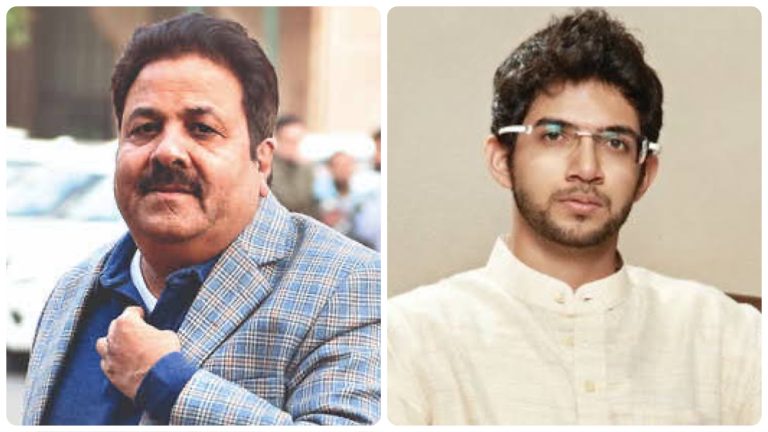
The BCCI cannot favour one city over another when organising key matches, stated the board’s vice-president Rajeev Shukla, responding to Shiv Sena leader Aaditya Thackeray’s remark referring to the World Cup 2023 final that was held in Ahmedabad. Thackeray had said ‘Never take away finals from Mumbai’ after lakhs turned out for the victory parade of Team India following the 2024 T20 World Cup victory.
“It is BCCI’s policy to decide the location of the final. It cannot always be assigned to a specific city,” Shukla said on Friday.
The Wankhede Stadium in Mumbai hosted the semifinal of the 2023 ODI World Cup, while the final was held at the world’s largest stadium by seating capacity in Ahmedabad.
“There was a final match in Kolkata during the 1987 World Cup, and Kolkata is considered the Mecca of cricket. So it can’t be decided that finals should always be held in a specific city,” said Shukla. “There have been semifinals and finals in Mumbai. Similarly, the Ahmedabad stadium has a capacity of 1,30,000, and we consider capacity as well,” he continued.
On Shiv Sena (UBT) leader Aaditya Thackeray's tweet "Never take away a World Cup final from Mumbai," BCCI Vice President Rajeev Shukla says, "I thank Mumbaikars who came in such large numbers to welcome the victorious Team India yesterday. Also, I would like to say that it is… pic.twitter.com/qGxiKVvTFx
“Kolkata’s Eden Gardens can accommodate around 80,000 spectators (approximately 66,000). Other cities also have large capacities,” Shukla added.
“This decision considers the entire country and all venues. You cannot limit it to one location,” explained the senior board official. Shukla said it would not be correct to restrict key matches to a specific venue.
He also praised Mumbai fans for their large turnout at the open bus parade and commended the Mumbai Police for their effective management. “We were delighted to see the response from Mumbaikars. Mumbai is always a priority for us. It’s not that it isn’t. But the entire BCCI must decide where to host finals and semifinals. Every match is important,” he said.
After a huge crowd gathered during the Indian cricket team’s T20 World Cup victory parade from Marine Drive to Wankhede Stadium, Thackeray urged the BCCI not to “take away” any final matches from Mumbai.
Yesterday’s celebration in Mumbai is also a strong message to the BCCI…
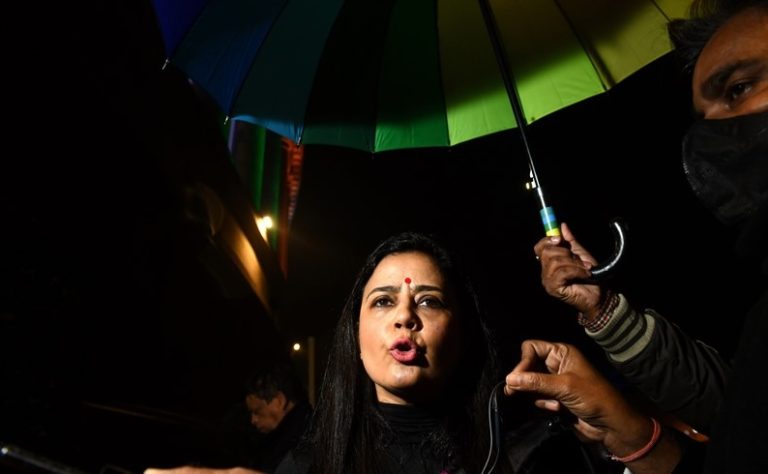
Known for her unhinged rants and abusive behaviour inside and outside the parliament, TMC MP Mahua Moitra stoked a fresh controversy when she used sexual innuendos to take potshots at NCW chairperson Rekha Sharma over her viral picture from a visit to Hathras, UP.
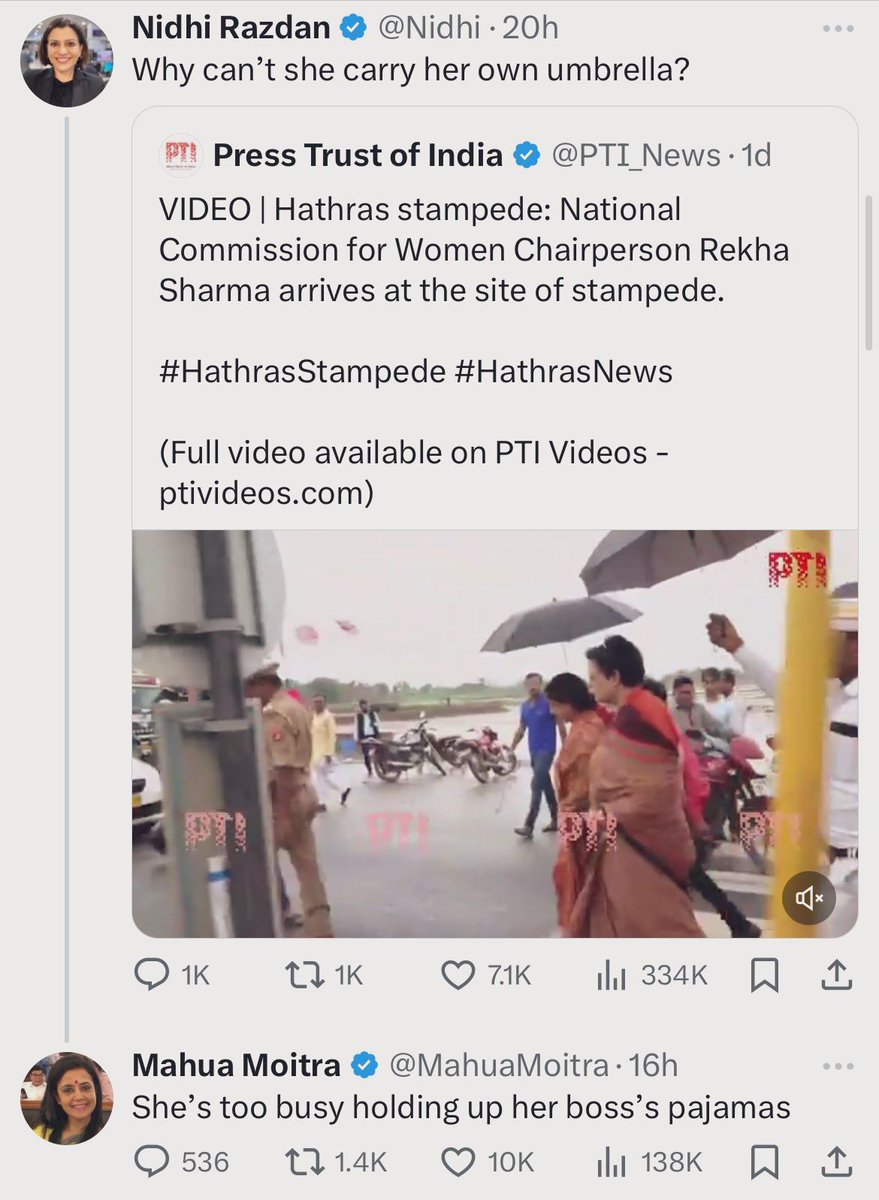
Sharma was seen at the site, with someone carrying an umbrella for her. Journalist Nidhi Razdan on X wanted to know why the chairman did not hold the umbrella herself. Moitra responded to Razdan’s post on X, commenting, “She’s too busy holding up her boss’s pajamas,” sparking online backlash at the choice of the words for the NCW chairperson.
Mahua Moitra’s crass response to Nidhi enquiring about Rekha Sharma
The remarks triggered a suo moto cognisance from the National Commission for Women, which wrote to the Lok Sabha speaker Om Birla demanding strict action against Moitra, who was expelled in her last term following allegations of ‘cash for query’ allegations. The Commission also demanded an FIR against the TMC MP for a comment that doesn’t behove a lawmaker.
Instead, Mahua has doubled down on her abusive behaviour, expressing no remorse for the choice of words she had used against a fellow woman. She challenged Delhi Police to get to her in the next three days. “Come on Delhi Police please take action immediately on these suo moto orders. Am in Nadia in case you need me in the next 3 days to make a quick arrest. I Can Hold My Own Umbrella,” she tweeted.
Come on @DelhiPolice please take action immediately on these suo moto orders. Am in Nadia in case you need me in the next 3 days to make a quick arrest. I Can Hold My Own Umbrella . https://t.co/pXvRSVSzxa
Moitra’s egregious conduct is not a new phenomenon. She has a chequered history of demonstrating perverse conduct and has even displayed the audacity to defend herself. Saying ‘hara*i’ inside the parliament, showing the middle finger to Arnab Goswami for asking tough questions, and celebrating abuses hurled at PM Modi are some of the instances that demonstrate her lack of basic decency and penchant for nasty demeanour.
Here is an illustrative list of instances demonstrating Mahua Moitra’s lack of basic decency and behaviour unbefitting of an MP
Mahua Moitra uses ‘hara*i’ inside the parliament
On February 7, Trinamool Congress leader Mahua Moitra was caught using abusive language in Parliament. In a viral video, she was heard saying the word ‘hara*i’ while Telugu Desham Party lawmaker Ram Mohan Naidu Kinjarapu was speaking. Following the social media uproar over her actions, the MP from West Bengal Chief Minister Mamata Banerjee’s party went on an unrestrained rant. Netizens questioned her ulterior motives, which further aggravated the TMC leader.
Mahua Moitra showed her middle finger to Arnab Goswami
In January 2015, during a debate on Times Now, Mahua Moitra, now the editor-in-chief of Republic, showed the middle finger to Arnab Goswami. The discussion was about the ‘attempt to murder’ charges against a man who had slapped TMC leader Abhishek Banerjee, Mamata Banerjee’s nephew. After being attacked by TMC workers, the man was hospitalized in critical condition. During the debate, Moitra repeatedly asked Arnab to let her “finish the sentence,” eventually losing her temper and telling him to “talk to yourself and not invite anybody” on his show, while making the offensive gesture.
Mahua Moitra assaulted a female constable in Silchar
In August 2018, Mahua Moitra was accused of assaulting a female Assam Police constable at Silchar airport. Reports state she was part of an eight-member TMC delegation visiting the state to discuss issues related to the NRC. Upon their arrival, the police requested assurances that they would not make provocative speeches or incite violence. An argument ensued between the police and the delegation, resulting in physical altercations with the police officers. According to the Director General of Police, two constables and a district administration official were injured.
Mahua Moitra celebrated abuses hurled at PM Modi
In October 2021, Mahua Moitra celebrated a supporter who insulted PM Modi. She tweeted, “You know BJP days are numbered when, while campaigning in a toto for the Shantipur by-election, an old man, halfway through his bath, ran out shouting in Bengali – ‘LPG hazaar taka – ei b*@#***d Modi ke hatao!’ Priceless!”
Mahua Moitra used derogatory language for ex-CJI
In July 2022, a complaint was filed against Mahua Moitra for using derogatory language towards former Chief Justice of India, Ranjan Gogoi, and for defaming an entire community. The complaint stemmed from a tweet on July 14 in which she stated, “My first of new Twitter series on replacements for unparliamentary words. Banned word- Sexual Harassment. Replacement- Mr Gogoi.”
Mahua Moitra glorified terrorists accused of the Pulwama attack by using similar abuses
On several occasions, TMC’s “firebrand” has used the notorious Gaumutra jibe against BJP leaders. This same jibe was notably used by the terrorist accused of the Pulwama attack in a video recorded just before the incident. In February 2022, she remarked, “Am speaking this evening in Lok Sabha on President’s Address. Just wanted to give early heads-up to @BJP to get the heckler team ready & read up on imaginary points of order. Drink some gaumutra shots too.”
Previously, in May 2021, she said, “Welcome to our Susu Potty Republic! Drink Gaumutra, smear cow dung & flush the rule of law down the toilet. Delhi Police issued a notice to Twitter & land up in their offices for rightly calling out @BJP’s fake document as manipulated media. Go figure.”
Moitra frequently uses abusive language and is notorious for spreading false and misleading information. Recently, she was caught attempting to mislead her followers on Twitter regarding SBI’s exposure to the Adani Group.
The above instances, which are indicative and not an exhaustive list, illustrate Moitra’s propensity for being abusive and nasty against her political opponents and not being one bit remorseful for lowering the dignity of the office she holds. It shows that crass conduct has, unfortunately, become a staple part of her everyday political conduct, which entails insulting political rivals and officials for either belonging to the other side of the spectrum or simply doing their job as in the recent case when Rekha Sharma was engrossed in reaching Hathras for taking stock of the situation following the fateful stampede that led to the loss of 121 lives.