

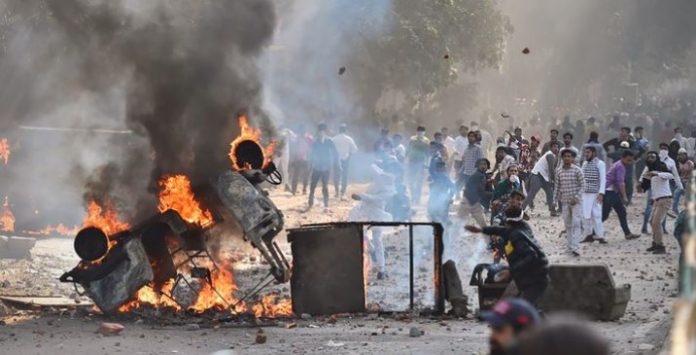
The Delhi anti-Hindu riots that started on the 24th of February had a definite precursor to it. While the organisation of the riots started in January, on the 23rd of February, an incident in Jafrabad can be considered the first incident of violence that started the Delhi riots of February.
At the time, the media had widely reported that anti-CAA and pro-CAA protestors had ‘clashed’ in Jafrabad saying that stones were pelted from both sides.
The PTI report from the 23rd of February read:
Clashes broke out Sunday evening between pro and anti-CAA groups near Jaffrabad in northeast Delhi after a large number of people who have been protesting against the Citizenship Amendment Act (CAA) blocked a road, while similar sit-ins started in several others part of the national capital. Police fired tear gas shells as members of the two groups pelted stones at each other in Maujpur, soon after a gathering called by BJP leader Kapil Mishra who demanded that the police remove anti-CAA protesters within three days.
However, OpIndia has exclusively accessed the chargesheet that paints a vastly different picture of the incidents of 23rd February.
In the charge-sheet, it categorically mentioned that it was the anti-CAA Muslims who had started pelting stones and indulging in violence at those who were demanding re-opening of the roads blocked by the anti-CAA protestors.
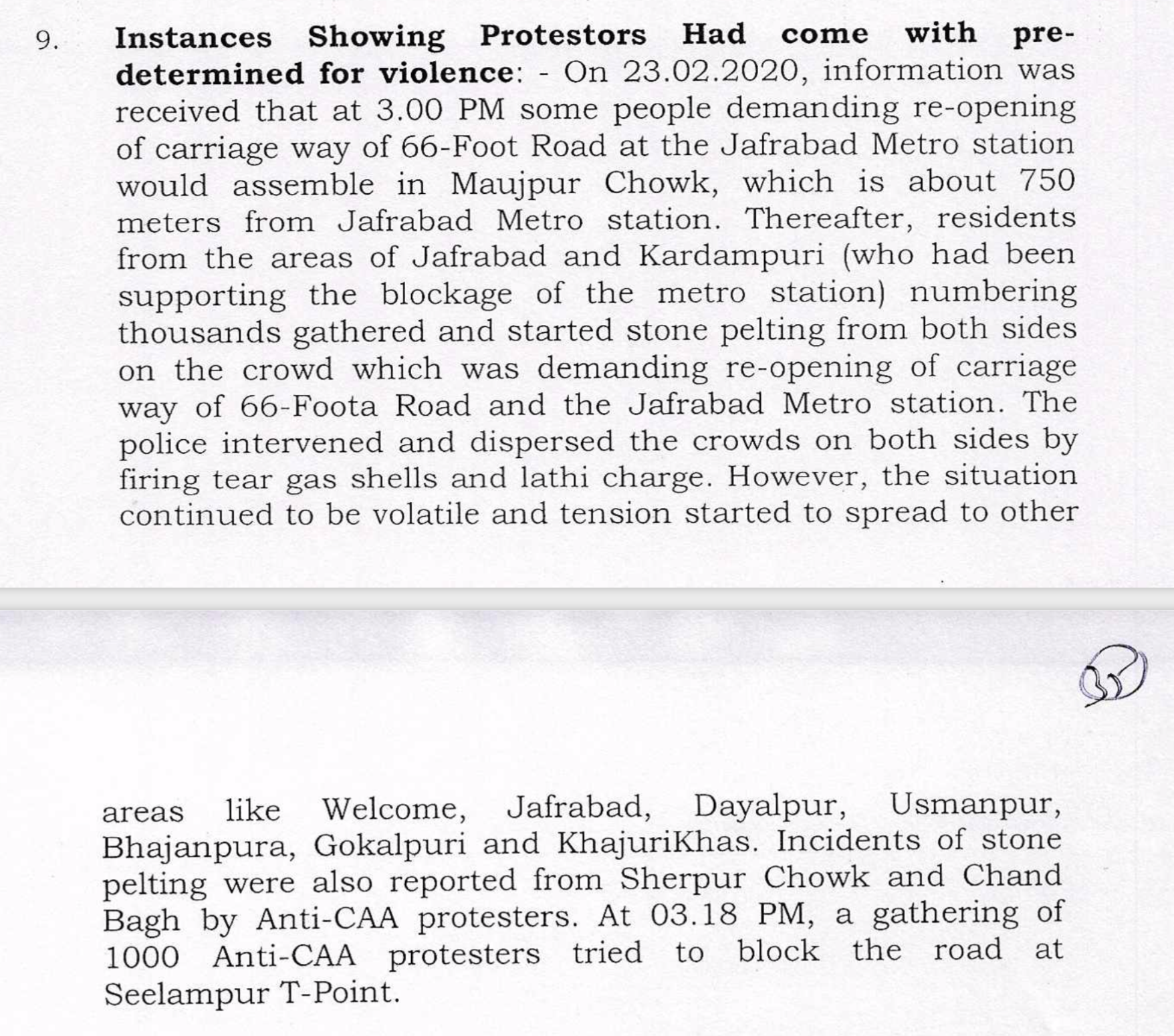
A group of individuals who were demanding the opening of the 66-Foot road near Jafrabad had assembled at Maujpur Chowk around 3:00 PM on 23rd February. The Maujpur Chowk where they had assembled was about 750 M away from the Jafrabad Metro Station.
The charge sheet then reveals that the residents of Jafrabad and Kardampuri who were supporting the blockage of the Jafrabad metro station congregated in the thousands and started pelting stones from all quarters at the group that was demanding the re-opening of the roads.
While the police fired tear-gas shells etc to disperse the crowd, the situation remained tense.
However, this portion of the charge sheet proves that the incidents of violence were indeed started by the anti-CAA protestors and were not a ‘clash’ per se between the two groups as earlier reported.
It was on the 24th of February that a clash between two groups in Maujpur has been recorded in the charge sheet. However, on the 23rd, it is evident that it was the anti-CAA group that was attacking the group which wanted the re-opening of roads.


