

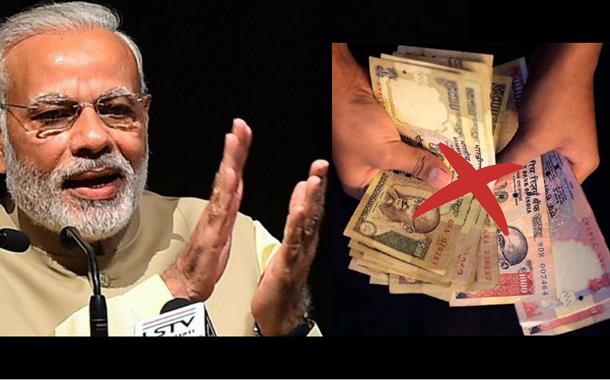
The Supreme Court of India on Monday upheld the Central Government’s decision to go ahead with demonetisation of Rs 500 and Rs 1,000 currency notes.
Supreme Court upholds the decision of the Central government taken in 2016 to demonetise the currency notes of Rs 500 and Rs 1000 denominations. pic.twitter.com/sWT70PoxZX
— ANI (@ANI) January 2, 2023
The five-judge Constitution Bench while dismissing the petition upheld that the Executive’s economic policy decision cannot be reversed.
Supreme Court says there was consultation between the Centre and the RBI before demonetisation. There was a reasonable nexus to bring such a measure, and we hold that demonetisation was not hit by doctrine of proportionality, says Supreme Court.
— ANI (@ANI) January 2, 2023
The Supreme Court said that there was consultation between the Centre and the RBI before demonetisation and that there was reasonable nexus to bring about the decision. The apex court further added that demonetisation was not hit by doctrine of proportionality. Doctrine of proportionality means that the action should not be more drastic than it ought to be to obtain desired result.
The Supreme Court was pronouncing the verdict on a batch of petitions that had challenged the Union Government’s November 8, 2016 decision to demonetise Rs 500 and Rs 1,000 currency notes.
The apex court had reserved its judgments on the batch of 58 petitions on December 7. Earlier, the SC had asked the Centre and Reserve Bank of India to place before it the records pertaining to the 2016 demonetisation decision in a sealed envelope. The SC had said that it has the power to examine the manner in which the decision for demonetisation was taken adding that “the judiciary cannot fold its hands and sit just because it is an economic policy decision”.
These remarks came after the RBI counsel made the submission that the judicial review cannot apply to economic policy decisions. The RBI had further told the SC that the objective of demonetisation policy was to curb black money and fake currencies. Attorney General R Venkatramani had also said that the economic policy of demonetisation was connected to a social policy where three evils are attempted to be addressed.


