

HomeNews ReportsIndia's three new criminal laws replacing British-era IPC, CrPC and Evidence Act to come...

India’s three new criminal laws replacing British-era IPC, CrPC and Evidence Act to come into effect from July 1

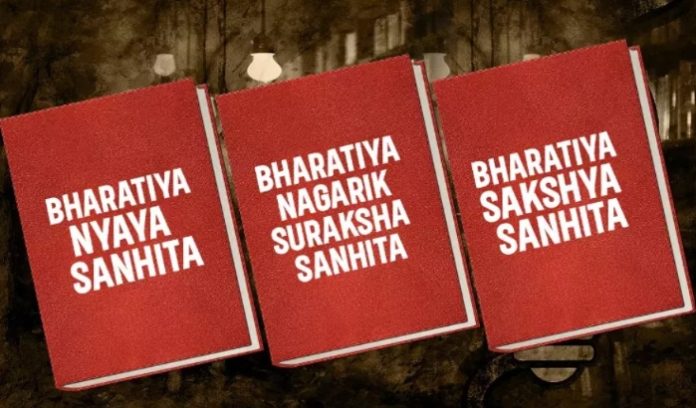
The Bharatiya Nyaya (Second) Sanhita, Bharatiya Nagarik Suraksha (Second) Sanhita, and the Bharatiya Sakshya (Second) bills will replace the Indian Penal Code of 1860, Code of Criminal Procedure (CrPC) of 1973, and Indian Evidence Act, of 1872.

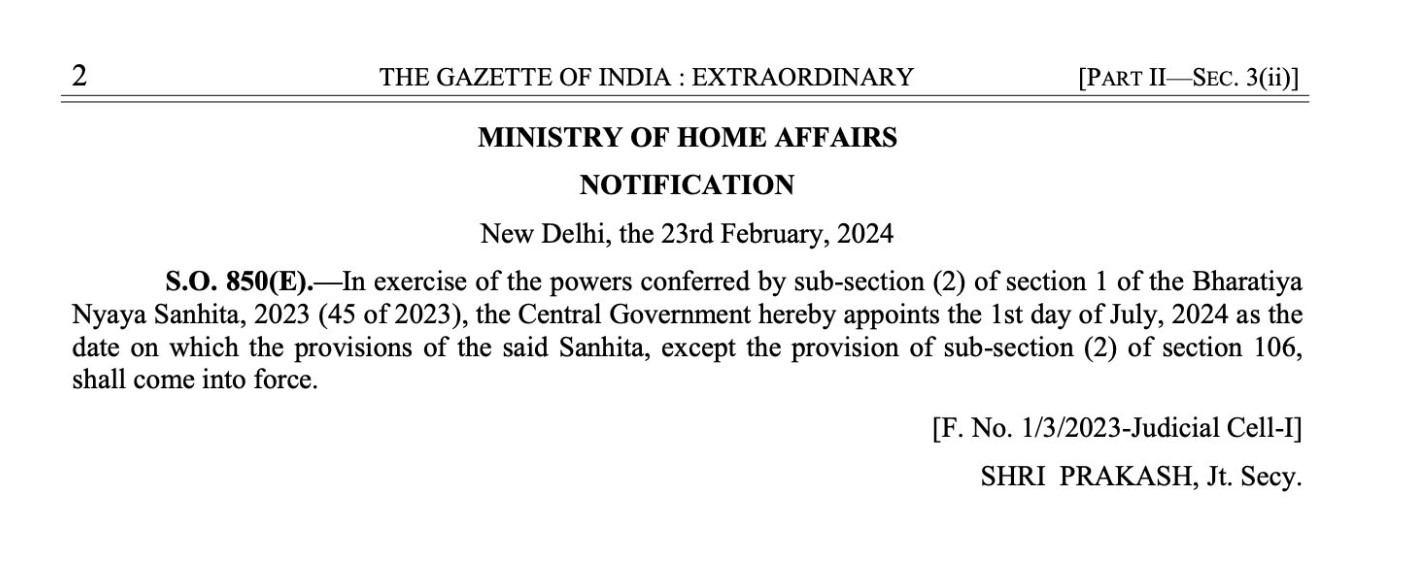
The central government announced that the three criminal laws replacing the colonial-era Indian Penal Code, Code of Criminal Procedure and Indian Evidence Act of 1872 will come into effect from July 1, 2024.

The Union Home Ministry issued a gazette notification to this effect on Friday, February 23, 2023.

Sub Section (2) of Section 106 of the BNS, which concerns ‘causing death of a person by rash and negligent driving of a vehicle’, has been put on hold for now.
The Bharatiya Nyaya (Second) Sanhita, Bharatiya Nagarik Suraksha (Second) Sanhita, and the Bharatiya Sakshya (Second) bills will replace the Indian Penal Code of 1860, Code of Criminal Procedure (CrPC) of 1973, and Indian Evidence Act, of 1872.

The three bills were first introduced in Lok Sabha on August 11, 2023, as Bharatiya Nyaya Sanhitathe Bharatiya Nagarik Suraksha Sanhita and the Bharatiya Sakshya Bill before being referred to a parliamentary committee headed by Brij Lal for further examination.

They were passed by the Lok Sabha on December 20 before being passed by the Rajya Sabha on December 21. The three new criminal code bills became laws after getting assent from President Draupadi Murmu on December 25.

Join OpIndia's official WhatsApp channel

  Support Us  

For likes of 'The Wire' who consider 'nationalism' a bad word, there is never paucity of funds. They have a well-oiled international ecosystem that keeps their business running. We need your support to fight them. Please contribute whatever you can afford

OpIndia Staff
OpIndia Staffhttps://www.opindia.com
Staff reporter at OpIndia

Related Articles

Trending now

From public servants to political warlords: Sena corporator Ramesh Mhatre’s assault on doctors reflects the arrogance of India’s political class

The assault on a woman doctor in Maharashtra is more than an isolated act of violence. It lays bare a disturbing reality of Indian politics, where many elected representatives, intoxicated by power, behave less like public servants and more like feudal warlords, resorting to intimidation and violence whenever their authority or ego is challenged.

The mask is off: Diljit Dosanjh’s ‘Satluj’ shows what OpIndia had warned about for years

With Satluj, Diljit’s past controversies have returned to focus, from his farmers’ protest stand and refusal to clearly condemn Khalistan to support for Jagtar Singh Johal, named in cases involving Hindu and RSS leaders.
- Advertisement -
