

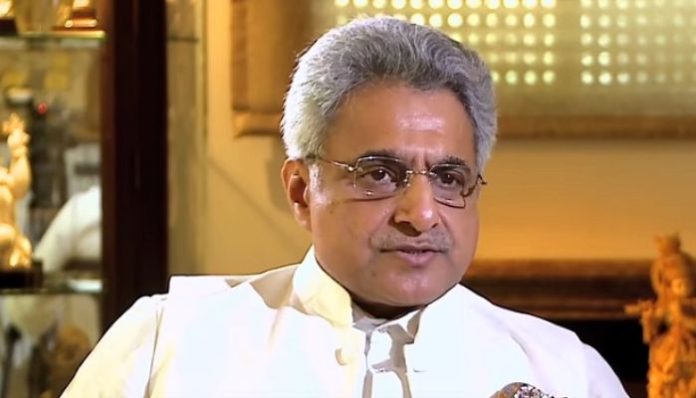
On 25th August, OpIndia accessed two complaints filed with Ministry of Home Affairs and Enforcement Directorate (ED) against former MP and senior advocate Pinaki Misra that raised serious national security concerns. In one of the complaints, there were details of financial irregularities and property transactions, while the second complaint detailed his conduct in Parliament where he repeatedly asked questions on India’s most sensitive defence assets. The complainant alleged these matters concern national security and corporate conflict of interest.
The complaints are split into two distinct areas. One is centred on alleged irregularities in property purchases and financial dealings. The second complaint revolves around Misra’s activity in Parliament where he asked specific questions related to India’s nuclear submarines, missile systems and key defence agreements. These two complaints build a case that warrants closer investigation. Notably, both the complaints have been accepted by the concerned authorities and further investigation in these matters has been initiated.
The complainant drew parallel between alleged wrongdoings by Pinaki Misra and his now-wife Mahua Moitra who was accused of helping a businessman by asking questions targeting businessman Gautam Adani in the Parliament.
Financial impropriety, property acquisitions and past associations
In his complaint, the complainant raised serious red flags over the financial transactions and property acquisitions of Misra. Furthermore, he also raised concerns over his past associations, especially with Chandraswami, born as Nemichand Jain.
The complainant highlighted how two prime properties in Delhi’s Golf Links and Jor Bagh were not bought in the conventional manner but were acquired through purchase of company shares. Instead of registering the bungalows directly, Misra is said to have acquired the holding companies, Jupiter Estates Pvt Ltd and White Lily Estates Pvt Ltd, both purchased from the same seller, Narindejit Koli.
The complainant argued that this method of acquisition allowed the transactions to be routed in a way that Misra was able to avoid scrutiny of the actual sale deed in his own name. The timing of these purchases made the matter more concerning as at that time, Misra was still a relatively young lawyer. His professional income at that time, according to records examined by the Delhi High Court, was only in the range of a few lakhs.
In its 2017 judgment on income tax appeals involving Misra and his ex-wife Sangeeta Misra, the court noted that the declared income could not reasonably justify the purchase of such high-value assets. More significantly, tax authorities had flagged remittances amounting to USD 3,05,000 sent from a Hong Kong-based individual to Sangeeta Misra’s account, shown as tax-exempt “gifts” given out of “love and affection”.
The complainant argued that it was unusual, if not suspicious, for a foreign individual with no visible family ties to transfer such large sums without any commercial consideration. The affidavit filed to justify the gifts only deepened the doubts. On this basis, it was alleged that these were not simple irregularities or technical lapses in reporting but transactions requiring a thorough official investigation into the true source of funds.
The complaint also revisited Misra’s long association with Chandraswami, the godman who rose to notoriety in the 1980s and 1990s for his influence over politicians, businessmen and international figures, and who was closely linked with controversial arms dealer Adnan Khashoggi. The dossier submitted by the complainant and accessed by OpIndia recorded that Misra became Chandraswami’s lawyer soon after graduating in 1983 and remained closely associated with him for more than a decade.
According to the complainant, Misra had accompanied him on at least 22 overseas trips, mainly to London and New York, where Chandraswami’s financial dealings and contacts with controversial figures were the subject of intelligence attention.
The dossier also pointed to an Income Tax raid in 1996 that revealed the absence of professional receipts to substantiate Misra’s claim that the foreign trips were for legal work. Around the same time, Misra’s uncle Ranganath Misra had recently retired as Chief Justice of India, and Misra himself had claimed to have briefly worked as Officer on Special Duty to Prime Minister PV Narasimha Rao. This combination of family influence, professional connections and unexplained wealth added to the suspicions raised by the complainant.
In parallel, the acquisition of the Jor Bagh and Golf Links properties further fuelled questions about the sources of funds. The method of acquisition, by purchasing companies that held the properties rather than direct sale deeds, was described as a device to avoid scrutiny.
In his memoirs, former CBI officer Nirmal Kumar Singh described Misra’s alleged role in obstructing investigations against Chandraswami, including preventing officers from entering the ashram, obtaining case files and intimidating witnesses. These accounts, alongside the tax findings and court records, are cited by the complainant to argue that questionable financial and professional dealings have been a recurring pattern throughout Misra’s career.
Questions in Parliament and national security angle
The second complaint is more concentrated on Misra’s role as a Member of Parliament. It compiles a record of over six hundred questions raised across four terms in Lok Sabha. A significant proportion of the questions were linked to India’s military preparedness and defence acquisitions. Though it is common for MPs to ask the government about governance, budgets, and development, Misra’s questions were of an unusual level of technical detail about highly classified areas.
The complainant cited examples of questions asked by Misra where he sought information about the operational status of India’s nuclear-powered submarines, including INS Arihant and INS Chakra. In one of the starred questions, which the government refused to answer on the grounds of “national security”, he had asked about the damages suffered by INS Arihant, the estimated cost of repairs and the timeline by which it would be made seaworthy. In another question, he asked similar details about INS Chakra.
Furthermore, he asked questions on the Rafale deal with France, on proposed pilot training programmes with Vietnam using Sukhoi-30 aircraft, and on the alleged use of outdated defence equipment by the Indian Army. According to the complaint, the specificity of these questions suggested that these were designed to elicit sensitive information rather than to seek broad policy clarification. The complainant therefore argued that these went beyond legitimate parliamentary oversight and bordered on attempts at intelligence collection.
Defence queries and alleged anti-Russia tilt
The dossier accessed by OpIndia indicated a consistent pattern in the nature of the questions asked by Misra in Parliament. A number of them were focused on defence platforms sourced from Russia, which raised concerns about an apparent anti-Russia tilt. For example, he repeatedly asked questions about the leased submarine INS Chakra, the status of the ATV programme under which INS Arihant was built, and the S-400 air defence system that India contracted from Russia.
One of the concerning questions he asked was whether the United States had raised objections to India’s purchase of the S-400 system. In another question, he sought commercial details of the deal, including payment obligations and instalments, information that would normally be kept confidential between governments. The complainant noted that the line of questioning was in line with what American arms manufacturers would have sought, who wanted to sell systems like THAAD and Patriot to India.
Furthermore, there were questions about budgetary allocations. For example, he asked if India’s defence budget factored in payments for past arms deals, and what amount remained for new weapon purchases. The complainant argued that such questions, if answered in detail, could provide a roadmap of India’s procurement priorities to foreign powers. The dossier, in whole, asserted that these repeated questions show a bias that warranted further examination.
Conflict of interest and corporate links
Other than the national security angle, the complainant also underlined a corporate conflict of interest. As a practising lawyer, Misra represented several entities in the coal, power and steel sectors during the same period when he asked questions in Parliament on coal reserves, power plants, and the role of coal mafias in state-run mines.
Between 2015 and 2017, Misra raised questions about modernisation of coal mines, theft and pilferage during loading and unloading, and interference of mafia elements in coal management. The complainant stated that these questions closely overlapped with cases he was arguing as counsel for companies in the sector, including Jindal Steel and Power Ltd and Meghalaya mining interests.
Furthermore, the overlap was not limited to coal. He also asked multiple questions in the aviation sector, including airline routes, expansion of airports, and promotion of seaplanes. At the same time, he served as a director of companies like Brady Air Pvt Ltd and Brady and Morris Engineering, which had stakes in aviation and infrastructure.
The complainant asserted that this dual role of legislator and corporate insider represented a misuse of parliamentary privileges. He called it a “brazen conflict of interest” that undermines the purpose of an elected MP.
Questions highlighted by the complainant
The complainant highlighted 13 questions to support his assertions against Misra. According to the complainant, Misra’s stint on using his parliamentary position to get sensitive information started from his first term as MP itself.
In August 1996, in a question in the Lok Sabha, he asked the Home Minister about the RDX and weapons recovered in Delhi in June that year. The government informed about the seizures including AK-56 rifles, grenades, timers and RDX and confirmed arrests were made with legal action taken. However, the complainant questioned the intention as Misra, being an MP, was pressing for specific operational details of an ongoing counter-terrorism investigation. Such information is generally considered time-sensitive and agencies do not disclose details unless the judicial proceedings are over.
Earlier that year, in July, Misra also asked the Prime Minister if the government had signed revised agreements with Enron for the Dabhol Power Projects and details related to it. Though the government provided the information, the complainant questioned why an MP from Puri was probing into a controversial Maharashtra power project that had already drawn allegations of corruption and undue foreign influence.
Moving to 2017, Misra asked the Defence Ministry in March whether Vietnamese fighter pilots would be trained on Sukhoi-30 MKI aircraft in India. He further sought details of the number of pilots to be trained, the duration of training, and whether Indian fighter pilots would be trained abroad on jets the government proposed to acquire. Though the information was provided by the government that India and Vietnam had agreed to take forward a proposal for training Vietnamese Air Force personnel on Su-30 aircraft, the complainant raised concern that Misra’s question sought precise operational details including numbers and duration of training. Such information is sensitive and not normally raised in Parliament.
In February 2018, Pinaki Misra asked the External Affairs Ministry if India was under pressure from the US to scale down its ties with Pyongyang after North Korea’s missile test. He further asked if the government had urged North Korea to roll back its nuclear and missile programme, whether India was engaging the international community to address the issue, and what results had been achieved.
The government replied that India shared international concerns about DPRK’s destabilising activities which have impact on India’s national security. Furthermore, the government added that India had called upon North Korea to refrain from such actions. The complainant raised concerns that Misra’s line of questioning sought to probe India’s diplomatic posture in sensitive negotiations involving North Korea, the United States and the global non-proliferation framework which in whole is strategically delicate.
In March 2018, Misra asked the Defence Ministry if INS Chakra had suffered extensive damage and been dry-docked. He further pressed for details on whether the damage had been assessed, its extent, the estimated cost of repairs, and the time by which the submarine would be ready to sail again.
Again, in the same month, he asked the ministry about the extent of damage suffered by INS Arihant. He specifically sought details of the estimated cost of repairs and the timeframe by which the submarine would be repaired and returned to service with full operational capability. Both questions went unanswered by the ministry stating such information could not be divulged in the interest of national security. The complainant asserted that if the government had answered, the information could have been of immense value to adversarial powers. In a way, Misra went far beyond legitimate parliamentary oversight into areas of classified defence capability.
Then in April 2018, Misra asked the Defence Ministry to provide details of the budgetary allocation for new weapon systems and modernisation in the 2018–19 budget. He further pressed whether this allocation included instalments of earlier arms deals and, if so, the details, and sought the actual amount left for new procurements for the Indian Army. Though the information was provided, the complainant asserted that such questions seeking information on exact figures about India’s defence procurement planning reveal sensitive financial priorities that could be of interest to foreign arms suppliers and adversarial entities.
In July 2018, he asked the Defence Ministry if a 6% increase in the budget, including Rs 86,488 crore for modernisation, would stagnate defence preparedness. He also asked if China’s defence budget was nearly triple that of India and how the government planned to modernise the armed forces with limited increases. Though the information was provided, the complainant asserted that the questions were framed in a way that could be considered a sensitive national security issue.
In August 2015, Misra and other MPs asked the Defence Ministry about the number of defence personnel killed due to insurgency, terrorism and cross-border firing in the last three years and the current year. He further sought details on whether the government had analysed the reasons for these casualties, whether compensation had been paid to families, how many procurement requests had been invited or cancelled since the Kargil war, and the steps taken to equip personnel against infiltration and terrorism. Though the information was provided, the complainant said that such questioning sought detailed procurement requirements and operational vulnerabilities. If disclosed fully, this could reveal India’s capability gaps and aid defence lobbyists pushing foreign arms sales.
In August 2016, Misra and two other MPs asked the Defence Ministry if negotiations on pricing and related issues for the purchase of 36 Rafale fighter aircraft from France had been completed. They further pressed for details of the present status, the expected timeline for completion of negotiations and delivery of aircraft, and additional steps to address the shortage of fighters in the Indian Air Force. Though the information was provided, the complainant asserted that such questions could have exposed India’s negotiation position and revealed operational capabilities to adversaries.
In March 2018, Misra and other MPs asked the Ministry of Shipping if operationalisation of the Chabahar Port in Iran would boost trade for India, contribute to regional development, and with which countries India was likely to expand commerce. They further sought details of products expected to benefit and whether any stakeholder connectivity events were planned. While the information was provided, the complainant said that such detailed disclosures, if misused, could expose India’s strategic vulnerabilities and aid lobbying interests.
In July 2019, Misra and three MPs asked if the government planned to acquire Russia’s S-400 system and sought details such as cost, and concerns expressed by other countries. Though the information was provided, and the government noted that India takes sovereign decisions based on threat perception, and operational and technological aspects, the complainant said that such queries about cost and third-country pressure details around a strategic purchase, potentially amplified foreign objections and exposed negotiation sensitivities.
In December 2019, Misra asked about the steps taken by the government to indigenise critical weapons, plans to boost defence exports, and measures to encourage start-ups. The government provided the information. However, the complainant asserted that such detailed disclosures can reveal procurement and export priorities useful to foreign suppliers.
In December 2022, Misra asked the Ministry of Mines if the committee constituted for reviewing royalty rates for minerals had submitted its report, what action had been taken on it, whether the government had fixed a timeline for revision of royalty rates, and if not, the reasons. The information was provided by the government. However, the complainant asserted that the detailed information on coal and mineral royalty revisions being asked by him raised issues of conflict of interest as he also appeared as counsel for major mining companies.
DGIT complaint on Vidya Jyoti Trust, money laundering and demonetisation deposits
In his complaint to the Directorate General of Income Tax (DGIT) concerning Vidya Jyoti Trust which operates Delhi Public School (DPS) Kalinga in Cuttack, the complainant asserted that while the trust enjoys exemption under Section 12A of the Income Tax Act, it has been used as a conduit for tax evasion, layering of illicit funds, and laundering of black money.
The trust was incorporated in 2001 by Mahimananda Mishra and Mala Mishra, with Pinaki Misra, his ex-wife Sangeeta Misra, and Mahimananda Mishra’s sons, Charchit and Chandan Mishra, as trustees. The complainant alleged that large cash deposits, ranging from Rs 1 crore to over Rs 12 crore annually, were deposited in school bank accounts between FY 2015–16 and FY 2024–25. Notably, around Rs 8 crore were deposited in FY 2016–17, the year of demonetisation, which the complainant argued showed deliberate intent to launder unaccounted money.
The school, with an enrolment of about 3,000 students, charges annual fees between Rs 1.2–2 lakh per child, suggesting an average turnover of Rs 40–50 crore a year. However, the complaint highlighted that declared income remained consistently below Rs 40 crore, indicating suppression of receipts and diversion of funds for trustees’ benefit. It further alleged that while the trust claimed application of income towards expenses like salaries, advertising and maintenance, it failed to deduct TDS on payments worth Rs 20–30 crore annually for a decade. The complainant described these as bogus or unverifiable expenses designed to maintain tax-exempt status.
Furthermore, the complainant argued that there were direct transfers to trustees Mala and Sangeeta as “professional fees”. The complaint said these individuals lacked qualifications to justify such payments, terming them sham transactions in violation of Section 13(3) of the Act. It also pointed to the use of related entities like OSL Prestige Pvt Ltd, where Charchit and Chandan Mishra are directors, for the purchase of luxury assets with trust funds.
Furthermore, the complainant alleged that Pinaki Misra acquired high-value properties and art worth upwards of Rs 300 crore through dubious means, undervaluing assets in tax declarations. It specifically pointed to art valued at Rs 80 crore but declared at only Rs 6–8 crore, and claimed that in FY 2020–21, Misra sold a Jor Bagh property under market value to route funds via hawala for the purchase of a London property in his son Dhanraj Misra’s name.
Why the complaints are being flagged
These complaints show that the matter is not just about finances or corporate conflicts. It is about national security. The repeated focus on India’s nuclear assets, missile systems and defence deals has been presented as evidence that parliamentary privilege may have been misused.


