

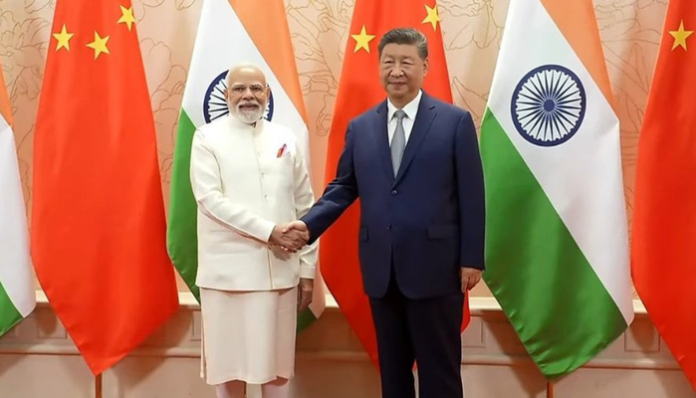
As Prime Minister Modi landed in China, after a gap of 7 years, to attend the Shanghai Cooperation Organisation (SCO) Summit on Saturday (30th August), he had a bilateral meeting with Chinese President Xi Jinping ahead of the annual summit.
During the historic meeting, which comes amid the US tariffs, the two global powers vowed to strengthen the relations between the two countries. Both PM Modi and President Xi Jinping emphasised the significance of strong India-China ties, which have been facing turmoil since the Galwan Valley clash in 2020.
In his opening remarks, PM Modi expressed India’s resolve to take forward its relationship with China. “We are determined to take our relationship forward based on mutual trust, respect and sensitivity. We extend our best wishes for the successful hosting of the SCO Summit, and I thank you for the invitation for this visit and this meeting,” said PM Modi.
VIDEO | Tianjin, China: In his opening remarks during delegation-level talks with Chinese President Xi Jinping, PM Narendra Modi (@narendramodi) says, "We are determined to take our relationship forward based on mutual trust, respect and sensitivity. We extend our best wishes for… pic.twitter.com/SP39eIwXjQ
— Press Trust of India (@PTI_News) August 31, 2025
Similar sentiments were echoed by President Xi Jinping, who highlighted that India and China are two ancient civilisations and important members of the Global South. He added that the ‘dragon’ and the ‘elephant’ need to come together to enable each other’s success. “China and India are two ancient civilisations in the East. We are the world’s two most populous countries, and we are also important members of the Global South. We both shoulder the historical responsibility of improving the well-being of our two peoples, promoting the solidarity and rejuvenation of developing countries, and promoting the progress of human society. It is the right choice for both countries to be friends who have good neighbourly and amicable ties, partners who enable each other’s success, and to have the dragon and the elephant come together, said the Chinese President.
#WATCH | Tianjin, China: During his bilateral meeting with PM Narendra Modi, Chinese President Xi Jinping says, "… China and India are two ancient civilisations in the East. We are the world's two most populous countries, and we are also important members of the Global South.… pic.twitter.com/uJV595g54i
— ANI (@ANI) August 31, 2025
A statement released by India’s Ministry of External Affairs (MEA) after the meeting, stated that the two countries affimed that they are development partners and not rivals and that their differences should not turn into disputes.
PM Narendra Modi met with Xi Jinping, President of China, on the sidelines of the Summit of the leaders of the SCO in Tianjin on 31 August 2025.
— ANI (@ANI) August 31, 2025
Prime Minister underlined the importance of peace and tranquility on the border areas for continued development of bilateral… pic.twitter.com/RUhMWEaguw
Here are the highlights of the meeting between PM Modi and President Xi Jinping-
Relations based on mutual trust, respect and sensitivity
Affirming the peace and stability on the LAC after the disengagement process following the Galwan Valley clash, PM Modi said that the relations between the two countries should be based on mutual trust, respect and sensitivity. He pointed out that the resumption of the Kailash Mansarovar Yatra and direct flights between India and China mark the movement of the two countries in a positive direction.
India and China need to be friends, uphold multilaterlism
Hinting at the exisitng uncertain ties of both countries with the US, President Xi Jinping said that it was “vital for India and China to be friends and good neighbours amid the rapidly changing world. Recognising the role of their economies in stabilising the world, the two leaders asserted that they need to expand bilateral trade and investment relations and reduce trade deficit.
Prime Minister noted that India and China both pursue strategic autonomy, and their relations should not be seen through a third country lens. The two leaders deemed it necessary to expand common ground on bilateral, regional, and global issues and challenges, like terrorism and…
— ANI (@ANI) August 31, 2025
India and China are development partners, not threats to each other
The Chinese President asserted that India and China are development opportunities for each other and not threats. He cautioned that the two countries are at a crucial stage of development and regeneration, and therefore, they should focus on development. Jinping said that border issues should not define the India-China relationship.
India-China relations should not be seen through a third country lens
Stressing the strategic autonomy of the two countries, Prime Minister Modi said that India-China relations should not be seen through the lens of a third country. Both leaders agreed that the countries need to expand common ground on bilateral, regional and global issues and challenges, including terrorism, as well as fair trade in multilateral platforms.


