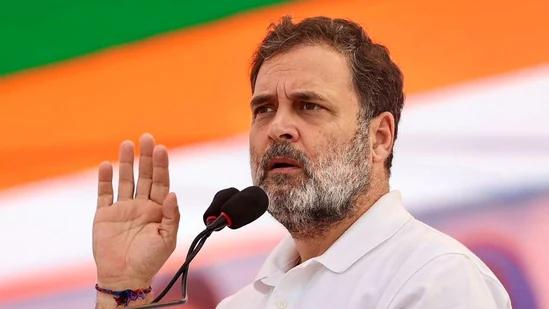
When Rahul Gandhi took the stage in Bihar’s Kutumba on November 4, 2025, he wasn’t speaking as a reformer addressing India’s economic or governance challenges. He was playing the part of a political provocateur, wielding caste as both shield and sword. His claim that “10 per cent of the country’s population controls the judiciary, bureaucracy, business and even the Army” was not merely a factual exaggeration; it was a deliberate act of fear-mongering. Gandhi’s remarks, aimed squarely at fuelling caste divisions ahead of Bihar’s Assembly elections, were less about social justice and more about electoral arithmetic.
Gandhi’s speech painted India in stark binaries: a privileged 10 per cent allegedly lording over the remaining 90 per cent, who he claimed were Dalits, Mahadalits, backward castes, tribals and minorities. He declared that the “most backwards” form the overwhelming majority of India, yet remain invisible in every sphere of power, from business boardrooms to army barracks.
“All the jobs go to them. They have control over the armed forces. You won’t find the remaining 90 per cent population represented anywhere,” he said. The phrasing was not accidental. It was calculated to incite resentment, to turn a complex social structure into a simplistic morality play where a small elite oppresses a vast underclass.
But politics built on grievance rather than governance eventually consumes itself. Gandhi’s claim was not backed by any credible data. There is no official caste-wise record of the Indian Army’s composition, nor any basis to assert that the judiciary or private industry is monopolised by a particular caste bloc. The Indian judiciary, for instance, currently has Justice B.R. Gavai, himself from a Scheduled Caste background, serving as Chief Justice of India. To say that Dalits or backward classes “have no representation” when the nation’s top judge comes from a marginalised community is not just inaccurate; it’s willfully misleading. It reveals not ignorance, but a conscious choice to twist reality for rhetorical effect.
Dragging the Indian Army into caste politics
More disturbingly, by dragging the Indian Armed Forces into this caste narrative, Gandhi crossed a line that even his political opponents have seldom breached. The Indian Army is one of the few institutions that has, for decades, stood as a model of unity beyond caste, religion, or region. Soldiers share rations and risk lives for each other, bound by uniform and duty towards protecting nation, not by social hierarchy. To insinuate that the Armed Forces is somehow “controlled” by a particular caste elite is to plant seeds of distrust where none existed. It undermines morale, disrespects service, and insults the very ethos of “Nation First” that defines our forces.
This isn’t the first time Rahul Gandhi has made such reckless remarks about the military. Only months ago, during his Bharat Jodo Yatra, he alleged that Chinese troops were “thrashing Indian soldiers in Arunachal Pradesh”, a statement that drew a stern rebuke from the Supreme Court. A bench led by Justice Dipankar Datta had then remarked, “If you are a true Indian, you would not say all this.” Clearly, the reprimand failed to instil any restraint. Gandhi’s latest comments are merely a continuation of that pattern: denigrating national institutions to serve a transient political narrative.
The deeper question, however, is why Rahul Gandhi persists with this divisive rhetoric. Bihar, with its entrenched caste-based voting patterns, offers a tempting laboratory for his experiment. The Congress, having lost its traditional appeal among upper castes and struggling to reclaim relevance in the Hindi heartland, has found in “caste consciousness” a convenient substitute for ideology. By amplifying the “90 per cent versus 10 per cent” narrative, Gandhi hopes to mobilise Dalits, Extremely Backward Castes, and minorities under the Congress umbrella. It is the politics of arithmetic masquerading as the politics of social justice. But it is likely to end up being a colossal failure, much like Mr Gandhi’s political journey thus far.
Undermining institutions, dividing India to reverse political fortunes
Nevertheless, the problem is that such politics corrodes the moral core of leadership. A genuine reformer would use data, policy and dialogue to address underrepresentation. He would advocate education reforms, targeted economic support, and inclusion programmes that uplift marginalised communities. Instead, Rahul Gandhi opts for a language of resentment. His words are not a call for reform, they are a declaration of division. In one sweeping generalisation, he has branded entire institutions as casteist and delegitimised the competence of thousands who have risen through merit, sacrifice, and service.
Ironically, this is the same leader whose party’s government in Karnataka has failed to make its own caste survey public. For all his fiery demands of a nationwide caste census, Gandhi’s own state units cannot demonstrate transparency or follow-through. It exposes the hollowness of his advocacy. When data doesn’t align with the narrative, Congress simply abandons the data. What remains is rhetoric. Loud, emotive, and manipulative.
The contradictions don’t end there. Rahul Gandhi’s lament about the “underrepresentation” of Dalits and backward castes in industry ignores the vast network of welfare schemes, reservations, and educational reforms that have been systematically implemented over decades, many of which were either initiated or supported by the same Congress governments he now accuses of perpetuating elitism. In fact, it is a scathing indictment of the reservations system, implemented under his party’s government after India became independent. Is he suggesting that reservations system has that his party leaders fleshed out hadn’t benefitted the marginalized community at all?
His father, grandmother, and great-grandfather presided over decades of Congress rule. If indeed only “10 per cent” control India, it happened under their watch. In effect, Rahul Gandhi’s speech was an indictment of his own political lineage. If one were to come at this conclusion, it is not the upper caste groups, but incompetent Congress leaders who should be held accountable for coming up with a system that has failed in its core objective: bringing equality and ensuring social justice.
Yet he appears unbothered by irony or accountability. His obsession with polarising narratives has become his only tool for political relevance. Bereft of economic ideas, administrative vision, or coherent ideology, he defaults to divisive themes where caste, religion, class, language are each wielded selectively depending on the state he’s addressing. In Kerala, he plays the secular progressive; in Karnataka, the OBC crusader; in Bihar, the caste warrior. The shape of his politics changes, but its essence remains the same: pit one group against another, and hope to reap electoral dividends from the chaos.
Sow social distrust and reap political dividends
What makes his latest attack particularly dangerous is that it normalises distrust in institutions. When a leading opposition figure tells citizens that the judiciary, the Army, and business are all “captured” by a privileged few, he is not just criticising the government; he is delegitimising the Republic itself. It erodes faith in the very systems that keep India stable and functioning. If people begin to believe that justice, defence, and governance are all caste conspiracies, what remains of national unity?
The caste faultlines Gandhi seeks to exploit are real, but they are not insurmountable. India’s trajectory since Independence has been one of slow but undeniable upward mobility across social categories. Educational institutions, public service commissions, and affirmative action policies have opened doors that were once sealed. Yet, progress does not make for good soundbites. For Gandhi, it’s easier to deny progress entirely, to declare that “90 per cent” are invisible and oppressed. That narrative may earn applause at a rally, but it insults the millions of Indians from humble backgrounds who have risen through hard work, education, and perseverance.
It is also telling that Gandhi’s idea of empowerment seems to rely entirely on victimhood. He speaks not of ambition or innovation, but of exclusion. He tells communities that they are not represented, that they are helpless, that the system is stacked against them. Such rhetoric breeds fatalism, not empowerment. A truly transformative politics would inspire people to transcend barriers, not wallow in them. But Gandhi’s speeches seem crafted to cultivate grievance rather than grit.
The Congress once prided itself as a party of national unity of bringing diverse strands of Indian society together under a common banner of nation-building. That vision has long since faded. Today’s Congress, under Rahul Gandhi’s stewardship, is a party that survives on identity politics, on fragmenting the social fabric into electorally convenient pieces. His “10 per cent vs 90 per cent” theory is not just a political argument; it’s a moral regression. It replaces aspiration with envy, solidarity with suspicion, and merit with group victimhood.
If the Congress were genuinely committed to increasing representation, it could have proposed data-backed reforms, perhaps an institutional audit, scholarship expansions, or training pipelines for marginalised candidates in civil services and judiciary. It could have offered constructive criticism of existing systems and suggested policy solutions. Instead, what we witnessed in Bihar was a speech crafted to inflame, not inform. It was theatre, not statesmanship.
Rahul Gandhi’s constant descent into divisive populism also reflects his deeper insecurity. Having failed to present himself as a credible alternative to PM Modi on matters of governance, economy, or foreign policy, he now seeks to become the voice of “the excluded”. But this voice lacks conviction and evidence. When a politician who comes from the country’s most elite political dynasty speaks of “10 per cent controlling everything,” it reeks of hypocrisy. Gandhi himself is the embodiment of privilege, a product of dynastic politics, not social struggle. To see him brand others as “elite” is almost comical.
Desperate for relevance, Rahul Gandhi turns caste into a weapon of political survival
Ultimately, Rahul Gandhi’s November 4 speech in Bihar is symptomatic of a larger malaise within the Congress ecosystem, a complete disconnect from ground reality. Instead of addressing issues like infrastructure, education, or job creation, Gandhi’s politics thrives on emotional manipulation. His call for an India where “90 per cent live with dignity” sounds noble until one realises he’s constructing that dignity atop falsehoods and insinuations.
In a country as complex as India, leadership demands responsibility. It requires empathy tempered by evidence, and criticism grounded in facts. Rahul Gandhi’s words fail this test on all counts. His “10 per cent” remark is not just misleading; it is corrosive. It insults the institutions that protect our democracy and denigrates the people who serve within them. Worse, it seeks to turn fellow Indians against one another on the basis of caste identity, a weapon as old as politics itself, and just as destructive.
Rahul Gandhi’s latest outburst should therefore be seen for what it is: not an act of courage, but of desperation. Unable to inspire confidence through vision, he resorts to sowing doubt through division. In doing so, he risks undoing decades of social progress achieved through dialogue, reform, and representation. His politics may win applause from a partisan crowd, but it does disservice to the idea of India as one nation bound by shared destiny.
For a man who claims to be “uniting India” through his travels and rhetoric, Rahul Gandhi seems alarmingly eager to divide it whenever elections approach. The “10 per cent versus 90 per cent” speech was not a gaffe; it was a glimpse into his political instinct. And that instinct, sadly, is not to heal India’s wounds, but to reopen them for votes.