

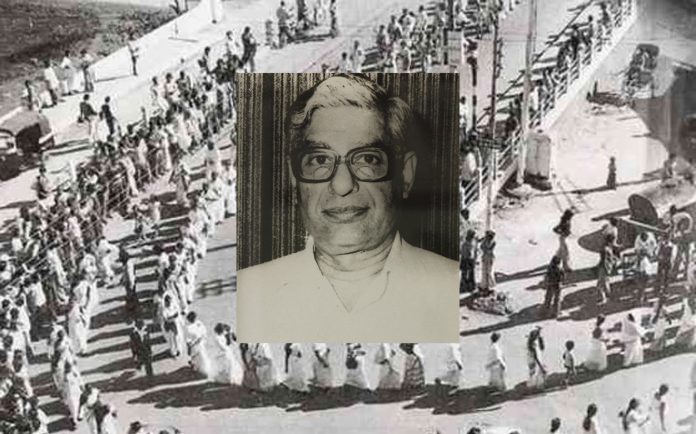
On 25th November, the Himanta Biswa Sarma government in Assam presented the Tewary Commission Report on Nellie Massacre in 1983 in state assembly. The copies of the much-awaited report were distributed among MLAs, and also has been made public. Notably, while it has been called the ‘report on Nellie massacre’, the official title of the report is ‘Report of The Commission of Enquiry on Assam Disturbances, 1983.’
Which means, commission headed by Tribhuvan Prasad Tewary looked into all the violent incidents that took place in 1983 at the height of Assam Agitation, not just the incident on 18th February 1983 in Nellie. The commission was asked to look into the circumstances leading to the incidents in Assam from January to April 1983.
The comprehensive report captures not only the immediate failures that led to one of independent India’s worst episodes of mass violence, but the deeper factors that had been simmering for decades in the state.
Justice Tribhuvan Prasad Tewary, who authored the report, performs the task of untangling a complex history of demographic transformation, political agitation, administrative failures, and community mistrust. At the centre of the inquiry lays the event that shocked the nation, the massacre of around 3000 people belonging to the minority community at Nellie on 18 February 1983. However, the report underscores that Nellie was a symptom, not the cause. It was the result of deeper social, political, and historical crisis that had engulfed Assam during those years.
Most importantly, despite the massacre of Muslims by local tribals in the area, the Tewary Commission concludes that giving the incident a communal colour is ‘entirely unwarranted’, noting that “All sections of the society suffered as a result of the senseless violence.” Instead, the report states that AASU (All Assam Students Union) and AAGSP (All Asam Gana Sangram Parishad) were primarily responsible for the agitation and its consequences.
Here is a detail analysis of what the report states.
A Land of Arrivals: The Background
From the outset, the Tewary Commission emphasises that Assam has historically been a land impacted by migration. The report categorizes various waves of migrants and the impact they had on the region’s demography, economy, and politics.
The report notes that while Assam has been receiving immigrants, including Muslims, from centuries, there were no conflicts in the past. In fact, local Muslims had fought against Muslim invaders.
The report highlights that issues started after the arrival of Bengali-speaking migrants during the colonial period. The British, the report notes, encouraged the entry of Bengalis, especially educated Bengalis from the districts of present-day West Bengal and Bangladesh, as they were already conversant with British administrative practices.
The colonial government relied heavily on them for “revenue and other routine administration and for office jobs.” This phenomenon, according to the report, occurred because Bengal “came in contact with the British much earlier” and had a ready supply of English-educated personnel who could work for the administration. This influx “had a considerable impact on the educational, economic and cultural life of Assam.”
Additionally, a large number of people were also brought into Assam to work in agricultural activities. While most of them were brought as workers, they gradually started to acquire land in the state. This also caused resentment among local farmers.
The Commission avoids passing value judgments on whether this impact was positive or negative, but its acknowledgment of the depth of change of demography as a result of such immigration explains what later fuelled the Assam Movement. The perception held strongly by many Assamese groups was that the character of the state was being transformed in ways they could neither control nor reverse.
Apart from Bengalis, both Hindus and Muslims, other migrant communities also made their way into Assam in significant numbers. The report mentions the Marwari community from Rajasthan, who arrived as early as the late 19th century, working as traders, managers, and bankers. Similarly, people from Odisha, Bihar, and Uttar Pradesh also settled in Assam. A final group, the Nepali settlers, primarily engaged in agriculture and cattle rearing, saw their population grow substantially, from 0.89 lakh in 1951 to 3.5 lakh in 1971.
However, the Commission observes that these groups did “not exercise much influence in any sphere,” compared to Bengalis.
The movement of the Muslim immigrants from East Bengal to Assam commenced in the early decades of the 20th century. Initially, they occupied char lands, the sandbars of Brahmaputra River which were uninhabited at that time. As the number of outsiders arriving in the state grew, the government devised various policies to settle them and allot them lands. Initially, immigrants could settle only in some areas, defined by a ‘line system’ and then by a ‘block system’. This ensured that immigrants could not settle in some areas.
The report notes that in 1938, it was recommended to abolish such restrictions imposed on immigrants to acquire land, and also to distribute land unattractive to Assamese people to landless immigrants. These policies let to mass influx of Bengali Muslims from East Bengal to Assam in 1930s and 1940s, swelling their number in the state.
After that there two major incidents of immigration took place, at the time of partition of India in 1947, and then the Bangladesh liberation war in 1971. In between, Bangladeshis continued to infiltrate via the porous border to settle on fertile char areas in Assam. As a result of such continuous migrations, demography of Assam had already changed.
These demographic shifts form the essential backdrop to the tensions of the 1970s and early 1980s. The people of Assam, particularly the Assamese-speaking and tribal communities, worried due to what they perceived as unchecked migration that threatened their land rights, electoral power, and cultural identity. These fears were powerful enough to reorganize the social and political landscape of Assam.
The Start of Agitation: How Assam Reached the Breaking Point
Although the clash between indigenous communities and migrant populations had simmered for decades, the Tewary Commission identifies the late 1970s as the period when these tensions crystallized into open political mobilization. The All Assam Students’ Union (AASU), which later eventually became the principal driving force behind the Assam Movement, submitted a 19-point charter of demands to the government in 1978. This marked the beginning of organized agitation rooted in the claim that Assam’s demographic balance was under threat.
A pivotal trigger arrived soon after, the death of Hiralal Patowary, the sitting MP of the Mangaldoi Lok Sabha constituency. His death in April 1979 necessitated a by-election. This routine political event became historic when it was discovered that the voter list prepared after a summary revision had an unusually large number of “foreigners’ names.” The Commission notes explicitly that this discovery sparked the statewide agitation led by AASU and the All Assam Gana Sangram Parishad (AAGSP), who demanded the deletion of foreigners from the rolls and their expulsion from the state.
The by-election was subsequently cancelled as the nation needed a mid-term election after the dissolution of Lok Sabha in the same year. The Mangaldoi controversy quickly escalated into a mass movement, with demands to clean up the voters list of the entire state before the election.
The All Assam Gana Sangram Parishad was formed in August 1979 with representatives from several organisations including AASU, Assam Jatiyatabadi Dal, Purbanchaliya Lok Parishad, Assam Jatiyatabadi Yuba Chatra Parishad and Assam Sahitya Sabha. AAGSP became the main organisation leading the agitation with AASU as its main supportive group.
What had begun as a dispute over electoral rolls in one constituency transformed into demands for wide-ranging identity verification, border controls, and deportation of illegal immigrants. Road blockades, general strikes, civil disobedience campaigns, and public mobilization became staples of the Assam Movement.
By 1980 itself, violence had started to appear during the agitations. The commission states two waves of major communal violence took place in 1980, in January and May. The January violence was during protest against Lok Sabha elections without removing names of illegal immigrants from the voter list. The May violence was over ‘Demand Day’ by All Assam Minority Students’ Union, as AASU/AAGSP supporters attempted to scuttle the AAMSU program. This led to clashed between the two sides, resulting in loss of lives and properties.
By this time, agitators had also stopped pumping and transportation of oil form Assam, with the famous ‘tej dim tel nidio’ (will give blood but not oil) slogan, and movement of other products like jute, timber and plywood to other states was also blocked. By the early 1980s, the agitation groups commanded massive public support and had their own enforcement capabilities across many districts.
The 1983 Election That Sparked Violence
The government’s decision to go ahead with the state assembly elections in February 1983 proved to be the catalyst for the bloodshed that followed. The agitation leadership had made it clear that no election would be acceptable until the “foreigners issue” was resolved. The government, however, insisted that constitutional continuity required elections, and that the state could not indefinitely defer democratic processes.
Notably, while it was widely recognised that the decision to hold the elections was the primary trigger for the violence that followed, the Tewary Commission supported the government’s move. The report recognises the constitutional compulsion to hold the elections, as the 44th constitutional amendment passed in 1978 stated that the maximum period for which a State could be under President’s Rule is one year. As Assam was put under President’s rule March 1982, elections were needed to be held by early next year to form the legislative assembly. The report also states that not holding elections due to the demands of a group of agitators would have been harmful to the functioning of the democracy.
While the central government had proposed an amendment to further the delay the elections in Assam, there was no unity among opposition parties over it, and the government could not secure the support of two third of MPs needed for the amendment. Therefore, the election in Assam became a necessity despite massive opposition to it, and it was decided that the polls will be held on the basis of the 1979 voter lists.
“The Government of India, it seems to me, had no option but to hold the election in the State as the term of President’s rule was going to end,” says the report. AASU and AAGP announced boycott of the elections, and their leaders were arrested by the police. Some parties including the BJP and the Janata Dal supported the boycott call.
However, Justice Tewary says that this was an error in judgement, concluding that had there been no boycott, the disturbance would not have been so colossal and wide-spread. But the report also stated that the government’s decision to go ahead with the polls and the boycott call aggravated the situation.
The Tewary Commission shows in detail how the govt worked to hold the elections without violence. Security forces identified certain constituencies as “strongholds of AASU and AAGP,” anticipating resistance to polling activities in those areas. Polling centres were assessed based on their vulnerability, and elaborate plans were drawn up for deployment of police and central forces. Candidates were provided with personal security officers, their residences were guarded, and police escorts accompanied them during campaign tours.
Despite these precautions, problems surfaced long before the first vote was cast. There were fears that state government officials would refuse to cooperate with the Election Commission. Suppliers were reported to be unwilling to provide essential materials for the conduct of elections. Government presses hesitated to print electoral rolls or ballot papers. Even private vehicle drivers, whose vehicles were requisitioned for election duty, were reluctant to participate. The Chief Electoral Officer prepared contingency plans to counter each of these possibilities.
The Election Commission’s logistical assessment predicted a worst-case scenario of total administrative non-cooperation. The Commission had to consider the possibility that printing presses would not print ballots, local officials would refuse duty, and vehicles would not be available for transportation.
These were not hypothetical fears but real projections based on ground reports. The fact that the electoral machinery was stretched to its limit even before polling day reveals just how deeply the agitation had penetrated the state’s institutions.
To maintain law and order, preventive measures were taken across several districts. In one district alone, 1,646 persons were arrested under Section 151 of the CrPC, proceedings were initiated under Section 107 against 189 people, and 16 persons were detained under the National Security Act
Yet the Commission notes that these measures were insufficient. While the first day of polling on 14 February passed without major incidents in some places, the situation deteriorated rapidly thereafter. The report cites the administration’s observation that law and order was “fairly satisfactory” initially, but violence escalated on a larger scale quickly after some villages were burnt down in Goalpara.
THE Nelllie Massacre and the Widespread Violence
The Tewary Commission’s findings establish that the violence of February 1983 did not erupt spontaneously. It was the result of long-standing resentments, political mobilization, and a near-total collapse of administrative authority.
Nellie, a cluster of villages in Nagaon district, was home to a large population of Bengali-origin Muslims, many of whom were peasants settled in riverine tracts and char areas. These communities had often been labelled “illegal immigrants,” irrespective of their actual citizenship or historical presence.
According to the Commission’s findings, one of the immediate triggers for violence in many regions was the participation of these communities in the elections despite the boycott call. The agitation leadership had demanded total non-cooperation, and in areas where communities defied the boycott, there were adverse retaliation.
The underlying tensions between Assamese tribal groups, particularly the Tiwa (Lalung) community, and Bengali-origin Muslims had been simmering for years. Competition over land, agricultural rights, and political influence had created a volatile environment in which even small provocations could escalate.
When attackers encircled Nellie and its surrounding villages on 18 February, the absence of rapid state intervention proved catastrophic. The massacre unfolded over a few hours, resulting in the deaths of more than 1,800 people, mostly women, children, and elderly villagers.
While the massacre at Nellie was the most devastating incident, it was not the only site of violence. The Tewary Commission records that widespread attacks, arson, and clashes occurred in several districts during that period. The report clearly states that violence took place from both sides, and both Bengali Muslims and locals were victims in various such incidents in the first half of 1983.
The report also documents an incident when a RAF and a CRPF personnel were killed in firing by personnel of Assam Police Battalion who were part of a protesting group surrounding a polling station. In return fire, a Havildar of Assam Police Battalion was killed.
The police personnel were from areas where disturbances were taking place, and they were unhappy with orders to go into those areas facing violence in small groups, as they felt insecure. They were also overworked and tired, resulting in some of them to join the agitators. Such incidents had affected the law-and-order situation badly, leading to eruption of violence in several places with no adequate police force to control.
Violence and attack on polling process took place in large number of places in Goalpara, Darrang, Kamrup and Nagaon districts. Notably, these districts were very large at that time, and covered almost entire western Assam. Similarly, violence also took place in upper Assam districts like the undivided districts of Lakhimpur, Dibrugarh and Sibasagar. The violence included targeted attacks and burning of homes, apart from snatching of ballot boxes and attack on police personnel.
In district after district, the Commission’s findings reveal a massive mismatch between the enormity of the crisis and the capacity of the state to respond. The sheer geographic spread of the violence, combined with the reluctance of officials and workers to participate in election duties, meant that administrative machinery was effectively overwhelmed. The Chief Electoral Officer’s testimony recorded in the report shows how deeply the agitation had impacted the election. The ECI had to face various problems as printing presses refused to print ballot papers, government vehicle drivers refused to drive, and even police forces offered limited cooperation.
The Commission also noted the widespread circulation of rumours and misinformation during this period, like claims that certain communities were stockpiling weapons, that attackers were on their way, or that specific villages had already been targeted. Such rumours heightened anxieties and provoked pre-emptive violence. In several cases, violence escalated as a chain reaction, an initial attack in one village would lead to retaliatory burning in another, further fuelling the cycle.
The Commission’s Analysis: Causes of the 1983 Violence
Justice Tewary’s report records demographic, political, and administrative factors to explain the origins of the 1983 disturbances. Demographic anxiety as a result of the unchecked immigration was the most prominent factor. The Commission provides detailed census tables and analysis of population growth, making it clear that the perception of being outnumbered or displaced was central to Assamese fears, and that such fears were not baseless. The data in the report, such as the sharp population increases in districts with large immigrant populations, were interpreted by many as definitive proof that unchecked infiltration from Bangladesh was altering the region irreversibly
Political collapse was another major factor. The agitation movement had grown so powerful that its appeals were followed more many areas, compared to directives of the state government. When AASU and AAGSP declared that elections could not be held before resolving the foreigner’s issue and cleaning up the voter list, and the government insisted on proceeding with elections in 1983, confrontation became inevitable.
Administrative unpreparedness further compounded the crisis. Despite preventive arrests, categorization of sensitive polling stations, and security deployments, the machinery was stretched beyond capacity. The agitation had grown too big for the administration to control.
At a deeper level, the Commission suggests that the entire episode reflected the breakdown of trust between communities, between citizens and the state, and between different organs of governance. In such an environment, even well-intentioned actions could be misinterpreted, and rumours could spark deadly consequences.
The Danger is not Over
The Tewary Commission’s report, written in the immediate aftermath of the violence during Assam Agitation demanding deportation of illegal immigrants, clearly states how the threat of mass immigration changing demography of the state permanently is real.
This threat continues today. While large scale immigration from Bangladesh has almost stopped, sporadic incidents of such infiltration keep taking place regularly, increase in recent months after the incidents in Bangladesh. The Himanta Biswa Sarma government has started pushing back immediately after catching them crossing the border.
The state government has also decided to use a ‘forgotten’ law to deport illegal immigrants without referring them to Foreigners Tribunals, where cases go on for years.
Several other attempts are being made to stall the process of demographic changes, even though it can’t be reversed now. The NRC update process, the ongoing eviction of encroachment on government and forest lands, and the move to recognise more communities as Scheduled Tribes are part of such efforts.
While the Assam Agitation with signing of the Assam Accord, it could not achieve the main objective of the movement. Now those deficiencies are being corrected, like implementation of the clause 6 of the Assam Accord, that talks about provision of Constitutional, legislative and administrative safeguards to protect, preserve and promote the cultural, social, linguistic identity and heritage of the Assamese people.
Now after decades, efforts are being taken to implement this provision, including defining the term ‘Assamese people’ used in the accord. While Assam’s demography has permanently changed with Bangladeshi Muslims having a major share of the population, the Tewary Commission Report reminds that if there are further changes to demography, situation can turn volatile like 1983.


