

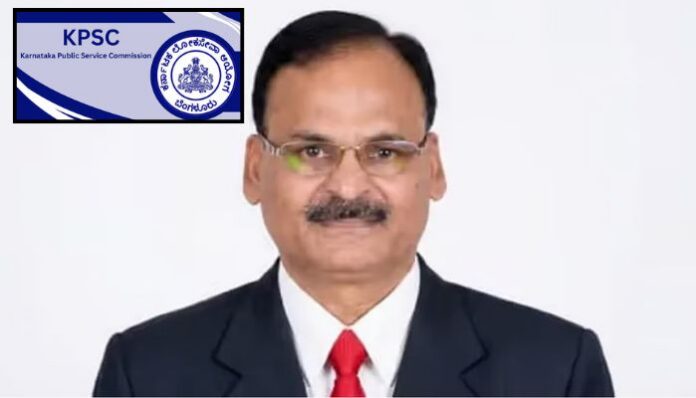
Karnataka Public Service Commission (KPSC) Chairman Shivashankarappa S Sahukar has been at the centre of a series of recruitment controversies involving manipulation of examinations, misuse of authority and corruption. Sahukar was first suspended by Karnataka Governor Thaawarchand Gehlot in July 2026 over allegations linked to the recruitment of his daughter, Suma Sahukar, to a government post under the OBC quota. The Karnataka High Court later quashed the suspension on constitutional grounds, after which the Governor suspended Sahukar again on 25th August following a recommendation from the state Cabinet.
The controversy has since widened. The Karnataka Police’s Criminal Investigation Department (CID) is investigating multiple allegations against the KPSC, including the manipulation of recruitment examinations and the leakage of question papers. Sahukar himself has been questioned by the CID in connection with the recruitment of 400 veterinary officers. On 7th September, the Karnataka High Court rejected his anticipatory bail plea after the CID placed before the court material alleging links between Sahukar, his son and an accused middleman.
Why was Sahukar suspended?
The first major controversy involving Sahukar centred on the recruitment of his daughter, 28-year-old Suma Sahukar, as an Industrial Extension Officer in the Karnataka Industries and Commerce Department.
According to an FIR filed by the KPSC, recruitment for 50 Industrial Extension Officer posts was announced in March 2024. Suma applied under the OBC 3B category, appeared for the examination in July 2025 and was selected in January 2026. During document verification, she submitted an income certificate showing her family’s annual income as only ₹40,000. Police registered a case alleging forgery and fraud over the certificate.
The income figure became a major point of controversy because Suma’s father was a senior KPSC official. Records cited in the case showed that Sahukar became a KPSC member in 2019 with a monthly salary of around ₹2.05 lakh and became chairman in 2021 with a monthly salary of around ₹2.25 lakh. KPSC records later showed his gross monthly salary as chairman was around ₹3.60 lakh in 2023. The figures were therefore vastly different from the ₹40,000 annual family income declared in the certificate.
कर्नाटक में 80 लाख रुपये में बिक रहे हैं गजेटेड ऑफिसर के पद
— ऑपइंडिया (@OpIndia_in) September 20, 2026
फर्जी कागजों के सहारे अपनी बेटी को नौकरी दिलवा रहे थे KPSC चेयरमैन
कांग्रेस राज में जिन अभ्यर्थियों को दिए जाते थे लीक पेपर, उनकी होती थी खूब खातिरदारी@Saumyasuniverse pic.twitter.com/DSGKLOwGps
The Karnataka High Court, while hearing a petition relating to the case, observed that the allegations, if established, could affect the credibility of a constitutional institution responsible for recruitment to government posts. In another hearing, the court described the declaration as an “eyewash” and “fraud”.
Suma was granted anticipatory bail on 24th July. The Governor’s first suspension of Sahukar was subsequently challenged in the High Court. The court quashed that order on 19th August, but restricted Sahukar from taking decisions concerning the proceedings related to his daughters. The Governor later issued a fresh suspension order on 25th August based on the state Cabinet’s recommendation.
Veterinary recruitment brings a bigger controversy
The second and more serious case concerns the recruitment of 400 veterinary officers by the KPSC.
A complaint filed in July revealed that 29 candidates who were selected in the recruitment process had received unfair assistance, including access to the question paper before the examination. One of the beneficiaries was also described as a relative of the KPSC chairman. The matter led to a CID investigation into the recruitment process.
According to the CID’s investigation presented before the Karnataka High Court, some candidates paid between ₹40 lakh and ₹80 lakh to middlemen. They were taken to hotels and resorts before the examination, where they were provided leaked examination material and coached on how to answer the paper. Investigators also examined internet calls involving candidates, middlemen and KPSC officials on the days of the examination.
The case also involves IAS officer Gyanendra Kumar Gangwar, who served as KPSC’s controller of examinations. Gangwar has been arrested in connection with the paper leak. The Enforcement Directorate has also taken up the money-laundering aspect of the case.
On 7th September, the CID told the High Court that Sahukar and his son were in frequent contact with Kannale through encrypted internet calls. The court rejected Sahukar’s anticipatory bail plea after finding a prima facie case warranting investigation. The rejection of bail, however, is not a finding of guilt; the allegations remain subject to investigation and judicial proceedings.
The police have also identified candidates who made payments to facilitate cheating. A 10th September report said investigators had identified 12 aspirants who paid money in connection with the veterinary recruitment, with payments of up to ₹80 lakh traced through bank transactions.
The High Court, while hearing a petition filed by an affected candidate, described the allegations as a possible “systematic assault upon the constitutional mandate governing public employment” if they were ultimately proved.
A wider pattern of manipulation inside KPSC
The controversies surrounding Sahukar have also brought attention to allegations that go beyond the two cases directly linked to him.
A report by The Indian Express, based on interviews with former KPSC members, officials and candidates and a review of complaints, FIRs and court documents, reported several methods of manipulating recruitment over the years. These included withholding marks, approaching high-scoring candidates for bribes, manipulating interview panels, altering tabulation records, tampering with answer sheets and leaking question papers. The allegations are being investigated or are part of cases before the courts.
One allegation concerns the withholding of examination marks. According to officials cited in the investigation, marks of candidates could be kept from being published after an examination. This information could then be used to identify candidates who had performed well and approach them individually with demands for money in exchange for assurances of selection.
A former KPSC member described the system by saying, “When some (KPSC) secretaries insisted on making the marks public, the chairman and his supporters resisted hard.” The claim was that releasing marks immediately would make it harder to identify and target candidates who were already in a strong position to qualify.
A former senior official also pointed towards the importance of the Controller of Examinations’ office. The official said, “The Controller is supposed to function independently, and only his or her office would know the marks of individual candidates and also have the addresses and contact details of each candidate.” According to the official, compromising this system would allow those involved to identify candidates and contact them for bribe demands.
Allegations of manipulated interviews
Another method involved the interview stage of recruitment.
A note prepared by then KPSC secretary Vikas Suralkar in September 2023 raised concerns about the way interview panels evaluated candidates. Under the system, KPSC members could be part of interview panels along with outside experts.
According to former officials cited by The Indian Express, records from at least two recruitment exercises showed a sharp difference between the rankings given by outside experts and those given by KPSC members. Candidates rated highly by experts were placed much lower by members, while candidates given lower rankings by experts received better rankings from members.
One former official described the pattern as a “V-curve”, saying the contrast between the assessments was difficult to explain as random variation. The allegations have added to concerns about whether interviews could be used to alter the final ranking of candidates.
The role of interviews has also changed over the years. The weightage of the Personality Test was reduced from 200 marks to 50 marks in 2020 and then to 25 marks in 2022.
Questions over tabulation and OMR sheets
Former KPSC officials also revealed that manipulation could occur even after candidates had completed their examinations.
According to the investigation, some former officials said that marks were changed at the tabulation stage, a process they said could be difficult to detect later. They also complained of possible tampering with OMR answer sheets after the July 2023 recruitment examination for Assistant Executive Engineers.
One former official claimed that although the OMR process was supposed to be recorded on camera, “in some cases, they even manipulated camera angles”. Questions were also raised over the lack of public disclosure of vendors involved in examination-related work. These remain allegations and are among the broader irregularities being examined.
BJP MLA Basanagouda Patil Yatnal has sought a CBI investigation into the allegations concerning Suma’s recruitment and the veterinary examination. The KPSC cases therefore extend beyond one chairman or two recruitment exercises. For thousands of aspirants who spend years preparing for government examinations, the central issue is whether selection is based on merit and transparent procedures.


