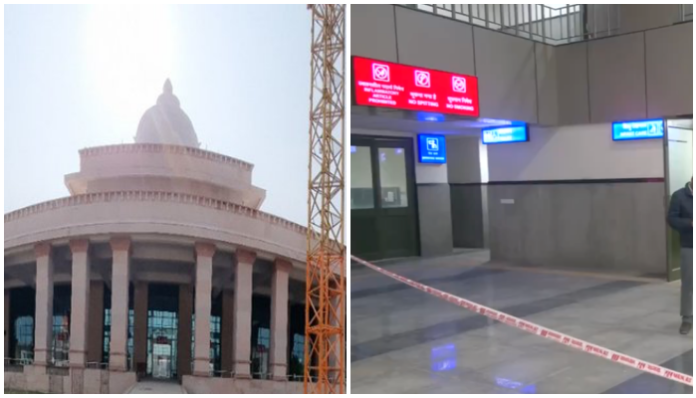
Refurbished platforms, new signboards, escalators, lifts, and murals of Lord Ram painted on walls–these and many more would be the features of the Ayodhya railway station after the ongoing revamp.
Prime Minister Narendra Modi is scheduled to inaugurate the revamped Ayodhya railway station later this week.
Tourists pouring into the temple town ahead of the grand consecration of the Ram Temple on January 22 are stopping at the railway station, marvelling at the ongoing revamp work which is aimed at giving it the look and feel of a temple.
Prime Minister Modi will touch down at the temple town on December 30–ahead of the consecration ceremony next month.
Purshottam, a tourist from Delhi, said the revamped railway station, while being equipped with new-age amenities for the benefit of passengers and visitors, will also have echoes and influences of Hindu mythology in its overall appearance.
“We are here for the first time. It seems we have arrived at an airport and not a railway station. This station not only has modern amenities but also a touch of Hindu mythology,” he told ANI.
Ramnarayan Das Ji Maharaj, a visiting seer in Ayodhya, too, said the revamped and remodelled railway station has the wherewithal to extend top-class services to passengers and visitors.
“It looks gorgeous with a new design. Lord Ram, too, wished for the station to be revamped so well that devotees don’t run into any problems visiting the grand temple for the consecration ceremony,” he said.
Swami Sai Prasad Saraswati, a visiting seer from Thiruvananthapuram, said, “Ayodhya is beautiful and people are arriving in the city in droves ahead of the consecration ceremony.”
The redevelopment is being carried out in two phases. While the first phase, which is near-finishing, will see the development of the platform areas, the second will see the construction of the new station building equipped with more lavatories, dormitories, ticketing and circulating areas, among others.
The district magistrate of Ayodhya, Nitish Kumar, said the railway station has a circulation capacity of about 50,000-60,000 people and work on the second phase will commence soon.
“We are carrying out the revamp of the railway station in a manner as to make it resemble the facade of Ram Temple. It would also reflect the historical significance of Ayodhya. While it would resemble a temple from the outside, it would be equipped with the latest technology for the ease of passengers. It already has a circulation capacity of 50,000-60,000 people and we are only into Phase 1 of the project. Work in the second phase will begin soon,” he told ANI.