

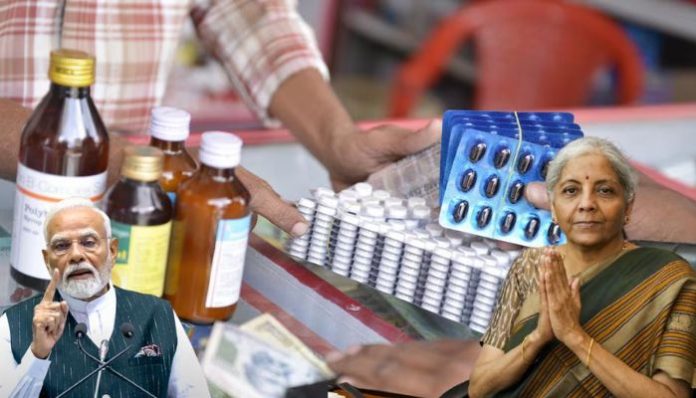
The GST Council, on Wednesday, 3rd September, announced a major GST reform, which provided a big relief to consumers purchasing health insurance and medical products. The government is removing the Goods and Services Tax (GST) on individual health insurance and individual life insurance policies, which were previously taxed at 18%.
Individual Health/Life Insurance Now GST Free!#NextGenGST pic.twitter.com/UCrGQgxkJ3
— Nirmala Sitharaman Office (@nsitharamanoffc) September 3, 2025
In addition to this, the GST on various healthcare products and lifesaving drugs has also been reduced, making them more accessible to the general public.
Healthcare made cheaper as part of GST reforms
With the new reforms, the government has put a strong focus on reducing healthcare costs. Individual life insurance policies, including term life, endowment and ULIPs, will not attract any GST now.
Similarly, all individual health insurance policies, including family floater plans and policies for senior citizens, will also be exempted from GST. Earlier, people had to pay 18% GST on these, which often increased the overall premium amount.
Apart from insurance, several key healthcare items have also seen sharp reductions in taxes. Products like glucometers, test strips, corrective spectacles, medical-grade oxygen, diagnostic kits and reagents, which earlier attracted 12% GST, will now be taxed at just 5%.
Thermometers, which previously carried an 18% GST, have also been moved into the 5% slab. Moreover, GST on 33 life-saving drugs and medicines has been brought down from 12% to zero, offering significant relief to patients who rely on these medicines.
Government says reforms will benefit the common man
Union Finance Minister Nirmala Sitharaman, while announcing the decisions after the 56th GST Council meeting, said the move was aimed at making healthcare and insurance affordable for all.
“After detailed discussions and consultations with stakeholders, we decided to exempt individual insurance policies. Families and individuals will directly benefit from this, and companies will be expected to pass on the benefit to policyholders,” the Finance Minister said.
She also added that the government wants to make it easier for people to buy medical insurance without worrying about high costs. Revenue Secretary Arvind Shrivastava confirmed that insurance companies have assured the government that the benefits of these tax cuts will be passed on to the buyers.
A landmark decision
Industry leaders have welcomed the tax cuts, calling them a landmark decision. Tapan Singhel, Managing Director of Bajaj Allianz General Insurance, said the exemption of GST on health insurance is a progressive step. “At a time when medical inflation is rising steeply, this decision reduces the financial burden on families. It also aligns with the goal of ‘Insurance for All by 2047,’ making healthcare more accessible and increasing insurance penetration in the country,” he said.
The latest data shows that India’s overall insurance penetration has slipped to 3.7% in FY24 from 4% in FY23. Experts believe that this reform will help boost both life and health insurance coverage, while also making healthcare products and medicines more affordable for millions of people.


