

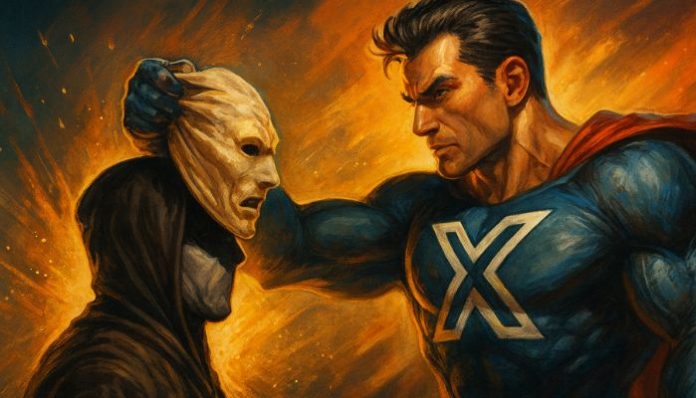
On 22nd November, social media platform X rolled out a major update which is being described as one of the most significant changes in recent years, especially after billionaire Elon Musk took over. The platform now displays a country label for every user account across the world based on the device location and the app store it is connected to.
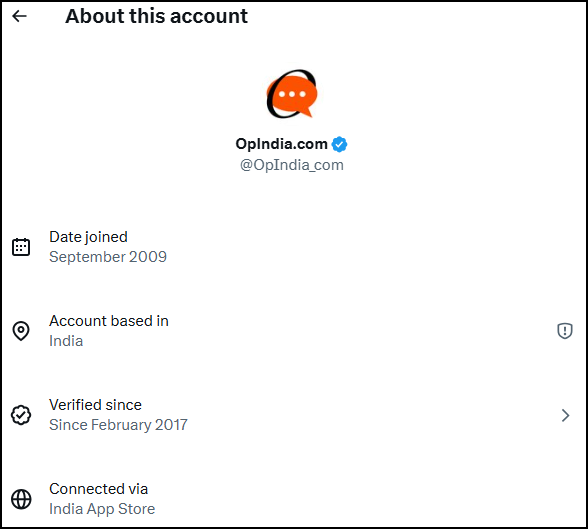
The feature allows users to see where an account is based simply by clicking on the date the profile joined X. It will help users identify accounts used for propaganda or coordinated influence. Notably, there is also an option to hide the country of origin and show the region instead.
X claims that this switch will help accounts stay “anonymous” in regions where there are strict restrictions on speech on social media. In a post on X, platform’s Head of Product, Nikita Beir said, “And for those in countries where speech has penalties, we’ve included privacy toggles to only show your region.” While several users have embraced the feature, others have raised concern that the feature may lead to regional targeting or new forms of online abuse.
In a couple hours, we'll be rolling out About This Account globally, allowing you to see the country or region where an account is based. This will be accessible by tapping the signup date on profiles.
— Nikita Bier (@nikitabier) November 22, 2025
This is an important first step to securing the integrity of the global town… pic.twitter.com/5d7cX21qGj
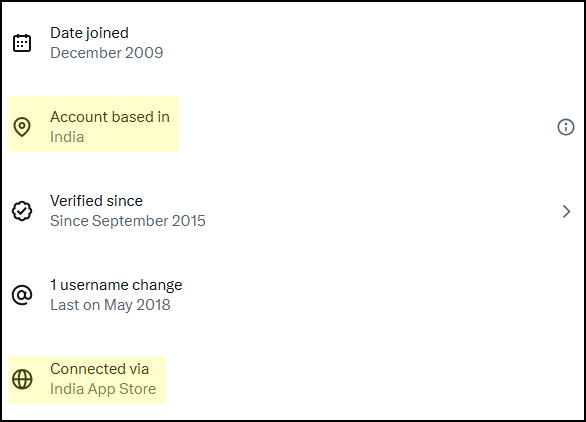
The information is visible once a user clicks on any profile’s date of joining the platform. For example, if the device location is “India”, it will show the country of origin as India. Also, if an account is connected via the Android Play Store based in India, it will show the information in “Connected via”. However, in case the account has been connected via VPN or proxy in the past, the location might not be accurate.
Until now, anyone could claim any identity, geography or background and participate in political conversation without even the faintest disclosure of where the account originated. This opacity allowed anonymous networks and politically charged handles to enjoy protection while posting anti-India content. This protection has now become a feature of the past as anyone can check and verify if the user should have a say in political or regional discussions or not.
A feature that immediately exposes origins of political voices
The disclosure has made something very clear. Several accounts that have dominated Indian political discourse for years are not based in India at all. The same goes for other countries as well. The country label may not prove where someone physically lives today, but it shows where the account was set up or where its digital footprint was established. For a country that has long suspected foreign involvement in domestic narratives, the confirmation has opened fresh discussions.
In October this year, X’s Head of Product, Nikita Bier, explained the purpose behind the update. According to Bier, when someone reads content on X, they should be aware of the origin of the account so that they can judge the authenticity of the viewpoint being propagated by the account.
When you read content on X, you should be able to verify its authenticity. This is critical to getting a pulse on important issues happening in the world.
— Nikita Bier (@nikitabier) October 14, 2025
As part of that, we're experimenting with displaying new information on profiles, including which country an account is… pic.twitter.com/OYgT1OiJdA
Alt News listed as ‘based in the United States’
Alt News is one of the most controversial accounts on social media in the context of India. While the company claims to be a fact-checking initiative, it is well known that the founders of Alt News, Mohammed Zubair and Pratik Sinha, are highly biased. Zubair has been caught multiple times posting fake news on social media and then quietly deleting it.
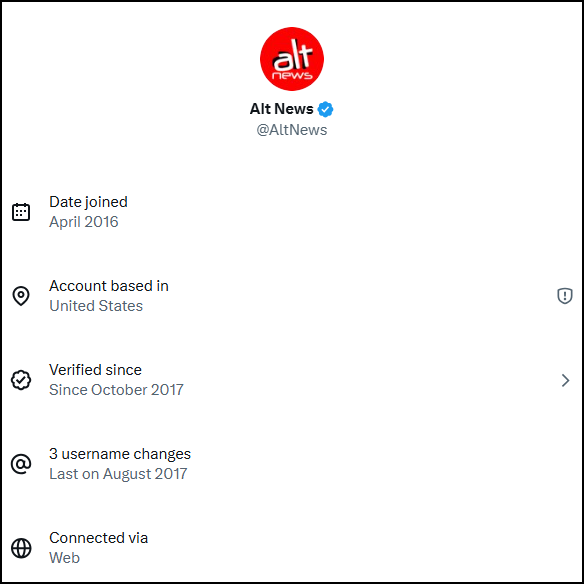
Alt News has been central to many of India’s political flashpoints. The account’s information shows that it is “based in United States”. This revelation has caused debate on social media. Alt News has always presented itself as a rooted, homegrown Indian entity deeply embedded in the country’s political environment. Its criticism, activism and fact-checking claims are all framed as being local responses to local issues.
While the label might not be the actual location of the account, the disclosure weakens the claim that all domestic activism on the platform is truly domestic.
Regional labels and the art of selective ambiguity
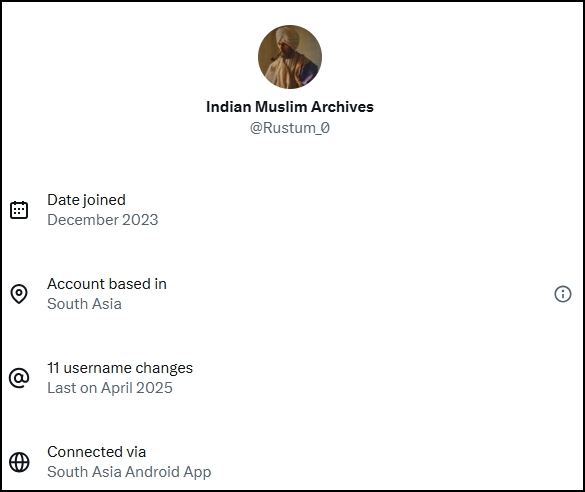
Another account that caught the eye was “Indian Muslim Archieve” that has the handle “Rustum_0”. The account shows “South Asia” as origin and is known for posting misleading history content.
Furthermore, several social media users claimed that the account “Nimo Yadav” showed “Account Based in South Asia” and posted screenshots. However, when OpIndia checked, it showed India. OpIndia could not verify of the screenshots shared by users were genuine or not.
???ISI has strictly instructed their pakistani handlers to change geo location to South Asia
— Hindutva Knight (@HPhobiaWatch) November 23, 2025
Sahil Farooqi from Team Paad, Jitu Rehmani of Nimo Yadav and Khushi Khatoon is their most trusted anti-India ISI agents in the regions who immediately followed the command of ISI… pic.twitter.com/1w6SX3y3a3
Another propaganda account, The Dalit Voice, also shows that it is based in “South Asia”.
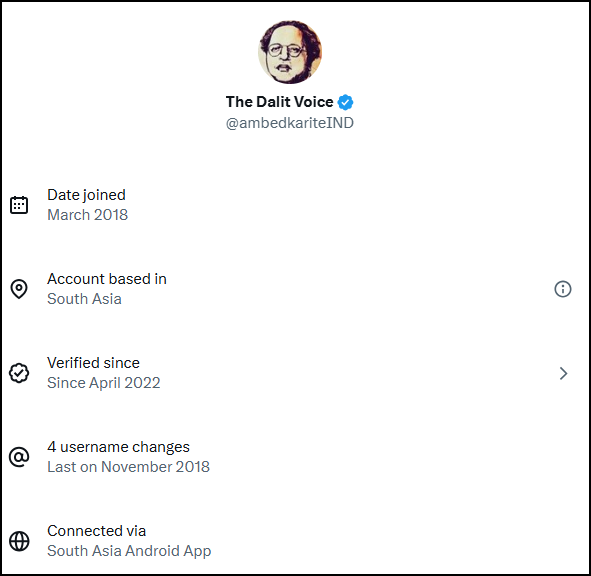
The argument is simple. If someone is indeed based in India, why not simply choose India. The ability to pick a region is a legitimate privacy option, but it also becomes a tool for avoiding disclosure. In political conversations where authenticity and location matter, such selective ambiguity creates more suspicion than clarity.
Politically charged accounts comment on India but are based outside
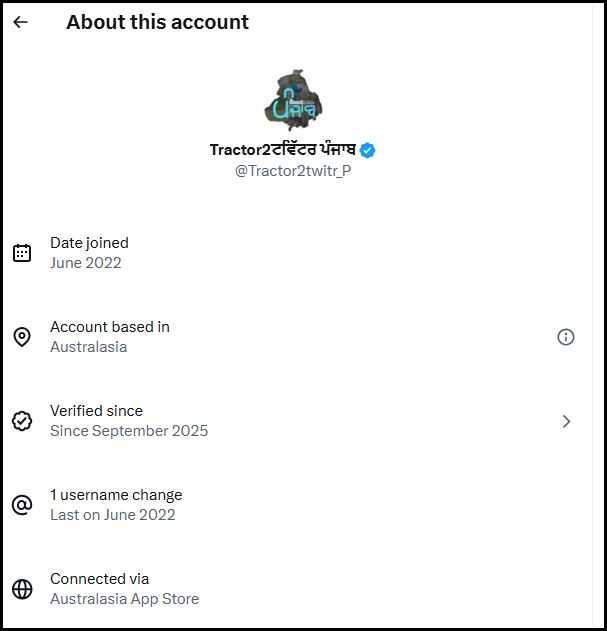
The new feature has also brought attention to accounts that have played an outsized role in agitation narratives. The handle commonly known as Tractor2twitr_P, which frequently comments on Punjab, Sikh identity, farmers’ protests and alleged discrimination, shows “Account based in Australasia.”
On profile, the account owner claims to be from Ludhiana.
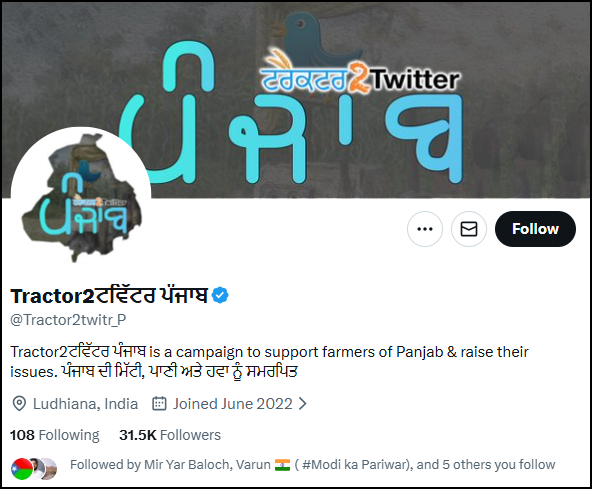
The account has repeatedly pushed anti-India content and encouraged agitation in Punjab. During farmer protests, there were many such accounts that were loudest online. A similar-sounding account, tractor2twitr, was withheld in India for its anti-India content during the protests. This specific account seems to be either run by the same set of people or at least share similar ideology and agenda.
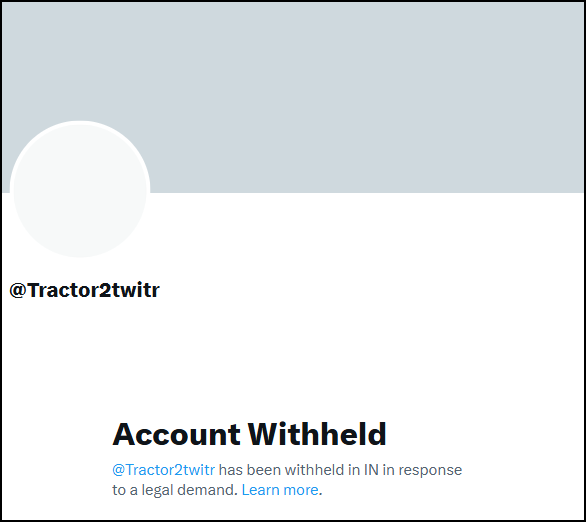
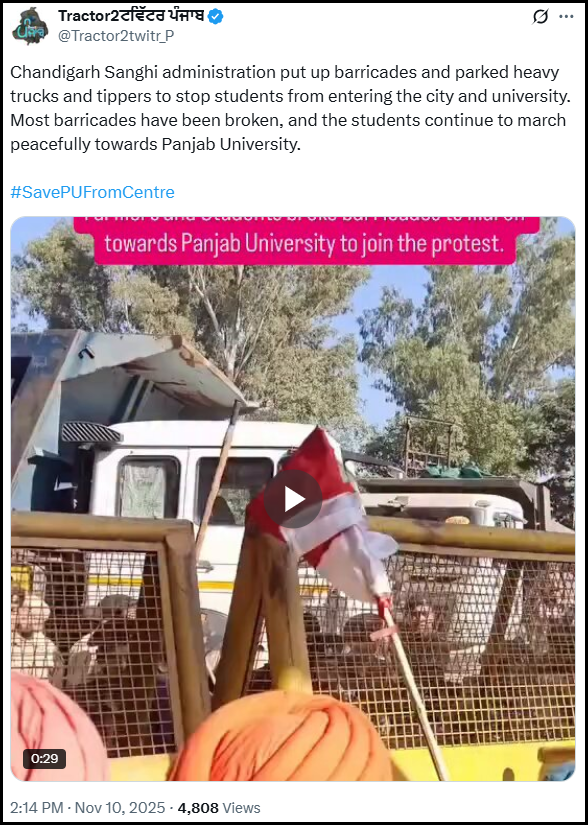
The account has been extensively publushing narrative-setting posts about Panjab University protest.
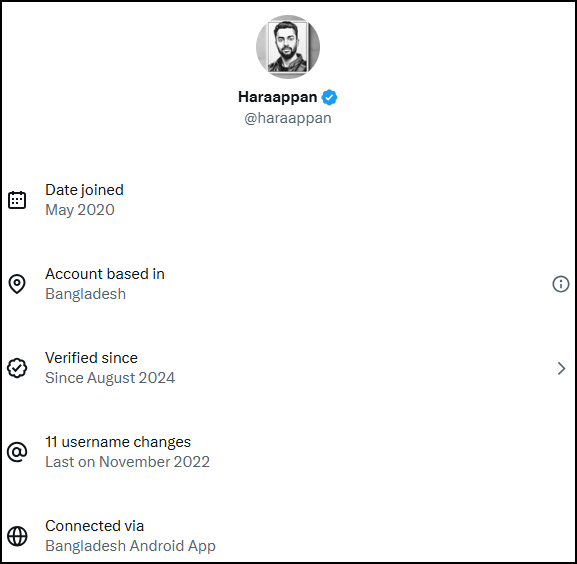
Another fine example is of X handle “haraappan” which regularly pushes North vs South narrative, talks about caste and more. According to X’s new ‘account based in’ feature, the handle originated in Bangladesh.
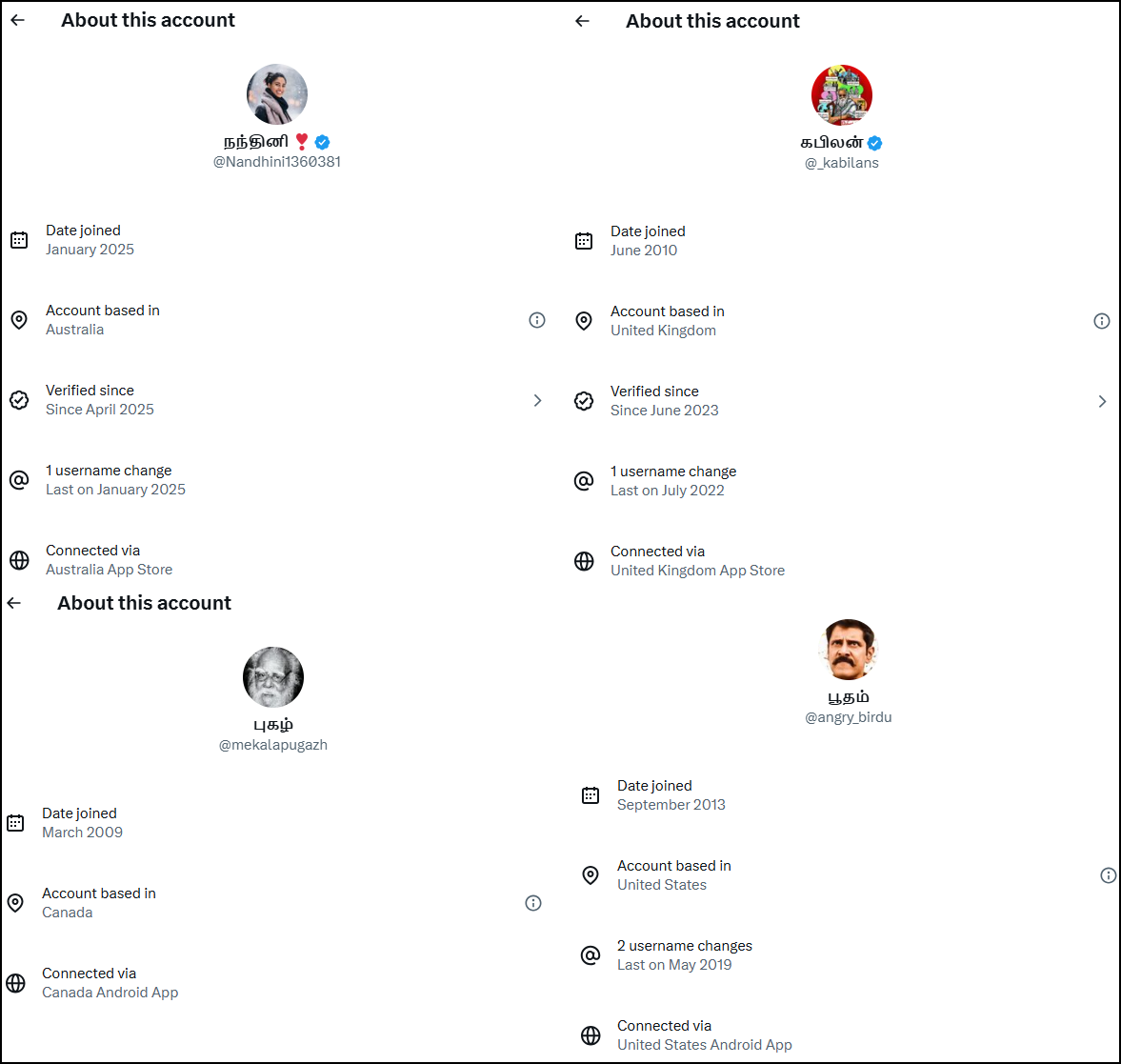
Several other handles that push North vs South narrative turned out to be based in Australia, the United Kingdom, Canada and the United States.
The curious case of ‘Diya’ and ‘Yashita’ from Pakistan
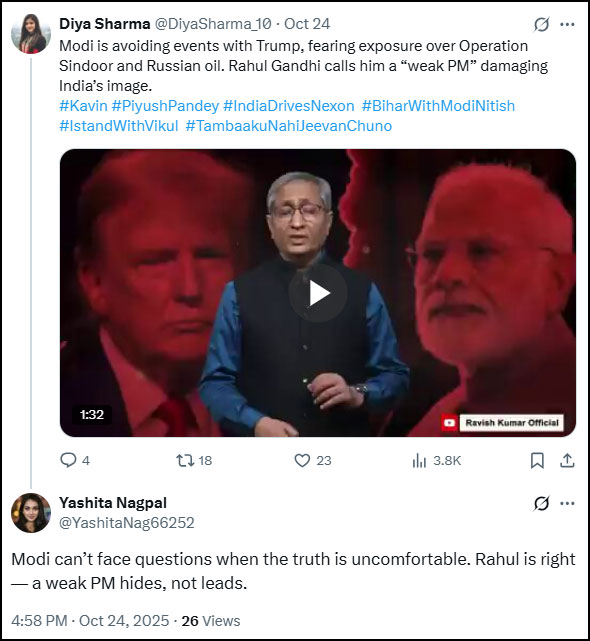
Yet another case is of “Diya Sharma” and “Yashita Nagpal” that turned out to be Pakistani accounts.
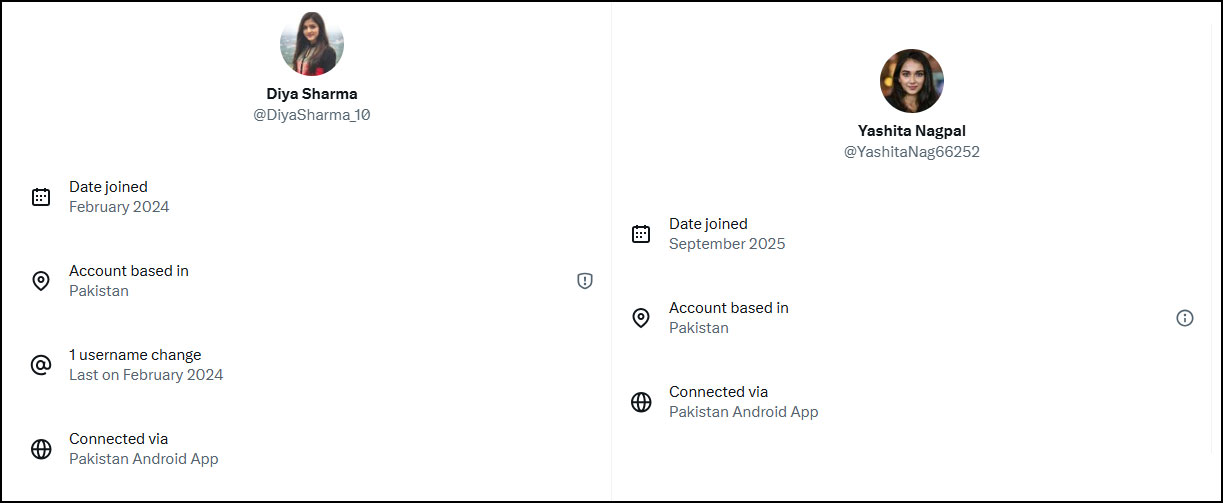
Both accounts were seen promoting Congress’s narrative.
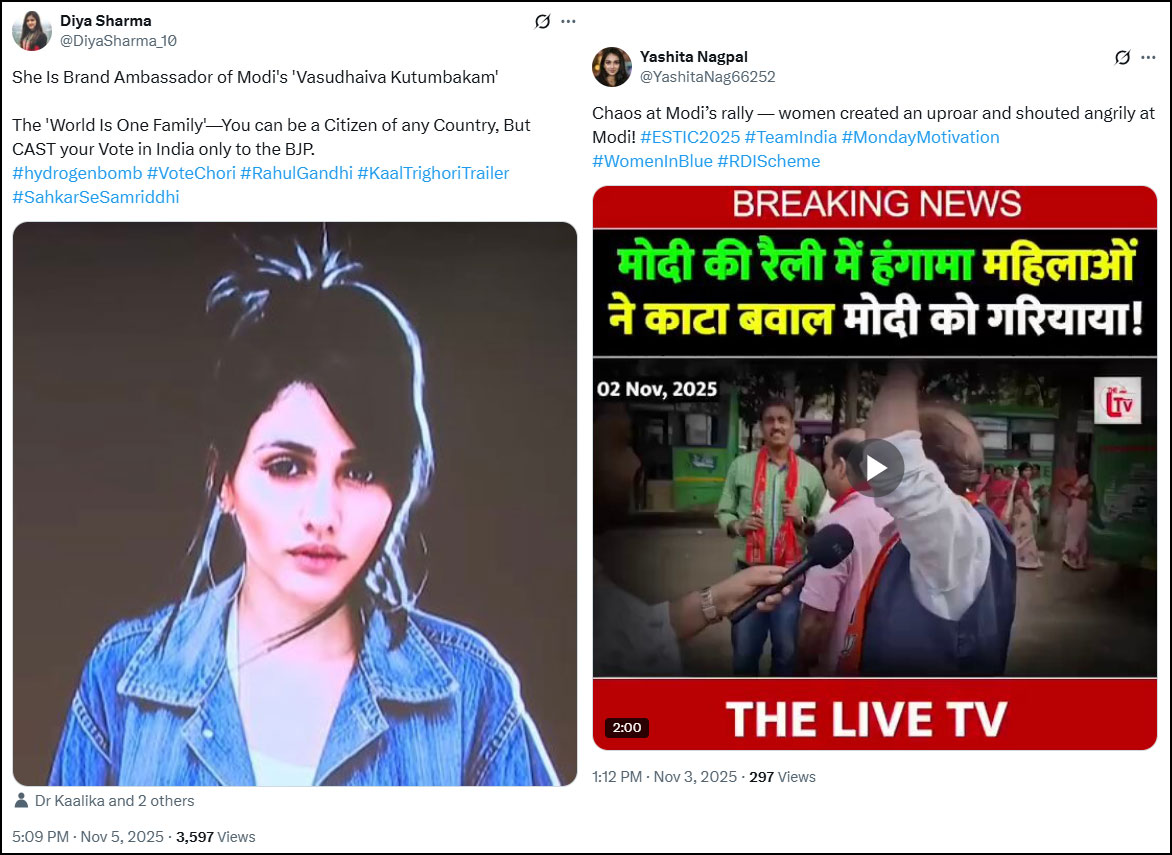
Furthermore, they were interacting with each other and reposting each other’s posts on X.
Shaping discourse from thousands of kilometres away
The conversation is now shifting towards legitimacy and accountability. When an account positions itself as a participant in Indian social or political life but turns out to be based abroad, users naturally reassess its credibility. Online narratives about caste conflicts, communal tensions, Punjab issues and political grievances have often been driven by people who remain completely outside the Indian environment. Their distance from the consequences of their messaging gives them a freedom that domestic voices simply do not have.
The new labels give the audience a tool to distinguish between those who truly reflect ground realities and those who speak from another continent while projecting themselves as local witnesses.
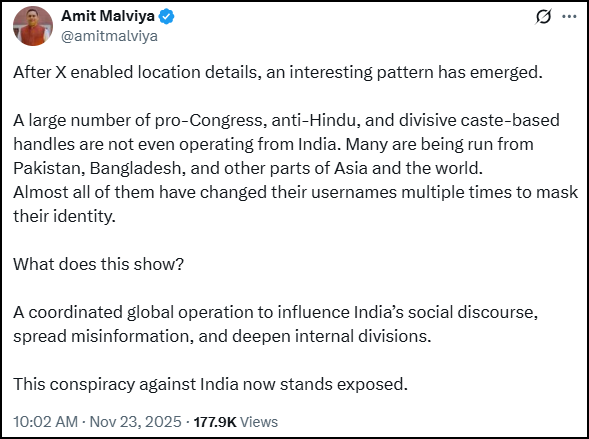
Bharatiya Janata Party (BJP) IT Cell Chief Amit Malviya pointed out how large number of pro-Congress, anti-Hindu and divisive caste-based handles are not even operating from India. In a post on X, he said, “After X enabled location details, an interesting pattern has emerged. A large number of pro-Congress, anti-Hindu, and divisive caste-based handles are not even operating from India. Many are being run from Pakistan, Bangladesh, and other parts of Asia and the world. Almost all of them have changed their usernames multiple times to mask their identity. What does this show? A coordinated global operation to influence India’s social discourse, spread misinformation, and deepen internal divisions. This conspiracy against India now stands exposed.”
Raising the question of why so many hide their location
The emergence of region-level labels has created a new form of curiosity. Not every foreign-based handle is suspicious. Many Indians live abroad and engage with events back home. The concern arises only when politically aggressive accounts, which often act as catalysts during tense situations, choose to hide their origins or mask them through vague region labels. If transparency were harmless to their influence, they would not avoid revealing their actual country.
This leads to reasonable questions about coordination, funding and deliberate interference. It also raises a broader issue. Who benefits when misinformation or agitation is powered by voices outside the country, especially during moments of crisis.
A feature that inadvertently vindicates the government
The Indian government had said at the time that many handles amplifying the protest were operated from abroad. These warnings were dismissed by activists and commentators. The new country labels now give credibility to what the government had insisted all along. Pro-farmer protest individuals and groups claimed that the accounts were purely organic voices from Punjab and other regions. The new country labels now confirm that at least some prominent agitation-related accounts were not in India at all. For the first time, a platform itself is revealing the digital origins of accounts that shaped the narrative during those protests.
In doing so, X has unintentionally validated the Indian government’s concerns.
Transparency is unsettling only for those who depended on opacity
The intention behind the feature was simple. Users should have enough information to judge the authenticity of the voices influencing them. In India, the impact has been far more dramatic than expected. The labels are already showing that a significant portion of India-focused activism, agitation and political commentary is rooted outside the country. Many who positioned themselves as representatives of local communities are now being revealed as foreign-based digital actors.
The discomfort is loudest among those who relied on opacity. The feature has stripped away that convenience. For the first time, Indian users can identify the location of the one who is speaking. The new transparency feature is going to have severe consequences for those who came to social media with an anti-India agenda, at least for those who are sitting abroad and trying to shape the narrative.
There are several Indian media accounts showing foreign origin which might be a bug. Beir, in a recent post, said there are a “few rough edged” that will be resolved by Tuesday. If any data is incorrect, it will be updated periodically based on best available information. This happens on a delayed and randomized schedule to preserve privacy,” he added.


