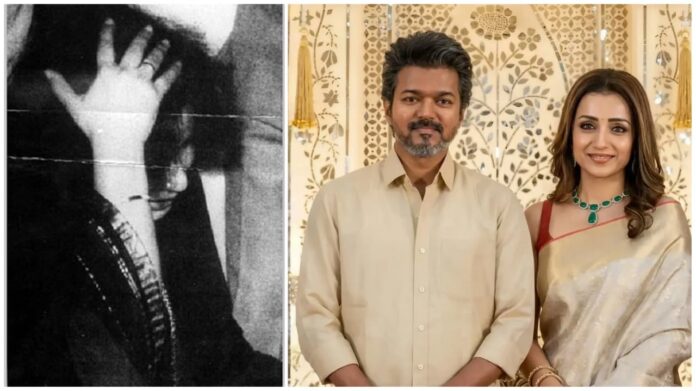
Politics in Tamil Nadu has often been marked by fierce rivalries, but some episodes have transcended ordinary political confrontation to become defining moments in the state’s history. One such moment unfolded on 25 March 1989, when then Leader of the Opposition J. Jayalalithaa walked out of the Tamil Nadu Assembly with a torn saree, dishevelled hair and visible injuries after proceedings descended into chaos.
Nearly four decades later, another controversy involving a woman has once again placed the Dravida Munnetra Kazhagam (DMK) under scrutiny. Udhayanidhi Stalin, the former Deputy Chief Minister and a senior DMK leader, was arrested after drawing widespread criticism over an alleged double-meaning remark widely interpreted as targeting actress Trisha Krishnan during a political speech against Tamil Nadu Chief Minister C. Joseph Vijay.
While the two incidents are vastly different in nature, one involving alleged physical assault inside the Assembly and the other a controversy over public remarks, they have together revived a larger political debate about the treatment of women in Tamil Nadu’s political discourse.
The day that changed Jayalalithaa’s political career
The Assembly session of 25 March 1989 remains among the most controversial in Tamil Nadu’s legislative history.
Jayalalithaa, then 41 and serving as the Leader of the Opposition, accused the Karunanidhi-led government of corruption during the Budget session. The proceedings soon deteriorated into unprecedented disorder as AIADMK and DMK legislators clashed on the Assembly floor.
Jayalalithaa later alleged that she was physically attacked amid the chaos. According to her contemporaneous account, legislators directed blows towards her, hurled objects across the House and, while AIADMK MLAs were escorting her out, a DMK minister allegedly pulled her saree, causing it to tear and resulting in injuries.
She emerged from the Assembly with a torn saree, dishevelled hair and tears in her eyes, a scene that was widely reported and became one of the defining images of Tamil Nadu politics.
Jayalalithaa declared that she would return to the Assembly only as the Chief Minister of Tamil Nadu.
Two years later, in 1991, she fulfilled that pledge by leading the AIADMK to a sweeping electoral victory.
Competing versions of the 1989 events
The events of that day have always remained politically contested.
Jayalalithaa consistently maintained that she had been assaulted and humiliated inside the Assembly.
Karunanidhi, however, rejected those allegations. In statements issued later, he maintained that DMK legislators had remained calm despite provocation and instead accused AIADMK MLA K. A. Sengottaiyan of attacking him and breaking his spectacles after Jayalalithaa called him a criminal.
The contrasting accounts have remained part of Tamil Nadu’s political history, with both parties continuing to narrate the incident through sharply different lenses.
Regardless of those competing claims, the events of 25 March 1989 are widely remembered as one of the darkest days in the history of the Tamil Nadu Assembly and marked a turning point in Jayalalithaa’s rise as a mass political leader.
The Trisha Krishnan controversy
The latest controversy erupted during a DMK protest meeting over the Cauvery water-sharing issue.
While attacking the ruling Tamilaga Vettri Kazhagam (TVK) government, Udhayanidhi Stalin remarked that sections of the crowd repeatedly chanted actress Trisha Krishnan’s name. His comments were widely interpreted by political opponents and many social media users as a double entendre referring to media speculation linking Trisha Krishnan with Chief Minister Joseph Vijay.
Although Udhayanidhi immediately added, “I meant the Cauvery,” the clarification did little to contain the backlash.
The remarks triggered criticism from across the political spectrum.
The ruling TVK described the comments as degrading and accused the DMK leader of normalising the objectification of women in political discourse. The party approached the National Commission for Women seeking action. The Tamil Nadu BJP also condemned the remarks, calling them vulgar and demanding legal action.
Earlier controversies involving women
The Trisha controversy is not the first time Udhayanidhi Stalin has faced criticism over comments involving women connected to political rivals.
Earlier this year, while criticising Chief Minister Joseph Vijay, he referred to Vijay’s wife, Sangeetha Sornalingam, mentioning reports about their personal differences during a political speech. Those remarks also drew criticism for dragging family members into political attacks.
During the 2021 Assembly election campaign, Udhayanidhi also mocked then Chief Minister Edappadi K. Palaniswami over his political relationship with V. K. Sasikala, invoking her while attacking his political credibility.
Each of these episodes has attracted criticism from opponents, who argue that women associated with political rivals are unnecessarily drawn into partisan political battles.
Echoes of the past
The circumstances surrounding Jayalalithaa’s 1989 Assembly experience and the Trisha controversy are fundamentally different.
One concerns allegations of physical assault during legislative proceedings. The other concerns remarks delivered at a political rally.
Yet both incidents have generated debate over how women become part of political confrontation in Tamil Nadu.
For Jayalalithaa, the events of March 1989 transformed her political image from an opposition leader into a symbol of resilience. The images of her leaving the Assembly remain among the most enduring in the state’s political history.
The current controversy has similarly reopened conversations about political language, public conduct and the standards expected from elected representatives.
Whether the Trisha row ultimately proves to be a fleeting controversy or another defining moment in Tamil Nadu politics remains to be seen. What is undeniable, however, is that nearly four decades after the events of 1989, women continue to be dragged into Tamil Nadu politics.