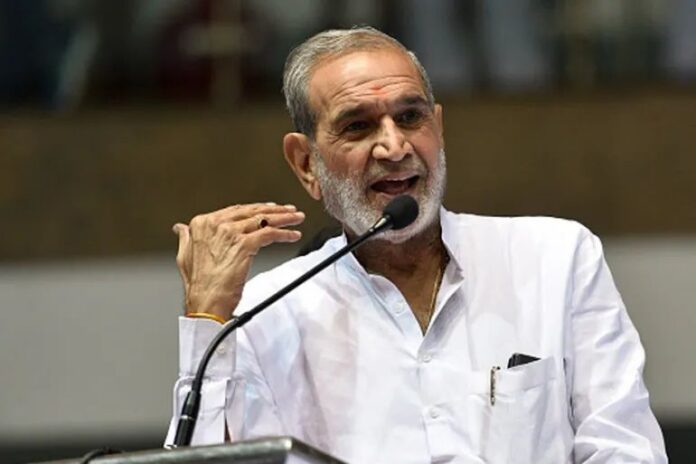
Former Congress MP Sajjan Kumar, who died in Delhi on Thursday at the age of 80, spent decades as one of the Congress party’s influential leaders in the national capital before his political career was eventually eclipsed by his convictions in cases arising from the 1984 anti-Sikh riots. He died while serving a life sentence, with his appeal against his 2018 conviction still pending before the Supreme Court.
Kumar, who represented Outer Delhi in the Lok Sabha, remained a prominent Congress figure even as allegations over his role in the violence continued to follow him. His eventual conviction in 2018 resulted in a life sentence and his imprisonment in Tihar Jail. He was later convicted and sentenced to another life term in a separate 1984 riots murder case in February 2025.
Sajjan Kumar and the Congress connection
Kumar’s political association with Congress was not confined to his years in Parliament. Despite allegations surrounding the 1984 violence, he continued to remain part of the party’s political machinery for years.
He returned to electoral politics in 2004 when Congress fielded him from the Outer Delhi constituency, from where he won a Lok Sabha seat. His political influence in Delhi also extended beyond parliamentary elections, with the party relying on his organisational network and ability to mobilise crowds.
In 2014, Kumar was reportedly included in the Congress campaign committee for the Delhi Lok Sabha elections. He also participated in party rallies and election campaigns, including events linked to Rahul Gandhi.
Even after decades of allegations concerning the 1984 violence, Kumar was seen participating in Congress programmes. In 2018, he was seen leading a Congress protest in Delhi during a Bharat Bandh over fuel prices. His appearance at the demonstration triggered controversy when he confronted a journalist who questioned him about the 1984 riots.
He also participated in a Congress rally in September 2018 against sealing drives, unemployment and price rise in Delhi.
The continued public presence of Kumar within Congress circles became particularly contentious because victims and survivors of the 1984 violence had repeatedly alleged his involvement in the killings.
The 1984 riots and the cases against Kumar
The anti-Sikh violence erupted after Prime Minister Indira Gandhi was assassinated by her Sikh bodyguards, Satwant Singh and Beant Singh, on October 31, 1984.
Delhi witnessed widespread attacks on Sikh families, homes, businesses and places of worship. More than 2,700 Sikhs were killed in the national capital during the violence, according to official figures cited in subsequent court proceedings.
Kumar became one of the most prominent Congress politicians to face criminal proceedings over the violence. However, the legal process moved slowly, with several cases being closed, ending in acquittals or remaining unresolved for years.
Senior Supreme Court lawyer and 1984 riots victims’ counsel H S Phoolka had repeatedly alleged that the police and government machinery had failed to properly investigate cases in which political leaders were accused. The issue of delayed investigations and alleged lapses in the original police probes became a recurring feature of the legal battle surrounding the riots.
2018 conviction: Delhi High Court’s damning observations
One of the biggest turning points in Kumar’s case came in December 2018, when the Delhi High Court convicted him for his role in the killing of five Sikhs in the Raj Nagar area of Delhi Cantonment during the riots on November 1 and 2, 1984. The case also involved the burning of a gurdwara.
The High Court overturned the earlier acquittal and sentenced Kumar to life imprisonment. He subsequently surrendered and was lodged in Tihar Jail. His appeal against the conviction remained pending before the Supreme Court.
The judgment was particularly significant for its observations about the circumstances in which the 1984 cases had been handled. The court criticised the manner in which perpetrators had escaped accountability and referred to the role of political patronage and the failure to bring the accused to trial.
The verdict also dealt a major political blow to Congress, prompting senior party leaders to distance the organisation from Kumar.
Congress leaders argued that Kumar was no longer holding office or contesting elections on a party ticket. The attempts to separate the party from Kumar, however, came against the backdrop of his long political association with Congress and his continued participation in party activities over the years.
Kumar subsequently resigned from the Congress.
Convicted again in 2025
The 2018 conviction was not the end of Kumar’s legal battles.
On February 12, 2025, a Delhi court convicted him in another 1984 riots case concerning the killings of Jaswant Singh and his son Tarundeep Singh in Saraswati Vihar on November 1, 1984. The court found him guilty of murder, rioting and several other offences.
The details recorded in this case were particularly disturbing. According to the prosecution case and the court record, a large mob armed with iron rods and lathis attacked the family’s home in the Raj Nagar area at around 4 to 4:30 pm. The attackers broke into the house, looted valuables, assaulted the family and set the property on fire. Jaswant Singh and his son Tarundeep were dragged out and burned alive in a nearby vacant plot, while the women in the family were brutally beaten as they tried to protect them. A police official was allegedly present when the family pleaded for help, but no effective intervention followed.
The prosecution alleged that Kumar was not merely a member of the mob but had led it and instigated the attacks. When charges were framed in 2021, the trial court said the material on record was sufficient to form a prima facie view that Kumar had participated in and led the riotous mob. The charges included murder, rioting, unlawful assembly, dacoity, robbery, causing hurt and destruction of property by fire.
The case also became an illustration of how the 1984 cases remained buried for decades. An FIR was registered in 1985, but the matter was not properly investigated and was eventually marked “untraced” in 1994. Judicial records were later stated to have been destroyed in the routine process of weeding out old records. The complainant had identified Kumar after seeing his photograph in a December 1984 issue of India Today, but her identification did not result in his prosecution at the time. The case was reopened after the Ministry of Home Affairs ordered fresh investigations into 1984 riot cases in 2015.
The complainant’s account was also striking for what it said about the failure of the state machinery. She told investigators that a police official was present during the attack and that she had pleaded for her husband and son to be saved. The court later noted that her reluctance to place trust in the police was understandable given what she had experienced during the violence.
The case had a particularly long history. The FIR was registered in 1991 after earlier complaints and investigations, while a Special Investigation Team later revisited the case following recommendations to reopen a number of 1984 riot cases.
The prosecution alleged that Kumar had led a mob that attacked the family’s house, looted and destroyed property and burnt the two men alive. The trial court ultimately held that the prosecution had established its case beyond reasonable doubt.
The prosecution subsequently sought the death penalty, describing the crime as an attack that had severely damaged communal harmony.
On February 25, 2025, the court sentenced Kumar to life imprisonment in the case. This meant that Kumar was serving life sentences in two separate 1984 riots cases.
A career that ended behind bars
Kumar’s trajectory from a powerful Congress politician in Delhi to a convicted prisoner is one of the more consequential political-legal stories to emerge from the long aftermath of the 1984 riots.
For years, his name remained intertwined with allegations that victims said had not been adequately investigated. The 2018 Delhi High Court conviction finally established criminal liability in one of the cases, while the 2025 conviction added another murder conviction to his record.
The legal history also remained complicated. Kumar was acquitted in other 1984 riot cases, demonstrating the varying outcomes of decades-old prosecutions. In a later case, a Delhi court held that there was insufficient admissible and reliable evidence to establish his presence or participation in the crime and acquitted him.
Kumar’s death on Thursday therefore closes the life of a politician whose public career cannot be separated from the tainted legacy of 1984. His rise within Congress, his continued political relevance despite allegations, the Delhi High Court’s findings about political patronage and investigative failure, the disturbing evidence in the later father-son murder case, and his eventual imprisonment collectively made him one of the most prominent faces of the prolonged judicial reckoning over the anti-Sikh violence.