

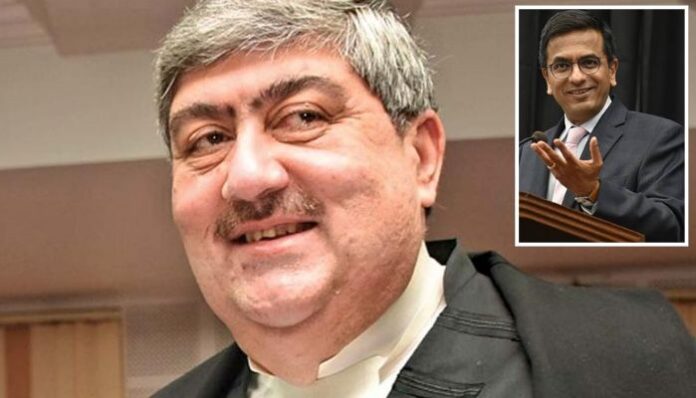
Former Supreme Court judge Justice Sanjay Kishan Kaul has triggered a political controversy after raising questions about former Chief Justice of India (CJI) DY Chandrachud’s approach to judicial appointments. According to Kaul, Chandrachud wanted to seek the government’s views on proposed judicial appointments before the Supreme Court Collegium formally deliberated on the names, a practice Kaul reportedly disapproved of as seeking the government’s “pre-approval”. The Congress has seized on these remarks to question the independence of the judiciary under the Modi government.
On Sunday, 25th October, Congress general secretary Jairam Ramesh cited a report based on Kaul’s forthcoming memoir, Without Fear or Favour, and accused the government of exerting pressure on the judiciary. Ramesh claimed the book raised “serious questions” about judicial independence and referred to allegations of government involvement in appointments, attempts to obtain approval before Collegium meetings, and questions raised about the caste of a judge belonging to a minority community.
पूर्व सुप्रीम कोर्ट जज जस्टिस संजय किशन कौल की किताब ने मोदी सरकार के कार्यकाल में न्यायपालिका की स्वतंत्रता पर गंभीर सवाल खड़े किए हैं। न्यायाधीशों की नियुक्तियों में सरकार की दखलंदाज़ी, कॉलेजियम की बैठक से पहले ही सरकार की मंज़ूरी लेने की कोशिश और अल्पसंख्यक समुदाय के एक न्यायाधीश के नाम पर उनकी जाति को लेकर सरकार के बेतुके सवाल – जस्टिस कौल ने इन घटनाओं का ज़िक्र किया है। जिन बातों को लोग खुलकर कहने से कतराते थे, जस्टिस कौल ने वो सब बड़े सयंत शब्दों में दर्ज किया है। हैरानी की बात यह है कि पूर्व चीफ़ जस्टिस ऑफ़ इंडिया ने नियुक्तियों से पहले सरकार के साथ चर्चा किए जाने की बात से इनकार नहीं किया है। जब पूर्व CJI जस्टिस चंद्रचूड़ कहते हैं कि सरकार की CJI से बातचीत और नियुक्तियों में भूमिका तो होती ही है, तो न्यायपालिका की स्वतंत्रता को लेकर सवाल और गंभीर हो जाता है। जस्टिस कौल का यह ख़ुलासा कि PMLA मामले में उनकी अध्यक्षता वाली बेंच द्वारा कोर्ट के फ़ैसले के कुछ पहलुओं पर पुनर्विचार का सवाल उठाए जाने के बाद मामला बिना उनसे चर्चा किए दूसरी बेंच के सामने पहुँचा दिया गया, बेहद गंभीर है। इससे सरकार द्वारा सुप्रीम कोर्ट के कामकाज में दैनिक दख़लअंदाज़ी का अंदाज़ा लगाया जा सकता है। अगर न्यायाधीशों की नियुक्तियों पर सरकार की मंज़ूरी का दबाव हो और संवेदनशील मामलों की सुनवाई करने वाली बेंच भी बदल दी जाए, तो लोकतंत्र की सुरक्षा के लिए पूछना ज़रूरी है: अगर यह न्यायपालिका पर दबाव और उसकी स्वतंत्रता को कमज़ोर करना नहीं है, तो फिर क्या है? संविधान की रक्षा करने वाली संस्था को सत्ता के दबाव से मुक्त होना चाहिए। लोकतंत्र में न्यायपालिका की स्वतंत्रता कोई विकल्प नहीं, अनिवार्यता है।
— Jairam Ramesh (@Jairam_Ramesh) October 25, 2026
In an interview with journalist Karan Thapar for the propaganda outlet The Wire, Kaul recalled an alleged incident in which Chandrachud took him aside during a Collegium meeting and asked whether he should telephone the government to ascertain its views on proposed appointments. Kaul said he opposed the idea of contacting the government while the Collegium was still deliberating on the names.
According to Kaul, the Collegium had agreed on five names, but Chandrachud wanted to include a sixth name that had been proposed at the last minute. Kaul suggested that the former CJI might already have obtained some form of government approval for the other names, including the sixth candidate. “Maybe he had already taken some kind of approval [from the Government] for the other names, including the sixth name,” Kaul said, according to the reported interview.
Ramesh also referred to Kaul’s account of a separate incident involving a Prevention of Money Laundering Act (PMLA) case. He alleged that a matter was reassigned to another bench after a bench headed by Kaul raised the possibility of reconsidering aspects of an earlier ruling, without consulting Kaul. Ramesh described these accounts as evidence of possible interference in the Supreme Court’s functioning and argued that the judiciary must remain free from pressure from those in power.
“When there is pressure to obtain government approval for judicial appointments, and when benches hearing sensitive cases are altered, one must ask — in the interest of safeguarding democracy, if this does not constitute pressure on the judiciary and an erosion of its independence, then what does?” Ramesh said.
This public rift between two former senior judges of the top court has turned an intense spotlight on Justice Sanjay Kishan Kaul’s own past track record, judicial outlook, and long career.
Who is Justice Sanjay Kaul?
While Justice Sanjay Kishan Kaul now positions himself as a staunch defender of judicial integrity and procedure through his upcoming memoir Without Fear Or Favour, a closer examination of his judicial track record reveals a career marked by deeply contentious rulings, persistent accusations of hurting public and religious sentiments, severe institutional conflicts, and questionable associations.
Justice Kaul’s rise to national prominence in legal circles in May 2008 came on the back of a deeply divisive judgment that shielded the controversial Islamist painter M.F. Husain from criminal proceedings. Husain had drawn widespread condemnation across India for his nudist depictions of ‘Bharat Mata’ (Mother India) as well as revered Hindu gods and goddesses.
The depictions, showing a weeping, naked woman symbolising the country, alongside nude portrayals of sacred deities, sparked massive public outrage and criminal complaints across Maharashtra, Gujarat, and Madhya Pradesh filed by citizens aggrieved by the manifest disrespect toward national and religious symbols. Facing overwhelming anger from right-wing organisations and civic groups, Husain chose to flee the country into self-imposed exile in Dubai and Qatar.
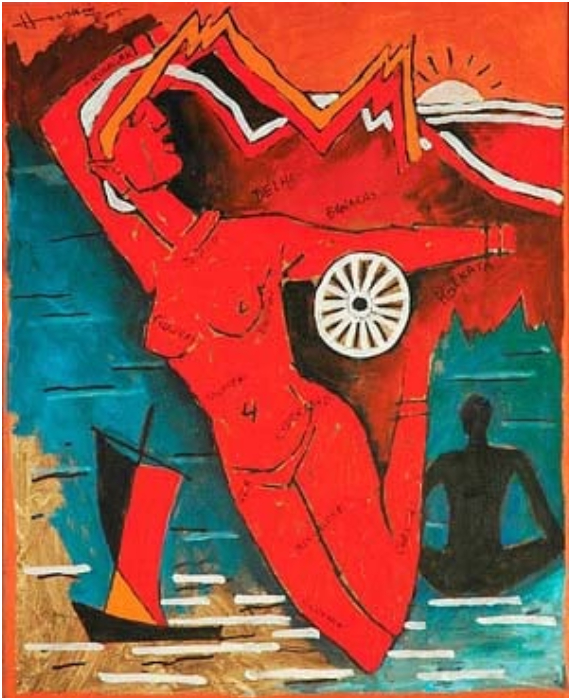
Instead of holding the artist accountable for hurting the deeply held sentiments of millions of citizens, Justice Kaul quashed all three criminal cases against the 92-year-old anti-India Islamist painter. Dismissing the widespread public grievance, Justice Kaul claimed: “The allegations made against the painter are baseless, and it would not be proper to hold that he had a deliberate intention to manifestly insult Bharat Mata.”
In his 74-page judgment, Justice Kaul sought to legitimise explicit nudism under the garb of historical aesthetics, writing: “We have been called as land of Kama Sutra then why is it that in the land of Kama Sutra, we shy away from its very home. Beauty lies in the eyes of the beholder, so does obscenity.”
He further defended eroticism by adding, “Ancient art has never been devoid of eroticism where sex worship and graphical representation of the union between man and woman has been a recurring feature.” By shielding Husain, who had previously compared Indian public opposition to Hitler’s regime, Justice Kaul’s ruling was widely criticised for setting a dangerous precedent where offensive, anti-national, and religiously insensitive depictions were given complete judicial protection at the expense of public morality.
Undermining community traditions: The Perumal Murugan ruling
Justice Kaul extended this controversial philosophy during his tenure as Chief Justice of the Madras High Court when he ruled in favour of Tamil author Perumal Murugan. Murugan’s novel Madhorubhagan (One Part Woman) had caused severe anguish among local community members and religious groups in Tiruchengode due to its derogatory depiction of local temple festival customs and traditions attached to childlessness. The outrage was so intense that Murugan publicly announced the “death” of his writing career on Facebook and withdrew his books.
Delivering the judgment alongside Justice Pushpa Sathyanarayana, Chief Justice Kaul dismissed the legitimate cultural concerns of the local communities. The bench famously brushed aside public objections by declaring: “If you do not like a book, throw it away. There is no compulsion to read a book. Literary tastes may vary — what is right and acceptable to one may not be so to others. Yet, the right to write is unhindered.”
Invoking controversial Indian-British authors like Salman Rushdie to justify his stance, Justice Kaul asserted that Indian society’s tolerance levels were declining and held that creative freedom overrode local community sensibilities.
Justice Kaul consistently prioritised offensive artistic expressions over the protection of long-standing social, cultural, and religious values, repeatedly dismissing popular outrage as mere intolerance.
Allegations of administrative harassment and caste bias
Justice Kaul’s administrative leadership as Chief Justice of the Madras High Court was similarly embroiled in severe controversy, highlighted by a public conflict with fellow High Court judge, Justice C.S. Karnan. Justice Karnan formally wrote to the Chief Justice of India, the President, and Law Minister Sadananda Gowda, accusing Chief Justice Kaul of blatant administrative harassment, belittlement, and discrimination against a Dalit judge.
In his official letter, Justice Karnan openly confronted Justice Kaul’s arbitrary exercise of power: “Since your Lordship is solely in-charge of the Madras High Court and invested with administrative power, Your Lordship has elected to allot me insignificant / dummy portfolios while those juniors to me, have been allotted significant assignments, which is tantamount to belittling my capabilities as a judge of many years in this August Court. Being a Dalit do you expect me to take such treatment lying down? Or do you expect me to fight for my rights till the bitter end?”
Justice Karnan also exposed the murky underbelly of judicial appointments, attacking the Collegium system under Kaul’s leadership as a tool of nepotism meant “only to entertain their own favourites comprising close relatives, distant relatives and in the absence of the abovementioned choices, then the selection would go to close associates and good friends.”
The situation deteriorated further when Justice Kaul set up a judicial recruitment committee that excluded fair community representation. Justice Karnan issued a judicial order halting the selection process, citing administrative improprieties and revealing that judges from the same community and close relatives had been favoured. Justice Karnan went on to request financial audits into the potential misuse of government funds by Chief Justice Kaul and the Registrar General, exposing deep-seated administrative dysfunction and alleged high-handedness during Kaul’s tenure at the High Court.
Resurfaced optics: Socialising with CJP leader Saurav Das
Adding to the questions surrounding his personal conduct and objectivity, photographs have recently resurfaced online showing Justice Kaul attending the Cockroach Janta Party (CJP) co-convener Saurav Das at his personal residence during last year’s Diwali celebrations.
Sanjay Krishan Kaul was at a Diwali party with fatherless Saurav Das last year. All’s making sense now. https://t.co/BjqJ5SknzA
— Ankit Jain (@indiantweeter) October 25, 2026
The revival of these images has raised serious eyebrows given Das’s recent legal troubles. Saurav Das was recently released from Tihar Jail after being compelled to sign a peace bond before the Special Executive Magistrate (SEM), undertaking not to engage in activities that disturb public peace or tranquillity. The SEM (New Delhi), Ritu Raj, subsequently directed Das to produce official documents proving his residential address in Delhi.
It cannot be more obvious than this…. Sanjay Kishan Kaul was at a Diwali party with fatherless Saurav Das last year. And today, all of a sudden, he makes these allegations, and all the leftists are quoting that post. Seems like this is today’s agenda 🙂 https://t.co/xH8FzL6CeC
— Lakshay Mehta (@lakshaymehta08) October 25, 2026
Far from being an unblemished guardian of judicial ethics, Justice Sanjay Kishan Kaul’s career reflects a pattern of polarising decisions that repeatedly offended religious and cultural sentiments, severe allegations of administrative harassment and caste-based discrimination from within his own court, and questionable social connections with controversial figures. His recent attacks on former CJI D.Y. Chandrachud must therefore be evaluated against the backdrop of his own deeply controversial record on and off the bench.


