

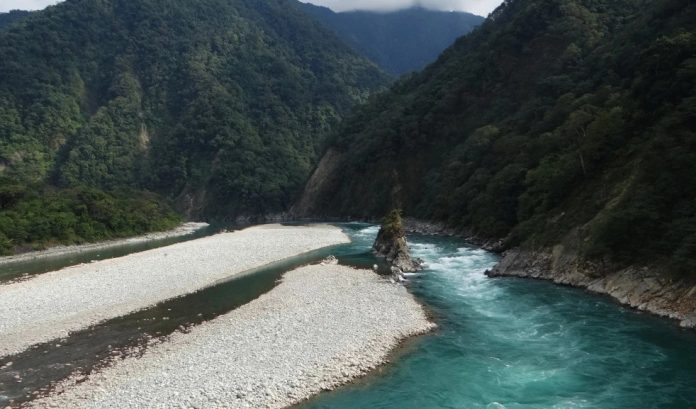
The Union Cabinet today approved the construction of India’s largest hydropower plant in Arunachal Pradesh, which will include India’s tallest dam. Pre-investment activities for the Dibang Multi-Purpose Project was approved by the union government today. The government today allocated ₹1600 crore for preliminary activities of the project like compensation for land acquisition, payment of net asset value of forests, compulsory afforestation, construction of roads and bridges to access the project site etc.
Dibang Multipurpose Project is a hydropower cum flood moderation scheme proposed on Dibang River in Lower Dibang Valley District of Arunachal Pradesh. Apart from producing electricity, the project will moderate flood in areas downstream of the Dibang Dam during the monsoon session. The plant will produce 2880 MW of electricity, making it the largest hydel power in the once completed. It is estimated that the project will produce 11223MU of energy in a 90% dependable year. The Dam constructed for the project will be 278-meter-high, making it tallest in the country.
The total estimated cost of the project will be ₹28,080.35 crore, and once started it will take 9 years to complete. The foundation stone for the project was laid by former PM Manmohan Singh in January 2008 itself, but the construction did not start. The project will be executed by NHPC Ltd, which will have a 278-meter-tall Concrete Gravity Dam, 6 horseshoe-shaped Head Race Tunnels of 9 meter diameter, and underground power station, and 6 Tail Race Tunnels of 9 meter diameter.
Dibang Multipurpose Project is envisaged as a storage-based hydro-electric project with flood moderation as the key objective. The construction of the project shall prevent the sizeable downstream area from floods. After implementation of master plan of Brahmaputra Board for flood moderation of all rivers contributing to river Brahmaputra, of which Dibang MPP is one of the component, sizable area will be protected from flooding and it will help in mitigating the perennial damage due to floods in Assam.
The project has already obtained all statutory clearances like TEC, Environment Clearance, Forest Clearance (Stage-l) and Defence Clearance for seeking Investment Sanction from Govt. of India, but Forest Clearance (Stage-II) is pending.
Dibang is one of the main tributaries of the river Brahmaputra. In fact, Dibang and Lohit rivers merge with Dihing river (called Siang in Assam, Tsangpo in Tibet) in eastern Assam to form the mighty Brahmaputra River. Last year India’s second longest bridge constructed over the Dibang river in Arunachal was opened. The 6.20 kilometer long bridge is just 50 km away from India’s longest bridge in Assam.


