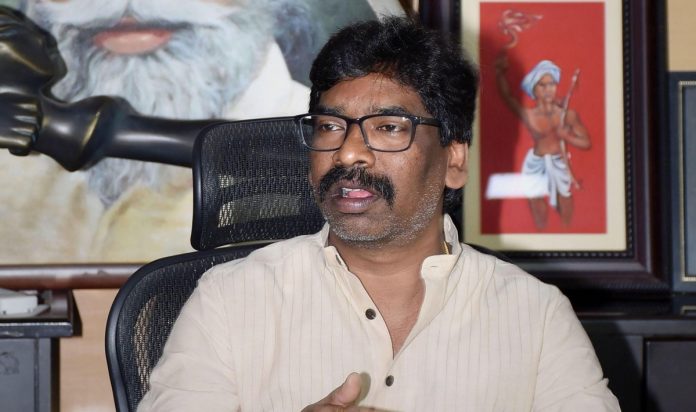
The Hemant Soren government in Jharkhand has become the latest state to revoke the general consent given to CBI to probe cases in the state. After the revocation of the general consent by the JMM-Congress-RJD alliance government, the central agency will require the state govt’s consent before conducting any investigation inside the state.
An order issued by the Jharkhand government says, “In exercise of the powers conferred by section 6 of the Delhi Police Establishment Act 1946 (25 of 1946) the Government of Jharkhand hereby withdraws the consent accorded to the Members of Delhi Special Police Establishment vide Govt order Memo No J/Vlvidh-6019/96 Dated 19.02 1996 as also by any other Instruments issued by the Government of Jharkhand, from time to time, to exercise the powers and jurisdiction under the said Act In the State of Jharkhand”.
Jharkhand has joined the list of non-BJP ruled states to have withdrawn the blanket consent given to CBI, signifying the opposition parties rallying together against the central govt. In a similar move, Left Democratic Front (LDF) ruled Kerala had withdrawn the consent on Wednesday.
Earlier, other non-BJP ruled states West Bengal, Rajasthan, Chhattisgarh, and Maharashtra had issued similar orders under the Delhi Police Establishment Act to require CBI obtain their consent to start any probe in the respective states. Andhra Pradesh had also withdrawn the consent in November 2018 by Chandrababu Naidu govt, but it was restored by the Jagan Mohan Reddy govt in June 2019.
West Bengal had also withdrawn the consent to CBI in 2018 immediately after Andhra Pradesh. Congress-led Chhattisgarh government had done the same in January 2019. Congress-ruled Rajasthan government had revoked the general consent in July 2020. More recently, the Shiv Sena-Congress-NCP govt had followed suit in October this year, after the CBI had taken over the Sushant Singh Rajput case and UP govt had recommended transferring the TRP manipulation case to CBI.
CBI comes under the DSPE Act and it requires states to give the agency a consent to act against central government employees within a state as public order and police come under the state governments. To avoid issuing separate consents for each case, states generally issue a blanket consent to the CBI, which is routinely renewed. But after withdrawal of the general consent, the agency will have to seek permission for each cases it wants to probe in the states, and the states may refuse to grant such permission.