Home Blog Page 1114

Teachers won’t be able to use cell phones, action to be taken if they go to worship or offer namaz while on duty: Rajasthan School Education Minister

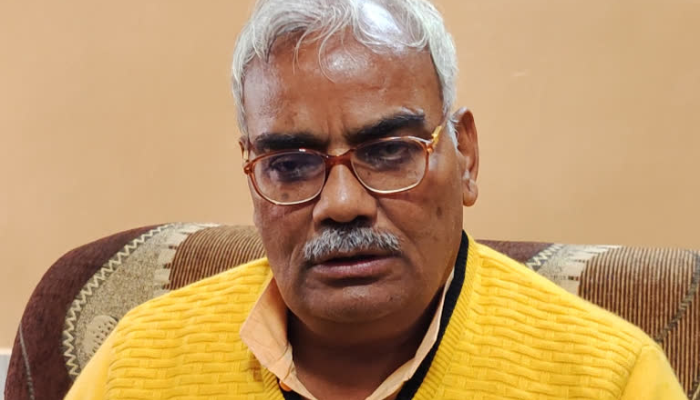
Madan Dilawar has adopted a tough stance regarding the concerns of teachers leaving the school and using cell phones while on duty. He is serving as School Education and Panchayati Raj Department Minister in the government of Rajasthan. According to him, teachers would no longer be permitted to use cell phones and suffer consequences if they left the institution’s premises to worship or for Namaz during working hours without notifying their higher authorities. The teachers could face suspension and even dismissal if they did not adhere to the fresh regulations.

On 6th May, Dilawar stated that schools were trying to abide by the previous directives, guidelines and rules in this respect and declared, “Everyone is trying to improve the environment in the school so that no teacher leaves the school during school hours in the name of worship or to offer Namaz. If he or she has to go, he or she should take a leave. It will be recorded in the register that the teacher has taken a leave. Otherwise, if any teacher leaves the school without notice, action will be taken against him or her. The teacher can either be suspended or dismissed.”

While decrying mobile as a “disease” he also pointed out that a large number of educators at the school are constantly using their phones to access social media or the share market. “No one will take the mobile phone inside the school. Even if they carry it by mistake then they will have to deposit it with the school principal. Only the school principal is allowed to carry a cell phone in the school.”

He added, “Mobile phones have become a disease. School teachers, be it male or female, they keep watching the stock market. Don’t know what things they keep seeing.” Furthermore, he promised that government school playground encroachments would be eliminated. He assured, “Work has been started on this and efforts are also being made to bring quality in education by resolving all issues.”

(With inputs from ANI)

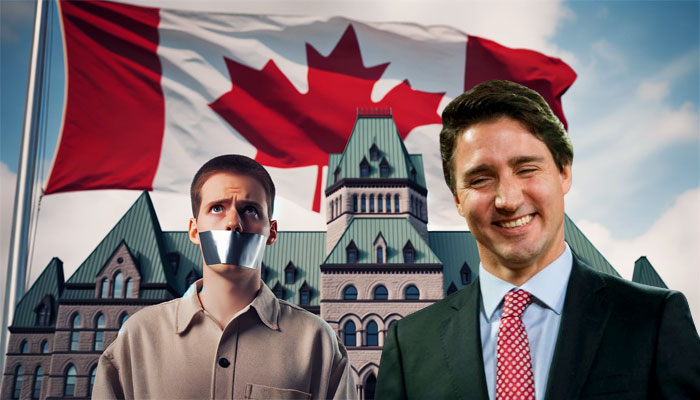
Canada’s Bill C-63 – Weaponising undefined ‘hate speech’: Trudeau govt to penalise individuals for ‘hate speech’ even if made years ago. Why India needs to be careful

In February 2024, the Canadian government introduced Bill C-63, known as the Online Harms Bill. As per the Government’s official stand, the bill was introduced to protect individuals, especially children, from online hate speech and other harmful content. However, several sections of the bill have come under critics’ scrutiny because of its overreach and potential harm to freedom of speech. Critics argue that it would impose an unprecedented control on the freedom of expression.

First, let’s discuss the section on “hate speech” in the bill. As per the proposed bill that is undergoing readings in the Canadian Parliament, Justin Trudeau-led government is all set to penalise individuals for ‘hate speech’ even if it was made years ago. The bill, as outlined in the inserted text, would amend Canadian law to address the issue of hate crimes strictly. The main focus remains on increasing the severity of penalties for crimes that allegedly are motivated by hatred towards certain protected groups.

Enhanced Penalties for Hate-Motivated Offences in Bill C-63

Bill C-63 specifically noted that whenever anyone commits an offence under any Act of Parliament which is motivated by hatred based on race, national or ethnic origin, language, colour, religion, sex, age, mental or physical disability, sexual orientation, or gender identity or expression, would be considered an indictable offence. The penalty for such an offence can be as severe as life imprisonment. That means if you say anything against those who believe “men can menstruate”, it might be seen as a hate crime and you will get in trouble in Canada.

Definition of Hatred

As per Bill C-63, the definition of hatred is based on the existing legal definition of hatred as per sections 319 and 318 of the Criminal Code of Canada.

Exclusion Clause

There is one exclusion clause in the bill that says that not every act that might humiliate, discredit, hurt, or offend someone may come under the definition of hatred. Though it appears that the bill attempted to distinguish between genuinely hateful actions and those that might have unintentionally caused emotional distress, in totality it would be hard for the “accused” to explain their stand.

Reactions from experts and legislatures on Bill C-63

Historian Dr Muriel Blaive labelled the bill as “extremely problematic”. He highlighted the retroactive nature of the bill that could allow for the prosecution of the individuals based on the statements that were made in the past and at that time they were not deemed as “illegal”. He described the bill as a betrayal of Western legal traditions that say that a person can only be punished under laws that were active at the time of the offence.

Furthermore, Bill C-63 has proposed to establish several new bureaucratic entities including the Digital Safety Commission and the Digital Safety Ombudsperson. These entities would have the power to investigate complaints and impose heavy penalties on individuals as well as operators. Notably, in the case of a person, the penalty has been proposed to a maximum of 6% of the global revenue or CAD 10 million and in the case of an operator it can go as high as 8% of the global revenue or CAD 25 million, whichever is higher. It has raised concerns that there would be over-regulation and it can potentially put a strain on the legal system of the country which is facing an immense burden already.

Life imprisonment

One of the most drastic elements of the bill is the creation of a new hate crime offence, which could result in life imprisonment if an act is motivated by hate. Notably, the bill reinstates Section 13 of the Canadian Human Rights Act that allows the Human Rights Commission of Canada to oversee cases of hate speech. This section, as per the critics, may lead to subjective interpretations of what can be deemed as hate speech leading to potential fines of up to CAD 50,000 without any possible procedural safeguards that are generally found in criminal law.

MP Rachael Thoman of Lethbridge has opposed the bill. In a post on X, Thomas stated that while the protection of children is a commendable goal, the bill does very little to achieve it. Instead, it would impose severe restrictions on free speech. Thomas warned that this bill would have a chilling effect on public discourse and may lead to potential misuse in the form of revenge accusations.

Why India needs to be careful

India finds itself at a critical juncture where the principles of justice and the preservation of civil liberties are being put to a severe test, especially when it comes to handling hate speech and the responses it provokes. If we talk about recent cases, a concerning precedent was set in the case of former Bharatiya Janata Party (BJP) spokesperson Nupur Sharma, where the Supreme Court of India, through its oral observations, suggested that she was ‘responsible’ for the subsequent violent events in the country including the riots and murders, giving a clean chit to the actual culprits who were doing the rioting and murdering.

Though the observations did not find their way in the final order, the implications and the repercussions of the statement are felt even today and it will continue to affect the narrative for decades to come which is deeply troubling. This approach can be seen as aligning with the concept of the “tyranny of the intolerant,” where the definition of hate speech is determined on the level of outrage it incites rather than the inherent nature of the speech itself.

The stance taken by the judiciary not only undermines the objective legal standards but also backs those who would resort to violence under the guise of being offended. The real danger here is the potential normalisation of violence as a legitimate response to speech, with the judiciary inadvertently legitimating the most violent reactions as benchmarks for legal scrutiny.

Nupur Sharma faced a severe backlash for a statement she made about Islam and Prophet Mohammed in reply to provocative statements during a debate on Times Now made by penalist Taslim Ahmed Rehmani. Alt News’ co-founder Mohammed Zubair intentionally edited the clip cut out Rehmani’s provocative statement and published only the part where Sharma was replying to him as “hate speech” against the Prophet.

The campaign initiated against Sharma was so well-orchestrated that it created national and international ripple effects resulting in the suspension of Sharma from the party. Furthermore, Kanhaiya Lal in Rajasthan and Umesh Kolhe in Maharashtra were murdered for supporting Sharma on social media. When Sharma went to the Supreme Court seeking clubbing of FIRs against her, the court made the infamous observations and blamed her for the riots and murders instead of blaming Islamists who were the actual cause.

The judicial attitude has the risk of creating an environment where the free speech of the section of the society that does not react violently is unduly curtailed. The fear of potential violent backlash could deter people from expressing legitimate opinions that could be controversial according to a specific group of people. Canada’s law against hate also reminds us of the anti-communal violence bill that Congress attempted to bring potentially putting Hindus in the line of fire. Experts and legislatures who opposed the bill argued that according to the bill, no matter who started the violence, in the end, Hindus would have been prosecuted.

India needs to be vigilant against judicial and parliamentarian overreach. Political parties like Congress do not have the edge to come back in power following the ongoing Lok Sabha Elections 2024 but that does not mean they would not attempt to bring such laws in the state where they hold the power. Such overreach threatens to erode civil liberties and gives power to anti-democratic elements within the society. As a nation, the legal framework of the country must evolve to protect free expression within the purview of curbing hate speech without capitulating to the pressures of those who are intolerant. Simultaneously, the citizens of the country must ensure freedom of speech and expression is never absolute and they should practice constraint wherever required.


UP: Akhilesh Yadav and Muslim leaders desecrate temple where non-Hindus are not allowed, wear shoes in premises, Hindus purify the temple

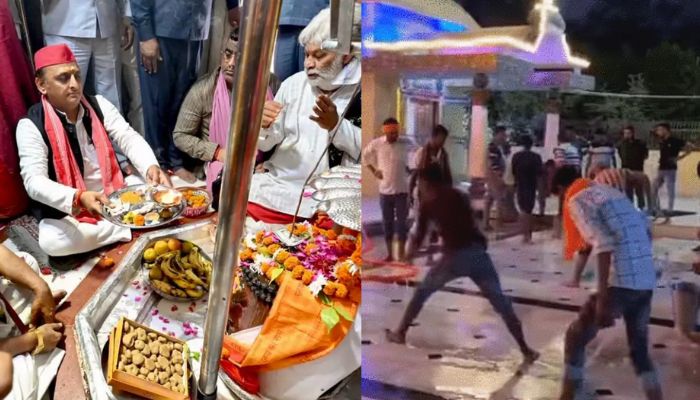
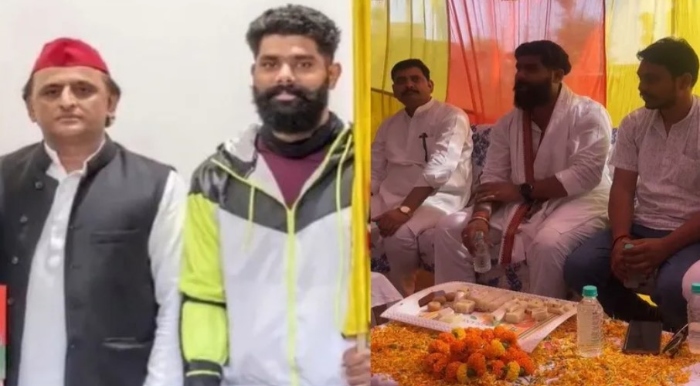
On Monday (6th May), Akhilesh Yadav, the Samajwadi Party (SP) supremo and Kannauj Lok Sabha constituency candidate visited the Siddhapeeth Baba Gauri Shanker Mahadev Mandir in Kannauj, Uttar Pradesh to pray before beginning his campaign. However, several youths then cleaned the temple with Gangajal, alleging that Akhilesh Yadav brought Muslim leaders with him who desecrated the temple by wearing shoes within its premises. The youths also said that a sign board outside the temple clearly says entry for non-Hindus is prohibited.

A video of the several youths cleaning the temple after Yadav’s visit went viral online. The Bharatiya Janata Party (BJP) alleged that Akhilesh Yadav was accompanied by Muslim leaders who entered the temple wearing shoes. Due to this, Hindus undertook the purification of the Gauri Shankar Temple with Gangajal.

Shivendra Kumar Gwal, the BJP city president, claimed that some Muslims and workers accompanying the Samajwadi Party supremo entered the temple wearing shoes and allegedly spat. Gwal welcomed Akhilesh Yadav’s visit, but referred to him as a “electoral Hindu.” Non-Sanatanis are forbidden from entering the temple, as stated on a board outside.

Speaking to the media the youths who cleaned the temple said, “We have cleaned the temple as Akhilesh Yadav came here today. Firstly, he has no sense of how pooja-paath [worship] is performed. Even though it is clearly written on a board outside the temple that non-Sanatanis are not allowed inside the temple, he [Akhilesh] came here with Muslims. And the Gaur Shankar Mandir has been cleaned, Akhilesh Yadav too will be cleaned from Kannauj [in the elections].”

The angry youths questioned the SP leader if he would visit any mosque or dargah while wearing shoes and also asked if he finds only Hindu temples to insult.

While the BJP claimed that the temple was cleaned as non-Hindus accompanying Akhilesh Yadav entered the temple wearing shoes and allegedly spat there, several Samajwadi Party leaders tried to stir a caste discrimination controversy.

Samajwadi Party leader IP Singh claimed that the BJP believes that backward, Dalit, and oppressed people have no right to worship in Hindu temples. “Honorable National President Shri Akhilesh Yadav Ji belongs to the backward class, hence BJP got the temple premises washed with Gangajal, before that it had got the CM residence washed. BJP believes that backward, Dalit, deprived and exploited people have no right to worship in Hindu temples. This time these PDA, backward, Dalit, deprived and exploited people together will show BJP the way out of power.”

However, he failed to address concerns of the violation of the sanctity of the temple with a retinue of leaders accompanying Akhilesh Yadav wearing shoes inside the temple premises.

Moradabad: Samajwadi Party leader Asif Ali rapes and extorts crores from the daughter of his party’s ex-leader, threatens her with acid attack

In Uttar Pradesh’s Moradabad district, the daughter of a former Samajwadi Party MLA has accused an incumbent MLA of the party of rape and blackmail. According to a report by Dainik Bhaskar, the accused SP leader Asif Ali, who formerly held the position of the state secretary of Samajwadi Yuvjan Sabha, raped and tortured the victim for 5 years. He used her private pictures to blackmail her and extorted Rs 6 crore from the woman and now he was threatening the woman with an acid attack.

Currently, the police have lodged an FIR against 4 people including the accused and his brother and started investigating the matter.

According to the Bhaskar report, the incident came to the fore after the victim, on Tuesday (May 7) night, narrated her ordeal to her husband, who, in turn, approached the Civil Lines police station to file a complaint against the accused.

The victim resides in Moradabad’s Civil Lines neighbourhood. Her grandfather held a prominent position in the Parliament during the Nehru-led UPA government’s rule while her father served as an MLA twice from an assembly seat in a neighbouring district.

The victim has two sisters and no brothers. She was married to a businessman from Kanpur 11 years ago. Many high-profile politicians including Samajwadi Party founder-patron Mulayam Singh had attended her wedding. The victim’s father died a year ago. Due to not having a son, only the daughters have the right to ownership of his property and whatever transpired with the victim was primarily due to her share in the inheritance.

Image source: Dainik Bhaskar

The victim, in her complaint, stated that the ordeal began in the year 2019 when she visited her maternal home to take care of her ailing father.

“I was married in Kanpur. My father had no son, so whenever he fell ill, I used to come to him to take care of him. Asif Ali alias Shibli Chaudhary, who lives near Tikonia Park in Jigar Colony, used to visit my father. I also met him whenever I was home to take care of my father. I came to my maternal home in 2019 when my father fell ill. On April 4, 2019, Asif gave me an intoxicant by mixing it in a cold drink. Due to this, I became unconscious. He raped me in an unconscious state and also clicked my nude photos, which he started using to blackmail me,” the victim stated.

She added that when she regained consciousness, she realised that something wrong had transpired with her. Upon enquiring, Asif Ali showed her, her nude pictures and threatened to leak them on social media if she did not continue to do what he asked her to and instead approached the police or spoke to her family members about it. Scared of the disrepute it would bring to her family, the victim kept acceding to his demands.

You won’t be able to face your family if you tell anyone about this. I will make your nude photos viral. He said, pointing a gun at me and threatening to kill me,” the victim recalled.

The woman lamented how the Samajwadi party leader kept taking advantage of her helplessness and raping her by threatening to make the photos viral. He used to take her to his house and rape her in his bedroom while the accused wife you to sit outside guarding the room, she said, adding that the torture continued for 5 years.

Image source: Dainik Bhaskar

The victim further revealed how Asif Ali coerced and threatened her into signing many legal documents. “He also got me to sign many papers by threatening me. Not only this, he also took me to the court in an intoxicated state, where, with the help of his lawyer brother, he got me to sign many papers,” she added.

The victim went on to say that after physically abusing her, Asif also took advantage of her financially. His eyes were set on her father’s property worth crores. By threatening to make the photo viral, he managed to extract 3 crores from her. She paid the whole amount for the flat in Supertech that he also purchased.

In 2023, the victim lost her father. After his death, Asif Ali forcefully transferred a petrol pump, which she inherited from her father, to his name. “My father passed away at the end of 2023. Post my father’s death, I begged Asif to spare me and delete my pictures, but he refused to listen. He demanded an additional 3 crores from me in exchange for deleting the photos, but he never did. He began putting pressure on me to register the petrol pump I inherited from my father in his name,” the woman wrote in her complaint.

Samajwadi Party leader threatens victim with an acid attack

The victim further narrated to Dainik Bhaskar how recently when she refused to meet him and bent down to his demands, he started threatening her with an acid attack.

Image source: Dainik Bhaskar

“I went to ICICI Bank on May 6 at 1:00 pm with my sister and driver. Asif and his son Fahat came there. As soon as I left the bank, Asif threatened to throw acid on my face. During that time his son Fahat had a revolver pointed at my driver. When I screamed, a crowd gathered. Seeing the crowd, Asif threatened to throw acid and ran away from there. I came back home and narrated the whole thing to my husband. On his advice, I filed an FIR,” she added.

What did the police say

Speaking on the matter, Moradabad SSP Hemraj Meena said that an FIR had been registered based on the complaint filed by the woman. She accused the Samajwadi Party leader of mentally harassing her since 2019. The complaint read that the accused Asif Ali extorted three crores from the victim. The matter is being investigated.

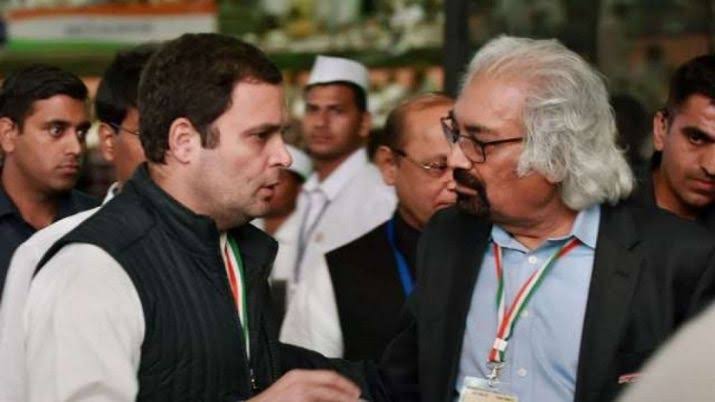
Sam Pitroda says people of East India look like Chinese, South Indians look like Africans, goes on a racist rant in an attempt to divide India

Congress leader and close associate of Rahul Gandhi, Satyanarayan Gangaram Pitroda popularly known as Sam Pirtoda has attacked the Bharatiya Janata Paty and Prime Minister Narendra Modi for “endangering ” the “secular and diverse idea of India” by his frequent temple visits, the celebration of monumental Ram Mandir and observance of Hindu festivals like Ram Navami in a 2nd May interview with The Stateman.

He claimed that Indians native to the Eastern side of the country resemble Chinese people, those living in the West appear middle eastern while North Indians look like ‘white people’ and the ones in the South are similar in appearance to the people of ‘Africa’.

Sam Pitroda alleged, “This will ultimately affect our economy, employment, future, safety and security. That’s one view and that centres around the Ram temple, God, history, heritage, Bhagwan (Lord) Hanuman, Bajrang Dal and all kinds of issues. Fine, I respect their view. There is another group which says look our founding fathers fought against the British Raj, not for Hindu Rashtra but for a secular nation. Pakistan decided to create a nation based on religion and see what happened to them. We are a shining example of democracy in the world. We have survived 70-75 years in a very happy environment where people could live together leaving aside a few fights here and there.”

He further stated, “We could hold a country together as diverse as India where people on the East look like Chinese, people on the West look like Arab, people on the North look like maybe White and people in the South look like Africa. Doesn’t matter. We are all brothers and sisters. We all respect different languages. We all respect different religions, different looks, different customs. different food and as a Gujarati, I love dosa, I love idli. That’s my food. That’s no longer South Indian food. Okay, that’s the India I believe in where everybody has a place and everybody compromises a little bit.”

Watch the entire video below and Sam Pitroda’s comment on racial diversity in India begins at 2:40 mark.

He claimed, “You know if I go to Tamil Nadu and can’t speak the local language, that’s okay, I am still at home. Okay, people love me. I can go to any shop and buy anything and stay in any hotel because that’s my India. Okay, so that idea of India which is rooted in democracy, freedom, liberty, and fraternity is being challenged by Ram temple and Ram Navami and the Prime Minister going to temples all the time. You know, he is talking not as a national leader but as the leader of the BJP.”

Pitroda’s earlier comment on inheritance tax

Pitroda was in the news last month for doubling down on ‘inheritance tax’. Amidst outrage over the Congress party’s ‘wealth redistribution’ poll promise, Chairman of Indian Overseas Congress and Rahul Gandhi’s advisor Sam Pitroda has suggested that a US-like inheritance tax should be brought in India. Pitroda while explaining the inheritance tax claimed that in the US, 55% of the wealth is grabbed by the government when a person dies and the rest goes to the family, suggesting that Congress can bring a similar policy under its wealth redistribution promise.

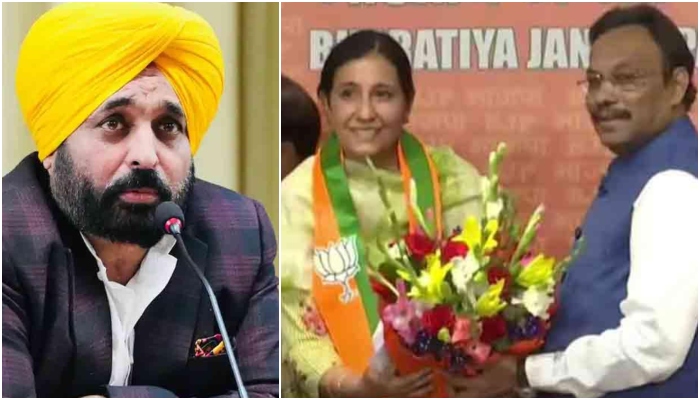
Punjab govt asks BJP’s Bathinda candidate Parampal Kaur to resume duty, refuses to grant VRS from her IAS service: Details

On Tuesday (7th May), the Punjab Government issued a notice to IAS officer Parampal Kaur, rejecting her resignation and instructing her to resume her duties as soon as possible. The failure of the notice compliance would result in disciplinary action against her, reports mentioned.

This comes days after the Centre accepted the resignation of IAS officer Parampal Kaur following Section 3 of All India Service rules. Kaur joined the Bhartiya Janata Party (BJP) in April after she gave her resignation to Chief Secretary Anurag Verma. Bhagwant Mann, the chief minister, however, rejected her resignation and chastised her for joining the BJP.

Kaur is the party’s candidate for the Bathinda Lok Sabha constituency. Mann said that her resignation had not been received and openly criticized the decision she made. Then, the Center stepped in and sent a letter claiming that her resignation had been accepted by the Government of India, which was the recruiting body.

The state government’s notice makes it clear that neither her request for VRS (Voluntary Retirement Scheme) nor the three-month notice period mandated by Rule 16(2) has been granted. The state government says that it has not, as required by law, waived the notice period, even though she has resigned from her position as the Managing Director of PSIDC. 

The notification also makes clear that Parampal Kaur had asked for the waiver of the three-month notice period, which is something that the state government may only do if certain requirements are completed and written justification is presented.

The Center meanwhile maintained on accepting Parampal Kaur’s resignation under Rule 3 because of her personal conditions, which included her mother’s health and family limitations, as well as her direct correspondence with the Secretary of the Department of Personnel and Training, GOI, which had been incorporated in the letter.

Noting that there was a dearth of IAS officials in the state and that Parampal was actively involved in political activities, which ran counter to the grounds for voluntary retirement stated in her application, the notification by the state stresses that no order had been issued regarding the acceptance of her resignation by the state. 

The government’s notification was sent out on the same day that nominations opened and Chief Minister Bhagwant Mann conducted a roadshow in Bathinda to support AAP candidate Gurmeet Singh Khuddian. Mann had threatened to discipline her earlier for breaking the resignation rules and regulations.

On April 3, Parampal Kaur, the daughter-in-law of former minister and Shiromani Akali Dal (SAD) leader Sikandar Singh Maluka, submitted her resignation from her position as Managing Director of Provincial State Industrial Development Corporation (PSIDC). As per the reports, the Centre had written to the Punjab Government, asking it to accept the VRS of the officer, on April 12. 

AstraZeneca says it is withdrawing its COVID-19 vaccines globally: This is the reason behind it and no, it is not ‘rare side effects’

On Tuesday (7th May), AstraZeneca announced that it has begun the global withdrawal of its COVID-19 vaccine due to a “surplus of available updated vaccines” since the epidemic. The Anglo-Swedish drugmaker also said that it would revoke the vaccine Vaxzevria’s marketing authorisations in Europe.

“As multiple, variant COVID-19 vaccines have since been developed there is a surplus of available updated vaccines,” AstraZeneca said. The drugmaker stated that the vaccine was no longer in production and could no longer be used. The vaccine will be withdrawn similarly in all other countries that have been using it.

The application to withdraw the vaccine was submitted on 5th March of this year and came into effect on Tuesday.

Notably, AstraZeneca is facing a lawsuit over claims that its COVID-19 vaccine, developed in collaboration with the University of Oxford, caused death and serious injury, including TTS (Thrombosis with Thrombocytopenia Syndrome), which causes blood clots and low blood platelet counts. The manufacturer, however, has stated that the decision to withdraw Covishield is not connected to the lawsuit.

In a statement, AstraZeneca said: “…over 6.5 million lives were saved in the first year of use alone and over three billion doses were supplied globally. Our efforts have been recognised by governments around the world and are widely regarded as being a critical component of ending the global pandemic. As multiple, variant Covid-19 vaccines have since been developed, there is a surplus of available updated vaccines. This has led to a decline in demand for Vaxzevria, which is no longer being manufactured or supplied. AstraZeneca has therefore taken the decision to initiate withdrawal of the marketing authorisations for Vaxzevria within Europe.”

“We will now work with regulators and our partners to align on a clear path forward to conclude this chapter and significant contribution to the Covid-19 pandemic,” it added.

The UK-based pharmaceutical company collaborated with the Serum Institute of India (SII), the world’s largest vaccine maker, to supply the Covishield vaccine to the Indian government.

In a recent statement in a UK court AstraZeneca admitted that the AZ vaccine can, in very rare cases, cause TTS. The causal mechanism is not known. “Our sympathy goes out to anyone who has lost loved ones or reported health problems. Patient safety is our highest priority, and regulatory authorities have clear and stringent standards to ensure the safe use of all medicines, including vaccines,” AstraZeneca said in a statement.

It is notable that the chances of rare side effects of possible TTS or blood clotting are just 3-4 cases in a million-strong population, and the effects are seen within a few weeks of vaccination, that too after the first dose itself.

Will drive Ram out of those who say Jai Shri Ram: Samajwadi Party chief’s close aide openly threatens Hindus, gives bizarre excuse after Netizens demand police action

The Uttar Pradesh unit of the BJP released a video clip on X on Tuesday, May 7. In it, Samajwadi Party leader Gagan Yadav, who is reportedly very close to Akhilesh Yadav, the chief of the Samajwadi Party, is heard openly threatening Hindus.

He is distinctly heard declaring that he has instructed his supporters to remain calm until Mainpuri casts its ballot in the third phase of the 2024 Lok Sabha elections on May 7. In the now-viral video, the leader of the Samajwadi Party is heard saying that, following the completion of the voting of the Mainpuri constituency, he and his associates would ensure that the Ram Bhakts were held accountable for their deeds.

The video was shared by Uttar Pradesh BJP with a caption in Hindi which roughly translated to, “In keeping with SP tradition, Gagan Yadav, an aide to Akhilesh Yadav and leader of the SP, has insulted Ram bhakts once more. But such opponents of Shri Ram will not be forgiven by the public.

The video starts with a clip which shows pictures of Gagan Yadav accompanying Akhilesh Yadav during party campaigning. In the next clip, Gagan Yadav is seen speaking to some of his aides, in front of whom he openly declares, “The third phase of elections is scheduled for the seventh. When the Mainpuri votes are concluded, we will compel them to face the music. Despite our immense strength, we are powerless. Our boys are furious, but we’ve asked them to remain calm. These are the Jai Shri Ram people. We’re going to drive the Ram out of them,” the SP leader says while it appears that the people in the vicinity concur with Gagan Yadav’s assertion.

This video soon went viral on X and Gagan Yadav started trending on the microblogging platform. Several Netizens shared the video and demanded police action against the Samajwadi leader for openly issuing veiled threats against Hindus.

Shortly afterwards, Gagan Yadav made a pathetic attempt to defend his threat against Ram Bhakts in a video message posted on his Facebook profile. He stated, “Akhilesh Yadav’s wife, Dimple Yadav, was publicly abused by a few miscreants during the Mainpuri poll on May 7. Jai Shri Ram was being chanted by the miscreants. I was enraged by this, and everything that was said was meant as retribution.”

He went on to claim that whatever was spoken was meant as payback for Dimple Yadav’s verbal abuse and that it wasn’t appropriate to turn it into a political issue. He added that nothing was more important to him than his self-respect and his society.

100 Samajwadi Party workers face an FIR for damaging Maharana Pratap’s statue in Mainpuri

Notably, prior to this controversy, the Mainpuri police registered an FIR against 100 Samajwadi Party workers for allegedly damaging the statue of Maharana Pratap in Uttar Pradesh’s Mainpuri.

According to the police, the incident occurred after Samajwadi Party chief Akhilesh held a roadshow in support of his wife and Lok Sabha candidate Dimple Yadav on Saturday night.

“After the roadshow, some party workers came here and tried to raise their party’s flag at the statue of Maharana Pratap. We are looking at the CCTV footage,” Mainpuri Superintendent of Police Vinod Kumar said.

It is noteworthy that Dimple Yadav of the Samajwadi Party won the Mainpuri parliamentary by-election in December 2022, defeating Raghuraj Singh Shakya of the BJP by a margin of 2,88,461 votes.

Considered the SP’s bastion, the seat was held by party patriarch Mulayam Singh Yadav and it was vacated after his death on October 10. The date of voting for the Mainpuri Lok Sabha Constituency Election was May 7 (Phase 3).

Samajwadi Party supporter raises ‘Pakistan Zindabad’ slogan during campaigning in Azamgarh, small children heard repeating after him, party calls it fake

On Tuesday, May 7, a video went viral on social media which showed a man raising ‘Pakistan Zindabad’ slogans and small children repeating the pro-Pakistani slogan after him. The video is being shared with claims that the video is from the campaigning of the Samajwadi Party in the Mubarakpur assembly constituency of Azamgarh in Uttar Pradesh.

According to reports, this video is from the Dhakwa village of Mubarakpur in Azamgarh. Notably, the Mubarakpur assembly constituency is a Muslim-dominated area.

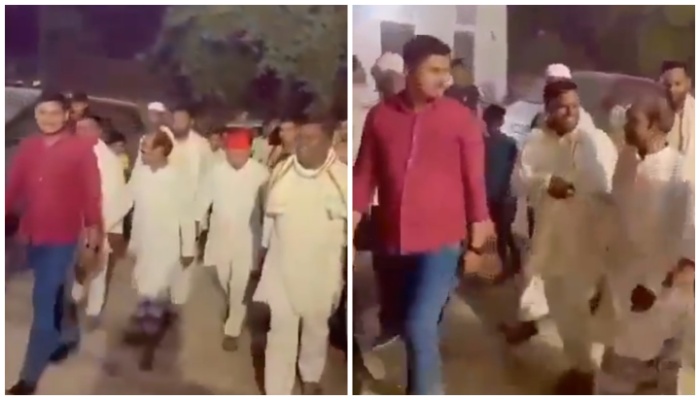
On Monday evening, SP MLA Akhilesh Yadav was campaigning for party candidate Dharmendra Yadav for the Lok Sabha election in the constituency. In the video that has been going viral, several locals and SP leaders are seen following Yadav. There are several children who are also seen amongst the crowd.

Samajwadi Party supporter claims he raised ‘cycle zindabad’ slogans

When the crowd reached the Mubarakpur assembly constituency, one person, amongst the Samajwadi supporters, identified as former District Panchayat member Virendra Yadav, raised the pro-Pakistan slogans. Several children are heard repeating the pro-Pakistani slogan.

Speaking about the video, the former District Panchayat claimed that Block Development Council (BDC) member Bansu Yadav edited the video. He said that the SP supporters were raising ‘Cycle Zindabad’, and ‘Akhilesh Yadav Zindabad’ slogans, which were edited and shared on social media. A complaint has been lodged in the police station in this matter, he added.

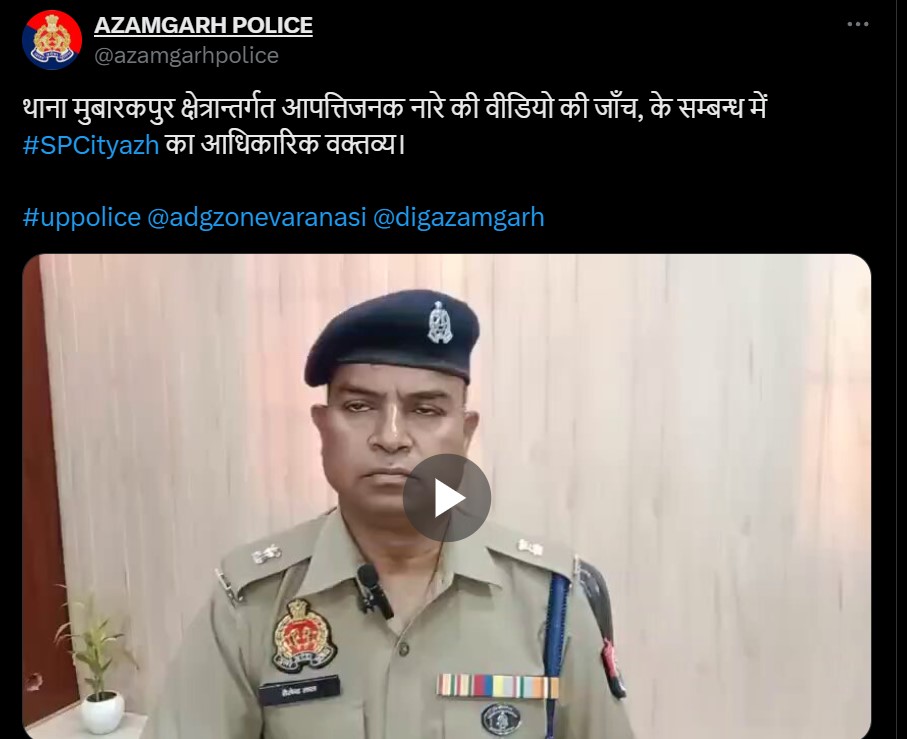
Azamgarh police says viral video being investigated

Meanwhile, Azamgarh’s ASP (city) Shailendra Lal said on Tuesday that the video has come to his notice through social media, in which an objectionable slogan is being raised. Orders have been given to investigate the viral video. The investigation into the matter has been handed over to Mubarakpur police and Cyber ​​Cell. A team has been sent to detain the person who is raising slogans. Along with interrogating the person, it will also be investigated where the video is from and whether the video is fake. If the video is of someone else and if someone else’s voice has been mixed, action will be taken after investigation.

The electoral exercise in the Azamgarh Parliamentary Constituency represented by Akhilesh Yadav, is scheduled to take place on 25 May, Phase 6 of the 2024 Lok Sabha elections. The BJP has fielded Shri Dinesh Lal Yadav ‘nirahua’ from the constituency while the Samajwadi Party has fielded Dharmendra Yadav.

In the Lok Sabha elections of 2019, Akhilesh Yadav, representing the SP, emerged victorious as the winning candidate from the Azamgarh Lok Sabha constituency. Akhilesh Yadav secured a total of 621578, while her closest competitor, Dinesh Lal Yadav Nirahua of the BJP, garnered 361704 votes. Dinesh Lal Yadav Nirahua faced defeat with a margin of 259874 votes.

Top Lashkar-e-Taiba commander Basit Dar among two terrorists neutralised in an encounter in Kashmir’s Kulgam, had a bounty of Rs 10 lakh on his head

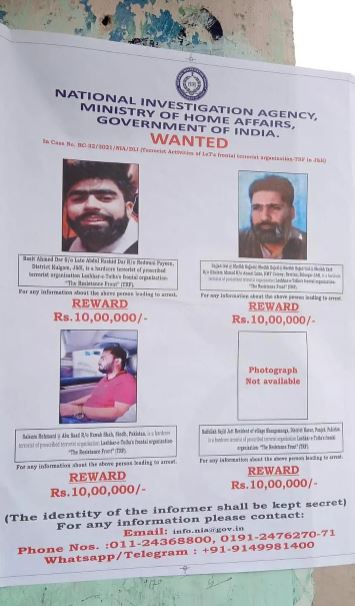
In a major crackdown on terrorism, Kashmir Police killed the most wanted commander of The Resistance Front (TRF) Basit Ahmed Dar in an encounter in Redwani Payeen of south Kashmir’s Kulgam district. Dar is among the two terrorists killed in today’s encounter. He was classified as an ‘A’ category terrorist and the NIA had announced a Rs 10 Lakh reward for details leading to his arrest. 

Following the encounter, Inspector General of Police Kashmir Zone V K Birdhi said that the top TRF terrorist Basit Dar was among the two terrorists killed in the Kulgam encounter today. He added that Basit was A category terrorist and was carrying a bounty of Rs 10,00,000 on his head.

(Image Source – Greater Kashmir)

The top officer asserted that it was a big achievement for the security forces as Basit Ahmed Dar was behind many militant attacks, especially in Srinagar. According to the officer, Basit was also the mastermind behind the spate of killings of Police personnel and civilians dating back to 2021. He was on the ‘most wanted list’ of security agencies. 

The IGP added that Basit was involved in more than 18 cases of killing of police personnel and civilians. In October 2023, his name also cropped up when the TRF terror group claimed responsibility for opening fire on J&K Police inspector Masroor Ahmad Wani in Srinagar while he was playing cricket. 

Basit, a resident of Redwani’s Kulgam, had been missing from his home for three years and joined The Resistance Front (TRF), an off-shoot terror outfit of Lashkar-e-Taiba (LeT). 

According to PTI, officials stated that security forces had launched a cordon and search operation in Kulgam’s Redwani area late on Monday after they had received information about the presence of terrorists in the area. However, the search operation turned into an encounter that continued till Tuesday (7th May).

As per the security forces, Dar was an ‘A’ category terrorist. Notably, the Jammu and Kashmir Police put terrorists in categories such as A+, A, B, and C, etc. This categorisation is based on the terrorists’ nationality, training, exclusivity, duration of activation, number of terror attacks carried, weapons in their possession, and popularity.

Meanwhile, security forces have intensified the search operations in the Poonch and Rajouri districts to track down the terrorists responsible for the attack on an IAF convoy that took place on Saturday. The attack claimed the life of Corporal Vicky Pahade while three other air warriors were injured in the attack. 

The Resistance Front

The Resistance Front or TRF is a separatist terrorist organisation currently active in Jammu and Kashmir. According to Indian security agencies, TRF is an offshoot of the terror outfit, Lashkar-e-Taiba (LeT). It is primarily active in the Kashmir region with a main base in Srinagar.

The terror outfit was founded by Sheikh Sajjad Gul of Srinagar and Muhammad Abbas Sheikh of Kulgam, a former Hizbul Mujahideen commander. It was started after the abrogation of Article 370 in 2019. It is considered the deadliest and biggest terrorist outfit in the current era of Kashmir militancy. It carried out dozens of attacks across Jammu and Kashmir targeting Indian security forces, pro-Indian politicians, Hindu activists, non-Kashmiri migrant laborers, and Kashmiri pundits.