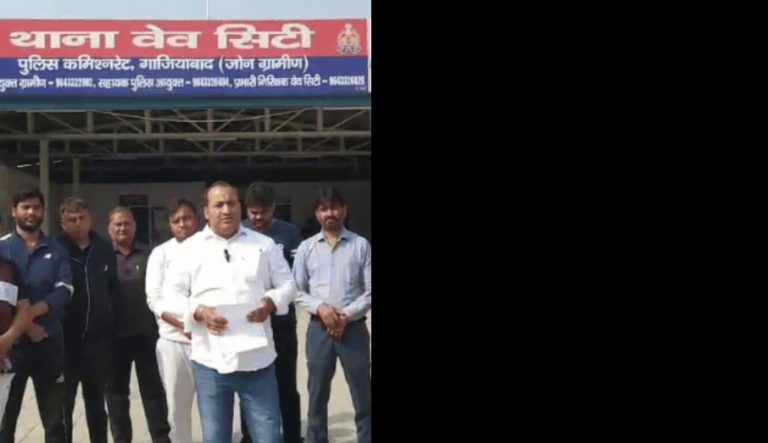
On Thursday (21st March) morning, a complaint was filed with the Ghaziabad police against Prophet Muhammad, the founder of Islam. The complainant Anil Yadav has alleged that heinous crimes are being committed in the world due to the Islamic book Quran. He has urged the Ghaziabad Police to register a case against Prophet Muhammad. Anil Yadav, who is associated with Shiv Shakti Dham of Dasna, said that he has demanded this out of concern. Yadav has filed his complaint at Web City police station in Ghaziabad.
Anil Yadav said, “For the last 1400 years, the reason for rape, loot, brutal murder of Hindu children and Hindu women is nothing but the Quran. The teachings given by Prophet Muhammad and the law written in the Quran are being repeated to date. The killing of minor Hindu boys in Badaun has rang the bell of Ghazwa-e-Hind, which is the dream of Hazrat Muhammad. This has hurt my sentiment. This FIR is necessary to save thousands of Hindus from Ghazwa-e-Hind.”
Mahamandaleshwar Yati Narsinghanand was going to Jama Masjid to talk about the Ghazwa-e-Hind issue raised by Anil Yadav in his complaint, according to reports he was detained on the way.
Complaint against Prophet Muhammad in Ghaziabad Police | पैगंबर मुहम्मद के खिलाफ गाजियाबाद पुलिस में शिकायत: डासना मंदिर से जुड़े अनिल यादव बोले- कुरान की वजह से हिन्दुओं पर हो रहे अत्याचार – Ghaziabad News —— अधिक जानकारी ? https://t.co/qR2vD15T0R
Notably, Shiv Shakti Dham of Dasna was in the news in 2021 because of Yati Narsinghanand. Now Anil Yadav (also known as Junior Narsinghanand) has given such a complaint at the same place. The outcome of Yadav’s complaint remains uncertain, with a possibility that it may not progress further. Should the matter proceed to court, it will likely be dismissed. The basis for this assertion lies in the case filed 39 years ago and its intricacies when the judiciary seemed hesitant to intervene in the complaint filed against the ‘holy book’ of Islam.
Calcutta Quran Petition
39 years ago in 1985, lawyers Chandmal Chopra and Sheetal Singh had approached the Calcutta High Court seeking a ban on the Quran. On 29th March 1985, they applied as per Article 226 of the Indian Constitution, appealing to the Calcutta High Court to direct the government to ‘seize’ every copy of the ‘holy book’.
The petition contended that every copy of the Quran based on Sections 153A and 295A of the Indian Penal Code (IPC) is liable to be forfeited under Section 95 of the Code of Criminal Procedure (CrPC). In this, Chandmal Chopra and Sheetal Singh raised their voice about ‘violence against infidels‘. They quoted a verse from the Quran that said, “When the holy months are over, kill idol-worshippers wherever they are found.”
The judge hearing the petition related to the Quran was also boycotted
The matter initially came up before Justice J Khastagir of the Calcutta High Court. After this, more than 70 advocates urged other lawyers to boycott the court of Justice J Khastagir. Senior advocate CF Ali had said, “This is absurd. No mortal on earth can challenge the sacred scripture and no court in the world has any authority over it.”
Islamist mobs on streets from Bengal to Bangladesh
Subsequently, terror-spreading protests from Islamists emerged, leading to anti-Hindu riots spreading from India to Bangladesh. A mob of thousands of Muslims came out on the road and created a ruckus in front of the Indian High Commission in Bangladesh. Twelve people were killed and 100 injured in the town located in the border area of Bangladesh, all of them Hindus. Similarly, a crowd of 20,000 Muslims came out in Dhaka. Other riots were seen in many places including Kashmir and Bihar.
‘Can’t change even a word in the Quran’, said the West Bengal government
The CPI(M)-ruled West Bengal government had taken a strong stand against the petition and its admission in the Calcutta High Court. In its affidavit, the government had said, “The court has no jurisdiction to pass judgment on the Quran, the holy scripture of Muslims around the world, whose every word, according to Islamic belief, is immutable.” The government had contended that the petition was filed with malafide intention and such a petition has never been filed in Indian history.
No hearing on the petition and arrest on publishing a book on this case
The matter was so heated by this petition that due to political pressure, Justice Khastagir removed it from his list and sent it to the court of Justice Satish Chandra. Thereafter, on the advice of State Advocate General SK Acharya, the case was transferred to a bench of Justice Bimal Chandra Basak, who dismissed the petition on 17th May 1985. On 18th June, Chandramal Chopra again filed a review petition, which was later dismissed on 21st June. After this, Chandral Chopra along with Sita Ram Goel published a book titled ‘The Calcutta Quran Petition’ in 1986, for which he was also arrested. Goel had to flee to evade arrest.
The Election Commission on Thursday published the complete electoral bond data submitted by the State Bank of India on the orders of the Supreme Court. The fresh data includes alpha-numeric numbers that can help match the purchasers of the bonds with the political parties that encashed them.
The data also includes bond numbers that would enable donors to be matched with the political parties they donated to.
“In compliance with the Supreme Court’s directions, SBI has provided data pertaining to electoral bonds to ECI today i.e. March 21, 2024. The ECI has uploaded it on its website as received from SBI on an ‘as is where is basis’,” the poll panel said in a statement on Thursday.
The two sets of data–552 pages of details of redemption by political parties and 386 pages of details of donors–cover electoral bonds purchased and redeemed from April 2019 until January 2024.
The fresh data was published by the poll panel on its website after the details were submitted by the State Bank of India earlier in the day, in compliance with a Supreme Court order.
The details of redemption by political parties include the serial number, date of encashment, name of the political party, last four digits of the account number, prefix, bond number, denomination, pay branch code and pay teller.
The State Bank of India was the only bank authorised to sell and redeem the bonds, which were first issued in March 2018 and were being sold until being declared null and void by the top court last month.
On Monday, the Supreme Court had directed SBI to disclose all electoral bond details, including the unique identification code, by March 21. It had then asked the Election Commission to upload the details upon receipt from the SBI.
The SBI chairman, in an affidavit to the Supreme Court, submitted that the “prefix and the bond number is in fact the alphanumeric number”.
This news report is published from a syndicated feed. Except for the headline, the content has not been written or edited by OpIndia staff)
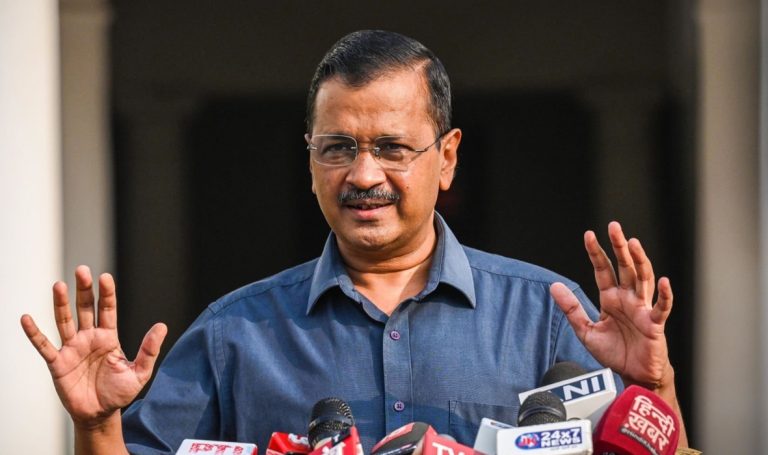
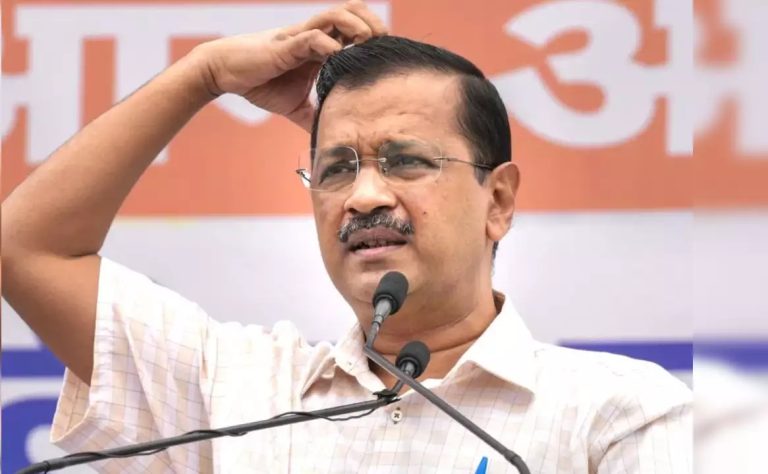
Hours after the Delhi High Court refused interim protection to Delhi Chief Minister Arvind Kejriwal from coercive action in connection with the excise policy case, an Enforcement Directorate team reached his residence for questioning.
The Delhi High Court on Thursday had refused interim protection from coercive action to Kejriwal and said at this stage the court is not inclined to grant interim relief.
The court was hearing a plea by Kejriwal seeking protection from coercive action against him in connection with the excise policy case.
The bench of Justice Suresh Kumar Kait and Justice Manoj Jain passed an interim order on his petition with the main matter listed for July 22, 2024.
During the hearing, Senior Advocate Abhishek Manu Singhvi, who appeared for Kejriwal, submitted that the summons issued under Section 50 do not even reveal whether the person summoned is a witness, suspect or accused.
He said his client has apprehension that he would be arrested “for political purposes”.
“What prevented you from arresting him, and why are you issuing summonses back-to-back?” the court asked ED during arguments.
Additional Solicitor General SV Raju replied that the agency never said that they are going to arrest. “The power is there. You come to join the investigation, we may or may not arrest you.”
Raju opposed the plea on maintainability grounds and submitted that the petition is seeking to quash and set aside all proceedings qua the petitioner in the capacity of his being national convener of a political party.
“But here, AAP has not been made an accused yet and the fact that he’s challenged means that his figment of imagination can’t lead to a grant of relief. A person or entity that has not been made an accused can’t seek to strike down a provision,” Raju said.
On Wednesday, during the hearing in the related matter before the Delhi High Court, Kejriwal’s lawyers stated that they have apprehension that the ED will arrest him and that he is ready to appear if he is given protection.
Kejriwal, through his plea, has sought, the declaration of Section (2) (s) OF PMLA to be ultravires, unconstitutional and arbitrary insofar it is construed to include a political party within its ambit and sweep.
Kejriwal’s plea stated that the present petition is being filed in extremely urgent and emergent circumstances where such arbitrary procedure under PMLA is sought to be employed “to create a non-level playing field for the impending general elections scheduled to be held from April 19, 2024, and to skew the electoral process in the favour of the ruling party at the Centre that controls the ED through the Ministry of Finance”.
ED on Sunday issued two fresh summons to Kejriwal in connection with two different cases – a liquor policy case and a case linked to the Delhi Jal Board.
This was the ninth summons to the Delhi Chief Minister in a money laundering probe related to irregularities in the Delhi Excise Policy 2021-22 case, asking him to join the investigation on March 21.
The fresh summons to the Delhi Chief Minister followed the eighth summons, which he had skipped on March 4.
Last week, the Additional Chief Metropolitan Magistrate of Rouse Avenue Court granted bail to Arvind Kejriwal on two complaints filed by ED for non-compliance with summons issued by the agency. During the hearing, Kejriwal appeared physically before the court.
According to the ED, the agency wants to record Kejriwal’s statement in the case on issues like the formulation of policy, meetings held before it was finalized, and allegations of bribery.
In its sixth charge sheet filed in the case on December 2, 2023, naming AAP leader Sanjay Singh and his aide Sarvesh Mishra, the ED claimed that the AAP used kickbacks worth Rs 45 crore generated via the policy as part of its assembly elections campaign in Goa in 2022.
The now-scrapped excise policy was aimed “at revitalizing the city’s flagging liquor business” and replacing a sales-volume-based regime with a licence fee for traders.
Lieutenant Governor Vinai Kumar Saxena had ordered a probe into alleged irregularities in the policy. AAP has accused Saxena’s predecessor, Anil Baijal, of sabotaging the move with a few last-minute changes that resulted in lower-than-expected revenues.
Two senior AAP leaders, Manish Sisodia and Sanjay Singh, are in judicial custody in the case. Sisodia, who was the then Delhi Deputy Chief Minister, was arrested by the CBI on February 26 following several rounds of questioning. On October 5, ED arrested Sanjay Singh, who is a Rajya Sabha member.
This news report is published from a syndicated feed. Except for the headline, the content has not been written or edited by OpIndia staff)
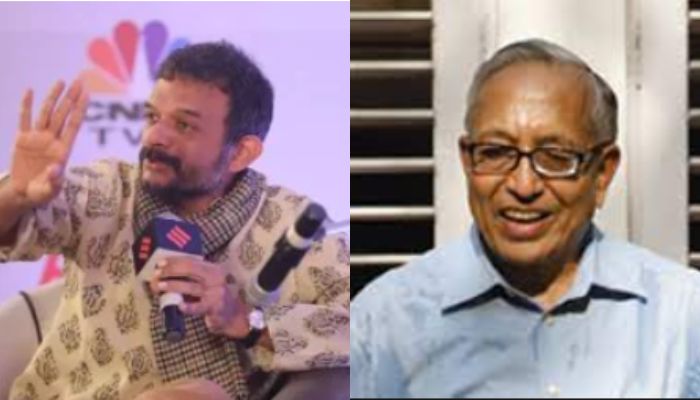
Great Indian percussionist and Ghatam player Padma Bhushan Vikku Vinayakram’s Divine appearance clubbed with his passionate and unmatchable performance towers over TM Krishna’s shallowness and Himalayan arrogance. I have always wondered why a Tripund-donning maestro like himself would share a stage with the likes of TM Krishna who insults the very Hindu values that award-winning Vikku Vinayakram wears on his sleeve and guides his art.
However, things appear to be changing. On Thursday, 21st March, renowned Indian classical musicians Ranjani and Gayatri withdrew from the Madras Music Academy Awards 2024 objecting to the Presidency of controversial Carnatic singer TM Krishna, who is known for his hateful aversion to Hinduism.
They said that participating in this year’s conference under TM Krishna’s presidency would constitute a “moral violation.” They accused Krishna of causing “immense damage” to the Carnatic music world.
They accused TM Krishna of insulting the most respected icons like Tyagaraja and MS Subbulakshmi. The musicians further alleged that Krishna’s actions have “tried to spread a sense of shame in being a carnatic musician” and has been exhibited through his “consistent denigration of spirituality in music.”
They also called out TM Krishna’s “glorification of a figure like EVR Periyar who 1. Openly proposed a genocide of ‘brahmins’ 2. Repeatedly called/abused every woman of this community with vile profanity 3. Relentlessly worked to normalize filthy language in social discourse,” they posted on X.
Along with Ranjani and Gayatri, Vedic scholar Dushyanth Sridhar, Carnatic musicians Trichur Brothers, Carnatic vocalist Vishakha Hari and composer Chitravina Ravikiran, who has also returned his Sangita Kalanidhi Award.
— Dr. Vikram Sampath, FRHistS (@vikramsampath) March 21, 2024
“My decision stems from my inability to relate to the kind of values that the Academy is glorifying today, by honouring an individual who has stridently tried to polarise and destabilise Indian Classical music and dance fields and the country as a whole along caste and communal lines through misinformation, malleable truths and unprovoked attacks against certain groups of people,” Ravikiran wrote in a long letter.
RETURNING SANGITA KALANIDHI AWARD from ACADEMY: I’ve taken this step after careful consideration as principles much larger than all of us are at stake. However I’ll always remain deeply grateful to the org for its role in my career from childhood ?#musicacademy#award#Musicpic.twitter.com/EfXVtkUTns
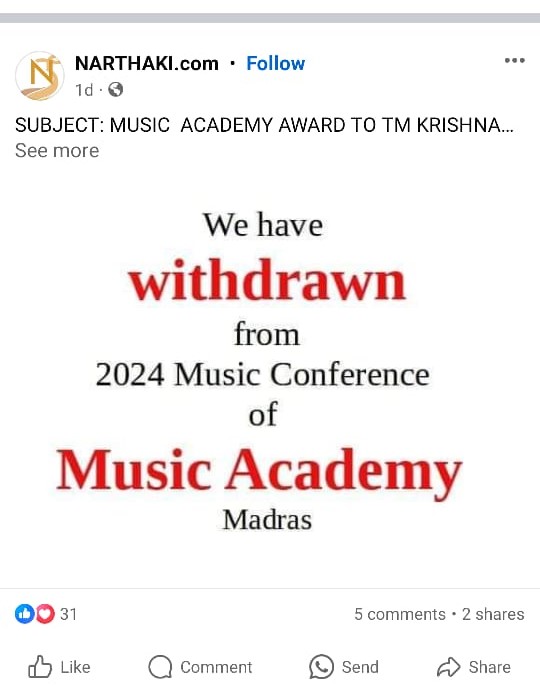
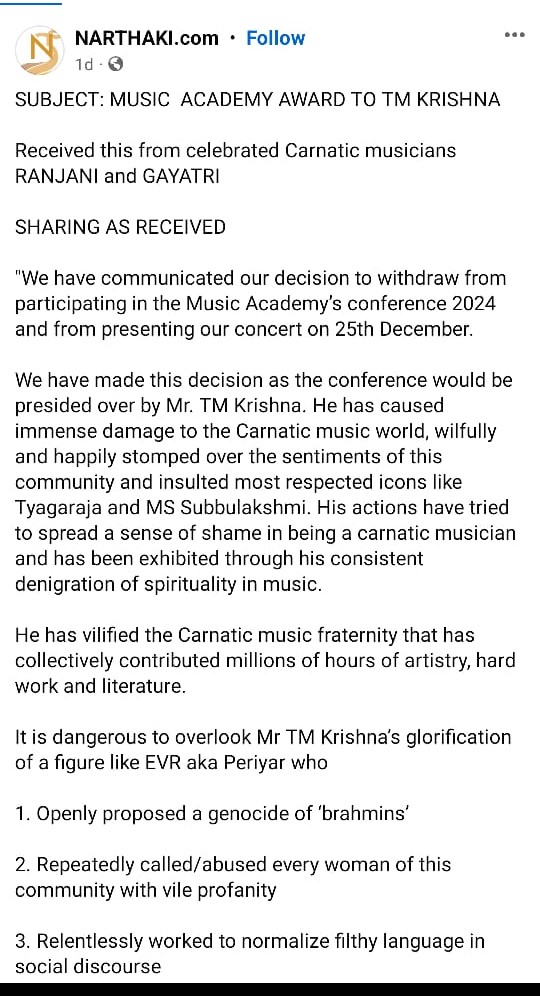
Narthaki, a global web portal for dancers run by Bharatanatyam dancer Anita Ratnam, shared on Instagram and Facebook a post that read, “We have withdrawn from the from 2024 Music Conference of Music Academy Madras” captioned with the text, “SUBJECT: MUSIC ACADEMY AWARD TO TM KRISHNA. Received this from celebrated Carnatic musicians RANJANI and GAYATRI. SHARING AS RECEIVED.” This caption was followed by the verbatim statement issued by Ranjani and Gayatri withdrawing from the Academy.
Screenshot of the same post by Narthaki on Facebook which was also shared on Instagram but later deleted from the latter
Screenshot of the caption to the post shared by Narthaki on Facebook which was also shared on Instagram but later deleted from the latter.
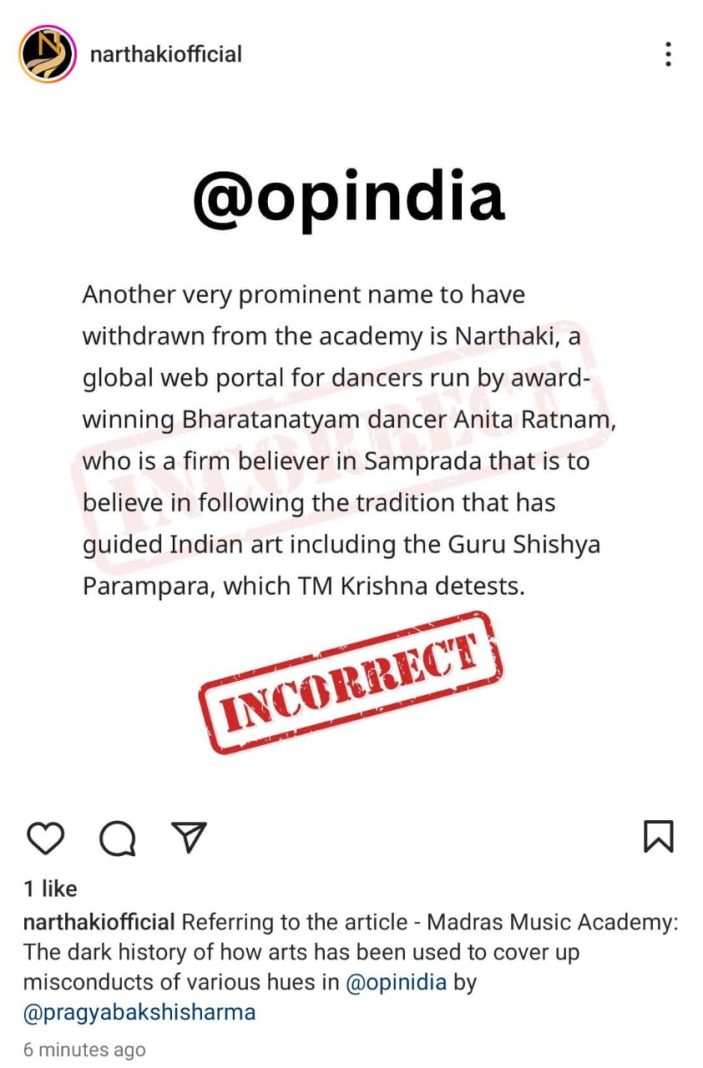
However, Narthaki later deleted their post from Instagram stating that Ranjani and Gayatri’s stand is “not their stand on the issue”. Having announced that they have withdrawn, Anita Ratnam’s dance platform later deleted the post but only from Instagram and not from Facebook.
Narthaki put out a clarification after deleting their original post sharing Ranjani and Gayatri’s statement
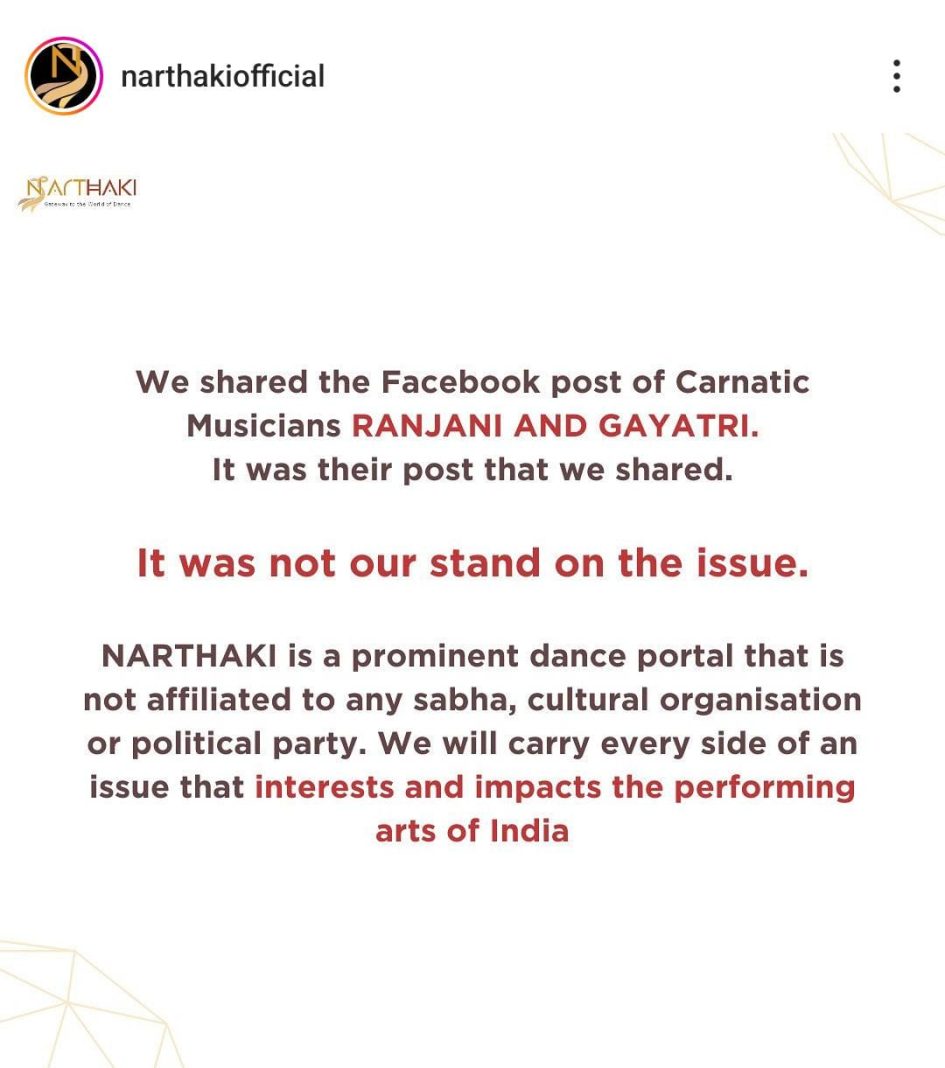
Narthaki put out a clarification after deleting their original post sharing Ranjani and Gayatri’s statement
They then put out a statement on Instagram saying, “We shared the Facebook post of Carnatic Musicians Ranjani and Gayatri. It was their post that we shared. It was not our stand on the issue. NARTHAKI is a prominent dance portal that is not affiliated to any sabha, cultural organisation or political party. We will carry every side of an issue that interests and impacts the performing arts of India.”
Post that was later deleted by Narthaki on Instagram
TM Krishna conferred with Sangita Kalanidhi title
On 17th March, the Madras Music Academy announced the Sangita Kalanidhi Award to TM Krishna drawing ire from Hindu voices within the Indian classical dance and music fraternity as well as from the connoisseurs of the arts.
This comes in the backdrop of TM Krishna’s comments against Hindu art forms, and repeated insults to the Hindu spirituality which is the basis of Indian art and culture. The so-called Carnatic vocalist has made several controversial remarks against the very art he practices.
TM Krishna has closely worked with Tamil writer Perumal Murugan, who has misrepresented Hindu temple festivals of yore in order to cast aspersions on the character of Indian men and women.
On Diwali last year, TM Krishna took to X to express his support for Palestinians saying that he found it difficult to celebrate the festival of lights at such a time.
“Difficult to celebrate the festival of lights when for people of Palestine lights indicate incoming death. Support for the Palestinians is support for all those who have been marginalised. In prayer for peace and a return of humanity,”
“Support for the Palestinians is support for all those who have been marginalised,” he wrote along with a photo of himself.
In an op-ed on 14th January 2024, TM Krishna trained guns at Infosys founder N Narayan Murthy and Sudha Murthy for endorsing longer work hours by likening their views to “Brahminism” followed by an unending rant.
In another casteist op-ed on 11th February 2024, he began by writing that the Indian classical dance form Bharatanatyam has been appropriated by Brahmins leading to its alteration and erosion.
TM Krishna, despite being a Carnatic vocalist himself, has said that Carnatic music and Bharatanatyam are not superior to other art forms. “Carnatic music is just like gaana, cinema music, or rock and roll,” he said in an interview in January.
In 2022, he performed in an event marking the Gujarat riots titled “Gujarat 2002-2002. Memories of Struggle.” He performed an “Urdu bhajan” at the event.
In an atrocious and misleading op-ed in September 2020, TM Krishna declared that Guru-Shishya parampara in Indian arts is abusive and should be abolished. He used the case of sexual abuse allegations against the Gundecha brothers to demonise the entire tenet of Guru-Shishya tradition which has given India great artists and performers.
Unfortunately for the connoisseurs, despite getting an opportunity himself, TM Krishna has believed that Carnatic music industry differentiates and is controlled by the “upper caste”. To that effect, on 24th November, 2017, he said that MS Subbulakshmi was celebrated only because of her upper caste.
He had said, “Earlier in her career, Subbulakshmi’s music had incredible freeness in spirit but later it was imbued with a certain sorrow that was mesmerising in itself. Her music was what it was because of the sorrow in her.”
Again in May 2022, TM Krishna gave an unsolicited statement about Rahul Gandhi’s meeting with a foreign woman at a nightclub in Nepal which had sparked widespread criticism. On this, TM Krishna said that Indians are “racists”.
“To me, it is irrelevant whether the lady at the pub was a Chinese diplomat. But what is obvious is that, to Indians, Chinese, Nepalis, Japanese, Koreans, Vietnamese, even people from Nagaland or Meghalaya are all the same. I will not use the commonly used slur! We are RACISTS,” he tweeted.
His address, while receiving the Magsaysay Award in 2016 became The Wire’s headline wherein he stripped the Indian from Indian classical music and openly insulted Hindus.
In 2018, irked by the outrage from Hindu connoisseurs of the arts for performing Christian hymns in Carnatic, TM Krishna vowed that he would sing one song on Allah and Jesus every month.
TM Krishna, a Leftist Periyarite
Ranjani and Gayatri’s letter mentioned that TM Krishna glorifies EVR Periyar, a Dravidian Hinduphobe.
“Its dangerous to overlook Mr TM Krishna’s glorification of a figure like EVR who 1. Openly proposed a genocide of ‘brahmins’ 2. Repeatedly called/abused every woman of this community with vile profanity 3. Relentlessly worked to normalize filthy language in social discourse,” they wrote on X.
TM Krishna’s narrative closely follows in the footsteps of Periyar’s destructive ideology. Right from Brahmin hate and related discourse, Periyar’s toxic ideology has been weaponised by the left to try and finish traditional Hindu values.
In March 2023, TM Krishna released a song in honour of Periyar to commemorate 100 years of his “anti-caste” movement. The post shared by TM Krishna was reshared by Tamil Nadu Chief Minister MK Stalin as well.
Periyar believed that marriage and pregnancy were upper-caste concepts to enslave men and women. He promoted ideas of promiscuity. As per reports, he too married his adopted daughter Maniammai, who was 38 years younger to him.
In 2018, Tamil singer Chimnayi Sripaada accused Periyarite poet Vairamuthu of sexual harassment during the #MeToo movement and was effectively banned by the Tamil music industry. Although notably, Sripaada herself keeps making anti-Hindu remarks.
Hindu voices have been gradually rising against TM Krishna
From seniors in the Indian arts fraternity to new talent, the spiritually inclined artists and performers have seen through TM Krishna’s facade in the name of creativity and reform.
Perturbed by the Ram Mandir Pran Pratishtha on 22nd January 2024, TM Krishna wrote a long venomous lecture titled “Heartless Devotion” in The Telegraph. “I am writing this piece on a day when many in my country are hailing the return of Rama to Ayodhya. In making such a claim, falsities are being dubbed as historical,” he wrote in the beginning.
On the same day, renowned Veena player Ramana Balachandran put out a statement gracefully calling out TM Krishna. “I don’t know enough to understand if I am Left, Right or Center, but your description of a Rama temple supporter definitely doesn’t represent my experience and hence this response,” he wrote.
“Hinduism is the only religion where obeisance paid to a deity is also viewed as obeisance to truth, an energy form, the ultimate indivisible consciousness or divinity, and not just to a godhead. In the context of Modi ji’s speech, Ram is righteousness, truth, valour, strength, consciousness, and all that. It’s naive of you to perceive this as being against minorities,” Balachandra wrote in a telling retort.
In 2018, the Airports Authority of India (AAI) postponed TM Krishna’s concert over rising anger towards his statement that he would perform songs on Allah and Jesus. Following the outrage, Aam Aadmi Party (AAP) came to TM Krishna’s rescue to organise his event.
The Sri Siva Vishnu Temple in US’s Maryland too had cancelled TM Krishna’s over this controversy.
In January 2020, the Chennai-based Kalakshetra Foundation withdrew permission to conduct TM Krishna’s book launch event saying, “Kalakshetra Foundation is an autonomous body under Ministry of Culture, Government of India. Being a Government organisation, it cannot allow any program that may instigate political, cultural and social disharmony.”
This came after an excerpt titled “Keeping the cow and brahmin apart” from his book was published in The Hindu. Two years later allegations of sexual harassment surfaced against a teacher in the Kalakshetra Foundation, which TM Krishna capitalised on.
Back then too, it was N Murali, President of the Madras Music Academy, who put his weight behind TM Krishna despite the latter’s threat to sing Abrahamic hymns. N Murali is the Director of The Hindu Group which runs the leftist newspaper The Hindu. All in all, the political Left has systematically had a hold over the Indian arts scene carefully placing its stooges to empty dance and music of all Hindu values.
The Hindu is TM Krishna’s medium for releasing his pseudo-intellectual frustrations. The publication allows him to rip apart the divinity from Indian classical music and dance. Albeit, real artists are speaking up now and Indian artists pursuing the divine truth will free their art from the suffocating grip of the Left.
Leftists like TM Krishna want a traditionless India
Indian classical artists and connoisseurs of the arts understand that Bharatiya art always meant to bring one close to Parmatma or Bhagwan, to put it briefly. The means to this end is to internalise Indian values, traditions for which insitutions like marriage, gurukuls, family et cetera have been built. Indian classical art forms upheld these very institutions, reminding us how they are the path to self-realisation.
Were this to materialise, Communism would meet the most painful death. So Leftists politicians and their mediocre stooges in arts planted themselves and presented words like reforms, freedom and equality separatly from the Indian culture, as if these values were lacking in our creative practices.
Unquestioned vulgar interpretations and representations of Ram and Sita, Radha and Krishna, Krishna and Gopis, Devis, Shakti, Shiva and Parvati, Shiva Lingam, and every Hindu deity and symbol has been done in the name of artistic freedom motivated by the Left.
No wonder that marriage as a sacred institution is peddled as a patriarchal and Brahminical concept by the coterie and promiscuity is promoted as freedom. Pregnancy and child birth that build families are demonised as anti-women by the ecosystem to make abortion and prostitution an accepted norm in the name of women’s rights.
Similarly, breaking long-held traditions in Indian classical dance and music is peddled as reform for equality by the likes of TM Krishna. Myriad of examples can be listed but any number of words would fall short to describe this fatal corruption.
A significant amount of culture has already been lost in these past decades given the course of India’s troubled history. But in refusing to let TM Krishna and N Murali pull the strings, Ranjani and Gayatri and all such devotional Hindu artists have perhaps preserved whatever little is left of the Indian classical arts.
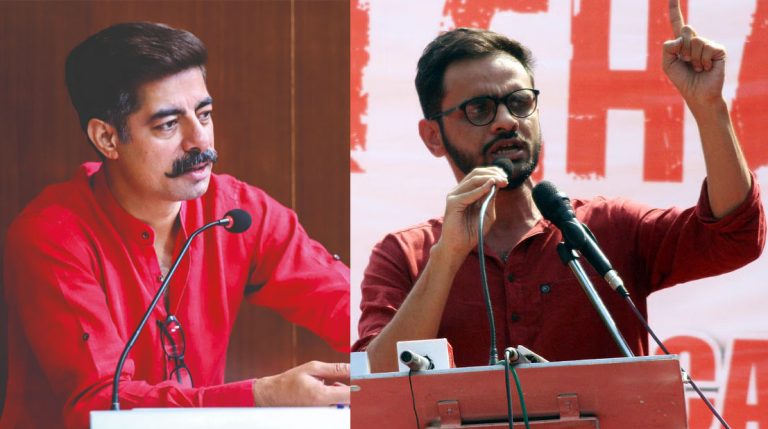
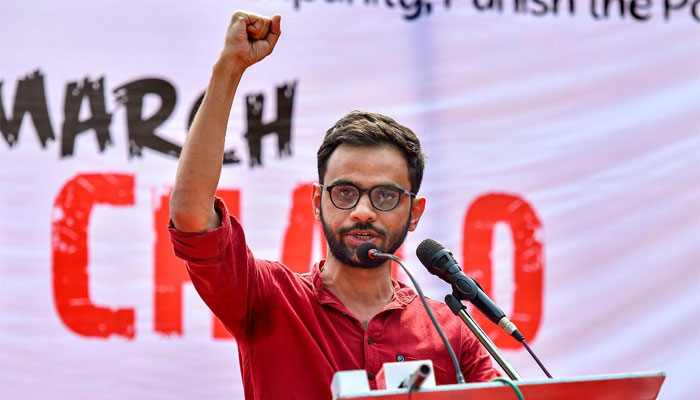
On March 21, Thursday, the Karkardooma Court in Delhi heard the bail application of the 2020 anti-Hindu Delhi riots accused Umar Khalid. Bail is sought by Umar Khalid in the UAPA case in the conspiracy case of Delhi anti-Hindu Riots (FIR 59/2020). Before the single judge bench of Sameer Bajpai adjourned the matter and listed the next hearing for April 3, Defense Counsel Trideep Pais mentioned the WhatsApp chat that Umar Khalid had with actor Sushant Singh a few months after the riots took place in the National Capital in February 2020.
Notably, the prosecutor has submitted these chats for the first time in court. The chats have been submitted in the written response filed by the Public Prosecutor, the contents of which have not been mentioned yet.
Senior counsel Trideep Pais argued before the bench that Umar had sent a report published by the leftist media portal TheQuint to actor and ‘activist’ Sushant Singh to ‘expose’ the Delhi police.
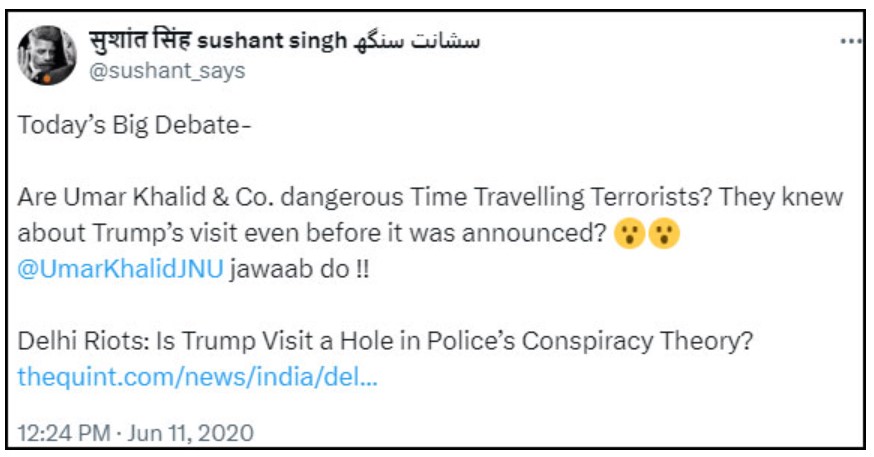
OpIndia found that the WhatsApp chat which was mentioned by Umar Khalid’s lawyer Trideep Pais indeed has merit because Sushant Singh did, on June 11, 2020, as instructed by Umar Khalid, shared the link from The Quint where the media portal claimed that police accused Khalid, Tahir Hussain, and others of hatching conspiracy on 8th January 2020 during a meeting. However, the first reference to the possible visit of Donald Trump to India was only made on 13th January 2020, five days after this meeting took place.
In conversation with Sushant, Khalid asked him to post the link to this report by The Quint, which the actor obliged.
Source: X
The closeness and synergy between actor and ‘activist’ Sushant Singh and terror accused Umar Khalid has been on display on multiple occasions. Over the years, Singh has written several posts supporting Khalid. Here are a few instances where Sushant Singh has shown his unwavering support for the UAPA accused Umar Khalid.
Personal Liberty must be protected, and not just that of propagandists and hate-mongers. Umar Khalid has been fighting to protect the rights of all citizens, in a constitutional way. #UmarKhalidKoRihaKaropic.twitter.com/05nO1Gb6ii
— सुशांत सिंह sushant singh سشانت سنگھ (@sushant_says) November 13, 2020
Today’s Big Debate-
Are Umar Khalid & Co. dangerous Time Travelling Terrorists? They knew about Trump’s visit even before it was announced? ??@UmarKhalidJNU jawaab do !!
— सुशांत सिंह sushant singh سشانت سنگھ (@sushant_says) December 23, 2020
Umar Khalid's arrest shuts a democratic option for a generation of Indian Muslims https://t.co/KOJ3KWZf3R
— सुशांत सिंह sushant singh سشانت سنگھ (@sushant_says) September 16, 2020
OpIndia’s investigation, and the details of the chargesheet showed that, even though the meeting to plan a conspiracy took place on January 8, the mention of Trump’s visit occurred during meetings held later, when they concluded that the only way to exert more pressure on the government was through rioting.
Umar Khalid in his confession said that on the 16th-17th of January, they concluded that riots are the only way to build pressure on the government and to ensure the repeal of CAA. “For this, I told people to hoard stones, petrol, acid, and weapons to be used when necessary. Then I attended demonstrations at 23-24 places in Delhi, I went to Amravati in Maharashtra as well where I said during US President Donald Trump’s official visit on 24th February, we will take to the streets and create pressure on the government by demonstrating our strength,” his confession says.
On the 24th of February 2020, when spoke to Tahir Hussain, Saifi was informed that according to plan, rioting had started and Hindu houses had been set on fire. All of this was mentioned in the chargesheet filed by the Crime Branch of the Delhi Police at the Karkardooma Court and as per IndiaTV, the Court had taken cognizance of it.
Meanwhile, the Delhi Court has adjourned the bail application of Umar Khalid and listed the next hearing for April 3.
Umar Khalid withdraws bail plea from SC citing ‘change in circumstances’
Notably, on February 14, the former Jawaharlal Nehru University (JNU) student withdrew his bail plea before the Supreme Court in the Delhi anti-Hindu riots in February 2020.
Senior advocate Kapil Sibal, appearing for Khalid, told the bench that the petition is being withdrawn given a “change in circumstances” and to seek bail afresh before the trial court.
Sibal said, “Bail matter, we wish to withdraw. There has been a change in circumstances; we will try our luck in the trial court.”
Khalid has been in custody in a UAPA case in the anti-Hindu Delhi riots in February 2020.
The Central Bureau of Investigation (CBI) on Thursday signed a Working Arrangement with Europol, the law enforcement authority of the European Union countries, to combat crime and enhance cooperation between the two agencies.
The Working Arrangement was signed by Europol Executive Director Catherine De Bolle and CBI Director Praveen Sood. The signing was concluded in a virtual event held on March 21, simultaneously in New Delhi and the Hague in the presence of senior CBI and Europol officials, according to CBI’s official statement.
This arrangement promotes direct cooperation between both organisations to build on their respective mandates, strategies and to explore the potential for synergies.
During the signing ceremony, the CBI Director expressed his appreciation for the collaborative spirit demonstrated by both parties.
He stated, “This working arrangement is an outcome of years of negotiation between CBI and Europol to reach this common ground. This moment marks a significant milestone in our ongoing efforts to combat crime and enhance cooperation between our agencies.”
He further highlighted that “The international dispersal of crimes, criminals and proceeds of crimes have necessitated need for expeditious international cooperation. Criminal networks operate across borders, exploiting differences in jurisdictions and taking advantage of modern technologies to evade detection. The arrangement we signed today reflects our shared commitment to address these challenges through enhanced cooperation and mutual assistance.”
Europol Executive Director Catherine De Bolle, echoed these sentiments, emphasizing the importance of international cooperation in addressing global security challenges.
She stated, “In an increasingly globalised world, the security of the European Union starts abroad. Security challenges have become more complex, multidimensional. There is nowadays a strong link between what happens outside of the EU’s borders and security within Europe.”
“The Working Arrangement which Europol has signed today with the CBI underscores the interconnected nature of security threats and the necessity of international cooperation to effectively address them. By joining forces with India, Europol further solidifies the EU’s commitment to proactive and comprehensive security measures, recognising that safeguarding our citizens requires a coordinated effort on a global scale,” she added.
This working arrangement not only brings together CBI and Europol but also enables wide cooperation between all law enforcement agencies in India and and all law enforcement agencies of 27 European countries that Europol represents as well as third countries and organizations associated with Europol, according to CBI’s official statement.
This will enhance cooperation in jointly tackling various forms of crime inter alia including organized crime, financial crimes, frauds, corruption, terrorism, cybercrime, human trafficking, drug trafficking, money laundering, environmental crimes, illicit trafficking in cultural goods, including antiquities and works of art, etc.
It establishes clear mechanisms for communication, cooperation, and collaboration, ensuring that respective law enforcement agencies can seamlessly collaborate, share best practices, and support each other, according to the official statement released by CBI.
This Working arrangement is very comprehensive and includes 26 detailed articles enumerating modalities for wide-ranging cooperation in over 30 different crime categories. The cooperation, in addition to the exchange of information, may include the exchange of specialist knowledge, general situation reports, results of strategic analysis, participation in training activities as well as providing advice and support in individual criminal investigations.
The CBI is the National Central Bureau for Interpol in India and coordinates assistance for all law enforcement agencies in India via Interpol channels. CBI is also a member of the GloBE international network of anti-corruption agencies.
It is pertinent to mention here that earlier this month, the CBI and the Independent Commission Against Corruption (ICAC), Mauritius, had signed a Memorandum of Understanding (MoU) to enhance all-round cooperation in combating corruption, money laundering and related crimes.
This partnership with Europol reflects a commitment to international cooperation in law enforcement and underscores the value of collaborative efforts in addressing the complexities of modern-day crime.
This news report is published from a syndicated feed. Except for the headline, the content has not been written or edited by OpIndia staff)
While the nation is still grappling with the shock of the gruesome murder of two Hindu children in Uttar Pradesh’s Badaun district, the villagers of the slain accused Sajid have said that they are not sure if Sajid or someone else killed Ayush and Ahaan. Others said that Sajid had changed their residence twice.
OpIndia’s ground report team is on a mission to uncover the truth of the horrific murder of two Hindu children in Badaun. In pursuit of facts, OpIndia arrived in the village of Sajid, who slaughtered children in Badaun. Sakhanu village is located approximately 13 kilometres from Badaun.
OpIndia talked to a local Dulichand in Sakhanu who said that Sajid’s family is not native to this village. He stated that Sajid’s family had changed their home twice previously. Sajid’s family used to reside in Kakrala and Uprala villages in Badaun.
Dulichand told OpIndia that Sajid’s grandfather’s name was Ghani, and he used to dispense medicines. Dulichand stated that he had not witnessed any hooliganism at the local level. During this, Dulichand lauded the current Yogi government. He pointed out that the administration under CM Yogi-led government is good.
Dulichand stated that more than half of the village’s population is Muslim, with the remaining Hindus. He stated that when the lockdown was implemented during the Covid-19 epidemic, many persons from the outside were hiding there. He stated that before 2017, bullies used to push people into forced labour.
When speaking with a Muslim man from Sakhanu, he expressed ambiguity questioning whether Sajid had murdered the Hindu children or someone else had done it. He stated that only Allah can determine whether Sajid killed the children or someone else did.
According to locals, Sajid’s family runs 11 shops in Badaun, which generally remain open until 8-9 p.m. But on the day of the crime, all shops were shut early and no shops were open at the time of the incident. The entire family had fled. Locals claimed that there was a great conspiracy behind this murder, which everyone in the family was aware of.
These locals, who visited Sajid and Javed’s barber shops for haircuts etc, stated that both of them seemed normal generally and had tied Kalava (sacred thread worn by Hindus). They added that the majority of their family members have kept names that do not explicitly reflect their religion.
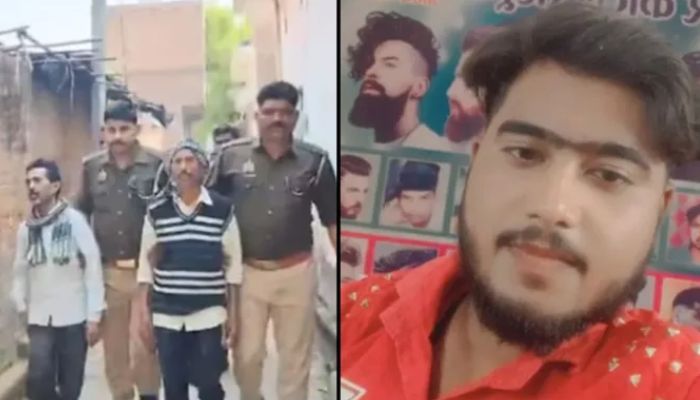
Notably, on the evening of 19th March, Sajid, who ran a barbershop in Badaun, murdered two Hindu children, Ayush and Ahaan, with a knife (ustra). Sajid had fled after committing the murder. As reported earlier, Sajid was gunned down in an encounter with Uttar Pradesh police on the same day. Sajid’s brother Javed, who was there during the incident, escaped. Police teams were conducting raids in search of him. Police also announced a reward of Rs 25,000 on Javed. On the 21st of March, the police arrested him.
On Thursday (21st March), the Delhi High Court refused to grant any interim relief from coercive action to Delhi CM Arvind Kejriwal in the Delhi Liquor Scam case. A division bench comprising Justice Suresh Kumar Kait and Justice Manoj Jain mentioned that they are not inclined to pass any such order to grant relief to the Delhi CM.
The High Court has asked for a response from the Enforcement Directorate regarding this new interim plea, scheduling the matter for 22nd April 2024.
In a media interaction, the Additional Solicitor General SV Raju said, “The petition is not maintainable, that was our main ground. And according to us, it’s not maintainable, it’s a desperate attempt for him to file the petition. Delhi HC stated that we are not inclined to grant an interim relief.”
#WATCH | Delhi HC refuses to grant any interim protection from coercive action to Delhi CM Arvind Kejriwal and said at this stage "we are not inclined to grant an interim relief."
Additional Solicitor General (ASG) SV Raju says, "The petition is not maintainable that was our… pic.twitter.com/LCOqs2R25u
The bench has given the Enforcement Directorate the freedom to submit a response to Arvind Kejriwal’s application for interim relief, which is a component of his petition contesting the summons issued to him by the central probe agency in the money laundering case. Senior Advocate Abhishek Manu Singhvi represented Kejriwal, while ASG SV Raju, along with special counsel Zoheb Hossain, appeared on behalf of the Enforcement Directorate (ED).
The main petition seeks to set aside all proceedings against Delhi CM Arvind Kejriwal in the “capacity of national convener of a political party/chief minister of the state” or in any other capacity arising out of and emanating from ED’s August 22, 2022 Case as well as all consequential proceedings emanating from it, including the summons of February 29, and March 16, and any further summons that may be issued to him.
Notably, by skipping the Enforcement Directorate’s repeated summonses in the Delhi excise policy scam, Arvind Kejriwal violated Section 174 of the Indian Penal Code (IPC) – which deals with disobeying a legal order to be at a certain place in person or by an agent.
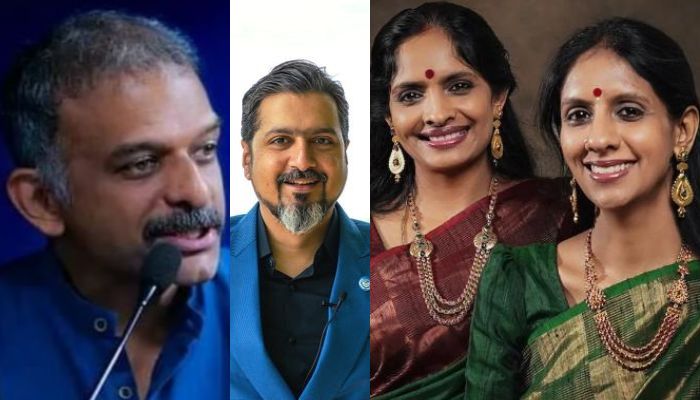
On Thursday (22nd March), three-time Grammy Award winner Indian music composer Ricky Kej condemned the attacking letter written by N Murali – the chief of the Madras Music Academy – to Carnatic musician sisters Ranjani and Gayatri. Earlier on 21st March, Ranjani and Gayatri withdrew from participating in the Music Academy’s conference 2024 and from presenting citing that the conference would be presided over by a Periyarite TM Krishna.
Ricky Kej wrote in an X post, “I am absolutely no one to judge right and wrong, or who is deserving of the prestigious Sangita Kalanidhi award. I deeply admire everyone involved, and everyone who have won or close to winning. But, I cannot deny that this letter reeks of arrogance, hatred and superiority. It hurts especially when directed against such amazing souls like Ranjani and Gayatri. I personally feel this letter is quite unbecoming of such a prestigious art institution.”
I am absolutely no one to judge right and wrong, or who is deserving of the prestigious Sangita Kalanidhi award. I deeply admire everyone involved, and everyone who have won or close to winning. But, I cannot deny that this letter reeks of arrogance, hatred and superiority. It… pic.twitter.com/KvdWtJ65ee
What did the chief of the Madras Music Academy write in his letter?
Ricky Kej also attached the letter written by N Murali. In this letter, N Murali said, “Dear Ms Ranjani and Ms Gayatri, I received your joint letter of 20th, March, 2024 and was shocked by both its vituperative content, which is replete with unwarranted and slanderous assertions and insinuations verging on defamation, and its vicious tone against a respected senior fellow-musician.”
He added, “You are aware that the Sangita Kalanidhi award instituted by The Music Academy in 1942 is the highest accolade in Carnatic music. The choice of Sangita Kalanidhi made year after year is a prerogative of The Music Academy and has always been made after careful deliberation, with the sole criterion being musical excellence demonstrated over a significant and sustained career. This year the Executive Committee of the Academy chose T.M. Krishna for this accolade based on his excellence in music over a long career, with no extraneous factors influencing our choice.”
N Murali further said in this letter, “We regard your decision to withdraw from the upcoming annual conference because the Academy has chosen for the award a musician you dislike and malign as unbecoming of artistes and in poor taste. I note that you have shared your letter addressed to me and the Academy, the social media, which apart from being discourteous, raises doubts about the intentions behind and the purpose of your letter.”
The chief of the Madras Music Academy concluded his letter by saying, “Normally, a missive of the kind you have addressed to me and the Academy posted on social media before you have received a reply would not warrant a response. But I would not like to deny you the courtesy of a response in consideration of your contributions to the field of Carnatic music.”
What was the stand of sisters Ranjani and Gayatri?
On 21st March, Ranjini and Gayatri posted on their social media handles, “We have communicated our decision to withdraw from participating in the Music Academy’s conference 2024 and from presenting our concert on 25th December. We have made this decision as the conference would be presided over by Mr TM Krishna.
“It’s dangerous to overlook Mr TM Krishna’s glorification of a figure like EVR who 1. Openly proposed a genocide of ‘brahmins’ 2. Repeatedly called/abused every woman of this community with vile profanity 3. Relentlessly worked to normalize filthy language in social discourse,” they posted on X, adding that TM Krishna has, over the years, “tried to spread a sense of shame in being a carnatic musician” and that has been exhibited through his “consistent denigration of spirituality in music.”
Who else is withdrawing from this event at the Music Academy Madras?
Renowned Carnatic musicians Trichur brothers have also withdrawn from the event. In a Facebook post, they wrote, “Formal announcement that we are pulling out of the Annual Conference 2024 of The Music Academy, Madras, for obvious reasons. “Mr TM Krishna believes in and propagates a value system that is diametrically opposite to our core values! We owe it to our Upbringing, Gurus, Rasikas, Family, Wellwishers and Students to stand up for what we believe in. Therefore to participate in a conference presided over by Mr. TM Krishna would make us outright hypocrites in our own eyes.”
Vedic speaker and writer Dushyanth Sridhar also wrote a letter to the president of the Music Academy Madras to communicate that he is withdrawing from the program. He wrote in his Facebook post, “Astikas, I have conveyed to the Madras Music Academy that I will not be performing on the 1st January 2025 (after the sadas). Below is a copy of the letter drafted to them.”
Apart from these names, many other stalwarts of the Carnatic music scene have spoken up against TM Krishna and the Music Academy’s mainstreaming of his ideologies.
Popular vocalist and Harikatha singer Visakha Hari has spoken against the Sangita Kalanidhi award given to TM Krishna. Composer Chitravina Ravikiran has declared that he is returning his Sangita Kalanidhi award from 2017 to mark his objection against TM Krishna and the Music Academy’s attempts to participate in promoting TM Krishna’s ideology.
RETURNING SANGITA KALANIDHI AWARD from ACADEMY: I’ve taken this step after careful consideration as principles much larger than all of us are at stake. However I’ll always remain deeply grateful to the org for its role in my career from childhood ?#musicacademy#award#Musicpic.twitter.com/EfXVtkUTns
Though Ravikiran did not name TM Krishna directly, he wrote, “My decision stems from my inability to relate to the kind of values the academy is trying to glorify today, by honouring an individual who has stridently tried to polarize and destabilize Indian classical music and dance fields and the country as a whole along caste and communal lines through misinformation, malleable truths and unprovoked attacks against certain groups of people.”
Who is TM Krishna?
TM Krishna, full name Thodur Madabusi Krishna, is an Indian Carnatic vocalist, author, and self-styled liberal social activist. Born on 22nd January 1976, in Chennai, India, Krishna has gained widespread recognition for his excellence in Carnatic music, a classical music tradition of India.
Apart from his musical pursuits, TM Krishna is also known for his self-styled social activism and advocacy for various causes which he considers attention-worthy. This includes caste issues, gender equality, and the democratisation of the arts. In the guise of addressing these issues, he had been a vocal critic of Hinduism and a staunch supporter of the Periyarite thoughts. In his attempt to be vocal about the need to break down barriers in classical music and make it more accessible to people from all backgrounds, he often resorted to making various statements against particular castes and communities especially the Brahmins by quoting EVR Periyar. Krishna has received numerous awards and honours for his contributions to music and society, including the Ramon Magsaysay Award in 2016 for “ensuring social inclusiveness in culture.”
On 21st March, Karkardooma Sessions Court in Delhi heard the bail plea of anti-Hindu Delhi riots accused Umar Khalid. Only the defence lawyer’s arguments were heard, and the matter has been listed for the next hearing on 3rd April.
During the hearing, one of the most important aspects that came to light was the chats between Khalid and his celebrity contacts, including Sushant Singh. This was the first time these chats came to light as part of a reply by the prosecution. Full details of the chats are yet to be revealed.
BIG.
DEFENCE READS OUT CHAT SUBMITTED BY PROSECUTION BETWEEN UMAR KHALID AND SUSHANT SINGH.
Umar had sent a quint report to “expose” Delhi Police.
(These chats have emerged for the first time by the prosecutor)
The defence mentioned one of the chats between Khalid and Sushant, where Khalid shared a link to The Quint’s report to “expose” Delhi Police.
Defence ‘explained’ changed circumstances leading to the withdrawal of the bail plea from the Supreme Court
In his argument, the defence lawyer for Khalid claimed that the bail plea was withdrawn from the Supreme Court because ‘SLP filed against co-accused getting bail from the High Court’. The defence cited the bail granted to Devangana Katlita, Natasha Narwal and Asif Iqbal Tanha and argued that as Khalid’s SLP was pending and Umar was arguing before the High Court, no part of the bail order to Katlita and others could be cited.
Defence says that when Umar Khalid’s SLP was pending, Umar was arguing before the HC and no part of the bail order to Devangana and others could be cited.
Defence reads out order which said the bail to Devangana and others would not be relied upon as precedent.
The defence further argued that the only position to evaluate was to determine whether Khalid was entitled to bail factually or not. He argued that only the interpretation of UAPA is barred from being treated as precedent; hence, Khalid was entitled to the plea of parity.
Notably, in his reply, the public prosecutor mentioned that there were attempts to set a narrative of Khalid on social media and in media. The defence argued against it and called it “pamphleteering”. However, the prosecution’s reply presented evidence that Khalid attempted to set a narrative in media and social media.
The written reply by the PP says that there were attempts to “set narrative”. The defence says that this is “pamphleteering”.
(Defence is clearly not happy with the PP talking about how Umar Khalid set the “narrative.” I am sitting here wondering why it invoked such a response)
The defence also argued that Khalid should be given bail due to “prolonged incarceration” and claimed that Khalid should be allowed to the “parity” argument as Devangana, Nathasha, and Asif got bail.
“Time is also a changed circumstance”, the defence says. The defence is arguing that prolonged incarceration can also be argued as a “change in circumstance”.
“The orders in Natasha, Devangana or Asif, or the order rejecting my bail, if bail is granted to me, would not be circumvented”, the defence says, citing other judgements. He also tried to draw a parallel between the Umar Khalid case and Vernon Gonsalves’s bail judgment. He said that the HC in Umar Khalid’s bail case interpreted Watalli’s judgement in a manner that made the court the mouthpiece of the prosecution.
Defence says that it is not sufficient that IO believes that the evidence points towards act of terror. The evidence has to prove that the accusations are “prima facie true”.
“When your honour is looking at bail, the court will be looking at it more liberally than the charge”
In his argument, a defence lawyer said there was no evidence against Khalid. He also claimed Khalid was not present and did not cause death. He said, “Not a single witness refers to Umar Khalid having committed a terrorist act.”
“Not a single witness refers to Umar Khalid having committed a terrorist act” – Defence
According to the defence, attending a conference did not amount to terror. He admitted Khalid was present at a couple of meetings and added that the accusations against him were a “result of the fertile imagination of the IO”.
Defence starts talking about allegations in the main chargesheet and supplementary chargesheet against Umar Khalid.
1. The defence says that there is no witness that Umar Khalid said anything in the MSJ/SOJ group. He was added to the group. He didn’t speak or give directions.…
Speaking on Khalid’s presence in certain groups, such as MSJ or SOJ, the defence claimed that he was added to those groups and did not talk or give directions. He further claimed the said group did not commit a terror act. He also denied the accusations that Khalid had instructed Imam to start a WA group on the intervening night of 4th and 5th Dec 2019.
The defence further argued that because Supreme Court had said and, hartal, rail roko etc, are legitimate forms of protest, Chakka Jan could not equate to terror. Dismissing a witness’s statement, the defence claimed that the witness said Khalid may have “instructed” to create violence was purely hearsay.
Defence reads a judgement of the SC saying bandh, hartal, rail roko etc are legitimate forms of protest. The defence uses this to argue that “chakka jam is equal to terror” is merely hyperbole not supported by the judgement of the Supreme Court.
Umar Khalid’s lawyer threw all his associates under the bus to get him bail
Khalid’s lawyer threw Tanha under the bus and argued the allegations against him were more severe than Khalid’s. He said if the Vernon Test was applied, Khalid should get bail on the argument of parity.
The lawyer says that the charges against Asif Iqbal Tanha are far more severe. “I am not saying it’s a terror act, but it’s far more severe”, he says. He says that if the Vernon Test is applied, Umar Khalid should get bail at least on the argument of parity.
The defence lawyer admitted Khalid was part of the DPSG group but claimed there was no material evidence against him. “I am yet to see a message by Umar which incites violence, gets excited by violence, etc,” he argued.
Defence is emphasizing on how minimum his involvement is in the planning of the protest and the groups mentioned in the chargesjeet.
Now, the defence says that DPSG were there and “far more involved” the days on which there was violence. They are on bail. There, parity applies.
Defence claimed that three out of five messages by Khalid were location shares, and one was about the call he received from Delhi Police, where they advised him not to proceed with the protest. Defence emphasised that Khalid had “minimum” involvement in planning the demonstrations and the groups mentioned in the charge sheet. He then continued to argue that DPSG were there and far more involved on the days when there was violence.
Defence reads part of the chargesheet leading up to the creation of the group DPSG. “There is no material evidence”, the defence says. In this portion, it was mentioned how the accused wanted to give the protests a secular fabric to hide their real motives.
The defence claims everyone who spoke against Khalid has a ‘fertile imagination’
The defence claimed everyone, including police, investigating officers, lawyers, witnesses, people in the group, and some people who sent messages to the WA group, had a “fertile imagination”. All of them had named Khalid.
Speaking at the meeting at the Popular Front of India’s office for raising funds for the riots, the defence claimed that Khalid was not physically present at the Khajuri Khas violence. He pointed towards the Call Detail Record and claimed Khalid was not present at the location. Alluding the delay in naming Khalid in their statements, the defence questioned the authenticity of the statements given by Tahir Hussain and Khalid Saifi. The defence continued to throw every possible associate of Umar Khalid under the bus to get bail for him.
“About the meeting at the PFI office for funding of riots” – Defence talks about this meeting between Tahir Hussain, Khalid Saifi and Umar Khalid on the 8th of January.
Defence further says Umar wasn’t physically present at the Khajuri Khas violence.