Home Blog Page 1378

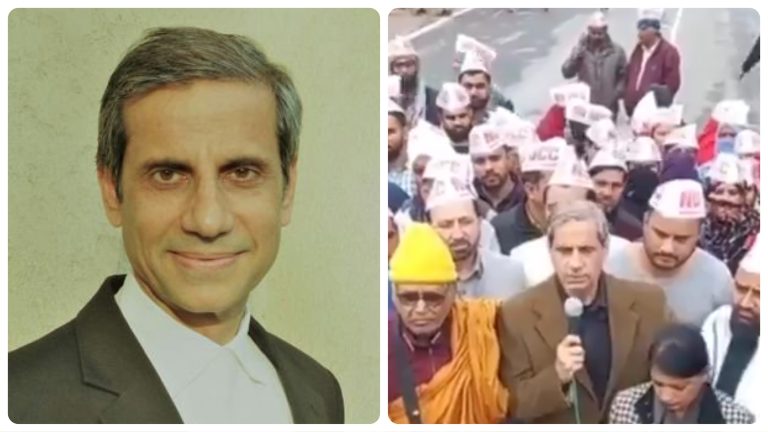
‘UCC will snatch rights of citizens and give it to Adani-Ambani’: ISIS poster boy Mehmood Pracha who asked Muslims to raise an armed militia

A video of infamous advocate Mehmood Pracha, known for being featured in a pro-ISIS magazine, spreading disinformation and inciting people against the Uniform Civil Code (UCC).

In a video that has gone viral on the internet, Mehmood Pracha claims that the Uniform Civil Code is a conspiracy to snatch the rights of citizens to hand them over to Adani and Ambani.

“UCC is a conspiracy…it is not Uniform Civil Code, it is Uniform Story Code… RSS governments promote it in different states and parts of the country. They aim to snatch the rights of 99 per cent of the citizens of the country and give them to Adani and Ambani. They want to loot money from all banks and give it to their workers and help them flee the country,” Pracha says in the video.

Notably, the video comes in the wake of the UCC bill tabled by the Uttarakhand government that includes various provisions, including a complete ban on polygamy and child marriage, a standardised marriageable age for girls across all faiths, and a uniform process for divorce. These proposals, geared towards promoting gender equality and social harmony, will be discussed during the ongoing special four-day assembly session, which commenced yesterday and will run until Thursday.

The draft of the Uniform Civil Code (UCC) covers a wide range of aspects of civil life. It includes suggestions regarding inheritance rights, compulsory marriage registration, and raising the legal age of marriage for girls to enable them to pursue education before marriage. Moreover, couples who do not register their marriages will not qualify for government benefits, signalling an emphasis on legal documentation.

However, as the Uttarakhand government prepares to roll out the bill and enact a law on the UCC, an attempt to defame the government and muddle the narrative around is underway, with Mehmood Pracha at the forefront of such endeavour that aims to undermine the law and mislead people with disinformation.

Mehmood Pracha was featured in ISIS magazine.

Mehmood Pracha, who had called for Muslims to take up arms, was featured as the poster boy for a pro-ISIS media outlet and is accused of spreading communal hatred in the past.

As India went through communal turmoil during the anti-Hindu riots earlier in February 2020, a publication titled ‘Voice of Hind’ issued by Al-Qitaal Media Center and Junudul Khilafah al-Hind featured Mahmood Pracha on its cover page. The cover was titled “So, Muslims, where are you going?”. It was featured with the subtitle “A Call to the Muslims of India”.

The magazine had praised slain terrorists in Kashmir. It also urged the Muslims to reject the idea of an Indian nation-state and fight for the ‘caliphate’ instead.

Mehmood Pracha had called for ‘Muslims and Dalits to acquire Arms License”

In addition to this, Mehmood Pracha has also been accused of exhorting Muslims to take up arms. In a press conference last year, Shia cleric Maulana Kalbe Jawad and Mehmood Paracha announced that they would be setting up a camp in Lucknow to teach Muslims and Dalits about the ‘right to self-defence and how to apply for a firearm licence.

Mahmood Pracha had cited the incidents of mob lynchings and the Sonbhadra massacre as reasons for conducting the camp. He said those events would not have occurred if the victims had legal firearms to defend themselves. They were planning to raise an armed militia to combat ‘mob lynchings’, using licenced weapons. Later, Mahmood Paracha was seen holding that training camp inside a Lucknow Mosque, where he was training Muslims about how to fill out forms for licences and acquire firearms, even though an FIR had been registered against him for his incendiary speech.

In 2020, the special cell of the Delhi Police conducted raids at Pracha’s office about the Anti-Hindu Delhi riots case.
‘Shravan Kumar and Aurangzeb cannot have equal rights to parents’ property’: Key highlights of the Uttarakhand UCC

Uttarakhand CM Pushkar Singh Dhami tabled the Uniform Civil Code Bill today in the state assembly. The Bill aims to provide equal rights to the residents of the state irrespective of their religion, caste, socioeconomic status, and gender.

Here are some of the key highlights of the Bill:

No more discrimination in inheritance laws

The Bill states that despite set laws, there are still some irregularities and bias observed in the process of inheritance and will. For example, a father doesn’t get the right to claim a share in his child’s property in case of the demise of the said child. Only the mother, wife and children have the right, but not the father. The Bill aims to change that.

Similarly, the children of a deceased person get different inheritance rights based on their gender, even married and unmarried daughters have different rights. The new Bill seeks to change that and bring uniformity in inheritance rights of all children of a person regardless of their gender and marital status.

Similarly, female children still face gender-based discrimination in inheritance of agricultural land, the Bill says, and asserts that all disparities have been addressed in the Bill.

‘No child is illegitimate, even if the relationship between a man and woman was not legitimate or legal’

The Bill says that the consensual relationship between a man and a woman can be termed legitimate or illegitimate based on social norms, but a child is never ‘illegitimate’. The Bill seeks to grant equal rights in inheritance to a child born outside of socially acceptable or ‘legitimate’ relationships. The Bill seeks to provide respect and equal inheritance rights to such children, asserting that the child born is always innocent, regardless of the social or legal sanctity, or the circumstances of the relationship between the parents.

In Section 55, the Bill also defines the rights of a fetus in inheritance laws and ensures that the yet-to-be-born child of a person gets equal rights in parental property after the person’s demise.

‘Shravan Kumar and Aurangzeb cannot have the same rights on parental property’

The Bill states that while some children take good care of their aged parents, some do not do so and there are some children who go to the extent of even hurting or killing their parents to claim parental property. Section 58 of the Bill includes provisions to ensure that any person who kills a parent can never claim inheritance in parental property.

Addressing the disparities and hurdles in making a last will and testament, the Bill also ensures that any person can make a will and decide the inheritance of their assets as per their choice and if they want to, they can choose any person as their heir and divide their assets as per their own will and judgment at any point of time in their life. They can even dismiss or withdraw an existing will in their name. As with other laws, the provisions are equally applicable to all residents of the state regardless of their religion, caste, or gender.

Rules on marriage, marriageable age, and ‘no legal validity to same-sex marriage’

The bill states the minimum age for marriage is 21 for a boy and 18 for a girl. Additionally, the Bill states clearly that only the marriage between a man and a woman is considered legal. Also, a man or a woman cannot marry another person while their spouse is alive, or they are divorced. Instant Talaq, Nikah Halala, and remarriage without divorce have been completely restricted in the new Bill. Social ills like Iddat and Halala should be ended, the Bill states. Polygamy, allowed in India under Muslim Personal Law, has been banned across all religions.

Also, a partner can seek divorce and claim maintenance if they are forced to change their religion after marriage, the Bill states.

Registration of marriage has been made mandatory. Registration of a marriage can be done in Gram Panchayat, NAC, Municipality, District or state level. A dedicated web portal has been started that will simplify the process and help couples understand the registration process.

Couples who have not registered their marriage can no longer claim the benefits of government schemes meant for couples and families. Though an unregistered marriage cannot be deemed invalid, the provision restricting government schemes to registered marriages only is added to encourage registrations of marriages, the Bill adds.

Child marriage, polygamy, Triple Talaq, Devdasi, and dowry are all banned

The Bill emphasizes that women have been the worst victims of the lack of a Uniform Civil Code for all religions, because many social evils like Devdasi, child marriage, Triple Talaq, and Halala, flourish under the garb of ‘religious practice’. Ultimately, such social evils only target women and keep them deprived of their legitimate rights as citizens of India.

UCC can help long-pending legal cases reach a conclusion and change the deplorable conditions where many women, especially Muslim women find themselves, due to the existing social evils under ‘religious sanction’, the Bill states.

Rules for live-in relationships

Asserting that live-in relationships are increasing despite the socio-cultural norms of the conservative Indian family system, the Bill states that it is trying to ensure that the future and safety of young persons do not get jeopardised.

The Bill states that all live-in relationships will have to be registered and the minimum age for the woman is 18 years. Also, if the boy or the girl entering into a live-in relationship is younger than 21, the parents of both persons will have to be given a notification for registration of the live-in relationship, so that they are aware of the status of the relationship and the location of the place where their ward is living.

The Bill states that the provisions have been kept to prevent exploitation, adultery, and abuse, and to protect the rights of any child born out of a live-in relationship. At the same time, the provision will ensure that any person entering into a live-in relationship is well aware of the name, identity, and religious affiliation of the partner they are going to live with.

The BJP holds a comfortable majority in the Uttarakhand assembly. The Bill is expected to pass.

‘He is insulting entire SC community’: BJP slams DMK for disgraceful remarks against Dalit Minister L Murugan

On Tuesday (6th February), the Bharatiya Janata Party (BJP) lashed out at Dravidra Munnetra Kazagham (DMK) leader TR Baalu for making disgraceful remarks about Dalit Minister L Murugan.

During a heated discussion in the Parliament over the disbursal of funds to Tamil Nadu in the wake of ‘Cyclone Michaung’, TR Baalu lashed out at Minister of State L Murugan.

“Don’t interfere. You are unfit to be an MP…you are unfit to be a minister! Sit down!” he was heard saying. It must be mentioned that Murugan belongs to the Dalit (SC) community in Tamil Nadu.

The distasteful remark by the DMK MP did not sit well with the BJP. Law Minister Arjun Meghwal sought an apology from TR Baalu. “You cannot call our minister ‘unfit’. Take back your words…They should be struck off the record,” he emphasised.

Parliamentary Affairs Minister Pralhad Joshi remarked, “How can you call him unfit? The DMK government is unfit! Congress is unfit! You called a Dalit minister unfit…He is insulting the entire SC community.”

In a tweet, BJP Tamil Nadu President K Annamalai said, “Thiru TR Balu is a disgrace to politics & this is not the first time he has made disgraceful remarks about a member of the Scheduled Caste Community. I strongly condemn these remarks on Hon MoS Thiru @Murugan_MoS avl in the Temple of Democracy.”

He added, “Our Hon PM Thiru @narendramodi avl is a true champion of Social Justice & has made a member of the Arundhathiyar community a Minister, which DMK could never despite being in the Central govt for decades. Hon MoS Thiru @Murugan_MoS avl’s unwavering commitment to serving the people & his dedication to bringing a positive difference as a Minister of State has surely irked DMK MPs.”

“Only an arrogant man like Thiru TR Baalu can term a member of parliament & a Minister from the SC community as “Unfit” & Thiru TR Baalu has to render an unconditional apology to the people of the SC community for calling their representative “Unfit”,” Annamalai concluded.

‘Workers are not dogs’: Congress leader Acharya Pramod lashes out at Mallikarjun Kharge over comparison of booth workers with canines

0

On 5th February, Congress leader Acharya Pramod Krishna schooled the national president of the party, Mallikarjun Kharge, on his remarks where the president compared party workers to a dog. In a video message, Acharya Pramod called out Kharge, stating, “A worker is not a dog”. Acharya Pramod is a close aide of Congress leader Priyanka Gandhi Vadra. Recently, he has targeted the Congress Party on different matters, including the party’s refusal to attend Ram Mandir Pran Pratishtha. Furthermore, he is also gaining headlines for his recent meetings with Prime Minister Narendra Modi and Defense Minister Rajnath Singh.

In a video of Kharge that went viral on social media, Congress’s president can be seen delivering a speech during an event. In his speech, he drew a parallel between choosing the right pet animal, like a dog and choosing the right booth-level worker. He suggested that as people choose the pet only after confirming that it will not bite, the booth-level workers should be selected, ensuring they follow the instructions. He said, “Place such a man at the booth who reaches at 7 AM and come out only after signing off from the booth duty.”

Responding to his remarks, Acharya Pramod said, “A worker is not a dog. He is hardworking and courageous. The words may be bitter, but it is the truth.” In his post, Acharya Pramod not only tagged Kharge but also Congress leader and Wayanad MP Rahul Gandhi and General Secretary Priyanka Gandhi Vadra.

Furthermore, he also raised questions about the Bharat Jodo Nyay Yatra. He said, “There are wise people in Congress party. On the one hand, the Mahabharata of 2024 is unfolding in the country; on the other, the party is engaging in political tourism. We are preparing for the 2029 elections as if we wanted to win 2024; this would not have happened.”

His comments shed light on the internal dynamics of the party and preparations for the upcoming political landscape.

Kharge is not the only one who has stirred controversy recently. Congress party leader and possible face of PM for the Lok Sabha elections 2024, Rahul Gandhi, courted controversy by serving biscuits to a party worker that a dog rejected. The incident was captured on camera and circulated widely on social media. The incident reportedly occurred during the Bharat Jodo Nyay Yatra in Ranchi, Jharkhand.

Speaking on the matter on social media, BJP spokesperson Amit Malviya wrote, “Just a few days ago, Congress President Kharge ji compared the party’s booth agents to dogs and here Rahul Gandhi is feeding biscuits to a dog during his visit, and when the dog did not eat, he gave the same biscuits to his worker.” He added, “If a party whose president and crown prince treats its party workers like dogs, then it is natural for such a party to disappear.”

Not to forget, BJP leader and Assam Chief Minister Himanta Biswa Sarma left the Congress party and joined BJP after a similar incident. Sarma rose to the ranks after joining the BJP and eventually became Chief Minister of the state.

Himanta Biswa Sarma revealed how Congress leaders ate biscuits from the same plate as Rahul Gandhi’s pet

In an interview with The Indian Express in June 2021, Himanta Biswa Sarma said he met Rahul Gandhi in the 2016 elections to discuss Assam’s problems.

He narrated, “We were served with tea and biscuits. The dog went up to the table and picked up one biscuit. Rahul looked at me and smiled at me. I was thinking, why is he smiling? I waited for Rahul Gandhi to press the calling bell and ask someone to change the plate.”

“After some time, I saw Congress leaders Joshi and Gogoi all taking the biscuits from the same plate and started eating. I was not a frequent visitor, and then I realised this is normal for everybody, as it happens in every meeting. That day, I decided enough was enough, and I could not stay with that person (Rahul Gandhi),” Sarma concluded.

‘Rich people don’t pay GST, only poor pay it’: How Rahul Gandhi’s latest rant exposes his ignorance about the GST and how it works

Rahul Gandhi is a gift that keeps giving, albeit to the opposition and not to his party. For the Congress party, Gandhi is nothing more than a liability who has not only sunk the party’s fortunes but is also blissfully unaware of the ramifications his party has to bear on account of his ramblings on issues he clearly lacks understanding.

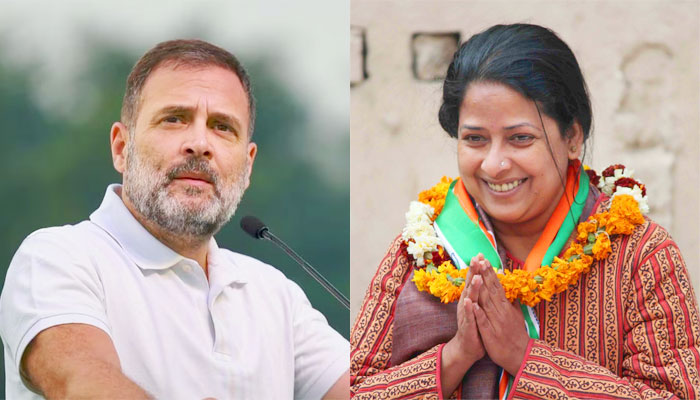
Recently, Rahul Gandhi went on a bizarre rant against India’s Goods and Services Tax or GST. In a public meeting in Jharkhand, Gandhi fulminated against the GST, claiming that it is only the poor who pay the GST while the rich and the privileged never pay it. In addition to this, Gandhi also resorted to what he does best when he is addressing a public gathering in rural India: demonise India’s industrial class and portray them as dishonest and thieves. The Gandhi scion targeted Adanis and Ambanis to claim that the two do not pay the GST while hardworking adivasis and tribals who haul 200 Kgs of coal to earn a living pay it.

“Rich don’t pay GST. It is the poor who pay for it. Adanis and Ambanis never pay GST. A tribal man I recently met who hauls 200 Kgs of coal to earn a living pays the GST,” Rahul Gandhi said in a public meeting during Bharat Jodo Nyay Yatra, another boondoggle project by the Congress party to keep their senior leader busy.

While Rahul Gandhi didn’t cite any evidence or report that states that Ambanis and Adanis don’t pay the GST, anyone with a modicum of knowledge about the indirect taxes would know the Congress leader was making scandalous claims not rooted in reality. Perhaps, the Congress leader may not even be aware that GST is clubbed under Indirect taxes and not Direct taxes. 

Anyway, the Goods and Services Tax (GST) functions as a value-added tax (VAT) imposed on the majority of goods and services traded for domestic use. Consumers bear the burden of the GST payment, yet it is the responsibility of businesses vending these goods and services to remit the tax to the government. 

Adani and Ambani run big businesses in India. They buy raw materials by paying GST on them, churn out finished goods, charge GST on them, and the difference between them is paid to the state and the central government. For instance, Fortune Edible Oil is owned by Adani Enterprises, a company owned by Gautam Adani. It procures raw materials, pays GST on them, and turns them into finished products, which then get sold in the market. Similarly, Mukesh Ambani also pays GST on raw materials that he procures locally for the manufacturing of his products. 

At the same time, to make such a sweeping statement that Adanis and Ambanis don’t pay GST at all is to assume that Adanis and Ambanis don’t buy any product domestically, even for their personal consumption, and all their purchase is from the international market, which invariably involves import duties to the government.

In short, the Goods and Services Tax is a tax collected on the consumption of goods or services, the higher the personal consumption, the more that person has to pay in terms of taxes. It is evident that people like Ambani and Adani consume more than the rest of the society so they likely pay more in terms of taxes when it comes to GST. Anyone consuming a product or availing services bought from the domestic market pays the GST, which goes to the state and the central government that uses it to provide better facilities to the people like hospitals, paved roads, improved public transport etc.

The Centre has come up with different GST slabs so that items and services of basic necessity are minimally charged while other products and services are grouped under higher GST slabs. The introduction of GST, therefore, has played a pivotal role in lowering the prices of several commodities vis-a-vis taxes charged on them before its introduction. The poor now pay much less for products and commodities that are essential to them than they used to before the implementation of the GST.

As explained by an X user named Ankur Singh, the introduction of GST has only helped in lowering the prices of essential commodities. Before GST, the total taxes on garments were above 18 per cent. However, after the introduction of GST, a garment that costs less than Rs 1,000 is grouped under a 5 per cent GST slab, meaning the consumer had to pay only 5 per cent tax on it for which he was paying over 18 per cent under the previous tax regime.

However, this nuance was missing from Rahul Gandhi’s rants against the GST as he made broad generalisations that rich people in India don’t pay the GST. This stereotyping of affluent people as non-compliant of GST and insinuating that they evade paying indirect taxes without offering any evidence to back it up speaks to the Congress’ historical attempt to foment class divide among the Indian society and pass the buck of their incompetence to alleviate poverty to businesses and industrialists responsible for driving India’s growth and providing employment to its youth.

Sure, there are a few businesses and businessmen who may be corrupt and who may have evaded paying taxes, but to use a broad brush to paint every marginally privileged person in the country as corrupt and non-compliant with GST is an insult to those who conscientiously pay taxes, both direct and indirect, and contribute to nation-building.

Rahul Gandhi, too, can start with the noble work of nation-building by first educating himself about the GST, how it works, and how it is different from the direct taxes, and then perhaps come up with suggestions that help tribals and the lower strata of the society instead of ceaselessly going about against the GST from time to time. Until then, the Modi government can continue lifting people out of poverty as it did in the last 10 years, with a staggering 13.5 crore people elevated out of poverty in the past five years alone.

Hyderabad: Mohammad Majeed and Mohammad Qasim arrested for attacking TSRTC driver and conductor with a cricket bat

0

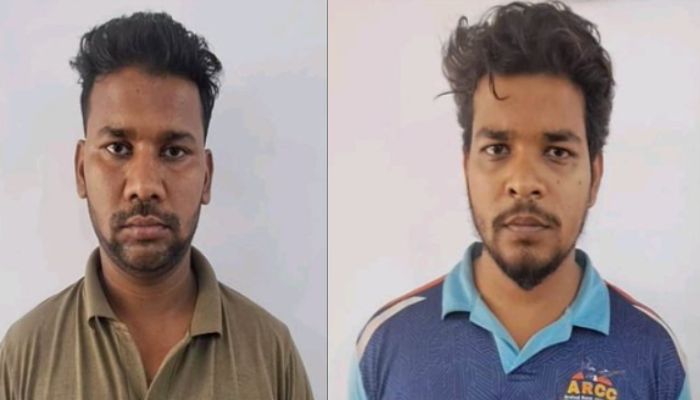
On Monday (5th February), the Domalguda police arrested two persons on charges of abusing and assaulting the TSRTC (Telangana State Road Transport Corporation) bus driver and conductor of the Farooq Nagar depot at Tank Bund on Sunday night. As per local media reports, the accused duo identified as Mohammad Majeed and Mohammad Qasim launched a violent attack with a cricket bat in which conductor Ramesh’s left arm was broken.

According to police, the accused duo Mohammad Majeed and Mohammad Qasim were riding a bike and they dangerously overtook the bus. The bus driver, angered by the reckless driving of the biker duo, shouted at them which escalated into an argument among them. 

Later, the bikers stopped their vehicle and stormed the bus where they started hurling abuses and assaulted the driver and conductor with a cricket bat.

In the ensuing attack, the driver Sheikh Abdul suffered severe injuries while the conductor Ramesh’s left arm was broken. Additionally, the glass of the bus was also shattered in the violent attack.

After getting information, Domalguda police reached the spot and arrested the accused duo. Subsequently, they were sent to judicial remand for 14 days. 

An FIR has been registered under section 333 (voluntarily causing grievous hurt to a public servant in the discharge of his duty) of the IPC, and Public Property Damage Act.

Video of the violent attack is doing rounds on the internet in which the attackers can be heard hurling abuses and attacking the TSRTC staff with a cricket bat. 

Following the violent attack, TSRTC director VC Sajjanar condemned the attack and warned that anyone who indulged in such a violent attack on TSRTC staff would have to face consequences. 

Taking to X, TSRTC director wrote, “It is unfortunate that some deliberately attack #TSRTC staff who are repeatedly warned. This is not good for society at all. Recently in #Hyderabad the driver and conductor of Farooq Nagar Depotwere indiscriminately attacked on Sunday night on the tank bund. They were beaten severely with a cricket bat. In this incident, conductor Ramesh’s left arm was broken. Driver Sheikh Abdul was injured. The RTC officials filed a complaint in Hyderabad Commissionerate Domal Guda Police Station about this incident and a case was registered.” 

He added, “The accused Mohammad Majeed and Mohammad Qasim were arrested by the police. My thanks to the police who nabbed and arrested the accused in the shortest possible time. The management once again warns that any attack on the RTC staff will be punishable by law #TSRTC.”

‘Kejriwal spent over 8 lakhs per night on hotel stay while moving around in Auto during the day’, claims Delhi politician Naveen Jindal

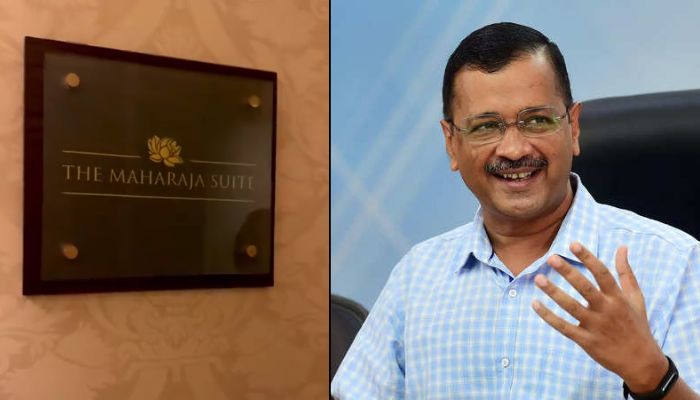
On Monday (6th February), Delhi-based politician Naveen Jindal informed that Arvind Kejriwal stayed in a ‘Maharaja suite’ during the 2022 election campaign in Gujarat and splurged ₹8-10 lakhs of taxpayers’ money each day on hotel accommodation.

“You have seen the picture of Arvind Kejriwal travelling by auto during the 2022 Gujarat election. But do you know that he stayed in the Maharaja suite which costs ₹8-10 lakhs daily?” he remarked.

The Delhi-based politician informed, “You may have heard the news about Kejriwal staying in a Sheesh Mahal. I did not see it from the inside. But here I am at the Maharaja suite. The decor and facilities available here are like his Sheesh Mahal.”

Naveen Jindal also showed a private pool in a video tour of the ‘Maharaja suite’ and said that Arvind Kejriwal likes to take baths with his ‘friends.’

“I am a common citizen, whose money in the form of taxes is used by Kejriwal to book expensive hotel rooms such as this… You (Kejriwal) are spending ₹10 lakhs per day on such a place and then fooling everyone by paying ₹80 for a three-wheeler,” he pointed out.

Naveen Jindal said that Arvind Kejriwal campaigned for 40 days and stayed in hotels during that time. “(On the other hand) People in Delhi do not have money to eat, government employees are not being paid salaries on time, Delhi Municipality and govt schools are in bad shape due to lack of funds,” he said.

The Delhi-based politician challenged Arvind Kejriwal and his Aam Aadmi Party (AAP) to disprove any of the allegations raised by him.

Inside the ‘humble abode’ of ‘Aam Aadmi’ Arvind Kejriwal

In May 2023, the images of the sprawling mansion of AAP chief ‘aam admi’ Arvind Kejriwal went viral on social media.

As per a report by Times Now, the mansion is located at 6 Flagstaff Road in the Civil Lines area of the National Capital. Dubbed as the ‘Sheesh Mehal’ of the Delhi Chief Minister, it is spread across a 13000 square feet area.

Besides, the residence has a 399 square feet lawn area and is equipped with all modern facilities imaginable. Times Now reported that Arvind Kejriwal stays with his family on the first floor. The ground floor has a large meeting hall and a visitor’s room.

Mansion of Arvind Kejriwal, image via Twitter/ Manjinder Singh Sirsa

The bungalow is spacious with state-of-the-art interior design, flooring and high grade furniture. In videos that have now surfaced on social media, it can be seen that the residence of Arvind Kejriwal has automatic motion-sensing doors in all rooms.

While speaking about the matter, BJP leader Manjinder Singh Sirsa said, “This palace-like bungalow that you are seeing is Arvind Kejriwal’s Sheesh Mahal. This is the same Arvind Kejriwal who used to say naively that he only wants a house of two or three rooms.”

“…See its drawing room, see its corridor, see this house from outside, the two storey house, it looks like a palace of a king. Arvind Kejriwal now has a photo of your house too. Will you lie now that you live in a small house?” he added.

An investigation by Times Now Navbharat found that the official bungalow of Delhi CM Arvind Kejriwal in Civil Lines was renovated at a cost of almost Rs 45 crore.

The report, termed “Operation Sheesh Mahal,” said that Rs 44.78 crore of taxpayer funds were utilised for the renovations, raising questions about the Aam Aadmi Party’s commitment to promoting austerity.

The channel obtained documents that indicate the curtains at Arvind Kejriwal’s residence were priced at around Rs 5-8 lakh per piece. According to the documents, 23 curtains were approved for installation at the residence of Delhi CM and AAP national convenor, with a total cost of Rs 97 lakhs.

Imported from Vietnam, the marble used for the renovation of Delhi CM Arvind Kejriwal’s residence cost around Rs 3 crores. The flooring was done using ‘Deor Pearl Marble’, known for its superior quality. Additionally, Rs 21,60,000 was spent on the chemical adhesive used to fix the marble.

The documents also reveal that a sum of Rs 40 lakhs was spent on installing six almirahs at the official residence of Delhi CM Arvind Kejriwal.

In 2013, Arvind Kejriwal stated that he and his AAP ministers would not occupy the government-provided bungalows and instead opt for smaller government flats. Ten years on, the lofty promises and claims made by him appear nothing but political grandstanding.

Uttarakhand: CM Dhami tables Uniform Civil Code Bill, Opposition claims they haven’t received draft copy yet

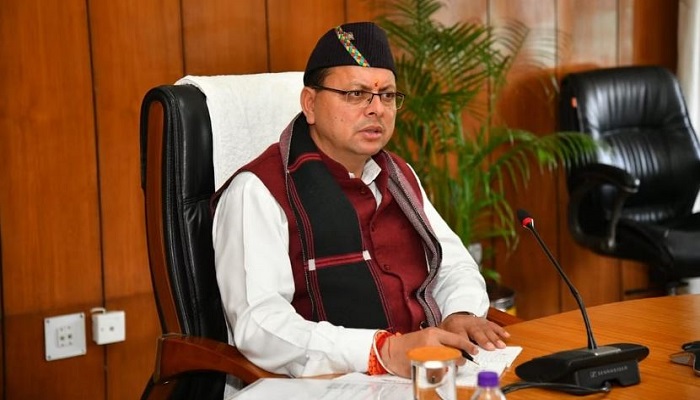
As the Uniform Civil Code Bill is tabled in the Uttarakhand assembly on Tuesday, Chief Minister Pushkar Singh Dhami called it a moment of pride adding that Uttarakhand will be the first to move towards implementing UCC.

The bill was tabled on 6th February, Tuesday, during the ongoing four-day special session of the assembly, which began on Monday.

Referring to this, CM Dhami posted on X, “With the aim of giving equal rights to the citizens of Devbhoomi Uttarakhand, a Uniform Civil Code bill will be introduced in the Assembly today. It is a moment of pride for all the people of the state that we will be known as the first state in the country to move towards implementing UCC”.

On Sunday, the Uttarakhand Cabinet approved the final draft of the UCC, which proposes uniform civil laws for all communities in the state.

Union Minister for Law and Justice Arjun Ram Meghwal said on Monday that the Uniform Civil Code is in the consultation process and being reviewed by the Law Commission of India.

“This is not just the issue of the Centre; the makers of the Constitution had discussed this even when the Constitution was being made…Right now, this matter is under consideration with the Law Commission of India and is in the consultation process. The states can fix it or improve it, and the government of Goa has already worked on UCC. The Uttarakhand government has approved this in the cabinet and as soon as we get a report by the Law Commission, we will inform you…” said Union Minister Arjun Ram Meghwal.

Earlier, a draft of the UCC was handed over to the Uttarakhand Chief Minister by the five-member committee headed by retired Justice Ranjana Prakash Desai.

The UCC will provide a legal framework for uniform marriage, divorce, land, property, and inheritance laws for all citizens, irrespective of their religion.

The passage of the UCC Bill will mark the fulfillment of a major promise made by the BJP to the people of the state in the run-up to the 2022 Assembly polls.

In March 2022, the Dhami government decided to constitute a committee to prepare a draft for the UCC. 

The opposition says they don’t oppose the bill, but raise concerns over ‘rules’ and draft copy

Yashpal Arya, the Leader of Opposition in Uttarakhand assembly claimed that they are not against the UCC, but the ruling party BJP is not following the rules of the assembly. He added that the BJP is trying to “suppress the voice of the MLAs” by their sheer majority numbers.

Congress leader Harish Rawat claimed that the state government wants an immediate discussion on the Bill but not all MLAs have received a drat of the Bill yet. Rawat added that the UCC Bill in Uttarakhand is ‘tokenism’ and if the BJP is so keen on it, they should have brought it in the national level by the central government.

The assembly proceedings were adjourned till 2 pm today following a ruckus in the assembly after CM Dhami tabled the Bill.

(With inputs from ANI)

If you are facing defeats repeatedly, look for alternate leadership: Former President Pranab Mukherjee’s daughter urges Congress party

On Monday, 5th February, the daughter of former President of India, late Pranab Mukherjee, Sharmistha Mukherjee, urged the Congress party to look for an alternate in leadership if the party is facing repeated defeat under “one’s” leadership. Sharmistha Mukherjee was speaking at the Jaipur Literature Festival when she targeted Rahul Gandhi and his role as the top leader of the Congress Party.

Sharmistha Mukherjee pointed out that Congress faced massive defeats in the 2014 and 2019 Lok Sabha elections, and during those general elections, Rahul Gandhi was the face of Congress for the Prime Minister’s post. She added that two Lok Sabha elections have passed and if the party is facing repeated defeat under a particular leader, the party should think about it. “Congress should think again who should be the party’s face,” Sharmistha added.

Sharmistha added that there is no doubt that Congress is the largest opposition party. However, the party leaders need to find a way to strengthen their position. She then pointed towards the need to incorporate democracy in the party, membership campaigns, and in-party elections for a better future of the party in the political scenario of the country. Furthermore, she hinted that there is a need for the contribution of ground-level and booth-level party members in the decision-making process, something that the late Pranab Mukherjee talked about in his diary.

“Freedom of speech does not only mean that you praise your leader. And the moment you criticise the party leadership, the entire ecosystem puts you in the dock. Is this freedom of expression?” Sharmistha added.

Sharmistha categorically expressed her dislike for the name “I.N.D.I.A. Bloc” and said she would prefer it to be called I.N.D.I. Alliance. She said, “When it was formed, I had posted on X that if it fails, what will be the headlines, ‘INDIA Breaks’. No political party should be synonymous with the country. This thought came to my mind.”

She added, “As far as leadership is concerned, there are many senior leaders in the alliance…they should sort it out themselves. But they need to resolve the issues like seat sharing, etc. I cannot answer whether this alliance will survive till the general elections.”

Sharmishta added that in democracy, there are different ideologies. She said, ” There might be differences between two groups on ideological grounds but that does not mean that one of them is wrong. Hence, there is a need for dialogue.”

She said when her father was active in politics, he was seen as someone who would bring everyone to the same table. He had the quality to put an end to hurdles in the house and bring everyone to discuss the matters at hand. “Democracy is not just about speaking your mind, but it is about listening to others as well,” Sharmistha Mukherjee added while emphasising the importance of dialogue.

Sufi Khanqah Association applauds the arrest of Mufti Salman Azhari for inciting communal tensions, says he is working for Ghazwa-e-Hind

0

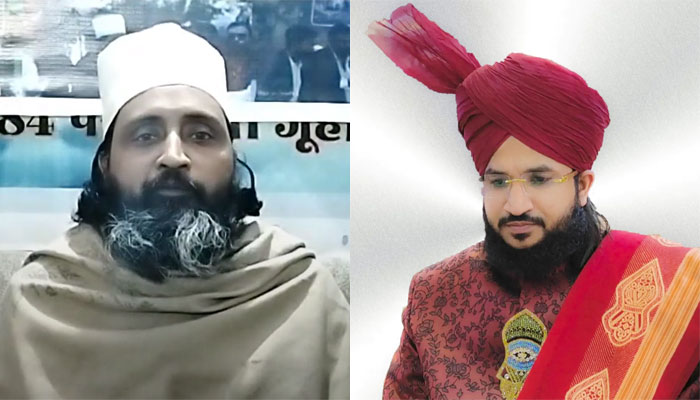
On 5th February, Sufi Khanqah Association’s president Sufi Mohd Kausar Hassan Majidi applauded the arrest of Mufti Salman Azhari by Gujarat Police for inflammatory speech. Azhari was apprehended recently by Gujarat Police in Maharashtra following an FIR filed in Gujarat. Salman was involved in inciting communal tension and promoting religious hatred among Muslim youth.

In his statement, Majidi expressed deep concerns over Salman Azhari’s actions. He stated that Azhari has been following the pattern of Tablighi Jamaat and escalating communal tensions between Hindus and Muslims. He also accused Azhari of engaging in activities in sync with the “Ghazwa-e-Hind project” which the Sufi Khanqah Association has consistently condemned.

Majidi said that Azhari received his education in Egypt and alleged he is aligned with the Muslim Brotherhood ideology. Majidi accused Azhari of aiming to establish a system similar to Hamas in India to advance the Ghazwa-e-Hind project. He also pointed out that multiple cases against Azhari were filed in Hubli and Dharwad in Karnataka for inciting riots.

Advocating strict action against Azhari, the Sufi Khanqah Association welcomed his arrest. Majidi said that individuals who promote religious hatred should not be tolerated. He also wrote a letter addressing the Home Minister, Chief Minister and DGP of Gujarat on behalf of the association calling for Salman Azhari’s detention in Uttar Pradesh. He also demanded an investigation into Salman Azhari’s alleged connections with the terrorists from Pakistan.

Sufi Khanqah Association emphasized that there is a need for scrutiny of those who support Pakistani terrorists in India. The association urged the government of India to take strict action against those who promote unrest in the country. Furthermore, the Sufi Khanqah Association called for strict punishment for those who damage the communal harmony in India and called for a crackdown on Azhari’s supporters to prevent further escalation of the matter.

Derogatory speech and arrest of Salman Azhari

On 31st January, Mufti Salman Azhari made derogatory remarks against the Hindu community during his 56-minute-long speech in Junagadh city of Gujarat. In the contentious video that went viral on social media, the radical Islamic preacher was heard saying, “The final battle of Karbala is yet to come… a moment of silence, then there will be noise again. The dogs are having their time today. Our time will come tomorrow.”

His provocative remarks against the Hindus were applauded by his supporters, who yelled ‘Labbek ya Rasulullah’ in unison. But this was not the only genocidal comment made by Salman Azhar on that day. Before his ‘dog reference’, Salman Azhari spoke in the context of the Ram Mandir Pran Prathishtha at Ayodhya and the legal battle surrounding the disputed Gyanvapi Masjid in Varanasi.

“If you keep idols inside a mosque, then, it will not become an idol-worshipping place (referring to temples),” he had stated. Azhari defended the tendency of Islamic invaders to appropriate religious structures of non-Muslims and pagans.

“You have kept one idol ( at Ram Mandir) but there were 360 idols at Kaaba. Even then, the Kaaba belonged to the Muslims. This did not stop the Islamic pilgrimage of Hajj,” he continued. “…Dear Muslims, the revolution will begin from your homes. They (Hindus) do not dare to convert your mosques to idol-worshipping places (referring to temples). You have yourself abandoned the mosques,” Azhari further added.

While referring to the Hindus as ‘dogs’, he emphasized, “We have a saying – When the ground is left open, dogs take over the place. But if you keep using the ground, then, they won’t become the shelter for dogs.”

Following his speech, a First Information Report (FIR) was registered against him. On 4th February, a team of Gujarat police reached Mumbai and arrested Salman Azhari in connection to his genocidal comments.

The cops also obtained a 2-day transit remand to take the Islamic hate preacher to Junagadh in Gujarat. As expected, Muslim ‘journalists’ came to defend Azhari on social media and seek his immediate release. Islamists also gathered outside the Ghatkopar police station and tried to intimidate the police into releasing the preacher.