Home Blog Page 1536

West Bengal at 41.4% tops in child marriages in India, stagnating the country’s progress towards eliminating the practice: Report

India’s progress towards eliminating the practice of child marriage has been stagnating in recent years with a few states continuing to marry their daughters before they turn adults. Through a recently released research study published in The Lancet Global Health, it has come to the fore that the state of West Bengal has topped the list in India with 41.4 percent of girls getting married before the age of 18. 

The numbers have been followed by states like Tripura where the rate is 40.2 percent, Bihar at 38.7 percent, Assam at 31.9 percent, Jharkhand at 31.5 percent, Andhra Pradesh at 29.6 percent, and Rajasthan at 21.3 percent. While these numbers indicate child marriage in the case of girls, the numbers showing boys getting married before the age of 21 are highest in two states namely Bihar at 26.6 percent and Rajasthan at 26.4 percent.

In the state of West Bengal, around 41.4 percent of girls get married before turning 18 whereas 20.1 percent of boys get married before they attain the age of 21. The percentage of girl child marriage in the state has however increased from the year 2016 when the rate was at 40.8 percent. The constantly increasing numbers are worrisome given that child marriages are a human rights violation and a recognized form of sexual and gender-based violence.
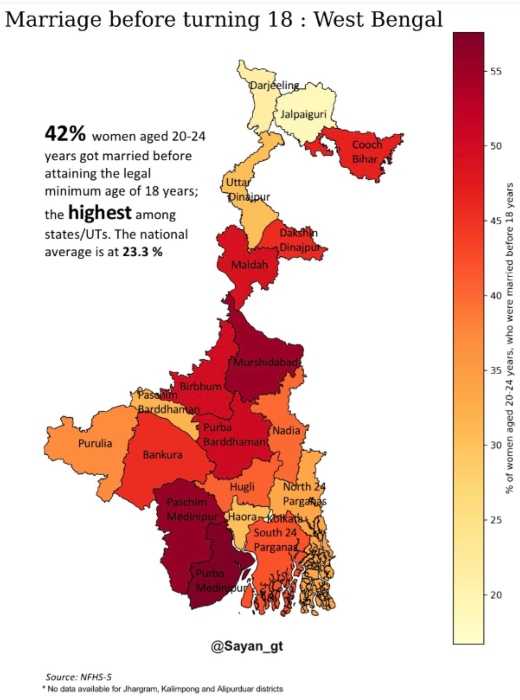
Image- X (@kamalKantmishra)

Under the Prohibition of Child Marriage Act, 2006 (PCMA), 18 is the legal age of marriage for girls, and 21 for boys in India. Despite several years of this Act being in existence, the early marriage of children continues to be practiced in West Bengal. As per the report, the districts with the highest incidence of child marriage in West Bengal are also those where trafficking is rampant.

The research report further revealed that the state of Andhra Pradesh has topped in child marriages among the South Indian states. According to the findings till the year 2021, approximately more than one in every four women in Andhra Pradesh married before the age of 18. In Telangana, more than one in every five girls married before reaching the marriageable age of 18. The numbers were followed by Telangana at 23.4 percent, Karnataka at 20.5 percent, Tamil Nadu at 12.7 percent, and Kerala at 6.2 percent.

Girl child marriage increased in 6 states, more common in Union territories

In India overall, as per the study, one in five girls and roughly one in six boys got married before the legally acceptable ages of 18 and 21, respectively. These findings represent nothing but an interruption in progress toward eradicating the terrible problem of child marriage.

The research also indicates that child marriage has become more common in some states and Union Territories (UTs) between 2016 and 2021. Girl child marriages increased in six states, including Manipur, Punjab, Tripura, and West Bengal. In comparison, boy child marriages increased in eight states, including Chhattisgarh, Goa, Manipur, and Punjab, the researchers noticed after analyzing data from India’s National Family Health Surveys from 1993 to 2021.

However, the research team, which included Harvard University scholars and those affiliated with the Indian government, stated that child marriage had declined nationally. Underage girls’ marriage rates fell from 49 percent in 1993 to 22 percent in 2021, while boys’ marriage rates fell from 7 percent in 2006 to 2 percent in 2021. However, progress towards ending child marriage continues to stagnate between 2016 and 2021, according to the researchers.

Child marriage is a violation of human rights and a recognized form of sexual and gender-based violence. Child marriage, defined as marriage before the age of 18, is both a cause and a result of social and economic vulnerability, leading to a variety of negative health outcomes that limit boys and girls’ ability to reach their full developmental potential.

According to UNICEF, child marriage was often the result of entrenched gender inequality, making girls disproportionately affected by the practice. Ending child marriage will be crucial to achieving the UN’s Sustainable Development Goal (SDG) 5, which aims to achieve gender equality and empower all women and girls by 2030.

Research Methodology and Conclusion

The researchers considered men and women aged 20-24 who were married before turning 18 in their analysis, even though the marriage of boys under the age of 21 is considered child marriage in India. The analysis included more than 13.4 million women and more than 1.4 million men.

According to the researchers, increased global attention to ending child marriage has led many countries to pass legislation prohibiting the practice. They maintained that in India, the policy response to child marriage included a legal prohibition intended to directly prevent child marriage, referring to the 2006 Prohibition of Child Marriage Act. The Act raised the legal marriage age for men to 21 years and for women to 18 years.

The researchers also noted that additional programs and policies were put in place to address the underlying causes of the practice, with an emphasis on lowering economic vulnerability, raising girls’ educational opportunities, and extending social protections.

They stated that state governments had been critical partners in bolstering efforts to end child marriage. Using Uttar Pradesh as an example, they stated that the state achieved a dramatic decrease in the prevalence and headcount for child marriage in the case of girls. Other states, such as West Bengal, they claimed, had been struggling.

There are still evidence gaps in the global elimination of child marriage, with interventions such as cash transfers showing poor success in certain geographies, such as India. The report called the observed stagnation in child marriage abolition at the state and UT levels in India a big concern and said that re-igniting progress in this direction was required to meet SDG Target 5.3.
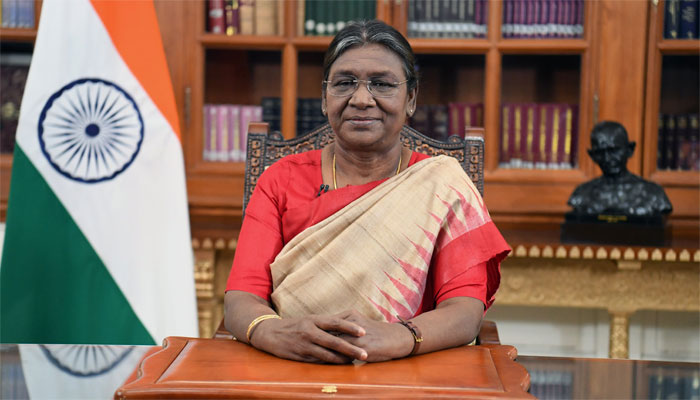
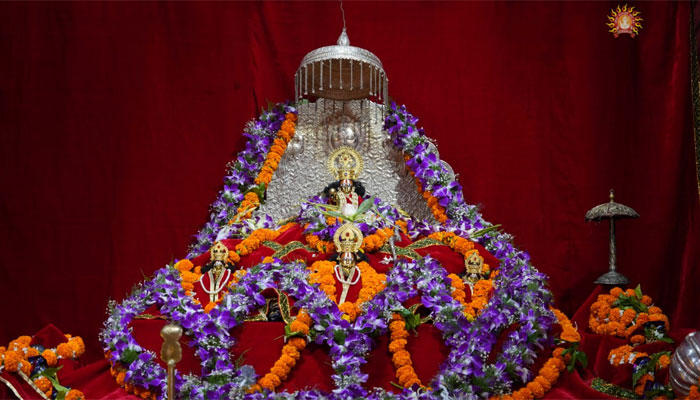
‘Dismayed to see how Vice President was humiliated’: President Droupadi Murmu expresses displeasure at behaviour of hooligan MPs

On 20th December, the President of India, Droupadi Murmu expressed displeasure at the Members of Parliament from the opposition parties for mocking and humiliating Vice President of India Jagdeep Dhankhar. In a post on X (formerly Twitter), she wrote, “I was dismayed to see the manner in which our respected Vice President was humiliated in the Parliament complex. Elected representatives must be free to express themselves, but their expression should be within the norms of dignity and courtesy. That has been the Parliamentary tradition we are proud of, and the People of India expect them to uphold it.”

Earlier, VP Dhankhar said in a post on X that he received a call from the Prime Minister of India, Narendra Modi, who expressed great pain over the way MPs behaved in the Parliament complex. He wrote, “Received a telephone call from the Prime Minister, Shri Narendra Modi Ji. He expressed great pain over the abject theatrics of some Honourable MPs and that too in the sacred Parliament complex yesterday. He told me that he has been at the receiving end of such insults for twenty years and counting but the fact that it could happen to a Constitutional office like the Vice President of India and that too in the Parliament was unfortunate. I told him- Mr. Prime Minister, the antics of a few won’t prevent me from performing my duty and upholding the principles enshrined in our Constitution. I am committed to those values from the bottom of my heart. None of the insults will make me change my path.”

Lok Sabha speaker Om Birla meets Vice President

Lok Sabha speaker Om Birla met the Vice President today over the incident. Sharing a video of their meeting on X, Speaker Birla wrote, “Conveyed my deep concerns and anguish to the Vice President and Hon’ble Chairman, Rajyasabha about serious misdemeanor by Hon’ble MPs in Parliament complex demeaning and denigrating the constitutional office of Vice President.”

MPs mocked VP Dhankhar in Parliament complex

On 19th December, Shameful scenes emerged from the Parliament premises as Opposition members of Parliament (MPs) were seen mocking Rajya Sabha Chairman Jagdeep Dhankhar. Trinamool Congress (TMC) MP Kalyan Banerjee was seen mimicking and mocking the Vice President at the Parliament premises while other Opposition MPs accompanying him laughed. Congress MP Rahul Gandhi was seen videographing the incident with a wide smile.

The cheap act was performed while Opposition MPs were staging protests against the suspension of at least 140 MPs from both Rajya Sabha and Lok Sabha since Monday (18th December).

VP reacted to the visuals of the TMC leader mocking him

Jagdeep Dhankhar has called the act “shameful”. He said, “Imagine a senior leader of your party (Congress) videographing another member of another party, mimicry of the Chairman, mimicry of the Speaker, how ridiculous, how shameful, how unacceptable.”

Notably, over 110 MPs have been suspended from the Parliament for the remaining Winter Session following unruly behavior and misconduct in the Houses.

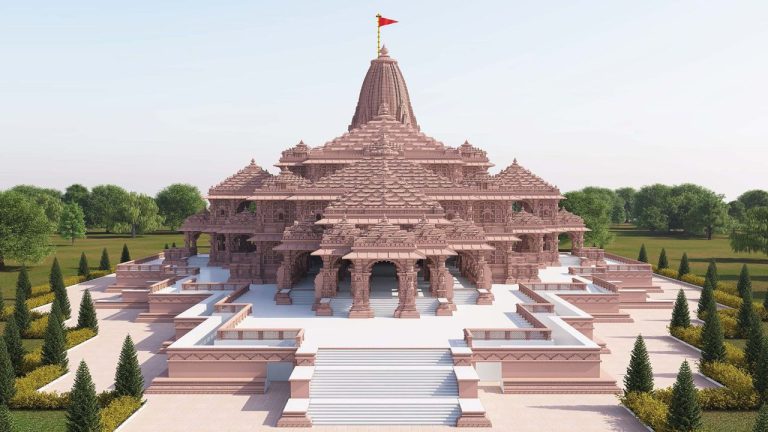
3500 workers, and a Mandir that can stand natural calamities, stand for over a thousand years: How the Bhavya Ram Mandir is being constructed

0

The Pranpratishtha of Shri Ram Lalla in Ram Mandir, Ayodhya is scheduled for 22nd January 2024. Recently, former Principal Secretary to the Prime Minister and Chairman of Shri Ram Janmabhoomi Teerth Kshetra, Nripendra Misra, talked about the construction of the Temple during a podcast with ANI’s Smita Prakash.

He talked in detail about the idols, and how the temple is being constructed. He also informed that 3,500 workers are tirelessly working to complete the construction in record time.

Ram Lalla’s journey to Ram Mandir for Pran Pratishta

Nripendra Misra said that three Sculptures of Ram Lalla Murtis are being made for the Temple which were expected to be ready by the middle of December. Once those Murtis reach Ayodhya, the journey of ‘Pran Pratishta’ will begin with a dip in the Saryu River. He added that Ram Lalla murtis will be taken to various temples in the city.

Thereafter, the murti of Ram Lalla will be kept inside the premises of the Bhavya Ram mandir. Then, Ram Lalla’s eyes would remain covered till the time of Pranpratishtha. The event will be conducted in the Garbgrih (sanctum sanctorum) and will not be open to the public. It will be done early in the morning. 

On the date of the Pran Pratishtha, the eyes of Ram Lalla will be opened. Notably, Pran Pratishtha is done so that the Murti attains the qualities of Bhagwan. It is the process of transferring from a normal to an exceptional.

The process of making idols of Ram Lalla

Misra added that there are going to be three idols. The present idol, which is believed to have appeared in 1947-49 and has been worshipped for decades, will continue to be a part of the Garbgreh.

When the devotees come to the TempleTemple, they will do darshan from at least 25-30 feet away from the Garbgreh. The old Murti is smaller, and doing proper darshan will not be possible. Hence, new idols are being made to ensure the devotees have a satisfying darshan in the Temple.

One of the Murtis will be Achal, which means it will never be moved after Pranpratishtha. That will be a standing one. The second Murti is going to be Utsav Murti. That means, on special occasions, Ram Lalla will be taken out for procession in the city, just like Jagannath Puri Yatra, and Tirupati Brahmotsavam. There is a possibility that the trust will start the yearly Yatra of Ram Lalla like Puri Yatra, but it has not been finalised yet.

All the Achal Murtis are made out of unique stones. Once the stones were selected, they were sent for testing at the National Institute of Rock Mechanics. It is a Government of India institute located in Mysuru, Karnataka, which specialises in tests of various stones to determine their strength. The stones selected for creating Ram Lalla murtis will not be affected by pollution. It will not absorb water as well. It will increase the life of the idols. The stones selected came from Rajasthan and Karnataka. Expert sculptors are preparing all the idols at undisclosed locations. The whole process is under extreme secrecy. Videography and photography are now allowed where the idols are being made. Notably, during a meeting to decide the material for the idols, stones were chosen for durability over metal.

3,500 workers completing the construction

Speaking about the labourers working at the site, Misra said 3,500 workers work day and night to complete the construction of the Bhavya Ram Mandir. The ground floor has the Garbgrih.

The lower place, just under the ground floor, will have 100 stone murals depicting Ramayana’s story from Bhagwan Ram’s birth to his coronation as King of Ayodhya after he returns from Vanvas.

Strong foundation to ensure Temple stands natural calamities for hundreds of years

Misra said that the construction of the Temple was a challenge in itself. After the soil tests, it was found that a few hundred years back, Saryu river passed through the region, and it almost touched the place, making the soil unsuitable for the foundation.

IIT Chennai’s advisors asked the construction company to dig 15 deep pits in the entire area and remove the soil. Then, it was filled with re-engineered soil and a mix of materials, including specially-made cement. The soil, once pressed, behaved like a stone.

Above several layers of the new soil is a granite base. Furthermore, Mishra informed during the interview that the bricks from five lakh villages across the country were also used in the temple’s foundation.

The Central Building Research Institute helped ensure the Temple building could tolerate earthquakes 50 times stronger than the earthquakes recorded in the region to date. Furthermore, the temple structure will not be affected by the Saryu River flooding.

The Temple itself is built on 2.5 acres of land. The Parikrama, or the corridor, will cover 8.5 acres of land. There will be a South Indian temple-style gate outside the Eastern Gate. Furthermore, a 15-foot high and 20-foot wide bronze statue of Jatayu will look at the Temple.

Misra said that no iron was used in the construction as it would have reduced the life of the building. Special workers from Rajasthan who are experts in stone building work have been brought.

Copper clips have been used to keep them attached. Central Building Research Institute made sure there was no gap between the stones. Back in 2020, the Temple Trust had asked devotees to donate copper rods and strips, for use in the construction process.

5-7 different construction projects are ongoing at the 71-acre land under the Trust. One of the constructions is the Pilgrimage Facilitation Centre, where, at any given time, 5,000 devotees can stay.

Collection and Security

So far, 3,500 crores have been collected from the devotees. The government did not pay a single rupee for the construction of the Temple, Misra informed. The organisations associated with the temple construction, such as Vishwa Hindu Parishad, reached out to the devotees across five lakh villages in the country and collected funds from them. The money was then deposited in the Trust’s account.

Regarding security, the Uttar Pradesh government formed a special division in UP Police to protect the Temple. They have been stationed at the premises. Another support the government provided was transferring stones from different parts of the country to Ayodhya via Railways and special permissions for the trucks bringing material for the temple construction to enter Ayodhya.

The mammoth construction project

Several companies, individuals and agencies have participated in the construction of Ram Mandir in Ayodhya. While Larsen & Toubro are managing the construction of the temple and beautification or upgradation of the tourist sites in Ayodhya, IIT Kanpur is working on the temple’s structural engineering.

IIT Chennai is mainly working on the foundation, raft, and plinth. Central Building Research Institute (CBRI) has done all the work on the stability of stones keeping in mind earthquakes and other natural challenges.

CP Kukreja Architects and L&T submitted their master blueprint plan for Ayodhya in January 2022. The project includes the development of public amenities, street furniture, broadening and “pedestrianisation” of roads along with the redevelopment of the Saryu riverfront.

Add to that a solar city near the Saryu River, ferries, luxury river cruises, houseboats are only some of the many tourism boosters to attract visitors and pilgrims alike. All this is made possible with one grand temple.

The construction which began in August 2020, will continue after the Pranpratishtha of Ram Lalla on 22nd January.

Karnataka: Hindu organisations demand that Muslim vendors not be allowed to do business in Shri Siddeshwara temple Makar Sankranti fair in Vijayapura

0

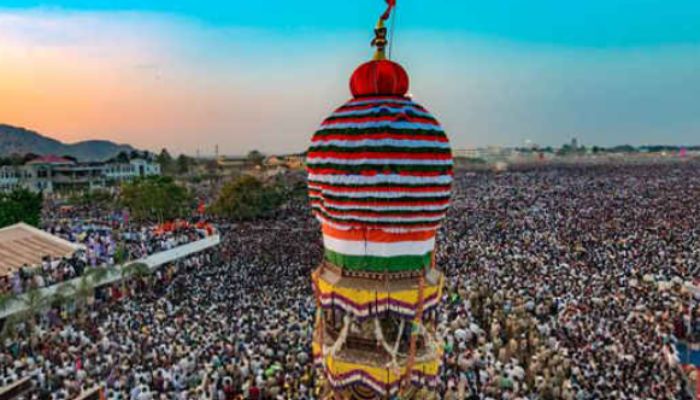
Hindu organisations in Karnataka’s Vijayapura have warned against allowing Muslim vendors to set up stalls and do business in the upcoming Shri Siddeshwara Jatre, a Hindu religious fair which dates back to over a hundred years. The fair is organised every year since more than hundred years on Makara Sankranti.

As preparations are underway for the historic fair, Hindu groups including the Shri Ram Sena and others have demanded that the Muslim community should not be allowed in the festival. Devotees from North Karnataka and Maharashtra participate every year.

Hindu groups assembled outside the Siddheshwar Temple in the city and said that they will stage protests if their demand is not heeded.

They reportedly argued that Muslim vendors do not respect the law of the land and don’t value their culture.

They also reportedly pointed out that the Muslim community has repeatedly hurt the religious sentiments of Hindus. Cases of cow slaughter, beef consumption and love/grooming jihad, abusing Hindu women and murdering them are on the rise, the Hindu groups reportedly said.

It is in this context that Hindu activists have said that if Muslim traders are allowed, the former will put up a fierce fight.

The activists reportedly said that Muslim shopkeepers are not allowed to do business in Hindu temple complexes and religious fairs in the state and the same should be followed in Shri Siddheshwar temple fair.

Reports say that the practice of not allowing Muslim traders to do business in Hindu festivals has been followed in several parts of the state.

The Hindu groups have also appealed to BJP MLA Basanagowda Patil Yatnal saying that they are hopeful for a response.

Moreover, Maha Sangh of Temple Mutts and Religious Organisations and the Hindu Jan Jagriti Sangh have said that non-religious people are prohibited from doing business in Hindu temple fairs.

In August this year, the Karnataka Rajya Hindu Jaatra Vyaparasthara sangha appealed to the government not to allow non-Hindus to set up shops during fairs or annual festivals of temples under the Endowment Department.

Sangha President Mahesh Das cited section 31 (12) of the Karnataka Hindu Religious Institutions and Charitable Endowments Act which states that no property including land, building or site situated near the temple should be leased to non-Hindis.

In October, the Mangaluru police booked Dakshinna Kannada district VHP joint secretary Sharan Pumpwell for calling for a boycott of Muslim traders during festivals in Hindu temples in Karnataka.

About a week ago, President of a traders’ body in Mangaluru, BK Imtiaz reportedly submitted a memorandum to the Deputy Commissioner MP Mullai Muhilan alleging that Muslim businessmen were prohibited from putting up stalls in the Kudupu Ananthapadmanabha temple during the ‘Shashthi Mahotsav’.

The Dakshina Kannada and Udupi Districts Religious Fair Businessmen’s Coordination Committee had reportedly said that several Hindu shrines banned Muslims from bidding for stalls near the temples during religious festivals.

Notably, Hindu religious rallies, festivals and devotees have often come under attack by Muslim groups unprovoked. Additionally, as per Islamic law, anyone who falls outside the purview of Sharia is deemed a ‘kafir’ which translates to ‘infidel’.

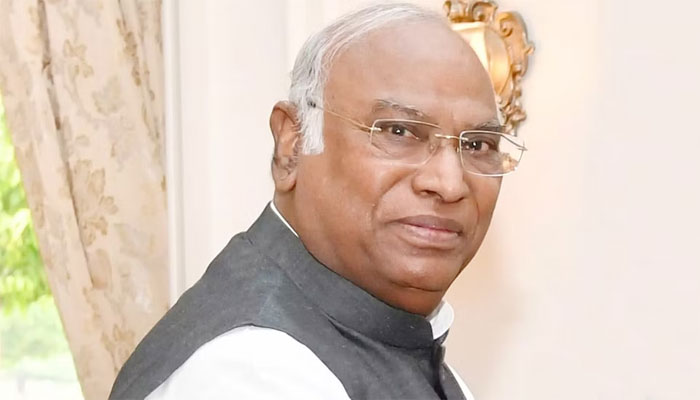
Elections 2024: Kharge avoids commenting on proposal to be I.N.D.I Alliance PM candidate, says winning is priority

On 20th December, Congress Party President Mallikarjun Kharge refused to comment on his name being forwarded as the face of Prime Minister for the 2024 Lok Sabha Elections. Replying to media queries after his statement in the I.N.D.I. Alliance meeting, Kharge emphasised on winning the elections first and then deciding who would become the country’s prime minister.

He said, “Our primary focus is on winning. What needs to be done to achieve victory is something we will collectively consider. The discussion about becoming the Prime Minister can come later. Talking about the Prime Minister’s position holds no significance if there is no majority. Therefore, our initial goal is to unite and strive to increase our numbers.”

He added, “We will collectively fight to bring a majority and make efforts to enhance our strength. After a few elections, the BJP and Mr Modi seem to have developed a sense of arrogance, as if there will be no one left in the country or the world except for them. They project themselves as the sole leaders. Hence, our first endeavour will be to win. How can we, as a united front, secure victory? I have repeatedly reiterated that I am repeating it – first, we will win. After that, our MPs can discuss what can be done within the democratic process. Our primary concern is winning, and you should think in that direction.

Insisting that deciding the PM face is I.N.D.I. Alliance’s internal matter, he added, “Instead of getting into discussions about who said what, whether it was us or someone else, this is our internal matter, and there is no need for anyone else to be involved.”

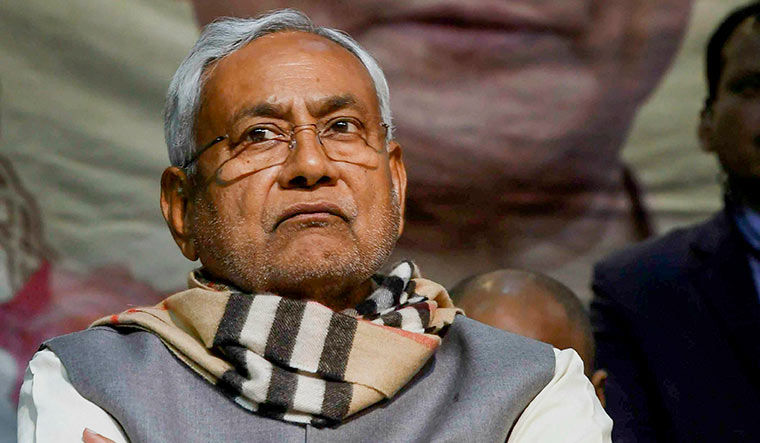
Nitish Kumar and Lalu Prasad Yadav walked out after Kharge’s name was proposed.

Reportedly, Bihar’s Chief Minister Nitish Kumar and Rashtriya Janata Dal (RJD) chief Lalu Prasad Yadav walked out of the alliance meeting after Kharge’s name was proposed as PM candidate. India Today quoted unnamed sources saying that West Bengal Chief Minister Mamata Banerjee proposed his name during the alliance meeting in Delhi. JD(U) chief Nitish Kumar and RJD chief Lalu Yadav expressed their disagreement and walked out of the meeting. Furthermore, they did not attend the press conference either.

Notably, JD(U) MLAs and RJD leaders had publically demanded that Nitish Kumar should be the PM face for the I.N.D.I Alliance for Lok Sabha Elections 2024. Lalu Pradas Yadav also supported Kumar’s name as PM candidate. Experts believe that supporting Nitish Kumar in national politics is to clear the path for Tejashwi Yadav to become Chief Minister of Bihar. Currently, Yadav is serving as deputy CM of the state.

Nitish-Baalu war of words over English translation of the speech

As the Lok Sabha elections are approaching, the differences between the parties that are part of the I.N.D.I Alliance are becoming more apparent. As per reports, during the recent alliance meeting in Delhi, Nitish Kumar lost his cool when Dravida Munnetra Kazhagam (DMK) leader TR Baalu sought an English translation of his speech delivered in Hindi. After Kumar’s speech, when Baalu sought the transition, Kumar snapped at him and asserted that Hindi is the national language and everyone should learn it.

Several leaders had to step in to calm him down as he went on for several minutes giving a lecture on Indian history and English imposition to Baalu. After his speech, Yadav spoke at the meeting. Both the speeches were not translated, the sources were revealed to The Hindu. Notably, in the earlier sessions, Rajya Sabha MP and RJD leader Manoj K Jha used to translate the speeches given in English and circulate among the leaders who are not well versed in Hindi. Baalu, expecting the same process to happen, sought the translation.

Following Kumar’s outburst, leaders, including Aam Aadmi Party (AAP) chief Arvind Kejriwal, who spoke in Hindi in earlier meetings, chose to speak in English to avoid any more word battle over the matter.

The fight over seats in Punjab

Earlier, OpIndia reported how AAP and Congress have locked horns virtually by claiming their right to contest Lok Sabha Elections on all 13 seats in Punjab. While AAP chief Kejriwal has asserted that his party can win all 13 seats if given a chance, Punjab Congress’s President Amrinder Singh Raja Warring has categorically said that Congress will not form an Alliance with AAP in Punjab for Lok Sabha Elections that are scheduled in the first half of 2024.

‘Hindi is the national language, learn it’: Nitish Kumar bursts as DMK leaders ask for English translation of his speech during I.N.D.I. Alliance meet

As the upcoming Lok Sabha elections draw near, the fault lines within the I.N.D.I. Alliance have come to the fore, culminating in a heated incident involving Bihar Chief Minister Nitish Kumar during a recent alliance meeting in Delhi on Tuesday (19th December).

Reports suggest that during the meeting, DMK leader TR Baalu requested an English translation of Nitish Kumar’s Hindi speech, leading to a surprising eruption from the Bihar Chief Minister. Expressing frustration, Nitish Kumar asserted that Hindi is the national language and insisted that everyone should comprehend it. His outburst continued for several minutes, delving into Indian history and criticising the imposition of English.

According to reports, in previous sessions, RJD leader Manoj Jha translated speeches into English for those not proficient in Hindi. However, after Nitish Kumar’s episode, subsequent speeches, including one by Aam Aadmi Party (AAP) chief Arvind Kejriwal, were delivered in English to avoid further clashes.

RJD’s Manoj Jha had offered to translate Nitish Kumar’s remarks during the meeting on Tuesday as well, but Nitish Kumar vehemently opposed the idea, emphasising the importance of Hindi as the national language and urging DMK leaders to discard colonial remnants, including the English language.

The incident not only revealed underlying tensions within the I.N.D.I. Alliance, but it also prompted a shift in the language of subsequent speeches, with leaders opting for English to prevent further linguistic confrontations.

The incident highlights growing tensions within the I.N.D.I. Alliance, particularly as Nitish Kumar feels sidelined despite being an instrumental figure in convening the opposition parties and hosting the alliance’s inaugural meeting in Patna.

Nitish Kumar is not happy in the I.N.D.I. alliance

Speculations about Nitish Kumar’s discomfort stem from the perceived downsizing of his role within the alliance. Despite his party, JD(U), touting him as the prime ministerial face, the recent meeting saw suggestions favoring Congress President Mallikarjun Kharge for the position, adding to Kumar’s unease.

Nitish Kumar’s absence from the joint press conference following the meeting fueled further speculation about his dissatisfaction. Some reports indicate his interest in becoming the Convenor of the I.N.D.I. Alliance, complicating the internal dynamics of the opposition coalition.

As the Lok Sabha elections loom, the incident adds a layer of complexity to the already intricate dynamics within the I.N.D.I. Alliance, underscoring the challenges of fostering unity among diverse regional parties with differing linguistic preferences.

All Shankaracharyas, Mahamandaleshwars, and spiritual leaders invited: Read details of the Ram Mandir consecration ceremony provided by Teerth Kshetra Trust

On Tuesday (19th December), Shri Ram Janmbhoomi Teerth Kshetra Trust shared the details of the program of the consecration ceremony scheduled at the Shri Ram Janmabhoomi Mandir in Ayodhya on 22nd January 2024. In the post shared from its X handle, the trust mentioned the key points related to the program.

The trust said in its post, “Key points related to the program of the consecration ceremony scheduled at the Shri Ram Janmabhoomi Mandir in Ayodhya on 22nd January: Invitations have been extended to revered saints from all traditions, along with all prominent individuals contributing to the honour of the country in every domain.”

It added, “In the new Teerthakshetrapuram (Bag Bijaisi), a Tent City has been established, including six tubewells, six kitchen houses, and a hospital with ten beds. Approximately 150 doctors from around the country have agreed to provide their services in rotation at this hospital. Langars, community kitchens, food distribution centres and meal areas will be set up in every corner of the town.”

It further said, “About 4,000 saints from all sects have been invited to participate. Invitations have been extended to all Shankaracharyas, Mahamandaleshwars, and top spiritual leaders of the Sikh and Buddhist communities. Key figures from various realms such as Vamini Narayan, Art of Living, Gayatri Parivar, Media Houses, Sports, Farmers and the Art world have been invited. Invitations have also been sent to veteran journalists active from 1984 to 1992. The families of Karsewaks have also been invited.”

Shri Ram Janmbhoomi Teerth Kshetra Trust also gave the details of the idol to be consecrated. It said, “Rama Lala’s idols are being made by three sculptors- Ganesh Bhatt, Arun Yogiraj and Satyanarayan Pandey. Out of the three, the idol that brings to life the tenderness of a five-year-old child will be chosen. The consecration ceremony rituals will commence from January 16.”

The trust concluded its post by saying, “Ganeshwar Shastri Dravid ji from Kashi and Lakshmikant Dikshit ji will conduct the Pran Pratishtha Puja. Following the consecration ceremony, there will be a 48-day cycle of mandala puja (ritualistic worship) under the leadership of Vishwaprasann Teerth Ji, a revered figure.”

US: Colorado Supreme Court declares Donald Trump ‘ineligible’ for White House, ruling Judges were appointed by Democratic Governors

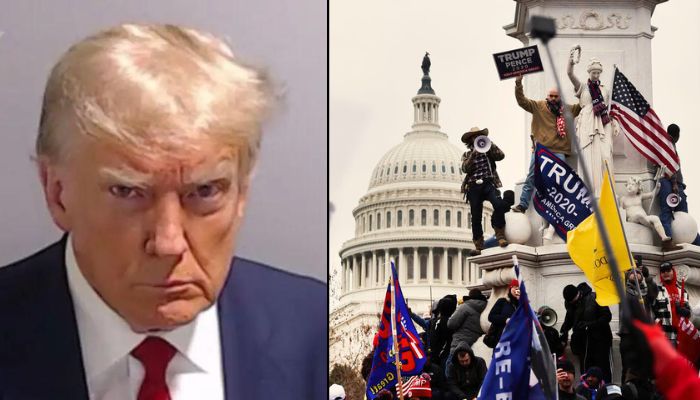
On Tuesday (19th December), the Colorado Supreme Court in the United States barred ex-President Donald Trump from the Colorado primary ballot and declared him ‘ineligible’ for the White House.

In a 4-3 majority verdict, the court invoked a rarely used ‘insurrection’ clause of the US Constitution to disqualify a Presidential candidate. Interestingly, the Judges of the Colorado Supreme Court were all appointed by Governors belonging to the Democratic Party.

“A majority of the court holds that Trump is disqualified from holding the office of president under Section 3 of the 14th Amendment,” the court ruled against the former US President.

“We do not reach these conclusions lightly…We are mindful of the magnitude and weight of the questions now before us. We are likewise mindful of our solemn duty to apply the law, without fear or favour, and without being swayed by public reaction to the decisions that the law mandates we reach,” it further added.

Justices Richard L. Gabriel, Melissa Hart, Monica Márquez and Hood wrote the majority verdict. The Colorado Supreme Court overturned a judgment by a district court Judge who ruled that Donald Trump could not be barred from the Presidential primary ballot.

It held Trump responsible for the events that unfolded on 6th January 2021 when his supporters stormed the US Capitol. Having said that, the court has put a stay on its decision until 4th January 2024, thus providing a two-week window for the former President to appeal the verdict in the US Supreme Court.

Reactions to the unprecedented Judgement against Donald Trump

While speaking about the matter, Donald Trump’s spokesperson Alina Habba said, “This ruling, issued by the Colorado Supreme Court, attacks the very heart of this nation’s democracy. It will not stand, and we trust that the Supreme Court will reverse this unconstitutional order.”

Republican leader Elise Stefanik said, “Four partisan Democrat operatives on the Colorado Supreme Court think they get to decide for all Coloradans and Americans the next presidential election.”

Indian-origin US Presidential candidate Vivek Ramaswamy vowed to withdraw from the Colorado Republican primary ballot and urged fellow candidates such as Ron DeSantis, Chris Christie, and Nikki Haley to follow suit.

Impact of the ruling by the Colorado Supreme Court

It must be mentioned that Donald Trump lost Colorado during the 2020 US Presidential elections and he does not need to win from the considerably ‘safe Democratic State’ to win the 2024 election.

However, the unprecedented verdict by the Colorado Supreme Court may pave the way for other State Supreme Courts to bar Trump from the primary ballot. It must be mentioned that the US Supreme Court currently has a 6-3 Conservative majority.

As of now, Donald Trump is well in the Presidential race and is likely to win against his Democratic rival Joe Biden.

IMF commends India’s economic resilience and growth amid global challenges, projects 6.3% growth in 2023-24

The Executive Board of the International Monetary Fund (IMF) came up with a ringing endorsement of India’s growth story after concluding the Article IV consultation with New Delhi, commending the nation’s robust economic growth, resilient financial sector, and notable progress in formalisation and digital infrastructure.

According to the IMF, India’s economy exhibited robust growth over the past year, surpassing pre-pandemic employment levels and showcasing resilience in the informal sector.

The financial sector experienced its strongest performance in years, demonstrating resilience in the face of global financial stress.

Despite a widening current account deficit in FY2022/23, driven by post-pandemic domestic demand recovery and external shocks, India’s services exports and strategic diversification of critical oil imports provided stability.

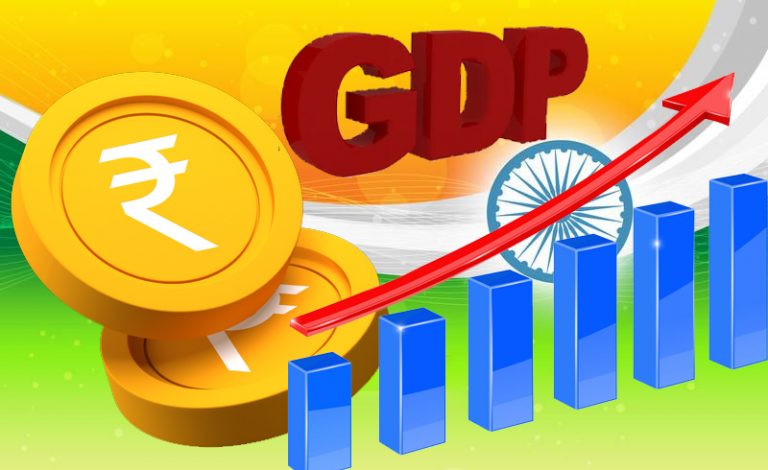
The IMF projects a continued strong growth trajectory for India, with real Gross Domestic Product (GDP) expected to grow at 6.3 per cent in FY2023/24 and FY2024/25.

“Despite widespread global uncertainty, India is expected to grow above 6 per cent over the next five years driven by continued strong investment, still-growing private consumption, and digitalization-driven productivity gains,” it reported.

The current account deficit is anticipated to improve to 1.8 per cent of GDP in FY2023/24, supported by resilient services exports and lower oil import costs.

In its report, on inflation front, the IMF projected 5.4 per cent for this fiscal year and 4.6 per cent for the next.

The IMF, in its Article IV consultation report, which reviews a country’s current and medium-term economic outlook, said the country’s growth is expected to remain strong, supported by macroeconomic and financial stability.

The foundational digital public infrastructure and robust government programs are poised to sustain growth, with the potential for even higher growth through comprehensive reforms.

Risks to India’s economic outlook are considered balanced. Global factors such as a sharp growth slowdown or supply disruptions could impact the nation through trade and financial channels.

Domestically, weather shocks pose a potential threat to inflation, while strong consumer demand and private investment could positively influence growth.

The directors highlighted the importance of further liberalization of foreign investment, structural reforms, and climate policy implementation.

The executive directors broadly supported India’s macroeconomic policies and reforms, acknowledging the country’s strong economic performance in the face of global challenges.

They emphasised the need for continued appropriate policies to sustain economic stability and encouraged further progress in key structural reforms to unlock India’s significant potential.

The directors commended India’s near-term fiscal policy, focusing on accelerating capital spending while tightening the fiscal stance.

Given elevated public debt levels, they recommended ambitious medium-term consolidation efforts and improvements in revenue mobilisation and spending efficiency.

The Reserve Bank of India’s proactive monetary policy received praise, with a consensus that the current neutral monetary policy stance is appropriate.

Exchange rate flexibility was highlighted as the first line of defence against external shocks.

The directors further acknowledged the stability of India’s financial sector but called for continued supervision, prudential tools, and vigilance, particularly in managing emerging vulnerabilities, including the rapid growth in unsecured personal loans.

Encouraging comprehensive structural reforms, the directors stressed the importance of labour market functioning, increased female labour force participation, and progress in health, education, land, and agricultural reforms.

Strengthening governance and regulatory frameworks were identified as critical for transparency and public accountability.

The directors also recognised India’s role during its G20 Presidency and urged the phasing out of recent restrictive trade policies. Further liberalization of the foreign direct investment (FDI) regime and improvement of the investment climate were encouraged.

The IMF’s positive assessment underscores India’s economic resilience and stability amid global uncertainties.

As India aims for sustained growth, the recommendations from the Executive Board emphasise the importance of fiscal consolidation, continued structural reforms, and vigilant policies to navigate potential risks.

India’s proactive approach to economic challenges positions the nation as a key player in the global economic landscape, with ongoing efforts toward inclusive and sustainable growth.

The Reserve Bank of India (RBI), meanwhile maintaining the status quo in key policy rates, in its latest monetary policy meeting, raised India’s GDP growth forecast for the financial year 2023-24 by 50 basis points to 7 per cent. In its October meeting, the RBI had forecast 2023-24 growth at 6.5 per cent.

This upward revision by the Indian central bank came on the heels of India reporting more-than-expected July-September quarter growth – 7.6 per cent. (ANI)

Probe in phone snatching case leads to sextortion racket: Zubair among 2 arrested, police reveal they earned Rs 2.8 crores by blackmailing victims

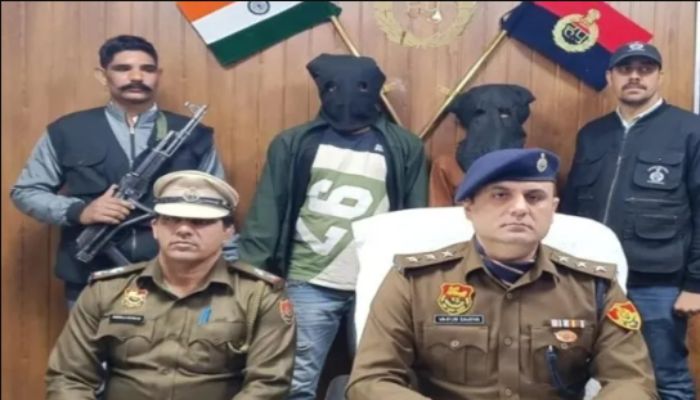
The arrest of two accused in a phone snatching case led Gurgaon Police to bust a sextortion racket that allegedly extorted more than Rs 2.8 crores from numerous targets. The two accused Zubair Khan (19) and Waseem (21) were arrested earlier this week by Gurgaon Police in a phone snatching case. However, during the investigation, the accused led police to a string of cybercrimes of sextortion. 

ACP (Crime) Varun Dahiya stated that during questioning, it was revealed that Waseem after robbing the complainant’s phone sold it to Zubair for Rs 7,000.  He said, “Investigation and interrogation of the accused lead us to a string of complaints against Zubair for extortion. He also revealed that others were involved in the crime. Zubair used the robbed phone to make WhatsApp video calls and defrauded several people of Rs 2.88 crore through extortion.”

As per reports, there are several complaints against him, and a few FIRs have also been registered. 

Dahiya added, “We are checking their modus operandi and will probe if there was a syndicate in Mewat. We will recover the money as and when we probe these complaints against them.” 

Waseem is currently facing charges in eight cases related to theft and robbery, spanning various police stations in Gurgaon. Similarly, Zubair is accused of two cyber-fraud incidents, including the ongoing case.

As per reports, on 11th December, a resident of Gurgaon’s Bar Gujjar area filed a complaint at the Kherki Daula police station. He stated that an unidentified person on a bike snatched his mobile phone and fled.

Subsequently, on 14th December, the Crime Branch team from Sector 31 arrested Zubair Khan near Ghatvasan. Later, the second accused, Wasim (21), a resident of Hasanpur Beri, was arrested on 17th December in Nuh. The police successfully recovered the stolen mobile phone.

The police during the investigation found that Wasim would snatch mobile phones from commuters and then sell them to Zubair for around Rs 7,000 each. The Police said that during the investigation it was found out that the accused used to work at a Bilaspur-based company and knew each other since then.

Regarding the modus operandi, the ACP said that the targets would receive a video call on WhatsApp from an unknown number. Upon answering, the screen would reveal either a naked woman or, in some instances, remain blank. Before the targets could comprehend the situation, the call would abruptly end after a few seconds.

Afterwards, the accused would morph an explicit video featuring the target’s face, sending it to the victim on WhatsApp a few hours later. Subsequently, the accused would threaten the target to upload the video on social media if they failed to pay a large amount. However, even after making the payment, the accused would threaten them again to give more money, creating an ongoing cycle of extortion.