Home Blog Page 1562

Mohit Pandey to be the chief priest of Ram Mandir in Ayodhya: While the leftist ecosystem is linking it with caste, here is why it has nothing to do with caste

The process of selecting priests to perform prayers at the Ram Mandir in Ayodhya was recently completed. As part of the process, regular applications were invited from interested devotees, and around 3000 people participated. The interested parties had to undergo a rigorous selection process that included specific criteria for choosing the priests for the Ram Mandir. In this entire process, 200 applicants were interviewed, out of which 50 candidates were selected for the post of priests.

Subsequently, the reports saying that Mohit Pandey had been selected as the chief priest went viral on social media. Reacting to these reports, certain social media users tried to cast aspersions and raise questions over the selection process for priests asking why only a Brahmin was selected for this post.

Many predictable handles, fanning the casteist divide and playing SC, OBC cards, started linking his selection with Brahminism highlighting his name, Manoj Pandey. 

A Dalit portal named ‘The Mooknayak’ tweeted in Hindi, ” Mohit Pandey will become the priest of Ram temple! Is it forbidden for Dalits to become priests?” 

Dilip Mandal fumed and wrote, “This temple is being built by the Government of India as a trust. It is not anyone’s ancestral property. There should be an agitation if the reservation is not given in the temple management. Everyone will give Dakshina and only one caste will withdraw all the money, this will not work.” 

An X user named Suraj Yadav in a sarcastic tone claimed that Dalits, OBCs, and Tribals are not Hindus. He wrote, “If he is a Hindu then he is selected. Keep in mind that Dalits, backward people, and tribals are not Hindus. Shudras, Ati Shudras, and people outside the caste system have no place either in the trust or in the place of worship. And this is especially for those Yadavs who are supporters of Manuvad or Brahminism.”

However, the pertinent thing is that those who are casting aspersions, neither know about the selection process nor are they aware of the merit due to which Mohit Pandey was selected for the post of Chief Priest.

For those unversed, the necessary condition to become a priest in the Ramlala temple was that the candidate should have studied Vedas, Shastras, and Sanskrit from a recognised Gurukul. Additionally, the candidate must have been initiated into the Ramanandiya tradition. In line with that, attention was paid to the knowledge of Vedas, rituals, and Vedic mantras during the interview process to select priests for the Ram Mandir. The upper limit for the candidates was fixed at 30 years.

Furthermore, despite their selection as Priest and Chief Priest, the selected candidates will have to undergo a long training period, which would last for 6 months, before they start performing their duties. In this training phase, they will be imparted in-depth knowledge of Vedas, rituals, Vedic mantras, and Ramayana. Only after the training phase is over, the priests will be able to perform the worship of Ramlala.

Candidates were adjudged on the selection criteria

As per the selection criteria, it was necessary to be a scholar of the Ramnandiya tradition, as well as to have expertise in the knowledge of Vedas, Shastras, and Sanskrit. The fact that Mohit Pandey passed all the selection criteria based on merit and ability, just like other candidates who were also evaluated, means that allegations of casteism and religious favoritism don’t arise. 

Notably, Mohit Pandey studied for seven years at Dudheshwar Ved Vidyapeeth, Ghaziabad. He obtained a Shastri (Bachelor) degree from Sri Venkateswara Vedic University, affiliated with Tirumala Tirupati Devasthanams in Tirupati. In 2023, he earned a master’s degree in Samaveda. He is also a scholar of the Ramanandiya tradition and possesses expertise in Vedas, Shastras, and Sanskrit.

Likewise, other selected priests include youth from Uttar Pradesh, Bihar, Rajasthan, Madhya Pradesh and Maharashtra. All the selected priests belong to the Ramanandiya tradition and have expertise in the Vedas, Shastras, and Sanskrit.

Mohit Pandey chosen as per the selection process

Speaking with The New Indian Express, Professor Rani Sadashiva Murthy, Vice-Chancellor of Sri Venkateswara Vedic University expressed happiness over the selection of Mohit Pandey to the post of Chief Priest of Shri Ram Lal Temple. 

Murthy said, “Many students from the University serve as priests and acharyas in various temples. A soft-spoken person, Pandey’s nature, focus and dedication to his studies have earned him the opportunity to serve Lord Ram in the esteemed Ayodhya Ram mandir.”

Mohit Pandey’s journey, from Ghaziabad to Tirupati and now Ayodhya after being selected as the Chief Priest of Ram Lala, is a testament to his dedication and rigorous training. Institutions like Dudheshwar Ved Vidyapeeth and Sri Venkateswara Vedic University in Ghaziabad have played a crucial role in nurturing individuals with spiritual abilities, as evidenced by their selection process.

In such a situation, those who are pointing fingers at his selection and linking it with castism are vitiating society by fanning the caste divide. 

While the ecosystem has been carrying out smear campaigns and cast aspersions, it is important to highlight that there are several temples in different states of India, there are not only Dalit or Women priests, prayers are performed by Dalit women priests in these temples.

In a previous article, OpIndia highlighted temples in which women and Dalits have been performing the responsibility of priests. Click here to read this complete report. 

Key takeaways from Supreme Court’s verdict upholding the abrogation of Article 370

The Supreme Court on Monday (11th December) upheld the abrogation of Article 370, which grants a special and separate Constitution to Jammu and Kashmir. Article 370 and Article 35A of the Indian Constitution gave special status to Jammu and Kashmir thereby giving it a separate identity than the rest of India.

On 5th August 2019, the Modi government revoked Article 370 and 35A thereby enabling the full and final Constitutional integration of the region into India. The same was immediately challenged by Advocate Manohar Lal Sharma who filed a petition under Article 32.

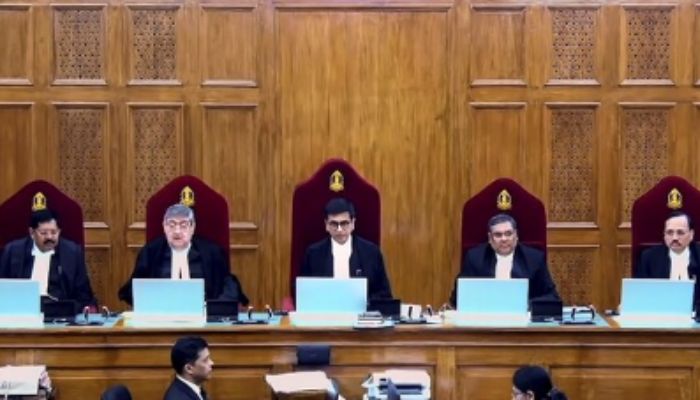
The five-judge Constitution bench comprising of Chief Justice DY Chandrachud, Justices SK Kaul, Sanjeev Khanna, BR Gavai and Surya Kant delivered a series of significant observations while upholding the abrogation of Article 370.

There were three judgments authored by the Supreme Court including by the CJI, Justice Gavai and Justice Surya Kant. A concurring opinion was authored by Justice SK Kaul and Justice Sanjeev Khanna had concurred with both judgments.

On the issue of the President empowered to withdraw executive and legislative powers from the state and transfer it to the Union

To the question of the power of the President under Article 356 to designate the executive and legislative powers of a state to the Union, the CJI listed a 6-point conclusion.

Upholding this power, in the 6th and last point, the CJI stated that every decision taken by the Union on behalf of the state is not subject to challenge.

“Opening up challenge to every decision would lead to chaos and uncertainty. It would in effect put the administration in the state at a standstill,” CJI Chandrachud read.

The SC laid down the criteria to assess action under Article 356 after it is exercised or brought into effect.

The criteria stated by the SC was in three points which read as follows:

“a) The exercise of the power by the President under Article 356 must have a reasonable nexus to the object of the Proclamation.”

b) The person challenging the exercise of power must prima facie establish that it is a malafide or extraneous exercise of power. After a prima facie case is made, the ownership to the Union to justify that the exercise of the power had a reasonable nexus for the object of the proclamation.

c) The exercise of power by the President for everyday administration of the state is not ordinarily subject to judicial review.”

This essentially means that the Supreme Court laid down criteria for challenging the implementation of Article 356 after it is invoked by the Union. And this requires for the objecting party to prove that the exercise of the power is malafide.

Moreover, the Supreme Court refused to accept the petitioner’s argument that the Union Government cannot take action which has irresversible consequences when a proclamation under Article 356 is imposed.

The SC also did not accept the petitioner’s argument that Parliament can assume only the lawmaking powers of the legislature of the state when the Proclamation under Article 356 is issued.

The Court observed that while exercising the powers of the legislature of the state under relevant Articles, the Parliament and the President are not delayed or blocked by absence of competence.

On the issue of whether Jammu and Kashmir retained “internal sovereignity when it joined the Union of India”

The SC held in clear words that the state of Jammu and Kashmir did not enjoy internal sovereignity when it joined the Union of India by signing the instrument of accession.

The SC cited the instrument of accession signed by the then ruler of Kashmir Raja Hari Singh.

The SC observed that according to paragraph 8 of the instrument of accession, “nothing in the instrument would affect the continuance of the sovereignity of the Maharaja in the over the state.”

The SC then observed that on 25th November 1949 a proclamation was issued for Jammu and Kashmir by Yuvraj Karan Singh which declared that the Constitution of India would not only supercede all other constitutional provisions in the state but also abrogate them.

The SC held that that with this proclamation, the paragraph 8 of the instrument of accession ceased to be of legal consequence.

The bench held that the proclamation reflects full and final surrender of Jammu and Kashmir to its sovereign ruler, to India, to her people who are sovereign.

Furthermore, the SC categorically stated that neither does the Constitutional setup nor any other factors indicate that J&K retained an element of sovereignity.

In a significant observation, the SC stated that the Constitution of Jammu and Kashmir was only to further define the relationship between the Union of India and the state of J&K whereas, it observed, that the relationship itself was already defined by the instrument of accession, the proclamation of 1949 and “more importantly” by the Constitution of India.

The SC pointed the absence of the reference to sovereignity in the Constitution of Jammu and Kashmir.

“In contrast, the Constitution of India emphasizes in the preamble that the people of India resolve to constitute themselves or to constitute India into a sovereign, socialist, secular, democratic Republic,” the CJI read.

The SC stated that Article 1 and Article 370 of the Indian Constitution make it evident that J&K is an integral part of India. The apex court also pointed out that the same is reiterated in Section 3 of the constitution of J&K which is unamendable.

The SC also observed that the Preamble of the constitution of J&K; sections 3, 5 and 147 of the state constitution coupled with Article 1 of the Indian Constitution read with the First Schedule as well as Article 370 “indicate in no uncertain terms” that J&K is subordinate to the Indian Constitution first and only then to its own constitution.

The SC also observed that the Constitution has provisions specific to the varying concerns of various states depending upon the degree of their concerns. These provisions, the SC observed, are specific to that state.

To that effect, the SC noted that the powers and privileges of Jammu and Kashmir are not distinguishable from the powers and privileges that are enjoyed by other states.

On the issue of the challenge to Constitutional Order (CO) 273

The SC said that in order to answer this question, the bench had to decide on two other issues. The first issue was whether Article 370 is temporary.

The SC held that Article 370 is a temporary provision “on the reading of the historical context in which it was included”. The SC elaborated on the same as follows.

SC held that the Article 370 was implemented to provide for an “interim arrangement until the constituent assembly of J&K was formed and to take a decision on the legislative competence of the union on matters other than the ones stipulated in the instrument of accession and ratify the Constitution”.

The second reason for Article 370, the SC observed, as a temporary purpose and interim arrangement in view of the special circumstance because of the war-like conditions in the state.

The SC observed that a textual reading of Article 370 indicates that it is a temporary provision.

The second issue was the effect of the dissolution of the constituent assembly of Jammu and Kashmir on the scope of powers under clause 3 of Article 370.

In a big blow to the petitioners, the SC upheld the powers of the President under Article 370 clause 3 to issue a notification declaring that Article 370 ceases to exist.

Moreover, the SC ruled that the President of India very much has this power even after the dissolution of the constituent assembly of J&K.

The reasons cited by the SC for the same were as follows. The SC stated that clause 3 of Article 370 encapsulates the process by which the states could ratify the Constitution of India.

The Constitution of India was ratified by every ruler of every Indian state on recommendations of the constituent assembly.

In states where the constituent was not yet formed, the ruler had to ratify the Constitution. Once the constituent assembly was formed in these states, they could call for modification to the Constitution required for the state.

The SC ruled that the recommendation of the Constituent assembly was not binding on the President.

Furthermore, the SC observed that constituent assembly of Jammu and Kashmir was formed for framing the Constitution for the state and was not intended to be a permanent body but one for a specific purpose.

Hence, the SC observed, that the power conferred to Article 370 clause 3 was only for the period of transition when the constituent assembly of J&K was formed pending the drafting of the state constitution.

The Supreme Court observed that holding that the power under Article 370 clause 3 cannot be exercised after the dissolution of the constituent assembly would lead to the freezing of the process of integration.

The SC added that the power of the President notfying that Article 370 ceases to exist applies equally to all states including to J&K under the First Schedule of the Indian Constitution.

“Article 370 1D and Article 370 (3) were introduced with the purpose of constitutional integration and not for disintegration. So the power under Article 370 1D and Article 370 clause 3, even when exercised to its fullest extent does not freeze the system of integration contemplated by art 370 but is rather intended to enhance constitutional integration between the Union of India and J&K,” the SC ruled.

Lastly, the SC observed that the President determines whether special circumstanes which warranted Article 370 have ceased to exist and that “it is a policy decision which completely falls within the realm of the executive”.

The SC clearly observed that the Court cannot sit and appeal over the decision of the President of India on whether the special circumstances that led to Article 370 have ceased to exist.

“However, the decision is not beyond the scope of judicial review,” the SC observed adding that the exercise of executive power can be challenged on the grounds of malafide.

A very significant observation made by the Supreme Court was that the Constitutional integration of J&K into the Union of India was a process ongoing for the past 70 years and not a sudden one.

The SC observed that it was not that only Article 1 and Article 370 were applied to J&K and neither was the entire Constitution suddenly applied to J&K after 70 years.

“The slew of Constitutional orders issued by the President under Article 370 1D applying various provisions of the Constitution and applying provisions of modification indicate that over the course of the last 70 years the Union and J&K have through a collaborative exercise Constitutionally integrated the state of J&K with the Union,” it observed.

The SC thereby also upheld that the exercise of power by the President to issue CO 273 was valid. Constitutional Order (CO) 273 issued by the President essentially sealed the abrogation of Article of 370 in J&K.

On the issue of challenge to CO 272

The SC held that all provisions of the Constitution can indeed be applied to J&K under Article 370 1D.

The SC categorically ruled that the power under Article 370 1D can be used to apply one provision, more than one provision, an entire part of the Constitution or all the provisions of the Constitution that is the entire Constitution.

“The provision does not make a distinction between one or all provisions of the Constitution. Non application of mind cannot be claimed merely because of CO 272 applies all provisions of the Constitution to J&K in one go,” the SC ruled.

On the issue of challenge to CO 272

The SC held that the President seeking the concurrance of the Union Government instead of the state government to issue CO 272 is not invalid.

The SC observed that the application of power by President under Article 370 1D is similar to the application of Article 370 clause 3 notifying that Article 370 shall cease to exist with the exception that the former can be reversed and the latter cannot.

The SC ruled that consultation and collaboration between the Union and the state is necessary only where a application provision of the Indian Constitution would require amendment to the state constitution.

This, the SC observed, is to ensure that the constitution of the J&K is not inconsistent to the Indian Constitution. The SC observed that the principle of consultation and collaboration by the Union with the state is not required to be followed.

The SC further held that the exercise of power is malafide only if inteded to deceive. The SC ruled that the President securing the concurrance of the Union of India on behalf of the state government is not malafide.

On the validity of Parliament’s exercise of power under Article 3

The Supreme Court cited the observations of the 5-Judge SC bench in Babulal Parate case. Th had held that the views held by the state legislature under the proviso to Article 3 are not binding on the Parliament.

The SC held that the Parliament’s exercise of power under the first proviso of Article 3 is valid and not malafide, the SC held.

On the issue of validity of Jammu and Kashmir Reorganisation Act 2019

The SC mentioned the submission of the Solicitor General that the statehood of J&K will be restored and that the status of Union Territory is only temporary.

The SC also mentioned that the SG submitted that the status of Ladakh as a UT will not be affected by the restoration of the statehood of J&K.

In view of the submission, the SC held that it is not necessary to determine whether the reorganisation of J&K into two Union Territories of Ladakh and J&K is permissible under Article 3.

The SC also ruled that elections to J&K cannot be put on hold until statehood is restored and directed that the Election Commision of India take steps to conduct elections in J&K on 30th September 2024.

The SC directed that the restoration of statehood should be done as early as possible.

The epilogue by Justice SK Kaul

Justice SK Kaul’s epilogue after his judgement was a key highlight of the judgment by the Supreme Court. A Kashmiri Pandit himself, Justice Kaul echoed the struggles of the community.

He called on the “need to achieve collective understanding of the human rights violations perpetuated both by state and non-state actors of the people of this region”.

Justice SK Kaul recommended the setting up of a Truth and Reconciliation Committee (TRC) to investigate the violation of human rights violation both by state and non-state actors perpetrated in Jammu and Kashmir at least since 1980s and recommend measures for reconciliation.

“The commission should be set up expeditiously before memory escapes. The exercise should be time bound,” he said.
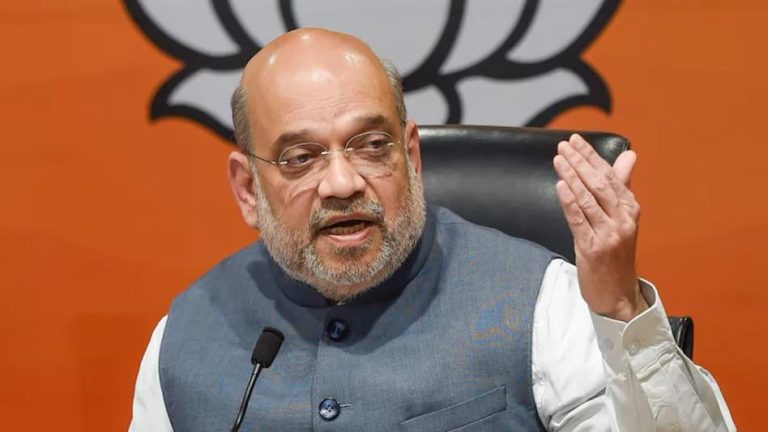
“Inko nahi samjha sakta”: Amit Shah takes a dig at Congress over stance on SC verdict concerning Article 370

0

Home Minister Amit Shah on Monday took a dig at Congress over its stance of disagreeing with the Supreme Court judgement over how Article 370 was abrogated from Jammu and Kashmir and said the opposition party will continue to lose elections with such a stand.

Replying to the debate in the Rajya Sabha on the two bills relating to Jammu and Kashmir, Amit Shah said it was an important day as the bills will be passed by Parliament on a day the Supreme Court upheld the abrogation of Article 370.

The Jammu and Kashmir Reservation (Amendment) Bill, 2023 and the Jammu and Kashmir Reorganisation (Amendment) Bill, 2023 were passed by Lok Sabha last week.

Targeting the Congress, Amit Shah said the opposition party has said it does not agree with how Article 370 has been abrogated.

He said due procedure and rules were followed while abrogating Article 370 in August 2019 and now the Supreme Court has also given its verdict.

“Main inko nahi samjha sakta, meri maryada hai (I cannot them make them understand, I have a limit),” he said.

The Home Minister said Article 370 led to separatism, which nurtured terrorism.

He said Congress should consider changing its position. “…or your numbers will go down further. There will be a contest in 2024 (Lok Sabha polls), Modiji will become PM for the third time,” Shah said.

Congress on Monday said that the judgement of the Supreme Court in the cases concerning the abrogation of Article 370 of the Constitution has decided many issues but has left open some issues that are also vitally important.

“Prima facie, we respectfully disagree with the judgement on how Art. 370 was abrogated. We reiterate the Congress Working Committee resolution dated August 6, 2019, that Art. 370 deserved to be honoured until it was amended strictly by the Constitution of India,” Congress leader P Chidambaram said addressing a joint press conference.

“We are also disappointed that the Supreme Court did not decide the question of dismembering the State and reducing its status to two Union Territories. That question has been reserved for adjudication in a suitable case in the future,” he said.

“The Indian National Congress has always demanded the restoration of full statehood for what has become the Union Territory of Jammu and Kashmir. We welcome the Supreme Court’s verdict in this regard. Full statehood must be restored immediately. The aspirations of the people of Ladakh must also be fulfilled,” he added.

Chidambaram said the party welcomes the Supreme Court’s direction to hold assembly elections. “However, we believe that the elections should be held immediately and there is no reason to wait until September 2024. When elections are held, the people of Jammu & Kashmir will have an opportunity to express their views on the crucial questions that were debated in the Hon’ble Supreme Court — an opportunity that has been denied to them so far,” Chidambaram added.

The Congress leader said the Supreme Court judgement has 476 pages and the party will study it carefully.

(This news report is published from a syndicated feed. Except for the headline, the content has not been written or edited by OpIndia staff)

Ghaziabad: Locals discover four-foot-deep pit under boundary wall of Hindan Air Base; probe launched

0

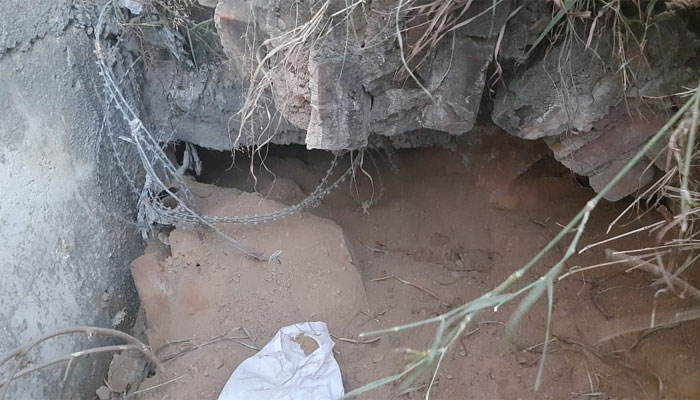
On 10th December, Ghaziabad Police registered an FIR against unknown persons for digging a four-foot deep pit under the boundary wall of Hindan Air Base. As per media reports, locals discovered a four-foot-deep pit under the boundary wall of the Hindan Air Base located in Ghaziabad. The strategically important air force base is located just 10 KM from Delhi.

Understanding the security concerns, the locals immediately informed the police. A team from Tila Mod police station reached the spot to investigate the matter. A team from the Indian Air Force also reached the spot and filled the pit with mud.

Notably, the Hindan Air Base comes under the Western Air Command of the Indian Air Force. It is one of the largest air bases in Asia. The C-17 transport aircraft of the IAF operates from this air base. During the 26/11 Mumbai attacks, the Air Force had deployed MiG-29 at Hindon Air Base to defend the skies over Delhi. The air base is strategic for forward offensive operations. Next to the 20-foot boundary wall of the air base, there is an empty ground followed by a densely populated residential complex.

Speaking to the media, the Deputy Superintendent of Police, trans-Hindan Zone, said, “A police team immediately reached the spot after receiving information and inspected the area with air force officials. A case has been registered, and strict action will be taken against those responsible.”

Locals alleged that there have been several incidents of robbery and snatching. Drug addicts and anti-social elements often indulge in such activities.

The Indian Air Force has not released any official statement on the matter. An FIR was registered under the provisions of the Indian Penal Code at Tila Mod Police Station at the request of the Air Force.

Assistant Superintendent of Police (ASP) Siddharth Gautam said the police are checking CCTV footage to find the culprits. Notably, the region where the pit was dug up was not within the range of any CCTV. Further investigation into the matter is underway.

Hathras: Teacher sacked over harassment of a student for greeting ‘Ram Ram’ at Saima Mansoor Public School

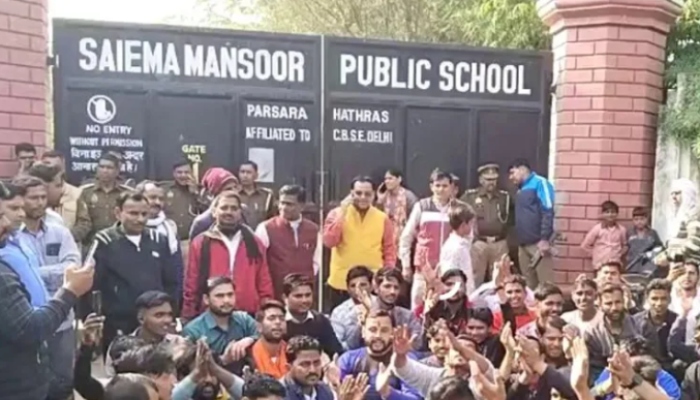
A case of harassment of a student from a school in the Hathras district of Uttar Pradesh has come to the fore, after which the members of Hindu organizations launched demonstrations in front of the school and demanded strict action against all the authorities at the school. The student was harassed at the school for greeting his teacher, Mohammed Adnan, ‘Ram Ram’. The principal of the school is also said to have abused the student and his family members.

The school administration has, however, issued a written apology in this matter. The dispute pertains to Saima Mansoor Public School, which is run by Aligarh’s Noorul Uloom Education Society. The incident is reported to have taken place on Friday (8th December 2023).

This case relates to the Hathras district’s Chandpa police station area. A video of a student’s brother captured at the school gate went viral on social media on 8th December 2023. A man recognizing himself as Gajendra Singh Sisodia at the Saima Mansoor Public School gate said that his brother was harassed for greeting his teacher by saying “Ram-Ram.” The teacher Mohammed Adnan did not respond, and he left after the class was over. However, he is said to have complained to Principal Salman Kidwai about the matter. 

According to Gajendra Sisodia, Principal Salman Kidwai visited the class following the teacher Mohammad Adnan’s complaint. Salman Kidwai then remarked in front of the class, “What filth you are spreading. Why do you say Ram Ram with such stupid faces? We are bringing teachers here from Aligarh. Greet Salaam, Namaste, whatever you want but no one will say, Ram Ram,” Kidwai said according to Sisodia. 

The student who has been abused and harassed at the school studies in 11th class and his family was pushed out after they went to complain about the matter to the authorities.

Anger among the Hathras Hindu organizations increased on Friday (8th December) after the video of the incident went viral. Representatives from every Hindu organization gathered at Saima Mansoor Public School’s gate on Saturday (9th December) and chanted Jai Shri Ram. The protesters also read Hanuman Chalisa. The police, however, arrived on the scene and took control of the situation as soon as they heard of the situation.

Hindu activists are calling for the accused teacher and the school principal to be held accountable. Given the gravity of the situation, an investigation team has been assembled by the district administration. Salman Kidwai, the school principal, announced to the media that teacher Mohammad Adnan was fired from his job because he had objected to being greeted as Ram-Ram. In addition, he sang songs of praise of the 30-year-old Saima Mansoor Public School and characterized the school’s atmosphere as secular.

The administration of the school has also written an apology acknowledging their mistake. An agreement has also been made to never commit the same act again with an apology.

Saima Mansoor Public School is run by the Noorul Uloom Education Society of Aligarh. Noorul Uloom Education Society, which claims to provide education to children, has President Naseem Ahmed, Vice President Sanaullah Khan and Secretary Nafees Ahmed. This institute was registered in January 1998.

Uttar Pradesh Police attaches house of slain gangster Atiq Ahmed’s sister in Meerut

0

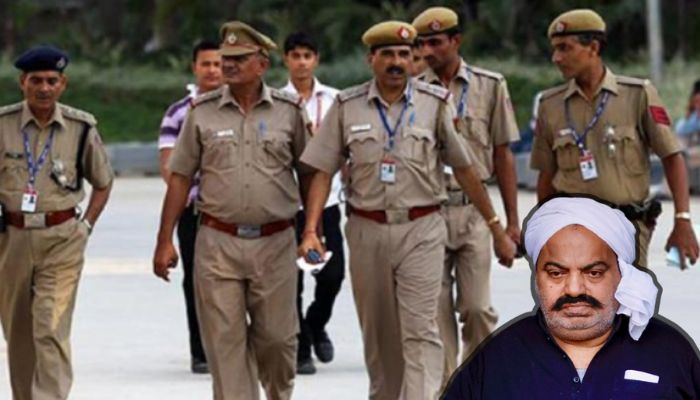
On 11th December (Monday), Uttar Pradesh Police attached a house in Meerut that belongs to slain gangster-turned-politician Atiq Ahmed’s sister Ayesh Noori and her husband Akhlaq, an official said. Akhlaq is the co-accused in the murder case of lawyer Umesh Pal. According to officials, the property attachment proceedings were carried out based on a court order.

The in-charge of Meerut’s Nauchandi police station, Subodh Saxena, said, “A team led by Prayagraj Assistant Commissioner of Police (ACP) Varun Kumar had pasted an attachment notice at the house on August 19, directing Ayesha, who is absconding, to surrender in court within 20 days. But since she remained elusive, the attachment process was carried out.” 

Umesh Pal, a key witness in the 2005 murder case of BSP leader Raju Pal, was shot dead in broad daylight in Prayagraj on 24th February.

Following Umesh Pal’s murder, his wife filed a complaint which prompted the Police to register a case against Atiq Ahmed, his brother Ashraf, their family members, and others. 

On Saturday (9th December), a team from Dhoomanganj police station in Prayagraj attached Noori and Akhlaq’s two-story house in Bhawani Nagar locality in Nauchandi which is registered in the name of Akhlaq Ahmed. However, several costly items were said to be missing, as per reports.

Nauchandi Inspector Subodh Saxena said that a fridge, washing machine, old sofa, and some utensils worth about a lakh were found in the house during the attachment. He added that it has been mentioned in the general diary of the police. 

The Nauchandi Inspector added that Guddu Muslim, the main accused in the Umesh Pal murder case stayed in this house after the killing and he was also given financial help by Akhlaq.

Saxena noted that Akhlaq was arrested by the Special Task Force on 2nd April while Noori is still absconding. 

On 15th April, Atiq Ahmed and his brother Ashraf were shot dead at point-blank range by three gunmen posing as journalists while police personnel were escorting the accused duo to a medical college in Prayagraj for a checkup. The act was caught on camera and the video of the incident went viral. Meanwhile, Atiq Ahmed’s wife Shahista Praveen is still absconding but his son Asad was killed in an encounter on 13th April.

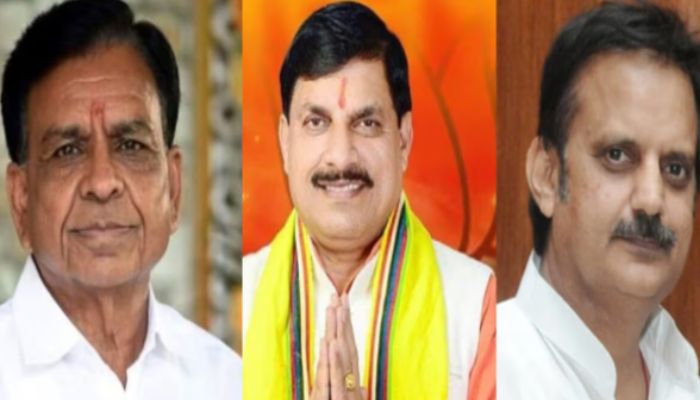
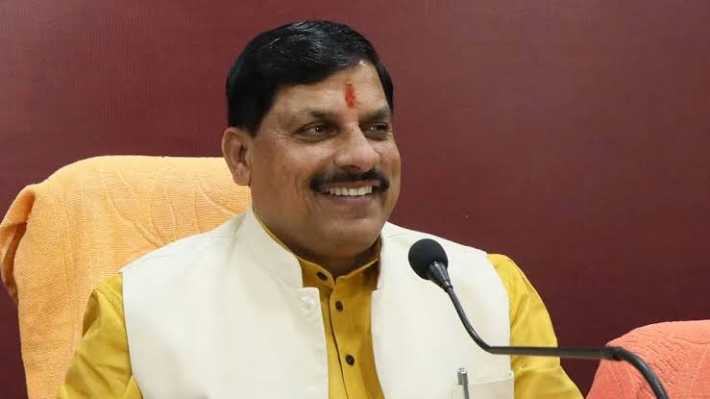
New CM of Madhya Pradesh Dr. Mohan Yadav, and his two Deputies, Rajendra Shukla and Jagdish Devda: Meet the new team leading MP

On 11th December (Monday), the Bhartiya Janata Party appointed Mohan Yadav as the CM-designate of Madhya Pradesh, as per reports. A consensus to elect Mohan Yadav as the new CM of the State was reached at the legislature party meeting. Yadav is a three-time MLA, and he is currently representing the Ujjain South constituency.

According to reports, the outgoing CM of BJP, Shivraj Singh Chouhan had proposed the name of Mohan Yadav in the legislative party meeting.

Additionally, the newly elected CM Mohan Yadav will be assisted by two Deputy Chief Ministers, namely Jagdish Devda and Rajendra Shukla. While former Union Agriculture Minister Narendra Singh Tomar will be the new Speaker of the Madhya Pradesh Assembly.  

BJP had sent three central observers, Haryana Chief Minister Manohar Lal Khattar, Asha Lakra, and K Laxman, who met the newly-elected party MLAs in Bhopal and arrived at this decision. 

Who is the new CM-designate, Dr. Mohan Yadav

Dr. Mohan Yadav has served as the Higher Education Minister of Madhya Pradesh and is counted among the top leaders of the Ujjain division. 

Born on 25th March 1965, Yadav started student politics at Madhav Science College and held many positions in the party. In 1982, he was the co-secretary of the Madhava Vigyan Mahavidyalaya Students’ Union and in 1984, he was the President of the Madhava Vigyan Mahavidyalaya Students’ Union.

Mohan Yadav assumed the responsibility of Municipal Minister of Akhil Bharatiya Vidyarthi Parishad (Ujjain) in the year 1984 and Department Head in 1986. 

In the year 1988, Yadav was the state co-secretary of Akhil Bharatiya Vidyarthi Parishad (Madhya Pradesh) and a member of the national executive. He was the State Minister of the State Unit of the Council in 1989-90 and the National Minister of the Council in the year 1991-92. In 1993-95, he served as the functionary (Sangh Karyavah) of Rashtriya Swayamsevak Sangh in Ujjain Nagar.

In 1998, Mohan Yadav also became a member of the Advisory Committee of the Western Railway Board. After this, he worked in different positions in the organisation. Between 2004-2010, he was the Chairman of the Ujjain Development Authority (Minister of State status). He also became the Chairman (Cabinet Minister status) of Madhya Pradesh State Tourism Development Corporation, Bhopal from 2011-2013.

Yadav became MLA for the first time in 2013. Even in 2018, the party trusted him and he was successful in winning the elections again. When the BJP government was formed in 2020, Mohan Yadav again became a minister, and now he has been chosen as the new Chief Minister of the state.

Deputy CMs Jagdish Devda and Rajendra Shukla

One of the Deputy CMs, Jagdish Devda, did his M.A. in Economics in 1979 from Vikram University, Ujjain, and completed his L.L.B. degree in 1985. In 1986, Devda worked as Professor in English at Vikram University, Ujjain, in 1986.  

BJP MLA Jagdish Devda has been winning the Malhargarh constituency since 2008. He won the 2013 elections by defeating Congress’ Shyamlal Jokchand and he beat Congress candidate Parshuram Sisodia in 2018 by 11,872 votes. 

Devda has won four consecutive elections from the Malhargarh constituency in 2008, 2013, 2018, and 2023. Earlier, he represented the Suwasara constituency in the Madhya Pradesh Assembly in 1990, 1993, and 2003.

Devda is said to have a strong influence in the RSS and has served in many profiles, including commercial taxes, planning, economic and statistics. He served as the Minister of finance of the state in the previous government. 

The other Deputy CM Rajendra Shukla was elected to the assembly for the first time in 2003. Shukla served in several ministries since then under Shivraj Chouhan-led BJP government, and now he has been elevated to the Deputy CM post in the state.

Karnataka: Woman stripped, tied to a pole, brutally assaulted after her son elopes with his girlfriend, seven arrested

0

On Sunday (10th December) a woman was dragged out of her residence, stripped naked, tied to a pole, and beaten in Karnataka’s Belagavi by the relatives of a girl with whom her son had eloped. The incident reportedly happened in the Vantamuri village near Belagavi city. Chief Minister Siddaramiah and Home Minister G Parameshwara both took cognizance of the event and reacted to the incident. According to police, the woman’s son had an affair with the girl for some time.

The girl’s family raced to the boy’s house after learning that their daughter had eloped with the woman’s son. The girl’s family is said to have dragged the man’s mother outside her home, stripped her naked, tied her to a pole, and assaulted her.

Responding to the horrific incident, Chief Minister Siddaramaiah said, “Not just Belagavi, our government is strict everywhere. No matter what offence, we’ll take stringent action against those who commit a crime.”

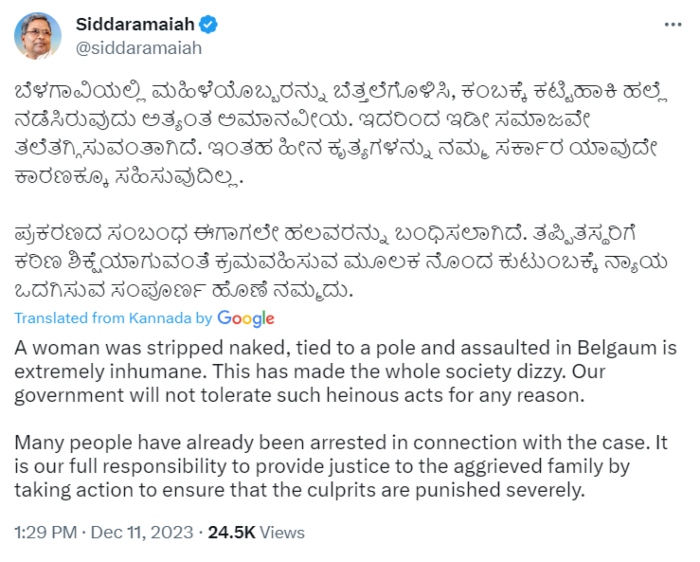
“A woman was stripped naked, tied to a pole, and assaulted in Belgaum is extremely inhumane. This has made the whole society dizzy. Our government will not tolerate such heinous acts for any reason,” the Chief Minister added on X.

Screenshot from X

“Many people have already been arrested in connection with the case. It is our full responsibility to provide justice to the aggrieved family by taking action to ensure that the culprits are punished severely,” he added.

Meanwhile, Karnataka Home Minister G Parameshwara also commented on the matter and said that seven persons who were actively involved in the crime had been arrested by the police and were about to be produced in court soon. The victim is undergoing treatment at the hospital and the Home Minister said that he would be visiting the victim.

“We will take action against the accused. A young couple had eloped. The girl’s family went to the man’s house, dragged the mother out, stripped her naked, and tied her to a pole before thrashing her. As soon as we got to know about it, police reached the spot, rescued the woman, and took her to a nearby hospital. She’s now in the hospital,” he was quoted as saying.

Reports mention that the incident happened at around 3 am on Monday (11th December). The Police immediately reached the spot after being informed about the incident. Seven people have been arrested so far in the case while 2 others are still absconding. Efforts are being made to nab the absconding accused.

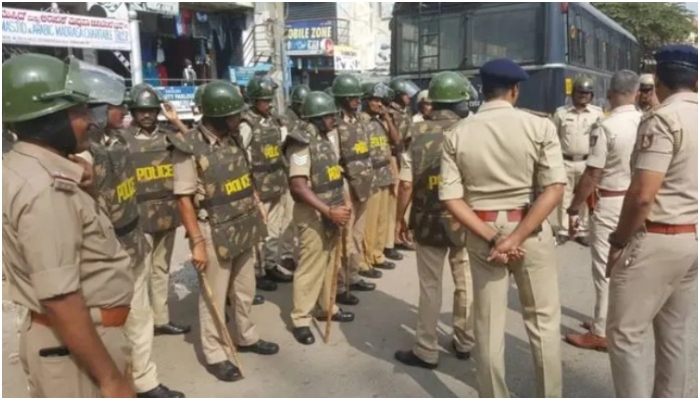
The incident has been registered under the jurisdiction of the Kakati Police Station. The situation continues to remain tense in the Vantamuri village near Belagavi city as several policemen have been deployed at a village. A Karnataka State Reserve Police (KSRP) team, ACP and two Sub-Inspectors, and several policemen have also been deployed at the location to avoid any untoward incident.

Madhya Pradesh: Mohan Yadav to be new CM, 2 deputy CM names also announced

Mohan Yadav, who was a cabinet minister in the Madhya Pradesh Government headed by Shivraj Singh Chouhan, is the Bharatiya Janata Party’s (BJP) pick as the new Chief Minister of Madhya Pradesh.

Meanwhile, the state will have two Deputy Chief Ministers namely Jagdisgh Devda and Rajesh Shukla.

Union Minister Narendra Tomar will be Madhya Pradesh Assembly Speaker.

Yadav became MLA for the first time in 2013 from Ujjain Dakshin’s seat. In the 2018 Madhya Pradesh Legislative Assembly elections, he was once again elected and became MLA from the Ujjain Dakshin seat.

Earlier on July 2, 2020, he took the oath as cabinet minister in the Madhya Pradesh Government headed by Shivraj Singh Chouhan.

Earlier in the day, BJP central observers Manohar Lal Khattar, Dr K Laxman and Asha Lakra of Madhya Pradesh held a legislative party meeting.

The BJP on Thursday announced the three central observers, which include Haryana CM Manohar Lal Khattar, K Laxman, National President, OBC Morcha and Aasha Lakda, National Secretary for the state.

During the 2018 assembly polls, the Congress returned to power with veteran leader Kamal Nath taking the oath as the chief minister but a political upheaval rocked the state in 2020 after then-Congressman Jyotiraditya Scindia, along with 22 loyalist MLAs, switched over to the BJP camp.

The Congress government fell after being reduced to a minority and the BJP formed the government, with Shivraj Singh Chouhan returning as chief minister.

But this time again, when the BJP emerged victorious with a thumping majority, the party has appointed central observers so speculations are being made in the political corridor that the party may bring a new CM face in the state.

Madhya Pradesh went to poll for 230 assembly seats in a single phase on November 17 and the counting of votes was done on December 3.

The BJP, which had been battling close to 20 years of incumbency in the state, won a resounding mandate, bagging 163 seats, while the Congress finished a distant second at 66 seats. 

(This news report is published from a syndicated feed. Except for the headline, the content has not been written or edited by OpIndia staff)

Meet the 5 Supreme Court judges, led by CJI Chandrachud, who gave the historic judgement to uphold the decision to abrogate Article 370 

0

On 11th December (Monday), the five-judge Constitutional bench of the Supreme Court upheld the Center’s decision to abrogate Article 370. Chief Justice of India Justice DY Chandrachud, Justices BR Gavai, and Surya Kant gave a joint judgment, while Justices Sanjeev Khanna and Sanjay Kishan Kaul authored separate but concurrent judgments.

The apex court in its verdict held that the challenge to the proclamation of the presidential rule was not valid and that Article 370 was a temporary provision among others. In his judgment, CJI Chandrachud held that Jammu and Kashmir does not hold any internal sovereignty after accession to the Union of India. A detailed report of the Supreme Court verdict in this case can be read here.

Brief profile of the Justices comprising the 5-judge Constitutional bench that delivered this landmark verdict

  1. Justice DY Chandrachud is currently the Chief Justice of the Supreme Court of India, the master of the roaster, and the first among equals. 

Justice Chandrachud was born on 11th November 1959 in Mumbai. His father Yashwant Vishnu Chandrachud (YV Chandrachud) served as the 16th and longest-serving CJI. His father held the top post in India’s apex court from 22nd February 1978 to 11th July 1985.

DY Chandrachud completed his BA (Economics Honors) from St. Stephen’s College, New Delhi. He did his LLB from Campus Law Centre, University of Delhi in 1982. He then secured an LLM degree and Doctorate of Juridical Sciences (SJD) from Harvard Law School, USA in 1986.

He practiced law at the Supreme Court of India and the Bombay High Court. In June 1998, he was designated as a Senior Advocate by the Bombay High Court. From 1998 until he was appointed a Judge, he was the Additional Solicitor General of India. 

On 29th March 2000, he assumed the role of Additional Judge at the Bombay High Court. Subsequently, on 31st October 2013, he took the oath as the Chief Justice of the Allahabad High Court. Later, on 13th May 2016, he was elevated to the Supreme Court of India. He is slated to retire as the CJI on 10 November 2024 attaining the retirement age of 65 years. 

  1. Justice Sanjay Kishan Kaul – (Born on 26th December 1958), Justice Kaul is the second most senior judge of the Supreme Court and hails from a Kashmiri family. He did his schooling at Modern School, New Delhi till 1976 and graduated from St. Stephen’s College in 1979. 

He secured his LL.B. Degree from The Campus Law Centre, Delhi University in 1982. He remained Advocate-on-Record of the Supreme Court of India from 1987 to 1999 and was designated as a Senior Advocate in December 1999. 

On 3rd May 2001, he was elevated to Additional Judge of the Delhi High Court and appointed as a permanent judge on 2nd May 2003. In 2013, he became the Chief Justice of Punjab and Haryana High Court. 

A year later on 26th July 2014, he assumed the duty of the Chief Justice of Madras High Court. Afterward, on 17th February 2017, he was appointed as a judge in the Supreme Court.

  1. Justice Sanjeev Khanna – (Born on 14th May 1960) Justice Sanjeev Khanna completed his schooling at the prestigious Modern School of Delhi. He studied law at the Campus Law Center of Delhi University. After graduation, he enrolled as an advocate with the Delhi Bar Council in 1983.

As an Additional Public Prosecutor in the Delhi High Court, he argued several criminal cases and was appointed by the Court as Amicus Curiae. For about seven years, he worked as Senior Standing Counsel of the Income Tax Department in the Delhi High Court.

In 2005, he was elevated as an Additional judge of the Delhi High Court and was made a permanent judge in 2006. He has been a Supreme Court judge since 18th January 2019 and is scheduled to retire on 13th May 2025.

  1. Justice Bhushan Ramkrishna Gavai – He was born on 24th November 1960 in Amravati. Justice Gavai joined the Bar on 16th March 1985. He worked with former Advocate General and High Court judge Raja Bhosle until 1987. 

From 1987 to 1990, he practiced independently in the Bombay High Court. After 1990, he practiced mainly before the Nagpur bench of the Bombay High Court.

On 17th January 2000, he was appointed as Government Pleader and Public Prosecutor for the Nagpur Bench. Subsequently, on 12th November 2005, he became a permanent judge of the Bombay High Court. He was then elevated as Judge of the Supreme Court of India on 24th May 2019 and is scheduled to retire on 23rd November 2025.

  1. Justice Surya Kant – He was born on 10th February 1962 in a middle-class family in Hisar (Haryana). Justice Surya Kant graduated from Government Post Graduate College, Hisar in 1981. 

He obtained his Bachelor of Laws degree from Maharishi Dayanand University, Rohtak in 1984. He then practiced law in the District Court, Hisar from 1984. He shifted to Chandigarh in 1985 to practice in the Punjab and Haryana High Court. 

Later on 7th July 2000, he became the youngest Advocate General of Haryana to be appointed to that post. In March 2001, he was designated as a senior advocate. 

He was the Advocate General of Haryana before becoming a permanent judge at the Punjab and Haryana High Court in January 2004. Later, on 5th October 2018, he was appointed as the Chief Justice of Himachal Pradesh High Court. He became a judge in the Supreme Court of India on 24th May 2019 and is scheduled to retire on 9th February 2027.

In 1954, Article 35A was introduced under Article 370, empowering the Jammu and Kashmir government to define permanent residents. The said article, which has now been revoked alongside Article 370, prohibited individuals outside the state from establishing permanent residence, buying land, or holding certain positions in government offices.

Following the abrogation of Article 370, two Union Territories named Jammu and Kashmir (with a legislative body) and Ladakh (without a legislative body) were created. As assembly elections have not taken place in either of the UTs, they are currently being administered by Centre-appointed lieutenant governors.

In May 2022, the Jammu and Kashmir Delimitation Commission redefined electoral boundaries, names, and the number of assembly seats. Delimitation is a precursor to future assembly elections. Reserved seats for scheduled tribes and representation for Kashmiri migrant communities were introduced alongside the delimitation process.

Furthermore, following the abrogation of Article 370, elections in Jammu and Kashmir opened for those who settled in the region and were previously deemed as “outsiders”. This inclusive move allowed West Pakistan refugees residing in the UT for 70 years to participate actively in the local elections.

The socio-political landscape of the region has changed extensively over the past four years. Almost zero incidents of stone pelting, paced-up infrastructure, and introduction of government schemes in the region are some of the examples of changes brought to J&K following the abrogation.