Home Blog Page 1654

As AAP blames Haryana for pollution in Delhi, data shows Punjab has 6 times the farm fires of Haryana

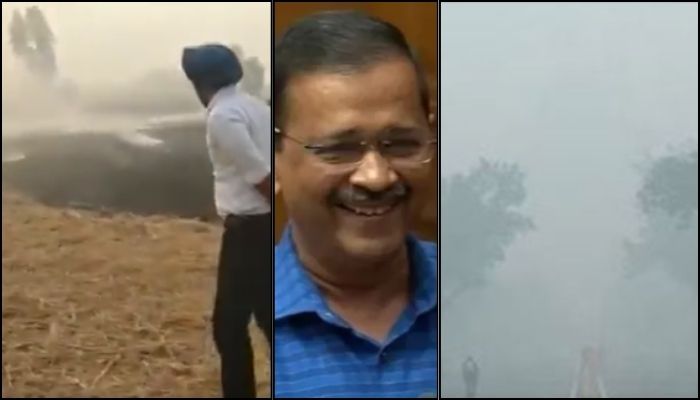
Even as farm fire incidents in Punjab have crossed the 2,000 mark in just 24 hours, the Aam Aadmi Party (AAP) is busy trying to win the perception war on social media. Taking to X (Twitter), AAP tweeted a graph image to claim that stubble-burning incidents in Punjab have reduced by 55 per cent in 2022-23. Notably, Punjab has reportedly recorded 65.6 per cent of farm fires as compared to Haryana which has recorded 5.3 per cent of farm fires.

At the same time, the AAP-led Punjab government has instructed the police and civil administration to register FIR and take strict action against farmers burning crop residue. Punjab government data reportedly reveals that 21 districts in the state have witnessed a spike in farm fire incidents.

Farmers in Sangrur reportedly logged 466 cases of farm fires on 8th November, taking the total count to a whopping 4,070, the highest of all districts. Ludhiana has reported 96 cases on 8th November, taking the total count of farm fires to 1,089. 861 cases of farm fires were recorded in 24 hours in South Mawla which comprises Bathinda, Faridkot, Mansa, Ferozepur, Muktsar, Moga and Fazilka.

This brings the overall farm fires in Punjab to 22,981. Meanwhile, the Haryana government has reported a 38 per cent reduction in stubble-burning incidents this year as compared to 2022. In the past two years, Haryana has recorded a reduction in stubble burning by 57 per cent.

The BJP-ruled state has taken strict action against individuals responsible for farm fire, issuing 1,256 challans and fine amounting to Rs 32.55 lakh. 72 FIRs have been filed and 44 far fires were extinguished.

Moreover, the Haryana government has unveiled a new policy aimed at completely ending stubble burning. The ‘Haryana Ex-Situ Management of Paddy Straw Policy 2023’ aims to harness paddy straw for sustainable energy and eliminate crop residue burning by 2027.

The Haryana government has sanctioned 19,141 lakh crop residue management (CRM) machines to farmers at a subsidy. An area of 940 lakh acres has been registered for incentives of Rs 1,000 per acre.

Moreover, the state government has reportedly imposed curbs on BS-III petrol and BS-IV diesel LMVs (4-wheelers) in Gurugram and Faridabad with immediate effect until November 30 or until the revocation of GRAP Stage III by the Commission on Air Quality Management, whichever occurs earlier.

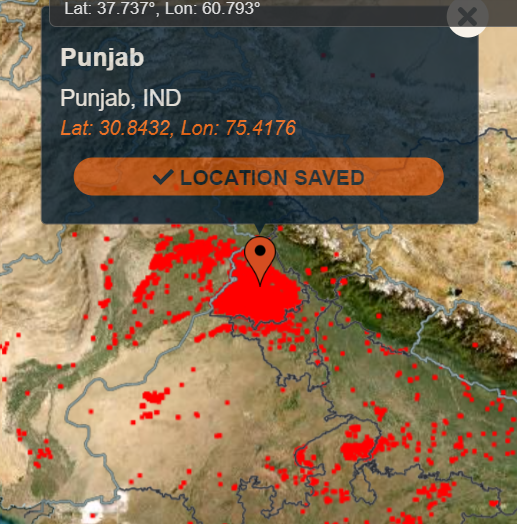
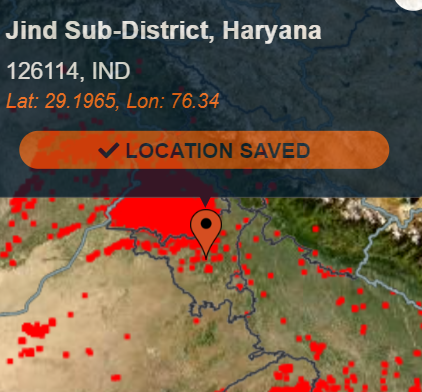
Satellite imagery from NASA’s Fire Information for Resource Management System (FIRMS) shows Punjab covered in red dots signifying the severe levels of farm fires in the state whereas the same in Haryana appears significantly lower. The data recorded in the satellite imagery is from the past 24 hours.

Screenshot of the satellite imagery available on NASA FIRMS showing large scale farm fire in Punjab in the past 24 hours (Source: NASA FIRMS)
Screenshot of the satellite imagery shared on NASA FIRMS showing relatively lower farm fire in Haryana as compared to Punjab in the past 24 hours (Source: NASA FIRMS)

Yet, the Aam Aadmi Party has accused the Haryana government for the dangerous Air Quality Index (AQI) levels in Delhi and National Capital Region (NCR). Even as AAP is the ruling dispensation in both, Punjab – where stubble burning is at its peak, and in Delhi – where AQI currently stands at 426, it has time and again been attacking the BJP-ruled Haryana government and indulging in a political war of words.

Mahua Moitra’s conduct ‘unethical’, shared login credentials with unauthorised persons: Lok Sabha Ethics Committee in draft report suggesting expulsion

0

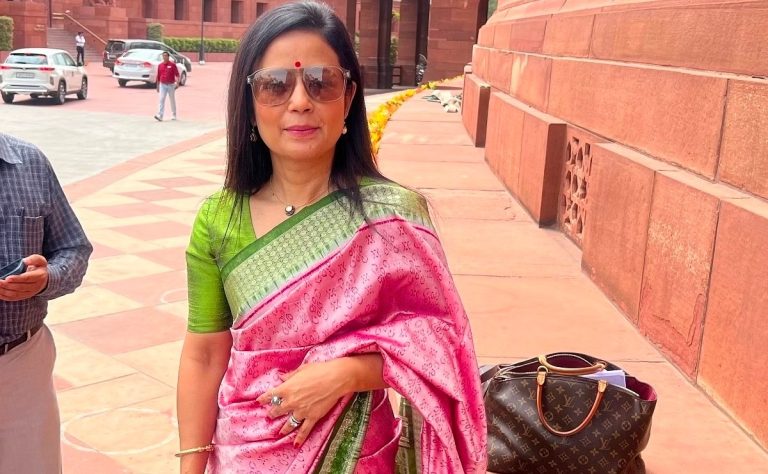
The Lok Sabha Ethics Committee, in its draft report, accused Trinamool Congress MP Mahua Moitra of being involved in ‘unethical conduct’ and sharing her ID login and password with unauthorised persons, sources said on Thursday.

According to the sources, Opposition MPs have given dissent notes on the draft.

“One common ground for all the opposition MPs to submit a dissent note is that the enquiry is not fair. They have said that Darshan Hiranandani should have been summoned by the committee to ensure a free and fair enquiry in all respects,” the sources said.

Under the ‘Cash for Query’ charges made by Nishikant Dubey against Mahua Moitra, Dubey alleged that the Trinamool MP had taken bribes from Dubai-based businessman Hiranandani to raise questions in Parliament to target the Adani Group.

The meeting of the Lok Sabha Ethics Committee which is investigating the cash-for-query allegations against Trinamool Congress MP Mahua Moitra by BJP MP Nishikant Dubey is underway.

As per the sources, the draft report on Mahua Moitra’s cash-for-questions case reveals that she visited the UAE four times from 2019 to 2023 while her login was accessed several times.

“On 47 occasions, her member portal login credentials were accessed from Dubai,” according to the draft report of the ethics committee.

The Ethics Committee has sought details reports from Information Technology (IT) and Ministry of Home Affairs (MHA) regarding IP address and location. The committee also seeks MHA’s input on the dangers of sharing login credentials, emphasizing the legal consequences under Section IT ACT 2000.

However, the draft report suggested several findings including, “The serious misdemeanours on the part of Mahua Moitra calls for severe punishment. The Committee, therefore, recommend that Mahua Moitra, MP may be expelled from the Membership of the Seventeenth Lok Sabha.”

“In view of the highly objectionable, unethical, heinous and criminal conduct of Mahua Moitra, the Committee recommend for an intense, legal, institutional inquiry by the Government of India in a time-bound manner,” it added.

The draft report further said, “Unethical Conduct’ and ‘Contempt of the House’ by Mahua Moitra by way of accepting money – cash and kind, amenities and various other facilities by Mahua Moitra, MP from Darshan Hiranandani, Business Tycoon, based in Dubai, United Arab Emirates.”

“The ‘money trail’ of cash transaction between Mahua Moitra and Darshan Hiranandani as a part of ‘quid pro quo’ should be.”

The comprehensive draft report spans approximately 500 pages.

Further report stated that “Darshan Hiranandani, an Indian national with UAE residential rights.

According to sources, the committee can recommend the expulsion of Mahua Moitra from the Lok Sabha and can take action against Bahujan Samaj Party MP Danish Ali who is a member of the committee.

Earlier today, Mahua Moitra wrote to Lok Sabha Speaker Om Birla, alleging a breach in the rules of the House claiming that the draft report of the Lok Sabha Committee on Ethics was accessed by a news channel. She alleged that since the media house was owned by the Adani group this was an issue of corporate fraud and breach of regulations.

(This news report is published from a syndicated feed. Except for the headline, the content has not been written or edited by OpIndia staff)

Spain: Jihadi network busted, 14 Pakistanis arrested in major anti-terror operation

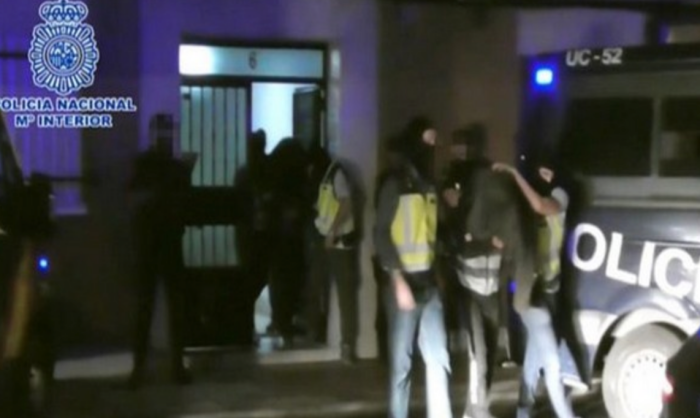
Police in Spain arrested 14 Pakistan-origin individuals and busted a suspected jihadist network based in the country, Euro Weekly News reported.

The arrests were made as part of an operation initiated by Spain’s General Information Commissioner’s Office after the anti-terrorist alert level was raised in the country following Hamas’ attack on Israel a month ago. Spanish Security Forces redoubled surveillance on suspects in order to avoid possible attacks, Euro Weekly News reported.

All of the detainees were of Pakistani origin and are said to have lived in Catalonia, Valencia, Guipuzcoa, Vitoria, Logrono and Lleida, according to Euro Weekly News, the largest English newspaper in Spain.

Police sources confirmed the arrests to La Razon, a local daily. Those arrested will be reportedly produced in court on Wednesday (local time).

Euro Weekly News reported that it is believed that these individuals formed a network in which jihadist messages and a high degree of radicalisation were transmitted online.

David Atherton, a journalist at The European Conservative posted on social media app X stating that these 14 Pakistani jihadists are linked to Tehreek-e-Labbaik Pakistan (TLP) an Islamic extremist political party in Pakistan.

“In Spain 14 Pakistani jihadists have been arrested for terrorist activities. They lived in Catalonia, Valencia, Guipuzcoa, Vitoria, Logrono & Lleida. They are linked to Tehreek-e-Labbaik Pakistan an Islamic extremist political party in Pakistan,” he said.

A similar anti-terror operation was carried out by the Spain’s national police last month where the police caught four suspected jihadists, reported Euro Weekly News.

Those four suspects were arrested in the Granada municipality of Huetor-Tajar, Cubelles in Barcelona, and Madrid, for ‘proselytism and jihadist recruitment’, the Spanish weekly said.

Reportedly, among those arrested was a man named “Caliph” who authorities said was the “creator and administrator of several groups in which he tried to indoctrinate young people in the jihadist creed.”

A married couple who had apparently been brought together after joining one of these online social media groups was also among those held, Euro Weekly News reported. Adding to this, the fourth suspected jihadist was said to have been an ‘indoctrinated’ individual.

(This news report is published from a syndicated feed. Except for the headline, the content has not been written or edited by OpIndia staff)

Russia asks Pakistan, Egypt, Brazil and other countries to return helicopter engines as Ukraine conflict continues to grow: Report

0

As Moscow attempts to replenish the massive supplies of weaponry being squandered for the war in Ukraine, Russia has attempted to reclaim parts from the defence systems it provided to countries like Pakistan, Egypt, Belarus and Brazil, a report in The Wall Street Journal said. The report stated that Russian officials are talking with officials of Egypt, Pakistan, Belarus and Brazil to acquire engines for Russian attack and transport helicopters.

The report states that Russia has asked Pakistan to provide at least four Mi-35M engines from helicopters that it previously sold the country. However, the Pakistani foreign ministry said that Moscow has not contacted them over the matter.

According to three persons with knowledge of the situation in April of last year, a group of Russian officials who were in Cairo asked Egyptian President Abdel Fattah Al Sisi to send back more than a hundred Russian helicopter engines that Moscow required for Ukraine. The insiders claimed that Egypt agreed and delivery of roughly 150 engines is anticipated to begin the following month.

These discussions were part of a bigger Russian effort to enlist the aid of its devoted military clients, who have been purchasing Russian planes, missiles, and air defence systems for decades, making Moscow the second-largest arms exporter in the world.

According to one of those people and another former Russian intelligence officer, Russia held conversations with representatives from Pakistan, Belarus, and Brazil throughout the year in an attempt to obtain engines for the Russian attack and transport helicopters that its forces had lost to Ukrainian defenders early in the conflict.

A source familiar with the buybacks stated, “Russia spent decades building its arms trade. Now they’re going back in secret to their customers trying to buy back what they sold them.” Other times, based on the two individuals, Russia has given up a portion of its lucrative arms export industry to help in the conflict by diverting weapons intended for Armenia and India to Russia’s front lines.

Russia is increasing its own manufacture of ammunition, spare parts and weaponry systems in tandem with its drive to restock its arsenal through export requisitions and buybacks. This is done to sustain the battle, which is rapidly entering its third year and depleting vast amounts of material. Additionally, Russia’s military apparatus has added more weaponry from allies, particularly North Korea.

Moscow has made significant attempts to repurchase Russian weaponry as the country’s forces in the east and south of Ukraine have launched an onslaught. Russia is attempting to regain the upper hand in combat now that the advance has slowed, though it is uncertain if the additional supplies will provide Moscow the means to intensify its assaults.

Konrad Muzyka, director of Rochan Consulting, military analysts based in Poland informed, “We don’t know the extent to which they’ll use the stocks to increase their tempo of attack or just keep up their current tempo.”

It was not long after reports surfaced that Egypt was considering supplying Russia with missiles when the Russian delegation arrived in Cairo. Under pressure from the United States, Cairo abandoned the idea. The United States then requested that Egypt provide weapons to Ukraine in order to assist that nation with an ammo shortfall.

The Russians sought to make sure that the close ties between Egypt and Russia, which had enjoyed cordial relations for decades, persisted when they arrived in Egypt shortly after. Egypt was a significant client for Moscow, which since 2014 had inked multiple multibillion-dollar contracts with Egypt for Russian fighter aircraft, helicopters, and air defence systems.

Later, in March, Egypt withdrew from several of those agreements because of concern about US penalties. Moreover, sanctions that limited Russia’s use of the SWIFT payments clearing system prevented Cairo from paying for the fraction of the armaments it did get.

According to the three sources, the Russians asked Egypt to return 150 engines for the Mi-8 and Mi-17 helicopters it had sold to Egypt after the agreement to transfer missiles to Russia was called off. They also encouraged Egypt to act swiftly to evade American notice. Russia promised to cancel Egypt’s debt in return and to keep supplying Egypt with essential wheat supplies. According to two persons acquainted with the matter, Russia threatened to withdraw its advisors related to the arms sector if Egypt refused. Several hundred of these advisers are stationed in Egypt by Russia.

The Egyptian president consented when he and Russian President Vladimir Putin met in July for an African nations meeting hosted by Russia in St. Petersburg. As per two individuals with cognizance of the matter, he also informed Putin that he would not dispatch the missiles to Ukraine that he had pledged to the Americans.

Regarding whether Egypt was returning the engines, the spokesperson for the Egyptian government Diaa Rashwan remained silent. Considering the numerous regional challenges at its doorstep, he declared Cairo would not jeopardize its own security. “Egypt, irrespective of the depth of its positive engagements with any country, including Russia is not willing to give up its armed capabilities to another entity.”

However, according to the three sources, Egypt intends to begin shipping roughly 150 engines probably in December. How many engines Egypt intended to send back remained unknown. The episode depicts the convoluted histories of Egypt, the United States, and Russia.

Egypt used Soviet weapons throughout the Cold War before shifting to the United States in more recent years. Nonetheless, Cairo and Russia continue to have some arms trade relations. According to one of the sources, the United States, which views Egypt as a vital ally in the Middle East, has approved certain Egyptian agreements with Russia but has threatened to impose sanctions on others. A spokesman for the Pentagon declined to comment.

Due to its increased armament requirements, Russia has had to reduce its exports and has occasionally fallen short of agreements, especially when it comes to land force armament systems. Almost half of Russia’s projected $14.5 billion in armament exports in 2021 was probably only $8 billion in 2018. For example, Armenia has not received many shipments of ammunition for multiple-rocket launcher systems like Grad and Uragan from Russia. As a result, when Azerbaijan retook control of the Armenian enclave of Nagorno-Karabakh in September, Armenian soldiers lacked weapons.

Additionally, Russia stopped selling a few exports to India. The person unveiled, “In some cases, the Defense Ministry requisitioned the arms systems before they even left the factories.” Queries were not answered by the Russian government or JSC Rosoboronexport, the country’s state-owned military export company.

Brazil retired its Mi-35M military helicopters last year and Moscow has asked that Brazil buy back 12 of those engines. According to a representative of the Brazilian Foreign Ministry, the nation declined because it is against supplying weapons to any party involved in the conflict. Six Mi-26 heavy-transport helicopter engines were sold back to Moscow by Belarus, one of Russia’s most steadfast friends, the source added. A request for comment was not answered by Belarus’ presidential office, but according to two of the sources contacted for this report, Belarus had consented.

Helicopters have been an essential component of Russia’s front-line forces since the start of the invasion, which made them susceptible to Ukrainian air defences early in the conflict. Over 100 helicopters were lost by Russia in the first few weeks of the conflict. Russia deployed its rotary-wing aircraft to fire the effective Lightweight Multipurpose Guided Missiles and laser-guided Vikhr missiles from behind the front line as the front line strengthened.

The missiles played a crucial role in Russia’s victory against Ukraine’s offensive throughout the summer and were deployed in larger quantities during Moscow’s attempt, some weeks ago, to seize the town of Avdiivka in the Donbas, marking the nation’s first offensive operations in months. Muzyka remarked, “The operational tempo of Russia’s rotary-wing fleet is quite high, especially since the start of the Ukrainian offensive, when they were used along with trenches and mines to slow down the advances.”


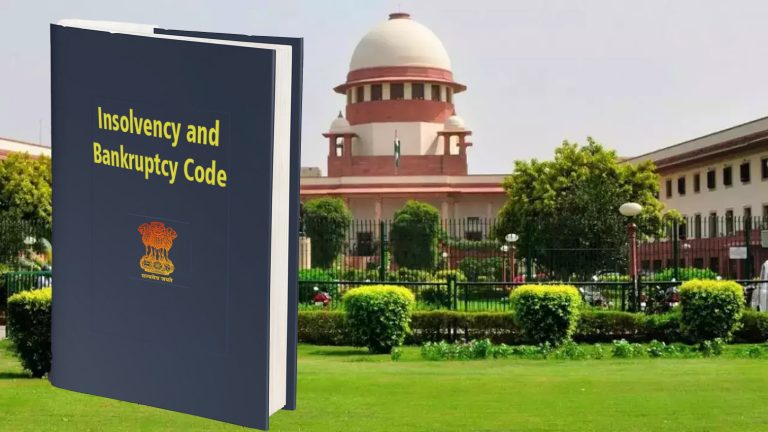
Modi govt’s Insolvency and Bankruptcy Code is constitutionally valid: Supreme Court rejects petitions challenging the code by Anil Ambani and others

On Thursday, 9th November, the Supreme Court upheld the constitutional validity of the provisions of the Insolvency and Bankruptcy Code (IBC), 2016, relating to Personal Guarantors’s Insolvency Resolution. The petitioners including Reliance ADA Group chairman Anil Ambani challenged on the grounds of violating principles of natural justice and absence of due process.

A bench comprised of Chief Justice of India (CJI) DY Chandrachud, Justices JB Pardiwala and Manoj Misra issued a ruling on a batch of more than 200 petitions challenging Sections 95(1), 96(1), 97(5), 99(1), 99(2), 99(4), 99(5), 99(6), and 100 of the IBC. The Supreme Court rejected the challenge and reaffirmed that the IBC was constitutionally valid and that its provisions were not arbitrary, as the petitioners claimed.

“IBC cannot be held to be operating in a retroactive manner in order to hold it violative of the constitution. Thus we hold that the statute does not suffer from the vices of manifest arbitrariness,” the Court said.

The Supreme Court bench ruled that it could not read an adjudicatory role into these rules and that changing the adjudicatory role would render the entire chronological procedure null and void. Changing the Court’s adjudicatory role under these clauses would amount to “rewriting the legislative functions.”

The Court stated that the implementation of natural justice principles cannot be considered as a straightjacket and that it might vary depending on the situation.

“In one case, it can be full-fledged evidentiary hearing and in some, a bare minimum is given to explain the nature of allegations,” the Supreme Court said.

The bench stated that “sufficient safeguards” have been read into the way a resolution professional (RP) functions during an insolvency proceeding.

“Parliament has not contemplated a roving enquiry by the resolution professional, but an enquiry for recommendation. The resolution professional, after carrying out process, is required to make an ascertainment in terms of clause (6). The process which takes place before the resolution professional is not ex parte and the legislature has ensured that even for a recommendation made, there is explanation taken from the debtor for the purpose,” the Court said.

The Court agreed with the Central government’s submissions made by Solicitor General Tushar Mehta, that the IBC provisions putting a stay on other legal procedures against corporate debtors were for the interest of the debtors.

Back in 2021, the Supreme Court affirmed the rules of the Insolvency and Bankruptcy Code relating to the insolvency of personal guarantors, which went into effect in 2019.

Notably, the Insolvency and Bankruptcy Code (IBC) 2016, is a bankruptcy law in India brought by the Narendra Modi-led NDA government seeking to consolidate the existing framework by creating a single Law for Insolvency and Bankruptcy. The Code provides a time-bound process for resolving insolvency in companies and among individuals resulting in much-needed impetus to solving the problem of stressed assets and NPAs in the financial sector of the country.

Mumbai man loses 3.3 crores to cyber fraud after Ukrainian woman manipulates him for ‘business partnership’ citing war and loss

0

A 75-year-old entrepreneur in Mumbai recently became the victim of a cyber fraud scheme and lost Rs 3.3 crore to a Ukranian woman. The incident came to the fore only after the victim, who owns a private company in Maharashtra’s Mumbai reported the fraud to the West Region Cyber Crime Police Station.

The scam, according to the reports, involved a Ukrainian woman named Esema who lured the entrepreneur with promises of starting a new company in India. She explained that her home country, Ukraine, was in chaos as a result of the ongoing war and claimed that her business has been destroyed. The woman managed to convince the Mumbai businessman that she has money and wants to start a new business in India. She first contacted the businessman via email, expressing her company’s interest in buying factory equipment.

Later, she stated she would send him a box containing $9.7 lakh in cash (roughly Rs 8 crore in Indian currency) to help him launch a new company in India in her name. In the next mail, however, she claimed, that the box had been confiscated by police in Jakarta, Indonesia. She demanded that the man pay several different fees in various accounts online for her to release the box.

The communication via emails continued and over eight months, the elderly man transferred money to 101 different Indian bank accounts, as instructed by Esema. He sent Rs 3.3 crore in total, hoping to receive the Rs 8 crore as promised. But he never received anything in return.

“The mail sender gave 101 account numbers to the complainant, asking him to pay fees for various certificates. He kept sending money for eight months to various accounts. In all, he sent Rs 3.3 crore, hoping to get the Rs 8 crore,” the police was quoted as saying by TOI.

The woman continued to make excuses and demanded more money, including fees for certificates such as anti-drug and money laundering clearance, transfer certificate fees, and other charges. She threatened to sue the man if he did not pay.

He was additionally compelled to provide income tax reports, a power of attorney, insurance, an original fund authorization certificate, and ministry of finance certificates, in addition to the money, to convince him of the authenticity of the transactions.

Friends turned foes: How Pakistan has fallen out with Taliban after it came to bite them back

0

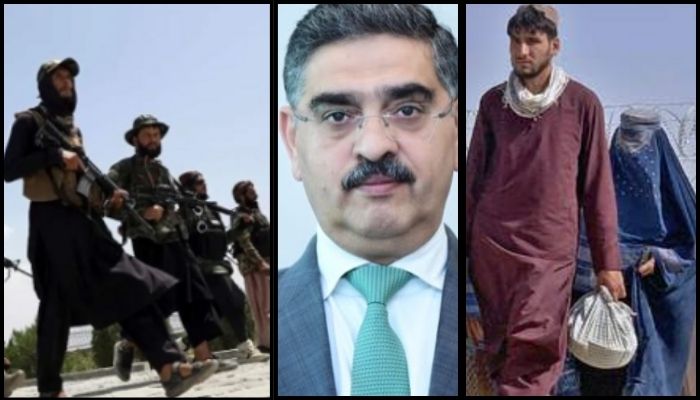
Pakistan Caretaker Prime Minister Anwaarul Haq Kakar said on 8th November that there has been an increase in terror incidents in Pakistan since the Taliban came to power in 2021, Dawn reported.

Kakar linked the ongoing deportation drive of illegal immigrants to counter-terrorism actions, reported Dawn, a Pakistani English-language newspaper.

The Pakistan Caretaker Prime Minister, while addressing the media in Islamabad, said, “After the establishment of the interim Afghan government (Taliban) in August 2021, we had a strong hope that there would be long-term peace in Afghanistan. […] Strict action would be taken against Pakistan-opposing groups, especially the Tehreek-i-Taliban Pakistan, and they would absolutely not be allowed to use Afghan soil against Pakistan.”

“But unfortunately, after the establishment of the interim Afghan govt, there has been a 60% increase in terror incidents and 500 per cent rise in suicide attacks in Pakistan,” he said.

He further added, “In the past two years, 2,267 innocent citizens’ lives have been lost to this tragic bloodshed, for which the terrorists of TTP are responsible who are conducting cowardly attacks on Pakistani using Afghan soil.”

“During this time, 15 Afghan citizens were also among the people involved in suicide attacks. Other than this, till now, 64 Afghan citizens were killed while fighting Pakistan’s law enforcement agencies during the counterterrorism campaign,” he added.

Kakar did not provide any further details about the alleged involvement of Afghan nationals in any specific terror attack.

His statement comes after the country witnessed a sharp rise in terror incidents during the past week, including at Mianwali Training Air Base claimed by the Tehreek-i-Jihad Pakistan and an ambush in Gwadar claimed by the Balochistan Liberation Front, while no group claimed responsibility for attacks in Dera Ismail Khan, as per Dawn.

Kakar went on to recall that the above details were in the knowledge of the Taliban.

The premier said that according to a monitoring report released in July this year by the United Nations, there was “clear mention of TTP centres in Afghanistan and increase in its activities against Pakistan”.

The prime minister added that even after reassurances from the Afghan government of taking action against the TTP, “no actions were taken against anti-Pakistan groups”. “Instead, in a few instances, clear evidence of enabling terrorism also came forward,” he said without providing further details, as per Dawn.

While Pakistan tries to shift the blame on Afghan migrants for growing terrorism in the country, it seems to have forgotten that Pakistan once played an active role in the creation of the Taliban in 1990s and then again, its resurgence in 2021.

The very Pakistan that is now admitting that terrorist attacks in its country have only increased ever since the Taliban came to power, had openly batted for the return of the terrorist group in Afghanistan.

And yet, the terror-sponsoring state of Pakistan continues to train terrorists to infiltrate its neighbouring countries, especially India while it decries terrorist attacks by its homebred radicals.

How was Pakistan involved in building the Taliban?

Several Afghans who joined the Taliban were known to have received madrassa education in Pakistan. The head of the new Taliban government formed in 2021 in Afghanistan, Mohammad Hasan Akhund, who is also on the UN sanctions list, had studied at a seminary in Pakistan.

Pakistan is known to be the Taliban’s principal benefactor and one of the only three countries that recognised the Taliban when they first took power in Afghanistan. Pakistan was also the last country to break diplomatic ties with the Taliban after the US invaded Afghanistan following the 9/11 attacks.

Meanwhile, support in Pakistan for Palestinian terrorist group Hamas is out in the open for all to see.

(With inputs from ANI)

Not just news, it is a geopolitical statement: Anand Mahindra on Google building its largest campus outside the US in Hyderabad

0

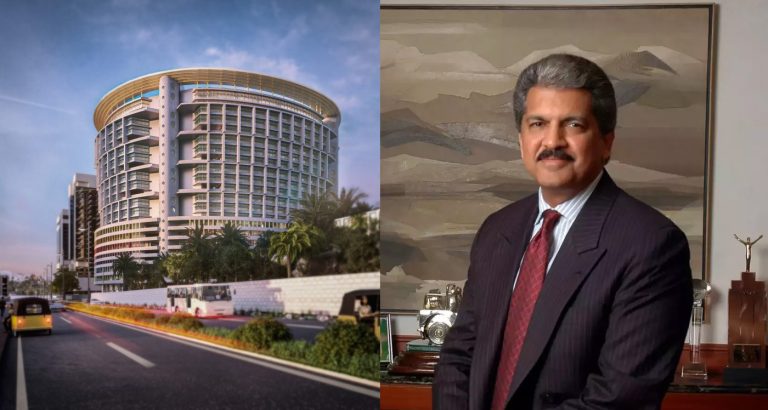
Google’s India headquarters was previously located in Hyderabad, but the corporation plans to significantly increase its footprint in the region and has begun construction on its new Hyderabad campus. It is going to be the largest Google office outside of the United States and the second largest globally, behind the Mountain View, California, headquarters.

Indian billionaire businessman and the chairman of Mahindra Group, Anand Mahindra is also in awe of the magnitude of the major development which he termed as “a geopolitical statement” and took to social media to express his opinion about the same. He posted, “This is not news about just one new building project. I read this slowly to let it sink into my mind. When a global, iconic giant like Google decides to build its largest office outside the U.S. in a particular country, it’s not just commercial news, it’s a geopolitical statement. It’s all happening here now finally.”

Anand Mahindra tweeted this referring to an October 14 tweet by Indian Tech & Infra, which included a video of the construction activity of the upcoming Google office. The video shows that foundation of the building is being prepared.

Telangana’s financial district would serve as home to the new, three million-square-foot edifice. The campus was motivated by India’s national objective to create and support centres for knowledge and innovation in its technology industry, according to Allford Hall Monaghan Morris (AHMM), the British design firm behind the project. The office is being constructed as a climate-sensitive and adaptable shelter that would require less energy because it has several glass structures.

The Google Hyderabad headquarters is going to include a variety of recreational areas with “upgradable servicing for comfort,” per the architectural firm. The central areas of the offices would be evenly spaced throughout the levels to promote promenades around the structure. According to the layout, the iconic ellipse would be open to the sky, letting sunshine flood the building.

The firm stated, “The Google Hyderabad office’s porous envelope will help to moderate the local climate, offering relief, shade, light and air to staff and visitors.”

Google is well renowned for its elegant workspaces, and the amenities and privileges offered there are legendary within the business community. While many businesses currently provide benefits akin to these, Google was the first to introduce play areas, gourmet meals in the workplace, and on-site washing facilities. Many of these qualities were already at Google’s India headquarters, but now that the company is creating a gigantic new office from the ground up, it is expected to rank among the most remarkable and iconic corporate spaces in the nation.

Anti-Israeli protestors attack Jews attending screening of Oct 7 Hamas attack video organised by Israeli actor Gal Gadot in Los Angeles: Watch

0

A brawl has reportedly occurred outside the Museum of Tolerance in Los Angeles where the screening of the October 7 Hamas attack organised by Israeli actor Gal Gadot is scheduled to take place. On Thursday, November 9, a video appeared on X showing some men getting into a scuffle with each other. Visegrad24, which reshared the video, alleged that anti-Israeli protestors attacked some Jews for attending the screening of the video.

The 0.53-second video of the violence was originally shared by an X user named Rabid Dentite.

In the clip, a man wearing a white hoodie is seen assaulting people who are attempting to cross the street. When the cops arrive and attempt to apprehend him, he flees. Towards the middle of the clip, one person could be seen holding both the Israeli and the US flags. Some women can be heard shrieking in the background, and one woman wearing a pink t-shirt can be seen filming the exchange that is taking place right across the street.

The violence reportedly happened outside the Museum of Tolerance in Los Angeles where the screening of 47 minutes of uncensored harrowing Hamas massacre footage titled “Bearing Witness to the October 7th Massacre” will take place this week. Besides, the screening will also take place in New York.

Israeli actor Gal Gadot is organising the event. The American Jewish Committee and the Anti-Defamation League are helping organize screenings of the footage.

The IDF reportedly collected the clip, and it has already been screened for UK journalists in London last week.

According to reports, around 120 prominent figures in Hollywood have been invited to attend the initial screening organised by Gal. 

The Israeli actor, who served in the Israeli Defence Forces before pursuing acting, has not made a public statement about the screenings yet. She has, however, come under fire from Islamists and Hamas sympathisers who while choosing to overlook the terrorism inflicted by Hamas on Israeli people, criticised her for not talking about the Palestinian plight.

It may be recalled that earlier in 2021 Gal Gadot came under fire for wishing for the safety of Israelis. When the Israeli actress sent out a prayer tweet amid the conflict between Israel and Hamas and Palestinian Islamic jihadis, she received a barrage of angry and insulting responses from “liberals” and Islamists on her timeline. They accused her of being a genocide enabler. They also gave a call to boycott her movies and called her a ‘murderer’.

Meanwhile, Israeli security officials have been collecting witness testimonies to gather evidence and confirm the allegations of sexual assaults committed by Hamas terrorists during the brutal terrorist attack on 7th October. This is being done to prosecute the surviving terrorists whom Israel captured.

The Israeli police are reportedly scanning about 50,000 video files to identify the terrorist rapists. Permission to use facial recognition systems has also been granted to officials.

Moreover, captured terrorists revealed to Israeli security that they had planned to seize control of a town or a city in central Israel for a substantial amount of time and take its residents hostage. They also had plans to plant mines in the area.

MP: Assam CM slams Congress over ‘Chunavi Hindutva’, says ‘one brings Mahadev into betting, another cuts cake with picture of Lord Hanuman

0

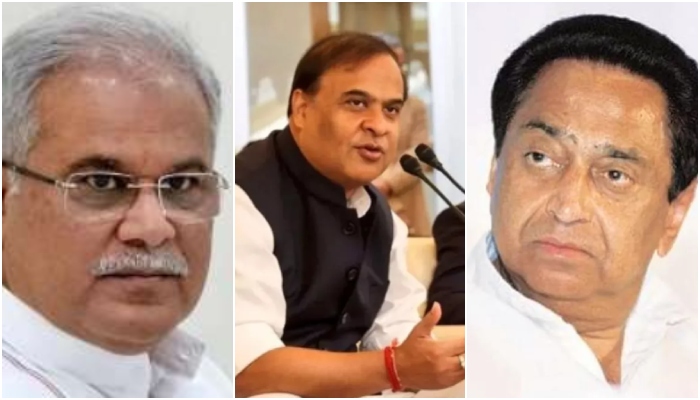
On Wednesday (8th November), Assam CM Himanta Biswa Sarma took a strong jibe at the Congress party and its leaders for using Hinduism as a tool ahead of the elections. While addressing a public meeting in Khandwa, Madhya Pradesh, Sarma stated that the Congress leaders ‘show off’ their love towards Hinduism and Hindu deities only during elections. “They say that they are Hindus but do nothing to be called enough as Hindus,” he said.

The Assam CM also recalled how Congress chief Kamal Nath from Madhya Pradesh had last year cut a cake with a picture of Lord Hanuman on it. “When elections come, they (Congress) people become Hindus. When Kamal Nath celebrates his birthday, Lord Hanuman is placed on the cake. They get the idols printed and then cut them with a blade to eat. Is Lord Hanuman an edible thing? If you were a Hanuman devotee, you would go to a temple and pray,” Sarma slammed.

On 16th November 2022, former chief minister of Madhya Pradesh and senior Congress leader Kamal Nath sparked controversy after he cut a ‘temple-shaped’ cake during his birthday celebrations. The video of Kamal Nath cutting a four-tier cake with an image of Lord Hanuman and a saffron flag on top had gone viral on social media drawing strong reactions online as well as from several political leaders. 

CM Chouhan had taken to Twitter to slam the Congress party over the issue. He said, “Congressis have nothing to do with devotion to God. His party used to oppose the Shri Ram temple. There is Hanuman Ji’s image on a cake and still, you are cutting the cake. This is an insult to Sanatan tradition and Hindu religion, which our society will not accept.”

Meanwhile, Himanta Biswa Sarma also slammed Congressi leader and CM of Chhattisgarh, Bhupesh Baghel for his alleged involvement in the controversial Mahadev betting app case. This is after Shubham Soni, the owner of the Mahadev Book betting app claimed that Rs 508 crore had been given to ‘Baghel saheb’ and others so far.

The Central Probe agency also claimed that a forensic analysis and a statement made by a ‘cash courier’ had led to ‘startling allegations’ that Mahadev betting app promoters paid about Rs 508 crore to Chhattisgarh Chief Minister Bhupesh Baghel.

While the allegations are being investigated by the agency, the Assam CM slammed the Chhattisgarh CM for his involvement in the Mahadev Betting App case. “Bhupesh Baghel in Chhattisgarh brings Mahadev into a betting app and here Kamal Nath cuts cake having picture of Lord Hanuman,” Sarma said.

Meanwhile, Sarma pointed out that encouraging the Congress corresponds to endorsing individuals with historical associations such as “Babars and Aurangzebs” in the country. He also warned that if the Congress came to power in Madhya Pradesh, there would be an increase in oppressive actions against the people. Sarma cited the situation in Karnataka in which the Congress gained power and urged people to oppose the “Chunavi Congress’s Hindutva.”

2023 Madhya Pradesh Legislative Assembly election is scheduled to be held on 17 November 2023 to elect all 230 members of the state’s Legislative Assembly.