Home Blog Page 1655

ISIS link to Delhi anti-Hindu Riots becomes deeper with arrest of AMU’s Wajihuddin Ali Khan: Al Haya Min Allah, ISIS’ Arshad Warsi and Sharjeel Imam link

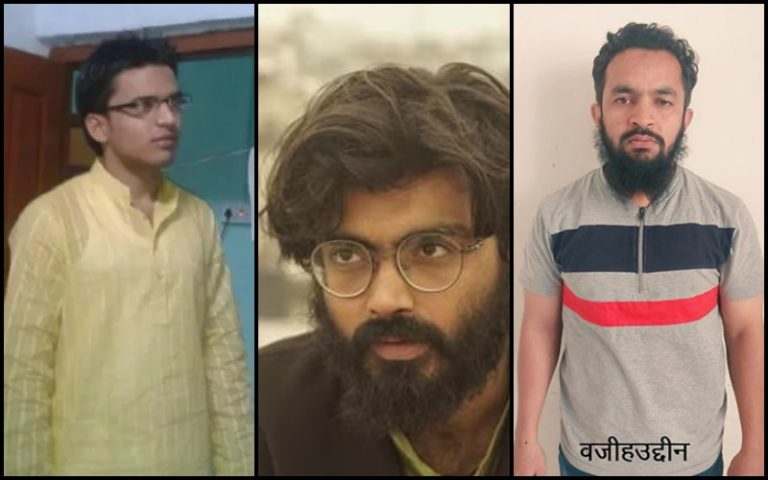
The Uttar Pradesh Police’s ‘Anti-Terrorism Branch’ (ATS) has apprehended another ISIS terrorist from Durg, Chhattisgarh. The name of the terrorist who has been arrested is Wajihuddin Ali Khan. He has been pursuing PhD at Aligarh Muslim University (AMU) in Uttar Pradesh. On Tuesday (7th November), the ATS apprehended him from Durg, Chhattisgarh. Later, the terrorist was moved to Lucknow on transit remand.

According to information obtained by OpIndia from police sources, the arrested terrorist Wajihuddin is originally from Durg in Chhattisgarh. He was pursuing his PhD at AMU. Wajihuddin used to teach social science subjects (history, geography, and civics) to his junior students including Hindu students in Aligarh. He was known as ‘Amir’ by those who embraced his ideology. The word Amir is considered the title of a king among Muslims.

ATS also arrested AMU associates and ISIS terrorists Abdullah Arshlan and Maaz bin Tariq earlier this week. Wajihuddin, Abdullah Arshlan, and Maaz Bin Tariq are also connected to the Pune ISIS network. According to a report by Times of India, Wajihuddin’s name had emerged while the ATS was questioning Arshlan and Tariq. ATS has said that Wajihuddin had ISIS handlers and was planning a terror attack in the state – he would also train Muslims to wage jihad and recruit them to ISIS.

According to the ATS, Wajihuddin was the mastermind who had recruited Arshlan (BTech in petroleum and chemical engineering) and Tariq (pursuing Bcom) to be ISIS terrorists.

The UP ATS press release categorically mentioned that Shahnawaz and Rizwan, arrested in the Pune ISIS module earlier in the year were closely associated with students from SAMU (Students of AMU group). They were ISIS terrorists who were recruiting other ISIS terrorists from SAMU.

From Wajihuddin and the others arrested, ISIS literature was recovered and it was also discovered that they were sharing this ISIS literature among each other and other students as well. Pertinently, Shahnawaz, Rizwan and Arshad Warsi, who were arrested in the Pune ISIS module, were planning terror attacks in Ayodhya, Akshardham Temple and Chabar House.

Pune ISIS module and Delhi Riots connection – ISIS terrorist Arshad Warsi and Sharjeel Imam

On 3rd October, NIA arrested three Jihadis connected to the ISIS Pune terror module. They were planning terror attacks against India. The prime accused – Shahanawaz, had a bounty of Rs 3 lakh on his head. According to the Delhi Police, the module planned to carry out terror attacks across India through instructions from foreign-based handlers. Shahnawaz alias Shafi Uzzama was arrested by the Delhi Police special cell from a hideout in the national capital.

The NIA has also recovered chemical substances from Shahnawaz and other incriminating material suspected to be used for IED fabrication. The NIA had announced a cash reward of Rs 3 lakh each for information about Shahnawaz and three other terror suspects namely Rizwan Abdul, Haji Ali, Abdulla Faiyaz Shaikh alias Diaperwala, and Talha Liyakat Khan. Reportedly, Shahnawaz, Abdulla, and Rizwan were radicalised into joining the ISIS mission over the Telegram app and planned to engineer violence and terror in the country. 

Police said the accused are Shahnawaz Alam (31), a resident of Hazaribagh in Jharkhand; Mohammad Rizwan Ashraf (28) from Lucknow; and Mohammad Arshad Warsi from Garhwa district in Jharkhand. The latter was presently residing in Delhi’s Jamia Nagar. While Rizwan Ashraf was arrested from Lucknow, Shahnawaz was arrested from Jaitpur and Warsi from Moradabad. Iron pipes, chemicals, time devices, and pistol cartridges, among other items used to make explosives, were recovered from Shahnawaz’s possession. 

Most interestingly, the authorities have released that Pakistan ISI and ISIS were handling the activities of the three terrorists now arrested. The police said that the three terrorists had sworn allegiance to ISIS and their Pakistani ISI handlers also had connections to ISIS. They added that ISIS operated from the background to ensure that they did not come to the notice of international agencies and law enforcement organisations.

Shahnawaz, who is the prime accused in this case, had come to Delhi in the year 2016. The police said that he would go to Shaheen Bagh and listen to speeches by the Radical Islamic group Hizb-ut-Tahrir. It was during his time in Shaheen Bagh that he swore allegiance to ISIS. Shahanawaz met Rizwan during this time and they became friends. Both of them were influenced by ISIS at this time. Interestingly, Arshad Warsi also came to Delhi in 2016 after completing his B-Tech from Aligarh Muslim University. He had crossed paths with Shahnawaz and become friends while they were attending one of the programs together. It is not clear what the program was, but since Warsi was settled in Jamia Nagar, one could possibly conclude that they met during the radical Islamic programs in Shaheen Bagh too. 

It was Mohammad Arshad Warsi who facilitated the sheltering of Shahnavaz, a most-wanted terrorist with a reward of 3 lakh rupees on his head. Warsi was also involved in plotting terrorist attacks. Following the information revealed in the interrogation of Mohammad Arshad Warsi, the Delhi Police Special Cell managed to locate and arrest Shahnavaz.

Hailing from Jharkhand, Mohammad Arshad Warsi holds a BTech degree from Aligarh Muslim University and is presently enrolled in a PhD program at Jamia Millia Islamia (JMI), where he specialises in ‘Islamic Principles in Management’. 

Arshad Warsi, who is now arrested for being an ISIS terrorist and planning bomb blasts in Delhi along with other ISIS terrorists, was intricately involved in the Delhi anti-Hindu riots as well. In fact, Arshad Warsi along with Sharjeel Imam planted the seed of the violence which culminated in the Delhi anti-Hindu riots in 2020. 

In the 2700-page chargesheet filed pertaining to FIR 59/2020, the Delhi Police dedicate almost 700 pages to the chronology of the conspiracy hatched for the Delhi anti-Hindu riots in 2020. In fact, the chargesheet displayed evidence that the conspiracy started right from the 5th of December 2019. It is in these crucial stages of planning that Arshad Warsi features along with Sharjeel Imam. 

According to the chargesheet filed by the Delhi Police, after CAB was tabled in both houses of the parliament on the 4th of December, on the 5th of December a group called Muslim Students of JNU (MSJ) was formed by Sharjeel Imam who was the main member of the group and its creation was also his brainchild. 

The chats that have been procured by the Delhi police after a perusal of the phones confiscated from Sharjeel and other accused, it was revealed that Sharjeel Imam and Arshad Warsi (student of Jamia) were in constant touch and Sharjeel was also in touch with “radical communal group” Students of Jamia (SOJ). 

While the chargesheets were being reported and even during the investigation into the Delhi anti-Hindu riots, Arshad Warsi seemed like a smaller player whose role was limited to coordination with Jamia radicals and Sharjeel Imam. However, with the latest revelations, it is evident that Arshad Warsi was an ISIS terrorist who was involved in planning and coordinating the violence from the beginning. 

The full report of the chats recovered between Sharjeel Imam and Arshad Warsi can be read here.

Who is Wajihuddin Ali Khan – Now arrested by UP ATS for being an ISIS terrorist

Wajihuddin Ali Khan was pursuing PhD at AMU. He was also a national player at the Ball Badminton Federation of India. A prominent Islamic preacher in AMU, he was regarded as an Amir (king) by other Muslim students and was regularly promoted by SAMU (Students of AMU).

On 16 May 2023, OpIndia stumbled upon Wajihuddin Ali Khan while covering a story about a dangerous campaign being carried out at AMU by SAMU. The students of Jamia Millia Islamia and Aligarh Muslim University floated a platform to find the “right path and purpose of life”. How simple and benign the idea may appear, the sinister plan behind an organisation that has been flourishing in Aligarh Muslim University and Jamia Millia Islamia raises serious concerns. ‘Al Haya Min Allah’, an organisation formed in 2019 and runs the ‘Haya’ Program in educational institutes to spread Islam among students, has been operating under the radar, carrying on undeterred with its patriarchal, supremacist, and profoundly communal agenda.

The Haya Campaign was a month-long Dawah campaign that Al Haya Min Allah ran at the university campus that includes an “awareness program” about Islam, workshops, offline and online competitions and Haya Conference at the end.

Under its program, the organisation talks extensively against democracy. For example, in a post from February 2020, they said, “Rule is for Allah, the Highest, the Almighty, and it is not permissible to give legislative rights to any human being, no matter who he is.” In simple words, the organisation is against the democratic system and wants Sharia (The rule of Allah) to be implemented.

In a post from February 2020, the organisation called nationalism a “ridiculous ideology” as it binds people to a piece of land. The post read, “Nationalism forces people inside one walled piece of land to have brotherhood for one another and espouse enmity against those on the other side of the wall whom he/she has never met.”

In a post from March 2020, the organisation said that the Quran is the Constitution for Muslims and no human has the right to decide what is lawful and what is unlawful. It further talked about Taghoot, a person who has attained extreme in ‘kufr’. Taghoot ” misleads others, that he calls others to his own worship or obedience or following, against the sole rights of Allah,” it added.

They asked their fellow Muslims to reject Taghoot and its followers. It read, “This means one has to identify the rapids, the Jews, the Christians, Hindus, Buddhists, atheists – all as kafir; otherwise, he is not a Muslim himself. If a person cannot distinguish between a mushrik and a Muslim, then he doesn’t know what Islam is! How can a person who doesn’t know Islam bring Eeman (Iman) on it?”

While promoting Sharia, rejecting nationalism and asking Muslims to consider Hindus and Jews as ‘Kafirs’, the group also promoted Hijab and campaigned against Hindus festivals.

The Facebook profile of Al Haya Min Allah has now been disabled. The full report on this campaign can be read here.

While following this group, we also came across Wajihuddin Ali Khan.

Wajihuddin Ali Khan was an Islamic preacher associated with the Al Haya Min Allah campaign and group and used to preach ‘Haya’ extensively. In our report, we discovered how he used to go from place to place at AMU with a portable mic and talk about following Islamic principles. In fact, one of Wajihuddin’s speeches was shared by Students of AMU on its page during anti-CAA protests. The speech was given during Jinnah’s poster row before anti-CAA protests. SAMU said it was relevant during those protests as well. Wajihuddin was extensively active during anti-CAA protests. 

Interestingly, he had also extended support to PFI and Sharjeel Imam.
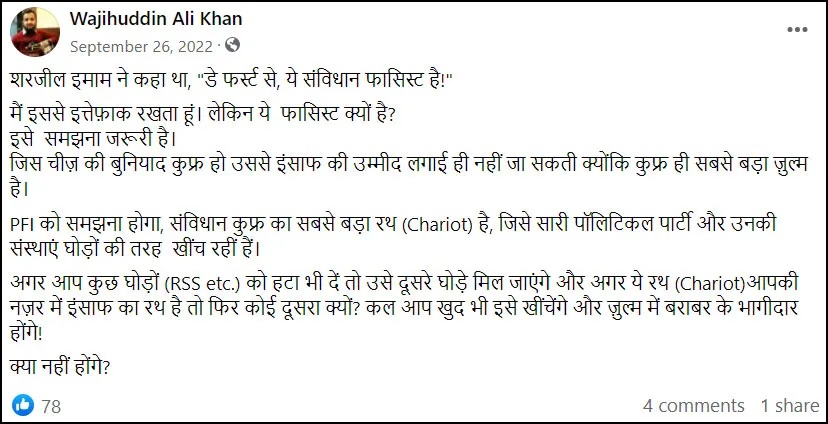
In his post, he had written: “Sharjeel Imam had said, ‘From day one, this Constitution is fascist’. I agree with his statement. But why? What can you expect from something that was built on the foundation of Kufr? You have to understand PFI. The Constitution is the biggest Chariot of Kufr that all the political parties and organisations are pulling. If we remove these organisations (RSS etc.), others will pull this Chariot. If this Chariot is the Chariot of justice in your eyes, then why look at the other? Tomorrow, you will pull this Chariot and become part of the injustice. Wouldn’t you?”

Connection between Wajihuddin Ali Khan and Arshad Warsi – both arrested for being ISIS terrorists

Wajihuddin Ali Khan had extended his support to Sharjeel Imam on his Facebook profile. As of now, Wajihuddin’s Facebook profile stands either locked or suspended.

However, there is a deeper connection between Wajihuddin Ali Khan and Arshad Warsi.

Arshad Warsi has on multiple occassions hailed Wajihuddin Ali Khan as the “amir” (king).
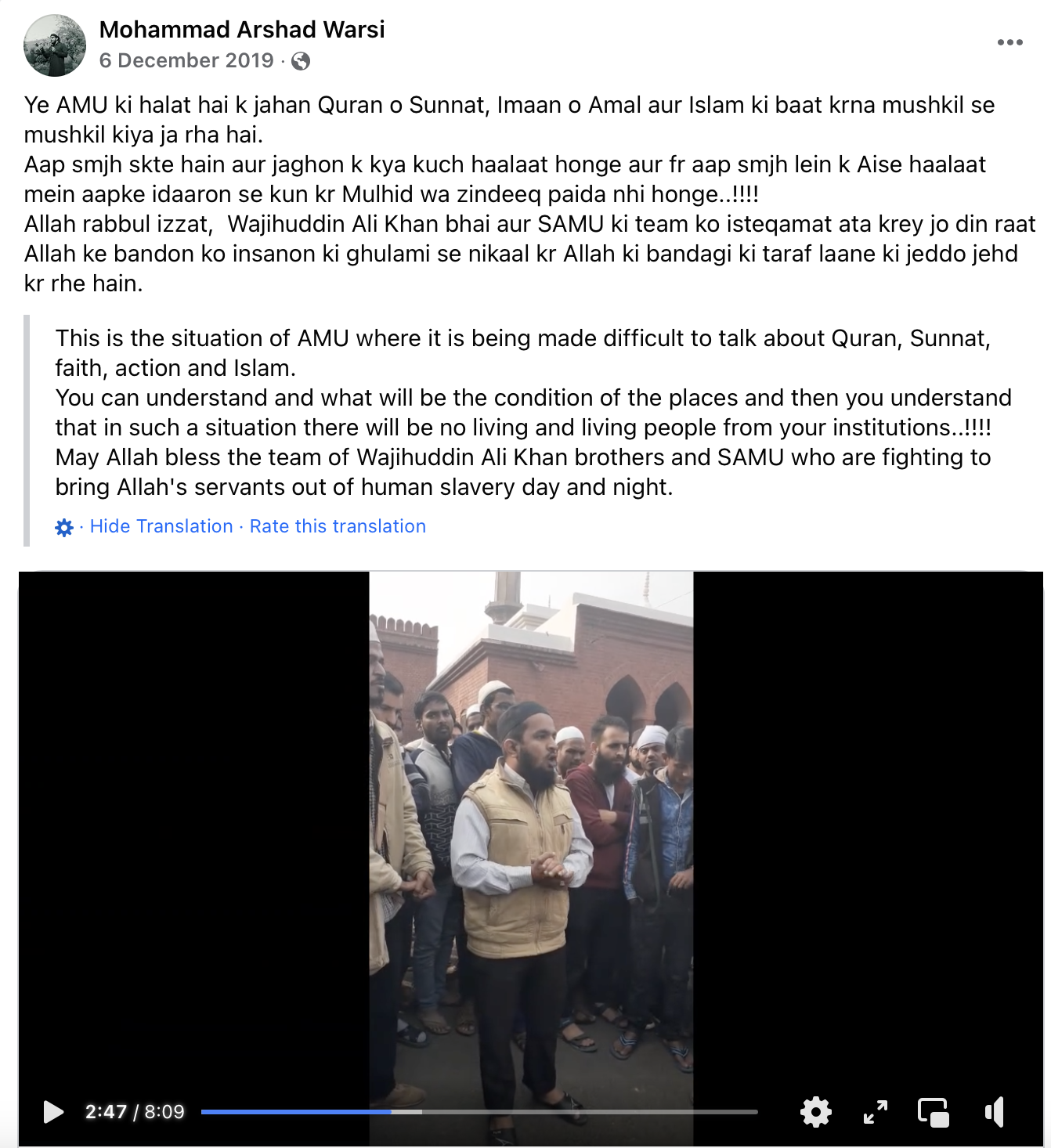
On the 6th of December, Arshad Warsi posted a video of Wajihuddin Ali Khan speech at AMU. He hailed Khan and SAMU.

In the video, Wajihuddin was scaremongering about how Namaz was being stopped and Muslims were not being allowed to talk about the Quran and Sunnat. It is pertinent to note that this video is from the 6th of December 2019. On the 6th of December, an event to mark the Babri demolition was held at AMU. Anti-Hindu slogans were also reportedly raised. Muslim students had cried persecution after 2 students were booked for their posts.

Unsurprisingly, it was China-funded NewsClick, Left portal Scroll, Wire etc that came to the defence of the demonstration by SAMU – in which Wajihuddin made a speech – shared by Arshad Warsi – both now arrested for being ISIS terrorists.

On the 4th of May 2019 too, Arshad Warsi had hailed Wajihuddin.

The speech that Warsi talks about cannot be accessed because Wajihuddin’s Facebook profile is no longer accessible, however, Warsi endorses his view, also articulated by the Al Haya Min Allah group, that all Hindus and Jews must be treated as Kafirs.

Arshad Warsi and Wajahuddin were connected far earlier than the anti-CAA protest. In 2018, Warsi posted on Facebook that Wajahuddin’s Facebook ID had been blocked after his Jumma sermon while protesting against “RSS terrorism”.

It is pertinent to remember that in 2018, a controversy over Jinnah’s portrait had erupted at AMU. In May 2018, after a portrait of Jinnah was found at AMU, some students protested against the divisive Islamist being hailed. The Muslim students, who supported the portrait clashed with other students opposed to it. In May 2018, Muslim students of AMU also raised objectionable Azadi slogans.

Wajihuddin Ali Khan was also holding weekly Dawah meetings inside AMU on a regular basis for many years. Here is a post from 2018.

From these posts, it is evident that Wajihuddin Ali Khan and Arshad Warsi were close for several years, at least since 2018. They have both been arrested for being ISIS terrorists. It is also pertinent to note that Arshad Warsi and Wajihuddin were closely involved in the anti-CAA protests that were taking place in Jamia and AMU at the time.

Wajihuddin Ali Khan, Arshad Warsi and the Delhi anti-Hindu riots connection

As discussed above in great detail, Arshad Warsi was intimately in touch with Sharjeel Imam during the early phases of the Delhi violence. Above, we had evidenced how Arshad Warsi shared a video of Wajihuddin Ali Khan on the 6th of December 2019. This is when the conspiracy of the Delhi violence had already taken seed and Arshad Warsi was intimately in touch with Sharjeel Imam. From Arshad Warsi’s post, it is evident that he was not merely praising Wajihuddin but was also connected with him on a personal level.

For example, on the 7th of December 2019, Sharjeel Imam said that he would be joining the protests called by United Against Hate. This fact was revealed by his WhatsApp conversation with Arshad Warsi. While joining a protest is not wrong in itself, here is the clincher – on the 7th of December, Sharjeel Imam categorically said that he was planning something big in the next week and for that purpose, he would mobilise students from DU, AMU etc with the help of MSJ members. 

Subsequently, Arshad Warsi put up the minutes of the meeting that was held at the Tefla Dhaba between the core committee members of the MSJ group. The aim of the meeting was rather simple – to make the UAH rally a resounding success and also, to ensure that both Muslim and non-Muslim students turn up at the protest. 

It is important to note that it was the following week that the Jamia riots took place and violence broke out in several parts of Delhi and even Uttar Pradesh. 

The violence began on the 15th of December when Muslim mobs rampaged through the national capital. Amanatullah Khan, a prominent MLA of the Aam Aadmi Party, and Delhi’s Sunni Waqf Board chief was spotted leading the riots in Jamia Nagar. Chants of ‘Hinduon se Azadi’ were raised in the same area that very day. Buses were also set on fire during those violent protests. On the same night, the Delhi Police cracked down on the Jamia Milia Islamia University and entered the campus to flush out the miscreants.

Two days later, massive riots broke out in Seelampur. Delhi turned into a war zone. A school bus was attacked and set on fire as well. The mob taunted the policemen to run after them following which stones were pelted.

Interestingly, on the 8th of December, an underground meeting had taken place where Sharjeel Imam, Yogendra Yadav and others were present. 

It was in this meeting, that according to the chargesheet, a plan was hatched on how to implement the Chakka Jam. It was decided that it would be Sharjeel Imam who would organise and lead students from various universities and colleges in and around Delhi.  

The fact that this meeting took place was also confirmed by the chats that were discovered between Sharjeel Imam and Arshad Warsi. 

On the same day, a WhatsApp group was formed called the ‘CAB TEAM’. The core members of the team were following: 

  1. Yogendra Yadav 
  2. Umar Khalid 
  3. Sharjeel Imam 
  4. Nadeem Khan 
  5. Parvej Alam etc.

Thereafter, there was a spate of violence almost on a daily basis leading right up to the Delhi anti-Hindu riots 2020. 

How it all ties together, proving the ISIS angle to Delhi anti-Hindu riots yet again

With multiple angles emerging, it has now been proven yet against that there was a definitive ISIS angle to the Delhi anti-Hindu violence – a conspiracy that took seed on the 5th of December 2019 and culminated into planned violence against Hindus in February 2023.

Following is a summary of what we know so far:

  1. On the 3rd of October, NIA arrested three ISIS terrorists – Shahnawaz Alam (31), a resident of Hazaribagh in Jharkhand; Mohammad Rizwan Ashraf (28) from Lucknow; and Mohammad Arshad Warsi from Garhwa district in Jharkhand
  2. UP ATS has said that Shahnawaz and Rizwan were closely associated with SAMU (Students of AMU group) and were recruiting for ISIS in that group.
  3. Thee three – Shahnawaz, Rizwan and Arshad Warsi were planning terror attacks in Ayodhya, Akshardham Temple and Chabar House.
  4. Arshad Warsi holds a BTech degree from Aligarh Muslim University and is presently enrolled in a PhD program at Jamia Millia Islamia (JMI), where he specialises in ‘Islamic Principles in Management’. He is therefore connected to both JMI and AMU.
  5. Arshad Warsi is intimately connected to the mastermind of the Pune module – Shahnawaz – because it was Warsi who had given shelter to Shahnawaz when the police placed a bounty on his head.
  6. Arshad Warsi was intimately connected to Sharjeel Imam – one of the masterminds of the Delhi anti-Hindu riots.
  7. In the Delhi Riots chargesheet, the Whatsapp chats between Sharjeel Imam and Arshad Warsi have been included.
  8. Sharjeel Imam and Arshad Warsi were connected since the 5th of December when protests against CAA were being planned. It was in these chats with Warsi that Imam had spoken about “doing something big” – essentially – creating violence.
  9. It was on the 6th of December that Arshad Warsi had hailed Wajihuddin Ali Khan and SAMU on Facebook. It was the anniversary of the Babri demolition.
  10. The pamphlets that were being printed by Sharjeel Imam and Arshad Warsi also had communal messages about Islam and Babri.
  11. On the 7th of December 2019 too, Arshad Warsi (who hailed Wajihuddin and SAMU) and Sharjeel Imam were closely involved in the planning of the violence.
  12. It was on the 8th of December that an underground meeting had taken place where Umar Khalid, Sharjeel Imam and Yogendra Yadav were present. In that meeting, it was decided that Sharjeel Imam would organise and lead the Chakka Jam.
  13. It was soon after that on the 15th of December that violence broke out.
  14. Ever since, almost on a daily basis, Hindus had come under violence by Islamists – leading up to the Delhi anti-Hindu riots of February 2020.
  15. Wajihuddin Ali Khan, now arrested for being an ISIS terrorist, was active in AMU up until very recently – OpIndia had covered his association with an AMU group called Al Haya Min Allah in May 2023.
  16. Wajihuddin Ali Khan had also extended supported to Sharjeel Imam in his Facebook post dated 26th September 2022.
  17. Arshad Warsi, Wajihuddin Ali Khan and other terrorists had ISIS and Pakistan ISI handlers.

It is evident that there are several tentacles of ISIS in the Delhi anti-Hindu riots case – now, with the arrest of ISIS terrorist Arshad Warsi, the arrest of ISIS terrorist Wajihuddin Ali Khan, their connection and the link to Sharjeel Imam, it becomes imperative that the Delhi Police and NIA investigate the terror angle and the extent of ISIS’ involvement in the 2020 violence that left several Hindus dead.
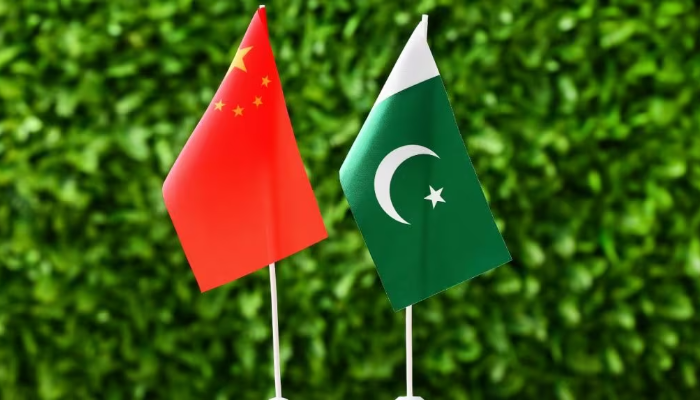
We are in loss-making relationship with China, they keep giving us credit so we can keep losing more to them: Pakistani media on their ‘all-weather friend’

Pakistan media has seemingly come to certain realisations about their country’s ‘all-weather friend’ China. An editorial in one of the country’s largest English newspapers Dawn has raised questions about the skewed nature of the close ties between the two countries. The article “What China wants from Pakistan” by Pakistani economist Khurram Husain sheds light on the mounting trade deficit and stark economic differences between the two neighbouring nuclear powers.

He stated that China seeks to maintain an unending trade surplus in its favour with Pakistan, just as they do with any other nation. “There might be a few specific things beyond this, such as Gwadar for instance, but those are marginal and nowhere near as central to Chinese designs in Pakistan and the rest of the world as we might imagine.”

Gawadar Port is operated by China Overseas Port Holding Company (COPHC), a state-run Chinese firm. Its most important feature is its geographic position as a gateway between western China and the Indian Ocean and hence is an asset for the communist country.

Khurram Husain emphasised that Pakistan has had a total trade deficit of about $90 billion with China since 2010. “This means capital worth $90bn has flowed from Pakistan to China against goods and services coming the other way. The next big deficit region includes the oil-producing countries of the Gulf.”

Furthermore, he examined the figures in relation to other Western powers and noted that during the same time frame, Pakistan had a $34 billion trade surplus with the United States. “With the UK (United Kingdom), it ran a trade surplus of almost $12bn. For the EU (European Union), it is harder to give a figure because the State Bank does not report EU trade data as a region, and the member countries have changed over the decade, making it difficult to manually compute the cumulative trade for these years. But it is safe to assume that there would be a sizeable trade surplus here too.”

He wrote that Pakistan gains capital through its participation in the US, UK, and EU economies and utilises the same to invest in the markets of China and oil-producing states of the Gulf.

He pointed out that the glaring economic disparity with China solidified itself after 2010. “The interesting thing is, if you look at the decade between 2000 and 2010, China would not factor as the top country with which Pakistan ran a trade deficit. It attained that position post-2010, and cemented it further with the second China-Pakistan Free Trade Agreement agreed to in 2019.

The agreement mentioned that China and Pakistan aim to reach US$15–20 billion in bilateral trade by the completion of the second phase. It was put into force on 1 January 2020, and will last until 2024.

The economist further added, “This is not unique to Pakistan. There are not many countries in the world that run a trade surplus with China. The single largest trade surplus that anyone ran with China last year, for example, was Taiwan, coming in at $156bn. Other countries that ran a trade surplus with China include Japan, South Korea, Malaysia, Indonesia, Brazil and a few others. By and large, the rest of the world runs a deficit.”

He also brought up India and conveyed that the country “ran a $100bn deficit with China last year alone” and also addressed the important distinction between Pakistan and other countries. “The difference between them and us, however, is they can afford this deficit whereas we can’t.”

Khurram Husain cited India and commented that another difference is that the country has pursued its commercial interests with other nations in Southeast Asia while forgoing a bilateral free trade agreement with China in order to protect its trade interests with its hostile neighbour. He reiterated, “Pakistan, on the other hand, has not only gone deeper into this loss-making relationship with China but increased reliance on Chinese credit as well along the way. A report released by Aid Data, a research lab based in the College of William and Mary, provides some useful data.”

He highlighted China’s $70 billion development finance commitment to Pakistan since 2000, which included emergency loans for budgetary assistance. “Of this, $56bn was committed in the post-2013 period, when the Belt and Road Initiative (BRI) began. The report provides data on commitments only, not actual disbursements, but in some categories, it is easy to see how commitments would equal disbursements.”

He added, “One of these categories is the general budget support. Of the $56 billion committed by China to Pakistan in the post-BRI period, $16 billion was for budget support. In the pre-BRI period, the years running from 2000 to 2012, budget support credits were $4.6 billion.”

He observed that China started giving Pakistan increasing amounts of credit for budgetary support as the trade gap widened. “What is the purpose of these credits,” he asked and answered, “To keep us in the game. So we can keep losing more and more to them with every passing year.”

However, he claimed that China is not doing anything wrong and alleged, “This is, in fact, fairly normal trade policy for an emerging great power. All great powers have run a similar trajectory. They run trade surpluses with the rest of the world for prolonged periods, gathering more and more capital within their economy as the years pass.”

He added, “Then they become exporters of this capital to others. Eventually, as their economy becomes the single largest producer of goods and services, as well as the single largest supplier of capital to the world, they remake the rules of the game to make their currency the medium of exchange in global trade settlements as well as the key reserve asset.”

China, Khurram Husain argued, is following this path even though it has encountered certain obstacles on its journey from becoming the world’s “workshop” to becoming a major financier. He reaffirmed that he did not blame China and stated, “This is normal trade policy for an emerging power, and its relationship with much of the world looks like this. It is Pakistan that has to learn something here. The first thing to do is to drain all emotion out of the relationship.”

He called for an objective assessment of the relationship between the countries which is devoid of any emotion. “This business of ‘higher than the highest mountain’ needs to end. The second thing is to take stock of the two free trade agreements we have had with China thus far and decide whether we want to renew this in 2024 or not, and if so, on what terms.”

He noted that understanding that the goal of the game is to earn capital and not borrow it or bring it in with sporadic fire sales of assets is crucial. “Centre your relationships with all countries around this principle. Relationships that help you earn capital are to be built upon. Those that drain capital from you are to be reformed and changed. Build a foreign policy with this in mind. That is the only way the country can pull itself out of a cycle of endless borrowing.”

It is important to note that China is notorious for its debt-trap diplomacy. Debt-trap diplomacy is a term to describe an international financial relationship where a creditor country or institution extends debt to a borrowing nation partially, or solely, to increase the lender’s political leverage.

The creditor country is said to extend excessive credit to a debtor country with the intention of extracting economic or political concessions when the debtor country becomes unable to meet its repayment obligations. The conditions of the loans are often not publicized. The borrowed money commonly pays for contractors and materials sourced from the creditor country. The Chinese Communist Party (CCP) government lends and then leverages the debt burden of smaller countries for geopolitical ends.

India is also a major focal point in the relationship between China and Pakistan. China exploits Pakistan as a tool for its expansionist foreign policy, especially with regard to India, in exchange for monetary assistance while Pakistan under its doctrine of religious extremism tries to infiltrate terrorism on Indian soil.

US launches airstrike on weapons storage facility of Iran-backed militia in Syria in response to attacks on US personnel, 9 killed

0

According to US Defense Secretary Lloyd Austin, US fighter planes executed airstrikes on a weapons storage facility in eastern Syria on 8 November that was connected to Iran in reaction to attacks against American personnel. Nine persons connected to organisations supported by Iran were killed in the assault, per the Syrian Observatory for Human Rights, a war monitor.

This is the second time in about two weeks that the US has struck a Syrian location that was reportedly connected to Iran. Washington accuses Tehran of supporting several armed organisations and holds it accountable for an increase in offensives against US soldiers in the Middle East.

While the Western power is working to prevent Iran and its allies from escalating the Israel-Hamas conflict into a regional war, the two countries could clash as a result of the continuing assaults and counterattacks.

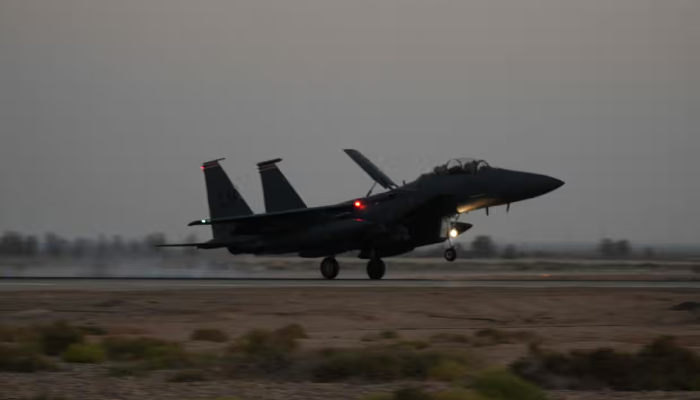
Lloyd Austin released a statement which read, “US military forces conducted a self-defence strike on a facility in eastern Syria used by Iran’s Islamic Revolutionary Guard Corps (IRGC) and affiliated groups. This strike was conducted by two US F-15s against a weapons storage facility.”

He mentioned, “This precision self-defence strike is a response to a series of attacks against US personnel in Iraq and Syria by the IRGC (Islamic Revolutionary Guard Corps)-Quds Force affiliates. The President has no higher priority than the safety of U.S. personnel, and he directed today’s action to make clear that the United States will defend itself, its personnel, and its interests.’

The senior official added, “The United States is fully prepared to take further necessary measures to protect our people and our facilities. We urge against any escalation. U.S. personnel will continue to conduct counter-ISIS missions in Iraq and Syria.”

The strike is being accompanied “with very clear messaging through multiple channels,” based on a senior US military official and senior Iranian leaders are being told, “We want you to direct your proxies and militia groups to stop attacking us.”

The site in Deir Ezzor province had been monitored, stated a senior American military official, allowing the US to choose a moment to do the strike with “a minimal number of casualties” albeit the action might have still resulted in some. “We were tracking just a couple (people) max that we don’t have any confirmation of just prior to the strike.”

On 26 October, the US military also attacked two locations in Syria that it claimed were used by the IRGC and its allies, however, it concluded that no one was hurt. Washington said that the other two strikes, like the most recent one, were in retaliation for attacks on US soldiers, who had been the target of more than 40 rocket and drone assaults since 17 October.

The war between Israel and Hamas, which started on 7 October when the terrorist organisation unleashed a surprise cross-border incursion from Gaza that resulted in the deaths of more than 1,400 people, is connected to the spike in attacks against US forces.

There are 900 American troops in Syria and another 2,500 in Iraq as part of the campaign to stop the Islamic State organisation from rising again. The jihadists had previously controlled a sizable portion of both nations, but after a brutal and multi-year battle, local ground forces with the help of international airstrikes drove them out.

The Houthi rebels in Yemen who are backed by Iran claimed on 8 November that they had shot down an American drone in another episode connected to the Israel-Hamas conflict. “Our air defences were able to down an American MQ-9 while it was carrying out hostile surveillance and espionage activities in Yemeni territorial waters as part of American military support for Israel,” they disclosed in a press release.

Senior US officials have confirmed that one of the nation’s drones was shot down. Following the 7 October attack, the US promptly provided military support to Israel and increased US personnel in the area.

Houthis are part of the “axis of resistance” of outfits positioned against Israel and are hostile to Yemeni government forces. The US Navy intercepted missiles fired by the rebels last month and they have taken credit for numerous drone and missile attacks against Israel throughout its conflict with Hamas.

The United States assessed that one of the MQ-9 drones was shot down by the Huthis in 2019. A number of MQ-9 drones, which are capable of flying more than 1,100 miles (1,700 kilometres) at altitudes of up to 50,000 feet (15,000 meters) and be used for both surveillance and strikes have been lost or damaged in recent years.

After Rashmika Mandanna, deepfake images of Katrina Kaif, Sara Tendulkar hit internet, govt issues notice to platforms failing to follow rules

0

A video of actor Rashmika Mandanna entering a lift was recently shared by Indian web and social media users. The video was a fake created with Deepfake, a technology that enables fraudsters and cyber criminals to manipulate images and videos using machine learning and artificial intelligence. Just a few days later, an altered image of Katrina Kaif is making the rounds. The image, which was originally a screen capture from the upcoming Tiger 3 film, has been modified to make it look vulgar. 

Katrina Kaif appears to be performing an action sequence for Tiger 3 while wearing a towel in the original image, which she released on Instagram. However, in the morphed image, the actor is shown in the same pose but with a distinct and altered outfit, making the image look vulgar. 

However, the modified and fake image was removed from social media hours later. IT Minister Ashwini Vaishnaw has taken cognizance of the issue and said that the government will issue notices to all platforms that fail to follow rules. They might lose legal protection, he said as quoted by Times Now.

Meanwhile, Minister Rajeev Chandrasekhar also commented on the issue and said that such deep fake videos were “dangerous and damaging” forms of misinformation. He warned that they must “be dealt with by platforms”.

While Deepfake is not an entirely novel tool, it first appeared on the web a few years ago. It is increasingly being used by scammers and cybercriminals to morph pictures and videos. Many of these videos are sexually explicit and are often used to commit identity theft. People use the technology, which uses strong video cards to modify and remake elements of images and videos, to spread misinformation and garner benefits at the cost of humiliation and defamation of celebrities. It is important to note that morphing images and videos, whether using Photoshop or Deepfake tools, is a punishable offense.

Unfortunately, women are the usual victims of such tools.

The altered image of Katrina from the ‘Tiger 3’ movie scene raises worries because deepfake technology is capable of taking images of real people and changing them to look entirely different. In this case, the image depicted her wearing a different, vulgar outfit than she did in the film.

Image- JantaKaReporter

Meanwhile, a doctored image of Sara Tendulkar with cricketer Shubman Gill is also going viral over social media. Sara Tendulkar, in an AI-generated image, can be seen hugging cricketer Shubman Gill. This original image however features Sara with her brother ArjunTendulkar. The original photograph has been tampered with to replace Arjun with Shubman Gill, with Gill’s face seamlessly superimposed onto Arjun’s body.

In Rashmika Mandanna’s case, a deepfake video indicated her in a situation she was never in, potentially harming her reputation. The video showed the well-known actor stepping into a lift.

Deepfake technology entails the use of the latest artificial intelligence to create extremely lifelike yet often misleading digital content. This technology can alter an individual’s appearance and voice in videos or audio files, making it difficult to differentiate between original and altered content.

In the case of Rashmika Mandanna’s Deepfake video, the primary footage showed Zara Patel, a British-Indian influencer, but her face was artificially replaced with that of the actress using Deepfake software. Concerns have been raised about the potential for misuse of such tools, as well as the need for legal measures to combat its spread.

 “Something like this is honestly, extremely scary not only for me but also for each one of us who today is vulnerable to so much harm because of how technology is being misused”, the actress had tweeted after the fake video went viral.

Reports mention that Deepfakes are frequently distinguished by unnatural facial expressions or movements, such as blinking too frequently or insufficiently, or movements that are too stiff or jerky. The eyes are capable of telling you whether a video is real or fake. Deepfakes frequently have blurry or unfocused eyes, or eyes that do not move in sync with the person’s head movements.

Young Israeli woman was gang-raped, shot in head, body mutilated: Chilling details of sexual assault by Hamas terrorists narrated by 7th Oct attack survivor

Israeli security officials have been collecting witness testimonies to gather evidence and confirm the allegations of sexual assaults committed by Hamas terrorists during the brutal terrorist attack on 7th October. This is being done in order to prosecute the surviving terrorists who were captured by Israel.

One such testimony collected by the Israeli Police’s Lahav 433 National Crime Unit was that of a woman who survived the Re’im massacre at the music festival.

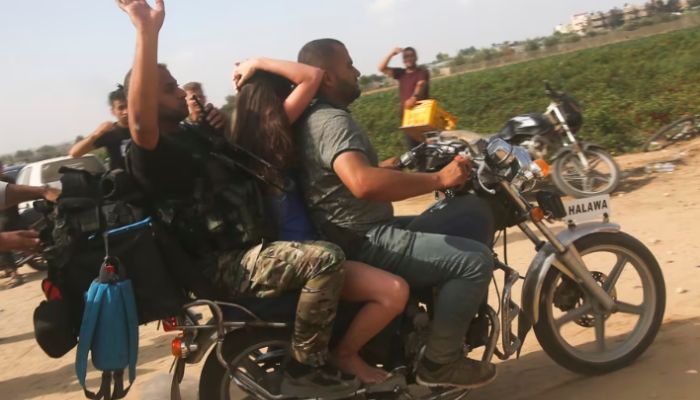
The woman said that she witnessed a young woman being gang-raped and then shot in the head. “I am trying to hide. Out of the corner of my eye, I perceive that he is raping her and carrying her. The girl was alive before, she was standing on her feet, bleeding from the back. The terrorist was pulling her hair. She had long brown hair,” the eyewitness narrated.

She added that the terrorists were in military uniforms. “They bent someone over. I realised he was raping her and passing her on to someone else also in uniform.” The witness said that subsequently one of the terrorists-rapists shot the young woman in the head and then they mutilated her body.

But this may not be even half of the spine-chilling act of rape and murder that ensued on 7th October. All Israeli media reports that have published this story claim to have omitted several graphics details, which are in possession of the police.

An Israeli author on X, formerly Twitter, quoted the eyewitness as saying that one of the Hamas terrorists shot the young woman in the head while raping her. “He didn’t even lift his pants. They cut her breasts and played with it,” Hen Mazzig cited some sources quoting the eyewitness.

Another witness, a male, who was behind the primary eyewitness, recounted the incident saying that he did not see the rape and that the eyewitness was telling him what she was seeing at the time of the crime.

This is just one of the many witnesses that the Israeli security forces are collecting to confirm the allegations of sexual assault committed by Hamas terrorists as the large investigation to uncover the details of 7th October attacks.

So far, the accounts of sex crimes and other brutalities during the onslaught were shared by volunteers from Zaka, an ultra-orthodox organisation that helps retrieve and identify bodies. The group has described the gory details of the atrocities committed with many bodies of women bearing signs of brutality and abuse.

The Israeli police are reportedly scanning about 50,000 video files in order to identify the terrorists-rapists. Permission to use facial recognition system has also been granted to officials.

Reports claim that in several cases, the police was able to link some suspects to murders. One of the suspects reportedly said that he murdered a man and a woman with hammer blows, and described a tattoo on the woman’s body. Investigators were able to locate the woman, who was seriously injured, and the man’s body which had bruises that might have been from the hammer blows.

Moreover, captured terrorists revealed to Israeli security that they had planned to seize control of a town or a city in central Israel for a substantial amount of time and take its residents hostage. They also had plans to plant mines in the area.

Reporters with terrorists? The presence of photojournalists raises the question of the ethics of AP and Reuters

0

Shocking details of the 7th October terrorist attack by Hamas on Israel have come to light as it was found that photojournalists from the Associated Press (AP), CNN, Reuters and others were conveniently present at the Israel-Gaza border to “live report” the terror attack. Experts have raised the question of whether the photojournalists involved had prior information about the attack that killed over 1,300 Israelis and foreign nationals. Furthermore, journalism ethics are at stake as it raised suspicion that the photojournalists could have been coordinating with the Palestinian terrorist organisation Hamas.

Photojournalists were at the border on a Saturday that was supposed to be quiet. It is being speculated if they coordinated with the terror outfit and if the wire services, including the Associated Press and Reuters, approved their presence alongside terrorist infiltrators. Moreover, it is being questioned if they had informed other media outlets like the New York Times and CNN about their company in the middle of the most brutal terrorist attack.

The report by Honest Reporting has highlighted some specific instances. For example, a freelance journalist identified as Hassan Eslaiah, who works for CNN, was seen capturing photographs from inside Israel without wearing any press identification. It is implausible for a photojournalist to enter a war zone without an identification jacket as it puts his or her life in danger. Without the identification jacket, the question arises if the terrorists were aware of his identity.

Screenshots of his now-deleted tweets were shared in the report, where he was seen documenting himself near an Israeli tank. Interestingly, an older photograph of Eslaiah surfaced following the controversy where he was caught with Hamas leader Yahya Sinwar.

The report also discussed other photojournalists such as Yousef Masoud, who works for the New York Times, and Ali Mahmud and Hatem Ali, who captured photos of abduction of Israelis by Hamas terrorists. Notably, some of the photos were removed from the AP database, raising the question of whether there were concerns over journalistic ethics among the management.

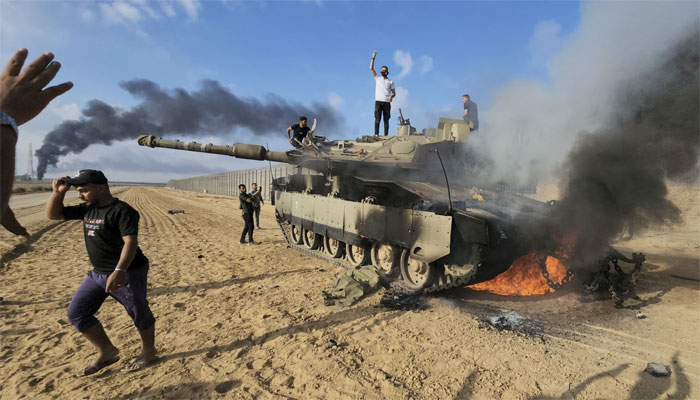
In the reports published by wire agencies, there were photographs depicting a burning Israeli tank and a lynch mob brutalising an Israeli soldier. These photographs were clicked by photojournalists Mohammed Fayq Abu Mostafa and Yasser Qudih. Shockingly, the report alleged the photograph of lynching was mentioned as the “photograph of the day” by Reuters editors in the editorial database. OpIndia could not independently verify the claim of marking the image as the “image of the day”.

‘They were doing their job’ excuse does not work

There is a possibility that the wire agencies and media houses will give an excuse that their photojournalists were just “doing their job” by covering the terrorist attack on Israel. However, “doing their job” does not include possibly hiding prior information about a terrorist attack. Their presence at the scene right at the time of the terrorist attack raises serious questions about the ethics they followed. Furthermore, photographing terrorists while they were mutilating bodies and lynching soldiers is not what is expected from photojournalists.

Taking the example of doing the job, we can talk about the tragic Bhopal Gas Tragedy, after which famous veteran photojournalist Raghu Rai went to Bhopal and documented the atrocities the people of Bhopal faced. It was his job, and he did it with a straight face. Because of Raghu Rai, we know how far the damage went due to the gas leak.

However, “doing the job” would not be an excuse in the case of “journalists” who live telecasted from Kargil during the India-Pakistan war or from Mumbai during the 26/11 terror attack. In both cases, the Pakistani Army and terrorists got information about the locations of our soldiers, and we lost precious lives.

The wire agency and media houses are responsible for drawing the line. The responsibility also falls on the shoulders of the photojournalists responsible for bringing out the reports without any bias. It is also the duty of journalists to inform law enforcement agencies if they get a tip of a possible terror attack. Hiding the information just to get a story before everyone else not only put hundreds of lives in jeopardy but also put the journalists and photojournalists on the wrong side of the law.

Israel-Hamas war

On 7th October, the Palestinian terrorist group Hamas launched a terror attack on Israel, killing almost 1,300 Israelis and foreign nationals. They abducted around 200 people and took them to Gaza. In response, Israel declared war against Hamas, aiming to wipe out the terrorist organisation from the face of the earth. Since then, Israel has bombed Hamas locations in Gaza for around a month and initiated ground response as well. So far, around 10,000 people have been killed in the war. Israel has repeatedly asked Palestinians to evacuate Gaza for their safety. On 9th November, the Israel-Hamas war entered its 33rd day.

Ghaziabad: Doctor injured after altercation with Kumar Vishwas’ security team, police say no evidence of poet’s claims of attack

0

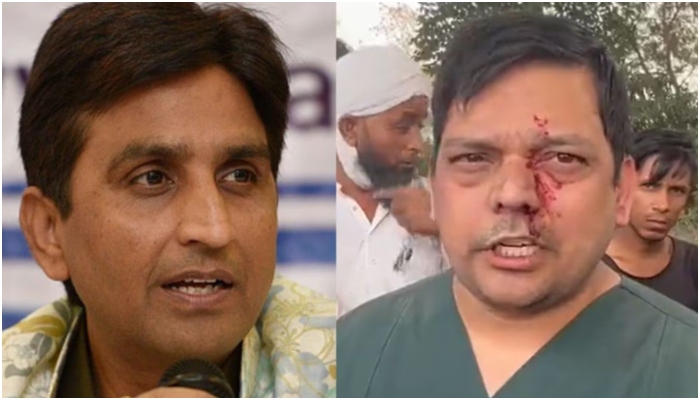
On Wednesday (8th November), a 35-year-old doctor at a private hospital in the Ghaziabad district of Uttar Pradesh was reportedly abused and assaulted by the security men of poet and former AAP leader Kumar Vishwas. The doctor identified as Dr Pallav Bajpai said that he was beaten by the security men from Vishwas’s convoy for not giving way to his vehicles on the Ghaziabad streets.

The doctor who was allegedly assaulted by the security men of Dr Kumar Vishwas has filed a police complaint.

The video of the doctor complainant has gone viral on social media where he could be seen injured and bleeding. “Two cars tried to overtake my vehicle. I gave them the way. Men from one of the cars which was a police van blocked my way and began abusing me for not giving them way. They assaulted me when told them that I was a doctor. One of the men told me that Dr Kumar Vishwas was in the car and was getting late for a show. I also informed them that I had an operation scheduled and was getting late. On this, one of the men dragged me out of the car and started beating me up. I have the number of the car noted,” the doctor said in the complaint.

The incident is said to have happened at around 3 p.m. on 8th November. The incident came to the fore after former AAP leader Dr Kumar Vishwas tweeted about the matter and alleged that his convoy was hit by a private car in Ghaziabad. He also alleged that the car owner attacked his security men on questions about the act of hitting. Vishwas also has reportedly filed a counter-complaint.

“Today, while going to Aligarh, when I left my house in Vasundhara, on the banks of Hindon, a car driver tried to attack the car of the security personnel traveling with me. The convoy was hit from both sides. My security men got down and interrogated that person. but he attacked not only the UP police constable but also the security personnel of the central forces. I have reported the case to the police. The reason for the attack is yet to be known. May God keep everyone safe. Thank you for all your good wishes,” Vishwas tweeted.

However, the Ghaziabad Police took cognizance of the event and said that the allegations leveled by Vishwas against the doctor could not be proven. “In the case that came to notice today, the allegations regarding the attack on the convoy of Dr Kumar Vishwas by an unknown person have not been proved in the course of preliminary investigation. The Indirapuram police station will conduct an advanced investigation into the case,” Ghaziabad Police said in a tweet on 8th November.

Dr Pallav Bajpai also stated that he sought help from the popular poet while he was being beaten by his security men but to no avail. “I shouted for help, screaming Kumar’s name several times, but he did not step out. They thrashed me for over 10 minutes,” Dr Bajpai said.

However, in the counter-complaint filed by Vishwas, he stated that the doctor first grabbed the collar of one of the cops. “He first grabbed the collar of one of the cops, Amit Bhadauria, and pushed him, due to which the identity card chain around his neck broke. Then he attacked a security guard, Ravikant. He also tried to snatch weapons from the security personnel,” Vishwas said in the complaint.

The Police have received complaints from both parties. Meanwhile, no FIR has yet been filed in the case.

Primary investigation, however, revealed that the allegations leveled by Dr Kumar Vishwas could not be proved. Advanced investigations in the case will be conducted by the Indirapuram police station as informed by Ghaziabad police.

Canada: ‘Exterminate the enemies of Gaza’, pro-Hamas Imam calls for finishing Jews in a rally, Quebec leaders demand action

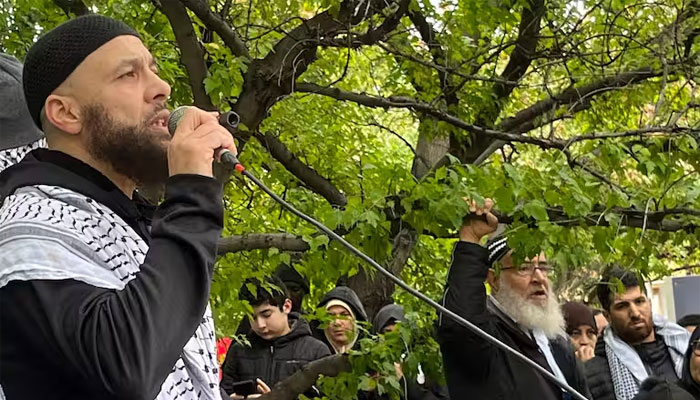
On 28th October, controversial pro-Hamas Imam, Adil Charkaoui allegedly called for ‘exterminating all Jews’ in a statement during a pro-Palestine rally near Place des Arts of downtown Montreal in Quebec, Canada. The leaders of four primary political parties have jointly called for strict action against him for possible hate crimes. In his speech in Arabic, Charkaoui called for the extermination of “Zionist aggressors”.

Speaking on the issue, Quebec Premier François Legault said that Charkaoui had been accused of inciting violence and hate. He pointed out that though he has no role in how the police should conduct an investigation, he stressed the fact that inciting violence is not permissible.

On the day when Charkaoui delivered the speech, there was a large gathering of pro-Palestinian demonstrators near Place des Arts. It was part of the “global day” of pro-Palestinian protests to “denounce” the ongoing Israel-Hamas war and bombing in Gaza. During his speech, Charkaoui invoked Allah and asked for the elimination of “Zionist aggressors” while calling them the “enemies of the people of Gaza”. He urged “no one be spared” during his address.

Charkaoui himself shared the video of the statement on social media platforms. Jewish groups condemned his speech, including the Centre for Israel and Jewish Affairs. CIJA characterised his speech as a call for violence against Jews. They argued that such rhetoric would not contribute to the peace in the Middle East and called for its condemnation.

However, some “experts” believe that Charkaoui’s statement did not target all Jews but only those who were participating in the war. Shokry Gohar, the Arabic language program director at McGill University’s Institute of Islamic Studies, claimed that after reviewing the video, he could confirm Charkaoui “did not call for the extermination of all Jews”.

Notably, Charkaoui’s past is full of controversies. He was once detained for six years under suspicion of terrorism. However, his case was dropped by the Federal Court in 2009. The Montreal Police has not issued any statement over the matter, which raised questions about how he was permitted to address the crowd.

Responding to the allegations, Charkaoui claimed that the “Zionist Lobby” was trying to cover up the crimes committed in Gaza. He wrote, “The current strategy of the Zionist lobby is to attack – through unscrupulous journalists – those who denounce the genocide in Gaza and to obscure the crimes of those who commit it.”

Israel-Hamas war

On 7th October, the Palestinian terrorist group Hamas launched a terror attack on Israel, killing almost 1,300 Israelis and foreign nationals. They abducted around 200 people and took them to Gaza. In response, Israel declared war against Hamas, aiming to wipe the terrorist organisation from the face of the earth. Since then, Israel has bombed Hamas locations in Gaza for around a month and initiated ground response as well. So far, around 10,000 people have been killed in the war. Israel has repeatedly asked Palestinians to evacuate Gaza for their safety. On 9th November, the Israel-Hamas war entered its 33rd day.

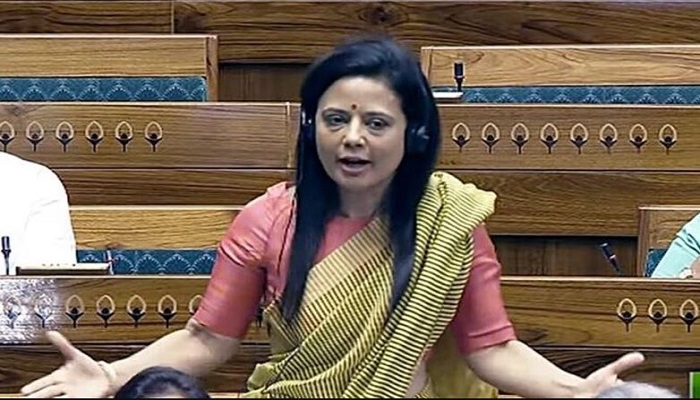
Ethics Committee to recommend TMC MP Mahua Moitra’s suspension from Parliament

In a significant development in the cash-for-query scam investigation, the Lok Sabha Ethics Committee has reportedly recommended that Trinamool Congress (TMC) MP Mahua Moitra be expelled from Parliament. The Ethics Committee is reported to have recommended Mahua Moitra’s suspension on the grounds of “unethical conduct” jeopardising national security. It is also reported that the Committee will be recommending against Bahujan Samaj Party (BSP) MP Danish Ali, a member of the Ethics Committee, for allegedly trying to manipulate public opinion against the panel.

According to an NDTV report, the Lok Sabha Ethics Committee recommended Mahua Moitra’s expulsion from the parliament in its 500-page report. The TMC MP has also been asked to appear before the panel on Thursday (9th November).

It has been reported that the Ethics Committee of Lok Sabha, headed by BJP MP Vinod Kumar Sonkar, will meet on Thursday to adopt a draft report on the cash-for-query allegation against Mahua Moitra.

This comes after Advocate Jai Anant Dehadrai filed a complaint with CBI, accusing Mahua Moitra of corruption, bribery and taking lavish gifts from businessman Darshan Hiranandani in exchange for asking Lok Sabha questions targeted on the businesses of Adani Group, Hiranandani’s competitors. Based on Dehadrai’s complaint, BJP MP Nishikant Dubey submitted a formal complaint to the Lok Sabha Speaker Om Birla seeking an inquiry against Moitra. He urged the Speaker for her immediate suspension.

In an interview with Rajdeep Sardesai for IndiaToday, Mahua Moitra admitted sharing her parliament login ID and password with businessman Darshan Hiranandani saying that “it is in no way against the rules.”

It is pertinent to recall that the IT ministry had stated that it had sent a report to the Lok Sabha Ethics Committee confirming that the TMC leader’s parliamentary ID was accessed 49 times from Dubai.

Later, the Ethics Committee of parliament summoned Mahua Moitra for questioning on November 2. The meeting, however, ended abruptly after the TMC MP stormed out. While leaving the meeting, Moitra accused the panel of asking “filthy and personal questions”. The committee, however, refuted her claims saying that she did not cooperate and left to avoid answering more questions. The committee called Mahua Moitra’s conduct “highly objectionable, unethical, heinous and criminal” in addition to calling for a time-bound legal and institutional inquiry by the government.

Meanwhile, on 8th November, BJP MP Nishikant Dubey said that the anti-corruption body Lokpal has ordered the Central Bureau Investigation (CBI) to investigate the cash-for-query scam.

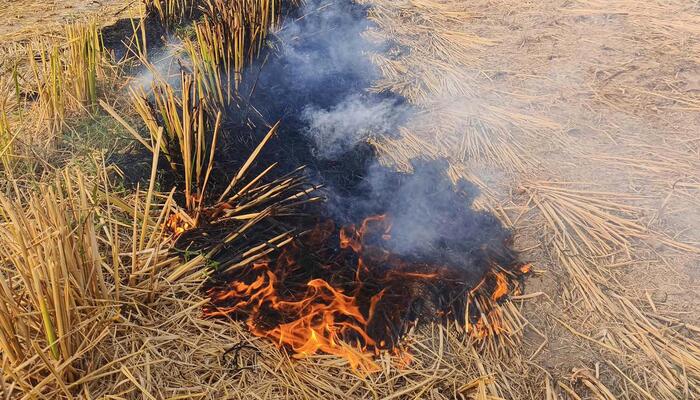
Punjab records 2000 stubble burning incidents in single a day, govt orders FIR against farmers

On Wednesday (8th November), farm fire incidents in Punjab crossed the mark of 2000 in a single day. The alarming numbers were recorded a day after the Supreme Court directed the state government to ensure the stopping of crop stubble burning “forthwith”.

Meanwhile, the Punjab government has instructed the police and civil administration to register FIR and take strict action against farmers burning crop residue.

Punjab DGP Gaurav Yadav directed the police officers to work in collusion with the civil administration to prevent stubble burning. DGP Yadav also appointed Special DGP (Law and Order) Arpit Shukla as the police nodal officer to monitor action against stubble burning.

Following the directions of the Supreme Court, Chief Secretary Anurag Verma has asked District Magistrates and CPs/SSPs to jointly hold a review meeting on the issue daily after receiving the data on farm fires.

During this meeting, it was decided that village-wise situation of stubble burning will be reviewed. If any stubble-burning incident is found to have taken place in the jurisdiction of any SHO, prompt disciplinary action will be taken against him.

Reportedly, 12 instructions have been issued. Police patrol parties, under the direct leadership of the area SHO, will work to put an end to the stubble burning swiftly. Cluster teams, formed earlier by the District Collectors in each district, have been urged to communicate with police and civil administration teams. Each district will now be divided into sectors, with a gazetted police officer in command of each. The District Magistrate and SSP have been ordered to make regular field inspections. Moreover, Collectors and SSPs have also been directed to use alternate solutions for in-situ and ex-situ stubble management.

According to data collected by the Punjab Remote Sensing Centre in Ludhiana, the overall number of farm fires in Punjab has risen to 22,981, with 2,003 new incidents reported on Wednesday.

The data of 2003 fresh incidents states that Sangrur continued to lead in rankings with 466 stubble-burning incidences, followed by 221 in Bathinda, 216 in Barnala, 150 in Faridkot, 131 in Mansa, 106 in Patiala, 103 in Ferozepur, and 96 in Ludhiana.

With the highest number of stubble-burning cases—4,070—among the 22,981 farm fires reported between September 15 and November 8, Sangrur is in the top spot. It is followed by 2,176 in Ferozepur, 1,888 in Tarn Taran, 1,719 in Mansa, 1,524 in Patiala, 1,454 in Amritsar, 1,436 in Bathinda, 1,129 in Barnala, 1,089 in Ludhiana and 1,014 in Faridkot.