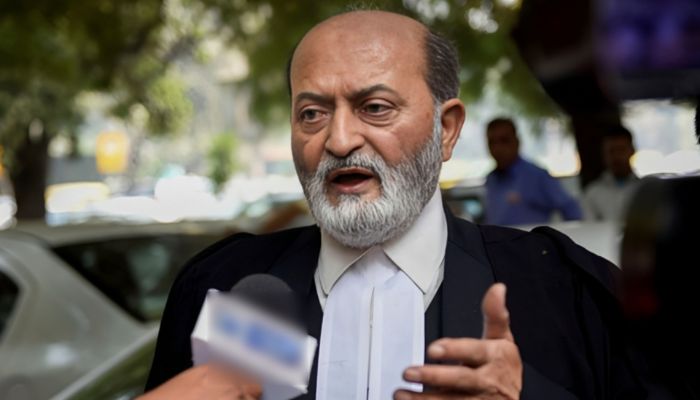
Senior advocate and All India Muslim Personal Law Board (AIMPLB) secretary Zafaryab Jilani passed away on Wednesday, 17th May 2023, in the morning. He died in Lucknow. Zafaryab Jilani was suffering from multiple health problems for a long time after suffering a head injury.
Senior advocate Zafaryab Jilani represented the Babri Masjid Action Committee in the Ram Janmabhoomi case of Ayodhya. He advocated in this case on behalf of the Babri Masjid Action Committee. Prior to this, he had also served as an additional ADG of Uttar Pradesh.
In May 2021, lawyer Zafaryab Jilani suffered a head injury. He was undergoing treatment at Medanta Hospital after suffering a serious head injury. However, at that time his condition was said to be critical, after which he was kept in the ICU. Due to the head injury, he had a blood clot in his brain and he also had a brain haemorrhage. However, after successful surgery, his blood clot could be removed. After a few days, he started to recover slowly.
Zafaryab Jilani has been in the headlines since the 1990s. He had presented the Muslim side in the Ayodhya case in the Supreme Court. Zafaryab Jilani was thus made the chairman of the Babri Masjid Action Committee (BMAC). In the last few days, he had health problems at least twice. On Wednesday, he passed away while he was being treated in the Nishantganj Hospital of Lucknow. Muslim clerics have expressed grief over his death.
Born on January 5, 1955, in Uttar Pradesh, India, Jilani dedicated his career to legal advocacy and representing the Muslim community in various high-profile cases. Jilani gained significant attention for his role in the Babri Masjid-Ram Janmabhoomi land dispute case. As the convenor of BMAC, he represented the Muslim parties and presented their arguments before the Supreme Court of India. The court’s verdict in 2019 granted the disputed site to Hindus for the construction of a grand Ram temple on the birthplace of Lord Ram, while providing an alternate five-acre land to the Muslims for the construction of a mosque. Apart from this case, Jilani was actively involved in other legal battles concerning so-called minority rights, including cases related to the Muslim Personal Law Board and the so-called religious freedom.
On Tuesday, May 16, the West Bengal government led by CM Mamata Banerjee submitted an affidavit in which it defended a ban on the film The Kerala Story claiming that the movie contains ‘manipulated facts and hate speech’ in several scenes and may hurt the religious sentiments leading to communal disharmony and pose a law and order situation.
In its affidavit, the West Bengal government stated that it decided to ban the film’s screening in the state by invoking its statutory power under Section 6(1) of the West Bengal Cinema Regulation Act 1954 based on intelligence information indicating that the ‘hate speech’ in several scenes of the film “may hurt communal sentiments and cause disharmony between communities, which will eventually lead to a law and order situation.”
Moreover, the Mamata government also claimed that the audience makes objectionable comments when they see scenes in the movie where Hindu and Christian girls are tormented. It further claimed that the moviegoers coming out of the theatres after watching the film talked about limiting their interaction with Muslims.
“During surveillance, it has been observed that the audience makes very objectionable comments whenever they see a particular scene where Hindu or Christian girls are seen tortured. It has also been observed that while coming out of movie halls people discuss among themselves to limit their interaction with Muslims and or that these Muslims ought to be taught a lesson,” the West Bengal government’s affidavit stated.
This comes after the Mamata Banerjee government on May 8 banned the release of The Kerala Story saying that it was done to “maintain peace”. While hearing the plea filed by The Kerala Story makers challenging the ban, the Supreme Court on May 12 issued a notice to the West Bengal government seeking to know the rationale behind banning the screening of The Kerala Story movie in the state. It questioned the state government as to why the movie can’t be screened peacefully in the state when it has been running without issues in the rest of the country.
Earlier, OpIndia reported that the Tamil Nadu government claimed before the Supreme Court on May 15 that there is no prohibition on screening of the film ‘The Kerala Story’ in the state. The CM MK Stalin-led government claimed in its affidavit that theatre owners chose not to exhibit the film out of their own will due to a ‘poor response to the movie.
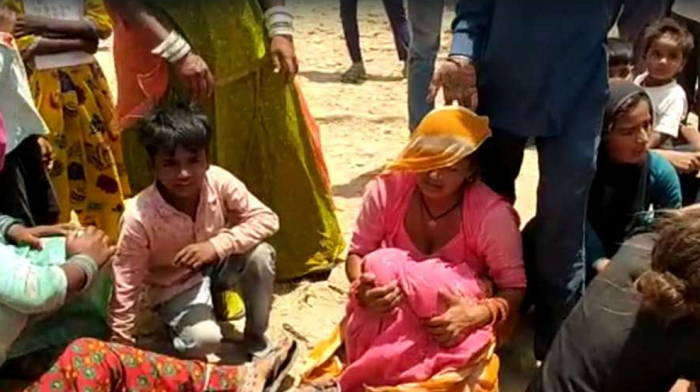
On Tuesday, houses of Hindu families living in the Amar Sagar area in the Jaisalmer district of Rajasthan were razed to the ground with bulldozers. These Hindu families had come to India after being displaced from Pakistan and were living in this area for a long time.
According to the reports, the action of bulldozing the houses of Pakistani Hindus was carried out under the leadership of UIT Assistant Engineer after the relevant orders were passed by District Collector Tina Dabi. The houses were razed to the ground in the presence of heavy police force, forcing women and children to come out on the road in the scorching heat.
The video of the incident was shared by Omendra Ratnu, an activist who has been working with Pakistani Hindu Refugees for many years. He indicated the involvement of ISI and Pakistani Islamists in the matter.
“Now 100 houses of Hindu refugees from Pakistan have been destroyed by government of Rajasthan in Amar Sagar colony, Jaisalmer. This is definitely handiwork of ISI and Pakistani Mullahs. They do not want Hindus of Pakistan to escape. The design is to convert a Crore Hindus to Islam,” he tweeted.
Now 100 houses of Hindu refugees from Pakistan have been destroyed by government of Rajasthan in Amar Sagar colony,Jaisalmer. This is definitely handiwork of ISI & Pakistani Mullahs. They do not want Hindus of Pakistan to escape. The design is to convert a Crore Hindus to Islam. pic.twitter.com/ZmA65yiI4g
The woman in the video could be seen lying on the barren ground with all the home articles thrown around. The video posted by Ratnu also stated that the women and children were lathi-charged by the police during the event. “The women here can be seen unconscious. This is because the police have imposed lathi-charge on them. Several temples have also been vandalized and set ablaze,” a man in the video could be heard saying. In another video he shared, the women could also be seen being taken to the nearby hospitals.
The videos of the incident were also shared by Swarajya journalist Swati Goel Sharma who said that the poor Dalit Adivasi Hindu refugees from Pakistan were being cruelly treated by the Rajasthan government. “Now their basti in Jaisalmer demolished, citing encroachment. Women lathi charged; at least three were hospitalised. In this scorching heat, shelters and water tanks broken,” she tweeted.
Horrifying. Looks like Rajasthan govt is bent on being cruel to poor Dalit Adivasi Hindu refugees from Pakistan
Now their basti in Jaisalmer demolished, citing encroachment. Women lathi charged; at least three hospitalised
Reports mention that these Hindus had somehow come to India after escaping the terror and repression of the government in Pakistan and were living in Amar Sagar for a long time, but their houses were demolished on the orders of District Collector Tina Dabi. This action of the administration was also opposed by the women of these Hindu families, but the women were lathi-charged and were forced to lie down on the streets in the scorching heat.
Responding to the event, Dabi said to the media that the state government had not issued any guidelines regarding the resettlement of migrants from Pakistan who had not been given Indian citizenship. Reports mention that the UIT officials had gone to the kacchi basti area and ordered the vacation of the land. However, they forcefully demolished their homes on Tuesday.
Eviction ordered by IAS officer Tina Dabi
The eviction of Hindu refugees from Pakistan in Jaisalmer was ordered by well-known IAS officer Tina Dabi, the District Collector and Magistrate of Jaisalmer. Following the demolition of the houses, the Pakistani Hindus reached the house of Tina Dabi and started a protest against her order. Hundreds of people including women and children sat on a dharna near her house, demanding resettlement.
However, the officer defended her action, saying that the houses were demolished based on complaints received from Amarsagar sarpanch and local residents. According to her, the complainants had claimed that the Hindu migrants have illegally occupied the land allegedly belonging to the state govt urban improvement trust. She further claimed that prior notices were also served to the refugees to vacate the land but they refuse to comply.
She added that the state govt is yet to issue any guidelines regarding the resettlement of migrants who had not been granted citizenship in India.
Earlier Tina Dabi made it to national headlines after topping the IAS entrance exam in 2015. In 2018, she married IAS Athar Khan, after the duo became close during the training period. The interfaith marriage became high-profile after many politicians, including Rahul Gandhi, hailed it as a prime example of a symbol of communal harmony “in this age of growing intolerance and communal hatred.” However, the marriage turned sour after Athar Khan could not tolerate the fact that Tina Dabi had stopped using the Khan surname with her name.
They filed for divorce in November 2020, which was finalised in August 2021. In 2022, Tina Dabi married Pradeep Gawande, a doctor turned IAS officer.
Homes of migrant Hindus from Pakistan were also razed in Jodhpur in April
Earlier on April 24, hundreds of homes, most belonging to migrant Hindus from Pakistan, were razed down by the Jodhpur Development Authority. A video of the incident was made viral on the social media in which migrant Hindus could be heard expressing their anguish over the action taken by the authorities.
In the video, a woman appeared unconscious due to the stress of the action taken on their houses. The man recording the video said, “Look at her. She fainted. Look around. This is our India. We came to India. They are bulldozing our homes. We were facing atrocities in Pakistan, and we are now facing atrocities in India. Look around. We are dying here.”
Meanwhile, another man could be heard asking for two-day time to vacate the premises. The heavy police force was present with the authorities and a bulldozer could also be seen in the video. It was also reported that the Hindus had said that they bought the land before building houses, but the administration claimed they had encroached the land.
Even though the Quad meeting scheduled for the coming week stands cancelled, PM Modi would reportedly visit Australia for a planned bilateral program and a ‘Little India’ awaiting him Down Under.
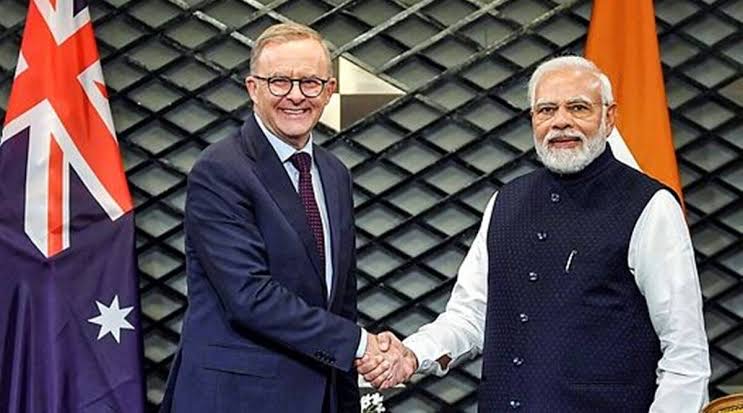
Australian PM Albanese expressed hope that PM Modi would visit the country despite the cancellation of the Quad meeting for the events planned for his trip.
PM Modi’s visit to Australia comes against the backdrop of an important bilateral meeting with his Australian counterpart, PM Albanese.
Flash: "Prime Minister Modi has a bilateral program that is organised so I'm certain that he will be here", Australia PM Albanese on PM Modi's visit even as Prez Biden's visit has been postponed to the country
Besides, a collective of approximately 60 Indian shop owners, who have been actively advocating for the renaming of Harris Park, are also eagerly waiting to receive Indian Prime Minister Narendra Modi on his visit to Sydney. The Prime Minister has been invited to lay the foundation stone for the ‘Little India’ Gateway entrance.
The Indian business community in Harris Park is making preparations to warmly receive Mr Modi. They refer to the collection of Indian restaurants and retail shops as ‘Little India’ and believe that formalizing the nickname would enhance the area’s attractiveness to tourists.
Behind the scenes, Andrew Charlton, the Member of Parliament for Parramatta, has been actively collaborating with government officials from both major political parties to facilitate Mr Modi’s visit to Harris Park.
According to Sanjay Deshwal, the president of the Little India Harris Park Business Association, the initial proposal to officially name the area ‘Little India’ was made in 2015. However, the efforts faced a setback when the Geographic Names Board advised the Parramatta Council to refrain from using the term, citing concerns of potential confusion.
With PM Modi’s visit, the Indian businesses ar Harris Park are upbeat that their demand would finally be fulfilled and the area would be formally named ‘Little India’.
Parramatta councillor Paul Noack, who initiated the motion, expressed the aspiration to establish the area as an international destination akin to places like Little India in Singapore and other renowned locations worldwide. This initiative, he stated, would put Harris Park on the map. It is important to note that the proposed designation of the three main streets as a cultural precinct would not replace the suburb name Harris Park.
The Quad meeting was cancelled following US President Joe Biden’s last-minute withdrawal due to the domestic debt ceiling crisis. It is now expected that the four leaders of the Quad grouping – the US, Japan, India, and Australia – will convene on the sidelines of the G7 meeting in Japan this weekend.
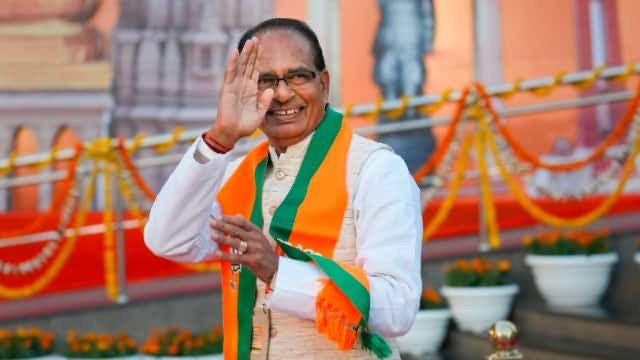
Weeks after promising to free Hindu temples from government control, the Shivraj Singh Chouhan-led Madhya Pradesh government on Tuesday took the first big step towards that direction after it allowed priests to sustain their livelihood through the income from temple agricultural land. This would also mean that the priests would not be dependent on the meagre salaries that were being given by the government and would be able to sustain themselves better.
Ashish Agrawal, the media in charge of the BJP state unit, revealed that the Cabinet of Chief Minister Shivraj Singh Chouhan has decided that priests can now utilize the income generated from up to 10 acres of agricultural land associated with managed temples. Similarly, if the land exceeds 10 acres, the priests will retain the income from the first 10 acres and the remaining land will be auctioned for farming, with the proceeds deposited into the temple’s account.
The Cabinet has also taken a decision to initiate a campaign to free temple lands from encroachment.
Last year, the Religious Trusts and Endowments Department of the Madhya Pradesh government issued orders to increase the honorarium for priests. Chief Minister Shivraj Singh Chouhan announced that temples and priests without agricultural land would receive a monthly honorarium of Rs. 5,000.
Similarly, temples with 5 acres of agricultural land would provide priests with a monthly honorarium of Rs. 2,500. However, priests serving temples with more than 10 acres of agricultural land would not receive any separate salary.
Shivraj Singh Chouhan announces liberating Hindu temples from govt control
In April 2023, Madhya Pradesh Chief Minister Shivraj Singh Chouhan had announced that the state government will not control any activities of temples.
During a Parshuram Jayanti event in Bhopal, the chief minister stated, “We have decided that the government will relinquish control over temple activities, and the auction of temple land will be conducted by priests instead of collectors.”
हमने फैसला किया है कि मंदिरों की गतिविधियों पर सरकार का कोई नियंत्रण नहीं रहेगा। मंदिर की जमीनों को नीलाम कलेक्टर नहीं बल्कि पुजारी कर सकेंगे।
— Shivraj Singh Chouhan (@ChouhanShivraj) April 22, 2023
The Rashtriya Swayamsevak Sangh (RSS) has long advocated for the liberation of Hindu temples from government control. The RSS has consistently emphasized that Hindu temples are subject to government oversight and expressed concerns that funds generated by these temples are being utilized for the upkeep of churches and mosques.
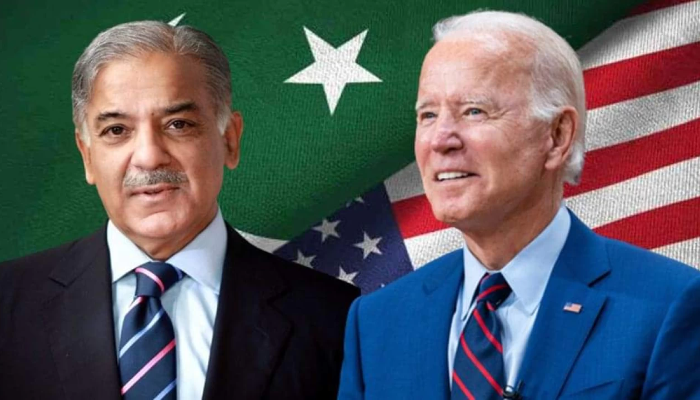
Amid the political turmoil in Pakistan, the United States declared on Tuesday that Islamabad is an important partner of the USA in the region and it wants Pakistan to succeed despite the country’s internal unrest.
John Kirby, the White House’s Coordinator for Strategic Communications at the National Security Council, spoke to reporters and stated, “We want to see Pakistan be a success. And we want to see the Pakistan government live up to the strongest aspirations of the Pakistani people.” He was answering a question on the current situation in Pakistan and US govt wanting a stable Pakistan.
“Pakistan is an important partner in the region. They are suffering from the threat of terrorism every single day. And we are mindful of the challenges that they are facing politically and economically as well. In the United States, they will continue to find a good friend,” he responded to the query raising concern over the grave situation in the South-Asian country.
In a different press conference, Vedant Patel, the deputy spokesperson for the State Department, told reporters that the US does not support any particular candidate or political party in Pakistan or any other nation and emphasised how important a strong, stable, and wealthy Pakistan is to its relations with the country.
“We do not choose a political party or a particular candidate when it comes to Pakistan or really any country. As it relates to Pakistan, our view is that a strong, stable, prosperous Pakistan is key to a strong and stable US-Pakistan relationship,” he answered a question on the political circus in Pakistan.
“Our belief is that individuals should have the freedom to express themselves, but do so without participating in any violence, violence that would put government employees in government buildings in harm’s way. And specifically on the arrest, I spoke a little bit to this last week,” he mentioned referring to the former prime minister and Pakistan Tehreek-e-Insaf (PTI) chief Imran Khan’s arrest last week by the Pakistani Rangers.
Meanwhile, the Australian phase of US President Joe Biden’s tour has been postponed because of acrimonious negotiations with the Republican-majority US Congress over the government’s debt threshold. He also pulled out of a visit to Papua New Guinea.
He was scheduled to participate in the third Quadrilateral Security Dialogue (Quad Summit) with prime ministers Narendra Modi of India, Fumio Kishida of Japan and Anthony Albanese of Australia, but his vital travel has been hindered by the country’s contentious internal politics.
On Tuesday, Joe Biden and opposition Republican leaders provided optimism of a compromise that would prevent a disastrous US debt default, however, the most recent discussions came to an end without an agreement. Treasury Secretary Janet Yellen said on Tuesday that the US faces an “unprecedented economic and financial storm,” referring to the debt crisis the US govt is facing.
US govt needs to raise its debt ceiling, failing to do so will result in the govt defaulting on its bills, which will be a historic first. Like most other govts, US govt also spends more than its revenue collected in forms of taxes and duties etc, and they cover the deficit by borrowing money.
To borrow money, the US treasury issues securities, like US government bonds, that it will eventually pay back with interest. However, there is a limit to how much money the US government can borrow. Once this debt limit is reached, the treasury cannot issue more securities, which means the govt has no more money to spend. This can lead to the suspension of various govt-run services. The US Congress sets the debt limit, which is $31.4 trillion at present.
Australian Prime Minister Anthony Albanese also announced on Wednesday that the Quad leaders’ summit scheduled for Sydney the following week would not take place. This development occurred as Washington tries to strengthen its security connections in the Pacific despite the growing rivalry with Beijing.
Despite the cancellation, it was reported that there would be no change in plan for PM Narendra Modi’s visit to Australia.
All four leaders are still slated to attend this weekend’s G7 summit in Hiroshima, where the Quad countries, United States of America (USA), India, Australia, and Japan are now likely to hold a side meeting.
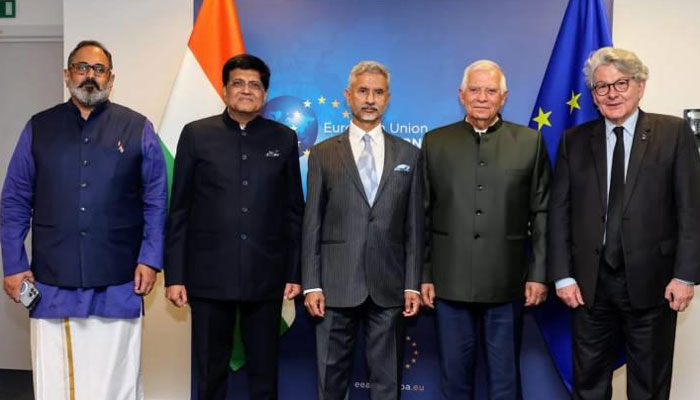
On May 16, External Affairs Minister S Jaishankar said that Russian oil substantially processed in other countries before exporting to EU countries is not considered Russian as per EU Council’s regulations. Defending India’s purchase of Russian oil in Brussels, he urged the EU leaders, who are threatening to block oil import from India, to look into the European Union Council Regulation 833/2014. His remarks came after the European Union Foreign Policy chief called for action against Indian refined products from Russian crude. Union minister S Jaishankar advised him to look at EU Council regulations that say Russian crude transformed substantially in a third country is not treated as Russian crude as per their own regulations.
#WATCH | My understanding of council regulations is that Russian crude is substantially transformed in a third country & not treated as Russian anymore. I would urge you to look at Council's Regulation 833/2014: EAM Dr Jaishankar when asked about EU Foreign Policy chief Josep… pic.twitter.com/5Dh5PH9yfX
The minister was replying to a media query over the remarks of Foreign Policy chief Joseph Borrell who wants the bloc to act on refined products from India made using Russian crude oil. Borrell’s comments came during an interview with Financial Times.
Dr Jaishankar said, “I really don’t see the basis for your question. Because my understanding of council regulations is that Russian crude substantially transformed in a third country and not treated as Russian anymore. I would urge you to look at Council’s Regulation 833/2014.”
In an interview with Financial Times, Josep Borrell said, “If diesel or gasoline is entering Europe . . . coming from India and being produced with Russian oil, that is certainly a circumvention of sanctions and member states have to take measures.” He further said, “That India buys Russian oil, it’s normal. And if, thanks to our limitations on the price of oil, India can buy this oil much cheaper, the less money Russia gets, the better.”
However, he added that if India uses that as a centre where Russian oil is being refined and sold to the European countries, they have to act on it. He further added he would raise the issue with Dr Jaishankar during a meeting with him.
Dr Jaishankar defended India’s imports from Russia several times
This is not the first time Dr S Jaishankar has defended India’s imports from Russia. While doing so, he has indirectly criticised the West for putting pressure on India to reduce trade with Russia amid the ongoing Russia-Ukraine war. Notably, Russia initiated military action against Ukraine in February 2022. It has been over a year since the war between the two nations started. The USA and other NATO countries support Ukraine by providing support in the form of weapons, soldiers and money.
While defending India’s trade with Russia, Dr Jaishankar has categorically said that compared to the transaction between India and European countries, India’s business with Russia is very small, from around USD 12 billion to USD 13 billion. He had said, “We have also given the Russians a set of products. I don’t think people should read more into it other than the legitimate expectations of any trading country to increase its trade.” In another statement, he said, “We do buy some energy, which is necessary for our energy security. But I suspect looking at the figures. Our total purchases for the month will be less than what Europe does in an afternoon. So, you might want to think about it.”
Dr Jaishankar is in Brussels for the last leg of his three-nation visit that covered Bangladesh, Sweden and Belgium for the India-EU Trade and Technology Council meeting. He is accompanied by Commerce Minister Piyush Goyal and Union Minister of State for Entrepreneurship, Skill Development, Electronics and Technology Rajeev Chandrasekhar.
On Monday, May 15, an Aligarh court sentenced 50-year-old Mohammad Hassan alias Pappu to twenty years in prison for raping his 13-year-old adopted minor daughter in October last year. Hasan was sentenced within 41 days after being charged under the POCSO Act. Reportedly, he adopted a Hindu laborer’s daughter. He had been raping the minor girl for about a year. Following Mohammad Hasan’s conviction, the victim was sent to a women’s shelter home.
Reportedly, Mohammad Hasan, a Quarsi resident claimed to have adopted a three-year-old Hindu girl from a brick kiln in Gujarat’s Ahmedabad where he used to work roughly eight years ago. He brought the girl to his home. Although he adopted the girl from a Hindu labourer, he renamed her as per his religion. Pappu was raping the juvenile girl for over a year. On October 25, 2022, Hassan’s daughter-in-law witnessed him sexually abusing the girl at their house.
Upon receiving information about the matter, a social worker in Quarsi named Mohan Chauhan lodged a complaint against Mohammad Hassan. Following this, a medical examination of the victim was conducted. On the basis of Chauhan’s complaint, Mohammad Hassan was booked under IPC section 354 (assault or criminal force to a woman with intent to outrage her modesty) and the Protection of Children from Sexual Offences (POCSO) Act on October 26, 2022.
During the hearing, the court convicted the accused Mohammad Hassan, and sentenced him to 20 years in prison and a Rs 50,000 fine based on the evidence and testimony of the female child. Out of the fine, the court ordered that Rs 40,000 be given to the victim. It is worth noting that the charge sheet in the case was submitted on April 4, 2023. On May 15, the court convicted the rape accused within 16 dates (41 days).
Government Counsel Mahesh Singh said that the convict failed to furnish any documentary evidence to establish when and how the girl was adopted by him. He added that the police tried to trace the victim’s family but failed to do so. Singh also said that the court on the basis of the victim’s testimony had added IPC section 376 (rape) against the accused. Mohammad Hassan was acquitted under 354 and sentenced 20 years jail term on the rape charge.
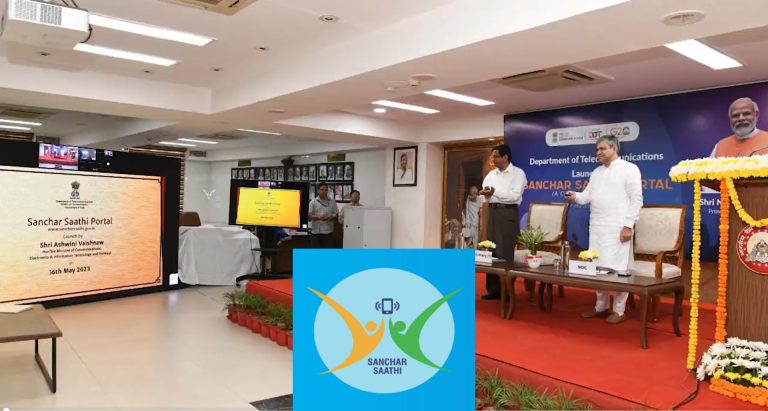
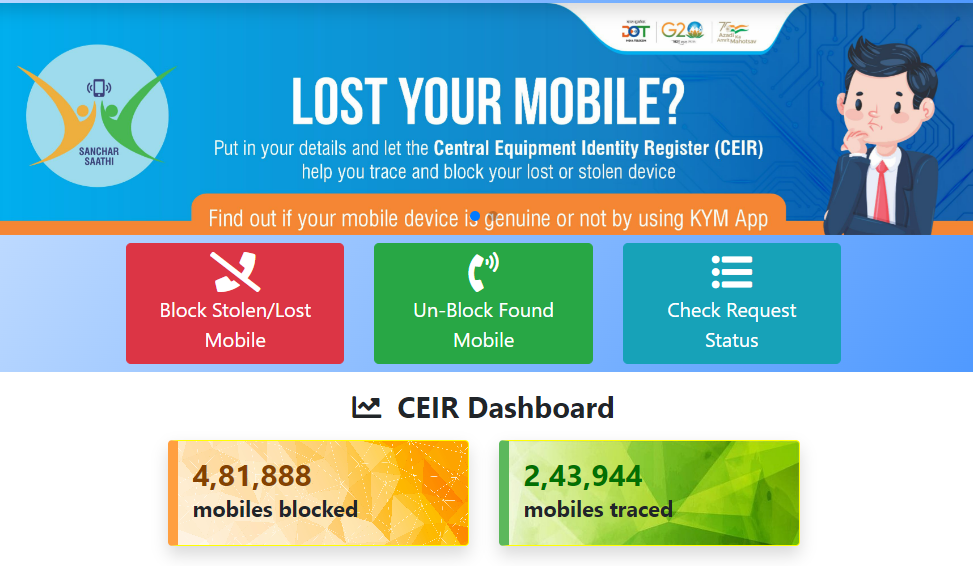
On Tuesday, the Department of Telecom launched a new portal named Sanchar Saathi which will help mobile phone users to block and track their lost or stolen mobile phones across India. Moreover, users will also be able to view all the mobile phone connections which have been issued on their documents. “People will be able to block, track and check the genuineness of a used device before buying them,” said Union telecom minister Ashwini Vaishnaw while launching the portal.
“Under PM Modi’s vision for Telecom user’s safety we have launched Sanchar Saathi Portal under which there are three reforms for telecom users’ safety that will help protect a user’s digital identity. These reforms perfectly fit the PM’s vision to benchmark India’s telecom sector globally,” he said.
The first reform is the Centralised Equipment Identity Register (CEIR) which helps block, track and trace a mobile phone if it is lost or stolen. If the SIM card is removed and a new SIM card is inserted still the phone can be blocked. The CEIR will help keep phone data and…
The first reform, as per the Minister, is the Centralised Equipment Identity Register (CEIR) which helps block, track and trace a mobile phone if it is lost or stolen. “If the SIM card is removed and a new SIM card is inserted still the phone can be blocked. The CEIR will help keep phone data and personal belongings safe,” the Minister said while addressing the masses at the launch event.
The second reform is Know Your Mobile. The consumer will get the facility to know how many SIM cards are there in their name, and what kind of documents have been attached. The users can now turn off their SIM cards as phone numbers are connected to KYC. “This will be done with an AI algorithm,” the Minister said.
The third reform is the 'Astra' an all AI-based framework to prevent cases where a fraudster takes multiple connections using different identities. Till now over forty thousand Point of Sale (POS) systems that were supporting these fraudsters have been blacklisted with Astra.… pic.twitter.com/Aqwj8BfcnH
The third reform is the ‘Astra’, an all AI-based framework to prevent cases where a fraudster takes multiple connections using different identities. According to the Minister, till now over forty thousand Point of Sale (POS) systems, that were supporting these fraudsters, have been blacklisted with Astra. With the help of Astra, 87 crore connections were traced, about 40 lakh connections were found fake, and 36 lakh connections have been closed following a detailed procedure. “In two cases it was found that one person has taken 5200 connections and the other has taken 6900 connections,” he added at the launch event.
He said that consumers can use the TAFCOP service on Sanchar Saathi to see if other mobile numbers are using their names without their knowledge or consent.
The facilities for Sanchar Saathi were created by C-DoT. The Department of Telecom’s technology development division has been successful in adding a capability to monitor the usage of counterfeit mobile phones across all telecom networks.
Prior to a mobile device’s sale in India, the government has now made it essential to provide the IMEI, a 15-digit unique numeric identity. The list of allowed IMEI numbers will be available to the mobile networks, allowing them to verify for the presence of any unlicensed mobile devices on their network.
The IMEI number of the device and the mobile number associated with it will be visible to telecom carriers and the CEIR system, and the data is utilised in some states to trace your lost or stolen mobiles using CEIR.
One of the typical methods used by criminals to avoid being found and blocked from using stolen mobile phones is to alter the IMEI number of the device. With the use of numerous databases, the CEIR will be able to prohibit any cloned mobile devices on the network.
In various telecom circles, including Delhi, Maharashtra, Karnataka, and the North East, C-DOT has been operating the technology’s pilot programme. Using the CEIR system, the Karnataka Police recently found and returned 2,500 missing mobile phones to their owners. With the aid of Apple id, a method for tracking stolen smartphones already exists, but Android-based smartphones have mostly caused problems.
Using stolen cell phones will be futile with the new system in place. The technique created by Sanchar Saathi may also aid in reducing phone smuggling.
Here is how the various services on the Sanchar Saathi platform can be used.
Know Your Mobile (KYM): There are three options to use this service, SMS, KYM and web portal. It provides all the information related to the IMEI number provided.
Lost Phone: It has the option to block a lost or stolen mobile phone, unblock a phone if it is found later, and track the request status. To block a number, information about the lost/stolen phone and the location where it happened, and the phone owner’s personal information has to be provided. Mobile number and device brand are mandatory fields for the information about the phone, while others like IMEI numbers (each SIM in a phone have individual IMEI numbers), second number if there was a second SIM, model name etc can be provided. The owner’s name and identity details are also mandatory.
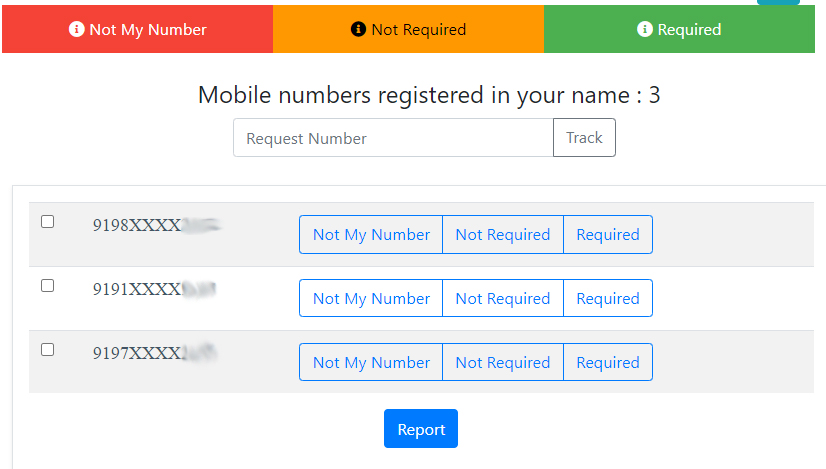
Mobile connections in your name: After providing the mobile number, the system lists all phone numbers issued to the owner of that number. Only the first 2 and last 4 digits of the numbers are displayed, and three options are given against each number, Not My Number, Not Required, and Required. If a number is not recognised by the user and it was issued without the knowledge of the user, this option can be selected. This will raise a request for disconnection of the number.
The ‘Not Required’ option is for those numbers which were taken by the user in the past but are no longer in use, selecting this will also raise a request for disconnection of the number. For the numbers which were taken by the user and are currently in use, the Required option should be selected before clicking the Report button.
April 15 was just another day for Santosh Jain who worked as a financial head in a company in Sudan. He went to his office in a steel factory as he did daily. Little he knew his life would turn upside down within hours of reaching the office.
On that day, the war reached his city. Jain was stuck in the office, his wife, Jyoti Agarwal, was locked in the house, and his two children were stuck in the school while there were tanks on the roads. Jain and 162 workers in his factory were stuck in the middle of the ongoing war. When Indian Embassy informed him that there was no diesel for the rescue vehicles, Jain provided the fuel from the steel factory he worked at.
In an interview with Dainik Bhaskar, Jain said his day was routine. Before he left for the office, his wife had already sent the children to the school. He came to the office and started working. Soon, he heard noises from the outside. He could listen to the noises of bullets being fired and bombs falling around the factory. It was a horrifying situation for everyone in the factory. They shut the doors and hid inside two rooms. After a few hours, the paramilitary barged into the factory and looted their cash and mobile phones. They obliged to armed personnel’s demands to stay alive.
Jain said he received a call from his children’s school, which asked him to take the children back home. However, he could not do anything as he was stuck in the office, and his wife was stuck in the house. He requested a school teacher to take his children with her. He could only bring back his children home the next day.
During the time between the war started in his city and the day of the rescue, Jain and his family lived on a minimal ration that was stored at their house. He said, “I had to bring 162 families with me. I could not leave them behind. Many of them could not speak English, Arabic or other Sudanese language.”
Hurdles in Operation Kaveri and How Jain helped
Jain said he received a call from the Embassy that the vehicles would reach his city soon for the rescue. It was a 12-hour drive to the Sudan Port. However, the rescue operation kept delaying for a couple of days. Later, Embassy officials informed him that there were vehicles, but it was impossible to arrange diesel for them.
Jain said, “There was a tank full of diesel in our steel factory. I thought this was more important; the rest could be figured out later. I told them to send the vehicles. All the tanks were filled with diesel from the factory, and we left for the Sudan port.” Jain said the vehicles were to reach at 3 AM but could only reach 8 AM. Soon all tanks of the vehicles were filled with diesel from the steel factory, and they started the journey back home. It took them 12 hours to reach Sudan Port and within a week.”
Jain told Dainik Bhaskar that throughout the journey to the port, there were checkpoints where all passengers were checked to make sure no Sudanese was among them. They had to hide their expensive phones out of fear of being snatched away. “We came back only with two pairs of clothes. We left everything we had built there in the last ten years,” said Jain.
The Horrifying Tales of the Sudan War
Jyoti told Dainik Bhaskar that they ate only lentils and rice stored in the house for days. There was no electricity. The weather was extremely hot, and it felt as if they would boil. She said, “Our children wanted to sleep with gates open. We could not let them. A pregnant woman living next door slept in the open. A bomb fell next to her, and she was blown into pieces.”
Jain saw a building rumble into pieces right in front of his eyes while hiding in the office. They had told their relatives in India that if they did not get a call for a couple of days, assume there was no electricity. If they did not reach out for over a week, assume they were dead.
Jain and his family are now settling in India. Their children have joined a school in Faridabad and the couple is running a start-up to sell clothes. They hope to see a brighter future in India.
Operation Kaveri
The government of India launched Operation Kaveri to evacuate Indians from war-hit Sudan. Under the ongoing Operation Kaveri, Minister of State for External Affairs V Muraleedharan went to Jeddah, Saudi Arabia, to manage the evacuation. Minister of External Affairs Dr S Jaishankar regularly updated about the evacuation process on social media. Apart from Indian Nationals, foreign nationals were also evacuated by India.
The Indians were evacuated from Port Sudan to Jeddah after the Sudanese army and the paramilitary Rapid Support Forces (RSF) agreed to extend their ceasefire amid ongoing violence in the capital Khartoum and the western Darfur region. Indians are being taken from Port Sudan to Jeddah on Navy ships and C-130J planes, from where they are being flown to India on C17 jet planes. On April 30, Dr S Jaishankar informed that 229 Indians reached Bengaluru. On April 29, 365 passengers reached India in one batch, and 231 reached home in another batch. In a tweet, Muraleedharan mentioned that around 2,100 Indians were scheduled for evacuation from battle-torn Sudan.
Sudan war
There is an ongoing conflict between Sudan’s military and its main paramilitary force. They are fighting to take control of the country. The war threatens the stability of Sudan and the wider region. The details of the conflict can be read here. Our coverage of Operation Kaveri can be read here.