In a tragic incident that shocked the community, a 3-year-old Texas girl accidentally shot and killed her 4-year-old sister after finding a loaded gun in their home. The incident occurred in the small town of Harris, located near Houston.
According to local authorities, the girls were playing together in a bedroom when the younger sister found a handgun that had been left unsecured in a nightstand drawer. The 3-year-old then accidentally fired the weapon, striking her sister and killing her unintentionally.
Harris County Sheriff Ed Gonzalez said the girls were in the bedroom of an apartment on Bammel North Houston Road in Houston, where they lived with their parents. “The 3-year-old gained access to a loaded, semi-automatic pistol. Family members heard a single gunshot. They ran into the room and found the small toddler, 4, unresponsive,” Gonzalez said.
Emergency services were called to the scene and the 4-year-old was pronounced dead. The girls’ parents were reportedly at home at the time of the incident.
“It just seems like another tragic story of, again, a child gaining access to a firearm and hurting someone else and this time there was a fatal shot,” Gonzalez said.
@HCSOTexas units responded to an apt unit at 9955 Bammel North Houston. Preliminary info: two toddlers were inside the unit with other persons. One toddler (3 yrs) gained access to a firearm and unintentionally shot the other (4 yrs). The toddler was pronounced 1/2 pic.twitter.com/AdXDgZ6bzF
The tragedy has left the community in shock and has once again raised concerns about gun safety and the importance of responsible gun ownership. In Texas, it is legal for individuals to own guns without a license or permit, and many households in the state keep firearms for protection or recreational purposes.
“The Harris County District Attorney’s Office will decide whether any of the adults will face charges based on the police investigation, which is still in the preliminary phase”, we continue to send the message that this is very preventable. You’ve got to be sure you’re being a responsible gun owner, securing your weapons in a safe place. It’s got to be more than just telling young kids not to touch the weapons. You know, we’ve got to do a little more. We see far too many tragic situations like this unfold.” Gonzalez further added
However, advocates for gun safety argue that more needs to be done to prevent tragedies like this from happening. They are calling for stricter regulations on gun ownership, as well as increased education and training on safe gun storage and handling.
The investigation into the shooting is ongoing, and it is not yet clear if any charges will be filed against the girls’ parents. Meanwhile, grief counsellors are working with the family and the community to help them cope with this devastating loss.
On Saturday (March 11), the police arrested a 34-year-old man named Santosh Kumar for making hoax calls about the presence of bombs at the railway station and bus stand in Erode town of Tamil Nadu.
As per reports, the accused contacted the police control room in Chennai and threatened bombings at Erode Junction and the bus stand. The district police swung into action and conducted a search operation for over 5 hours on March 11 morning.
The search was facilitated by sniffer dogs, the Bomb Deduction and Disposal Squad and the Railway Protection Force (RPF). While speaking about the matter, Erode Town Inspector R Deivarani said, “We searched those two spots for more than five hours and did not come across any such suspicious objects.”
Reportedly, the police then traced the phone number that made the hoax bomb call, which led them to the accused Santosh Kumar. The cops formed a special team and nabbed him from the Tiruppur district.
It has come to light that he made similar hoax calls in 2019 and 2021. As per reports, Kumar has been unemployed for some time and was struggling to make ends meet. The accused was hoping to be arrested so that he could eat regular meals.
The Erode police registered a case against Kumar under Indian Penal Code (IPC) Sections 506 (punishment for criminal intimidation) and 507 (criminal intimidation by an anonymous communication).
He was later produced before a magistrate who remanded him to judicial custody for 15 days.
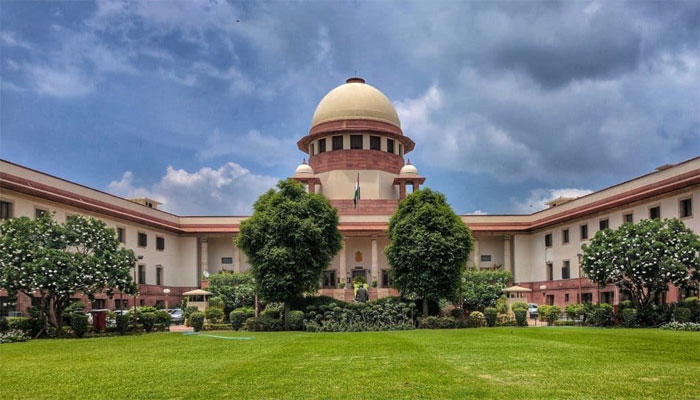
On March 13, the Supreme Court of India dismissed the special leave petition submitted by the Waqf Masjid High Court and the UP Sunni Central Waqf Board against the High Court’s order to remove or demolish the mosque in its premises.
The apex court bench comprising Justice MR Shah and CT Ravikumar granted a three-month extension to the mosque administration to vacate the premises. The mosque is located inside the High Court premises.
Bench : by which original lessees were granted 3 months time to vacate the premises in question, we see no reason to interfere with the impugned judgment of HC. Hence both SLPs stand dismissed. However, it will be open to petitioners to make a representation to State
The bench added if the construction is not removed within the 3-month period, the authorities will have permission to remove or demolish it. The court also permitted the petitioners to make a representation to the UP govt for an alternate land nearby which the state can consider if the law permits and considering if the lands are not required for any public purpose at present or in the future.
Bench : We further grant 3 months time to demolish the construction in question by the petitioners and if the demised construction is not removed within a period of 3 months from today, it will be open for authorities including the HC to have them removed or demolished.
The court noted that the mosque was constructed on a government lease land whose grant was cancelled in 2002. In 2004, the land was resumed in favour of the Allahabad High Court. In 2012, the Supreme Court ordered the resumption of the land. The apex court said the petitioners did not have any legal right over the premises. Notably, the High Court’s orders against which the petition was filed in the apex court were passed in a PIL filed by Advocate Abhishek Shukla.
Senior advocate Kapil Sibal appeared for the mosque committee. He argued that the mosque had been there since the 1950s and asked for an alternate site. He said, “The government changed in 2017, and everything changed. A PIL was filed ten days after the new government was formed. We have no problems with shifting to an alternative place as long as they give it to us.”
Senior advocate Indira Jaising appearing for UP Sunni Waqf Board, argued that the mosque was privately built but later dedicated to the public and registered with the Waqf board, thus becoming a Waqf property. On the contrary, Sibal excused himself from the argument that it was a Waqf mosque.
Senior advocate Rakesh Dwivedi, calling the case fraud, appearing for the High Court, said, “Twice there were renewal applications, and there was no whisper at all that the mosque was constructed, and it was used for the public. They sought renewal saying it was needed for residential purposes. The mere fact that they are offering namaz will not make it a mosque. If namaz is allowed for convenience in the Supreme Court verandah or HC verandah, it will not become a mosque.”
Dwivedi added that the mosque administration got it registered with Waqf in 2002 with the aim of stalling the eviction. He argued that unnecessary religious colour was given to the HC judgment.
Dwivedi : This is a case of complete fraud and religious colours are given. In 2002, they managed to get it register as a waqf to stall eviction and they managed for 20 years. Then they say it is because of Govt change. They are making religious colour to HC direction too.
The high court also informed the apex court that there was no alternate plot of land to relocate the mosque. The state might consider moving it to somewhere else, advocate Dwivedi said, adding that there was a shortage of parking on the premises.
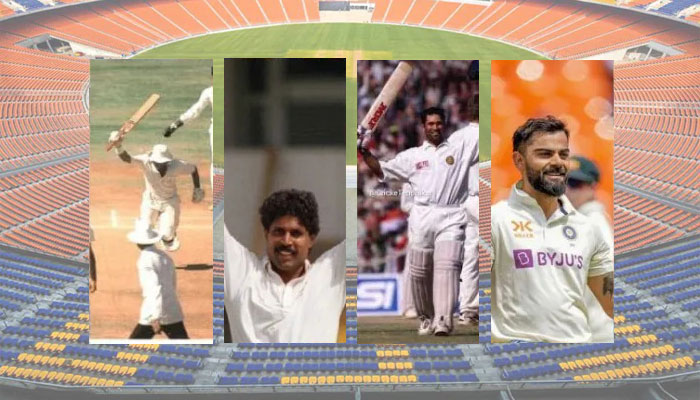
Virat Kohli scored his 75th international century yesterday at the Motera Stadium in Ahmedabad, yes the Narendra Modi Stadium. This century was also important for Virat because it was almost three years after he scored a century in a Test match. In the same way, many Indian cricketers have got the opportunity to create records in Motera Stadium, while the long wait of some cricketers has ended here.
This Motera Stadium in Ahmedabad has been extremely lucky for some all-time greats. If a list of such cricketers is made, Sunil Gavaskar, Kapil Dev, Sachin Tendulkar and now Virat Kohli are among those to have reached cricketing milestones at the ground. Let’s find out how Motera Stadium has been lucky and rewarding for these cricketers.
Sunil Gavaskar: Missed the century but made a big record
Earlier there was only one stadium in Ahmedabad which was named Sardar Patel Stadium, located in the Navarangpura area of Ahmedabad. A new stadium was built at Motera after Gujarat Cricket Association split. In this same stadium, the first Test match was played against West Indies who were invincible at that time. In the same match, Kapil Dev registered a record in his name which we will discuss later, but Sunil Gavaskar came very close to breaking Sir Don Bradman’s record of most centuries in this match.
When he was batting on 90 runs and it was evening time, there was some movement on the sight screen in front of him so he drew the umpire’s attention and started batting again. As soon as the ball came towards him, there was a movement on the sight screen again and Gavaskar was distracted and got caught in slips. Sunil Gavaskar could be seen very angry as he walked out towards the pavilion. Although Sunil Gavaskar could not surpass Sir Don Bradman in this Test, he broke this record in the subsequent test, which was played in Delhi.
But as if this Motera Stadium didn’t want to let Sunil Gavaskar go without making a record, the little master was just a few runs away from becoming the first batsman to score 10 thousand runs in Test cricket when a match was played against Pakistan in this stadium in Ahmedabad. Gavaskar scored 63 runs in the second innings of that Test match and created a record in his name.
The Motera Stadium is the venue for a double achievement for Kapil Dev
The current Narendra Modi Stadium has become a lasting memory for India’s greatest all-rounder Kapil Dev. In the match in which Sunil Gavaskar was dismissed at 90 runs, in the second innings of the same match, Kapil Dev bowled the best of his career and took 9 wickets against West Indies, conceding only 83 runs. Balwinder Sandhu took the first wicket of the innings, had it not happened Kapil Dev would have become the first Indian bowler before Anil Kumble to dismiss ten batters from the same team in an inning.
While Kapil Dev was struggling to break Sir Richard Headley’s record for most wickets and came close to the record, he broke the record by having Hashan Thilakarathne caught by Sanjay Manjrekar at forward short leg in the then Test match against Sri Lanka at the then Motera Stadium in Ahmedabad.
Motera Stadium witnessed Sachin Tendulkar’s first double century
It may have become easy for Sachin Tendulkar to score a century at that time but a double century was still far from him. Tendulkar scored his maiden double-century against New Zealand at the Motera Stadium in Ahmedabad. In this match, Sachin himself was the captain, and in addition to his double century, Dada, i.e. Sourav Ganguly also scored a century. However, Sachin’s decision to bat in the second innings without giving a follow-on to New Zealand became very controversial.
Virat Kohli’s quest for another Test century is complete
As we know that Virat Kohli scored a century in a Test Match yesterday i.e. 12th March 2023 after almost three years and that too at Narendra Modi Stadium in Ahmedabad which was earlier called Motera Stadium. Earlier in the last six months, Kohli had scored centuries in T20 and ODI Internationals. But when it came to a Test match century the long drought ended yesterday.
In this way, four great players of the Indian team have created their own records and in most cases fulfilled their long-time wishes at the Narendra Modi Stadium i.e. Motera Stadium in Ahmedabad. Hence there is no doubt that this stadium in Ahmedabad will remain a permanent favourite for Indian cricketers.
On Monday (March 13), the Rishi Sunak-led-British government facilitated the sale of the UK arm of the now-defunct ‘Silicon Valley Bank (SVB)’ to HSBC’s ring-fenced subsidiary, HSBC UK Bank.
According to HSBC, SVB UK had a profit of £88m before tax for the financial year ending December 31 last year. It added that the bank had loans totalling £55 bn, deposits of around £7bn and tangible equity of around £1.4bn as of March 10, 2023.
The acquisition was reportedly made for £1 (₹99.22). Interestingly, the assets and liabilities of SVB UK’s parent company are not included in the transaction.
This morning, the Government and the Bank of England facilitated a private sale of Silicon Valley Bank UK to HSBC
Deposits will be protected, with no taxpayer support
I said yesterday that we would look after our tech sector, and we have worked urgently to deliver that promise
In a tweet, Chancellor of the Exchequer Jeremy Hunt said, “This morning, the Government and the Bank of England facilitated a private sale of Silicon Valley Bank UK to HSBC. Deposits will be protected, with no taxpayer support. I said yesterday that we would look after our tech sector, and we have worked urgently to deliver that promise.”
In a statement, HSBC CEO Noel Quinn informed, “Acquisition makes excellent strategic sense for our UK business…SVB UK customers can bank as usual, safe in the knowledge their deposits are backed by the strength, safety and security of HSBC.”
The transaction was facilitated by the Bank of England under powers granted by the Banking Act 2009, after consulting the UK Treasury. “No taxpayer money is involved and customer deposits have been protected,” the latter had emphasised.
Silicon Valley Bank UK has today been sold to @HSBC.
This transaction has been facilitated by the @bankofengland in consultation with HM Treasury.
No taxpayer money is involved and customer deposits have been protected.
On Friday (March 10), the Federal Deposit Insurance Corporation (FDIC) announced the shutdown of the US-based Silicon Valley Bank (SVB) and the seizure of its assets.
The development resulted from the sudden shutdown of Silvergate Capital Corp and the unmindful fundraising of SVB, which created panic in the technology industry.
Founded in 1983, Silicon Valley Bank operated out of Santa Clara in California and provided various services such as online banking, treasury management, and foreign exchange trade.
Reportedly, the crisis came to light on March 8 this year after SVB Financial Group (parent organisation of Silicon Valley Bank) announced a sale of $21 billion of its securities.
FDIC: “Silicon Valley Bank, Santa Clara, California, was closed today by the California Department of Financial Protection and Innovation, which appointed the Federal Deposit Insurance Corporation (FDIC) as receiver.” pic.twitter.com/trqGu83CUB
This was further worsened by the sale of company shares worth $2.25 billion to shore up its finances, prompted by high deposit outflows at the bank, caused by a downturn in the startup industry. As a result, the Silicon Valley Bank shares fell 60%, leading to a whopping loss of $80 billion.
To salvage the business, SVB CEO Greg Becker held a conference call with clients and venture capital investors, requesting them to “stay calm” to avoid further withdrawals.
However, it was to no avail. Many venture capitalists instead instructed portfolio companies to minimise their exposure to Silicon Valley Bank, withdraw their cash, and look for other lenders (thus further exacerbating the crisis).
In February this year, American business magazine Forbes placed SVB Financial Group in the 20th position in the list of ‘America’s Best Banks.’
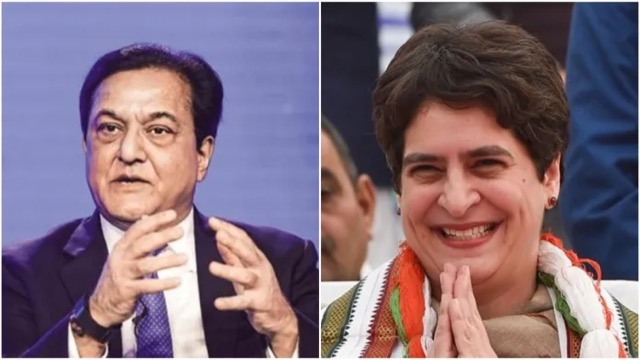
The grand old party suffered significant embarrassment as the Financial Action Task Force (FATF) released a case study on Yes Bank founder Rana Kapoor. According to the report, Kapoor allegedly obtained awards and accolades inappropriately by purchasing a “mediocre” painting from Congress.
Rana Kapoor was "forced" to buy an M. F. Husain painting from Congresswoman Priyanka Gandhi Vadra. The case was sighted in the FATF's recent report.@bhavatoshsingh takes you through the specific transaction that is now the focus of the FATF report. pic.twitter.com/UTe2xcSxoL
The Financial Action Task Force (FATF) published a case study titled ‘Purchase Art with Illicit Proceeds and Use Art of No Value to Pay Kickbacks’, in which they indirectly referred to Rana Kapoor as “Mr A” and accused him of misusing his position during his tenure. According to the study, “Mr A” purchased a piece of art for USD 264,000 from a close relative of a previous ruling party, which held no significant value.
“A money laundering investigation revealed that Mr A used his influence to sanction the loan to a loss-incurring entity, Company B. Investigations further revealed that Company B diverted the loan to 79 shell companies including Company C, which was controlled and owned by Mr A and his daughters. Company C received USD 79 million and used part of the funds to purchase assets including art from famous painters and influential people. Mr A invested a significant amount of proceeds in buying the art of famous artists. Investigations revealed that he had purchased around 44 paintings,” the case study said.
The allegation stated that Mr A had improperly obtained awards and recognition from various organizations. The investigation revealed that Mr A had resorted to purchasing substandard artwork from politicians in order to provide kickbacks for receiving awards. These kickbacks were then disguised as legitimate art transactions and paid through banking channels. During one such instance, Mr A allegedly purchased a piece of art from a close relative of a member of the previous ruling political party for USD 264,000. Congress-led UPA government was in power before Narendra Modi became prime minister in 2014.
The investigation concluded that the actual value of the artwork was significantly lower and that the payment was made as a bribe to secure the prestigious Indian award, ‘Padma Bhushan’ for himself.
According to Rana’s statement to the Enforcement Directorate (ED), included in the second supplementary charge sheet filed before a special court in Mumbai, he claimed that he was coerced into purchasing a painting from the ruling party in 2010.
On March 8, 2020, the ED arrested Kapoor on charges of approving loans amounting to USD 628 million for businesses that were either experiencing losses or had negative credit, in blatant disregard for established norms and regulations.
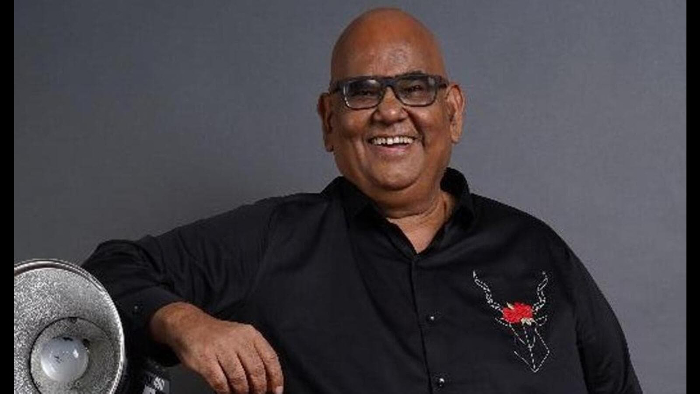
After being summoned by the Delhi Police in connection with the death of veteran actor Satish Kaushik, businessman Vikas Malu’s second wife has said that she won’t cooperate in the investigation until the investigating inspector with “suspicious role” is changed.
Vikas Malu’s second wife, who levelled serious allegations against her husband has been summoned by the Delhi Police to record her statement in connection on Monday.
“Whereas the above mentioned complaint filed by you on 11.03.2023, is being enquired by the undersigned. There are reasonable ground to examine you to ascertain facts and circumstances in relation to the enquiry of the above mentioned complaint. Therefore, you are requested to join the enquiry before the undersigned on 13.03.23 at 11 am, at your home or any other place convenient to you,” the Delhi Police stated in the notice.
However, the woman’s lawyer Rajendra Chhabra has told ANI that Vikas Malu’s wife won’t cooperate in the investigation pertaining to the “suspicious” role of the investigating officer.
Talking to ANI, Rajendra Chhabra said, “The role of the inspector, under whose supervision the whole investigation is taking place, is already under scanner. My client (Vikas Malu’s wife) will not join the investigation till the inspector is changed”.
The lawyer said that they have also sent an email to the Delhi Police Commissioner regarding this and has told about the “suspicious” role of the Inspector.
“The woman had made rape allegations against her husband Vikas Malu, and it was the same inspector investigating the case. But, he was removed from investigation for allegedly tampering with the evidence. Now, again after the complaint of my client, the same inspector has been appointed for investigation, which is surprising,” Chhabra added.
Vikas Malu’s wife has levelled serious accusations against her husband. She alleged that actor Satish Kaushik and her husband had business links and there was a monetary dispute between the two.
Speaking to ANI, she had said, “I have got a complaint registered in connection with Satish Ji’s death. He had come to my husband’s farmhouse for a party, where his health deteriorated. Some objectionable medicines have also been found from the farmhouse. Satish Ji and my husband had business connections as well. In August 2022, an argument broke out between Satish Ji and my husband, where Satish ji demanded Rs 15 crores that he had earlier given to him. But, my husband said that he will give the money in India.”
She further alleged, “When I later asked from him about the money, my husband said that he borrowed the money from Satish ji, but the money went for loss during the Covid period. My husband was not in the mood to return the money, he even said that he will use blue pills and Russian girls to do away with Satish Kaushik. That’s why I have brought this angle to the police for fair investigation.”
However, Satish Kaushik’s wife Shashi Kaushik reacted strongly to the allegations and refuted the claims of financial transactions. She also asked Vikas Malu’s wife to withdraw the case.
In an interview with ABP News, Shashi Kaushik said her husband had gone to Delhi to attend the Holi party.
“Satish Kaushik and Vikas Malu were good friends and they would never fight. Shashi Kaushik said Vikas Malu is very rich, so there will be no situation where he needs money from Satish Kaushik. She said the allegations of money transactions are baseless,” she said.
Shashi Kaushik said that the post-mortem report has confirmed that the late actor had 98 per cent blockage in his arteries and no drug was found in his sample.
“The Delhi Police has verified everything but she does not understand how Vikas Malu’s wife is claiming that the actor was drugged and killed. I do not understand why she is trying to defame my husband after his demise. She has some agenda, maybe because she wants money from her husband and she is now involving Satish into this,” Shashi Kaushik told ABP News.
After his wife levelled accusations of his involvement in the death of veteran actor Satish Kaushik, the farmhouse owner Vikas Malu alleged that his name is being used in “wrong light”.
He also urged the media to respect everyone’s sentiments.
The matter pertains to the death of veteran actor, Satish Kaushik who died on March 9 allegedly due to cardiac arrest.
Satish Kaushik celebrated Holi with his friends, and danced, after which he went to sleep at around 9:30 pm and at around 12 am his health deteriorated. He called the manager and told him that he was having difficulty in breathing. His manager took him to Fortis Hospital in Gurugram where he died at 1.43 am despite being given Cardiopulmonary Resuscitation (CPR).
The Delhi Police said that it is examining seven hours of CCTV footage at the farmhouse in Delhi where the actor celebrated Holi.
The police also said that the detailed post-mortem report of Kaushik confirms that the death was a “natural” one and occurred due to ‘cardiac arrest’.
Satish Kaushik had a medical history of hypertension and sugar, the police said.
Further investigation is underway in the case.
(This news report is published from a syndicated feed. Except for the headline, the content has not been written or edited by OpIndia staff)
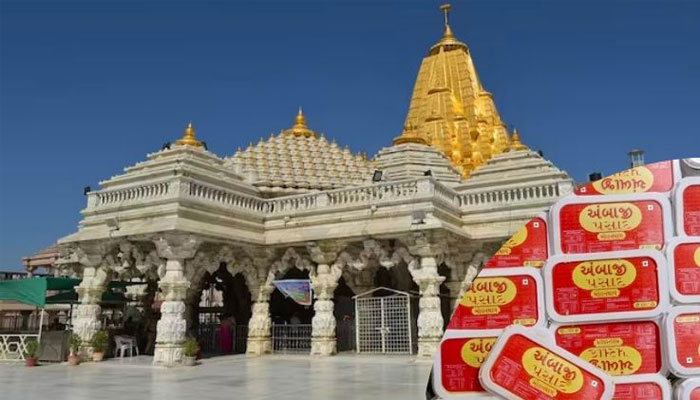
The decision of Shaktipeeth Ambaji Temple, Gujarat, to distribute Chikki as Prasad instead of Mohanthal has attracted much criticism from the devotees and Hindu organisations, including the Vishwa Hindu Parishad (VHP) and Hindu Hitrakshak Samiti. Here is all you need to know about the controversy.
On March 4, after the temple announced that Mohanthal, a traditional sweet Prasad, would be replaced with Chikki, Hindu Hitrakshak Samiti held a meeting and requested the temple administration to revoke the decision. The Hindu organisation gave 48 hours to the temple administration to act. However, after the 48-hour timeline, the Hindu organisation met again and postponed the protests in view of the Hindu festival Holi.
The change in Prasad from the traditional Mohanthal to Chikki at Shaktipeeth Ambaji Temple led to protests and outrage. Mohathan is a traditional sweet of besan (gram flour), sugar, ghee and milk. It is a traditional Gujarati sweet and has served as a prasad at many temples, including Ambaji temple, for many decades. Chikki is a brittle sweet made with jaggery and nuts, usually peanuts or sesame seeds. The temple administration said the shelf life of Mohanthan was only 8 to 10 days. On the contrary, Chikki can be stored for up to three months. The administration said it would benefit a lot more devotees. Chikki Prasad can be sent via courier as well, the temple administration said.
It was claimed that from time to time, devotees raised demands for dry prasad and Chikki would solve the purpose. Such dry prasad may be made available at other prominent temples such as Somnath and Tirupati, where laddoos (also with lower shelf life) are offered as prasad to devotees. The chikki prasad of the Ambaji temple can also be sent outside of India to NRI devotees. Banas Dairy and Amul Dairy were being contemplated to give contracts for the preparation of Chikki.
Gujarat Government came in support of Chikki Prasad
On March 11, Gujarat Health Minister Rishikesh Patel supported the Shaktipeeth Ambaji Temple administration in changing the prasad from Mohanthal to Chikki. In his statement, the health minister said, “People do not take Mohanthal despite it being prasad as they believe that Mohanthal cannot be eaten during fasting on auspicious days such as Agiyaras or Poonam (full moon). Because of this, the temple administration has decided to offer chikki prasad instead.”
Speaking about the shelf life of chikki, he said, “The shelf life of Mohanthal is only eight to ten days while the shelf life of chikki prasad is around three months.” He further added that prasad is a matter of faith and not taste.
The health minister added that it is believed that the Chikki that is supposed to be distributed as prasad is similar to what is available in the market. However, it is made out of a special kind of Mawa and peanuts. He said the prasad could be stored for up to three months, carried in bulk, and sent online. Speaking about further benefits, he said chikki prasad could be delivered anywhere in India and abroad. Furthermore, he noted that the sale of chikki prasad is the same as that of Mohanthal.
In a statement, the Collector of Banaskantha claimed that the administration received a lot of representations and opinions regarding prasad, after which the decision to change prasad to chikki was taken. He added that dry prasad would not spoil and could be kept for a long time.
Later, Former Deputy Chief Minister Nitin Patel said in a statement that the matter of Prasad at Ambaji Temple was between Devotees and the Trust. The Gujarat Government was working to settle the issue.
VHP demanded Mohanthal as Prasad at Ambaji temple
Vishwa Hindu Parishad (VHP) also supported the demand to resume Mohanthal Prasad at the temple. VHP Gujarat General Minister Ashok Raval said in a statement that he met the government officials, and they assured the Trust would sort the matter out. He expressed his displeasure over the statement issued by the Health Minister.
On March 11, VHP National Spokesperson Vinod Bansal noted on Twitter that VHP Gujarat regional chief Ashok Raval protested against the decision.
शक्तिपीठ अंबाजी मंदिर में परंपरागत प्रसाद को बंद करने के विरुद्ध @VHPGUJOFFICIAL के क्षेत्र मंत्री अशोक रावल जी द्वारा प्रदर्शन कर प्रशासन की तानाशाही के खिलाफ़ आंदोलन करना पड़ा। जय श्री अंबे?#SaveAmbajiTemplepic.twitter.com/wsRqK6fOOy
— विनोद बंसल Vinod Bansal (@vinod_bansal) March 11, 2023
Referring to the statements the government officials gave about the Prasad controversy, Raval requested the Chief Minister of Gujarat to ensure the state ministers do not give any statement that may anger the Hindu devotees.
VHP and Bajrang Dal Gujarat teams are distributing Mohanthal Prasad demanding to resume it at Ambaji Temple.
Over 200 kgs of Mohanthal distributed to mark the protest by devotees every day
Instead of protesting against the decision, a group of devotees distributed 200 KG of Mohanthal Prasad daily. In an OpIndia Gujarati exclusive, it was reported that the devotees chose the unique way of protest by distributing Mohanthal. A Twitter user PariPinkBerry tweeted about it saying, “Unique protest by Maa devotees in Ambaji against the decision to stop Mohanthal in Prasad and give Chikki. The local devotees received donations from Hindus and started offering Mohanthal to the devotees who came for darshan. 200 KG of Mohanthal is made and distributed every day for the last three days.”
અંબાજીમાં માઈ ભક્તો દ્વારા પ્રસાદમાં મોહનથાળ બંધ કરીને ચીક્કી આપવાના નિર્ણયનો અનોખો વિરોધ.
સ્થાનિક ભક્તોએ હિંદુઓ પાસેથી દાન-દક્ષિણા મેળવી દર્શને આવનાર ભક્તોને માતાજીને ચડાવેલો મોહનથાળ આપવાનું શરૂ કર્યું.
Amidst the controversy, Sunilbhai Brahmbhat resigned from his post. Speaking to OpIndia, Sunilbhai, a devout worshiper of Ambaji, confirmed that the reports were true. He said, “These videos are true. I am in the videos. We have a team of 20-25 devotees who are doing this work. For the last three days, the devotees coming to Ambaji are not deprived of Mohanthal Prasad. We ourselves make around 200 KG of Mohanthal and distribute it among the devotees.”
He added, “There is a lot of anger among the devotees over the decision to distribute Chikki instead of Mohanthal. We all repeatedly submitted applications in this regard at many places but the decision to distribute Chikki was not revoked after nine days.” Sunilbhai pointed out that oil has been banned in Ambaji temple premises for centuries. However, Chikki has substances that contain small amounts of oil. He called Chikki against the ages-old tradition.
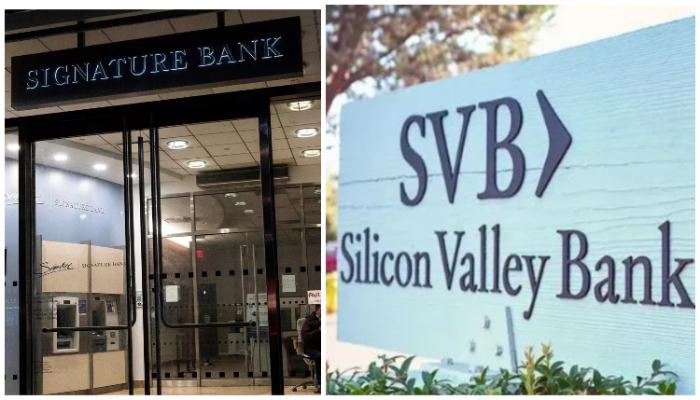
State regulators in USA shut down New York-based Signature Bank on Sunday, just two days after California authorities closed Silicon Valley Bank, marking the 3rd largest failure in US banking history. The shutdown is the result of the collapse of SVB Financial Group’s Silicon Valley Bank, with the economic meltdown spreading to other institutions.
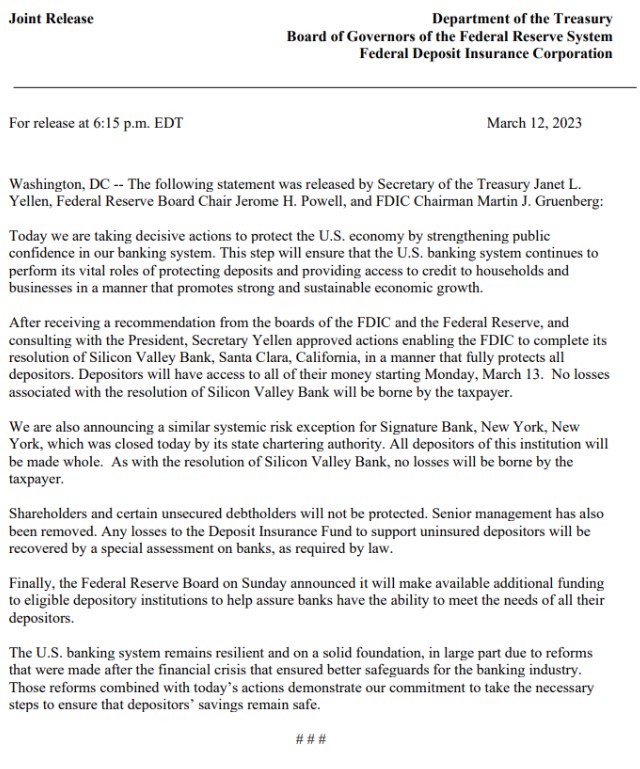
The US Treasury Department and other bank authorities stated in a joint statement on Sunday that all Signature Bank depositors will be made whole and that “no losses will be borne by the taxpayer”.
“We are also announcing a similar systemic risk exception for Signature Bank, New York, which was closed today by its state chartering authority. All depositors of this institution will be made whole,” the statement said.
The Federal Deposit Insurance Corporation (FDIC) was appointed as receiver for the bank’s assets by New York banking authorities. The bank reported $89.17 billion in deposit balance as of March 8. According to the New York State Department of Financial Services, it had roughly $110.36 billion in assets as of December 31.
The FDIC formed a “bridge” successor bank to Signature on Sunday, allowing customers to access their funds on Monday. Signature Bank depositors and borrowers will automatically become bridge bank customers, according to the FDIC. The regulator named Greg Carmichael as CEO of the bridge bank.
We are establishing a bridge bank to protect all depositors of Signature Bank, New York, and to preserve the value of the institution’s assets and operations to sell at a later date.
According to the interagency federal statement, shareholders and certain unsecured debt holders, however, will not be protected. “The senior management has also been removed. Any losses to the Deposit Insurance Fund to support uninsured depositors will be recovered by a special assessment on banks, as required by law,” it said.
Signature Bank, a commercial bank based in New York, Connecticut, California, Nevada, and North Carolina, had nine national business lines, including commercial real estate and digital asset banking.
Over a quarter of Signature’s deposits originated from the cryptocurrency sector as of September, however, the bank said in December that it will reduce its crypto-related deposits by $8 billion.
The bank stated in February that its CEO, Joseph DePaolo, would step down as a senior adviser in 2023 and be succeeded by the bank’s chief operating officer, Eric Howell. DePaolo was President and CEO of Signature since its founding in 2001.
After the collapse of the second US bank, President Joe Biden vowed to hold those responsible for bank failures “fully accountable”. Biden also said that he will speak about the US banking system on Monday and reassure Americans after the failures of Silicon Valley Bank and Signature Bank.
Signature Bank pulled back from doing business with Donald Trump
The New York-headquartered Signature Bank had long catered to former US President Donald Trump and his family. Following the storming of Capitol Hill in January 2021, Signature Bank snapped ties with the US President while insisting that he must resign from his constitutional position. Signature Bank even closed down two personal accounts in which Trump held about $5.3 million.
Meanwhile, Signature’s fall came on the heels of Silicon Valley Bank’s failure on Friday, the greatest failure since Washington Mutual went bankrupt during the financial crisis in 2008. Washington Mutual remains the largest bank failure in American history.
The Academy Awards, popularly known as the Oscars, are global film industry awards for creative and technical brilliance. These awards are considered the most prestigious and significant in the entertainment industry. This year, on March 12th, the Academy of Motion Picture Arts and Sciences hosted the 95th Academy Awards at the Dolby Theatre in Los Angeles.
With India shining brightly at the 95th Academy Awards this year, bagging two awards, one for RRR’s song Naatu Naatu and the other for The Elephant Whisperers, it is a fitting moment to remember Bhanu Athaiya, the first Indian who brought home the coveted statuette in 1983.
Bhanu Athaiya and her early life
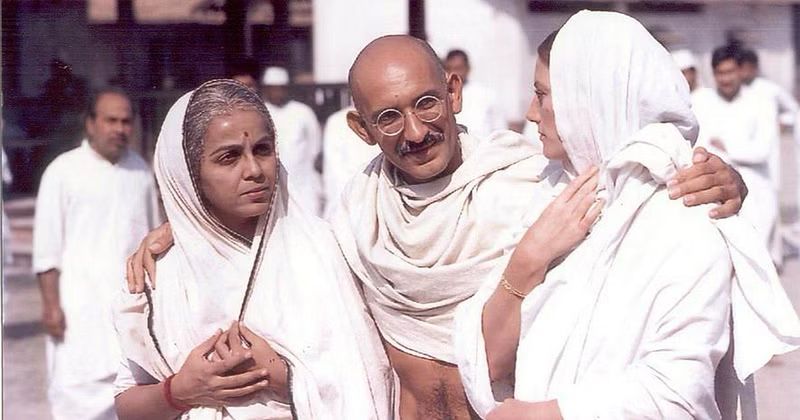
Bhanu Athaiya was an Indian costume designer who won the first Academy Award for India for Richard Attenborough’s movie Gandhi, which swept the Oscars in 1983 with eight awards including Best Picture, Best Director and Best Actor for Ben Kingsley, for his portrayal of Mahatma Gandhi. Bhanu Athaiya won the award for Best Costume Design along with her British collaborator John Mollo.
A still from ‘Gandhi’ (Source: YourStory)
Bhanumati Annasaheb Rajopadhye or Bhanu Athaiya was born in Kolhapur, Maharashtra in 1929. She was the third of seven children of Annasaheb Rajopadhye, a painter and photographer from a wealthy family, and Shantabai Rajopadhye. Her father died in 1940.
After finishing her formal education at the age of 17, Bhanu came to Bombay (now Mumbai) and lived with a woman whose mother worked at Eve’s Weekly, a popular magazine. Her job as a magazine illustrator led to a job at a boutique, where she began creating her own designs despite never having attended fashion school. This drew the attention of India’s film industry to her.
The legendary costume designer had a fulfilling career spanning six decades
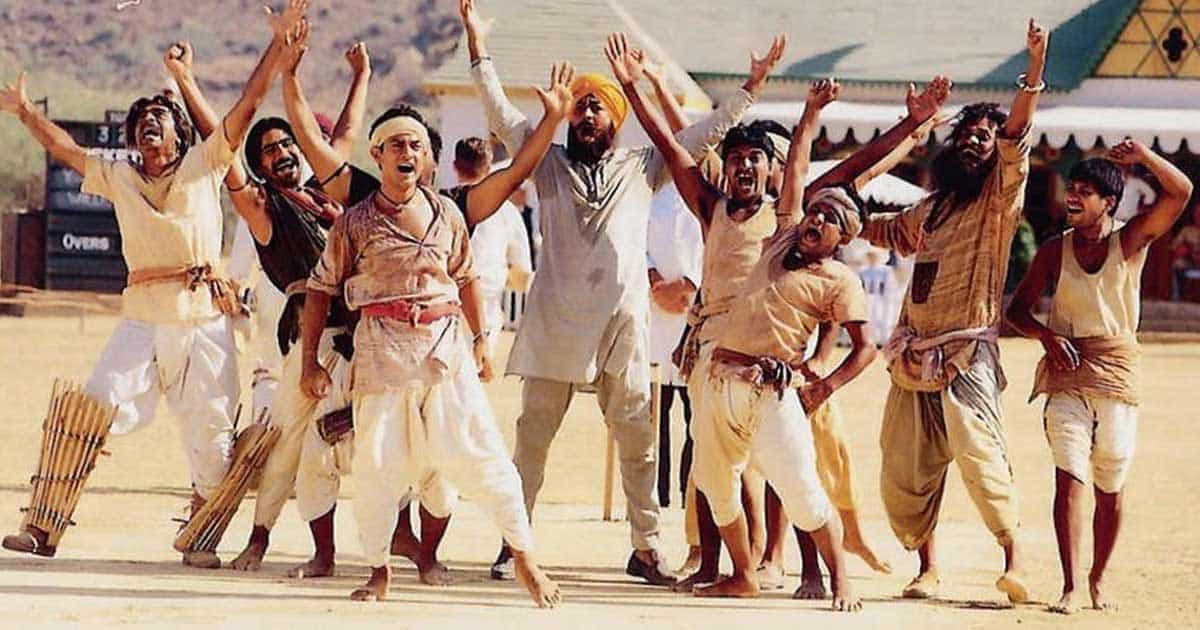
She began her career as a costume designer in Hindi cinema with Guru Dutt’s 1956 superhit C.I.D. Athiya worked for over six decades in close to a hundred Indian films. Aamir Khan starrer Lagaan, an Oscar-nominated film, was among her credits.
A still from movie ‘Lagaan’
She collaborated with top Bollywood talent and designed costumes for acclaimed Hindi movies like Teesri Manzil, Pyaasa, Kagaz Ke Phool, Guide, Brahmachari, Waqt, Razia Sultan, Karz, 1942 – A Love Story, and Swades, to name a few.
The directors with whom Athaiya worked read like the Who’s Who of Indian cinema, including Raj Kapoor, Guru Dutt, BR Chopra, Yash Chopra, Vijay Anand, Raj Khosla, Ashutosh Gowariker, Jabbar Patel and Vidhu Vinod Chopra.
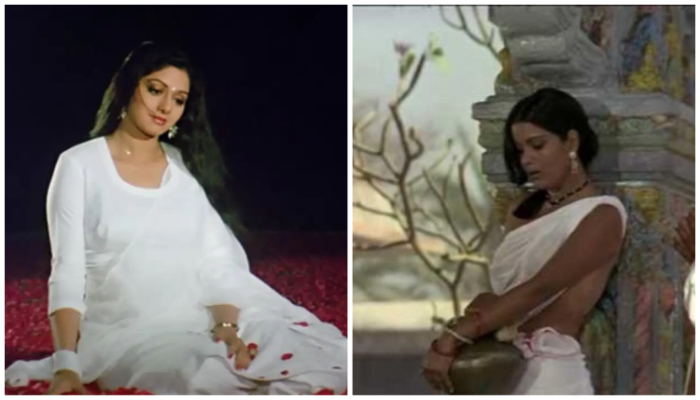
From Mumtaz’s ensemble in the song Aaj Kal Tere Mere Pyaar Ke Charche in Brahmachari (1969), Bhappi Sonie’s superhit Bollywood movie starring Shammi Kapoor to Sadhana’s fitting churidar and knee-length tunic in Yash Chopra’s Waqt (1965). From Waheeda Rehman’s austere look in Guide to Zeenat Aman’s sensuous one in Satyam Shivam Sundaram to Sridevi’s iconic look in Chandni, she was that veteran who shaped the aesthetics of Hindi cinema through her prolific work. Whether conjuring up oomphs or reproducing mundane reality, as in the Oscar-winning film Gandhi, Athaiya understood the importance of her task and executed it flawlessly.
Mumtaz’s ensemble in the song Aaj Kal Tere Mere Pyaar Ke Charche in Brahmachari (1969) (source: Film Companion)
Sridevi in Chandni (L), Zeenat Aman in Satyam Shivam Sundaram, Source: Pinkvilla, Amarujala
Notably, when she was hired for “Gandhi,” she was by some distance the most in-demand costume designer in India.
“Richard Attenborough was making a complex film and needed someone who knew India inside out,” Athaiya told Eastern Eye, a British weekly newspaper, in an interview published in 2020. “So much had to be contributed, and I was ready for it.”
In 2012, after Athaiya learned she had a brain tumour, she returned her Oscar statuette to the Academy of Motion Picture Arts and Sciences in Los Angeles for safekeeping after her death.
“I have no regrets at all. I am very happy that my Oscar has gone to the right place,” she told the news agency PTI at the time. She had previously donated several documents, photographs, production notes and letters about the making of Gandhi to the Academy.
She died in Mumbai on October 15, 2020. She was 91 years old.
Besides the prestigious Oscars, the legendary costume designer won two National Awards- for Gulzar’s mystery drama Lekin (1990) and the period film Lagaan directed by Ashutosh Gowariker (2001) in her glorifying career which spanned over six decades.
How many times has India brought home the Oscars?
In 1992, nearly a decade after Bhanu Athaiya won India’s first Oscars in 1983 for Gandhi, the Academy of Motion Picture Arts and Sciences, which organises the Oscars, gave Indian director Satyajit Ray an honorary Oscar “in recognition of his rare mastery of the art of motion pictures, and of his profound humanitarian outlook, which has had an indelible influence on filmmakers and audiences throughout the world.”
17 years later, at the 81st Academy Awards in 2009, legendary music composer A R Rahman and sound engineer Resul Pookutty received the prestigious award for their contributions to Danny Boyle’s record-breaking film Slumdog Millionaire. Rahman won two prizes that night: Best Original Song for Jai Ho, which he co-wrote with lyricist Gulzar, and Best Original Score, while Pookutty received Best Sound Mixing.
This year, once again, India dazzled at the 95th Academy Awards, with RRR’s song Naatu Naatu winning Best Original Music and The Elephant Whisperers winning Best Documentary Short Film.
How many Indian films have been nominated at the Oscars?
Indian films have been nominated three times in the Best International Feature Film category, previously known as Best Foreign Language Film.
Mehboob Khan’s epic Mother India was the first Indian movie to be nominated in 1958. The film, starring Nargis, Sunil Dutt, Rajendra Kumar and Raaj Kumar, was a massive hit in India and is still considered one of the greatest Indian films ever made.
In 1989, Mira Nair’s feature debut Salaam Bombay! was nominated, also for Best Foreign Language Film. Based on the life of Mumbai’s (then called Bombay) street children, the drama won a number of international awards, including the Camera d’Or and Audience award at the Cannes Film Festival, but eluded the Oscar voters.
Lagaan, the Bollywood musical set in colonial India, was the last film to earn an Oscar nomination in the Best Foreign Language Film category in 2002.
Late Indian producer Ismail Merchant and American filmmaker James Ivory received three Best Picture Oscar nominations for their Hollywood films, A Room With a View (1985), Howards End (1992), and The Remains of the Day (1993).
The documentary genre has had the most Indian nominations, beginning with The House That Ananda Built in the Best Documentary (Short) category in 1968.
Vidhu Vinod Chopra, a well-known Bollywood director and producer, was also nominated for an Oscar for one of his early films, An Encounter with Faces. In 1979, the documentary, which focused on the lives of children in orphanages, was nominated for Best Documentary (Short).
In 2022, Writing with Fire, directed by Sushmit Ghosh and Rintu Thomas, made history by becoming the first ever Indian film to be nominated for Best Documentary (Feature).
Rahman’s 2009 success was followed by two further nominations in 2011, for Best Original Song and Best Original Score for the film 127 Hours, his second collaboration with Boyle.
Bombay Jayashri received another music nomination in 2013 for her contribution to the critically acclaimed Ang Lee film Life of Pi. Jayashri was nominated for Best Original Song for her song Pi’s Lullaby, which she wrote and performed.