Home Blog Page 2556

Germany: Protesters clash with police over demolition drive for coal mine expansion, Greta Thunberg removed from the protest site

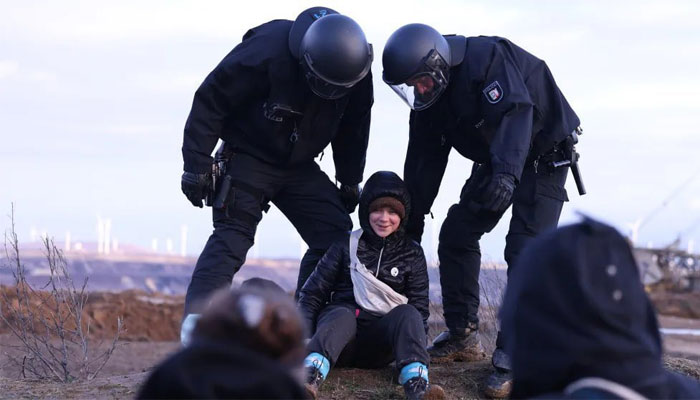
On January 15 (local time), environment ‘activist’ Greta Thunberg was removed from a protest site in Germany’s Lützertah by the police. Greta was protesting against the expansion of a coal mine that required the demolition of a village. As per reports, the protesters and police clashed at the protest site, and the police personnel were allegedly attacked. Reportedly, Greta recently said earlier that Germany was “embarrassing itself” by removing the protesters from the site.

Protesters, including local environment ‘activists’ and Greta Thunberg along with Luisa Neubauer, were seen allegedly being pushed by the German police off the protest site. In a tweet shared by political activist Timon Dzienus, Greta and others were allegedly pushed by the police. Timon wrote, “The police violence today in #Lützertah was unbelievable. Here Greta Thunberg, Luisam Neubauer and others are pushed by the police – and they just stand there peacefully. What is that, Aachen Police?!”

As per Politico report, the police had asked Greta to leave the area but she did not follow the instructions after which she was escorted away. Around nine protesters were taken to the hospital and over 70 police officers were reportedly injured during the clash.

Notably, other visuals shared on social media platforms showed how the protesters had attacked the journalists at the scene. In a video shared by journalist and author Oliver Maksan, protesters with the Antifa flag were seen attacking Dutch journalists on the site. As per a report in Neue Zürcher Zeitung (NZZ), a Swiss-German newspaper, the protesters called them Nazis before attacking the journalist and accused them of painting the protest in a bad light.

Fireworks were blown aimed at the emergency services repeatedly. The police had to warn them repeatedly not to attack the emergency services. They also warned if the protesters did not step back, the police would use water cannons and other means to clear the site. Later, the police used batons to push back the protesters as they managed to pass through the first police line.

Furthermore, a day before the violent clash between the police and protesters, Greta alleged that police used force against the protesters at the site. However, when the police retaliated and asked for evidence, she failed to provide any. The report suggested that the protesters threw mud at the police cars and tried to overturn police vehicles. Some protesters hit the tyre valves with stones and flattened them.

Violent clashes between the police and the protesters happened earlier as well. As per a January 11 report of The Bureau Investigates, the riot police tried to drag the protesters from the site during a clash between them.

The mine expansion at Lützerath

The mine being expanded is owned by Europe’s largest energy company RWE. Several villages are being demolished to make way for the 35 square KM Garzweriler mine, and Lützerath is among the last to go.

The protests have been going on at the site for over two years to stop the expansion of the coal mine. A petition was filed in the court to stop RWE from expanding the mine, but the court passed the judgment in RWE’s favour. Following the court orders, hundreds of riot gear-equipped police personnel moved to the protest site and cleared the barricades placed by the protesters. The police said it might take several weeks to clear the protest site.

‘Germany is embarrassing itself’

On January 13, Greta said, “Germany is really embarrassing itself right now. The science is clear, we need to keep the carbon in the ground.”

Greta Thunberg had expressed her desire to join the protesters, which she did the next day.

Hockey World Cup: India and England share points after a riveting contest ends goalless

0

India played a goalless draw against England to take home one point each in a crucial Pool D, Hockey World Cup match at the Birsa Munda International Hockey Stadium in Rourkela on Sunday.

In an exhilarating contest, both teams failed to convert their respective penalty corners as India failed to make use of four in the match. The English team managed to create eight penalty corners but the hosts stood tall to deny them a goal. 

The Indian team looked to take an early lead against England in the crucial game and hit the blocks running from the word go as they penetrated the English circle in the opening minutes.

India captain Harmanpreet Singh who had an off day in the previous game looked in spectacular touch. He was impressive on the field with his interceptions and tackles in the opening minutes, putting pressure on the opposition.

The Indian defence line had lapses on the field and moments where the English team were able to make runs into the hosts’ circle, conceding a total of five penalty corners (PCs) in a span of a few minutes. However, PR Sreejesh stood tall and made sure that India maintained a clean sheet.

The hosts were also able to get a PC in the 13th minute of the first quarter, thanks to a brilliant run by Mandeep Singh into the opponent’s circle. Hardik Singh injected the ball into the circle while taking the PC, but Harmanpreet could not gather the ball cleanly as India missed the opportunity to take the lead.

England were close to scoring in the dying minutes of the first quarter but defender Amit Rohidas averted the English team from scoring as the first quarter ended goalless.

The second quarter started with the English team on the attack. They secured yet another PC only to be denied a goal as the Indian defence stood tall and showed great grit. India were dominated by England for the most part of the second quarter as they made 17 circle penetrations till the end of the first half. They also managed to get seven PCs compared to India’s four. However, the hosts did find their rhythm in the latter part of the second quarter as they came close to scoring twice in the final minutes.

Another goalless quarter ensued after defenders from both sides showed great resilience, denying the goal. The first half ended with the teams battling it out neck to neck and ending with a scoreline of 0-0.

The Indian team started the third quarter with a press into the English circle, but the defenders again came into play to deny the hosts a goal. In the 38th minute, Hardik had a dazzling run down the middle as he drove past English players before entering the circle and taking a shot at the goal but Payne made a save once again. Hardik’s stick struck Rushmere in the face during the process leaving him bleeding profusely as the medical personnel rushed onto the pitch.

Sam Ward had the best chance of the game as he was left unmarked inside the circle, but Sreejesh stormed forward to put pressure on him and closed him down, prompting Ward to attempt the chip.

India did score a goal in the 45th minute as Abhishek managed to find the back of the net but in the process committed a foul, ruling out the goal for the hosts. The team had lost all its reviews and hence could not challenge the decision. The third quarter too ended in a deadlock as neither team could find the goal.

The fourth quarter saw the Indian team making numerous penetrations into the English circle but the England goalkeeper Oliver Payne’s resilience denied the hosts a goal each time.

England had the upper hand in the final quarter with India down to 10 men after the last match’s hero Amit Rohidas was issued a green card. Jarmanpreet Singh again got a green card in the 57th minute to raise eyebrows from head coach Graham Reid.

India survived the final nervy minutes of the fourth quarter with England managing to get a PC with 19 seconds left on the clock. However, the English team failed to convert it, bringing the game to an end with both teams sharing the honours in a closely fought contest.

England goalkeeper Oliver Payne was chosen as the Player of the Match. England maintains its lead in Group D with four points.

India, which has four points as well, is second due to a lower goal difference. To top the group and confirm direct qualification for the quarterfinals, India may need to beat Wales by a large margin in its final group match in Bhubaneswar on January 19.

(This news report is published from a syndicated feed. Except for the headline, the content has not been written or edited by OpIndia staff)

Bhalswa Dairy murder: Naushad and Jagjit Singh killed a man and chopped up his body to impress their terror “bosses” in Pakistan

0

On Sunday, January 15, Delhi Police revealed that the two terror suspects arrested from the Bhalswa Dairy area killed a man and chopped up his body to impress their bosses in Pakistan. The accused, Naushad and Jagjit, recorded their act on video and sent it to their bosses in Pakistan to show their capabilities.

According to police, the two suspects who were arrested under the Unlawful Activities Prevention Act (UAPA) on Thursday, confessed to their crimes.

During a press conference, Delhi Police Special Cell’s Additional Commissioner Pramod Kushwaha revealed that Arsh Wallah, who is currently based in Pakistan, directed both the accused. As per reports, ACP Kushwaha also revealed that the main intention of Naushad and Jagjit was to target a right-wing leader.

The two suspects were arrested from Bhalswa Dairy area

Earlier on Thursday, Special cell of the Delhi police arrested the two — identified as Jagjit Singh (29) and Naushad (56) — from the Bhalswa Dairy area of Jahangirpuri in Delhi. The police recovered two hand grenades, three pistols, and 22 live cartridges from the suspects. The police also found traces of blood at their house, following which the two were questioned.

Further, Delhi Police said it has information that Jagjit Singh has links to Khalistani terrorist Arshdeep Dall. He is also a member of the notorious Bambiha gang and has been receiving instructions from anti-national elements based abroad, the city police said, adding that he is also a parole jumper in a murder case in Uttarakhand.

Naushad is also associated with Harkat-ul-Ansar (HUA), a terror group that is based in Pakistan and primarily operates in Jammu and Kashmir. He has been a life convict in two counts of murder and has also served a 10-year sentence in connection with a case under the Explosive Act.

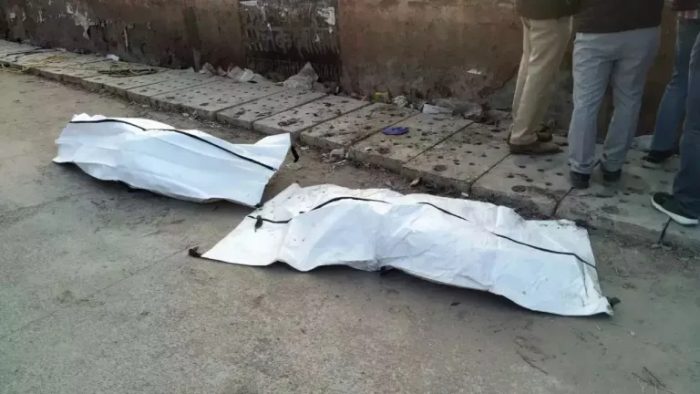
During their questioning, they confessed to their terror activities, and when the police searched their residences and nearby areas, the chopped-up body was found in a drain. The deceased is yet to be identified.

When the police questioned the neighbours about the two men, they said that they had bought a new refrigerator but returned it a week later. Police suspect that the accused had chopped the man after killing him and kept the remains in the refrigerator, and later they dumped the body in the drain.

Hari’s Loot: The Kirtan dedicated to Lord Krishna which passes through the streets singing his praises to mark the Sankranti

As the clock struck 8 in the morning, the familiar sound of a soulful melody hit my ears and brought along with it nothing but nostalgia. It had been 11 years since I last witnessed Hari’s loot (Bengali: হরির লুট) – a morning ritual that is observed on the last day of ‘Poush’ month of the Bengali calendar.

Hari’s loot coincides with the annual harvest festival of the Bengali community, the Poush Parbon (also known as Sankranti). On that day each year, the Hindus take an early shower, offer batasha, fruits, gur (jaggery), and nokul dana to Lord Krishna (an avatar of Lord Vishnu) and wait in anticipation of the Jan Kirtan.

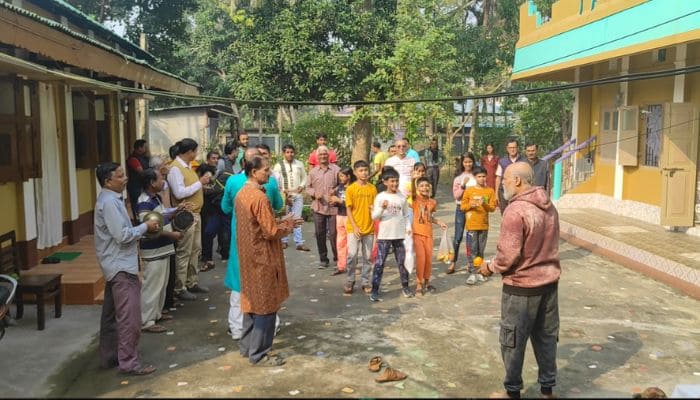
Neighbours, equipped with kartal, sankh, and mridanga, flock to each other’s houses and sing songs in praise of the Almighty. Kids wear new clothes and carry bags to collect the prasad.

After a couple of devotional songs are sung, one of the men from the crowd takes the bowl of prasad (offered to Lord Krishna) and distributes it among the devotees. However, instead of handing it over individually, the prasad (comprising of fruits, nokul dana, and batasha) is tossed in the air.

A fierce competition ensues between young adults to collect the most prized possession i.e. a whole coconut. Children also compete among themselves for the largest share of the prasad.

When the devotees move on to another house, a few family members from the previous household join the group. As a result, the size of the crowd increases with time. Usually, one jan kirtan covers 10-15 houses in a neighbourhood. After Hari’s loot is over, everyone retires to their homes.

I remember this event being the key highlight of the Poush Parbon while growing up in a remote town in Tripura. Children usually have their offs and offices remain shut on that day, thereby providing everyone with the opportunity to participate in the ritual.

Unfortunately, Hari’s loot is now limited to rural areas of Tripura and West Bengal. For someone raised in the metropolis of Kolkata, the ritual may sound alien altogether.

Events leading up to Hari’s loot

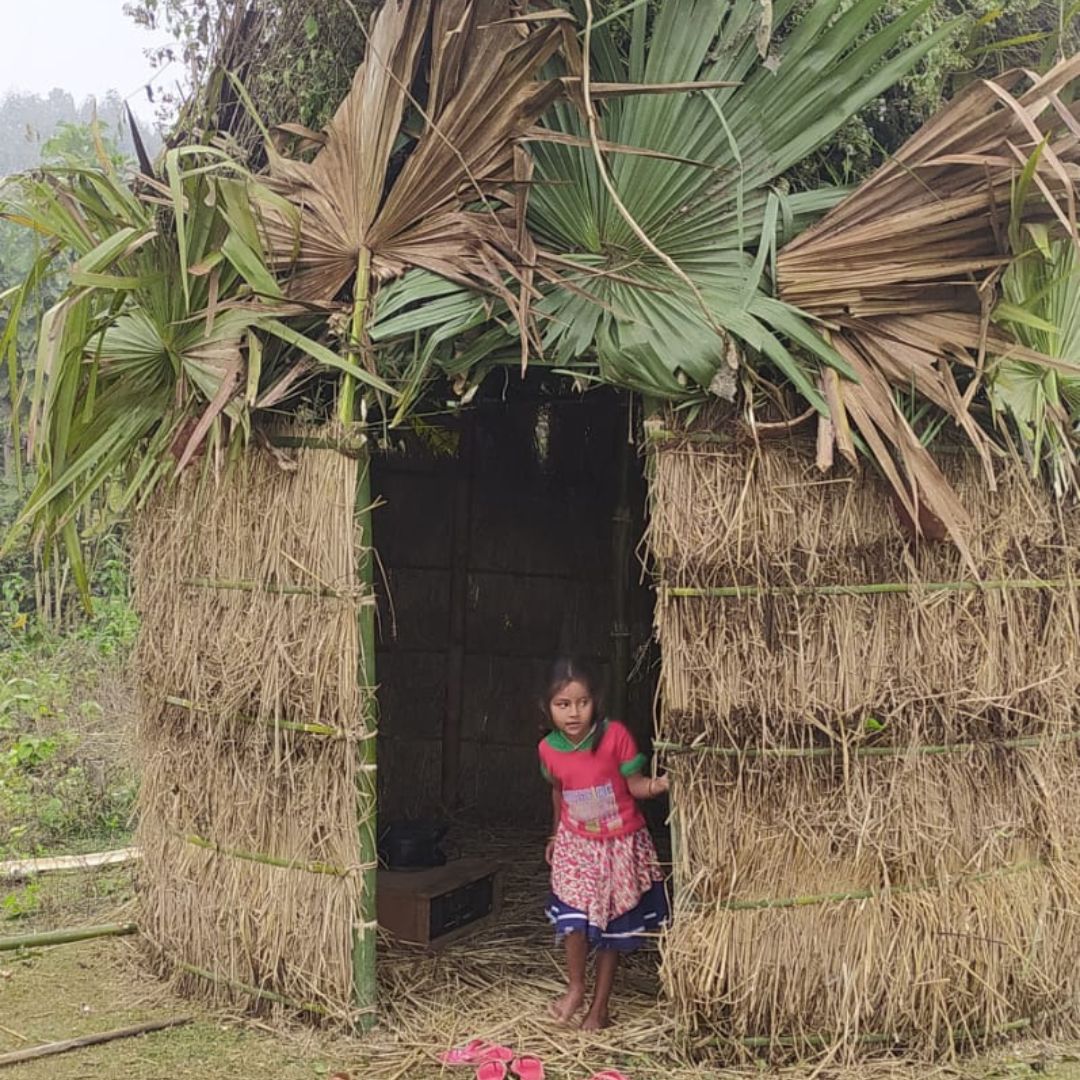
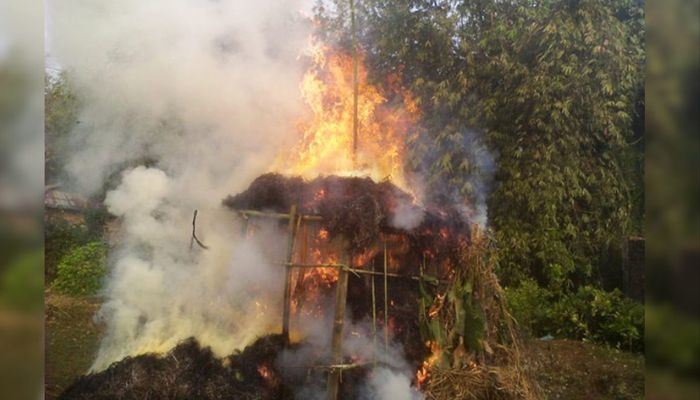
Hari’s loot is not an isolated ritual. It is preceded by the burning down of a temporary, thatched hut (also called Mera Merir ghor or Burir ghor), which is built a day before Poush Parbon.

On the eve of Sankranti, Bengali families employ local craftsmen to build a temporary hut with bamboo and straw. Sometimes, people prefer to do it themselves. Once the hut is built, light and sound systems are set up and bedsheets are put inside the hut.

The temporary shelter can accommodate up to 5-6 people at one time. Children and young adults play cards, ludo, sing songs, and have a feast there at night. Interestingly, some prefer to spend the night at the thatched hut while others choose to retire to their homes around midnight.

Representative Image via ENEWS Time

In the meantime, senior family members prepare dinner and traditional Bengali sweets (also called pitha) made of rice flour, coconut, milk, and jaggery.

As explained earlier, on the day of the Poush Sankranti, everyone takes an early morning bath and sets the thatched hut ablaze. They surround the burning hut and bask in the heat, amidst loud chants of ‘Mera Meri ghor jole re hoi.’

Mera Meri ghor on fire, image via News18

And then everyone waits in sheer anticipation for Hari’s loot. I am in Tripura in time to cover the upcoming Vidhan Sabha elections in the State, and this presented an opportunity after a good old decade to watch the event in action today.

It brought back fond childhood memories, spent with siblings and cousins. Today, all of them are settled in different parts of the country, far removed from the traditions and rituals that held a special part in our formative years.

As I was recording the footage of Hari’s loot, I caught a glimpse of my younger self among the children in the crowd. The same exuberance for the ritual, the same excitement to get as much of the prasad as one could, the same joy across the faces. It may only be in rural areas now, but good to see that Hari’s loot is still alive and well in some parts.

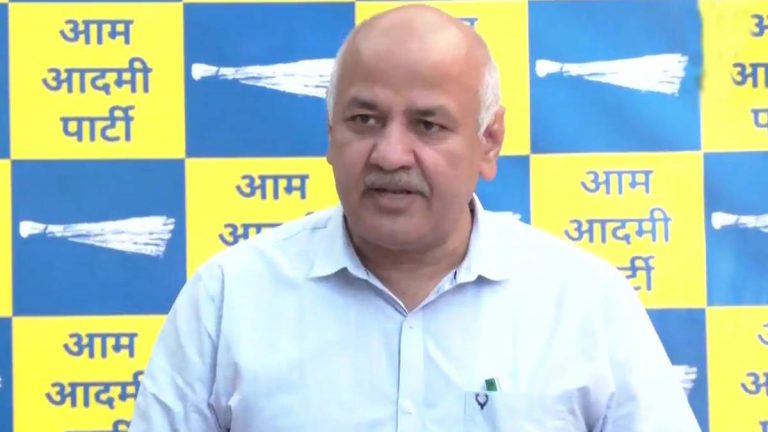
CBI seized my computer without providing ‘hash value’ to plant files to maliciously frame me: Delhi deputy CM Manish Sisodia

0

Delhi Deputy Chief Minister Manish Sisodia on Sunday issued an official statement on the CBI raid on his office, terming the whole exercise to be an act of malice.

In his statement, the Deputy CM has termed the whole exercise to be an act of malice detailing how the CBI raided his office on a Second Saturday (an official holiday) and gave a handwritten notice to the Secretary to seize a computer from the conference room. He said, “CBI is trying to maliciously frame me, seized a computer without providing Hash Value.”

The official statement reads, “Yesterday was a Second Saturday, so my office was closed when some CBI Official telephonically informed my PS to come to the office and open the same. When my PS reached the office at around 3:00 pm, he saw that a team of CBI officials was already present at my office. The CBI Officials asked him to open the Office and to take them to the conference room.”

“As they reached the conference room, they saw a computer installed therein, asked my PS to switch it on, assessed the same, and, forthwith, handed over a Notice under Section 91 CrPc to the Secretary, Dy. CM (GNCTD) with reference to the investigation of RC0032022A0053” the statement reads.

The statement further reads that as per the Notice, the Secretary was requested to produce the CPU of the system installed in my conference room.

“Thereafter, the CPU from the conference room of my office was seized without following the due procedure laid down. From the perusal of the said notice, it was perceived that the notice was hand-written to the Secretary, and immediately the property (CPU) was seized which shows the mala-fide of the Officer,” it read.

“The said conduct/ act of the CBI Officials also shows their malice whereby the Notice was given and immediately the said property was seized that too without following the guidelines as laid down in Chapter XVI: Cyber Crimes, CBI (Crime) Manual 2020. As it is explicitly mentioned in the said CBI Manual in Chapter XVI, 16.19:”

Sisodia said that CBI seized the computer without providing ‘Hash Value’.

The official statement reads, “Hash value is essentially an electronic fingerprint. The data within a file is represented through the cryptographic algorithm as a value known as hash-value. It is a string of data variables. Hash Value is the key to determining and validating the integrity of the data in question. As the integrity of the seized electronic device/digital device is quintessential to establishing the case, it is important to ensure the hash value of the data record is taken by the Investigating Officer at the time of seizure. The use of Hashing to authenticate electronic records is detailed in section 3(2) of the IT Act, 2000.”

“CBI Manual also mandates that at the time of the seizure of electronic document itself- an image of the same shall also be created and the said image shall also be hashed and tally with the hashing of the seized data to ensure data integrity. It is, therefore, a matter of record, as per the Seizure Memo provided to us by the CBI after the seizure that no ‘HASH VALUE was taken and mentioned by the Officer in the seizure memo who had seized the CPU’, nor CBI made an image of the seized document and hashed it” the statement reads further.

He said that in the absence of recording “HASH VALUE” during the seizure, the CBI can change the record in the seized CPU at its convenience.

According to the statement, “It appears that there is a scope for implanting, deleting and editing the record in the seized CPU by the team of CBI for making a frivolous case against me. In the absence of recording “HASH VALUE” during the seizure, the CBI can change the record in the seized CPU as per its convenience to maliciously frame me.”

Sisodia said in a statement, “I have clear apprehension that CBI has seized the CPU to destroy the confidential files/documents stored therein and will implant/edit files in the CPU and use the same to falsely implicate me as my name is not in the CBI chargesheet as an accused with respect to the afore-mention case.”

“Though the CBI/ED investigation in the Excise matter has been going on since last August 2022, it has not led to the discovery of any material against me. However, CBI is still continuing with its fishing and roving inquiry into the matter even after the chargesheet has been filed. This act clearly demonstrates that no procedural safeguards complied which would have ensured the integrity of electronic documents as mandated under the CBI Manual & IT Act. Therefore, the seizure of the electronic evidence yesterday has lost its authenticity and integrity in the eyes of law” Sisodia added in his statement.

(This news report is published from a syndicated feed. Except for the headline, the content has not been written or edited by OpIndia staff)

Tripura assembly elections: 154 CPIM workers join BJP after the CPIM announces alliance with Congress

On Friday, January 13, in a major political shift, the Communist Party of India (Marxist) and Congress party announced that the two parties will be contesting the upcoming elections in Tripura together. However, the ‘unethical’ alliance did not go well with several CPIM workers as 154 CPIM workers on Saturday reportedly joined the Bharatiya Janata Party in the Sepahijala district in the state.

As per a local media report, 138 CPIM workers in Bishalgarh joined the BJP.  It is notable that in the 2018 state assembly elections, the Bishalgarh seat was won by CPIM’s Bhanulal Saha. In a joining ceremony held at booth number 16/41 in Bishalgarh, 138 CPIM members from 40 families were welcomed by local BJP leaders.

Reportedly, 16 long-time workers of CPIM including a former Gram Pradhan have also quit the party and joined the BJP in Sepahijala’s Golaghati area. While the Congress and CPIM workers are in a state of confusion over the alliance, the BJP is reportedly appealing to them to join. 

It is notable that before BJP won the state in 2018, the Communists and the Congress were rivals in Tripura and were the main political parties, and both parties had ruled the state earlier. However, CPIM was in power for 25 years in Tripura, from 1993 to 2018, before losing to BJP. CPIM and Congress are also rivals in Kerala, while both parties work together at the national level.

Meanwhile, Tripura CM Manik Saha on Saturday called the Congress-CPIM alliance ‘unholy’ and said that the people of Tripura will reject them. 

While speaking on the sidelines of the foundation laying event for the beautification of a waterbody at Milan Sangha area in Agartala city. CM Saha said that the erstwhile “Left Front government left a debt of Rs 13,000 crore which the BJP government reduced through its planning and management.”

Furthermore, the Tripura CM added that the CPIM in past had tormented several Congress workers and now their leaders are hugging each other. “This is an unholy alliance, they have come together merely for their survival. The people of Tripura are aware of this and will give them a befitting response in the upcoming elections.”

Prayagraj: Mohammed Alam posed as Anuj Pratap Singh to trap and marry a Hindu woman, raped and tortured her when the truth was revealed

0

A shocking case of Love Jihad has come to the fore in Uttar Pradesh’s Prayagraj wherein a 21-year-old Hindu woman was raped and tortured by her Muslim husband who pretended to be a Hindu. The victim is a resident of Bihar’s Balia who was pursuing a nursing course in Prayagraj. In August last year, a case was registered on the basis of the victim’s complaint against her husband and his brother.

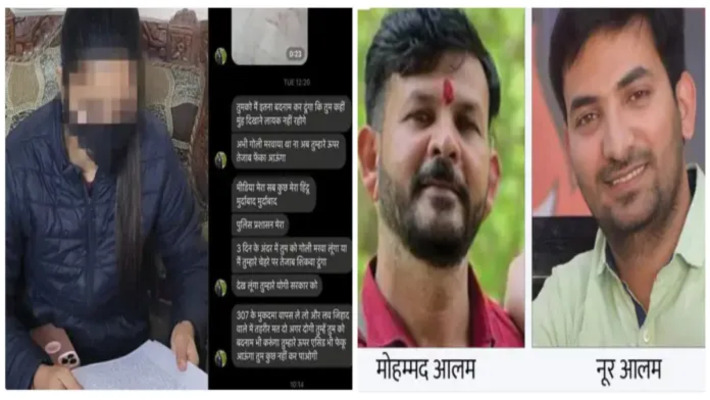
The accused Mohammed Alam who is reportedly a lawyer by profession, trapped the victim by posing as Anuj Pratap Singh aka Sonu on the Clubhouse app. The victim had lost her father during the Corona pandemic in 2021, as accused Mohammed Alam got know about this, he started being sympathetic towards the victim. The accused reportedly took the victim to Kashi Vishwanath temple as well as took care of her when she was ill in order to win her trust. The victim soon drew close to the accused Mohammed Alam and started trusting him completely. The accused one day took the victim woman to a hotel in Rambagh and established sexual relations with her. Later, when the victim became pregnant, Mohammed Alam got her child aborted. On February 24, 2022, the two had a court marriage. 

However, three days later she was left shocked after seeing her marriage certificate, as claimed by the victim woman. On seeing the name of her husband as Mohammed Alam instead of Anuj Pratap Singh, the confronted the accused for breaking her trust. As per a Dainik Bhaskar report, the victim was brutally thrashed by her husband after this, who snatched her mobile phone and locked her in a room.

The accused used to torture the victim and even injected drugs. The Hindu woman was first coerced into having sexual relations with his brothers by Mohammed Alam. Upon refusing, she was brutally thrashed. The victim who was intoxicated was then sexually assaulted first by the accused Mohammed Alam’s brother Noor Alam and the sons of his maternal uncle.

On 13 August 2022, however, the victim managed to escape and reach Colonelganj police station and lodged a complaint against her husband Mohammed Alam, and his brother Noor Alam.

Mohammed Alam threatened to kill the victim’s family members 

After filing the complaint, the victim claimed that Mohammed Alam called her mother and threatened to kill her, her mother, and her brother if the complaint was not withdrawn.

The victim also alleged that Mohammed Alam threatened to kill her family if she underwent a medical examination and testified against him in court. “I got scared after the threat, and to save my mother and brother, I gave the statement in court as Alam wanted,” the victim said in a statement to Dainik Bhaskar. 

As per the victim, on October 11, 2022, the accused took her to a secluded place in Kaushambi where he fired two bullets at her. Despite taking two bullets in her back, the victim managed to escape and called the police while hiding. Later, the police got her admitted to Swaroop Rani Nehru Hospital. Following this, Kokhraj Police booked Mohammed and Noor Alam on an attempt to murder charges.

The victim has alleged that Mohammed Alam has called her and threatened to kill her family and dump their dead bodies in a sever. 

‘Hindu Murdabad, I will see your Yogi government

Moreover, Mohammed Alam also sent messages to her in which he wrote, “Withdraw the case of Section 307 and do not file a complaint of Love Jihad. If you will do so, I will defame you and also throw acid on you. You will not be able to do anything. Media and Police are mine. Hindu Murdabad. I will see your Yogi government. Within three days I will get you shot or I will throw acid on your face.”

The victim has said that the accused persons are criminals and that her life is under threat. Seeking justice, the victim has penned a letter to Prayagraj Police Commissioner Ramit Sharma.

Sindhi Temples in Madhya Pradesh continue to submit Bir of Shri Guru Granth Sahib to Gurudwaras

0

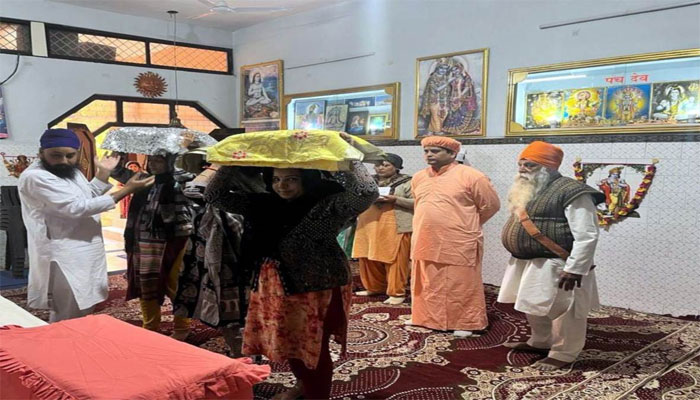
On January 14, more Sindhi Temples (Sindhi Tikanas) in Madhya Pradesh submitted Bir (copies) of Shri Guru Granth Sahib to Gurudwaras. In the last five days, close to a hundred copies have already been given up by the Sindhi community, and more Sindhi Temples may join in giving up their copies. It all started with Nihang Sikhs alleging that the sanctity of Shri Guru Granth Sahib was not being maintained in these Temples. They also demanded the removal of Hindu idols that were placed alongside Guru Granth Sahib in these Temples.

As per Nai Dunia’s report, Sindhi Temples of Biragarh have started sending Bir to Gurudwaras. The process was started in the city by Shri Gangadham Darbar in Sant Hirdaram Nagar. Three Bir were there in the Temple premises for a long time. The Temple administration submitted the copies to Gurudwara Jathedars. Furthermore, the Sindhi Panchayat of Biragarh has requested the police to increase security at Sindhi Temples as they suspect Nihang Sikhs might visit the Temples and cause a law and order situation.

In another video accessed by OpIndia, Sikhs were seen taking away the Bir of Shri Guru Granth Sahib from a Sindhi Temple after they learned that the ‘Mundan’ ceremony took place right outside the ‘Darbar’. Notably, cutting hair is considered unholy in Sikhism. Kesh or hair is part of the Five Ks (Kesh, Kangha, Kara, Kachera, and Kirpan) in Sikhism. They are considered to be the most auspicious symbols in Sikhism. While the people from the Temple administration kept saying it was not them who performed the ceremony, Sikhs did not listen and told them it was highly disrespectful to Guru Granth Sahib, and they would not let them have Bir anymore.

Nai Dunia’s report suggested that the religious leaders of the Sindhi community do not agree with each other over the matter. While Sukhsagar Darbar’s Baba Ramdas Udasin said Udasin Sampraday has deep faith in Granth Sahib and some extremist are creating problems, Mahant Tulsidas Kaltari stated Mahamandaleshwar Mahant Hansraj Saheb was in favour of sending Bir to Gurudwaras. A letter also surfaced on social media where Gurudwara Shri Guru Granth Sahib Bhawan of Bhopal confirmed that they received three copies of Guru Granth Sahib from Gangadham Udasin Ashram.

Kaltari added that the Sindhi community does not want any conflict. He further said it was wrong to ask the Sindhi community to remove Hindu temple idols.

The Sindhi community submitted Guru Granth Sahib copies

Close to 100 copies of Guru Granth Sahib have been submitted to Gurudwaras by the Sindhi community, mainly in Madhya Pradesh. The Sindhi community took the drastic step after groups of Nihang Sikhs visited these temples and alleged Beadbi of Guru Granth Sahib. They asked to ensure Guru Granth Sahib’s sanctity was maintained, to which the Sindhi community agreed, but the disagreement continued on the demand to remove Hindu idols from the Temples. In the end, the Sindhi community decided to give up copies of Guru Granth Sahib that they had worshipped in their Temples for years.

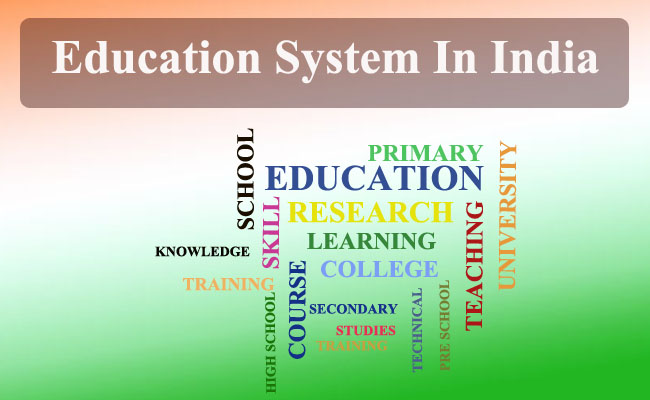
We can improve our education system by using a very large talent pool that is already available to us- The Armed Forces

0

The armed forces are the most disciplined, trustworthy, and responsible citizens of the country. They are the most respected too.

A large number of men and women in uniform retire every year. Army, Airforce, and Navy put together churn out thousands of retiring officers at a reasonably young age every year. They are a big asset to the nation as a talent pool. The officers retiring as Lt, Col, Colonel, and Brigadier are in the age group of 54 to 59 years. Most of them are well-qualified in different disciplines. All of them are physically fit and mentally agile. While there may not be a direct equivalence of Armed forces internal courses to academic degrees, they do a lot of value addition to a person’s knowledge. In certain cases more than a plain university graduation. I can vouch for this.

A shift in our outlook

In recent years, armed forces have realized that academic degrees do matter, especially for post-retirement employability, and hence serious, concerted efforts have been made in this direction. The Industry unfortunately views these degrees as mere ‘Thappa” or rubber stamps of approval required as a criterion for employment in certain positions. Of course, there has been a lot of criticism that our graduates are not employable, which too is a hard fact. This can be discussed till the cows come home, without making much headway.

A lot of research is being done in the field of education- I am not sure what they have been searching for for the past seven decades but the search is not abandoned and is still on for that missing link. Even the Prime Minister on the floor of the house has expressed his concern regarding this. Be that as it may, they still require these so-called educational qualifications to make the ‘cut’.

For the last several years, therefore all cadets passing out of NDA- National Defense Academy- get a bachelor’s degree in science, technology, or arts from JNU. This has been the most sensible thing done by the armed forces in keeping with the times. It gives a level playing field to officers who have been trained in the most sought-after institution, which is one of the best in the world. Let me say that there is no better academic curriculum to make you a perfectly rounded personality- no graduate coming from even the best universities in India or even abroad can match up to an NDA cadet passing out of this great institution.

Crème de la crème

Most technical Arms or services in the army encourage officers to do a post-graduation in technical subjects. They end up getting a Masters in Engineering in disciplines like Computer science, Communication engineering, Satellite communication, structural design, Environmental Engineering, Geoinformatics, Hydraulics and Water Resources, Engineering Infrastructure Engineering and Management, Structural Engineering, Transportation Engineering, automobile, aeronautics, shipbuilding, and several others.

When they quit service with loads of practical experience at 54 years of age, armed with these degrees, they become a National Asset.

Is the nation using this National Asset properly?

The one-word answer is a big NO. People retiring at a ripe- yes intellectually ripe too- can be utilized as a human resource to build the nation. I feel there are two simple broad avenues or streams to use this 24-carat resource for.

The Industry – In India, Industry has been utilizing the services of veterans, effectively. Companies as respected as Tata, Birla, and Reliance to name a few, have benefitted tremendously. The industry may not bother too much or lay emphasis on academic qualifications but are a bit concerned about the age factor. The industry is looking for younger profiles, preferably below 40 years which is not possible in this case. It is difficult to fit retired services officers in very senior industry positions directly because of a lack of industry exposure. And it is difficult to fit a person above 50 years into mid-managerial level positions which become non-lucrative for both parties. Therefore there is always a struggle to get this going at a Pan India level.

The academic profile-education – We are struggling with our education system right from school upward.

SCHOOLS.

There are approximately 15 Lakh or 1.5 Million schools in India.

As per the latest data from UDISE (Unified District Information System for Education), the total number of schools in India is 15.1 lakh. The total number of Government schools in India was 10.32 Lakh in the academic year 2020-21. The total number of students in India is 26.44 Crore. The total number of teachers in India was 96.96 Lakh during the academic year 2020-21. Statistically, there is a happy state or near happy state as there are 1 crore teachers for 26.5 crore students a near-acceptable figure of 1 teacher per 27 students. At a macro level, this looks nice. But stats are after all stats only.

I can say for example, that there is no dearth of water for 8 billion people on the planet as oceans are full. But can you drink that water? The answer is no. The quality of teachers is far from satisfactory or even pathetic in many schools. No one can say otherwise. If in an ocean sitting in a boat, you may therefore say ‘water water everywhere but no water to drink’. With a bit of stretch, one could say ‘Teacher teacher everywhere but NO GOOD teachers to teach’. I don’t want to be insulting to the teachers but yes there are a lot of good teachers and several bad ones too. Let us not get involved in exact numbers but the trend is clear and not debatable. But you cannot challenge the fact that one bad teacher has a horrendous effect on 27 students as per stats. And the reverse is also true regarding good teachers.

Good/bad schools are going to impact 26 crore Indian kids who are our future – 20% of our population. For a school brick and mortar is important but not a lifeline where as a teacher is. The building is hardware and teachers and staff are the Operating system and software. A computer without software is a piece of steel and silicon- worthless. Similarly, a school with great infra is a piece of concrete and bricks without good teachers. This is where veterans can chip in. They all are parents and know what kids need and they are qualified enough to be teachers and principals too- with leadership and administrative experience. If you can have lateral induction in civil services, why not in schools?

Colleges and higher education

This is another pain point in our education system. Veterans can contribute immensely to higher education. Academia has a lot of flexibility. I look at it as flexibly inflexible or inflexibly flexible- take it the way you want.

Minimum qualification is the basic problem. Ph.D. has been made a big stepping stone in academics. It is taken as a passport to teaching in universities. Yet the UGC has made some provisions to offset this.

A Ph.D. is mandatory only for the post of a Professor. Professors are teaching and research positions.

According to the UGC Regulation 2022, the minimum eligibility criteria for the assistant professor, JRF (junior research fellow), or equivalent posts in UGC Approved Universities are – SET/SLET qualified NET certificates and a Master’s degree. This has given some flexibility.

As reported by the Times of India- “In a major move to rope in industry experts and professionals, the University Grants Commission (UGC) is doing away with the mandatory Ph.D. requirement to teach in central universities. Special positions — professor of practice and associate professor of practice are being created.”

If you have Industry or relevant experience, you can get into higher echelons in higher education too. I have seen several good people from the Industry who love to teach and are experts in their subject matter. Students love these lectures, as they have loads of practical experience in addition to educational qualifications.

This is where one can have retired armed forces officers, who can teach and deliver well. At 54, you are neither old nor are you young. It is like a fruit- just ripe. The age between 50 and 65, these are your most productive years and your creative juices flow like Niagara Falls! Why don’t we tap these? Harness this massive source. Let me tell you that the Armed forces have some of the best training institutions, where degrees are awarded. Most of the teaching staff is from the uniformed fraternity called instructors. Most of them are very good, dedicated, and energetic.

There may not be great research being done in these finest institutions as the focus is on teaching, but must every teacher be a researcher? That is the moot question.

I, being in the education sector for more than two decades, have seen several Ph.D. qualified teachers who cannot teach to save their life! What good is your research when you cannot get it across to every student in the class? The idea of India, which is now on the cusp of becoming a superpower is to have deliverables -even in education. To become Vishwaguru we must have all hands on deck. If Industry requires brawn (young guys who can clock 16 hours a day), teaching requires healthy, willing-to-deliver ticking brains. You may require 4 hours of preparation to deliver a two-hour lecture.

An instructional tenure of three years in an army college should be given enough weight toward employability in civilian colleges. Let there be proper scientific mapping. Let me give an example of AFMC- Armed forces Medical College- in Pune. This College produces the best doctors in the country who serve the nation and armed forces.

I would like to mention that Joan Clarke was one of the women who contributed immensely to breaking the German cipher code- enigma- in Bletchley Park near London, during World War II. This was the biggest scientific breakthrough that changed the outcome of the war. She was only a BA in math from Cambridge. There were several others like Michael Arbuthnot Ashcroft, who were not doctorates but were an asset to the Allied forces in more than one way, including research of high order.

“Education is not preparation for life; education is life itself.” —John Dewey

Let Ph.D. not become a stumbling block. You may, and will, miss out on a very good teaching resource because of this.

I do not undermine the importance of research- after all, knowledge needs to be generated before it can be delivered. If you have only Electricity generators and do not keep pace with transformers and distribution systems, you will not be able to light up the whole country! You need scholars and researchers but you also need good people to distribute this knowledge.

There are Vice Chancellors of universities who are non-Ph.D. and are doing a great job.

A.P.J. Abdul Kalam never earned an academic doctorate through research but had as many as 40 conferred doctorates. Universities were vying with each other to confer doctorates, including a few from abroad, on him. But Abdul Kalam never flaunted his degrees. He didn’t even have a teaching degree but he turned out to be the most sought-after teacher in India during his later years. So it’s not the ‘title’ or degree that matters, but the ‘substance’ within us. He was the scientific advisor to the government of India and later headed the DRDO too.

Additional spin-off

Inducting Veterans into administrative or academic-administrative jobs like registrars will also help in streamlining education institutes of higher learning as well. Of course, having veterans as teachers will add value in terms of nationalism and cultural values besides discipline as a fundamental requirement that the country requires.

New education policy

New education policy has been created very recently and is still being relooked at. I feel this is the time to formally include this idea of inducting Armed forces personnel into the education system. Though, without this too, many are contributing their bit, but to get the maximum bang for the buck, we need to close the fist at the highest level, coordinate, and make a punch to get this done.


Made-in-India Prachand Light Combat Helicopter performing very well in joint wargames, say IAF pilots

0

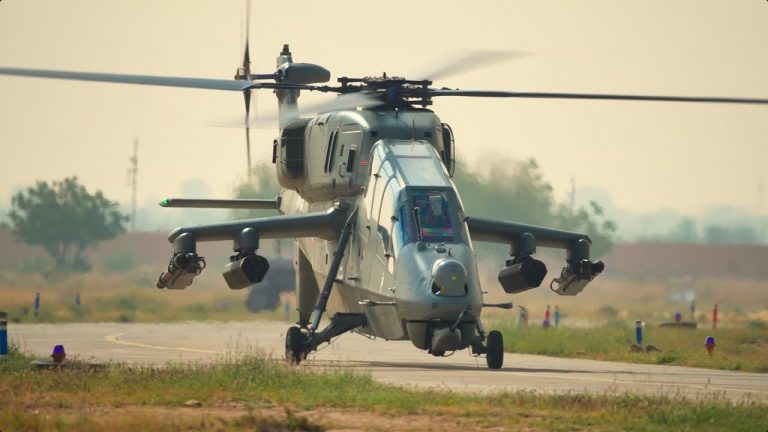
Within a few months of joining the Indian Air Force, the Prachand Light Combat Helicopter has started participating in joint wargames with the Indian Army and are performing very well.

The Prachand Light Combat Helicopters were inducted into the Air Force on October 3 last year and have been flying extensively in the desert sector since then. “We are carrying out integrated exercises with Army and we are fully prepared and ready to give support to Army in case of any future conflicts,” Indian Air Force’s Dhanush squadron’s Squadron Leader Raunak Dubey told ANI.

He said the chopper is being flown extensively in the desert sector and performing very well.

“We have flown this chopper quite a lot in our unit and we are highly impressed with its capabilities as it has been able to deliver on all its parameters. Its roles are to provide close air support to ground forces and take out enemy air defences,” he said.

Sq Ld Dubey said the Prachand is one of the most potent combat helicopters in the world which possesses air-to-air and air-to-ground missiles and has also got a 70 mm rocket pod as well as a 20 mm gun canon.

“It has performed very well during trials in both high altitude locations like eastern Ladakh and Siachen glacier. Its navigation system allows pilots to pick up targets and destroy them with ease,” he said.

Squadron Leader Tanmai Manan said the made-in-India LCH l gives India an edge over other attack helicopters due to its payload-carrying capacities, stealth, speed and agility.

“The helicopter is highly manoeuvrable, agile and responsive. The airframe has been designed in a way to make it crash-worthy. LCH is the only combat helicopter to have proven itself in the world’s highest battlefield. It can carry lethal weapons and destroy a plethora of targets in altitudes in excess of 6 kms,” he said.

The Commanding Officer of the squadron Group Captain Deepak Vishnoi also showcased the flying capabilities of the helicopter as the choppers took off for a sortie over the nearby locations in the desert sector.

The Jodhpur air base also has the Weapon Systems Integrated ALH Dhruv helicopter squadron whose role is to take out enemy armoured vehicles in times of conflict and they are known as ‘Tankbusters’. 

(This news report is published from a syndicated feed. Except for the headline, the content has not been written or edited by OpIndia staff)