On November 12 (local time), a B-17 heavy bomber collided with a P-63 aircraft and crashed. The incident occurred at an airshow in Dallas, Texas, United States. The ‘America’s Premier World War II Airshow’ took place on Veterans Day weekend, where over 40 World War II-era aircraft were displayed.
Terrible mid-air collision over Dallas during a WW2 air show yesterday. Spectators capture a P-63 Kingcobra smashing into a B-17 Flying Fortress. pic.twitter.com/8rlH6T2jZR
Spokesperson of Commemorative Air Force Leah Block was quoted by ABC news saying, “Currently, we do not have information on the status of the flight crews as emergency responders are working the accident.” She added there were five crew members on B-17 and one on the P-63.
Dallas Mayor Eric Johnson updated about the accident in a series of Tweets. He said, “As many of you have now seen, we have had a terrible tragedy in our city today during an airshow. Many details remain unknown or unconfirmed at this time. The NTSB has taken command of the crash scene with Dallas PD and Dallas Fire Department continuing to provide support.”
The videos are heartbreaking. Please, say a prayer for the souls who took to the sky to entertain and educate our families today.
He added, “The videos are heartbreaking. Please, say a prayer for the souls who took to the sky to entertain and educate our families today.”
In a follow-up tweet, he confirmed that the spectators and others on the ground were not injured. He said, “FAA is currently leading the investigation. A number of casualties are not yet confirmed, but no spectators or others on the ground were reported injured. The debris field includes Executive Airport grounds, Highway 67, and a nearby strip mall.”
– FAA is currently leading the investigation. – Number of casualties are not yet confirmed, but no spectators or others on the ground were reported injured. – The debris field includes Executive Airport grounds, Highway 67, and a nearby strip mall.
Several videos surfaced on social media showing the mid-air collision. The two aircraft descended rapidly after colliding in the air. A giant fireball followed by heavy black smoke could be seen in the video.
⚠️ GRAPHIC VIDEO: A mid-air collision involving two planes near the Dallas Executive Airport, today. The accident took place during the Wings Over Dallas WWII Airshow at 1:25 p.m., according to Dallas Fire-Rescue. A @FOX4 viewer took this video. @FOX4 is working for more details. pic.twitter.com/jdA6Cpb9Ot
On November 11, Bharatiya Janata Party’s leader Devang Dave demanded an apology from The Wire for accusing him of being the brains behind the imaginary app ‘Tek Fog’. In a tweet, he wrote, “The way The Wire the liars accused me of manufacturing and running so-called #TekFog app. They should publicly apologise and make it cover in all national & international Media like they did it for the fake story. Rest Law will take care of all of this.”
The way @thewire_in the liars accused me of manufacturing and running so called #TekFog app
They should publicly apologise and make it cover in all national & international Media like they did it for the fake story
It is not yet clear whether he is taking any legal step against The Wire for tarnishing his image with regards to Tek Fog.
The Wire’s accusations against Dave
Relying on an April 2020 tweet and some ‘source’, The Wire had claimed that the BJP was using one software named Tek Fog, led by BJP leader Devang Dave, that had unprecedented powers to manipulate online trends and churn out hate to attack its detractors. Dave, in an email response to The Wire, before publishing Tek Fog report, had categorically denied his involvement in any such ‘hate app’. However, The Wire’s hitjob not only made ridiculous assertions on the app which clearly does not exist, but even insinuated that Dave was indeed the brains behind it.
In the report published in January 2022, Wire claimed that the so-called Tek Fog app allowed BJP to ‘hijack’ the Twitter trends, allowed managing multiple WhatsApp accounts and direct online harassment of anti-BJP journalists. The report claimed that the app could bypass all kinds of security features that major social media platforms have. According to The Wire, Tek Fog had some kind of superpower that granted it capabilities that even the NSA of the USA did not have. The Wire alleged that hacking top apps like Twitter, Facebook, WhatsApp etc, child’s play using Tek Fog, and all security features of those platforms vanish with this magical piece of software.
However, within days, OpIndia punctured holes in The Wire’s report on Tek Fog, highlighting how the leftist propaganda website’s claims on a superpower app did not add up and how the app may be a figment of their fecund imagination. The entire rebuttal can be read here. But it took a span of 10 months and the Meta fiasco that led The Wire, too, withdraw its Tek Fog stories too, pending an “internal inquiry”. Incidentally, Devesh Kumar, The Wire staffer who co-authored Meta stories, had also co-authored the Tek Fog stories.
The Wire retracted ‘Tek Fog’ story after ‘Meta Vs The Wire’ saga fell apart
On October 23, left-leaning propaganda portal The Wire retracted Tek Fog stories after its accusations against Meta fell apart. The Wire had accused Amit Malviya, IT Cell Chief of BJP, of taking down the Instagram post(s) using his XCheck privileges. However, the story did not hold its ground and was proven to be false by experts. The Wire had to retract all the stories related to ‘Meta Vs The Wire‘ after it turned out that the stories were based on fabricated documents.
As one of their “experts”, identified as Devesh Kumar, who worked on the technical aspects of Meta, had worked extensively on ‘Tek Fog’ stories along with Ayushman Kaul, red flags were raised against the authenticity of ‘Tek Fog’ stories. The Wire pulled down the main stories first, followed by the spin-offs, including the report where they claimed the app was used to target Alt News’ co-founder Mohammed Zubair.
On 12th November 2022, the Uttarakhand government revoked the ban imposed on five medicines by Patanjali.
Earlier on Wednesday, 9th November 2022, the Uttarakhand Ayurveda and Unani Licensing Authority directed Divya Pharmacy, the maker of Patanjali products, to stop the production of its five medicines viz. BPgrit, Madhugrit, Thyrogrit, Lipidom, and Eyegrit Gold tablets. The ban was imposed after the allegation that these medicines are falsely being promoted for the treatment of blood pressure, diabetes, goitre, glaucoma, and high cholesterol.
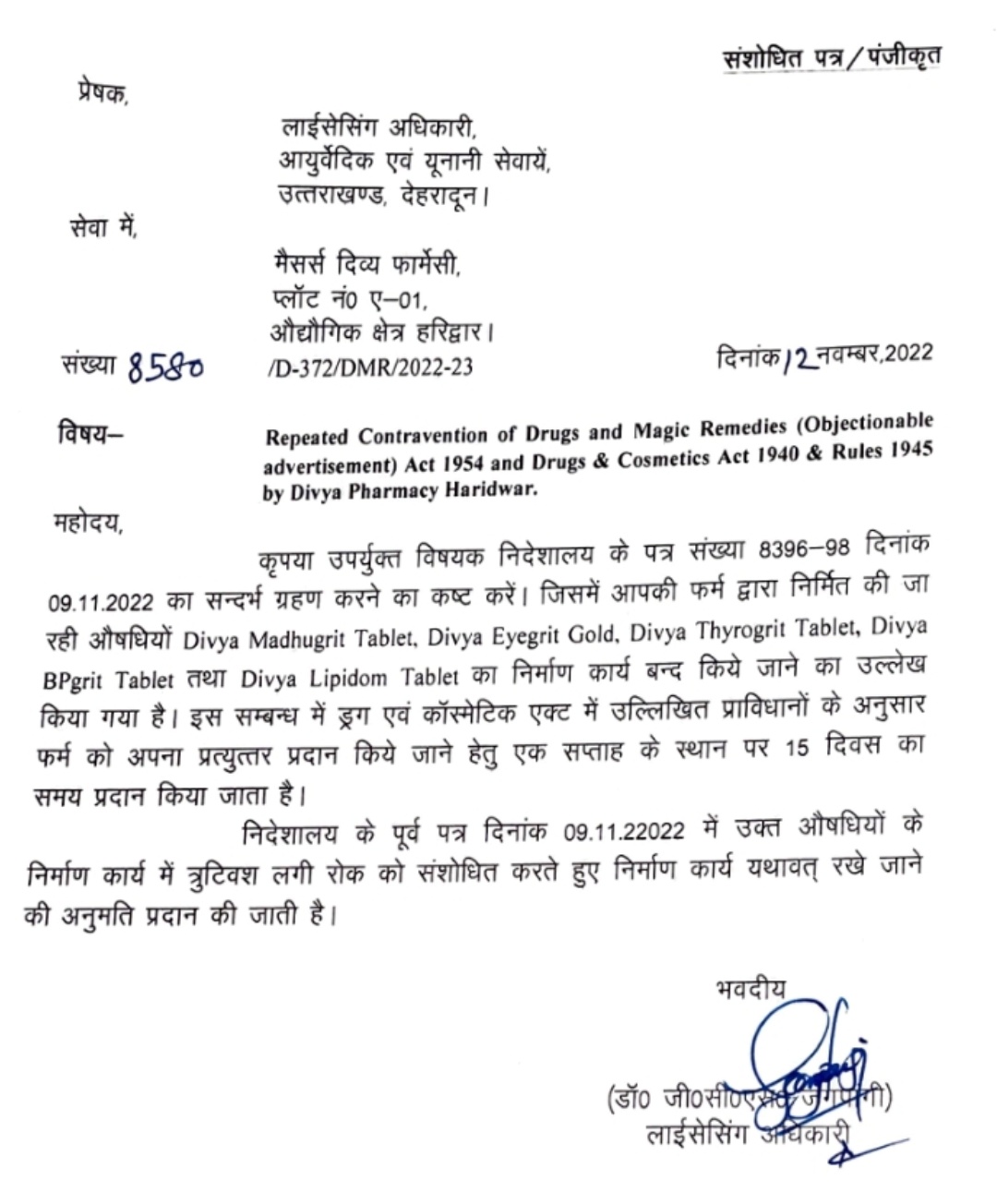
In a letter addressed to the Divya Pharmacy, the licensing officer of Uttarakhand Ayurveda and Unani Services wrote, “Please kindly take the reference of Directorate’s letter dated 09.11.2022 in which the medicines Divya Madhugrit Tablet, Divya Eyegrit Gold, Divya Thyrogrit Tablet, Divya BPgrit Tablet, and Divya Lipidom Tablet being manufactured by your firm are made to stop the manufacturing of. In this regard, as per the provisions mentioned in the Drugs and Cosmetics Act, the firm is given 15 days instead of one week to submit its response.”
Letter by Uttarakhand government
The letter further said, “Modifying the ban imposed by mistake on the manufacture of the above medicines according to the letter dated 9th November 2022, the permission is granted to keep the production intact.”
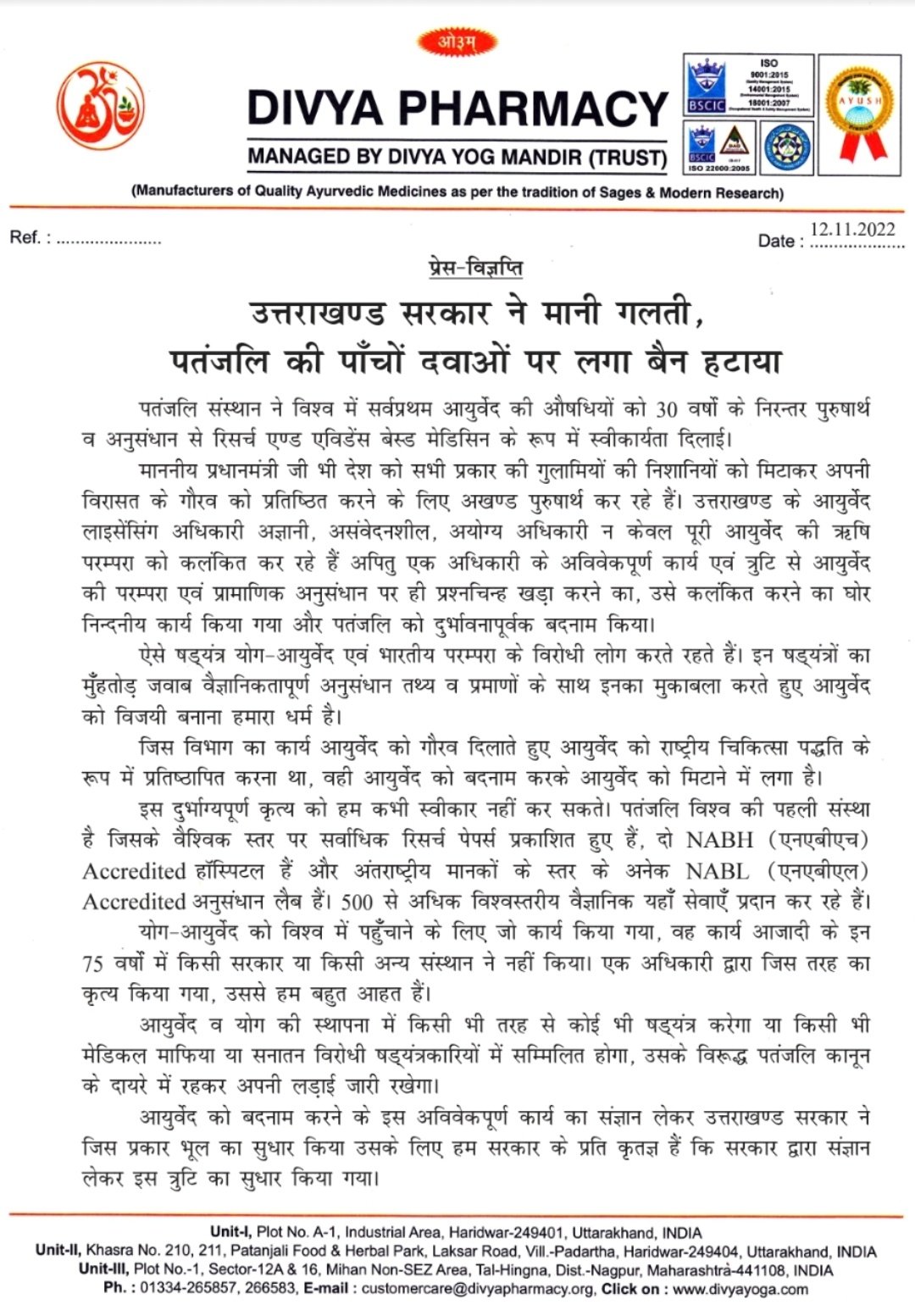
Press statement
Divya Pharmacy published a press release on this issue after receiving this letter. In this press release, it says, “Patanjali Institute is the first in the world to get an acceptance for Ayurveda medicines as research and evidence-based medicine with 30 years of continuous effort and research.”
“The Honourable Prime Minister is also making efforts to establish the pride of his heritage by erasing the signs of all kinds of slavery in the country. The ignorant, insensitive, inept Ayurveda licensing officer of Uttarakhand is not only tarnishing the sage tradition of Ayurveda but the injudicious work and errors of an officer have done a grossly condemnable act of questioning the tradition and authentic research of Ayurveda, tarnishing it. And defamed Patanjali maliciously. Such conspiracies are done by people opposed to Yoga-Ayurveda and Indian tradition,” it further read.
The statement further said, “It is our duty to make Ayurveda victorious by countering them with scientific research facts and evidence. The department whose job was to establish Ayurveda as the national system of medicine while bringing glory to Ayurveda is engaged in eradicating Ayurveda by defaming Ayurveda. We can never accept this unfortunate act. Patanjali is the first institution in the world to have published the most research papers globally. It has two NABH-accredited hospitals and several NABL-accredited research labs of international standards. More than 500 world-class scientists are providing services here.”
आयुर्वेद को बदनाम करने के इस अविवेकपूर्ण कार्य का संज्ञान लेकर उत्तराखण्ड सरकार ने जिस प्रकार भूल का सुधार किया उसके लिए हम सरकार के प्रति कृतज्ञ हैं कि सरकार द्वारा संज्ञान लेकर इस त्रुटि का सुधार किया गया। pic.twitter.com/1fFffziwMk
The press release added, “In these 75 years of independence, no government or any other institution has done the work done to take Yoga-Ayurveda to the world. We are deeply hurt by the kind of actions committed by an officer. Patanjali will continue its fight against any conspiracy in any way in the establishment of Ayurveda and Yoga or will join any medical mafia or anti-Sanatan conspirators, against him within the scope of the law.”
“We are grateful to the government for the way the Uttarakhand government corrected the mistake by taking cognisance of this imprudent act of defaming Ayurveda and this error was corrected as the government took the cognizance,” said the press release, which was also shared by Acharya Balkrishna – the managing director of Patanjali Ayurved Limited.
The five Patanjali medicines were banned on 9th November 2022, in response to a complaint filed by Kerala-based ophthalmologist KV Babu in July earlier this year. Babu sent another complaint to the State Licensing Authority (SLA) on October 11 through email. In the meanwhile, Dr. GCN Jangapangi requested in a letter to the joint director of Divya Pharmacy and drug controller of the state health authority that the pharmacy immediately and going forward remove “misleading and objectionable ads” from the media space.
Citing misleading ads the regulator also directed that Patanjali submit updated formulation sheets and label claims for each of the five formulations for a new round of product certification. The business could only resume manufacturing, according to the ban order of the health authorities, if the updated indications have been authorized.
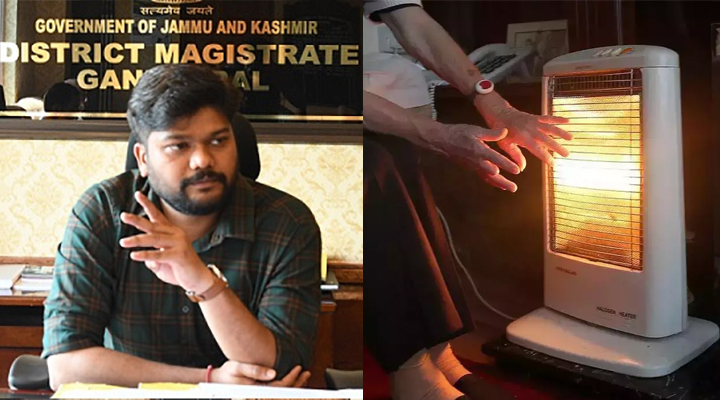
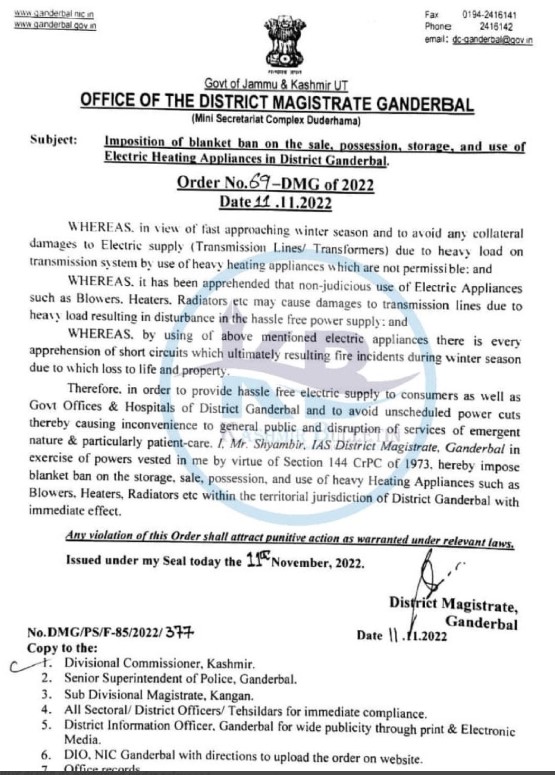
In a decision that is set to trigger a controversy, the administration of Ganderbal district in Jammu and Kashmir has announced a ban on electric heaters ahead of the winter season, to conserve power. On November 11, 2022, the District Magistrate of Ganderbal issued an order announcing a blanket ban on the sale, storage, and usage of electric heating appliances in the district ahead of the harsh winter. The decision has been made ahead of the onset of the winter season when temperatures in the area would plummet to minus 5 degrees Celsius.
According to an order issued by District Magistrate Ganderbal, it has been concluded that the improper use of electric equipment such as blowers, heaters, and radiators may cause transmission line damage owing to heavy load, resulting in a disruption in the hassle-free power supply. The Magistrate ordered the ban on electric heating appliances under section 144 of the CrPC, which is generally used to maintain law and order and to prevent any danger to human life.
Section 144 of the Code of Criminal Procedure authorises a District Magistrate a sub-divisional magistrate, or any other administrative magistrate to issue orders to prevent danger or nuisance in the area under their jurisdiction. It is one of the most commonly used criminal procedure codes in India, and in recent times, it was used to impose lockdowns and restrictions during the Covid-19 pandemic.
The order copy
“It has been apprehended that non-judicious use of Electric Appliances such as Blowers Heaters, Radiators etc may cause damages to transmission lines due to heavy load resulting in disturbance in the hassle-free power supply,” reads an official order copy. “Whereas by using the above mentioned electric appliances, there is every apprehension of short circuits which ultimately results in fire incidents during the winter season due to which loss to life and property,” it reads.
“Therefore in order to provide hassle-free electric supply to consumers as well as government offices and hospitals of district Ganderbal and to avoid unscheduled power cuts thereby causing inconvenience to the general public and disruption of services of emergent nature and particularly patient-care. I, Mr Shyambir, IAS District Magistrate, Ganderbal in the exercise of powers vested in me by virtue of Section 114 CrPc of 1973, hereby impose a blanket ban on the storage, sale, possession, and use of heavy heating appliances such as blowers, heaters, radiators etc within the territorial jurisdiction of District Ganderbal with immediate effect,” the order reads.
The DM has said that anybody who violates the government order will be dealt strictly with as per law.
December, the first month of winter in Ganderbal, is a chilly month, with temperatures ranging from -3.2°C (26.2°F) to 7.3°C (45.1°F). The average high temperature in Ganderbal drops from a cool 11.5°C (52.7°F) in November to a cold 7.3°C (45.1°F) in December. January, like December, is a cold winter month in Ganderbal, with temperatures ranging from 3.8°C (38.8°F) to -5.4°C (22.3°F). January is the coldest month, with an average high temperature of 3.8°C (38.8°F) and a low temperature of -5.4°C (22.3°F).
Therefore, if the order is strictly implemented, people in the region who rely on electric heaters during the winter will face great difficulties. They will be forced to rely on other sources of heat like firewood.
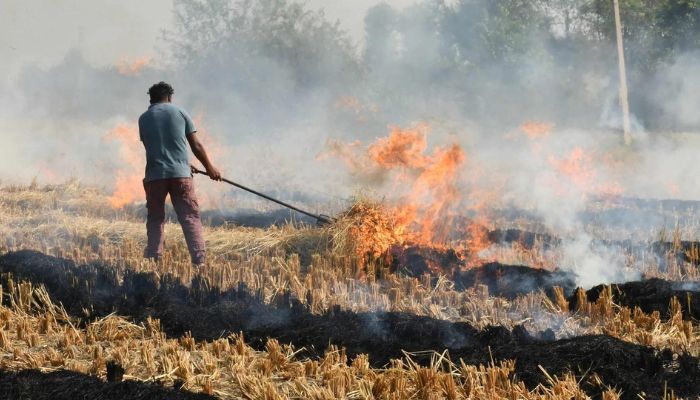
On 12th November 2022, the National Human Rights Commission (NHRC) held four North Indian states responsible for the continued stubble burning that causes severe air pollution in northern India. NHRC heard the Chief Secretaries of Delhi, Haryana, Punjab, and Uttar Pradesh on 10th November 2022 after taking suo moto cognizance of unabated air pollution in Delhi-NCR. After considering the responses of the concerned States and the Government of NCT of Delhi, and the deliberations thereon, the NHRC opined that the farmers are compelled to burn the stubble.
A press release published by the NHRC stated, “The State Governments have to provide harvest machines to get rid of those stubbles but they have failed to provide an adequate number of requisite machines and other measures; as a result, farmers are forced to burn the stubble, causing pollution. Therefore, none of the states can blame the farmers for stubble burning; instead, it is due to the failure of all four State Governments that the stubble burning is happening in the states of Delhi, Punjab, Haryana, and UP causing enormous pollutants in the air.”
The Commission has ordered that the concerned Chief Secretaries attend the subsequent proceedings in the matter on November 18, 2022, either in person or via hybrid mode. They are also required to submit their answers or affidavits in advance, within four days, that positively address the issues raised by the Commission.
The Commission has raised different issues with different states and expects answers on those in the next hearing from the state representatives. Further, the Commission has requested reports on a number of common issues from the concerned states and the Government of the National Capital Territory of Delhi within four weeks. The questions raised by NHRC include the status of assistance to farmers for in-situ management of crop residue using machines and other methods; preventing stubble burning; use of mobile and stationary anti-smog guns; dust management through water sprinklers; mechanical road sweeper machines; vehicular pollution; management of construction; and demolition.
Haryana has managed to reduce stubble burning to a large extent
It is notable that although the NHRC has held the four states responsible for the continued stubble burning, Haryana has taken significant steps to reduce the pollution caused by stubble burning and has succeeded in curbing the same to a remarkable extent.
Every year, the smoke produced by stubble burning by farmers in North India has been a major subject of concern due to the considerable health risks it poses. However, data shows that Haryana is working extensively to reduce stubble-burning incidents.
According to available data, Haryana has not only seen a considerable decline in the number of occurrences of stubble burning this year but has also been seeing a steady drop in similar incidents over the previous six years.
Haryana has reduced stubble-burning instances by more than 55% during the last six years. The total number of such accidents decreased from 15,686 in 2016 to 6,987 in 2021.
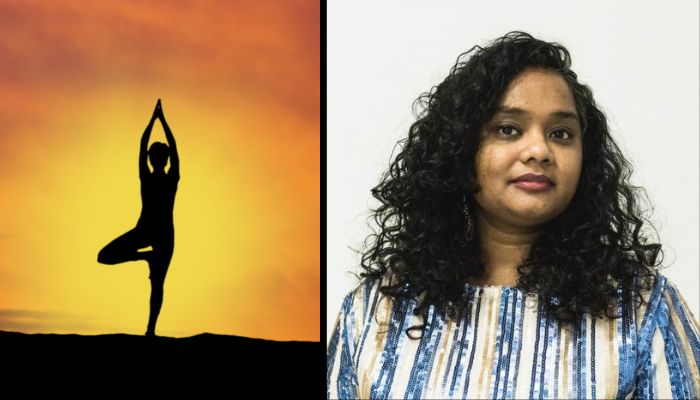
On Thursday (November 10), anti-Brahmin activist Thenmozhi Soundararajan went on an unhinged tirade against the ancient Indian Hindu practice of Yoga.
In a tweet, she claimed, “What does it mean to address the structural violence at the heart of yoga? I break the silence on the religious abuse that is at the heart of yoga and how healing begins with de-brahminising and decolonizing. Check it on the latest #conspirituality podcast.”
The archived version of the tweet can be accessed here. The anti-Brahmin activist participated in a podcast, hosted by one Matthew Remski and titled ‘Conspirituality.’
Screengrab of the tweet by Thenmozhi Soundararajan
During the one and half-hour long podcast, Soundararajan cast aspersions on the history of Yoga and claimed that it was used by Brahmins to oppress the Dalit community.
At about 21 minutes into the podcast, she said, “The Yoga practice that we see packaged in the United States is one very particular, consumable, superficial understanding of centuries of tradition that actually has much conflict and oppression inside of it.”
She then claimed that Yoga was practised by indigenous communities in India but the rules of the practice were written by ‘others’. Soundarajan insinuated that Yoga had an in-built system of hierarchy, which supposedly made it vulnerable to abuse. However, as has been the practice, she offered little evidence to prove her claims.
“We have seen different Yoga teachers weaponising their practice to prey on their students,” she concluded. At about 40 minutes into the podcast, the anti-Brahmin activist accused white and ‘caste dominant’ Yoga practitioners of shoving ‘Brahmanism’ down her throat.
Again, her conclusion was based on the fact that several Yoga sessions began with the chanting of the Gayatri Mantra and Sanskrit hymns. “I was very deeply in a (state of) conflict for participating in those mantras,” she said.
Thenmozhi Soundararajan remarked that Sanskrit was exclusive to the Brahmin community during the Vedic period and that ‘Manusmriti’ supposedly ordered pouring molten lead into the ears of Dalits and cutting off their tongues (for listening to Sanskrit mantras).
In the Ramayana, an Dalit who dared to practice yoga was murdered so that the sickly child of a priestly family might regain his health. In the Mahabharata, an Dalit boy is commanded to cut off his own thumb for the sin of being devoted to a guru above his station. /3
“I would say those words (Gayatri Mantra) and wonder how my ancestors could not say them and would be in conflict…” she added. The anti-Brahmin activist claimed her Yoga teachers would insist on repeating Sanksrit slokas, even when she declared herself as ‘caste oppressed’.
She then accused her Yoga teacher of preying on students by allegedly telling them stories of ‘ancient traditions’ where Yogis had ‘sexual congress’ with Adivasi women. “There are lot of Yoga traditions that try to sexually control the body in this idea of like purity and pollution,” she further emphasised.
Thenmozhi Soundararajan shares bizarre interpretations of ‘Dharma’ and ‘Karma’
The anti-Brahmin activist then went on to demonise Hindu beliefs of ‘Dharma’ and ‘Karma’, based on her skewed understanding of the concepts.
She claimed, “When I first found out that I was Dalit, I thought it was the weirdest thing ever. The whole idea of Dharma (duty) and Karma (consequences for your action) is that you’re born untouchable because you did something bad in your other life.”
“You did that (something bad) in your other life and you deserve to be shunned in this life, exposed to structural violence, and exploited. That is your punishment. To not fulfil that punishment is to be out of your alignment/ duty or Dharma,” she continued her outlandish claims.
Many of those evangelists have either been caste privileged, or caste apologists. The yoga they constructed for export has become a form of soft power, serving Hindu nationalist objectives. /5
She then whitewashed the gory history of the Islamic invasion and Christian evangelism by suggesting that forceful conversions to Abrahamic Faiths were in fact the fallout of Brahmanism in India.
Anti-Brahmin activist speaks about reincarnation and Buddhism
At about an hour into the podcast, Soundarajan said, “I actually struggle with the idea of reincarnation because of how punitively it was shared with me…I really cannot talk about reincarnation because of how it was weaponised against my people.”
Soundarajan also claimed that Buddhism was conceived to challenge Brahmanism and that it was driven out of the Indian sub-continent via political persecution, a lie often repeated by historical distortionists. She appealed to Buddhists to de-Brahmanise their rituals.
This book cuts through the romantic Orientalism commonly deployed by influencers, cult leaders, and ethno-nationalists. It points to—and updates—a vision of spiritual practice articulated by B. R. Ambedkar, rooted in the ancient Buddhist call to compassion and equality. /end
The blurb of the controversial podcast read, “In the Ramayana, a Dalit who dared to practice yoga was murdered so that the sickly child of a priestly family might regain his health.”
“In the Mahabharata, a Dalit boy is commanded to cut off his own thumb for the sin of being devoted to a guru above his station. The pious are told that these obscene retributions maintain the divine order,” it also alleged.
Google cancelled the talk by Soundarajan for sowing division among its workforce
In April 2022, tech giant Google cancelled a talk by Thenmozhi Soundararajan, owing to the fear that it might create ‘division and rancour’ in the workplace.
Thenmozhi, who serves as the Executive Director of Equality Labs, was invited to speak to Google News employees by its senior manager Tanuja Gupta. Her talk was supposedly aimed at raising awareness about ‘caste bias’ and ‘caste discrimination’ in tech companies on the occasion of ‘Dalit History Month.’
However, Google decided to not go forward with the scheduled talk. While speaking about the matter, Google spokesperson Shannon Newberry clarified, “Caste discrimination has no place in our workplace. We also have a very clear, publicly shared policy against retaliation and discrimination in our workplace.”
She emphasised, “We also made the decision to not move forward with the proposed talk which — rather than bringing our community together and raising awareness — was creating division and rancour.”
Thenmozhi Soundararajan alleged that 7 Google employees wrote to the management against allowing the anti-Brahmin activist to conduct her talk. She alleged that they used ‘inflammatory language’ to claim they would be harmed by her discussion.
After being vetted by Google, her aide Tanuja Gupta tried to make a pitch again for the anti-Brahmin activist. Gupta posted a link to a petition in an email group with 8,000 South Asian employees, hoping that she could coerce the tech firm into submission.
To her surprise, the respondents lambasted her for sowing societal division and promoting reverse discrimination in the United States. “Most institutions wouldn’t do what Google did. It’s absurd. The bigoted don’t get to set the pace of conversations about civil rights,” Thenmozhi Soundararajan claimed in her defence.
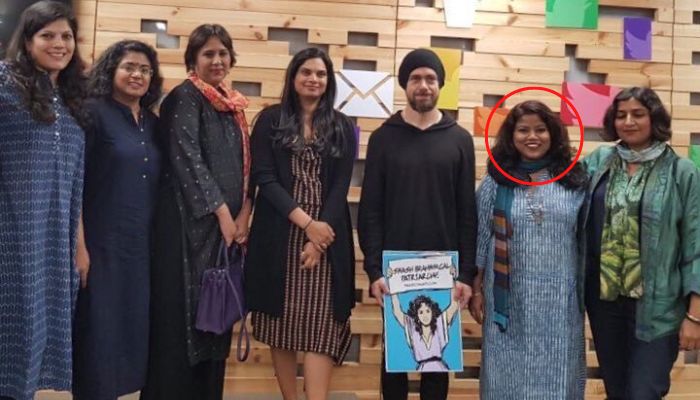
Thenmozhi Soundararajan with Jack Dorsey, Vijaya Gadde and Barkha Dutt
In 2018, Twitter CEO Jack Dorsey had once stoked a massive controversy when he held an anti-Brahmin placard that said ‘Smash Brahminical Patriarchy’, a poster designed by Thenmozhi Soundararajan.
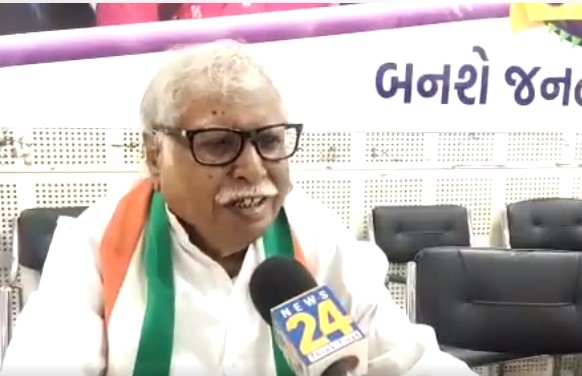
On Saturday, November 12, a video went viral on social media wherein Congress senior leader Madhusudan Mistry was seen making a derogatory remark against Prime Minister Narendra Modi.
“Hum Modiji ko uski aukat batana chatein hai,” said the senior Congress leader when a journalist questioned him about the Congress party’s manifesto promise to rename the Narendra Modi Stadium in Ahmedabad to Sardar Patel Stadium.
The Congress minister went on to criticise the Prime Minister, claiming that he could never be Sadar Patel.
“सत्ता में आई कांग्रेस तो नरेंद्र मोदी स्टेडियम का नाम बदलेगी, दोबारा सरदार पटेल स्टेडियम होगा नाम”
The Congress party today promised to rename the Narendra Modi Stadium in Ahmedabad to Sardar Patel Stadium if it comes to power in Gujarat. The news anchor had asked Mistry his take on the matter when he passed the derogatory remark against India’s Prime Minister.
Following Mistry’s insulting statement, BJP national spokesperson and Rajya Sabha member Dr Sudhanshu Trivedi criticised the Congress MP, claiming that the Congress party has a long history of doing so. A few months back, a Congress politician wished PM Modi ji death, said Trivedi recalling Sonia Gandhi’s “Maut ke Saudagar” comments against PM Modi at the time.
Sudhanshu Trivedi condemned Mistry’s remark against the Prime Minister and stated that such an insult to the PM by a Congress leader would be met with a strong response from the people.
Congress is in the field to save its presence, AAP is in the field to register its presence, only BJP is in the field to form the Government: BJP Spokesperson and Rajya Sabha member Dr. Sudhanshu Trivedi explains the scenario of Gujarat election 2022 in reply to media query today pic.twitter.com/hejLSmEqcB
Taking a jab at opponents, the BJP leader stated that the Congress was out to save its presence in the electoral arena, whilst the AAP was out to register its presence, and hence there was no competition for the ruling BJP.
Congress party’s hypocrisy over renaming a stadium after PM Modi
While the Congress party is busy leveraging the name of the Ahmedabad cricket stadium to further its political goal, it is crucial to remember that the name of Sardar Patel has not been erased. In reality, his name has been raised to represent the entire sports enclave, which includes a variety of other sporting facilities. Only the cricket stadium, not the complete sports complex, has been named after Prime Minister Narendra Modi. In fact, the stadium is just a part of the bigger sports complex.
After all is said and done, the Congress party making such a big deal about renaming a stadium is very amusing, given that the Nehru-Gandhi family names have been utilised for 450 different plans, projects, and organisations. They should, in fact, be reminded that there are 12 Central and 52 state schemes, 28 sports tournaments and trophies, 19 stadiums, 5 airports and ports, 98 educational institutions, 51 awards, 15 fellowships, 15 national sanctuaries and parks, 39 hospitals and medical institutions, 37 institutions, chairs and festivals and 74 roads, buildings and places named after 3 members of the Nehru-Gandhi family: Jawaharlal Nehru, Indira Gandhi and Rajiv Gandhi.
There are also parks and zoos dedicated to Kamala Nehru who was Jawaharlal Nehru’s wife. She had died even before Indian independence and had never been a politician. There are parks, gardens, memorials, schools and hospitals after Indira Gandhi’s younger son Sanjay Gandhi. Sanjay Gandhi was an MP for a period of only six months and was best known for the forced sterilisation drive during the Emergency and Maruti scam.
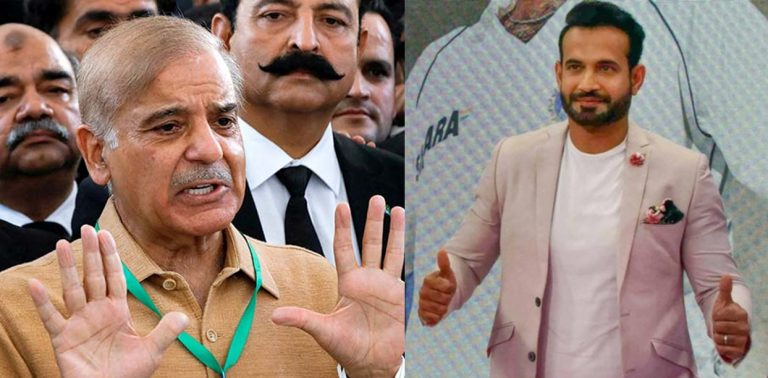
Former Indian cricketer Irfan Pathan on Saturday slammed Pakistani Prime Minister Shehbaz Sharif for his tweet mocking the Indian cricket team after its loss in the T20 World Cup semifinals to England.
Responding to a tweet by Pak PM Shehbaz Sharif, Irfan Pathan wrote, “Aap mein or hum mein fark yehi hai. Hum apni khushi se khush or aap dusre ke taklif se. Is liye khud ke mulk ko behtar karne pe dhyan nahi hai (This is the only difference between you and us. We are happy for our happiness and you’re happy for others’ pain. So, it is better you focus on your own country).”
Aap mein or hum mein fark yehi hai. Hum apni khushi se khush or aap dusre ke taklif se. Is liye khud ke mulk ko behtar karne pe dhyan nahi hai.
Irfan Pathan’s rejoinder was in response to a tweet posted by Pakistan Prime Minister Shehbaz Sharif after India’s exit from the T20 world cup earlier this week. “So, this Sunday, it’s: 152/0 vs 170/0 #T20WorldCup,” Pakistan Prime Minister Shehbaz Sharif tweeted, taking a swipe at the Indian cricket team that lost to England on Thursday and lost to Pakistan in the previous edition of the T20 World Cup. The first score represents the total Pakistan achieved against India in their World Cup match last year. These were India’s only two T20 World Cup losses by ten wickets.
Pathan had recently driven Pakistanis up the wall after taking a dig at them after the first semifinal in which Pakistan defeated New Zealand.
“Padosiyon jeet ati jaati rehti hai, lekin GRACE apke bas ki baat nahi hai,” Pathan wrote on Twitter. “And this is not for the player. NEVER,” he wrote in another tweet. He hasn’t confirmed why he took a dig at Pakistan
Padosiyon jeet ati jaati rehti hai, lekin GRACE apke bas ki baat nahi hai.
Irfan’s reply to the PM of Pakistan makes sense as Pakistan faces crises on multiple fronts, most notably on the economic front, where it is staring at an imminent financial collapse owing to rising inflation and the ever-increasing burden of the debt payment. The economy of the country is in shatters ever since former Prime Minister Imran Khan assumed power. The country has also failed to pick pace even after the Imran Khan government fell and Shehbaz Sharif assumed office.
Recently, a ferocious bout of incessant rain afflicted more than 33 million people, ravaging at least 110 districts in Pakistan and compounding problems for people who are already feeling the heat due to the country’s fragile economic health. Due to the disaster caused by excessive rainfall in the country, an emergency was also declared.
Pakistan’s economy, in particular, is in shambles. The country is witnessing unprecedented inflation, which is increasing the cost of basic necessities. The Financial Action Task Force (FATF) has long put Pakistan on its grey list, pressuring it to do more to investigate and prosecute senior leaders and commanders of UN-designated terror organisations who are involved in terror funding. It was recently laid off the list.
Minority persecution is on the increase in Pakistan. In quest of a better life, its citizens are leaving for other areas of the world. According to a Times of India report, Pakistani citizens account for more than 70% of citizenship applications in India.
A shameful defeat at the hands of Zimbabwe earlier in the tournament should have tempered the Pakistani Prime Minister, but that wasn’t the case as he mocked India over its defeat in semis, reinforcing the notion that Pakistan’s entire existence is dependent on its neighbour, India. It speaks volumes about the priorities of the Prime Minister who mocks his neighbouring country while his own country is beset by internal strife, looming financial and debt repayment crises, and growing incidents of terror attacks.
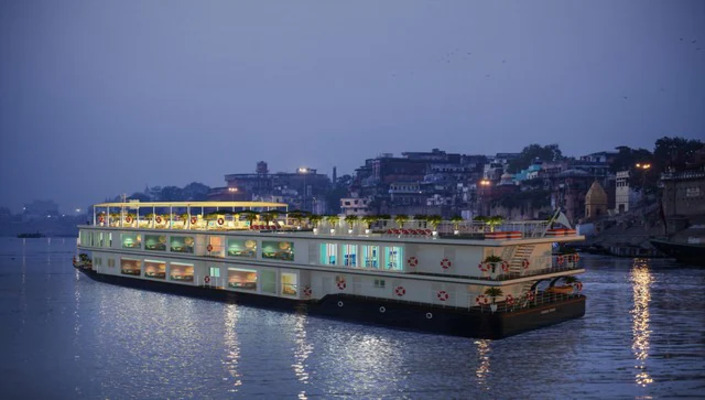
Varanasi, the holy city of Uttar Pradesh, is set to witness the launch of the world’s longest river voyage to Dibrugarh in Assam via Bangladesh on January 10, 2023. The central government has proposed to launch the world’s longest luxury river cruise in a bid to give a boost to inland waterways development in the country.
Sarbananda Sonowal, Minister of Ports, Shipping, and Waterways, stated that the Ganga Vilas cruise will sail from Varanasi to Dibrugarh in 50 days, covering 27 river systems and visiting over 50 tourist sites, including World Heritage Sites. The Minister went on to say that this will be the world’s largest river voyage by river ship, putting both India and Bangladesh on the global cruise map. In addition, the 50-day cruise will sail by sanctuaries such as Kaziranga National Park and the Sundarbans Delta.
Sarbanand Sonowal took to Twitter to share information about the Ganga Vilas Cruise and wrote, “The world’s longest river cruise will commence its journey in Jan next year. Ganga Vilas will set sail from sacred Varanasi to Dibrugarh via Bangladesh covering 4,000 km on the two greatest rivers of India, Ganga & Brahmaputra.”
The world’s longest river cruise will commence its journey in Jan next year. Ganga Vilas, will set sail from sacred Varanasi to Dibrugarh via Bangladesh covering 4,000 km on the two greatest rivers of India, Ganga & Brahmaputra. Watch ? pic.twitter.com/1buzy8ISig
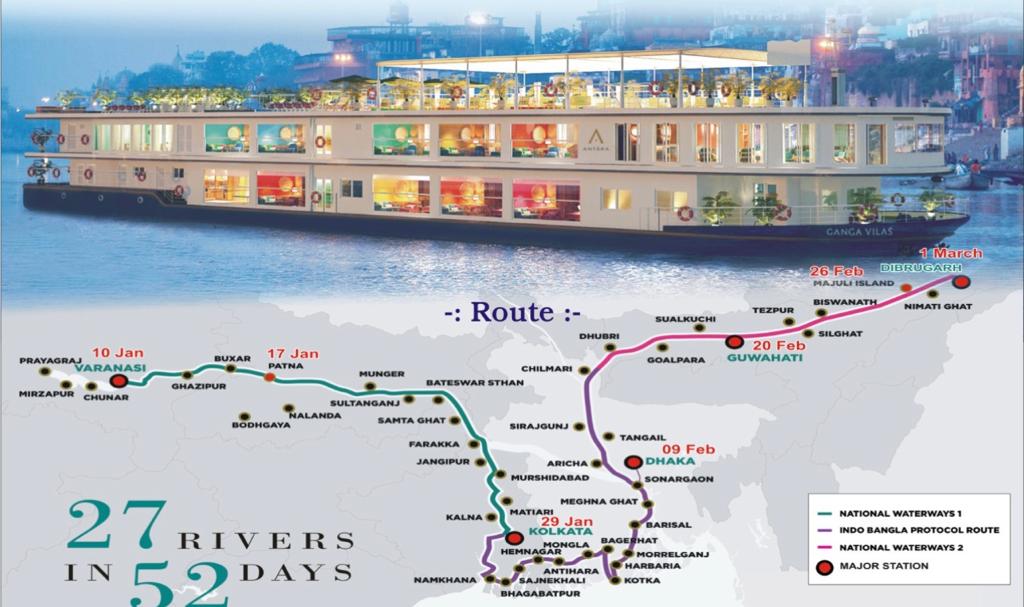
UP Chief Minister Yogi Adityanath and Union minister Sarbananda Sonowal released the timetable of the cruise ship during an event at Ravidas Ghat in Varanasi on Friday. The ship will start its first journey on 10th January from Varanasi and will reach Dibrugarh on March 1.
After departing from Varanasi, the cruise will arrive in Patna on the 8th day, sailing through Buxar, Ramnagar, and Ghazipur. During its 50-day journey, it will stop at over 50 architecturally important places, including world heritage sites. The route of the ship includes three major waterways, National Water Way 1 over the Ganga-Bhagirathi-Hooghly river system, The Indo-Bangla Protocol Route from Kolkata to Dhubri over several rivers in Bangladesh, and National Waterway 2 over Brahmaputra.
The proposed route of Ganga Vilas Cruise
After starting at Varanasi over River Ganga, the cruise will enter the Hooghly river at Farakka and reach the Sunderbans through Kolkata, sailing downstream. The cruise will navigate through various channels of the world’s largest delta of Megha river, which is formed Ganga and Brahmaputra. From Sunderbans, the cruise will start sailing upstream on the rivers included in the Indo-Bangla Protocol Route, which is mainly the Brahmaputra river and its distributaries known in various names in Bangladesh. The cruise will travel nearly 1,100 kilometres through Bangladesh before entering India again and will travel over the entire West-East length of Assam through Brahmaputra from Dhubri to Dibrugarh.
The tour’s standouts include witnessing the ancient “Ganga Aarti,” exploring the natural wonders of the world’s largest mangrove forest, visiting Mayong, India’s cradle of “black magic,” and exploring the vast cultural treasure of the world’s largest river island.
Sonowal asserted that one of the government’s top priorities is the development of coastal and river shipping, including cruise services, and that this will help India tap its potential in this territory. “In addition to promoting passenger traffic on rivers, the development of inland waterway systems would expedite trade and cargo services and attract tourists along its route.”
Minister Sonowal further informed that the cruise service will facilitate all sorts of tourists who come with varying mindsets. “Cruises are of various kinds, like luxury, expedition, etc. Tourists come with their own mindsets, some may wish to move from one point to another while others would prefer to stay throughout the journey. The service will facilitate all sorts of tourists,” he said.
Furthermore, with the amendment of the Indian Vessel Act, cruise liners will have national permits facilitating their seamless movement across states, the minister informed.
Measuring 62.5 m (length), 12.8 m (width), and 1.35 m (draft), this is the first river cruise ship built in India, according to authorities. The ship has 18 suits, along with various facilities and amenities like a restaurant, spa and sundeck.
With the signing of a memorandum of understanding between the Inland Waterways Authority of India (IWAI) and Antara Luxury River Cruises and JM Baxi River Cruises, the cruise will be the first set of cruise liners to operate on a PPP model. The cruise operators will determine the ticket price without intervention from the Centre. Antara cruises have stated that the Ganga Vilas cruise will have 18 suites and other facilities which include LED TV, smoke detectors, life vests, sprinklers, French balcony, convertible beds, a 40-seater restaurant, a spa, and sundecks.
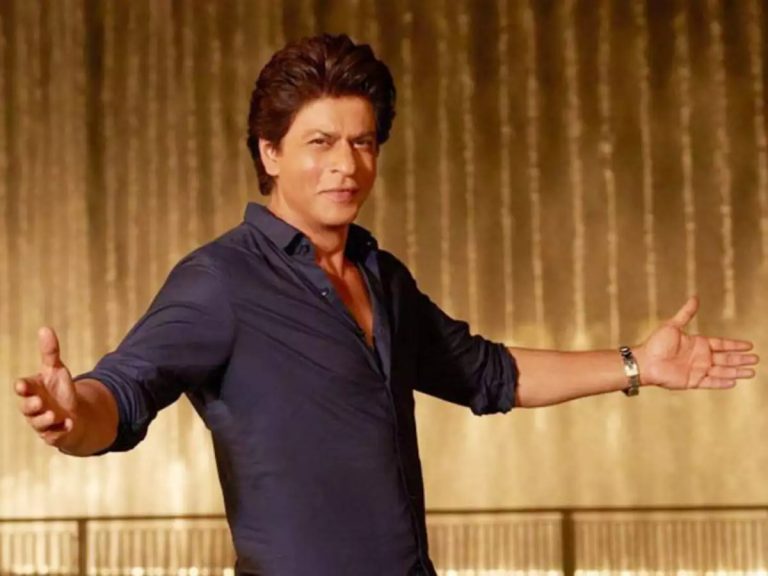
On Friday, Bollywood star Shah Rukh Khan and his crew were stopped by the Customs Department at Mumbai airport for about an hour and were questioned about the expensive watches that he had brought from the UAE. The Customs officials scanned his bags in which he carried expensive watches worth around Rs 18 lakh. Khan was further asked to pay a tax of Rs 6.87 lakhs for those watches.
According to the reports, along with Shah Rukh, his crew including his manager Pooja Dadlani, bodyguard Ravi, and some others were also stopped at the airport as they returned from the United Arab Emirates to Mumbai in a private chartered plane VTR-SG. Khan had been to the UAE to attend an event.
The expensive watches found by the Customs officials from Khan’s bag were from international brands namely Espirit and Babun, and Apple series watches. The exact cost of these watches amounted to Rs 17,56,500. Empty Rolex watch boxes were also discovered within his luggage.
After approximately an hour of questioning, Shah Rukh and Pooja were permitted to leave the airport, but the actor’s bodyguard Ravi and the rest of the crew had to stay at the airport to finish the formalities. The rest of the Khan’s crew was permitted to leave at 8 on Saturday morning only after his bodyguard Ravi deposited tax of Rs 6,87,000 using the actor’s credit card.
Shah Rukh Khan is preparing to make a huge comeback to the big screen after a long hiatus. He has 3 big releases lined up, starting with Pathaan, directed by Siddharth Anand. It is an action-packed entertainer whose trailer was launched on November 2, Khan’s birthday. The film also stars Deepika Padukone and John Abraham in prominent roles, with Ashutosh Rana and Dimple Kapadia playing significant parts.