Home Blog Page 449

Union Sports Ministry puts Draft National Code Against Age Fraud in Sports in public domain, invites suggestions

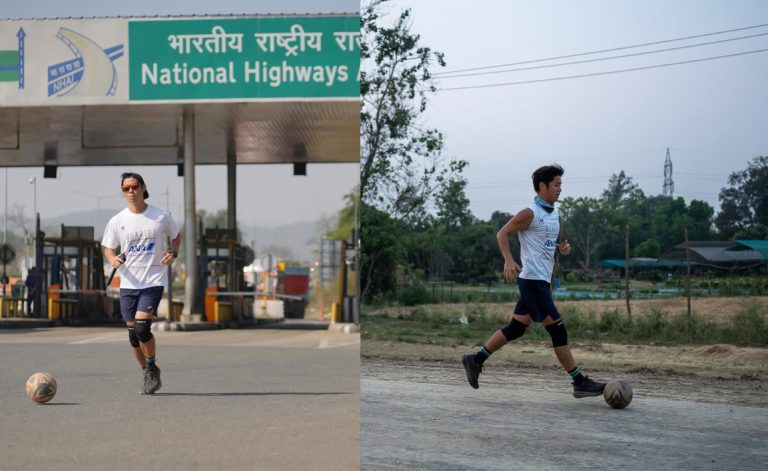
The Ministry of Youth Affairs and Sports on Thursday put in the public domain the Draft National Code Against Age Fraud in Sports (NCAAFS) 2025 for inviting comments/suggestions from the general public and stakeholders, as part of the consultation process.

This addresses age fraud comprehensively, aiming to protect genuine athletes and uphold the integrity of sports competitions nationwide. This revision has been undertaken after almost 15 years, marking a significant update to the existing framework to ensure fair competition, ethical governance, and enhanced accountability in Indian sports, as per a press release from the Union Ministry of Youth Affairs and Sports.

The Code aims to:

-Ensure fair competition by preventing age fraud, which compromises the integrity of sports.

Implement a robust verification system for age determination through a centralized database.

Introduce strict penalties for athletes, coaches, and officials found guilty of falsifying age records.

Enhance transparency and accountability in sports governance by aligning with international best practices.

Following are the salient features of NCAAFS 2025:

-Mandatory Age Verification & Digital Locking: All athletes must submit three mandatory documents during the registration process. Upon verification, the athlete’s age will be securely recorded in a centralized digital database, permanently locking their verified age to prevent any future manipulations.

Medical Examination for Age Discrepancies: For cases involving age discrepancies, medical examinations will utilize the TW3 method, MRI scans, and general physical and dental examination. Further, AI-based bone assessments to accurately determine an athlete’s age will be done in pilot phase. Any disputes arising from these examinations may be appealed through a designated appellate medical panel for further review.

-Uniform Penalties for Violations: Strict penalties will be enforced for age fraud violations. Athletes found guilty on the first violation will face a two-year ban from all competitions, along with forfeiture of any titles or medals won. A second violation will result in a lifetime ban and the initiation of legal proceedings under the penal code. Coaches and other officials found guilty will also face suspension and debarment from their roles.

-Whistle-blower Mechanism: A secure and confidential platform will be created for stakeholders to report cases of age fraud anonymously. Additionally, a reward system will be implemented to encourage and incentivize whistle-blowers to come forward with genuine reports.

-Amnesty Program for Self-Disclosure: A one-time amnesty window of six months will be provided, allowing athletes to voluntarily declare their correct age without penalties. Athletes who participate in this amnesty program will undergo a performance review and subsequently be reassigned to the appropriate age group.

-Two-Tier Appellate Mechanism: A two-tier appellate mechanism will handle disputes related to age determination. Athletes dissatisfied with initial medical examination findings may first appeal to the Regional Appellate Panel. If still unsatisfied, athletes may approach the Central Appeals Committee (CAC). The CAC’s decision will be final and binding on all parties involved.

-Role of Integrity/Compliance Officers: Integrity/Compliance Officers will be appointed by the National Sports Federations (NSFs) for each competition, and are responsible for ensuring strict adherence to the provisions of the Code. Their primary duties include verifying age-related documentation, overseeing the compliance process, identifying and preventing age fraud, and promptly reporting any violations.

-Dedicated National Database: A dedicated, centralised digital portal linked with the National Sports Repository System (NSRS) will be established to securely store all age verification data of athletes. Special care will be taken to ensure that the personal data of minors is managed and protected in strict compliance with the provisions of the Digital Personal Data Protection Act, 2023, ensuring lawful, fair, and transparent processing.

-QR-Enabled ID Cards: Following successful verification, athletes will receive ID cards embedded with QR codes. These ID cards will be made accessible digitally through the DigiLocker platform and must be presented mandatorily for participation in all sporting events.

-Public Accountability & Transparency: A robust monitoring framework will be established to ensure effective implementation of the Code. The Ministry of Youth Affairs and Sports will oversee compliance by requiring NSFs and the Sports Authority of (SAI) to regularly submit detailed compliance reports, thereby ensuring accountability and adherence to established guidelines.

Draft NCAAFS will be applicable to all athletes, coaches, officials, administrators, and support personnel involved in recognized National Sports Federations (NSFs), Sports Authority of India (SAI), Sports Control Boards managed by Central Government departments and Central Public Sector Undertakings (PSUs) and NGOs, NSPOs, public/private agencies, and institutions promoting sports development.

The draft NCAAFS provides that States/UTs may either adopt this policy or use this as a model framework to develop their own policy for promoting uniformity nationwide.


(This news report is published from a syndicated feed. Except for the headline, the content has not been written or edited by OpIndia staff)
The ₹ symbol replaced in Tamil Nadu budget: Read how the symbol for Indian Currency was created by a Tamilian, son of an ex-DMK MLA

A new controversy has been initiated by the DMK in Tamil Nadu amidst the ongoing row over ‘Hindi imposition’. The Tamil Nadu government decided to replace the Indian rupee symbol (₹) in the 2025-26 state budget logo with the Tamil script-based “ru” (ரூ). The odd action taken by Tamil Nadu chief minister MK Stalin highlighted a comical oversight as the modern rupee symbol was created by a Tamilian. Furthermore, the opposition in the state Bharatiya Janata Party (BJP) was quick to educate the Dravida Munnetra Kazhagam (DMK) and the Chief Minister MK Stalin.

Meet the designer of India’s rupee symbol

The rupee symbol’s origins date back to 2010 when Dr Udaya Kumar Dharmalingam, a postgraduate student at IIT Mumbai at the time, was only one or two day away from starting his new position in the design department at IIT Guwahati. Udaya Kumar had become victorious in a nationwide competition to create the rupee’s symbol, which was chosen from more than 3,300 submissions.

The United Progressive Alliance (UPA) government, which was led by Manmohan Singh at the time, adopted the symbol for Indian currency on 15th July 2010. Interestingly, DMK was part of the alliance that adopted this symbol for Indian currency, and had no problem with it whatsoever at the time.

More significantly, many people are unaware of Udaya Kumar’s connection to DMK. He was born in 1978 as the second of four children to contractor N Dharmalingam and Jayalakshmi. His father was also a DMK MLA in Tamil Nadu. Udaya Kumar, who was born in Marur, close to Tiruvannamalai in Tamil Nadu, later disclosed in an interview with “The Hindu” how he combined aspects of Roman and Devanagari scripts to create the rupee symbol.

The final design, he added, combined the Roman ‘R’ for rupees and the Devanagari ‘Ra’ for rupiah, giving it both an Indian and a universal identity. Udaya Kumar, currently in charge of the design department at IIT Guwahati, has created logos for a number of organisations, including the National Testing Agency (NTA) and IIT Hyderabad.

Udaya Kumar remarked that he made the decision to attend the IIT Mumbai, to complete his Master’s and PhD degrees in design. Kumar, who holds an architecture degree, expressed that he was always certain that he wanted to work as a teacher and designer. He aspired to contribute more to Indian scripts, especially Tamil, which was his mother tongue. His PhD and MD projects were also written in Tamil.

Udaya Kumar created pamphlets and posters while pursuing his bachelor’s degree in architecture at Anna University, which helped him discover his passion: visual design. He gained proficiency in typography and graphic design while attending IIT Bombay’s Industrial Design Centre. He continued his contributions to education and design after his achievements.

Kumar revealed that when creating the rupee symbol, he was inspired by the cultural and linguistic diversity found in India. His notion for a distinctive yet globally legible currency symbol was greatly influenced by his love of typography and Indian scripts. As a result of his research, he combined aspects of Latin and Devanagari scripts to guarantee the same. The Indian tricolor served as the inspiration for the symbol’s two horizontal strokes at the top, which stand for advancement and economic stability and aspiration to reduce economic disparity. 

Udaya Kumar mentioned, “I realised Indian scripts don’t have their design repertoire. After two years of trying to create something new in Tamil typography, I realised that I shouldn’t work on my own. I needed expert guidance and hence, came to Industrial Design Centre at IIT-Bombay,” while talking to The Times Of India.

He added, “I spent endless nights on trial and error. The symbol had to have universal design features while staying Indian in spirit.”

This accounts for the stroke across the top curve, parallel to the’shirorekha’, the line that heads the alphabet in Devanagari script, and the symbol’s tendency toward the Latin letter form, ‘R’ for rupee. “Most international currencies have double strokes such as the Australian dollar, Korean yen, the Euro or the Lira. The feature pronounce its identity as a currency,” he highlighted.

The Department of Economic Affairs and the Ministry of Finance authorized the rupee symbol in 2010 following its selection. The objective was to attain international recognition within two years and incorporate the symbol into the Indian financial system within six months. On 10th August 2010, the Unicode Technical Committee granted the symbol the code U+20B9 to enable its use in digital and financial systems around the world. Within a year, major IT companies like Apple and Microsoft had integrated the symbol into their keyboards.

BJP’s scathing attack on DMK

The decision to remove the rupee symbol from the state budget of Tamil Nadu was made by the DMK government amid its conflict with the central government led by the Bharatiya Janata Party. Tamil Nadu’s opposition to the National Education Policy (NEP) 2020, which the DMK claims is an attempt to force Hindi on the state, is behind this decision. Nonetheless, the action provided the BJP with ammunition to hit out at the DMK and Chief Minister MK Stalin.

BJP’s Tamil Nadu chief K Annamalai charged the DMK with disregarding a national symbol designed by a Tamilian. “Udhay Kumar, who designed the symbol, is the son of a former DMK MLA,” he wrote and then said, “How stupid can you become, MK Stalin.”

“What the father endorsed, the son rejects,” he remarked in another tweet displaying a picture of Udaya Kumar with M. Karunanidhi, former chief minister of Tamil Nadu and MK Stalin’s father.

BJP IT Cell head Amit Malviya too slammed the Tamil Nadu Chief Minister for replacing the rupee symbol. “Udaya Kumar Dharmalingam is an Indian academic and designer, son of a former DMK MLA, who designed the Indian rupee sign, which was accepted by Bharat,” and termed the move as an insult to Tamilians. “Just how ridiculous can one get,” he asked.

Former governor of Telangana and BJP’s Dr Tamilisai Soundararajan called the decision a result of DMK’s anti-national mindset and challenged MK Stalin to adopt a Tamil name for himself. He accused the party of fostering separatism and working against national integrity.

While DMK may try to live in a parallel universe, the currency of India is still denoted by ₹, designed by a Tamilian.

Germany had intelligence reports about laboratory origin of COVID-19 in 2020, its spy agency had informed govt and CIA but kept it from public

According to Germany’s foreign intelligence service in 2020, there was an 80% to 95% possibility that the coronavirus that caused the COVID-19 pandemic was unintentionally released from China’s Wuhan Institute of Virology. Two German newspapers published the shocking revelation on 12th March. The disclosure was not made public then.

German spy agency BND had suspicions that the institute had carried out gain-of-function studies, in which viruses are altered to make them more contagious to people for scientific purposes, according to a joint investigation published by the magazines Die Zeit and Sueddeutscher Zeitung. Both the then-chancellor, Angela Merkel, and her successor, Olaf Scholz, however, ignored the findings, much like other Western leaders.

According to the papers, it also showed signs of multiple safety rule violations at the facility. An unidentified intelligence operation known as “Saaremaa” and publicly accessible data served as the foundation for the spy agency’s conclusion. The report stated that although the probe had been commissioned by the office of Angela Merkel, it had never been released. However, the assessment was communicated with the United States Central Intelligence Agency (CIA) in the fall of 2024, per the details.

The CIA has determined that the COVID-19 epidemic is more likely to have originated in a laboratory than in the wild, based on a spokeswoman in January. At the time, the agency stated that both the lab origin and the natural origin hypotheses remained conceivable, and it had “low confidence” in its assessment. According to media reports, some of the material was from the Wuhan Institute of Virology, which is situated in the Chinese city Wuhan, where the pandemic is reported to have begun. It pointed to the usage of some dangerous research techniques there as well.

The reports asserted that there was proof that Wuhan researchers had conducted “gain-of-function experiments,” which involve manipulating naturally existing viruses. Such studies have the potential to alter how a virus spreads, how it produces disease and what kinds of hosts it can infect.

China’s government claimed to have participated in and supported studies aimed at identifying the origin of COVID-19 and has charged Washington with politicizing the issue, particularly in light of investigation efforts of the US agencies. Beijing has stated that allegations that the epidemic was most likely sparked by a laboratory leak are unfounded. Last month, China’s foreign ministry declared that the Wuhan Institute of Virology was not engaged in the development or spread of the COVID-19 virus and that it never conducted any gain-of-function research on coronaviruses.

Ever since the coronavirus outbreak flared up in the central Chinese city of Wuhan, the ground zero of the pandemic that later swept across the world, scientists have been debating about the origins of the contagion, with the virus being leaked from a lab being one of the most widely believed hypothesis. Many had suspected that the virus was leaked from the Wuhan Institute of Virology in China where researches on the virus are regularly conducted.

But the clamour surrounding the leak of the virus from Wuhan was quelled after 27 scientists in the Lancet rejected the theory as baseless and insisted that the virus originated through conventional means. A letter written by the 27 scientists published by “The Lancet” in February 2020 had said that they “strongly condemn conspiracy theories suggesting that COVID-19 does not have a natural origin,” and had claimed that scientists from multiple countries “overwhelmingly conclude that this coronavirus originated in wildlife.”

However, a probe carried out by “The Telegraph” in 2021 has revealed that 26 out of 27 scientists who wrote a letter in the Lancet medical journal trashing the lab-leak theory of the COVID-19 outbreak have or had links to researchers from China’s Wuhan Institute of Virology.

According to reports, experts in the United Kingdom aided in shutting down covid lab leak theory back in 2020. The article “The proximal origin of SARS-CoV-2,” published in “Nature Medicine” in March 2020, stated that the pandemic was triggered by a natural breakout event, and was crucial in dampening debate about the virus’s origins. However, declassified emails from early 2020 show that the authors engaged in long talks with specialists, including Sir Patrick Vallance and Sir Jeremy Farrar, the head of the “Wellcome Trust,” in the weeks before publication. Experts were cautioned in those email conversations that the odd traits identified in Covid-19 may have developed in both lab or wild animals.

They were also cautioned that the Wuhan Institute of Virology (WIV) had been doing research on bat coronaviruses at risky biosafety levels. However, by the time the article was published, all mention of Wuhan’s biosecurity issues had been omitted and the authors contended that lab proliferation of the virus was doubtful.

The United States Energy Department, in its 2023 classified intelligence report, has concluded that the Covid pandemic most likely originated from a laboratory leak. The report was submitted to the White House and key members of Congress. Notably, earlier, the Energy Department report by Director of National Intelligence Avril Haines’ office in 2021 had said the virus’ origin was inconclusive.

WSJ quoted unnamed people who have read the report. One of the unnamed US Intelligence officials told WSJ that the update was done in the light of new intelligence, further study of academic literature and consultation with non-government experts. Earlier, the FBI stated in its report with “moderate confidence” that Covid-19 resulted from a lab leak in 2021. The agency held its position in this report.

The US Congress report declared that the coronavirus “most likely” originated in a laboratory in Wuhan. It was released in December 2024 by a US House of Representatives committee that had spent two years looking into the COVID-19 pandemic and its effects in the US.

Politicians wanting to sacrifice Hindu celebrations for Ramzan and how they only embolden Jihadis, who then commit Mhow like violence: Mollycoddling the petulant “minority”

In a Hindu-majority India, ‘secular’ politicians take delight in turning secularism and ‘bhaichara’ into a brutal whip against the Hindus to pander to Muslims. On 12th March 2025, Anjum Ara, the Mayor of Bihar’s Darbhanga issued a statement asking Hindus to take a “two-hour break” from Holi celebration to accommodate Jumma Namaz on Friday (14th March).

In her statement, Darbhanga Mayor Anjum Ara urged local Hindus to pause Holi festivities from 12:30 pm to 2:00 pm, saying, “Jumma time cannot be extended, so there should be a two-hour break on Holi. This would enable people from both faiths to carry out their respective practices without any hassles. We understand that Holi comes only once in a year. But we also need to keep in mind that for Muslims, it is the holy month of Ramzan.

Furthermore, she urged Hindus celebrating Holi to maintain distance from mosques. This statement was issued by the district administration after a peace committee meeting ahead of Holi.

Why not? After all, that exactly has what ‘secularism’ been in this country. Hindus must always make sacrifices, and play the role of “Bada bhai” (elder brother) so that the “Chhota bhai” (younger brother) can do whatever he wants. Darbhanga Mayor Anjum Ara’s “Hindus should not play Holi for two hours, because Jumma Namaz time cannot extended” reminds one of West Bengal Chief Minister Mamata Banerjee’s diktat prohibiting Durga Visarjan to facilitate observance of Muharram a few years back.

The so-called ‘secular’ politicians always pick Hindus to be the scapegoat of their lopsided appeasement in the name of preserving communal harmony. Then it was Durga Visarjan in West Bengal, now it is Holi, a festival celebrated by Hindus with unbridled joy, is being asked to pause, effectively to kneel before the rigid timetable of the Muslim community’s Jummah Namaz in Ramzam. Contrary to what the Islamo-leftist propagandists masquerading as secularists suggest, this is not about protecting communal harmony but about prioritising the convenience of Muslims over the celebration of the once-in-a-year festival of Hindus.

Anjum Ara suggests that Hindus should maintain distance from mosques to avoid clashes. This is basically a warning-cum-threat to Hindus that if you happen to go near a mosque and get seen celebrating your festival, it would be justified for Muslims to get offended, and resort to stone pelting and assaulting Hindus. There have been numerous instances when Islamo-leftists justified violence by Muslim mobs against Hindus just because the latter were taking a procession near a mosque playing bhajans, or raising Jai Shri Ram slogans. This, however, is dangerous and solidifies the Islamist assertion that non-Muslims should avoid entering ‘Muslim areas’ to avoid offending Islamists and getting attacked by them.

The Darbhanga Mayor’s statement is not something new, rather it is just a continuation of a broader pattern where politicians, often draped in secular rhetoric pander to Muslim sentiments at the expense of Hindu sentiments and festivals. The underlying message of doing so is that Hindu beliefs and festivals are somehow negotiable, adjustable, and dispensable while those of Muslims are sacrosanct. This is a blatant exploitation of the inherently tolerant and accommodating nature of Hindus. In Hindi, there is an adage “Seedhe ka mooh kutta chaate” which implies that the virtuous ones get easily suppressed or cornered. Hindus are ideologically very divided and have independent thought processes when it comes to politics, however, the Muslim community has historically been a consolidate votebank of certain political parties.

While Hindus see politics from the frame of development, jobs, infrastructure, freedom of speech etc, a significant section of Muslims sees politics as yet another tool for the expansion of their religious dominance. It, is thus convenient for the self-proclaimed secular politicians to appease politically and ideologically more united groups than a religious group that does not operate as a consolidated votebank.   The Muslim appeasing political parties know that their neglect and suppression of Hindus and their beliefs would not trigger as fanatical and violent a protest as doing the same to Muslims would, they take advantage of this to issue diktats directing Hindus when and how they can or cannot celebrate their festivals.

During Ramzan, especially on Fridays, public places witness amplified calls to prayer, road blockages for offering namaz or iftar gatherings etc with little pushback from the authorities. Even if the police try to remove those offering namaz on roads, the Islamists and their sympathisers in politics and on social media villainise the authorities, painting them as oppressors of ‘minorities’. Contrast this with the curbs placed on Hindu festivals be it firecracker bans on Diwali or restrictions on Ganesh Chaturthi processions in states ruled by ‘secular’ (read Muslim appeasing) political parties. Apparently, the Darbhanga Mayor’s proposal adequately fits into this divisive trend, wherein politicians declare that Hindu traditions can easily be sliced and diced to fit the demands of or to appease a vocal and ready-to-get-offended-over-nothing minority, all under the guise of maintaining ‘communal harmony’.

Hindus should pause festivals, but Muslims cannot even allow processions to pass on a road near a mosque

However, far from fostering peace and upholding communal harmony, such moves only embolden Islamist Jihadis who interpret this as weakness, and assume that somehow they have the right to get offended and resort to violence if a Hindu procession passes by a mosque or simply Hindus are seen celebrating their festivals in a Muslim area. Emboldened by the appeasement of politicians and “Masjid ke saamne Jai Shri Ram chillaoge toh ye hi hoga” justification by Islamist sympathisers online, the average Jihadist uses petty excuses to vent out hatred against Kafirs (infidels) and assault them.

The recent violence in Jharkhand’s Hazaribagh wherein Muslims pelted stones from Madarsa on Hindus for installing Mahashivratri flags and loudspeakers. One wonders, if Anjum Ara was Hazaribagh’s mayor,  she would have ordered Hindus to not install religious flags and play bhajans on loudspeakers to avoid offending Muslims. This wasn’t an aberration. In Madhya Pradesh’s Mhow, Muslims pelted stones on local Hindus for taking out a rally celebrating the Indian men’s cricket team winning the Champions Trophy. All was well until the celebratory procession passed Jama Masjid where a mob from the Masjid raising Allahu Akbar slogans started pelting stones at those celebrating India’s victory. While police were investigating the matter, Islamists on social media handed clean-chit to their riotous co-religionists giving fake excuses like firecrackers were hurled inside the mosque, and blaming Hindus for instigating Muslims by simply raising flags of Lord Hanuman and chanting Jai Shri Ram. This came despite the fact that the Imam of Jama Masjid had already admitted that it was the Muslims who started the violence by attempting to lynch Hindus who were chanting Jai Shri Ram during the cricket victory celebration.

There is a meticulous attempt ongoing to normalise the existence of Muslim ghettos/ no-go zones where the mere existence of Hindus exercising their right to worship is a potential trigger for violence and an affront to the Muslim community. Even last year, the court directed Hindus to change their Ram Navami Shobha Yatra routes ensuring that they do not traverse paths with mosques on them. This automatically shifted the onus of responsibility from the aggressor to the aggrieved. In Jharkhand’s Hazaribagh, a Hindu activist was arrested last year for organising Ram Navami procession in a place where the Hindu festival is somewhat ‘banned’.

Not only last year but in the recent past, processions of Hindus celebrating their festivals be it Ram Navami or Mahashivratri faced orchestrated attacks from Muslim mobs in West Bengal, MP, Gujarat and other states often near mosques. Remember the anti-Hindu violence in Haryana’s Nuh in 2023 wherein Hindus taking out a  Jalabhishek Yatra to celebrate Shravan Somwar were attacked by a rabid Muslim mob? The ‘secular’ politicians and their local and foreign media allies shrewdly blamed the Hindus for the violence even though 5 out of the 6 dead in the violence triggered by Islamists in Nuh were Hindus.

Each time, the pattern repeats: Hindu festivals become flashpoints, and instead of condemning the Jihadist perpetrators, politicians villainise the victims and preach ‘restraint’ to them. It was seen in Sambhal last year, how the Samajwadi Party stood rock-solid with Muslim rioters who pelted stones at the police when they arrived at the dispute Jama Masjid to get its court-ordered survey conducted. OpIndia reported earlier that a delegation of SP leaders went to jail to meet incarcerated Muslim rioters. With such political backing, the jihadists get encouragement to attack Hindus and the assurance that they will get away with it sooner or later while all blame will be shifted on Hindus.

Interestingly, the usual players are pushing the argument that even Sambhal CO Anuj Chaudhary asked Muslims to avoid stepping out of their homes if they have a problem with Holi colours and offer Jumma namaz at home asserting that Jumma comes 52 times in a year but Holi comes only once. However, this is a classic case of drawing false equivalence. Sambhal is a communally sensitive zone which became as such due to Islamist violence in December 2024, in Sambhal’s context, it was a pragmatic call to advise Muslims to avoid offering namaz in a mosque or publicly but at home as Sambhal’s history justified caution unlike Darbhanga where there is no as such trigger

Anjum Ara’s “two-hour break” instruction not only causes inconvenience to Hindus, it sends a signal to Islamists that their intransigence pays off. If Holi can be paused today, what’s next, banning Diwali celebrations near mosques? Banning Durga Pooja pandals during Eid? By caving to these demands, politicians aren’t promoting coexistence rather they are fuelling a sense of entitlement among Hindu-hating Islamists who use violence as a bargaining chip. The history backs this up. Communal incidents spike during Hindu festivals, with Muslims being the attackers in almost all cases. Yet, the response is rarely punitive, more often, it is Hindus who are told to adjust, to compromise to maintain the lopsided Bhaichara and preserve the façade of ‘Ganga-Jamuni Tehzeeb’ and other high-sounding pseudo-secular crap.

This is mollycoddling a petulant minority at its worst. Muslims in India are not denied the right to practice their faith, this however, should not be at the cost of the rights and dignity of Hindus or other non-Muslim communities. Ara’s ‘regret’ after the stirring outrage rings hollow as her initial stand reveals the mindset. Such politicians are not mediators rather they are enablers, sacrificing Hindu cultural identity to appease a community that is increasingly conditioned to expect concessions and somehow deems it right to victimise others simply for practising their faith overtly or sometimes simply existing. While true harmony requires mutual respect and not one-sided surrender some politicians thrive empowering those who thrive on discord and draw joy from assaulting Hindus.

Politically motivated protest under banner of PSF-TISS: Bombay HC upholds suspension of PhD student accused of anti-national activities

The Bombay High Court upheld the two-year suspension of Ramadas KS, a PhD student at the Tata Institute of Social Sciences (TISS), for taking part in a protest against the national government and the National Education Policy (NEP). The politically motivated protest was held under the Progressive Students Forum (PSF)-TISS banner. A division bench consisting of Justices A.S. Chandurkar and M.M. Sathaye noted that the protest/march was politically motivated. The bench concluded, “The petition is dismissed with no order as to cost.”

The bench pointed out that TISS was right to conclude that Ramadas gave the impression that the opinions expressed in the rally were the institute’s opinions, which damaged its reputation.

“It is therefore clear as sunshine that the said march was politically motivated, which the petitioner participated in under the banner PSF-TISS. Therefore, the finding of the committee that he created an impression in general public that the politically motivated protest and views were the views of the respondent/institution TISS, is founded on material available on record and no fault can be found to that extent. This has brought disrepute to the institute in its view. Petitioner can have any political view of his choice, but so does the institute,” the court pronounced.

TISS issued a show-cause notice to Ramadas KS citing “misconduct” and “anti-national activity.” He was issued a show-cause notice for taking part in the “Parliament March” demonstration in New Delhi on 12th January 2024, where a poster produced by PSF included the name of the institute to indicate that it was a student group from there. Ramadas responded to the show-cause notice and following an investigation, his scholarship was revoked and he was suspended from TISS for two years.

According to the court, the petitioner acknowledged in his response to the show-cause notice that he took part in the “Parliament March” and used TISS and PSF in one of the posters. “The petitioner has full freedom of expressing his political view; but to do so under the banner of respondent institute is what is objected to by the institute,” it observed.

According to the institute’s honor code, the student agrees to refrain from offering opinions on any platform that could harm its reputation in the public eye. The court also underlined the same. It was argued that by employing TISS as a platform to convey his political beliefs, he had broken the aforementioned guideline. The petition objected to TISS’s consideration of his prior behavior in determining the extent of his punishment. The court stated that he was given adequate notice snd the institute’s assessment of his past conduct was not wrong.

“It is settled position of law that in any inquiry, once the delinquent is given sufficient notice about past conduct or antecedents and opportunity is given to the reply to the same, the past conduct can be taken as material consideration while arriving at the quantum of punishment. It is therefore clear that the institute can consider whether the Petitioner has committed previous violation of the code or other policy,” the court conveyed.

Ramadas admitted, the court added, that he and other students had spent the night outside the director’s residence and engaged in sloganeering. It stated that the director’s exercise of his or her rights and personal life was disrupted by this act. It mentioned that although TISS had previously taken a liberal stance against the petition because it had not taken any action, the institute did take his actions during the politically motivated event under the PSF-TISS flag seriously. The court pointed out that his acts were forbidden by the institute’s regulations, therefore the two-year ban was not excessive and his right to free speech was not infringed.

“The petitioner while enjoying the financial aid approved by the respondent/institute, participated in a clearly politically motivated protest in a student group under a banner having name PSF-TISS. Therefore the necessary effect of such conduct on the decision of the respondent institute about grant is bound to follow,” it declared.

Ramadas claimed that his suspension had been imposed without taking into account his justifications and petitioned the court in May 2024 to have it revoked. However, the court also highlighted, “In the facts and circumstances, We do not find this case as an outcome of any discrimination or against freedom of expression. This case is about involving the name of the institution in the expression of politically motivated thoughts and protests undertaken by the petitioner, a student. If such actions are prohibited under applicable rules, then the necessary consequences of the breach are bound to follow.”

MK Stalin govt escalates language row, replaces official Rupee symbol ₹ with Tamil script in Tamil Nadu budget

In an obvious escalation of the language row, the Stalin government in Tamil Nadu has now dropped the Indian Rupee symbol ₹ from its official documents. In the budget for the financial year 2025-26, the government replaced the ₹ symbol with its equivalent Tamil script.

This move comes amid and the Tamil Nadu government’s opposition to the 3-language policy of the National Education Policy (NEP), which it calls Hindi imposition, even though Hindi is not made mandatory.

The Tamil Nadu budget document uses the ரூ symbol as the Rupee symbol in its budget document, which is the first character of the Tamil word for Rupee. The state govt has not made any comment on why it used its own currency symbol instead of the official symbol.

Notably, the ₹ symbol was adopted by the UPA govt in 2010 to replace the existing symbol Rs. symbol, as it is used as currency symbol by multiple countries. After the Indian govt decided to adopt a new currency symbol, a design competition was announced by the central govt to select a new symbol.

The design created by U Udaya Kumar was selected as the winning symbol, which combines the elements of Devanagari letter ‘र’ (ra) and the Latin capital letter ‘R’. The parallel lines on the symbol represents the tricolor and also depict an equality sign symbolizing the nation’s desire to reduce economic disparity. 

The new symbol was subsequently incorporated into currency notes and coins, with the first series of coins bearing the ₹ symbol entering circulation on July 8, 2011. 

The use of a separate currency symbol by Tamil Nadu government represents a major conflict of the state with the centre.

Jaipur Polytechnic Women’s College ex-principal Mashkoor Ali arrested for allegedly molesting female students, installing camera in bathroom

The former principal of Jaipur’s Women’s Polytechnic College, Mashkoor Ali, has been taken into custody. He has been accused of sexually harassing female students who also protested against him. The police have confirmed the allegations leveled against him. He was arrested following an initial investigation into the charges made against him by the victims. A Special Investigation Team (SIT) inquiry was conducted against him, and the allegations were found to be true. The students also recorded their statements on the matter.

They revealed that Mashkoor Ali had installed a camera in the washroom, and videos were recorded using it. On 3rd February, the college personnel and the female students lodged a complaint with the Secretary of the Technical Education Department, after which a committee was formed. He was suspended after being found guilty in the probe. The inquiry committee then returned to the institution on 10th March for further investigation, during which the students demonstrated. They complained that the investigation was being launched again to save him.

They further conveyed that the accused had been appointed principal in 2023 and had been misbehaving with the female students ever since. They disclosed that he used to sit behind the cupboard in the corner of the library, out of sight of the CCTV cameras and molest his targets there. He even allegedly added himself to the personal WhatsApp group of the students and sent obscene messages to the girls. He reportedly claimed to be in contact with influential persons in order to take the students in his car, where he would molest them in the moving vehicle.

The students unveiled that Mashkoor Ali used to threaten them with making their videos viral on social media if they approached the police or family members, and hence, the victims remained quiet due to fear. “Principal Mashkoor Ali used to say that you (girls) will have to sleep with other people as well. He claimed that he has links with powerful people. He also supplied girls and even threatened to expel them from the college if they did not obey him,” the girls stated while talking to Amar Ujala.

West Bengal govt bans Holi in Santiniketan Sonajhuri Haat in the name of protecting trees, BJP calls it Mamata Banerjee’s politics of appeasement

On 12th March, an official said that the West Bengal government has prohibited Holi festivities in Sonajhuri Haat in the Birbhum district of Santiniketan this year due to possible harm to the local greeneries. The well-known bazaar is close to the UNESCO (United Nations Educational, Scientific and Cultural Organization) World Heritage site of Visva Bharati University’s Santiniketan campus.

Several banners have been placed in the area asking people, both domestic and foreign tourists, not to park their cars there or celebrate the festival of colors, according to Bolpur Divisional Forest Officer Rahul Kumar. He added that visitors were asked not to record the Holi celebrations on camera. “The department will seek support of police and administration to enforce the ban but will also leave it to people for the better sense to prevail,” he conveyed.

Meanwhile, West Bengal Leader of Opposition Suvendu Adhikari reacted to the development and referred to the political agenda of appeasement of the ruling All India Trinamool Congress (AITC/TMC). He said, “This has not happened in just one area. Police conduct coordination programs at the time of programs of other communities. We saw this happening during CPIM (Communist Party of India-Marxist) and TMC regimes. But in 2025, for the first time, meetings were held at every police station for Holi. What was the issue in the meeting, this is a special month for the other community and this time Holi is falling on a Friday (Jumma).”

“So, it was openly said that colours should not be used and Holi should be celebrated. There will be arrests if someone does something. Birbhum Additional SP (Superintendent of Police) said that by 10 am, the Holi celebrations in Santiniketan should be wrapped up because it is Friday. This is happening in Bengal for the first time. Mamata Banerjee’s Police administration is doing politics of divides, it is doing politics of appeasement,” he pointed out.

According to a spokesman for the central university Visva Bharati, its UNESCO heritage designation prevents the campus from being opened to thousands of people during Holi. “We are not issuing any diktat and people in large groups will be prevented from walking to the Sonajhuri Khowai belt on 14th March, the day of Dol Yatra,” the DFO claimed. He further added, “What we want to avert is the assembling of thousands of people during the festival of colours in an area where there is a green cover. The sprinkling of coloured water may cause irreparable damage to trees. Let us take the pledge to save Sonajhuri from any ecological damage on 14th March.”

Visva Bharati had ceased public participation in ‘Basanto Utsav’ (spring festival) after 2019, and this is the first time the forest department has prohibited the Holi celebrations at Sonajhuri Haat, which had become a popular venue for lakhs of people during the festival. “We are not opening the varsity campus (to all) for the ‘Basanto Utsav’ because of the UNESCO World Heritage status. Opening it up for all would mean accommodating more than 5,00,000 people within the ashrama, which Visva-Bharati cannot manage in terms of infrastructure and logistics,” the university spokesperson stated.

Another country heads to financial ruin because of China: The dragon’s lending practices push Maldives toward sovereign default

0

The Maldives is grappling with a mounting debt crisis that threatens its economic sovereignty, as foreign exchange reserves dwindle to precarious levels while substantial debt repayments loom.

According to an article by human rights advocate and freelance journalist Dimitra Staikou on Medium, China’s lending practices and trade policies have significantly accelerated the island nation’s financial deterioration.

“The scale of the debt problem is staggering. The Maldives’ total debt stock has ballooned from USD 3 billion in 2018 to USD 8.2 billion as of March 2024, with projections indicating a further increase to more than USD 11 billion by 2029. Of the current debt, USD 3.4 billion is external, with China and India being the primary creditors,” Dimitra wrote.

The immediate financial challenge is daunting, with the Maldives needing to service external debt worth USD 600 million in 2025 and a staggering USD 1 billion in 2026.

Usable foreign exchange reserves held by the Maldives Monetary Authority stood at below USD 65 million as of December 2024, an improvement from the alarming low of USD 21.97 million in July 2024. However, reserves briefly turned negative in mid-August, underscoring the severity of the balance of payments crisis.

In response, international financial institutions have downgraded the country’s credit rating. Fitch lowered the Maldives’ rating by three notches in consecutive cuts made in June and August, while Moody’s maintained a negative outlook for the government’s long-term local and foreign currency issuer rating.

Dimitra highlighted that the China-Maldives Free Trade Agreement (FTA), implemented in January 2025, has worsened the country’s economic vulnerabilities rather than providing relief.

“Of the approximately USD 700 million in bilateral trade, Maldives exports comprise less than 3 per cent compared to China’s dominating 97 per cent import share. Under the FTA, Maldives removed tariffs on 91 per cent of goods from China, a concession that has yielded little reciprocal benefit given the country’s narrow export base,” she wrote.

Within two months of the FTA’s implementation, imports from China surged to USD 65 million, up from USD 43 million during the same period the previous year. More concerning is the drastic decline in government revenue from import duties, which fell by 64 USD –from MVR 385 million to just MVR 138 million.

The agreement has also opened the Maldivian tourism sector to Chinese companies and financial institutions. While Chinese tourists contribute significantly to visitor numbers, financial benefits increasingly flow back to Chinese companies rather than strengthening the Maldivian economy.

President Muizzu’s government has implemented numerous measures to address the crisis, including increasing the Tourist GST tax rate from 16 per cent to 17 per cen, doubling the green tax, and imposing departure taxes and airport development fees. The government has also begun divesting stakes in state-owned enterprises and approving mergers of key companies, including Maldives Airports Company Ltd. and Regional Airports Company Ltd.

Aggressive expenditure control measures have also been implemented, including the termination of 228 political appointees, phasing out indirect subsidies for food, electricity, and fuel, and prioritizing existing public sector investment programs. Despite these comprehensive efforts, estimates suggest that the Maldives will still face a financing gap of more than USD 500 million in 2025 and USD 800 million in 2026.

In response to the crisis, the Maldives has sought financial assistance from multiple sources. The government has requested USD 300 million from each of the Gulf Cooperation Council (GCC) countries, but these requests have largely gone unheeded. Similarly, President Muizzu’s appeals to China for USD 200 million in budget support from the China Development Bank, refinancing of debt service payments, and a currency swap have received no positive response.

A USD 750 million currency swap from India has provided some temporary relief for routine import payments and government expenditures. However, this measure is insufficient to cover upcoming debt service payments, including the USD 1 billion Sukuk repayment due in 2026.

Dimitra warned that the Maldives’ situation mirrors a pattern seen in other nations where Chinese loans and trade agreements have led to unsustainable debt burdens.

“Without significant international intervention or debt restructuring, the Maldives risks following neighboring Sri Lanka into sovereign default,” she wrote.

With creditors showing little willingness to offer assistance, the Maldives faces an impending economic crisis that could have far-reaching implications for its financial independence and political sovereignty.

This dire financial situation compounds the existential threat the low-lying island nation already faces from climate change. 

(This news report is published from a syndicated feed. Except for the headline, the content has not been written or edited by OpIndia staff)
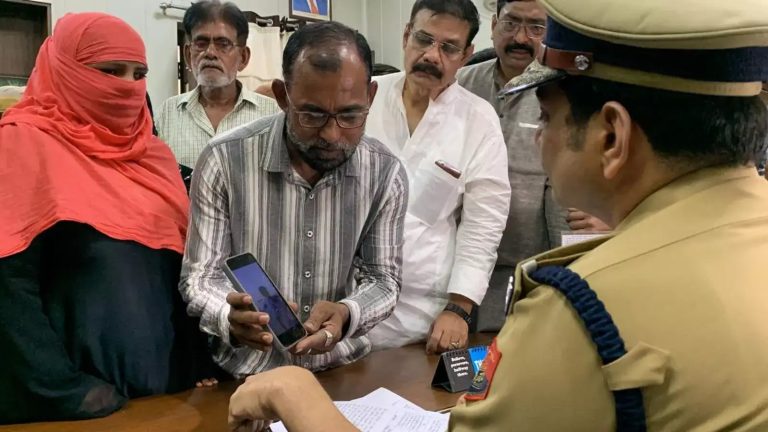
Telangana: Hyderabad Police issues notice ordering Hindus not to throw colours on ‘unwilling people’ on Holi, asks them not to travel in groups

A major controversy has erupted in Congress-ruled Telangana after the Hyderabad Police Commissioner CV Anand issued a notice ordering Hindus celebrating Holi not to throw colours or coloured water on ‘unwilling individuals, locations, and vehicles’. The order also prohibited the riding of bikes and other vehicles in a group on roads and public places, that may disturb law and order.

“Throwing colours or coloured water on unwilling persons, places and vehicles or smearing unwilling people with colour, on public roads and public places in Hyderabad City, causing annoyance. Prohibit movement of two-wheelers and other vehicles in groups on streets and public places disturbing peace and order and causing inconveniences, annoyance or danger to public. This order shall be in force from 1800 hours on 13-03-2025 to 0600 hours on 15-03-2025 in connection with celebrations of Holi Festival-2025,” the notice issued on 11th March 2025 reads.

It further states that anyone found violating these directives would be prosecuted under section 76 of the Hyderabad City Police, Act 1348 Fasli.

“The Public are hereby informed that any person violating the above order shall be liable for prosecution for violation under Sec. 76 of The Hyderabad City Police, Act 1348 Fasli,” the notice issued by Hyderabad Police Commissioner CV Anand adds.

Notably, section 76 of the Hyderabad City Police, Act 1348 Fasli states that anyone who violates the directive issued by the Commissioner of Hyderabad City Police or refuses to conform will be punished with a fine which may extend to fifty rupees, and/or be punished with imprisonment for a term which may extend to 8 days or with fine which may extend to fifty rupees or with both. The law also provides for imprisonment for a term which may extend to one month or with a fine which may extend to one hundred rupees or with both, thirdly in other cases, the ‘offenders’ may be punished with a fine which may extend to hundred rupees.

Meanwhile, a similar notice has been issued by Cyberabad Police Commissioner, Avinash Mohanty in which the officer ‘warned’ Hindus against throwing colours or water on strangers, locations, and vehicles, and the movement of vehicles in convoys.

The Bhartiya Janata Party (BJP) has slammed these directives and accused the Congress government led by CM Revanth Reddy of discriminating against Hindus.

Nothing will stop the Eid festivities, there are no restrictions! Why the discrimination?, BJP’s Telangana unit posted on X (Formerly Twitter).