Home Blog Page 4906

In 2015 Bihar elections, most exit polls were wrong, the one correct was rejected by the channel as it didn’t believe it: Read details

After the voting for the third and last phase of Bihar election was over, the news channels and poll agencies announced their exit poll results. Compared to previous elections, this time the number of exit polls was very less, with only a few agencies conducting the polls in an attempt to predict the election results.

The exit polls have predicted a very close contest, with UPA comprising RJD, Congress and left parties marginally ahead of NDA, which has BJP, JD(U) as its members. In this context, let us see how the exit polls feared in the last assembly polls in Bihar.

In the 2015 elections, a total of 8 poll agencies had conducted exit polls, with diverse results. ABP-Nielsen, CNN-IBN-Axis and News X-CNX had predicted clear win for MGB, while NDTV-Hansa and News 24-Today’s Chanakya had predicted win for NDA. The others had predicted a very close contest with little gap between the predicted numbers for the alliances.

This shows that among the 8 exit polls, only one had predicted it correctly, the Axis poll, which was commissioned by CNN-IBN but was not aired. All other exit polls didn’t predict the landslide victory by JD(U)-RJD-Congress alliance. While some predicted win for the alliance, they predicted far narrow margin of victory for the UPA. While others were completely wrong as they had predicted NDA win.

The Axis poll, which turned out to be correct, was not aired by CNN-IBN because the channel was not convinced with the numbers. They didn’t believe that UPA will win by such huge margin, and decided not to air it on both the English and Hindi channels of the network. Due to this, Axis had deleted the exit poll results from its website also. But after they results were out, they had re-uploaded the same. This shows that News Channels which air the exit polls will not show a prediction if it does not match with their inter prediction.

On the other hand, Today’s Chanakya and NDTV had publicly apologised for predicting wrong results in their exit polls, after the election results were out. In a statement, Pranoy Roy had blamed the poll agency, saying that the data provided by them was wrong.

it is notable that while a JD(U) led Mahagathbandhan govt was formed after the elections, Nitish Kumar chose to return to NDA two years later, and an NDA govt was formed as a result, with Nitish Kumar continuing as the CM.

Bihar Assembly elections: Exit Polls suggest a hung assembly, predict a close contest with a slight edge for Mahagathbandhan over NDA

As Bihar Assembly Elections draws to an end, several exit polls have emerged with their predictions of which alliance is poised to sweep the state. However, contrary to the expectations, the exit polls have suggested that the electoral contest in Bihar will be a closely-fought one, with neither of the parties and alliances emerging out as a clear victor.

The trends from the various exit polls suggest that this time around Bihar may be in for a hung assembly as Mahagathbandhan and NDA seemed to score almost equal seats in each of the exit polls conducted.

Exit PollNDA allianceMahagathbandhanLJP Others
Republic-Jan Ki Baat91-117138-1188-56-3
Times Now-C-voter104-128108-1131-34-8
TV9 Bharatvarsh 110-120115-1253-510-15
Today’s Chanakya55-66180-191—8-12
India Today-Axis69-91139-1613-53-5
Exit Polls predictions for the Bihar Assembly elections

The Republic-Jan Ki Baat poll says that NDA alliance is expected to get seats in the range of 91 to 117 out of the 243-seats Assembly. The survey adds that Congress and RJD’s Mahagathbandhan alliance is all poised to rack up somewhere in the range of 138 to 118 seats and emerge as the alliance with the highest number of seats. Besides, LJP and others are expected to bag up to 8 and 6 seats respectively.

The C-voter exit poll, on the other hand, says that NDA alliance which comprise of BJP, JDU and other parties, will win seats in the range of 104 to 128. Mahagathbandhan alliance is expected to bag 108 to 113 seats while LJP and others would score 3 to 8 seats tentatively.

The third exit poll, TV9 Bharatvarsh, also hinted that the electoral battle in Bihar is fiercely contested, with the NDA alliance expected to secure 110-120 seats while its rival Mahagathbandhan is presumed to win 115-125 seats. The exit poll claims LJP and Others will grab up to 5 and 15 seats respectively.

The only outlier in the exit polls is the survey result thrown up by Today’s Chanakya. The exit poll predicts that the Mahagathbandhan alliance is all set to form a government in the state by winning 180 to 191 seats of the total 243 seats. The NDA alliance, the Chanakya claims, will be relegated to the second position with 55 to 66 seats.

India Today – Axis also announced a clear victory for RJD-Congress alliance, with Rajdeep Sardesai declaring Tejashwi Yadav as the next CM.

All the exit polls were unanimous that LJP did a big mistake by leaving NDA, as all of them predicted single digit seats for them. Similarly, others are also not likely to win many seats.

The result of the Bihar Assembly elections, which went to polls in three phases, with the last phase ending today, will be declared on Tuesday, November 10. Electronic Voting Machines will be opened at 8 am on November 10 and counting will begin. Normally, the picture of who is winning the contest is clear by noon but given the closeness of the electoral battle as the number from exit polls suggest, results may not be clearer until the evening.

Jaipur: Man dies after hit by a speeding luxury car, the police allow accused to go home

0

On Friday, a 22-year-old boy was killed in a car accident by a speeding Audi car at 8 am on Sodala elevated road in Jaipur. As per reports, the victim, identified as Mada Ram, was going to his examination centre for police constable recruitment exam when he was hit by the luxury car. He fell from the flyover and landed on the rooftop of a house, around 150 metres below the flyover. The victim had reached Jaipur from Jodhpur around 5:30 am in the morning.

“He was walking on the flyover when the car, which was driven by a woman, hit him from behind. Mada Ram was thrown off the bridge and he landed on the roof of the house below. The accident was so severe that he died on the spot,” an officer informed. The video of the victim, lying lifeless on the rooftop of the building, has now come to light.

Jaipur police allows accused to go home

The cops detained two accused women after the incident, including the driver Neha Soni. The police said that she had a valid driving licence. The accused has been identified the daughter-in-law of Vimal Soni, the owner of Soni hospital. The police informed that the accused were en route Ajmer Road when the vehicle went out of control. The car ended up hitting a pole, which resulted in its uprooting.

The cops have seized the vehicle. A case has also been registered under the Indian Penal Code (IPC) Sections 279 (rash driving), and 304A (death due to negligence). The police have not arrested any of the accused and instead allowed them to return home. The post mortem of the victim was conducted on Friday evening.

“It happened around 8am when the deceased was on his way to the examination centre. The women were on their way to Ajmer Road. It appears to be a case of speeding. The vehicle went completely out of control. After hitting Mada Ram, the driver could not control the car and it hit a pole. We have seized the vehicle,” a officer told media.

Victim’s brother demands strict punishment for accused

As per reports, Mada Ram has seven siblings. While speaking about the tragic incident, his brother Raja Ram lamented, “For the last many years, Mada Ram was preparing for competitive exams. He had previously appeared for patwari and forest department exams but was not selected. He had worked hard to clear the exam.” He added, “My father-in-law had mortgaged his land so as to help Mada Ram take coaching for exams. His elder brothers work as labourers and do not earn much.” Raja Ram lamented that he hoped to see his brother as a constable. He had also demanded strict punishment for the accused.

Netflix’s ‘A suitable Boy’ – Suitably Secular: A Review

0

The TV series “A Suitable Boy” is a six-part adaptation of the Vikram Seth novel of the same name and helmed by Mira Nair, an old hand in translating ‘India’ to Western eyes. I haven’t read the book, so the trailer, treatment and cast seemed appealing enough for me to watch it over last week. Expectedly, for a well-hyped series, fresh off the oven, it did garner eyeballs and many a review.

But this is not another review, at least not a regular one. What I intend to do here is highlight the problematic stereotypes and portrayals, especially of Hindus, that somehow regular reviewers either seem to largely miss noticing or don’t seem to care enough about. And to show how they go a long way in perpetuating the perennially distorted image of the Hindu community.

But before we dive deeper, let’s take a quiz to test the secular quotient of those of you that haven’t read the book or watched the series. What follows is a set of one-line descriptions of a few key characters from the series. Try to peg the religion (they are either Hindu or Muslim) to which they belong, from these descriptions.

  1. Wayward scion of a wealthy politician, given to irresponsible behaviour and besotted by a courtesan
  2. Kind courtesan with a heart of gold, exploited by a religious but ruthless ex-ruler
  3. A highly religious debaucherous erstwhile ruler hell bent on building a place of worship that would disturb communal harmony.
  4. An aristocratic zamindar and his son, both benevolent and forgiving of the wayward scion who endangers the latter’s life
  5. A politician with his heart in the right place but is non-religious and couldn’t care less about places of worship

If you answered – Hindu, Muslim, Hindu, Muslim, Hindu – or got at least the majority of them correct, congratulations on scoring high on your SQ test. Now on to the details.

‘A Suitable Boy’ is set in 1951, in a fictional town in North India, that is still trying to grapple with the aftermath of partition and the ever-simmering undercurrent of religious tensions. The central theme by itself is non-political – of a mother trying to find her younger daughter a suitable groom, but the sub plots and characterizations are too politically shrill to ignore.

In the very first episode, we get the first glimpse of the Ganga-Jamuna Tehzeeb where a Muslim zamindar tells his Hindu friend, the influential revenue minister, how a certain maharaja is trying to build a temple next door to a mosque, potentially threatening the delicate communal harmony. The revenue minister in turn tries to warn the home minister and the maharaja himself that healing touches and not temples, are the need of the hour (the oh-so-familiar language spoken by secular liberals) But his pleas fall on deaf years.

As expected (only in secular stories like these), an unarmed peaceful Muslim group comes protesting against building of the temple and get ruthlessly shot by the police. Clearly, to the uninitiated viewers (especially Western ones) the narrative being set is of majoritarian ruthlessness. No novel or TV series, of course, will tell them the harsh truth of real India.

An India where there almost never are cases of temples being built next to mosques with the purpose of destroying communal harmony, but only the unacknowledged truth of hundreds of mosques built over destroyed temples – some even sitting visibly on top of desecrated temples in even the holiest of holy Hindu places.

And far removed from the screenplay of unarmed crowds getting shot by police, in real India, it is actually Islamist mobs in thousands that gherao police stations to pelt stones and set them on fire, as it happened in Bangalore recently, at even the slightest hint of a perceived insult.

When we talk of Hindu-Muslim tensions, how can riots be far behind?

In one of the later episodes, a Muharram procession and a Ramlila celebration come face to face and the aggressor is – not surprisingly – a Hindu. His angry shoving of a Muslim results in breakout of clashes. What follows is more stereotypes – an angry ‘saffron’ mob chasing the hero and his Muslim friend.

While the hero does end up eventually saving his Muslim friend from the bloodthirsty mob, there is no depiction of any scenario where Hindus are chased or killed, since in the make believe secular world there is no possibility of such a thing ever happening. Perhaps that is why Wikipedia calls Delhi riots ‘an anti-Muslim pogrom’ and the mainstream media never once mentions Godhra in the context of 2002.

If the story and screenplay is mischievous and misleading, characterizations are no better.

The Gita-chanting mother of the protagonist is shown as a mousy and wimpy woman. “What did I do in my past life to bring this curse on my beloved child,” she shrieks when she learns of her daughter’s love for a Muslim man. “(All Muslims are) Dirty, violent, cruel, lecherous,” she then exclaims, before vehemently denying the permission her daughter seeks to continue seeing the man.

“We never talk about religion. My father only cares about his mathematical problem,” is the innocuous response on the other hand that Lata gets from her ‘progressive’ Muslim lover Kabir Durrani, the son of a Maths professor, when she brings up the topic of family resistance to their relationship. These two scenes, especially when juxtaposed against each other, reveal an insidious agenda – of showing a contrast that cannot be starker.

The picture being projected is Hindu closemindedness and Muslim openness when it comes to interfaith relationship. Almost like a prequel to the fawning Tanishq ad. Once again, it cannot be emphasised how far removed from the truth the scenes are. A spate of recent cases in the news show that the victims by far, in the brutal and violent ends that many interfaith relationships come to, are indeed Hindus.

Even if the couple goes on to marry, the sad truth of legal disadvantages a non-Muslim woman is likely to face and the dangerous privileges that minority men get of having their own unquestioned personal laws is never highlighted. Overt insinuations aside, there are enough subtleties too peppered throughout to reinforce stereotypes.

Repeated references are made about how dishy the young Muslim lover is – as opposed to the Hindu suitors of Lata who need to admittedly scale up to compete (superior Muslim looks – check!). Even a Hindu child is not spared – the revenue minister’s precocious grandson, a Maths genius, rattles off caste statistics in his grandfather’s constituency that is supposed to help him win (Hindu caste obsession – check).

The only religious Hindu, the Maharaja is shown to be an uncouth, paunchy villain who exploits a courtesan and causes a stampede in a temple (undisciplined Hindu crowds – check). Of the only two remotely ‘grey Muslim characters’ one is a village zamindar who is hinted at being unjust to his worker and merciless to his own son, but there is enough warmth in his portrayal to not outright hate him.

The other is Waris, the benevolent zamindar’s wily servant who turns the minister’s tragic circumstances to his advantage. But he too hugs and makes up with his opponent in the end. And finally, the heart and soul of the Hindu community – the temple – forms a constant backdrop throughout. And not in a good way.

Lata and Kabir share a passionate kiss in temple premises. Characters are shown repeatedly walking around in shoes and sandals near sacred idols and holy trees. And thus, we can go on and on. But that will only make it more frustrating. Needless to say, ‘A Suitable Boy’ follows all secular tropes very religiously (pun intended)
• A good Hindu is a non-religious one, or religiously indifferent, at best – check
• A religious Hindu is always uncivilized or regressive – check
• Muslim – religious or otherwise – is mostly reasonable and understanding – check
• Muslim is always a victim – of Hindus or his/her circumstances – check

There is no doubt that the series is overall competently made. The actors are well cast and deliver stellar performances. The flow is engaging, even if predictable. The production values are top-notch (costume and set designs specifically) and the series itself to bound to sell well. And therein lies the problem.

As long as distortions and stereotypes are packaged glossily and sold well, they would remain entrenched as the unquestioned truth in the minds of large swathes of the viewing audiences while all ‘other versions’ will continue to remain unheard or worse, dismissed as untruths. It is time for professional Hindu voices to learn to tell and sell our versions of our stories.

And unapologetically. I hope, one day, not too far in the future, series and movies that talk of the majority of this country in a far kinder tone – of their glories, their accomplishments, their struggles, their resilience, their grit, their wisdom, their inclusiveness, and above all, their truths – get made skillfully enough, for the rest of the world to hear, understand and appreciate.

We can’t pass order today, it is already six: Bombay High Court refuses to grant bail to Arnab Goswami today, lawyers free to approach the sessions court

After almost 6 hours of hearing, the Bombay High Court reserved its judgment in a petition filed to challenge Republic TV Editor-in-chief Arnab Goswami’s arrest. While withholding the verdict in the ad-interim plea filed by Arnab Goswami, the court said that it could not pass an order today as it was already 6 PM. The Republic Media Network Managing Director had filed the plea requesting to declare his arrest as illegal, and also sought interim release from jail.

The court said that it could not pass an order today citing the considerations and compilations submitted to them. The court added that it will pronounce the orders someday in the next week.

Senior advocate Harish Salve cited the precedent of the Jagisha Arora’s habeas case where the Supreme Court ordered the release of Prashant Kanojia from custody last year. Salve argued that similar to Kanjia’s case, his client, Arnab Goswami, too, should be granted bail. However, the court refused to grant a verdict in the case, adding that the pendency of the petition will not bar the petitioner from approaching the sessions court for bail and if such an application is filed, it should be decided within 4 days.

The prime argument raised in the HC petition is that the police has no power to suo moto re-open the case without getting a judicial order after the Magistrate passed a closure order in the case in 2019 based on the report submitted by police. The defence lawyers contended that action of the police officers to re-start the investigation in the case were illegal and hence the accused ought to be released.

On Friday, after hearing Arnab Goswami’s counsel, the division bench of Bombay High Court, comprising Justices S S Shinde and M S Karnik, had adjourned the plea of Republic TV’s editor-in-chief Arnab Goswami that sought revocation of the 2018 abetment of suicide case in which he has been arrested. The Bombay HC on Friday had said that the court needs to hear the other side before coming to a conclusion. Arnab Goswami also sought interim release from jail. The hearing had started on 5th November, a day after Raigad court had rejected the plea for police remand had sent him to judicial custody of 14 days.

Republic TV chief Arnab Goswami arrested, he files habeas corpus petition

After being manhandled at his residence by Raigad police cops who came to arrest him at his house on November 4th in relation to a two-year-old closed case, Republic TV Editor-in-Chief Arnab Goswami had filed a plea before the Bombay High Court challenging his arrest by the police. 

The plea in the Bombay High Court came after Mumbai Police had arbitrarily started re-investigation in the 2018 closed case of interior designer Anvay Naik’s suicide on the direction of Maharashtra Home Minister Anil Deshmukh.

In the plea filed by him before the Bombay High Court, Goswami said that his arrest was conducted in blatant violation of his fundamental rights to life and personal liberty and his dignity guaranteed under Article 21 of the Constitution. He had alleged that he was forced out of his residence by around 20 officials of Mumbai police and was dragged into the vehicle and his son was also assaulted.

In his plea, Goswami had sought an urgent interim stay on the re-investigation in the 2018 FIR lodged at Alibaug police station in which he was accused of abetment to suicide of Naik. He had asked the court to the issuance of a writ of Habeas Corpus directing Alibaug police to produce him in court claiming that his arrest and detention was illegal because the case was closed.

Republic TV chief Arnab Goswami arrested

Continuing their witch-hunt against Republic TV chief, the Mumbai Police on Wednesday arrested Arnab Goswami. The Mumbai Police reached Republic TV Editor-in-Chief Arnab Goswami’s residence on Wednesday and physically manhandled him as they tried to detain him in a 2018 abetment to suicide case that was already closed.

A team of Mumbai Police arrested Republic TV chief Arnab Goswami after they physically assaulted and dragged him by grabbing his hair. In a shocking act, a large contingent of Mumbai Police was seen present at Goswami’s residence on Wednesday morning. In the below video, it can be seen how officials of the Mumbai Police were manhandling the Republic TV chief.

In May 2018, an FIR was filed against Arnab Goswami after an interior designer had committed suicide in Mumbai. In a suicide note, Anvay Naik claimed Goswami owed him a total of Rs 5.4 crore. However, Goswami was investigated and case was closed by court after a closure report was filed by the Police.

Double standards? Reaction of BARC towards the actions of Republic TV and India Today raises questions on its impartiality

The TRP manipulation case, where India Today is accused of bribing households where BARC viewership tracking devices are installed to watch the channel, has become a tool of Mumbai police to illegally harass Republic TV. Despite documents showing that it was India Today which was named in the complaint and the FIR in the case, the police continue to harass Republic TV, which was not named, and Hansa Research, which had actually exposed the scam and filed the complaint.

While the illegal actions of the Mumbai police are well known by now, the role of another entity in the case, the Broadcast Audience Research Council (BARC), also raises some questions. There is a huge difference in its reactions to comments by the two channels, Republic TV and India Today, raising questions on its impartially and fairness.

BARC reaction towards Republic TV

After the Mumbai police commissioner Param Bir Singh had alleged that Republic TV is an accused in the TRP manipulation case, the channel had accessed the report prepared by Hansa Research and the FIR filed in the case, which had shown that it was not named, instead, India Today was the accused channel. Subsequently on 18th October, Republic TV had shown an e-mail received from BARC, which had confirmed that the channel was not under investigation for TRP manipulation.

The BARC’s mail written to Republic TV had categorically stated that there has been no manipulation by Republic media network. The mail stated that if there was any complaint against Republic, BARC would have informed about the same to the media house. The response from BARC comes after Republic media network had urged BARC representatives to confirm in public about the clean chit given by rating agency to the media network. The CEO of Republic TV Vikas Khanchandani had written to BARC CEO requesting him to publicly acknowledge about BARC’s finding that it had found no infringement the Republic TV.

However, after Republic TV had displayed the content of the e-mail in its defence, the BARC had reacted in a strange manner. It issued a strong statement against Republic TV and condemned it for revealing the email, saying that it was confidential communication. “BARC India is highly disappointed with the actions of the Republic Network by disclosing private and confidential communications and misrepresenting the samem,” it had said in a statement.

BARC didn’t deny the content of the email shown by Republic TV, which means it is correct that they didn’t find any violation by the channel, but still objected to using the email in defence by the channel saying it was confidential. It was a rather strange, as it is expected that the channel will use everything to protect itself from the hounding by Mumbai police.

Moreover, the claim that the email was confidential also raises the question that why should the information contained within the communication be confidential. With media trial underway across all channels and the reputation of Republic TV being dragged through the mud, it is imperative that authorities with the wherewithal to clear the air do come forward and do their job.

But despite having crucial evidence that can clear the name of Republic TV, it chose not to so and allowed Mumbai police to continue to hound the channel when there is no evidence against it. And when the channel got an official statement from BARC and made it public, BARC objected to it, clearly indicating that it wants the case against the channel to go on despite knowing that the channel is not guilty.

BARC reaction towards India Today

Now, the reaction of BARC, or the absence of it, to a recent statement by India Today raises the question on impartiality of the organisation. On 5 November, India Today issued a statement saying that its stand has been vindicated against BARC. It claimed that Bombay High Court had overruled BARC in an earlier case where BARC had fined the channel Rs 5 lakh. The channel and its journalists claimed victory against BARC, saying they were found not guilty by the court.

But this was a completely wrong claim, as the court didn’t exonerate them, the court only set aside the BARC order of imposing penalty on them, and asked to start the proceedings afresh.

Moreover, it was BARC itself which had told the court that it was ready to give the India Today group a fresh hearing, which the court had accepted. BARC said that here is now a new Code of Conduct for Redressing Viewership Malpractices, and its Disciplinary Council is ready for fresh hearing.

The main argument of India Today was that when BARC had issued the order against it, the Disciplinary Council did not have the appropriate quorum. Now the council has quorum, and India Today also told the court that it is ready for fresh hearing.

This makes it clear that neither BARC nor the High Court has pronounced the channel innocent. They only quashed the earlier order and is going to start the proceedings again against the channel, under new code of conduct. The case against India Today remains, which will be heard by BARC again. Therefore, when India Today announced victory against BARC, it was clearly lying.

But BARC is yet to react to it, it has not clarified that India Today has not won against it. While Republic TV had displayed a mail actually sent by BARC, they had objected saying it was confidential, but now when India Today is openly spreading lie regarding BARC, the organisation is silent.

This, therefore, raises the question on the role of BARC in this entire TRP manipulation saga.

When Bombay High Court declared Mumbai Police as the ‘best’ force in the world: Read details

0

Even as Mumbai Police has been receiving condemnation for carrying out a witch-hunt against the critics of the Maha Vikas Aghadi government, the Bombay High Court has heaped praises on the Mumbai police saying they were considered as one of the best in the world.

A Bombay High Court bench comprising of Justices SS Shinde and MS Karnik, hearing a petition, had praised the Mumbai Police for working against all odds and had also compared them to the Scotland Yard police, the metropolitan police responsible for policing London.

“Among all these odds, Mumbai police is considered as one of the best in the world and is compared to the Scotland Yard police. Some amount of cooperation is required from people too,” he said.

The Bombay High Court had also pointed out how the police personnel carried out their duty under a lot of pressure amidst the COVID-19 pandemic and lockdown.

“The job of a police officer is difficult during these times of pandemic. The Mumbai police are already under a lot of pressure. They have to do 12-hour duty and then there are processions and morchas for which bandobast is required,” Justice Shinde said.

Interestingly, these remarks were made by Judge SS Sindhe while hearing a petition filed by a Navi Mumbai resident, Sunaina Holey. In her petition, Holey had sought the court to quash three FIRs lodged against her for allegedly making ‘offensive remarks’ against Maharashtra Chief Minister Uddhav Thackeray and minister Aaditya Thackeray on social media.

Mumbai Police books Sunaina Holey for making remarks against Thackerays

The Mumbai Police had arrested one Twitter user Sunaina Holey, who goes by the ID @SunainaHoley, on August after a complaint was filed against her by Rohan Chavhan, a leader of the Shiv Sena’s youth wing Yuva Sena. In his complaint, Chavhan had alleged that Sunaina had posted objectionable content on the microblogging website against CM Uddhav Thackeray and Environment Minister Aaditya Thackeray.

The complaint was filed at Tulinj Police Station, Nalasopara. The user also runs a backup account @NidarNaari, and both these accounts were mentioned in the complaint. Chavhan mentioned that Sunaina used extremely offensive against the Shiv Sena chief and his son to defame their image on social media.

The Mumbai Police had arrested Holey after Shiv Sena leader had urged police to take action against her under section 294 (using obscene language in public place), 499 (defamation), 506 (criminal intimidation) and other relevant sections of the IPC and Section 66A of the Information Act 2000 within 48 hours.

However, she was later granted bail after Mumbai Police had arrested her multiple times for expressing her opinion on Maharashtra Chief Minister Uddhav Thackeray and his son Aaditya Thackeray.

Munger violence: 5 SHOs removed for their dereliction of duty leading to violence against Hindus during Durga Visarjan

0

In a severe action against police negligence, 5 Station House Officers (SHOs) of Bihar’s Munger have been removed from their post for their laxity that resulted in the violent clashes between devotees and police personnel during the Durga immersion ritual, leading to the death of a student and injuries to many others.

The Station House Officers (SHOs) of Muffasil, Basudeopur, Kotwali, Kashimbazar and Purabsarai police stations were transferred after the police and the district administration held them responsible and recommended their removal.

A senior officer privy to the development said that the report of the incident made it clear that the officers were careless in responding to the situation in Munger town. Timely intervention could have avoided the escalation and prevent the violent turn of events, the officer claimed.

Since the model code of conduct is in force, the district administration has sought the Election Commission’s permission for their removal.

Munger violence incident

According to the reports, violence broke out between the police officials and devotees after Kotwali police asked Hindus not to delay the idol immersion procession of Shadipur Badi Durga on the night of October 26, 2020. Traditionally, the idols are immersed after three days of Vijayadashami but this time, in view of the first phase of Assembly polls in the state on Wednesday, the administration had insisted on the immersion by 5 am on Tuesday.

Durga puja organizers, as instructed, had taken out the procession allegedly with DJs close to midnight as they headed for the immersion. The situation turned ugly around 11.50 pm when police officials used brutal force on Hindus going for Durga Puja Visarjan.

The police reportedly unilaterally beat up four persons who were carrying idols on their shoulders. This sparked off a protest which led to the ensuing violence. The videos of the incident had quickly gone viral. In the videos, one can see police officials raining batons even as devotees scurried to protect their deity’s idol from being damaged by the lathi-charge.

An 18-year-old youth was killed and scores of others injured in the firing that took place on the intervening night of Monday and Tuesday. 20 policemen including SHOs of Sangarmpur, Kotwali, Kasim Bazar, Basudeopur police stations were also injured in the ensuing violence.

SIT formed to assess the damage caused by the mob that retaliated against police action in Munger

Three days later, on October 29, a furious mob retaliated against the police brutality by setting off police stations on fire, vandalising public property and torching several vehicles. About 16 FIRs have been registered till date and more than 160 have been named as accused in the case, including six police personnel, CISF officials and about 3,000 unidentified people.

A Special Investigation Team (SIT) has been constituted by Munger ranger DIG Manu Maharaaj under the supervision of district SP Manavjit Singh Dhillon to probe the entire matter. The SIT has been tasked with the responsibility of assessing the damage caused to public properties. by the rampaging mob, who torched the police stations, vandalised police vehicles and ransacked SDO and SP’s office and residences.

As per reports, the damage caused by the rioting mob will be recovered from the culprits. Munger SP, in a meeting with SIT members, asked them to collect evidence against the accused with the help of CCTV footage. The district SP Dhillon has asked officials to furnish separate reports on the damaged properties and submit the same to the court. He adds that no arrests have been made in the case to avoid a backlash, claiming that the removed SHOs have been transferred to other police stations.

Complaint filed against Munger DM Rajesh Meena, SP Lipi Singh, SDO and SHOs

A complaint has been filed against former Munger SP Lipi Singh and several other police officials in a local court over the incident of police brutality on the occasion of Vijaya Dashami, Hindi daily Prabhat Khabar has reported. The complaint mentions seven police officials by name including Lipi Singh and current SDO Khageshchand Jha.

The complaint has been filed by one Kelu Yadav aka Dayanand Kumar through advocating Nirmal Kumar. The complaint names SP Lipi Singh, SHO Khageshchand Jha, Krishna Kumar, Dharmendra Kumar, Kotwali officer-in-charge Santosh Kumar Singh, Kasim Bazaar officer-in-charge Shailesh Kumar and Mufassil officer-in-charge Brajesh Kumar as accused.

Meanwhile, a complaint has also been filed by an RTI activist Om Prakash Poddar with the Bihar State legal service authority (BSLSA), exhorting them to file an FIR against DM Rajesh Meena, SP Lipi Singh, SDO, SHOs and deputed magistrates for opening fire and ordering lathi-charge against the devotees.

In the wake of the complaint, BSLSA’s secretary Akhilesh Pandey has demanded a complete report from Munger SP. A report from CISF shattered the assertions made by Munger SP Lipi Singh about the violence in the town on October 26. Singh had claimed that the firing started from within the mob. However, the report by the CISF said that the local police were the first ones to open fire. It also revealed that after the situation got out of control, they even fired in the air to disperse the mob.

The CISF report, which was issued on October 27, a day after the incident, said that at the request of Munger Kotwali police station, a detachment of CISF troops was sent to the district school for the protection of the Durga immersion procession ceremony. The report mentions that the phalanx of troops sent by CISF that contained 20 personnel was divided into two groups of 10 each. One of the groups was posted along with SSB and Bihar Police personnel at Deendayal Upadhyay Chowk, Munger.

The report claims that the dispute between the devotees and police began at around 11:45 pm on the night of October 26, 2020. It states that some people started pelting stones on police and security forces after which the Munger Police opened the first fire.

The report says that CISF head constable M Gangaiah fired 13 rounds of bullets from his INSAS rifle. The firing by the personnel dispersed the crowd following which the personnel of CISF, SSB and local police returned to their camp.

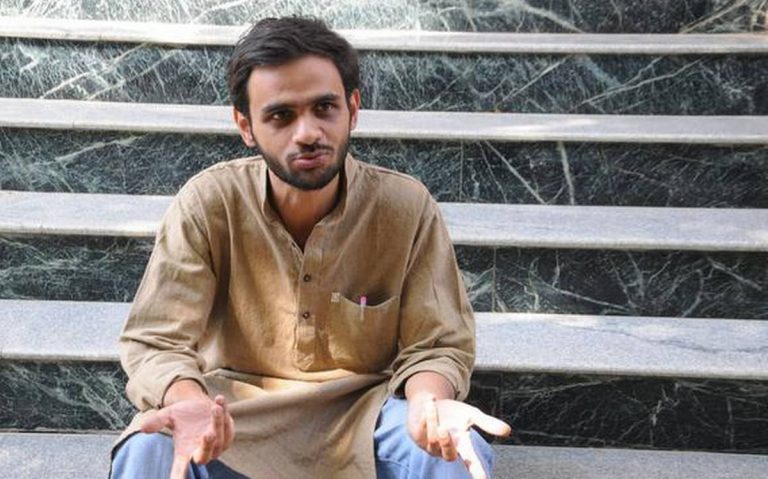
Left, Congress and Islamists ‘warn’ Arvind Kejriwal for allowing prosecution of Umar Khalid, forget that AAP leaders helped them fan Delhi anti-Hindu riots

A day after Arvind Kejriwal-led AAP government gave its sanction to Delhi Police for the prosecution of anti-India ‘activist’ Umar Khalid in a UAPA case related to Anti-Hindu Delhi riots, the far-left ‘activists’, the Congress trolls and Islamists joined their hands together to attack the Delhi government and Chief Minister Arvind Kejriwal.

The decision of the Delhi government led by Arvind Kejriwal to give its nod to sanction the radical Islamist Umar Khalid has angered the far-left ‘activists’ and Islamists. These radical members had high hopes on Delhi government that it would not sanction prosecution against communal riots accused Umar Khalid just as it had initially refused to give nod to prosecute former JNUSU president Kanhaiya Kumar and others in a sedition case.

It is pertinent to note that the Delhi government had initially refused to give sanctions for prosecuting Kanhaiya Kumar. However, later, out of extreme public pressure, the Delhi government had to give its assent to prosecute Kanhaiya Kumar and others in a JNU sedition case.

Similarly, the Delhi government, in a major shock to far-left radical elements, had consented to prosecute Umar Khalid, who was booked under the stringent anti-terror Unlawful Activities (Prevention) Act (UAPA) for plotting the Anti-Hindu Delhi riots in Delhi in February that took lives of more than 50 people.

Far-left radicals and Islamists abuse Arvind Kejriwal and Delhi government

Soon after the Delhi government’s decision was announced, far-left students’ leader Aishe Ghosh, who herself is accused of instigating violence inside JNU campus in January this year, took to Twitter to threaten Delhi Chief Minister Arvind Kejriwal saying that each and every ‘betrayal’ will not be forgotten.

Aishe, through her tweets, craved for a revenge against Arvind Kejriwal for his decision to give nod to prosecute Arvind Kejriwal.

Tweet by Aishe Ghosh

Another ultra-left student leader Sai Balaji expressed his anger against Aam Aadmi Party calling it a ‘disaster’ and accused them of being part of BJP an RSS.

Balaji allleged that the AAP was pandering to BJP-RSS agenda and stood against the mandate given to them.

Tweet by Sai Balaji

A left-wing troll ranted against Aam Aadmi Party by referring to it as a ‘Sanghi-B team’ to claim that Umar Khalid was a ‘hero’ that they are scared of.

Tweet by one Subytweets

Joining hands with the far-left, the radical Islamists too foul-mouthed the Delhi government and AAP chief Arvind Kejriwal for their decision to bring Umar Khalid to justice for unleashing terror on the streets of Delhi by instigating Anti-Hindu riots.

Shehla Rashid, a freelance protestor-cum-Islamist, referring to the Delhi government’s judgement, not only claimed that she had friends in the US, but also said that these ‘friends’ of her can easily take solace in the US for the fact that they at least had a real opposition.

Essentially, Rashid said that Aam Aadmi Party was no more of an opposition against the ruling BJP.

Tweet by Shehla Rashid

Notorious Islamic troll-masquerading as ‘journalist’ Rana Ayyub, lamenting about the fact that radical Islamist Umar Khalid will finally brought to justice, protested against Arvind Kejriwal.

Tweet by Rana Ayyub

Ironically, these far-left activists and Islamists had all enthusiastically joined hands with Aam Aadmi Party leaders like Amanatullah Khan, Tahir Hussain to instigate Muslim mobs during the anti-CAA protests. Later, these very same people had also campaigned for the AAP and Arvind Kejriwal in the 2020 Delhi elections hoping that the AAP would let them to create anarchy on the streets of Delhi once elected to power.

Mutually, the Aam Aadmi Party had then overlooked the atrocities committed by these left and radical Islam mobs, in a hope that they could be used during the Delhi elections.

However, the Delhi government, by turning its back on these radical elements this time, has crushed their hopes of freeing the likes of Umar Khalid before being held accountable before the law.

Congress joins left, Islamists to attack AAP-led Delhi government

Not just radical left and Islamists, the perpetual backers of these radical groups – the Congress ecosystem is also upset against the AAP-led Delhi government for giving its sanction to prosecute Umar Khalid under UAPA in the Anti-Hindu Delhi riots case.

Srivatsa, a Congress party worker known for spreading anti-Hindu hatred and fake news on social media, claimed that Kejriwal’s sanction to prosecute Umar Khalid proved that AAP was nothing but a B-team of BJP, both politically and ideologically.

He claimed that Kejriwal has time and again supported persecution of minorities and anti-BJP ‘activists’, while adding that only Congress and Rahul Gandhi stood as a bulwark against BJP and RSS.

Tweet by Congress troll

Sanghamitra, another Congress troll, said that Muslims in Delhi had overwhelmingly voted for Aam Aadmi Party in 2020 Delhi elections, however, Kejriwal was paying them with interest by giving sanction to prosecute radical Islamic terror sympathiser Umar Khalid.

Shockingly, the Congress generalised Muslims of Delhi by comparing them to radical Islamist like Umar Khalid.

Tweet by Congress troll

Another Congress troll Ajay said that Umar Khalid despite being a PhD from JNU did not have the foresight to see through Arvind Kejriwal’s Sangh Parivar roots.

Tweet by Congress troll

The opposition party Congress, unsurprisingly, has descended to such a low-level in the political landscape that it is now speaking in the same tone as radical left and Islamists.

Umar Khalid – the mastermind behind the Anti-Hindu Delhi Riots

Umar Khalid is an accused in the anti-Hindu Delhi riots and has been arrested for provided logistical support for the riots and being one of the main masterminds of the Anti-Hindu Delhi riots.

The notorious Islamist Khalid was arrested by the police on September 14 for his involvement in the horrific Northeast Anti-Hindu Delhi riots. In a charge sheet filed by the Delhi police and admitted by the court, it is alleged that Khalid had hatched the conspiracy of the anti-Hindu Delhi riots along with his friends during the visit of the US President Trump to India.

Khalid, the former JNU student and son of an ex-SIMI member, had allegedly met the former AAP Councillor Tahir Hussain and another accused Khalid Saifi to assure logistical support during the riots through his contacts in the PFI.

The FIR copy stated that the anti-Hindu riots conspiracy was hatched by ex-JNU student Umar Khalid and his associates who are linked with two groups. As part of the conspiracy, Umar Khalid gave provocative speeches at two different locations and appealed to people to take to streets during the visit of US President Donald Trump so that the propaganda that minorities are oppressed in India can be internationalized.

The charge sheet filed in the murder of IB officer Ankit Sharma and Tahir Hussain’s role in the riots, it is explicitly mentioned that Tahir Hussain hatched the plans for the riots in January when Hussain had met the JNU scholar and Khalid Saifi at Shaheen Bagh. 

Along with Umar, several other rabble-rousers such as Jamia media coordinator Safoora Zargar, RJD’s youth wing president Meeran Haider, Pinjra Tod activist Natasha Narwal and several others have been booked under the stringent Unlawful Activities (Prevention) Act (UAPA) for instigating the violence that swept over large swathes of the northeast Delhi in February earlier this year.

Interestingly, several Congress leaders, AAP leaders and Islamist activists like Sharjeel Imam and Umar Khalid had come together to instigate and partake in the anti-Hindu Delhi riots. However, the Congress trolls and Islamists seem to be feeling rather betrayed now that Arvind Kejriwal has given sanction to prosecute Umar Khalid evenjhough his leaders had earlier instigated the riots along with these trolls. In fact, one even recalls how AAP leader Amanatullah Khan had stood with Sharjeel Imam while he was instigating riots, and the role of AAP leader Tahir Hussain is well known.

After being hands-in-glove with Congress, Islamists and Leftists in fanning riots, AAP seems to now be at the receiving end of their ire because as the process goes, Arvind Kejriwal has had to give his assent to prosecute Umar Khalid under stringent UAPA.

How the political ambitions of the Congress silenced the contributions of freedom fighters

On the occasion of Vijaya Dashmi, the entire country celebrates the victory of Shree Ram over Ravana, the victory of good over evil. We know about this victory in detail through various versions of the Ramayana like Valmiki Ramayana, Ramcharitramanas, Kamba Ramayanam, Sri Ranganatha Ramayanamu, Saptakanda Ramayana,  Krittivasi Ramayan.

No version of Ramayana claims that Shree Ram won the battle against Ravana single handedly due to his divine power. In fact, each version of Ramayana states that Shree Rama achieved victory with the help and contribution of Laxman, Hanuman, Sugreev, Angad,  Vibhishan, Jamwant, Jatayu, Sampati, Nal, Neel,  Bheels, Vanars and Bhallus of Vanar Sena. Everybody, including the Vanars who fought the battle is accorded due credit in Ramayana. 

Whenever we watch a movie or a TV program, at the start and end of it we can see the credits running on the screen. These running credits display the names of the Director, Producers, Actors, Distributers, Print and electronic media partners for publicity, Chorographers, Technicians, Musicians and other artists who were involved in making of film and contributed to deliver a fully completed movie to the viewers. Even though everybody gets paid for their work, but it is customary and well established norm  to recognize everybody’s role, whether small or big, in presenting a completed film. 

Whenever a school or college students make a project report, it starts with a note of thanks for Teacher/professor, Lab In-charge and Lab assistants. It will be conspicuously surprising if anybody deviate from this norm. Now imagine how one will feel if somebody gives his/her whole life for a cause and his/her contribution is never mentioned proportionately anywhere. Yes, it has happened in the case of biggest and toughest project ever taken by our countrymen, that is, to get rid of the oppressive British rule in India.

When India was reeling under the exploitative and oppressive regime of the Britishers, millions of Indians were fighting in their own way for the country’s independence. Out of these millions, thousands of Indians from the various corners of India had dedicated their whole life for this cause and had given the supreme ‘Aahuti’ of their life in the ‘Yagna’ of India’s independence. But it is really disheartening that only a few of them are known to masses and rest of them still remains the unsung Heroes with stories of their valor buried deep in the annals of history. Hardly any detailed information is available in public domain about their life and the activities they carried out for freedom.

When India got independence and Indians formed the government, there was a hope that the contribution of all uncelebrated freedom fighters and martyrs would be brought to the public discourse for inspiring the next generation. But this hope was soon belied. The Congress party ruled the country after independence for decades. To advance the interest of one family, further it had put the dirt of sponsored history on the remarkable contribution of unsung Heroes.

The fight against the Britishers was fought in myriad forms and at multiple fronts. Some supported the way of cooperation and negotiation with Britishers for slow progress towards participation in government and self rule. Some were disillusioned with the policy of submitting memorandums, petitions, appealing and believed in “Tit for Tat”. They favored use of arms against brute force of Britishers. Some believed in working clandestinely to attack British Raj by organizing revolutionary associations inside and outside India.

When policies of Britshers were rendering million of Indians poor and hungry, for some, working for the upliftment of poor brothers and sisters, was the way of fighting the Britishers. When the plight of the society was totally ignored by the Britishers, striving for social reforms for the betterment of fellow countrymen was the way of fighting the British Raj for some freedom fighters.

Amidst all the efforts against the foreign rule, Centre stage and spotlight was occupied by the congress, it claimed to be representative of whole India [1]. In congress also, particularly by a faction who believed that if the needs of Indians were properly conveyed and explained to Britishers, good sense would prevail to English masters and they would show mercy [2][3][4][5]. This faction within congress believed in submitting Memorandums, Addressing Letters, Appeals, Fariyads and Invitations (Let’s say this faction as Maafi lobby of congress) [6].

This Maafi lobby grew closer to the British Raj in India. The British Raj also treated Maafi lobby as the representative of whole India and considered the requests and pleas received from them only as legitimate form of raising grievances by Indians. This lobby did not want to enrage the Britishers, professed loyalty to the British Raj and preferred to go slow on small incremental basis towards representation of Indians in government [7].

This proved conducive to prolong the British rule in India and British Raj granted the members of this Maafi lobby with awards, titles and participation in government [8]. Whenever any member of this lobby was taken under symbolic arrest, he received special treatment as a political prisoner unlike other nationalist leaders.   

All other freedom fighters of different ideology, even the nationalist members of Congress were seen as ‘unrest creators’ and were treated differently by the Britishers [9]. They were met with harsh repression, sedition cases and severe punishment without court trials [10]. Even Morley, Secretary of state, confessed “I must confess that I am watching with the deepest concern and dismay the thundering sentences that are being passed for sedition, etc. We must keep order, but excess of Severity is not the path to order. On the contrary, it is the path to the bomb” [11].

In 1907, during the Surat split of Congress, the moderates expelled the ‘extremists’ including Bal Gangadhar Tilak. After his expulsion he was sent to Mandalay Jail for 6 years under sedition case. Britishers brutally repressed the nationalist leaders of congress and members of various revolutionary organizations [12].

Any nationalist leader who did not fall in the line of Maafi lobby suffered at the hand of Britishers [13]. In 1939, nationalist leader Subash Chandra Bose was ousted from congress even after winning the election of congress president. Subsequently he was put under house arrest by Britishers [14]. This lobby exercised huge clout as one side it was close to the British Raj and on the other side it used face of Mahatma Gandhi for Mass appeal [15].

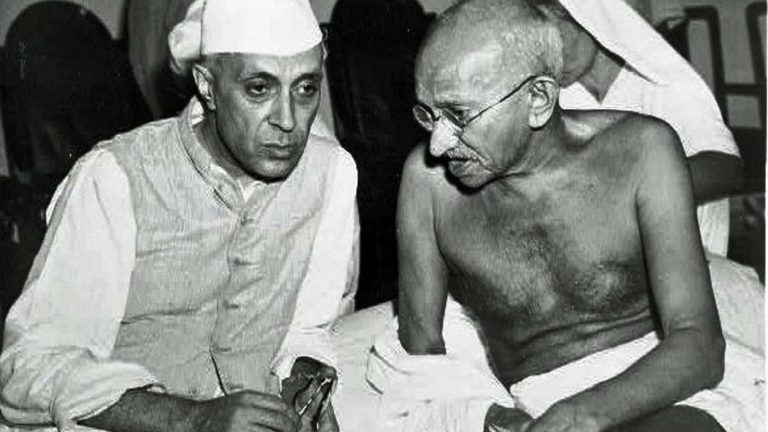
Nehru was a prominent member of the Maafi lobby who was very close to the British Raj especially with the last Viceroy Lord Mountbatten. Nehru’s proximity with Lord Mountbatten and a special favor from Mahatama Gandhi where he preferred Nehru over Sardar Vallabh Bhai Patel ignoring the mandate of 12 Pradesh Congress committees got him the PM post in interim government [16][17].

After independence, in order to usurp the legacy of freedom movement and to make the PM post feudatory forthe Nehru family, Congress eulogized only those freedom fighters who fell in the definition of ‘Moderates’ and suited the political convenience of Nehru. Congress led by Nehru deliberately adopted the systematic approach of ignoring and belittling the contribution and valor of freedom fighter belonging to different ideology. This helped in achieving larger than life image for Nehru and advancing the Congress’s electoral prospects. To ensure that his coming generations would keep on appropriating the inheritance of Freedom Fight, Nehru added ‘Gandhi’ surname to the name of her daughter Indira [18].

The Freedom fighters of national level whose contribution was brushed under carpet by congress government were Subash Chandra Bose, Sardar Vallabh bhai Patel, Bal Gangadhar Tilak, Bipin Chandra Pal, Lala Lajpat Rai, Bhagat Singh, Khudi Ram Bose, Veer Savarkar, Laxmi Sehgal, Shyam ji Krishan Verma, Batukeshwar Dutt and many more. There were no attempts by the government which was formed after independence to spread their ideas and vision.

Apart from these national level Heroes, there were other hundreds of freedom fighters who shown exemplary courage and fought the Britishers in their own region. Vasudev Balwant Phadke from Maharastra, Sushila Chain Trehan Madan Lal Dhingra, Swami Shradanand and Kartar Singh Sarabha from Punjab, Kumwar Basawon Singh from Bihar, Titumir and Matangini Hazra from Bengal, U. Muthuramalingam Thevar and Velu Nachiyar from Tamilnadu, Dhan Singh Gujar from U.P., Karnad Sadashiva Rao from Karnataka, Rani Gaidinliu from Nagaland. This list can go on and on endlessly. When we try to find more about these freedom fighters from credible sources, we cannot find even more than few lines. 

On the day of victory of Shree Ram, who patted even a tiny squirrel for its attempts to empty the ocean which stood between him and Lanka, I sincerely request Narendra Modi led BJP government to get these unsung heroes their due credit.

In my opinion, based on birthplace, twenty of such freedom fighters should be identified from each of the current state and union territory. After the partition, birthplace of many freedom fighters now lies in Pakistan and Bangladesh; there should be provision to include them also. Then evidence based and objective research oriented project should be assigned to post doctoral scholars of various universities of India. The source of research can be archives of British Raj, Provincial government, official records of princely states, Revenue records, police diaries and intelligence gathered by special branch of that era.  

There are many passionate Indian citizens and NRIs who want to know and find out more about the unsung Heroes of Indian freedom fight but cannot do so due to lack of resources and dedicated time required for it. In India, the number of research project undertaken in field of Arts is far less than that of in field of science. To promote research projects on various unsung freedom fighter, suitable grants should be allotted by UGC for universities and research Scholars researchers undertaking these projects. 

Such projects will provide more insight about the lives, ideas, sacrifices and contributions of these freedom fighters. After knowing more about forgotten freedom fighters, Government Schemes, offices, Public spaces, Roads, Airports and civic amenities should be named after them contrary to current scenario where members of a single family have a sort of copyright on them. 

Vested political interest of one family made congress to sideline the contribution of many freedom fighters. But reason for requesting the government now to undertake this project is to get justice for unsung Heroes of freedom movement by giving them due credit for their sacrifices. This reason is much bigger than the clamor of electoral politics. 

A nation, which does not remember and respect its heroes of previous generations who had given their blood for its foundation, can never inspire the coming generations to sweat for its safety and prosperity.    

References

[1] https://ncert.nic.in/ncerts/l/hess205.pdf , page 143, Text written under heading Source-1 
[2] https://en.wikipedia.org/wiki/Early_Nationalists#cite_ref-TotalModerates2_8-0
[3] Kundra, D. N. (2012). History & Civics PART II. Goyal Brothers Prakashan. pp. 91, 93, 98–106, 111
[4] Sequeira, Dolly Ellen; Raj, S. Irudaya (2009). History & Civics. Morning Star Publishers. pp. 27, 35–41, 45. ISBN 978-8131-7033-11
[5]. Stein, Burton. A History of India. I. New Delhi: Oxford University Press. pp. 254–255. ISBN 978-0-19-565446- 2.Avoiding confrontations, the early Congress leaders were patient, moderate and conciliatory in their demands
[6]. https://en.wikipedia.org/wiki/Surat_Split , Heading – History, Line – 2. 
[7]. Stein, Burton. A History of India. I. New Delhi: Oxford University Press. pp. 254–255. ISBN 978-0-19-565446- 2.Avoiding confrontations, the early Congress leaders were patient, moderate and conciliatory in their demands
[8] https://ncert.nic.in/ncerts/l/hess205.pdf , Page 144, Heading – Source 2
[9] http://vsktelangana.org/father-of-indian-unrest-bal-gangadhar-tilak
[10]  http://indiansaga.com/history/bengal_split1.html
[11] https://shodhganga.inflibnet.ac.in/bitstream/10603/94895/10/10_chapter%206.pdf Page 184
[12] https://shodhganga.inflibnet.ac.in/bitstream/10603/94895/10/10_chapter%206.pdf
[13] https://shodhganga.inflibnet.ac.in/bitstream/10603/94895/10/10_chapter%206.pdf
[14] https://en.wikipedia.org/wiki/Subhas_Chandra_Bose#cite_note-FOOTNOTEChattopadhyay1989-91 [Chattopadhyay, Subhas Chandra (1989), Subhas Chandra Bose: man, mission, and means, Minerva Associates]
[15] https://www.gktoday.in/gk/subhash-chandra-bose-and-congress-tripuri-session-1939/
[16] https://www.tandfonline.com/doi/abs/10.1080/07075332.2014.900812?src=recsys&journalCode=rinh20
[17] https://www.sundayguardianlive.com/opinion/patel-not-nehru-prime-minister
[18] https://www.business-standard.com/article/news-ani/congress-ignored-freedom-fighters-to-promote-nehru-gandhi-family-ram-madhav-118102200054_1.html