In a shocking incident that took place in Lucknow, Uttar Pradesh today, the wife of Deputy Inspector General of Police in Uttar Pradesh police reportedly killed herself by hanging. According to reports, Pushpa Prakash, wife of UP police DIG Chandra Prakash hung herself around 11 o’clock in the morning today in Sushant Golf City area.
36-year old Pushpa Prakash was rushed to Lohia Hospital by some people. However, she was declared dead by the doctors there. Her body has been taken in custody by the police. The reason of her suicide is not yet known. No suicide note work was recovered from the scene.
DIG Prakash is a member of Hathras SIT
DIG Chandra Prakash, who is a 2004-batch IPS officer, is currently posted in Unnao. He is member of the three-member SIT headed by UP Home Secretary Bhgwan Swarup which was constituted in relation to the Hathras case. A 19-year-old Dalit girl was allegedly strangled by four men in Hathras, Uttar Pradesh. After her condition worsened, she was shifted to Delhi Hospital where she succumbed to her injuries. Prior to that, she had accused the four men of raping her.
Following her death, a lot of political mudslinging took place where politicians flocked at Hathras to score political brownie points. Eventually, a CBI inquiry has been put in place to investigate the crime.
The union finance ministry has issued the detailed guidelines for the waiver of ‘interest on interest’ for loans that was announced earlier this month. The govt had decided to waive the compound interest on loans upto Rs 2 crore for a period of six months, from March to August.
It was announced that this compound interest waiver will be applicable to all borrowers un the approved categories, regardless of whether the moratorium was availed or not, which was announced by the Reserve Bank of India for the lockdown period.
Now according to the guidelines issued by the ministry, the interest waiver will be funded by the government in the form of ex-gratia payment. According to the “Scheme for grant of ex-gratia payment of difference between compound interest and simple interest for six months to borrowers in specified loan accounts (1.3.2020 to 31.8.2020)” issued by the ministry, the following categories of loans will be eligible for this interest waiver, provided that the outstanding loan amount does not exceed Rs 2 crore.
MSME loans
Education loans
Housing loans
Consumer durable loans
Credit card dues
Automobile loans
Personal loans to professionals
Omsumption loans
The terms and conditions of the scheme include:
The guidelines say that any borrower whose aggregate of all facilities with lending institutions is more than Rs. 2 crore (sanctioned limits or outstanding amount) will not be eligible for the waiver under this scheme.
The loan should not have turned into NPA (non-performing asset) as on 29th February 2020.
The loan must be availed from a banking company, a Public Sector Bank, a Co-operative Bank, a Regional Rural Bank, an All India Financial Institution, a Non-Banking Financial Company or a Housing Finance Company. Loans from Micro Finance Institutions are also eligible, provided it is a are member of a Self-Regulatory Organisation (SRO) recognised by RBI.
This scheme is not linked with the EMI moratorium announced by RBI, the ex-gratia payment under the scheme will be made regardless whether the borrower had availed the moratorium facility or not.
For this payment, the difference between compound interest and simple interest on the loan for the period from 1 March to 31 August will be calculated, and the same amount will be credited to the account of the borrowers. The rate of interest as on 29th February will be considered for this calculation.
The amount will be credited to the accounts of eligible borrowers by 5 November 2020.
The respective lending institutions will credit the difference between simple and compound interests to the accounts of eligible borrowers. After the payments are made, the lending institutions will claim reimbursement from the central government. Such claims will have to be submitted with designated officers or cells at State Bank of India. The govt has directed the SBI to assign designated officers or cells for this purpose. These cells will function as the nodal agency under the scheme.
While calculating the interest, the outstanding loan as on 29/02/2020 will be considered, and any payment after that date will be ignored. This will ensure that the scheme will be uniform for all, regardless of whether the moratorium facility was availed or not.
Soon after taking up the post of the Mumbai police commissioner in February this year, Param Bir Singh drew flak for reinstating former ‘encounter specialist’, API Sachin Vaze in the Mumbai police force. API Vaze was suspended from the force over 16 years ago. Vaze’s suspension order was revoked by a review committee, headed by Param Bir Singh.
Vaze, facing murder charges in the 2003 custodial death case of Khwaja Yunus, had been suspended on March 3, 2004. He resigned three years later, in November 2007 after his repeated requests for reinstatement were rejected by the government.
Khwaja Yunus custodial death case
Khwaja Yunus, a 27-year-old software engineer was arrested by the Mumbai Crime Branch-CID on December 25, 2002, under the now-repealed Prevention of Terrorism Act (POTA). He was arrested along with three others in connection with a blast that took place on December 2, 2002, in Ghatkopar in Mumbai. Yunus had reportedly gone missing on January 7, 2003. The police had claimed that he had escaped from a police jeep near Lonavala while being taken to Aurangabad for investigation. Yunus’s family had moved the high court, which transferred the case to the state criminal investigation department (CID). The CID, after investigating Yunus’s disappearance, concluded it to be a case of custodial death and booked Vaze and three other officers for murder and destruction of evidence.
After Sachin Vaze was re-inducted in the Mumbai Police in June this year, merely 4 months after Param Bir Singh took up the post of the Mumbai CP, Khwaja Yunus’s mother Asiya Begum had reportedly filed contempt pleas in the Bombay High Court against Mumbai police commissioner Param Bir Singh and the then additional director general of police (current principal secretary (special) home department) Amitabh Gupta. She accused Param Bir Singh and Gupta of reinstating the police officer guilty of killing her son while in custody.
Former ‘encounter specialists’ Sachin Vaze and Pradeep Sharma joined Shiv Sena
After his resignation, Vaze had joined Shiv Sena. Another officer Pradeep Sharma, who was also a part of the ‘encounter squad’ with Sachin Vaze, also joined the Shiv Sena later. Sharma was posted at the Anti-Extortion Cell of Thane Police by the then Thane police commissioner Param Bir Singh.
Sharma’s career had nosedived in August 2008 after the state government dismissed him from service for his alleged links with the underworld mafia Dawood Ibrahim’s D-company. He, however, redeemed himself on May 7, 2009, when the Maharashtra Administrative Tribunal (MAT) ordered his reinstatement, by stating that his dismissal was unsustainable under the law.
Sharma was once again in the dock when was arrested along 21 others on January 8, 2010, in connection with the fake encounter case of gangster Ramnarayan Gupta alias Lakhan Bhaiyya. On July 5, 2013, Sharma got a new lease of life, as a Mumbai court acquitted him in in that fake encounter case. He was reinstated in the force in September 2017.
After resigning from the force, Sharma had also reportedly joined Shiv Sena and had unsuccessfully contested the state Assembly elections in 2019 on the Shiv Sena ticket from Nallasopara.
In fact, some reports suggest that the proximity these suspended officers shared with Param Bir Singh and with the Shiv Sena has played an instrumental role in reshaping their almost concluded careers.
Mumbai Commissioner of Police Param Bir Singh
Mumbai police commissioner Param Bir Singh has recently been bagging the headline due to a series of his inexplicable actions, especially against the Republic Media Network. People have been accusing him for misusing of state-machinery for personal agenda and record-setting.
But being under the spotlight is nothing new for the 1988-batch IPS officer, one of the last from the 1990s ‘encounter specialists’ era who is still in service. Be it the questions raised by the controversial 2019 “clean chit” to Deputy Chief Minister Ajit Pawar in the high-profile irrigation scam that dates back to the Congress-NCP government’s tenure from 1999-2014 or be it accusations of not taking on the terrorists during the 26/11 Mumbai terror attacks, falsely framing the co-owner of Provogue, Salil Chaturvedi, in a drug case in 2005 or torturing Sadhvi Pragya in custody for ‘Hindu terror bogey’, Param Bir Singh has had an extremely controversial past.
In the run-up to the 2020 US Presidential elections, video streaming platform YouTube is under shortage of advertising space, reports Bloomberg.
Political parties have invested massively in their YouTube campaign to lure the voters. However, the video streaming platform is struggling to find slots to put the ads before the right target audience. This is despite Youtube’s capacity to host endless videos on its platform. The situation is worse in ‘critical swing states’, where the shortage of advertising space has caused prices to double. Youtube, which is owned by Google, had earlier seen a fall in its revenue but the election season has made business flourish for the video streaming platform.
Media Director of Lockwood Strategy Lab (Democratic political ad firm), Cat Stern remarked, “There’s a crunch. All political advertisers are buying in the same states, to similar audiences.” She compared the commercial competition to that of Black Friday and Cyber Monday. “The reserves tend to be gobbled up by well-funded campaigns,” stated Reid Vineis, VP at Majority Strategies (Republican political ad firm).
Fierce competition for ad space on Youtube
The brutal competition on Youtube for political ads, coupled with soaring prices, has forced small campaigners to look for other advertising platforms such as Hulu and Roku Inc. Political ad buyers are exploiting the fact that Youtube viewership has shot up amidst the pandemic. They are also using Youtube’s non-skippable ads to their advantage. Besides, Youtube also sells ads in advance that are placed strategically over the most popular videos.
The increased political ads have prompted a “code yellow” on Google’s engineering staff – an internal label that assigns more urgency to certain projects. YouTube has said that it reviews every political ad more closely to meet its policy standards, in a bid to curb misinformation.
Youtube campaign in critical swing states
Reportedly, the Youtube campaign is even more fierce in States such as Iowa that has historically witnessed tight polling. Political ads are often sold out, which in turn has limited the ad campaigns towards the end of the election cycle. While discussing about the ad space crisis, Flex Point Media (Republican political consultancy) co-founder Tim Cameron stated, “A lot of late money that’s coming on board — it’s difficult to find anywhere to put it.” As per reports, Google has sold over $139 million in political ads in September alone. Contrary to conventional norms of funding political campaigns on TV, Youtube has gained prominence as an advertising medium.
In an editorial piece on Shiv Sena mouthpiece Saamana, the party brazenly peddled lies to criticise the BJP for its announcement of providing free vaccine of COVID-19 to the residents of Bihar as one of its promises ahead of the state assembly elections. Hitting out at the BJP, the Saamana editorial alleged that the vaccine will be available only for the residents of Bihar and questioned the central government if the rest of the states in the country are in Pakistan for not receiving the vaccine.
Shiv Sena alleges other states in the country won’t be receiving COVID-19 vaccine
“What exactly is the policy of the BJP? The Prime Minister promised that caste, religion, province, politics would not factor in the vaccine distribution. But now the BJP leaders have assumed a strange role ahead of the Bihar assembly elections. They are offering free vaccine to the residents of Bihar. The citizens in the rest of the states do not live in Pakistan,” Shiv Sena said in its scathing Saamana article while noting that the polls will be the first full-fledged elections in the country amidst the ongoing pandemic.
It further asked if the non-BJP ruled states in the country should ask Russian President Vladimir Putin for securing vaccines for their citizens for COVID-19.
Are other states not going to receive the COVID-19 vaccine as alleged in Saamana?
The Union Finance Minister Nirmala Sitharaman on Thursday while releasing the BJP manifesto in Bihar for upcoming elections said that the BJP promises free coronavirus vaccines in Bihar, whenever the vaccine is made available. The Union Minister did not explicitly mention that only the residents of Bihar will be eligible for receiving the vaccine if and when it will be released, and certainly did not say that other states won’t get the vaccine.
However, trolls and Congress-supporting ‘online activists’ summoned their fertile imagination to attack the BJP and the Union Minister for the announcement of providing the state residents with a vaccine to one of the most contagious infections without charging a dime for it. Several of them deemed the government’s move of granting free vaccinations to COVID-19 as ‘cruel’. Other detractors sowed confusion by wondering if the vaccine will be made available to other states or not.
Rolling along with the insinuations peddled by internet trolls and journalists harbouring pathological hatred for the BJP, Saamana published an article suggesting that the vaccines won’t be available to other states of the country.
All states will be provided with vaccines and it will be there decision to give free vaccines or charge for it
This myth raging around the vaccine being made available only for Bihar was demolished by BJP IT cell head Amit Malviya, who issued a clarification about the BJP poll promise after half-truths and distortions started doing the rounds on the social media.
BJP’s manifesto promises free Covid vaccine. Like all programs, center will provide vaccines to states at a nominal rate. It is for the state Govts to decide if they want to give it free or otherwise. Health being a state subject, Bihar BJP has decided to give it free. Simple.
He asserted that vaccination is a state subject and explained that like all other immunisation programmes, the Centre will provide vaccines to states at a nominal rate. This will include BJP-ruled and non-BJP ruled states. Then it is up to the states to charge for vaccines or not. Health is a state subject and should BJP come to power in Bihar, they have promised to make the vaccine free. Similarly, non-BJP ruled states like Delhi, Maharashtra, West Bengal can choose to either make vaccines free for all or charge its citizens for the same.
In essence, it will be the individual state’s remit to provide the vaccination for free to its citizens or charge an amount for it. Bihar is not getting special treatment from Centre ahead of elections. Centre will give the vaccine, whenever it is developed, to all states and the state governments will decide whether to make it free or charge people for the same.
Internet is full of all kinds of outlandish things that keep going viral every other day. This time it is a bizarre song about the Indian flatbread Papadum or papad that has sent the netizens in a frenzy. The video of the song named ‘papadam’ features an Indian woman and four foreigners singing and dancing to the weird song holding papads in their hands. Take a look at the song here:
The song has triggered negative reactions from people on social media who criticised the song. Social media users have accused the song of being insensitive towards Indian culture, racist, and cultural stereotyping. One of the Twitter users condemned the song saying this was not the representation she wanted.
Apart from the bizarre lyrics of the song that had just one word, ‘papadum’, what drew the attention of people was the Indian lady in the video of the song who was not lip-syncing at all and kept grinning all through the video without blinking her eyes.
I’m a tiny bit confused as to why the Indian lady doesn’t sing? That’s the part that’s throwing me.
People wondered whether she was uncomfortable doing the video or the expressions were deliberate to make her look ‘funny’.
Thanks @AnandWrites. I now have to spend my day trying to figure out why the only South Asian in the video is also the only person not singing along while also trying to figure out whether I’m being made fun or or awkwardly embraced. All while I’m trying to unsee this video.
The songwriter later clarified that the Indian was woman was indeed not comfortable singing the song. He said that in the intro of the song, lady brings the papadum and then the they all dance.
She wasn’t comfortable singing,but there was an intro where she brought us food and talked of dance.
The song was apparently created in 2014 by an Australian musician named Anthony Donald Joseph Field who is a member of a children’s music group called the Wiggles.
Al, I wrote the song, and directed the clip in 2014 (which was meant as a celebration). It was not my intention to be culturally insensitive to the Indian community, or to add value to ethnic stereotyping. Apologies .
After the backlash from the people on the song, Field apologised saying that he did not intend to be culturally insensitive to the Indian community or add value to ethnic stereotyping. He said that the song was meant as a celebration.
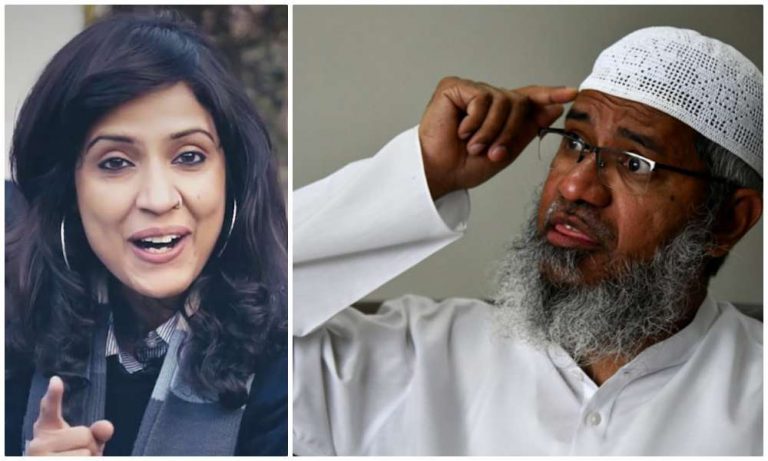
A video featuring Radio Mirchi RJ Sayema is doing rounds on the internet in which she was seen normalising anti-Hindu bigotry by legitimising the usage of radical Islamic terms as ‘Kafir’ and ‘Jihad’.
In a video, titled ‘Urdu Ki Paathshala’, the self-proclaimed Urdu expert RJ Sayema explains the ‘real meaning’ of Islamic concepts of ‘Kafir’ and ‘Jihad’. According to Sayema, if one googles the word ‘Kafir’, it would throw up a definition which people are normally aware of. However, as per the ‘Urdu expert’ Sayema, Google picks up the ‘most-used’ definition instead of giving a ‘real’ one.
So, according to Sayema, one should pick up a dictionary to understand the real meaning of the word ‘Kafir’. Sayema, interpreting the definition of Kafir from a dictionary, says the word ‘Kafir’ originates from another word ‘Kufr’, which meant ‘to hide/conceal’. However, Sayema conveniently forgets how the Quran, holy book for Muslims, prescribes severe punishment for ‘Kafirs’.
Sayema continues to claim that, according to Islam, the word ‘Kafir’ meant that the person who tries to hide the religious teachings of ‘God’. “Someone who tries to hide the makers of us and the one who hides the truth is a ‘Kafir’,” says Islamist Sayema as she reads out a poem narrating the ‘true meaning’ of ‘Kafir’.
So, any individual who is a ‘non-believer’ and tries to conceal the teachings of the ‘God’ (including Bhagwan, she mentions) is a ‘Kafir’, says Sayema. It should be remembered that as per the Holy Quran, repeated usage of ‘God’ by Sayema in her videos is nothing but Allah. In fact, anyone who worships an idol of gods or goddesses, is a ‘Kafir’. Thereby, by that logic, all Hindus are ‘Kafirs’.
Jihad means ‘struggle’, says Sayema
Next up, Sayema tries to explain the ‘real meaning’ of another Islamic concept of ‘Jihad’. Citing that the Islamic terrorists have demeaned the term ‘Jihad’, Sayema goes on to claim that not even five per cent of humanity knew the real meaning of the word ‘Jihad’. The Urdu expert Sayema then passionately claims that the word ‘Jihad’ never meant a ‘holy war’. As per Sayema, the word ‘Jihad’ means “to struggle”.
In an attempt to normalise the usage of such inciting words, RJ Sayema goes in length to find ways to explain how the term ‘Jihad’ and “Kafir’ never meant any bad to the ‘non-believers’ or non-Muslims.
RJ Sayema, in her video, kept on claiming that ‘Jihad’ never meant ‘terrorism’ but a ‘struggle’. Interestingly, Sayema never cites the sources where such concepts are defined as such, as claimed by Sayema in her video.
Radio Mirchi RJ Sayema finds space with radical preacher Zakir Naik
Interestingly, these misleading videos are now being shared across Islamic channels on YouTube in an attempt to distort the real meanings of Islamic terms. A YouTube channel – The Muslim Guide, which telecast videos of radical Islamic terror sympathisers such as Zakir Naik, has uploaded RJ Sayema’s video on its channel.
The video was first uploaded by RJ Sayema in ‘Urdu ki Pathshala’ series, a show in which she claims to explain the real meaning of Urdu words. The same was uploaded by The Muslim Guide about five months back on their own channel.
RJ Sayema’s videos part of Islamic propaganda on Youtube
In fact, the connotations of ‘Kafir’ and ‘Jihad’ in Islam is completely different from the understanding of RJ Sayema. If one carefully analyses the Islamic scriptures, the usage of ‘Kafir’ can be found in multiple instances.
What is ‘Kafir’ and ‘Jihad’ then ?
According to New Age Islam, an Islamic reformist organization, Quran says, “The word Kufr means to reject faith in God, God’s signs, the prophets, the Holy Scriptures and the Day of Judgment. One who does not have faith in the unity of God and does not have faith also in other sacred signs of God is a Kafir”.
Further, the Quran says, “One who rejects faith in God or does not have faith in God is called a Kafir. A Kafir may also be an idolater who worships gods and goddesses”.
According to the Quran, they are those who have gone astray. There are about 350 verses about Kufr and Kafir. In the majority of the verses, Kufr is non-belief in one God and prophets of God and in Holy Scriptures. Kufr is also the worship of idols and gods and goddesses other than God. In some of the verses, the word Kufr and its variations are used to mean ingratitude for the favours of God. It is natural that if someone does not recognize God or does not have faith in God, he will also not acknowledge God’s favours but will attribute the favours to his gods and goddesses.”
The words Kufr and Kafirun and Kafirin and its other variations are used for non-belief in Allah, the Holy Scriptures of Islam, its messengers and the Day of Judgment. These are variations of the word Kafir.
We had earlier listed numerous quotes from the Quran so that readers can understand what the word Kafir and its variations mean. Here is a list of verses cited by various Islamic scriptures which defines and helps to understand the real meaning of ‘Kafir’.
In fact, RJ Sayema herself agrees to the point all non-Muslims are ‘Kafirs’ when she points out that anybody who is not willing to accept the teaching of ‘God’ (Allah), he/she is termed as a non-believer or a ‘Kafir’.
With Islam being a ‘monotheistic’ religion, the concepts of ‘Tawheed’ clearly explains how one is a ‘Kafir’ or ‘infidel’ if he does not believe in the concepts of one God ‘Allah’. According to the concept of ‘Tawheed’ in Islam, there is no ‘God’ other than Allah and people who do not accept the concept of ‘Tawheed’ are essentially non-believers or ‘Kafirs’. Hence, all non-Muslims are ‘Kafirs’, as per Islamic principles.
The other term ‘Jihad’ appears in the Quran in different contexts and can include various forms of ‘struggle’, including ‘armed struggle’. Jihad or Islamic holy war is a fundamental foreign policy concept in Islam. In the specific context of Islamic law, ‘Jihad’ generally signifies an armed struggle against ‘non-believers’, meaning ‘Kafirs’.
The Islamic concepts of ‘Jihad’ and “Kafir’, which is being normalised by the likes of Sayema, has been used by several radical Islamic terror groups to wage a ‘holy war’ against the ‘non-believers’. Just a few months ago, it was very much evident in the country when Islamists had descended on the streets of the country during the anti-CAA protestors and had shouted slogans like ‘Kafiron se Azadi‘ (freedom from Kafirs).
If Sayema believes that ‘Kafir’ had no negative connotations, she should also perhaps explain to her viewers on why were anti-CAA protesters were seeking independence from these ‘Kafirs’ and what sort of ‘Azadi’, these mobs led by Muslims wanted ‘freedom’ from so-called ‘Kafirs’.
RJ Sayema’s history of normalising hatred
RJ Sayema, an ardent Aam Aadmi Party supporter, was in the middle of a controversy last year after she had incited a mob to protest outside the Delhi Police headquarters. She incited people on Twitter to gather in large mobs outside the Delhi Police headquarters, which subsequently turned into violent protests.
RJ Sayema’s tweet inciting mob during anti-CAA protests
Delhi Police had to resort to lathi-charge after protestors at Jamia Nagar had set buses on fire and raised communal slogans. She later clarified that the mob needs to gather outside the old headquarters of Delhi Police at the ITO.
Recently, the Delhi High Court had issued a notice to the Union government in connection with the impleadment application seeking FIR against rabble-rousers like RJ Sayema, Swara Bhaskar under appropriate IPCs & IT Act and also issued directions to NIA to conduct an investigation into their alleged role in the anti-Hindu riots that was unleashed by Muslim mobs in Delhi in February.
With the subject of freedom of speech being in the forefront after the consistent attack on Republic TV by Maharashtra government, a Delhi High Court order earlier this year raises several questions in this matter. On July 30, the High Court passed an order asking satire site the Fauxy to take down a satire video, which itself was based on a satire article by a different website, saying that the video had infringed upon the trademark of beer brand Budweiser, and tarnished its image. There are several issues in the order, especially the arguments of the beer maker, which seems to have been accepted by the court for the time being.
Background of the case
On 8 May 2020, satire website foolishhumor published an article claiming that one employee of Budweiser has acknowledged that he has peeing into beer tanks for 12 years. The satire article said that the employee wanted to clear up any doubt about taste of Budweiser, and stated he’s been doing this for more than a decade just before bottling.
This report was widely shared on social media, and it suddenly went viral on 2nd July in India. The viral content was a screenshot of the title of the foolishhumor, which didn’t indicate that it was a satire. Some people believed it to be true, others figured out it was fake, but it was widely shared. But as happens with such viral content, people found out the source of the screenshot and found out that it was fake. Soon, it was fact-checked by both fact-checking sites and mainstream media houses, which clarified that the news was not true and it was satire.
The satire article by foolishhumor didn’t come out of nowhere, it was based on a widespread belief that Budweiser beer does not taste good. A large number of people criticise the taste of the beer. A 2016 article on Washington Post says “Budweiser is a tasteless concoction that you sometimes order because the only alternative is drinking NOTHING, and that would be unbearable.” Author Alexandra Petri then went on to add, “The most important difference between Budweiser and chilled urine is that I hear some people on the Internet drink the latter on purpose for fun.”
Budweiser beer is regularly added in the list of beers with worst taste, and the article by foolishhumor sought to explain its perceived bad taste, which was nothing but a joke.
Few Indian media sites, like the Hans India, fell for the satire and published a report titled ‘you will stop drinking Budweiser beer after reading this’. The report reproduced the content of the foolishhumor article, failing to mention that it was a satire website. Hans India later updated the article to mention that source of their report was satire.
Screenshot of The Hans India Report
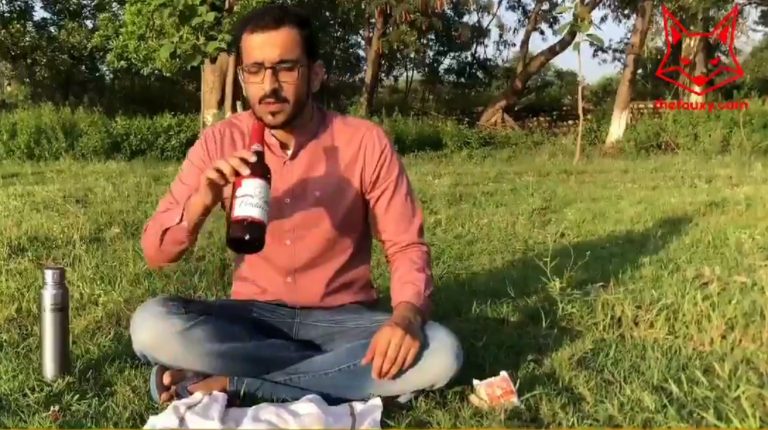
After the article went viral, Indian satire website The Fauxy did a satire video based on the same. In the video made in the format of a news report, actress Apala Bisht played the role of a news anchor saying that the Fauxy reporter Rishav Sharma did a fact check on the reports that Budweiser beer contains urine. It then shows Rishav Sharma drinking Budweiser beer, and ‘urine’ from a bottle. After drinking both, he concludes that the report is fake and the beer does not contain urine, because the beer tastes worse than urine.
The trailer of the video can be seen in the tweet above, while the linked YouTube video is no longer available after the court order.
The arguments against The Fauxy
Although the satire video concluded that the beer does not contain urine, while continuing with the theme that the beer does not taste good, the company was not happy with it, and they filed a case against it at the Delhi High Court. The company listed actors in the video Apala Bisht and Rishav Sharma, the owners of Fauxy, Twitter and Youtube as defendants in the case.
While it is not known whether the company filed any case against the original article by foolishhumor, probably not because the article is still available online, they accused the Fauxy video of trademark infringement and defamation.
Some of the claims made by the company are shocking, and actually not based on fact. They argued that the “trademark rights of the plaintiff have been infringed and its reputation tarnished by the defendants posts on social media including Twitter and YouTube which perpetrate fake news stating that the employees of the plaintiff have been urinating in the beer sold to its customers.” This is completely untrue, the Fauxy video didn’t say that Budweiser employees are urinating in the beer. In fact, the video debunked that claim, in a humorous way, while the claim was made by another satire site foolishhumor, and was reproduced by social media users and some other media houses.
Screenshot from the Delhi HC order
It is bizarre that The Fauxy was accused of making a claim that it didn’t made, and in fact had debunked that. If the company was offended by the claim, they should be gone after foolishhumor, not Fauxy.
The company also argued that the video which was uploaded on YouTube didn’t carry the disclaimer that it is a “fake news”/ fictitious report. But all videos by the portal contains a link to its website, which clearly mention that it is a satire web portal. Moreover, it is evident from the video that it was a joke, and nobody will assume it to true.
In another bizarre accusation by the company, the petition by Budweiser also actually cites media reports clarifying that the foolishhumor report was satire to claim that the reports are spreading the fake news. It quotes a news report by NDTV referring to a news item “Budweiser admits several employees have been pissing into their beer tanks for years”.
Screenshot from the Delhi HC order
The report by NDTV was titled “Budweiser Trends High On Twitter, Find Out Why”, and it clearly said that it was a fake report. The report sought to explain why Budweiser was trending on Twitter in India, and cited the reason as the foolishhumor satire article, and contained a link to the article and the title.
Therefore, NDTV didn’t spread fake news this time, they clarified Budweiser was trending due to a satire article. But shockingly Budweiser accused the controversial media house of spreading the fake news.
The company also mentioned in the plea that satire is no defence in the context of Indian law. They also stated that Twitter, YouTube and Instagram are also responsible for the video, despite it is well known that these platforms can’t decide what content is uploaded by their users.
The claim of copyright infringement
The argument by the company that the video infringes upon the trademark is also questionable, and the same Delhi High Court had ruled in favour of such parody using known trademarks in the Tata vs Greenpeace case. In that case, Tata had objected to a game released by Greenpeace titled Turtle vs Tata, where a Tata logo was depicted along with Olive Ridley Turtles. The game, released as part of a campaign against Dharma Port Project which was being developed by Tata Sons and L & T, also had reference to “Tata demons”. The Tata group had filed a case against the game, alleging copyright infringement.
The Delhi High Court had refused to grant an injunction against Greenpeace, citing the “Bonnard rule”. Delhi High Court had held that the use of the mark by Greenpeace was not in the course of trade, since it was not in the same line of business as Tata. Further, the usage of the trademark by Greenpeace was merely a promotional activity to draw consumer and public interest to its activity, hence it was merely denominative in nature. Thus, it amounted to fair use in Trade Mark law.
The same argument applies to the Fauxy video, as it is not in the same business as Anhueser Busch Llc, and it was not using the video to promote a beer brand. Moreover, it was referring to an already widespread claim based on a satire article. Therefore, use of the Budweiser brand in the video should come under fair use, and should not be considered a trademark infringement.
Despite such flawed arguments by Anhueser Busch Llc, the company that owns the Budweiser brand, Delhi High Court accepted their petition and passed an interim order directing that the video should be taken down from YouTube, Twitter and any other online platform. The court has issued summons to the actors in the video, Fauxy, Twitter, YouTube and Instagram to submit written statements and affidavits. 14th December has been set as the last date to submit the documents at the court.
A 25-year-old man, who worked as a caretaker at a house in Pune, was on the run for about a month after stealing gold ornaments worth Rs 6.2 lakhs from a bungalow in New Sangvi, was arrested by the police on Monday after the accused was tricked into a romantic relationship through a social media account made in the name of a woman. The man agreed for a rendezvous to meet the “woman” at Kalpataru chowk, where police were waiting to arrest him.
Sandeep Bhagwan Hande (25), the arrested man is a resident of Walhekarwadi area of Chinchwad and a native of Gangapur in Aurangabad. He was arrested under Section 380 (theft in the dwelling house, etc) of Indian Penal Code after a case was lodged against him on October 17 at Sangvi police station.
A complaint was registered by Sangita Kankaria(52), a resident of New Sangvi, with the police claiming that unidentified people stole ornaments worth Rs 6.2 lakhs and cash of Rs 40,000 from her bungalow. The complaint mentioned that the family had appointed a caretaker on September 21 but barely in four days he left the job.
Pune Police traps the thief by posing as a woman
The police traced the mobile phone location of the caretaker and established contact with him by creating a fake Facebook account in the name of a woman. He accepted the Facebook friend request and started having “romantic chats” with the woman. A few days later, the man agreed to meet the “woman” at Kalpataru chown in Pimpri-Chinchwad, where police personnel were waiting to nab him.
“Since he was approached through a female person’s profile, he assumed he was coming to meet a woman. Being unaware of the police’s plot, he came at the spot predecided for the meeting and was arrested from there,” a police official said.
24 tola gold jewellery and Rs 20,000 in cash, which collectively sums up to Rs 6,15,000 have been recovered by the police from the burglar.
Sandeep initially gave vague answers. However, he confessed to the theft as soon as police showed him the outlines. This was done by a team of Senior Inspector of Police Ranganath Unde and Inspector of Police (Crime) Ajay Bhosale.
In a shocking incident, an elderly woman from Kadangode was allegedly tied to a bed in a Coronavirus ward at the Government Medical College Hospital in Thrissur in Kerala. The 65-year old woman, identified as Kunjubheevi, had high blood pressure and was earlier undergoing treatment at a Coronavirus centre in Kuttanellur.
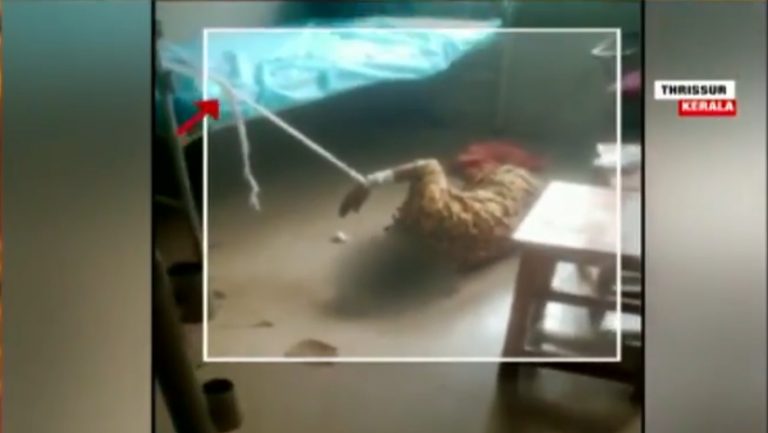
As per reports, the woman was admitted to the Government Medical College Hospital, after she was diagnosed with the Wuhan Coronavirus on October 20. The woman was allegedly tied up to prevent her from falling off the bed. Nevertheless, she fell from the bed and had injuries on her face and head. The Coronavirus-infected woman is now undergoing treatment at a private hospital and her condition is said to be stable.
Victim’s daughter-in-law barred from accompanying her
The relatives of the victim had alleged that the woman’s daughter-in-law was not allowed to accompany her, despite being Coronavirus positive. The video of the incident, which was captured by another patient, has now gone viral on social media. In the said video, the woman could be seen lying on the ground, with her hands tied to the hospital bed. In the shocking case of apathy and medical negligence, no nurses were present to attend to the elderly woman.
Elderly woman tied to the hospital bed at Thrissur Medical college in #Kerala; doctors remain indifferent. Even when she fell off the bed, there was no hospital attendant to help her out. The patient’s family has now complained to Kerala Health Minister @shailajateacherpic.twitter.com/MJjTXFpZfw
A complaint has been registered with the Human Rights Commission, DMO, and Kerala Health Minister KK Shylaja. Kerala MP TN Prathapan had written to the Health Minister, demanding action with respect to the incident. He had also complained about the lack of psycho-social services for patients at the Coronavirus ward of the hospital.