Home Blog Page 5126

Congress leader Jitu Patwari spreads fake news claiming that PM Narendra Modi is flying in a luxurious private jet: Read details

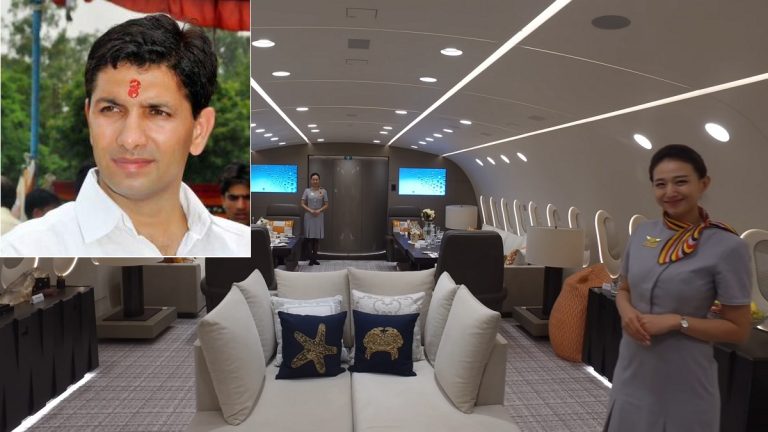
Madhya Pradesh Congress MLA Jitu Patwari resorted to spreading fake news today to criticise prime minister Narendra Modi. In a tweet posted on 1st August afternoon, the former Minister alleged that while Railways is being sold, PM Modi is travelling in a luxurious aircraft. Posting the interiors of a luxurious cabin of an aircraft, Jitu Patwari said, ‘even though the PM comes from a tea seller background, he will make India a world leader only if we give him better facilities’.
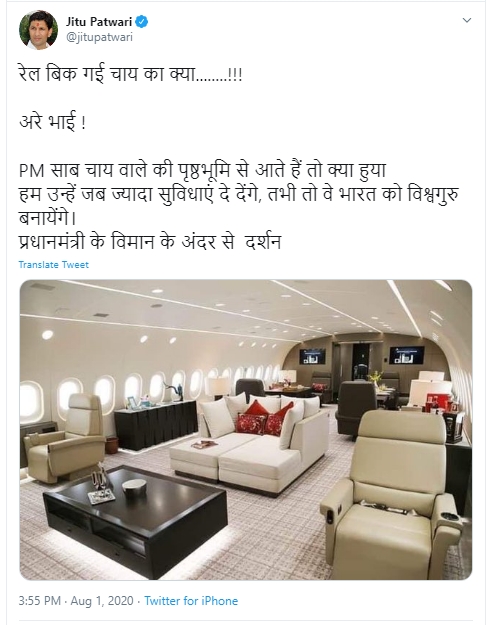
He also added, ‘a view of the interiors of the plane’, suggesting that the image shows the interiors of PM Modi’s aircraft.

Although the image shows a very luxurious looking interiors of an aircraft, a quick image search on the Internet busted the lies of the Congress leader. Because, the image that Jitu Patwari used to allege that PM Modi is flying in a luxurious plane, is actually taken from the website of Deer Jet, a chartered flight operator. The image shows the 787 Dream Jet, an Boeing 787 Dreamliner jet that has been configured as a luxurious business jet by the company. At the time of its launch in 2016, it was known as the only privately owned Boeing 787, which was not used for scheduled commercial flights.
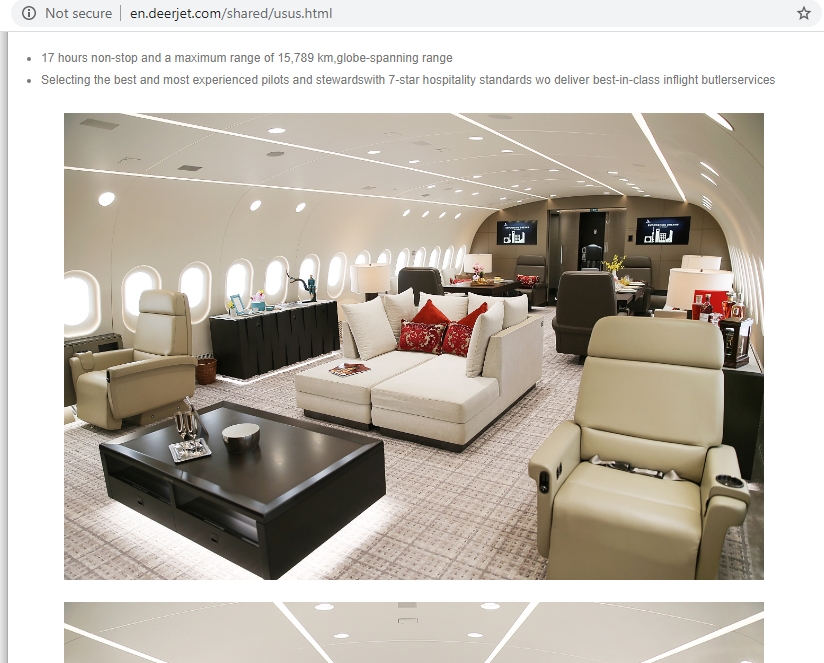
The image used by Jitu Tawari on Deer Jet website

A video of the jet shot during its display at Dubai Air show 2017 can been watched below, and it is clear that this business jet has no relation with PM Modi or India.

The Prime Minister of India currently uses a Boeing 747 operated by Air India for his long-distance international travel. For shorter distances by PM and other VVIPs, the Indian Air Force operates three Boeing Business Jets. The Air India Boeing 747 planes are known as Air India One, with the call sign AIC001, when the PM is flying.

As the Boeing 747 planes are aging, the government of India had selected the Boeing 777-300 (Extended Range) as replacement for international travel by PM, President and other VVIPs. These two are not new acquisitions, but from the excessive purchase of aircraft made for Air India during the UP government. The UPA govt had purchased much more then need number of planes for both Air India mand India Airlines, which is one of the primary reason of the current unviable stage of Air India which has been merged with Indian Airlines.

Air India had purchased 12 Boeing 777s, out of which two were chosen for VVIP services and sent back to USA to retrofitting equipment and facilities needed for such service. The planes have undergone significant modifications since then, and one of them is scheduled to be delivered later this month, while the other one will arrive in the next month. The planes will have state-of-the-art missile defence systems and Self-Protection Suites (SPS), apart from communications facilities similar to the systems available on the Air Force One, the aircraft used by American president.
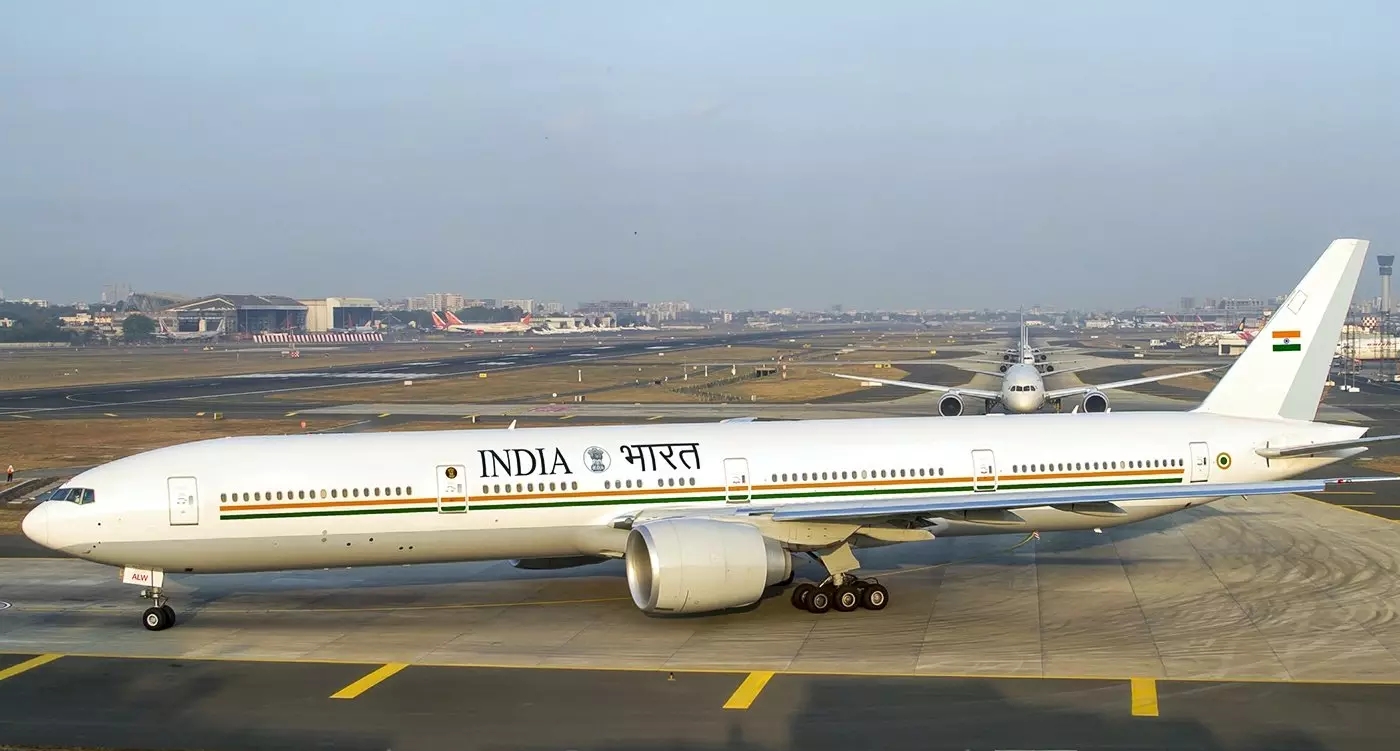
Boeing 777-300 readied as Air India One

Current Boeing 747 jets of Air India used by the PM were regular passenger jets, and that’s why they do not have such advanced facilities. The new planes are being specifically customised for VVIP travel, and as they need not carry large number of passengers like regular commercial flights, it is expected that the Boeing 777s will provide better comfort to its passengers as compared to regular commercial flights. But images of interiors of the new Air India One planes are not available yet, the image used by Jitu Patwari is not from those planes.

The claim that Railways is being sold is also completely false. The Indian Railways has decided to allow private operators to run passenger trains on its network, but that does not mean the Railways has been sold. The railway infrastructure like tracks, signalling, stations continue to be owned by Indian Railways, while private operators only run trains using them, just like private airlines and bus operators run from govt owned airports and bus depots. Private companies already run freight trains on Indian Railways network, and now that has been extended to passenger trains.
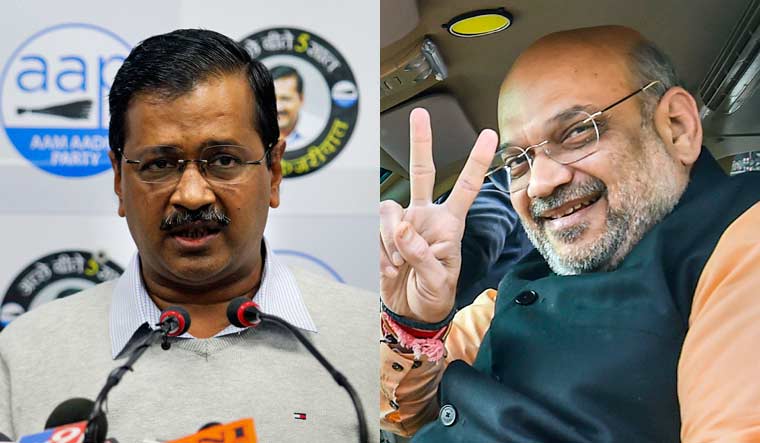
How Amit Shah saved Delhi from hitting AAP’s ‘target’ of 5.5 lakh Coronavirus cases by July 31

Here is a fact that was never widely reported. Towards the end of March this year, just as Coronavirus was making its way across India, the AAP government quietly signed up Delhi for the Center’s Ayushman Bharat program.

Until then, Kejriwal had maintained that Delhi did not need to join Ayushman Bharat because Delhi’s own system was much better.

How much better? Believe it or not, Kejriwal provided an exact figure. In a two page letter (written in Hindi) to Union Health Minister Dr. Harsh Vardhan in June 2019, Kejriwal had stated that

Delhi government’s health scheme is 10 times bigger and comprehensive than Ayushman Bharat

And yet, just as India found itself entering the jaws of a pandemic, Kejriwal abandoned his own health scheme to pick up a product that in his own words was 10 times worse.

And thus begins a tragicomic tale of a Chief Minister who loves bombast but seems bored by the actual task of governing. Which is why he is forever looking for others to pick up the slack.

But the virus is not forgiving. And in a big metropolis such as Delhi, there was no stopping it. The AAP tried all the obvious tricks. Testing too little. Hiding data on death toll. An app that gave fake info on availability of hospital beds. Blaming “outsiders” for taking up space in Delhi hospitals and trying to kick off a big public “debate” over this non-issue. This is “latkaana, atkaana, bhatkanaa” on a scale that would put even Congress to shame.

At the very least, the Chief Minister’s IIT education should have taught him that you cannot hide from an exponential curve. By mid-June, data compiled from Delhi’s municipal corporations showed that the Coronavirus death toll was at least twice the official figure from the state government.

India Today report

As Delhi clamped down on testing, the test positivity rate soared to a frightening 37% on June 13. The capital was now officially spinning out of control.

Not only was Delhi testing too little, there was a story in who it was testing. A story of class privilege and elitism. A story that is particularly cruel to the supposed “aam aadmi” votebase of the AAP.

Here is the number of tests that Delhi government had conducted by June 14, broken down by region, as compiled by The Print.

Infographic from The Print

Right away, you can see that the number of tests in posh South Delhi and New Delhi area towering over places like Shahadara, where the poor of the city live.

The test positivity rate tells a similar story of AAP’s cruelty to Delhi’s poor.

Infographic from The Print

The rate of positives in New Delhi is 22%. In South Delhi, it is 28%. Scary indeed, but surely better off than the astonishing 75% in Shahadara. In other words, the poorest parts of the city were suffering the most and getting the least number of tests.

The data leaves absolutely no room for doubt: the government of “aam aadmi” was working only for the elite.

But virus doesn’t see rich or poor. By mid-June, AAP knew it was all over. That’s when Deputy CM Manish Sisodia went public, sort of promising Delhi 5.5 lakh cases by July 31.

Article by HT

Unbelievably, Sisodia was still playing games at this time over the non-issue of reserving hospital beds for locals.

Delhi desperately needed adult supervision of its elected government. And they got it. The Prime Minister put together a team to “help” Delhi and Amit Shah stepped in.

Article by Times of India

Notice that date: June 14, 2020. And now see the magic. Here is the data compiled by India Today’s Data Intelligence Unit.

See how the number of tests in Delhi climbs rapidly as the Center steps in?

See how test positivity rate was soaring until Amit Shah stepped in? And how it began to fall immediately after?

The pattern is unmissable. Things turned around for Delhi with the Center coming in.

It is difficult to imagine how bad things could have gotten in Delhi had there not been the Center to babysit its supposedly grown Chief Minister.

But then, maybe that was Kejriwal’s master plan all along. If he makes a mess of Delhi badly enough, he knows he has Amit Shah to come in and pick up the pieces. Then, Kejriwal can do what he does best: chill out.

What an idea, Sir ji!

When NDTV wanted 1000 karsevaks to be murdered in a storm of bullets to protect the secular fabric of the country

As the much-awaited Bhoomi pujan ceremony of the Ram Mandir approaches, marking the culmination of the long-drawn battle to reclaim the abode of Lord Rama, it is worth drawing attention towards those who had wanted the police to fire bullets on the karsevaks gathered in Ayodhya, apparently, in a bid to protect the secularism of the country.

Days leading to December 6, 1992, thousands of karsevaks, harbouring the dream of getting the Ram Janmabhoomi back flocked to Ayodhya and protested against the disputed structure that symbolised centuries of Muslim tyranny and oppression. On December 6, 1992, a raft of restive karsevaks stormed the premises of the disputed structure, scaled its heights and razed to ground the buildings that were claimed by Hindus as illegal construction over the hallowed Ram Janmabhoomi. The Supreme Court had recently upheld that notion and granted the disputed site of Ayodhya to Hindu for building a magnificent Ram Mandir.

However, while the preparations for the bhoomi pujan in Ayodhya is on the anvil, it is pertinent to reflect upon an important interview of the then UP CM Kalyan Singh. Singh had become an object of scorn of the liberal establishment for ‘allowing’ the karsevaks to demolish the controversial structure and seemingly cause a dent in the pluralism of the country. In the aftermath of the demolition, Singh’s government was sacked and President’s rule was imposed in Uttar Pradesh.

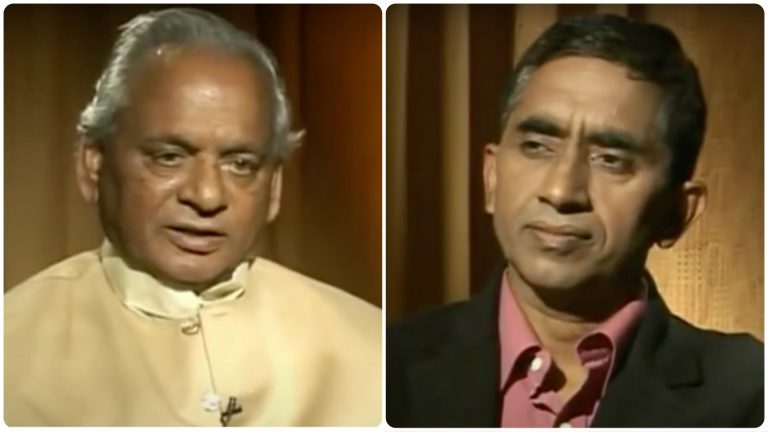
Years later, an NDTV journalist interviewing Kalyan Singh raised aspersions on the wisdom of the former UP CM, asking him if it was wise to save lives of thousands of karsevaks at the expense of “dividing the country”.

In an interview with NDTV in 2009, Kalyan Singh said, “Lakhs of karsevaks were present at the site but I had given explicit orders to the police that no bullets will be fired at them. He elaborated that doing otherwise would have led to the death of 1000s of people. He emphasised, “If I had allowed it to happen, thousands of people would have died from bullets and stampede, and the structure still wouldn’t have survived.”

However, Kalyan Singh’s unapologetic response possibly raised the hackles of the NDTV reporter who questioned Singh’s decision of not letting police fire bullets on the karsevaks gathered around the Babri structure. “You decided to divide crores of people for saving lives of just a few thousands of karsevaks?,” the NDTV journalist asked.

NDTV anchor suggests Kalyan Singh should have passed orders to slaughter 1000s of Hindus

The question posed by the NDTV reporter revealed that the concept of secularism was more important to him than the value of thousands of human lives. It exemplifies the partisanship that NDTV has come to be associated with, where cosseting a particular community is a matter of utmost consideration, even if that entails the loss of thousands of Hindu lives. The NDTV anchor felt no compunction in suggesting former UP CM Kalyan Singh to have ordered deaths of a few thousand Hindus so that the Muslim community can be appeased.

Calling out the anchor’s fearmongering, Singh sharply noted that even after 17 years of the incident, the demolition had not divided the people as claimed by the journalist. He further added that he has no regret, remorse, or guilt for the demolition of the controversial structure.

“I am not sorry for the demolition of the structure. Nor do I feel any contrition for it. No regrets, no repentance, no sorrow, no grief. Following the demolition of the controversial structure, many regard the event as a matter of national shame but I say that it is a matter of national pride,” Singh added.

Kalyan Singh likely to visit Bhoomi pujan ceremony of Ram Temple

Singh, 88, in his recent interview, claimed that he is proud of his decision to not allow the police to open fire on the karsevaks in Ayodhya on December 6, 1992. Singh added that it was the demolition of the disputed structure that paved the way for the Ram Temple bhoomi pujan scheduled on August 5. Singh further added that he wished to see Ram Mandir come up in Ayodhya before his death and take rebirth in the temple town once again.

Singh, who also served as the Governor of Rajasthan, said that the construction of a Ram Mandir in Ayodhya would lead to more tourism and ensure the development of the city. Singh is expected to reach Ayodhya on August 4, a day before the bhoomi pujan ceremony is scheduled to be held.

In a freewheeling interview, Singh reiterated his stance, saying that he had no remorse over the demolition of the structure in Ayodhya. He cited Mir Baqi’s demolition of Ram Temple in 1528 as an instance by a Muslim invader trying to humiliate the local Hindu population.

“May be it was destined to happen under my rule. Had there been no demolition, probably the courts too would have ordered status quo. So, it was the demolition that actually has paved the way for the August 5 bhoomi pujan and naturally, I am delighted,” Singh said.

Women-led Self Help Groups: Frontline workers in the fight against COVID-19

Recently, Prime Minister Modi held a discussion with different banking and NBFC stakeholders. The focus of the discussion revolved around the crucial role financial and banking system play in supporting India’s growth. Among other issues, PM Modi emphasized that banks and NBFCs should encourage the small entrepreneurs, SHGs and farmers to take loans. The mention of SHGs by PM Modi holds significance here.

In the last few years, this women-led movement has become an institution for women empowerment and economic prosperity of rural India. Despite the sheer size of SHGs and the impact, they have on rural economies, their contributions have not been highlighted well. But, these SHGs have shown how they can be a substantial force of rural growth and an important movement to address bigger challenges facing the community through their phenomenal work during COVID pandemic. 

The Self-Help Group movement has helped millions of women of rural India break free from subdued life and become financially independent ever since its inception in 1992. Their phenomenal growth from a small group of 225 to 6.3 million SHGs comprising 69 million women today is a testament to their success. These SHGs have played a crucial role in the social and economic empowerment among rural women and have fostered the spirit of entrepreneurship and financial independence. They have further played a crucial role in instilling among rural women a social and political consciousness thereby gaining a voice which is now heard across all groups of the society.

The impact of this community has been well demonstrated in recent months, ever since the pandemic began its spread. In the fight against this deadly disease, the SHGs have taken up the tasks of providing assistance in numerous ways and alleviated the sufferings of many in their communities. 

SHGs have launched a number of initiatives at the local level since March this year. When the pandemic began, the Indian manufacturers were not able to meet the demand for masks and other protective materials. The SHGs stepped in to fill this demand. As per a report by the ministry of rural development, more than 132 lakh masks were produced by 14,522 SHGs involving 65,936 members in 399 districts (across 24 states) from March 15th to March 30th. In April, 20,000 SHGs managed to produce more than 19 million masks across 27 states (which is in about 90% of India’s districts). By May, this increased to over two lakh women SHGs producing more than 10 crore masks. The masks produced by SHGs were distributed among ASHA workers, ANM and hospital workers and other front line COVID warriors at free of cost. 

Their efforts also included 1 lakh litres of sanitizer and 50,000 litres of handwash; with sanitiser production increasing to 3 lakh litres by May. Again, to meet the demand for PPE kits, the SHGs swung into action. Over 4000 women belonging to SHGs produced more than 2 lakh PPE kits across 12 states from March to May. 

SHGs went on to play a key role in tackling the problems caused due to the restriction of mobility and the loss of livelihoods, especially of the migrant population.The largest of them, – the Kudumbashree network of Kerala comprising  4.4 million womenacross 300,000 SHGs,have been instrumental in running 1300 community kitchens in their state’s panchayats and municipalities. Their efforts continued to assist the stranded and the vulnerable; whilst also delivering food to the quarantined and the bedridden. Kudumbshree spear headed the government’s ‘Break the Chain’ campaign by educating people on social distancing and washing of hands at regular intervals through posters, phone messages and weekly meetings. These women SHGs also started a floating supermarket (in a boat) for delivering essential supplies to the Kainakary residents in Alappuzha.

The SHGs also stepped in to spread awareness on COVID-19 and busting the myths that came along with the disease. The Jeevikas of Bihar conducted door-to-door awareness drives on social distancing, good health, and hygiene. Jeevikas belonging to 1.4 lakh SHGs provided food supplies to the elderly and the quarantined. They used the Mobile-Vaani platform to make public voice messages on safety measures around COVID-19.

Through their vast network of WhatsApp groups, comprising of 190,000 WhatsApp groups with 2.2 million members, the SHGs proactively worked towards countering misinformation about COVID-19.

Since the beginning of the pandemic, the SHGs have done phenomenal work in lending a hand by not just stitching masks and preparing sanitizers, but also in ensuring livelihood to the most marginalized groups. The work done by the SHGs during the pandemic is worthy of being a template for optimal community-led response in times of crisis. 

(The article is written by Akriti Tyagi, who is a lawyer by education but a writer by disposition. Keen on all things historical, cultural and social. An avid traveller and a voracious reader)

Ayodhya Diaries: When Nehru tried to impose his ‘Aurangzeb diktat’, an ICS officer KK Nair refused to budge

The Ram Janmabhoomi movement is the manifestation of the relentless pursuit and perseverance of leaders who kept everything at stake to ensure that a majestic Ram Mandir is built. When India celebrates Bhoomi Pujan on August 5, it will mark the conclusion of a long-standing struggle by generations of Hindus in rendering justice to Lord Ram in His own country. Despite political pressure and illustrious career at stake, one such man decided to forego everything to ensure that the dream of a magnificent Ram Mandir comes alive.

The man was Kandangalathil Karunakaran Nair, abbreviated as KK Nair. Born in Kerala on September 11, 1907, the erstwhile Indian Civil Service officer was the frontrunner in safeguarding the Fundamental right to worship of Hindus even before India became a Republic. His life began from the village of Kuttanad in Alappuzha in Kerala. After completing his education in the State, Nair went to England for higher studies and cleared the Indian Civil Service (ICS) exam at the age of 21. He was then posted as the Deputy Commissioner cum District Magistrate of Faizabad, the earlier name of Ayodhya, on June 1, 1949.

Demand for a Ram Mandir left Nehru irked

His endeavour in Ayodhya eventually became the highlight of his career. After receiving a letter from the State government of Uttar Pradesh to do a report on the Ram Janmabhoomi issue, Nair sent his assistant Guru Datt Singh to submit a report on the same. On October 10, 1949, Singh, in his report, recommended the construction of a majestic Ram temple at the site. Singh had visited the site and observed that both Hindus and Muslims performed their ceremonies, side by side.

He wrote, “Hindu public has put in this application with a view to erecting a decent and Vishal temple instead of the small one which exists at present. There is nothing on the way and permission can be given as the Hindu population is very keen to have a nice temple at the place where Bhagwan Ram Chandra Ji was born. The land where the temple is to be erected is of Nazul (government land)”.

KK Nair refused to bow down to Nehru

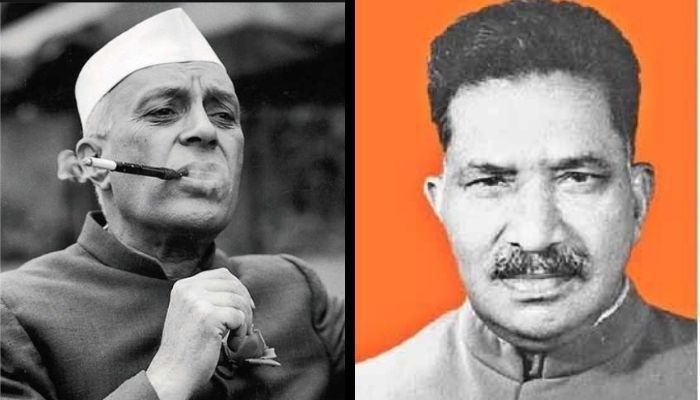
However, on the directions of an irked Prime Minister Jawaharlal Nehru, the Chief Minister of Uttar Pradesh Govind Vallabh Pant tried to evict the Hindus from the Ram Mandir. However, the KK Nair refused to budge and decided not to implement the order. He highlighted that the Hindus were performing Puja at the site and forcing them to leave would stir riots. He also refused to remove the idols from the site. Nair was eventually suspended by Govind Vallabh Pant from his designation as the District Magistrate. 

However, he moved the court against the then Congress government and secured a judgment in his favour.  On being reinstated as an ICS officer yet again, Nair bid adieu to civil services. He took the decision in the wake of the growing resentment against Nehru.  Nair refused to bow down to the ‘Aurangzebi diktat‘ of Nehru. His open defiance of the then Prime Minister and his firm resolve to ensure justice to the millions of Hindus earned him a place in the hearts of people. As a gesture of endearment, he was called as ‘Nair Sahab’ by people.

KK Nair strives for Ram Mandir politically

Following his resignation from ICS, he started practising as a lawyer in the Allahabad High Court. To strive for the cause of building a Ram Mandir in Ayodhya, KK Nair and his family joined the Jan Sangh. His wife Shakuntala Nair contested elections and became a member of the Uttar Pradesh Legislative Assembly in 1952.

Both Nair and his wife eventually became the members of the Lok Sabha in 1962. Interestingly, their driver was also elected as a member of the Legislative Assembly of Uttar Pradesh. Reportedly, Nair and his wife were arrested during the dark days of the National emergency that was proclaimed by President Fakhruddin Ali Ahmed on the behest of Prime Minister Indira Gandhi.

KK Nair continues to inspire a generation of Hindus

KK Nair passed away on September 7, 1977. He dedicated his life to Jan Sangh and the cause of Ram Mandir. Although he was a celebrated figure in the state of Uttar Pradesh, he received a lot of recognition in his home state of Kerala. Reportedly, the nationalists in the state of Kerala have decided to build a memorial on the land donated by Vishva Hindu Parishad in his village.  A Trust by the name of KK Nair Memorial Charitable Trust has also been set up. Besides welfare activities, the trust provides training for civil service aspirants and scholarships for students.

Ram Janmabhoomi movement spearheaded by KK Nair was later continued by tall leaders like of LK Advani, Ashok Kumar, Kalyan Singh, Vinay Katiyar, and Uma Bharti. Following the historic judgment by the supreme court in 2019, a trust has been constituted to build the Majestic Ram Mandir at the same site for which Nair espoused his career. Although KK Nair is no more in this mortal world, yet his contribution to the movement will be cherished for years to come.

Former Samajwadi Party leader Amar Singh dies at the age of 64

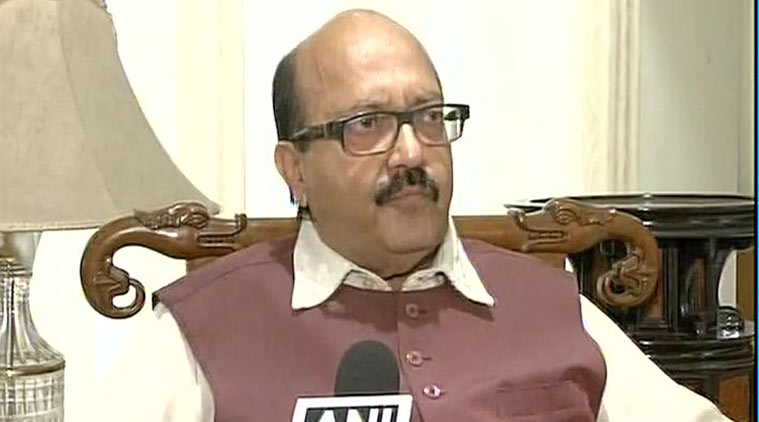
Veteran political leader Amar Singh passed away on Saturday after a prolonged period of illness. The former Samajwadi Party leader was receiving treatment at a hospital in Singapore. He was an elected representative of the Rajya Sabha.

The Indian Embassy in Singapore was reportedly extending support to the veteran leader. His daughters and wife were by his side in Singapore as Amar Singh was receiving treatment. He was receiving treatment for the past 6 months. In 2013, he had suffered a kidney failure. He was reported to be critical then as well but had made a healthy recovery.

Condolence messages for the veteran leader are pouring in as we speak. Paying tribute to him, BJP’s Shahnawaz hussain said, “No matter which party he belonged to, he had good relations with everybody.” Kalraj Mishra said, “We had very close relations. This is a personal loss for me.”

This is a developing story. The report will be updated with more information as and when we receive it.

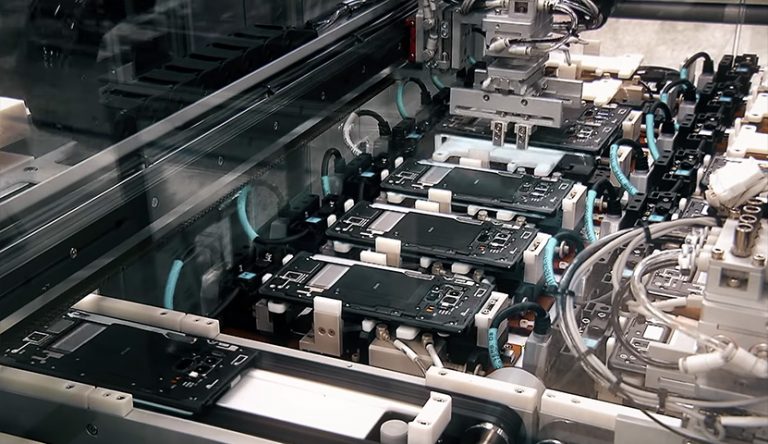
Incentive scheme for mobile phone & component manufacturing a huge success, production of ₹11.50 lakh crore and export of ₹7 lakh crore expected in 5 years

Union Electronics & IT, Communications minister Ravi Shankar Prasad said today that the Production Linked Incentive Scheme announced by the government of India for Scale Electronics Manufacturing has been a huge success. In a press conference held via video conferencing, the minister informed that a large number of applications have been received from both global as well as domestic mobile phone manufacturing companies and electronic components manufacturers willing to set up facilities in India taking the benefits of the scheme.

“Industry has reposed its faith in India’s stellar progress as a world class manufacturing destination and this resonates strongly with Prime Minister’s clarion call of AtmaNirbhar Bharat – a self-reliant India. We are optimistic and looking forward to building a strong ecosystem across the value chain and integrating with the global value chains, thereby strengthening electronics manufacturing ecosystem in the country,” Ravi Shankar Prasad said.

Production Linked Incentive Scheme (PLI) for Large Scale Electronics Manufacturing was notified by the ministry on 1st April, 2020. This scheme extends an incentive of 4% to 6% on incremental sales (over base year) of goods under target segments that are manufactured in India to eligible companies, for a period of five years subsequent to the base year (FY2019-20). The scheme was open for filing applications till 31st July 2020. Incentives are applicable under the scheme from 1st August this year.

On 2nd June, detailed guidelines for the three initiatives under the scheme were announced by the minister, which included a total incentive of Rs 50,000 crore. The scheme has a goal of increasing production to $106 billion from $70 billion in 2018-19. The target for exports of electronic components is $77 billion. The Production linked Incentive scheme is the largest scheme with value of Rs 40,000 crore, and it is expected to help large scale manufacturing of mobile and other gadgets.

A total of 22 companies have filed their applications under the PLI Scheme. International mobile phone manufacturing companies that have applied under the Mobile Phone Segment are Samsung, Foxcon Hon Hai, Rising Star, Wistron and Pegatron. Out of these, Foxcon Hon Hai, Wistron and Pegatron are contract manufacturers for Apple iPhones. Apple (37%) and Samsung (22%) together account for nearly 60% of global sales revenue of mobile phones and this scheme is expected to increase their manufacturing base manifold in the country.

In the Mobile Phone’s domestic company segment, including Lava, Dixon Technologies, Bhagwati (Micromax), Padget Electronics, Sojo Manufacturing Services and Optiemus Electronics have submitted applications under the scheme. These companies are expected to expand their manufacturing operations in a significant manner and grow into national champion companies in mobile phone production.

Apart from phone makers, 10 companies have filed applications under the Specified Electronic Components Segment, which include AT&S, Ascent Circuits, Visicon, Walsin, Sahasra, Vitesco and Neolync.

This Scheme is expected to lead to total production of about Rs 11.5 lakh crore in the next 5 years. Out of this, international mobile phone manufacturers have proposed a production of over Rs 9 lakh crore, domestic mobile phone companies are expected to contribute Rs 2 lakh crore and the companies under Specified Electronic Components segment have proposed production of over Rs 45,000 crore.

This scheme will lead to a significant increase in export of mobile phones and electronics components from India. Over the next 5 years, around 60% of the total production of Rs 11.5 lakh is expected to be exported, which will be around Rs 7 lakh crore.

The Production Linked Incentive Scheme will scheme will bring additional investment of around Rs 11,000 crore to the electronics manufacturing sector. This is expected to generate approximately 3 lakh direct employment opportunities in next 5 years. In addition to that, additional indirect employment of nearly 3 times the direct employment is also estimated. Domestic Value Addition is expected to grow from the current 15-20% to 35-40% in case of Mobile Phones and 45-50% for electronic components.

With the demand for electronics in India expected to grow manifold by 2025, the Minister expressed confidence that PLI scheme and other initiatives to promote electronics manufacturing will help in making India a competitive destination for electronics manufacturing and give boost to Atma Nirbhar Bharat campaign. Creation of domestic champion companies in electronics manufacturing under the Scheme will give fillip to vocal for local while aiming for global scale.

Under the leadership Prime Minister Shri Narendra Modi and his visionary initiatives like the “Digital India” and “Make in India” programmes, India has witnessed an unprecedented growth in electronics manufacturing in the last five years. The National Policy on Electronics 2019 envisions positioning India as a global hub for Electronics System Design and Manufacturing (ESDM) by focusing on size and scale, promoting exports and enhancing domestic value addition by creating an enabling environment for the industry to compete globally.

Hypocrisy in the time of pandemic: How NDTV shames Hindus during a temple festival but did the opposite during Eid

The Hinduphobia that the mainstream media engages in is no secret. It is known that the media continuously attacks Hindu traditions and tries to spread negativity around Hindu festivals while giving other religions a free pass even when the latter is extremely toxic. ‘Save Water’ campaigns during Holi, ‘Crackerless Diwali’ and other such campaigns have become the mainstay of Hindu festivals while others are not subjected to such negativity. One media network which has been particularly guilty of this is NDTV.

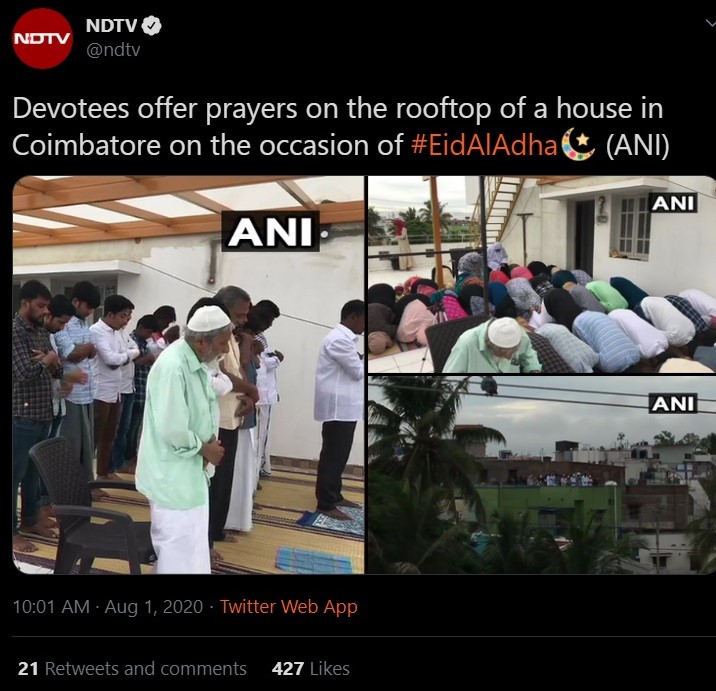
On the occasion of Eid-al-Adha or Bakri-Eid, NDTV posted a tweet where it reported on the fact that Muslims had gathered on the rooftop of a house in Coimbatore to offer prayers. There was obviously no social distancing observed by the faithfuls. The images shared did not portray them wearing any masks either. Amidst the Coronavirus crisis, this could lead to further spread of the disease.

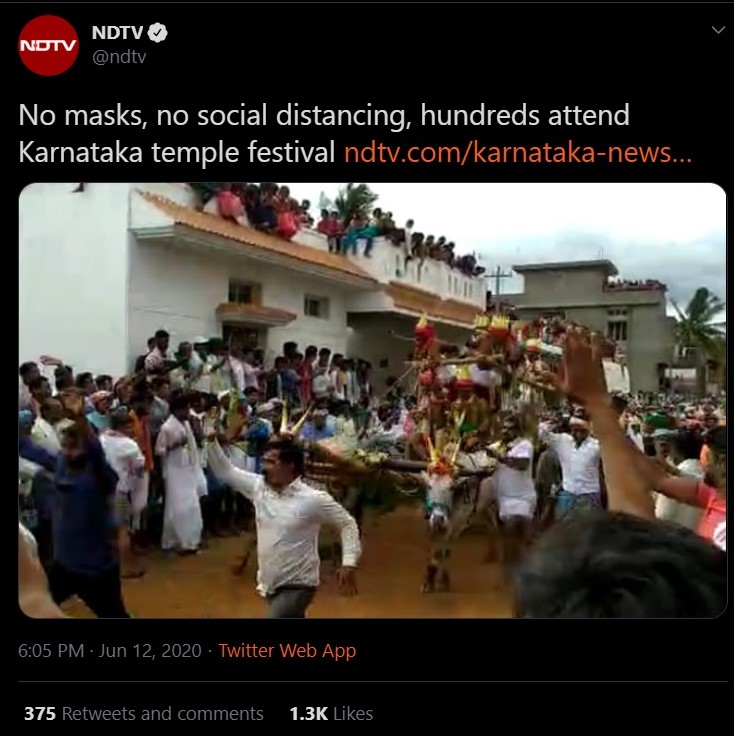
NDTV, however, chose not to comment on the matter. The stance of the network was quite different when a public gathering at a Temple was concerned. The NDTV sermonised how the devotees were not practising social distancing and masks were lacking. The objective was, quite clearly, to hold the gathering at a Hindu Temple responsible for the spread of the Coronavirus.

Thus, while NDTV tried to blame a Hindu Temple festival for the spread of the Wuhan Coronavirus citing a lack of social distancing and masks, it refrained from making similar comments on public gatherings for Eid. The concerted attacks on Hindu traditions and festivals while giving other religions a free pass has, of course, become the hallmark of secularism in India.

In the past, we have observed how the mainstream media which spreads negativity continuously during Diwali suddenly finds itself in a cheerful mood during Christmas. During Diwali, they preach that ‘high calorie’ food should be avoided while for Christmas, they share plum-cake recipes because ‘What is any festival without food?’

It is similar to the kind of activism PETA engages in. While it goes out of its way to initiate an anti-leather campaign during Rakshabandhan, insinuating in a bizarre fashion that the Hindu festival has something to do somehow with the use of leather, it develops cold feet when it comes to advocating the prevention of animal slaughter during Eid. It only goes on to demonstrate that activists only seek to make a name for themselves by attacking a soft target while taking great care to keep themselves away from any serious trouble.

Aaditya Thackeray meets Mumbai Police Commissioner, reports say Sushant Singh Rajput’s death was discussed

0

A day after new reports claimed that a big politician’s son had reportedly attended the party at Sushant Singh Rajput’s residence and allegedly had a spat with him, a night before his purported suicide, son of Maharashtra Chief Minister Uddhav Thackeray, Aaditya Thackeray, had a meeting with Mumbai Police Commissioner Param Bir Singh. According to the reports, actor Akshay Kumar was also present in the meeting.

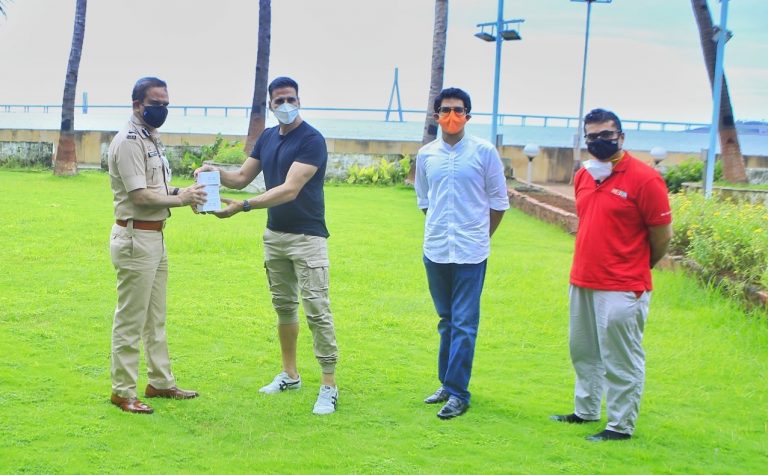
According to a report, extending his support in the fight against the coronavirus outbreak, Akshay Kumar has reportedly presented the Mumbai Police with 1,000 additional GOQii fitness bands of the new model VITAL 3.0. Earlier too, the Bollywood actor had donated the wrist bands with sensors that can detect COVID-19 symptoms.

The Bollywood superstar donated the GOQii smartwatches to Maharashtra Minister of Tourism and Environment Aditya Thackeray and Mumbai Police Commissioner Param Bir Singh at the Mayor’s Bungalow this afternoon.

However, it has also been reported that the meeting between the actor Akshay Kumar, Aaditya Thackeray and Mumbai Police Commissioner may have also included discussion on the progress of the probe into the alleged suicide of actor Sushant Singh Rajput.

Bihar Police alleges non-cooperation from Mumbai Police

The meeting between the Maharashtra Environment Minister, Aaditya Thackeray and Mumbai Police commissioner comes on the heels of the FIR filed by Sushant Singh Rajput’s father KK Singh in Patna. The Bihar police that had reached Mumbai to investigate the suicide of the late actor had yesterday claimed that the Mumbai Police has been less than forthcoming in helping them in the investigation. Bihar Police had also failed to secure the postmortem report of Sushant Singh Rajput even after visiting the Cooper Hospital in Mumbai, as the hospital refused to hand-over the same to them.

Reports claim a bigshot politician’s son was present at Sushant Singh Rajput’s flat a night before his suicide

The alleged suicide of actor Sushant Singh Rajput took a completely new turn after his father, KK Singh, filed an FIR against actor Rhea Chakraborty and five others, including three of her family members, for abetment of suicide. Yesterday, a report by Times Now claimed that an eminent personality was possibly present at the party, a night before Sushant Singh’s demise, alleging that the Mumbai Police report can be compromised.

According to reports, a politician’s son was present at the late actor’s apartment at the party. As per Times Now report, there was a heated argument between the person and Sushant Singh Rajput post which the late actor left the place. Curiously, the CCTV has been dysfunctional since then. Sources claim the police officials are trying to conceal the identity of this person. People close to Sushant Singh Rajput have revealed that there was a party at his apartment and the aforesaid personality was also present there along with others.

FIR against Rhea Chakraborty and others

The last few days have seen major developments in the probe of the alleged suicide of Sushant Singh Rajput after his father KK Singh filed an FIR against Rhea Chakraborty and others, under the charges of Abetment of Suicide (IPC Section 306), Cheating and dishonestly inducing delivery of property (IPC Section 420), Punishment for wrongful restraint (IPC Section 341), Punishment for wrongful confinement (IPC Section 342), Theft in a dwelling house (IPC Section 380) and Punishment for criminal breach of trust (IPC Section 406).

Kashmir: Residents heave a sigh of relief as 3 remote villages near LoC get electricity for the first time after 73 years

0

In a positive development, three villages in North Kashmir located in close proximity to the Line of Control (LoC) in the Kupwara district, which are frequent targets of shelling from Pakistan, will get electricity after 73 years. 

As per reports, the villages of Keran, Mundian, and Patruu in the district remain cut-off for 6 months due to heavy snow. Besides, due to natural geographical barriers, the life of 14000 residents of the three villages remain endangered due to heavy shelling from the Pakistani side of the LoC. A two-year-long electrification project is now close to completion and will ease the woes of the local inhabitants of the Kupwara district.

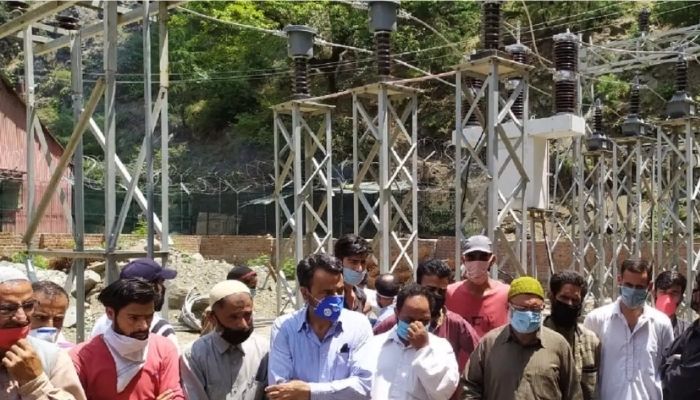
Under the electrification project, 979 utility posts, a receiving station, and a 33 Kilovolt line have been installed by the Kashmir Power Distribution Corporation Limited (KPDCL). According to Muhammad Aijaz Asad, who serves as the Managing Director of KPDCL, the Coronavirus lockdown has helped speed up the project. He informed that it was an uphill task to lay high tension wires and utility poles due to the difficult terrain and the proximity of the villages to the LoC. “We are able to divert manpower which would otherwise have been engaged in regular work to this project,” Asad was quoted as saying.

Electrification project boon for farmers in Kashmir

An official from the district administration stated that a lot of time was spent in seeking approvals for the project that has been built on defence land. Around 14,000 people living in the area had to depend on solar power or diesel generators for electricity. The farmers in the area have expressed hope that electrification in the region will boost their earnings. When Times of India spoke to farmers named Mohammad, Imran Zayed, and Ghulam Hasan Lone, they informed that they have been using digital generators to water crops such as rice, walnuts, and apples for just 3 hours. According to Zayed, the presence of a 24/7 electricity supply will be like a dream come true moment for him and can boost his income.