Home Blog Page 522

MK Stalin continues politics of regionalism, vows to continue ‘language war’ against imaginary Hindi imposition: Here is everything to know about ‘Mozhi Por’

Tamil Nadu Chief Minister MK Stalin declared on Saturday (25th January) that his party’s student wing would oppose the proposed University Grants Commission (UGC) draft recommendations in New Delhi.

“The introduction of the three-language policy and the National Education Policy (NEP) are blatant attempts to impose Hindi and Sanskrit on non-Hindi-speaking states,” he declared.

MK Stalin pledged to continue the alleged language war and prevent the imposition of Sanskrit or Hindi to protect Tamilian identity.

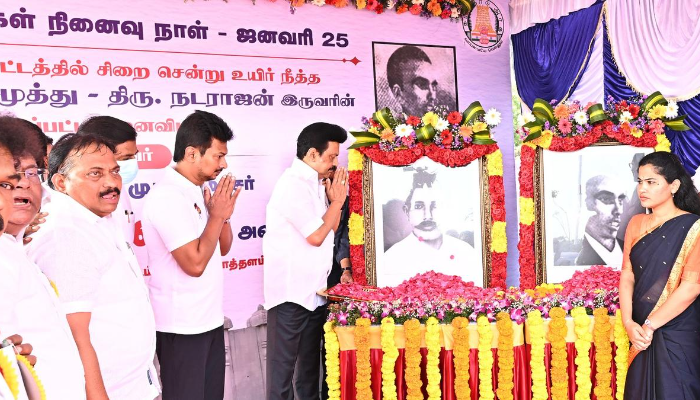
The development transpired in an event in the commemoration of those who passed away during ‘Mozhi Por’ (Language War), in Chennai.

Stalin claimed that in order to defend the rights of all non-Hindi speaking states, the Dravida Munnetra Kazhagam (DMK) student wing would hold a “Education Right” demonstration in Delhi.

He has started to push for the union government to revoke the 2024 and 2025 draft University Grants Commission (UGC) regulations. He maintained that the struggle to preserve the Tamil language and the rights of the state is still underway. He further blamed the centre for eroding federal ideals.

Additionally, the DMK supremo emphasized how the party has been defending Tamil Nadu’s two-language policy since 1967. It was the first state to pass a resolution in the assembly opposing the UGC’s draft regulations, he added, slamming the union government for introducing them.

“Universities are established by states, so the authority to govern them should also rest with the states. However, the union government continues to encroach upon state’s rights,” he accused.

A three-language policy was adopted to create obstacles, according to him. He also conveyed that a two-language policy only came into effect to safeguard the regional language after his party gained power.

Stalin also wrote to Union Education Minister Dharmendra Pradhan on 20th January. He alleged that the draft recommendations would have a significant impact on university autonomy and were a blatant violation of the rights of state governments. 

“The Union government is only thinking about either imposing Hindi or Sanskrit. Foreign Hindi is being imposed to destroy mother Tamil,” he charged and even accused the BJP (Bharatiya Janata Party) of attempting to turn India into a country with only one religion and one language.

“They (BJP) are showing support to Hindi, but the truth is that they are the supporters of Sanskrit. After making Hindi sit on the throne, they will bring in Sanskrit. We have crossed several attempts of language and cultural imposition. Unable to impose an Aryan language on ancient Tamil society, attempts are being made to impose it through schools and universities. Can’t we, who give land, create infrastructure and maintain universities capable of appointing a chancellor? Why can’t the people choose the Chief Minister to be the chancellor,” he asked.

Stalin complained about the celebration of “Hindi Month” at Doordarshan Kendra in Tamil Nadu and the proposition of Hindi as the primary language of instruction at IITs and IIMs. Moreover, he alleged that the central administration had neglected Tamil Nadu in the union budget, cut back on funding for the education department and withheld disaster relief package.

“Instead of fulfilling its responsibilities, the union government focuses on imposing Hindi, promoting Sanskrit names and introducing policies like NEET (National Eligibility cum Entrance Test), which harm our students,” he stated.

Stalin presented Rs 34 lakh renovated memorial of Thalamuthu and Natarajan, who died in the 1939 protest against the imposition of Hindi. The state government previously declared the 25th of January to be “Tamil Mozhi Thiyagigal Naal (Tamil language martyrs’ day).”

He added that statues of Natarajan and Thalamuthu would be erected at the Thalamuthu Natarajan Building in Egmore at the request of VCK President Thol Thirumavalavan. He also paid floral tributes to them and Dharmambal Ammaiyar.

The UGC has attempted to expand the region of selection to change Regulation 2010, which deals with the appointment and selection of vice chancellors in institutions throughout the nation.

Only academicians with at least ten years of experience as professors are eligible to be chosen for the position under the current rules.

What is ‘Mozhi Por’

The students of Tamil Nadu took to streets on 25th January 1965, halting daily activities, in protest of Hindi being designated as the “official language,” reported The New Indian Express.

It was not the first anti-Hindi demonstration as such instances had been intermittent, with some individuals even taking their own lives. The shocking instances began from 1938, when the uprising succeeded in preventing Hindi from being designated as the “language of education.”

Many also refer to the 1938 protest, which was led by Periyar E V Ramasamy, as the “First Mozhi Por.” The 1965 agitation, however, is significant since it was predominantly a student movement and it gave a fatal blow to the Congress, the ruling party at the time, which has yet to recover from its monumental defeat.

The DMK, which supported the unrest, was able to seize power in 1967 owing to the same and the two-language system in schools was enforced.

The showdown was scheduled for the fateful day for two reasons: The students chose to assemble the crowd the day before because 26th January is a government holiday and it was the end of the 15-year period allotted when India became a republic to make Hindi the national language.

Secondly, it was the first anniversary of Keezhapazhur Chinnasamy’s death who burned himself alive in Tiruchy in 1964 in support of Tamil. On Chennai’s seaside road, students rallied in a massive show of strength.

According to L Ganesan, the driving force behind the movement, on 25th January 1965, the air was infused with linguistic fervor as the phrase Hindi Oliga, Tamil Vaazhga (Down with Hindi, long live Tamil) rang out.

Chinnasamy, who was born in Keezhapazhur, which is now in the Ariyalur district, lit himself on fire in front of the Tiruchy junction railway station early on 25th January of 1964, one year prior to the launch of the ‘Mozhi Por’ while shouting, “Down with Hindi, long live Tamil.”

Poet and author Jayaprakasam unveiled that pupils, teachers and researchers from Tamil universities played an active part in the agitations across the state.
Chhattisgarh: Hindu organisations bust religious conversion ‘prayer meeting’ in Raipur and Balrampur, 2 pastors among 7 arrested

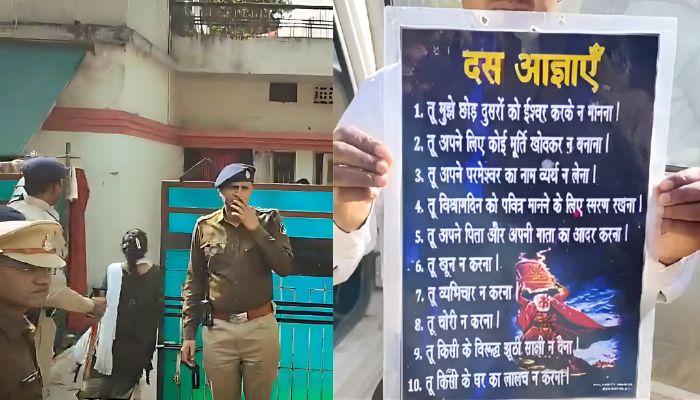
On 26th January, Raipur and Balrampur in Chhattisgarh witnessed unrest over allegations of religious conversions. Hindu organisations and locals acted on tip-offs in both districts and uncovered ongoing Christian conversions happening in guise of prayer meetings. Reportedly, accused pastors had orchestrated conversions under the guise of prayer meetings. Three people were detained in Raipur, including a pastor, while four were arrested in Balrampur, and promotional materials were seized.

Raipur incident – protests erupt over alleged conversions in Mitaan Vihar

Hindu groups, led by Bajrang Dal, learned about alleged forced conversions happening in Mitaan Vihar Colony in the Mowa area under the Pandri Police Station. They reached the house where the conversions were reportedly taking place under the guise of prayer meetings and classes and chanted slogans such as ‘Jai Shri Ram’. As the situation escalated, a heavy police force was deployed to maintain law and order.

Additional Superintendent of Police (City) Lakhan Patel, CSP Civil Lines, and SHOs of different police stations arrived at the scene with reinforcements. Ten individuals were removed from the house, including men, women, children, and a minor. Three individuals, identified as Kirti Kumar Keshwani, Maharathi Banjare, and Jeevan Lal Sahu, were detained by the police and later sent to jail.

An FIR has been registered under Section 299 of the Bharatiya Nayay Sanhita (BNS) and Section 4 of the Chhattisgarh Religious Freedom Act. Hindu organisations have alleged that conversions have been happening in the area for a long time. They accused the pastor of influencing vulnerable individuals under the guise of prayer sessions.

Balrampur incident – alleged use of “healing meetings” for conversions

The second such incident happened in Saruat village of Wadrafnagar block in Balrampur district. Locals alleged that a pastor and his associates were luring villagers with promises of curing illnesses and financial benefits. Following the information received by the locals, police raided the house where the conversion sessions were taking place and arrested four individuals, including a pastor.

Police also seized large quantities of Bibles, promotional material and an ID card of the National Christian Association from the accused. According to the locals, the pastor organised “healing meetings” to gather people and then exploited their religious sentiments to facilitate conversions.

In both cases, police said that investigations are underway. The issue of religious conversions has again been brought into sharp focus in Chhattisgarh with these two incidents. In the past few years, the state has seen rampant cases of religious conversions with missionaries luring vulnerable communities, including tribals, to convert to Christianity.

So much so, even the rice allotted by the government had been routed to be used for conversion activities. In November 2024, OpIndia reported how rice distributed under the Prime Minister Narendra Modi-introduced Pradhan Mantri Garib Kalyan Anna Yojana (PMGKAY) and the Chhattisgarh government’s Annapurna Scheme was being misused by Christian missionaries. According to media reports, missionaries have initiated a scheme called the “one handful of rice plan”, under which they collect rice from poor families. Each family member donates one handful of rice daily to the missionaries, which is then gathered in large quantities and sold in the open market at Rs 25-30 per kg. This practice is estimated to generate an annual income of over Rs 100 crore for the missionaries. Hindu organisations have demanded stricter enforcement to prevent such activities.

Bangladesh: Islamic extremists associated with BNP kidnap 3 Hindus including temple priest, beat them up and demand ransom

On Saturday (25th January), Islamic extremists abducted three Hindus from the Hillview residential area in the Chittagong district of Bangladesh.

The victims were identified as Rubel Rudra (42), Keshab Mitra Das (43) and Samir Das (45). While Samir and Rubel run laundry shops, Keshab is a priest at a Hindu temple.

According to reports, four Islamic extremists carried out the kidnapping and demanded ransom from the families of the victims. They were identified as Bashir Ahmed Rana, Mohammed Jihad, Mohammed Arif and Mohammed Emon alias Saddam.

The four accused abducted Rubel Rudra and Samir Das from their shops on Saturday (25th January) morning and afternoon respectively. In the evening, they kidnapped temple priest Keshab Mitra Das.

The victims were beaten and held hostage on the 4th floor of an under-construction building. The Islamic extremists who carried out the abduction also demanded 9 lakh Taka as ransom.

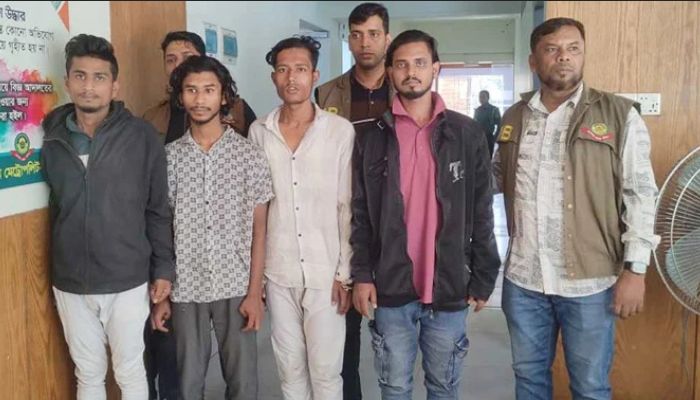
Fortunately, the Chittagong police raided the building at night and rescued the 3 Hindus. The cops also arrested the 4 Islamic extremists and recovered 12 sharp weapons and 5 motorcycles from them.

The accused are associated with Chatra Dal, the student wing of the Islamist political party BNP. Bashir Ahmed Rana, Mohammed Jihad, Mohammed Arif and Mohammed Emon are also the followers of terrorist Saiful Islam alias Burma Saiful.

All of them are history sheeters with multiple cases of theft, robbery, dacoity and extortion registered against them in multiple police stations.

Attack on Hindus in Bangladesh since the ouster of Sheikh Hasina

OpIndia has been vetting and reporting cases of atrocities on Hindus since the ouster of Sheikh Hasina on 5th August 2024.

There have been at least 205 attacks on Hindu temples, shops and businesses within 3 days of the fall of Dhaka.

We previously exposed how Muslim students have forced as many as 60 Hindu teachers, professors and government officials to resign from their positions.

Human rights activist and exiled Bangladeshi blogger, Asad Noor, has recently revealed that the minority community is now being coerced into joining ‘Jamaat-e-Islami’.

On 6th September, a procession of Hindu devotees carrying the idol of Lord Ganesha came under attack in the Kadam Mubarak area in Chittagong city of Bangladesh.

Ahead of the Durga Puja celebrations, a radical Muslim man named Yasin Mia vandalised the idols of Goddess Durga and other Hindu deities in Gouripur town in the Mymensingh district of Bangladesh on 25th September.

In the latest series of attacks, idols of Goddess Durga and other Hindu deities were vandalised at the Rishipara Barwari Puja Mandap and the Manikadi Palpara Barwari Pujamandap on 28th September and 1st October respectively.

The attacks were carried out in Sujanagar upazila in Pabna district in Rajshahi Division of Bangladesh. While a total of 4 idols were defaced at the Rishipara Barwari Puja Mandap, another 5 Hindu idols were destroyed at the Manikadi Palpara Barwari Pujamandap.

On 3rd October, 7 idols of Hindu deities were destroyed at the Gopinath Jiur Akhara Durga Puja mandap in Kishoreganj, Dhaka Division, Bangladesh.

On 5th November, the Hindu community came under attack from police and law enforcement authorities in Hazari Goli in Chittagong city of Bangladesh.

On 29th November, a violent Muslim mob attacked Hindu minorities and vandalised 3 temples in Patharghata in Chittagong district of Bangladesh.

The Hindu religious sites that the Muslims targeted included the Shantaneshwari Matri Temple, the Shoni Temple, and Shantaneshwari Kalibari Temple. The attack took place immediately after the conclusion of Jumma Namaz

On 30th November, a prominent Hindu journalist named Munni Saha was arrested by the police from Karwan Bazar in Dhaka city of Bangladesh.

A group of extremists attacked the Mahashmashan Kali Mata Mandir, vandalised 7 idols of deities and stole gold ornaments on 13th December 2024.

On 19th December, a Muslim man identified as Alal Uddin vandalised an idol at the Polashkanda Kali Temple and then attempted to create a fake alibi. The incident occurred in Haluaghat upazila in the Mymensingh district of Bangladesh.

Another 37-year-old Muslim man identified as Azharul vandalised several idols of deities in Haluaghat Upazila in the Mymensingh district of Bangladesh.

The recent arrest of Chinmoy Krishna Das Prabhu and his aides, attempts at banning Hindu organisation ISKCON and stiffling Hindu protests with cases of ‘sedition’ highlight systematic persecution under the interim government of Muhammad Yunus.

There have been multiple instances of attacks on Hindus under the pretext of ‘blasphemy.’ The recent cases of Hridoy PalUtsab MandalPartha Biswas PintuAkash DasPranta Talukder and Utsab Kumar Gian are shining examples of targeted persecution.

So far, there have been many attempts to downplay violence against Hindus as ‘fake‘, ‘exaggerated‘ or ‘politically motivated‘.

Drug ringleader wanted in US arrested in UK after his glamorous wife gave way the location in vacation photos on Instagram

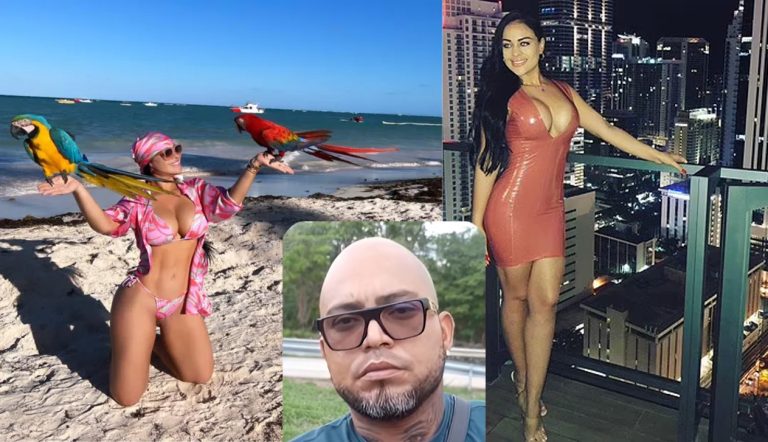
A most wanted drug kingpin was arrested in the UK after the authorities got his location from an unexpected source, his wife’s Instagram posts. Luis Manuel Picado Grijalba was arrested at London Airport after police tracked his wife’s Instagram account and found from the photos posted there that they were vacationing in Europe.

Grijalba is a Nicaraguan native who also holds Costa Rican nationality. Luis Manuel Picado Grijalba is accused of shipping cocaine from Limón in Costa Rica to the US and is wanted by the US Drug Enforcement Administration (DEA). He was nabbed by National Crime Agency officers on December 29 on an international warrant.

As Costa Rica generally does not honour deportation requests made by the USA, Drug ringleaders from the country can be caught only if they travel abroad. However, Grijalba’s glamourous wife Estefania McDonald Rodriguez made it easy for the authorities, as she posted several photographs of the couple’s vacation in Europe. Reportedly, Luis Grijalba travelled to London with his wife Estefania McDonald Rodriguez to celebrate the new year, unaware that the US agents were tracking her social media accounts.

Rodriguez posted photographs of herself with her husband in front of the Eifel Towel. In another photo after that, they were seen near the London Bridge. The Instagram account has been deleted now.

Estefania McDonald Rodriguez generally travels a lot and posts photographs, but her cautious husband does not accompany her. But this time they travelled together, and his wife made the mistake of revealing that she was with her husband in the European locations. As a result, DEA tracked them and got Luis arrested with the cooperation of NCA after an arrest warrant was issued.

Grijabla was presented in a court in the UK, and he has contested extradition to the USA. Officials of Costa Rica’s Judicial Investigation Agency said that they have been informed about the arrest, adding that there is no case against the Drug dealer in the country.

Randall Zúñiga, an official of Costa Rica’s Judicial Investigation Agency, said, “His wife travelled out of the country a lot and posted about it on social media. They went to Colombia and Europe a lot. They had recorded several trips. She uploaded a lot of photos. The DEA had been following Grijalba for several months and was waiting for the international arrest warrant to be ready.” 

As US starts deporting illegal immigrants, Colombian president says he will not allow planes carrying Colombian migrants to enter the country

0

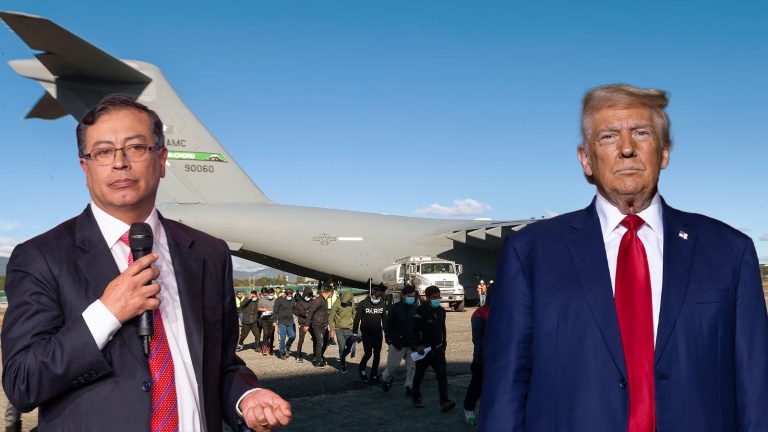
As the United States of America under President Donald Trump has started deporting illegal immigrants to their native countries, Columbian President Gustavo Petro has announced that he is blocking planes carrying illegal Colombian migrants back from the USA.

In a post on X on Sunday, Gustavo Petro said that the US can’t treat Colombian migrants as criminals. He announced, “I deny the entry of American planes carrying Colombian migrants into our territory.” The president added that the United States must establish a protocol for the dignified treatment of migrants before the Colombian govt receives them.

A community note has been proposed for the post by the president on X, saying that Colombia must accept its deported nationals under international law as US is only deporting those illegal immigrants who have committed crimes. The proposed note said that turning away American planes could violate agreements.

Earlier on Thursday, White House announced that commencement of deportation of illegals from the country. White House press secretary Karoline Leavitt said on Thursday night, “The Trump Administration arrested 538 illegal immigrant criminals including a suspected terrorist, four members of the Tren de Aragua gang, and several illegals convicted of sex crimes against minors.” 

At least three flights have already landed in Guatemala carrying deported illegals. The Trump admin is using both commercial and military aircraft for the operation.

President Donald Trump said that his administration is deporting illegals with criminal records first, saying the operation is going well. He said, “We’re getting the bad, hard criminals out. These are people that have been as bad as you get, as bad as anybody you’ve seen. We’re taking them out first.” 

Assam: Dibrugarh to be made the second capital of the state, an assembly Complex to constructed by 2027

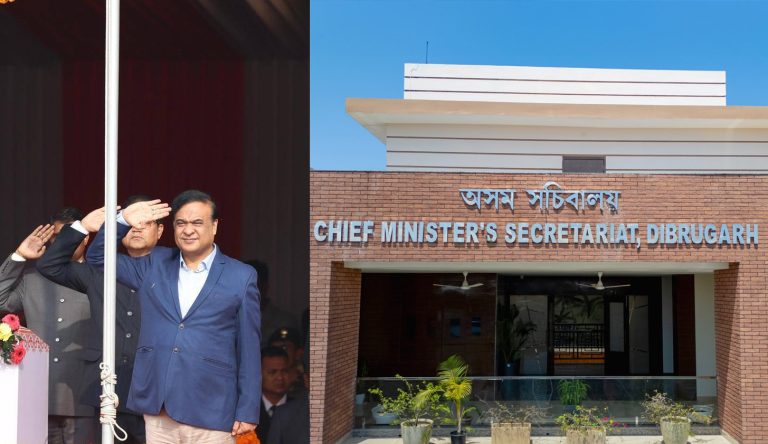
Making an exception this time, Assam Chief Minister Himanta Biswa Sarma unfurled the national flag on the Republic Day in Dibrugarh instead of the state capital Guwahati. The Chief Minister usually celebrates the Republic Day in Guwahati but this time the celebration was held in Khanikar Parade ground of Dibrugarh in Eastern Assam. The celebration was followed by an announcement by Sarma revealing the plan to develop Dibrugarh as the second capital of the state.

Sarma said that within the next three years, Dibrugarh will become the second capital of Assam. “Today is an important day in Dibrugarh’s journey to become the second capital of Assam. For the first time, state celebrations are taking place in this historical city”, he said. Both the Republic Day celebration in Dibrugarh and the announcement are significant considering the militancy-infested past of the place.

Furthermore, Sarma said that after the Dibrugarh Assembly Complex is ready in 2027, at least one session of the state assembly will take place there every year. “From January 25 next year, the construction work for a permanent building of the Assam assembly will begin. In the next three years, Dibrugarh will become an important city in India”, he said.

Infrastructure to be developed in Dibrugarh, Tezpur and Silchar

Sharing the images from the Republic Day celebration on X (formerly Twitter), Sarma wrote, “The successful hosting of #RepublicDayCelebration in Dibrugarh today without any calls for boycott or any toward incident proves yet again that Assam is now a safe state – for investors, tourists, visitors and its citizens.

Sarma added that the state government will develop three towns of Dibrugarh, Tezpur and Silchar into cities by developing infrastructure. “Dibrugarh will have an Assembly Complex by 2027”, he said.

The CM said that Tezpur will be developed as the cultural capital of the state, and a Raj Bhawan will come up in the historic town. Moreover, he announced that the Barak Valley town Silchar will have a Mini Secretariat & Chief Secretary’s Office.

“Dibrugarh is all set to host the Central Republic Day celebrations for the first time and the town is all decked up in Tricolour to celebrate the spirit of the Republic. From being affected by militancy to now hosting full-scale Republic Day celebrations, it has come a long way.,” Sarma said.

Notably, a Chief Minister’s Secretariat has already been established in Dibrugarh, and the CM had announced that he will spend 4 days every month in the office in the eastern Assam town. This decision enables people in 9 districts surrounding Dibrugarh to approach the top administration conveniently.

Security arrangements made a month in advance

Security arrangements were reportedly made a month in advance for the Republic Day celebrations. Talking about the security arrangements, Dibrugarh SP VV Rakesh Reddy informed that inter-district boundaries were secured to prevent any suspicious movement.”The manning of inter-district boundaries to check for suspicious movement, including of riverine routes, began around Christmas. Patrolling of trains is also being done by both the Railways Protection Force (RPF) and the Government Railway Police (GRP)”, Reddy said. He added that the Army and the CRPF assisted the state police which deployed around 400 personnel in the security arrangements.

Dibrugarh among ‘disturbed areas’ under the AFSPA

Dibrugarh has traditionally been a stronghold of the separatist militant organisation ULFA (United Liberation Front for Assam). It is among the four districts of Assam which are notified as ‘disturbed areas’ under the Armed Forces Special Powers Act. A call for a ‘total strike’ was reportedly made by the ULFA from midnight to 6 pm on Republic Day.

According to reports, around 5 months ago ULFA claimed to have planted 24 explosives across Assam to be set off on Independence Day. Several such bombs were discovered without any ignition or triggering mechanism during a search.

Trump suggests relocating Gaza population to ‘clean up the demolition site’, proposes resettlement of Palestinians in Arab nations like Egypt and Jordan

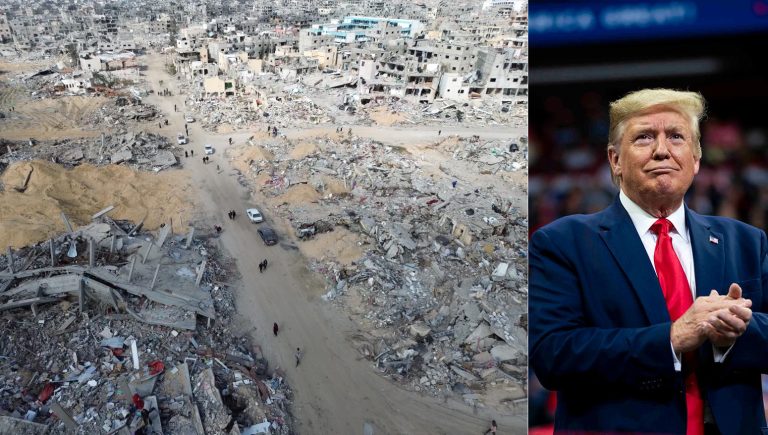
On 25th January (local time), US President Donald Trump proposed a large-scale relocation of Palestinians from Gaza to neighbouring Arab countries like Jordan and Egypt. The statement from the US President came during a press briefing aboard Air Force One. In his remarks, Trump described Gaza as a “demolition site,” saying that he is looking to “clean out that whole thing.” His suggestion aligns with his broader pro-Israel stance.

Relocation for a ‘clean slate’ in Gaza

Trump expressed a desire to see Arab nations increase their acceptance of refugees from Palestine. He framed the displacement as a potential step towards peace in the region. He said, “I’d like Egypt to take people. You’re talking about probably a million and a half people, and we just clean out that whole thing and say, ‘You know, it’s over.’”

He stated that he had discussed the idea with the King of Jordan, Abdullah II, and planned to raise it with the President of Egypt, Abdel Fattah el-Sisi. Trump praised Jordan’s earlier efforts to host Palestinian refugees and remarked, “I’d love for you to take on more, ’cause I’m looking at the whole Gaza Strip right now, and it’s a mess. It’s a real mess.”

Trump noted that the relocation could be temporary or permanent and said, “Something has to happen. But it’s literally a demolition site right now. Almost everything’s demolished, and people are dying there.” He added, “So, I’d rather get involved with some of the Arab nations, and build housing in a different location, where they can maybe live in peace for a change.”

Resuming bomb shipments to Israel

Trump also announced that he would lift the ban imposed by the Biden administration on the delivery of 2,000-pound bombs to Israel. He said, “We released them today,” and added, “They’ve been waiting for them for a long time.” When questioned about the reversal, he said simply, “Because they bought them.”

The weapons, including MK-84 bombs, were previously held up amidst concerns over their use in populated areas like Rafah, a southern city in Gaza. The Biden administration’s concerns over civilian casualties had led to the suspension in May 2023.

Hostages and the fragile ceasefire

Trump celebrated the ongoing ceasefire between Israel and Hamas that has facilitated the release of hostages. He said, “The ceasefire is a step forward, but if the hostages aren’t released, we know Israel will act again.”

So far, there has been no official statement from the office of Israeli Prime Minister Benjamin Netanyahu on Trump’s statements, the resumption of bomb deliveries, and the proposal for population resettlement.

US suspends all funding to Bangladesh under USAID after president Donald Trump’s executive order

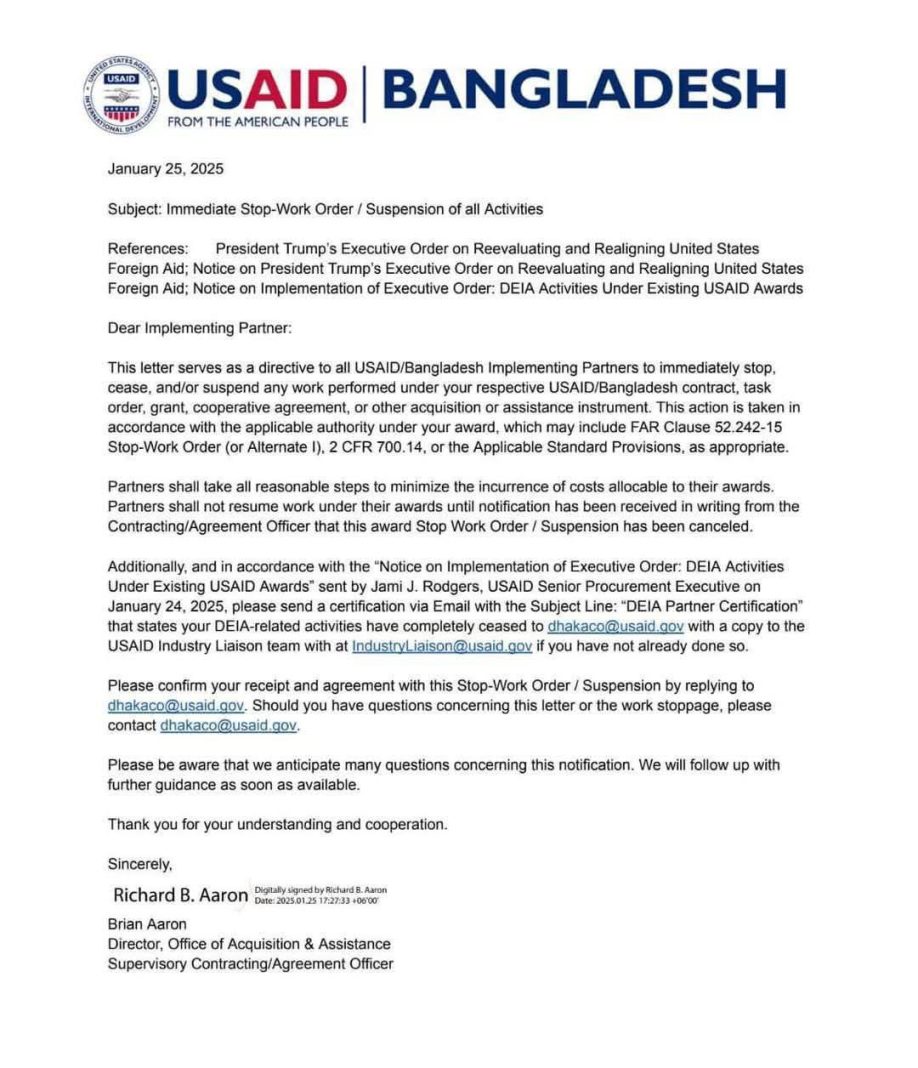
Within five days of swearing in as the 47th President of the United States, Donald Trump passed an executive order immediately suspending all US operations in Bangladesh. In an order dated January 25, 2025, the United States Agency for International Development (USAID) directed its implementing partners to immediately halt all the existing contracts, grants, and assistance programmes in Bangladesh citing an executive order by President Trump.

USAID Bangladesh order (via ?)

“The letter serves as a directive to all USAID/Bangladesh Implementing Partners to immediately stop, cease and/or suspend any work performed under your respective USAID/Bangladesh contact, task, order, grant, cooperative agreement or other acquisition or assistance instrument”, read the notice.

It further states that “Partners shall take all reasonable steps to minimize the incurrence of costs allocable to their awards. Partners shall not resume work under their awards until notification has been received in writing from the Contracting/Agreement Officer that this award Stop Work Order / Suspension has been cancelled.”

The US is the leading contributor of humanitarian assistance in response to the Rohingya crisis and has contributed around $2.4 billion since 2017. The development comes as a major setback for the Muhammad Yunus-led Bangladesh government as the country is already facing major financial crisis.

The suspension reportedly is part of a broader review of foreign aid allocation being carried out under a comprehensive ‘stop-work’ order issued by the US State Department on Friday. The order drafted by the Department’s foreign assistance office and approved by the Secretary of State Marco Rubio affects all existing foreign assistance with the exception of military financing to Israel and Egypt. No specific reasons were provided for the order.

Trump is reviewing all US foreign assistance

Within hours of assuming office 2on 0th January, President Trump passed an order imposing a 90-day moratorium on US foreign development assistance pending a review of the efficiencies and consistency of his policy. The scope of the order, however, was not immediately known.

The order is likely to cut billions of dollars of assistance. The US is the world’s single largest donor of global aid. It allocated around &72 billion in assistance in 2023 alone. The order comes as a major setback for Bangladesh as the country struggles to restore normalcy since the violent revolution last year that overthrew the Sheikh Hasina government.

Uttar Pradesh: Mursaleen, Hasnain, Yameen, Zeeshan, and Junaid involved in illegal cow slaughter arrested after gunfight in Bhojpur

0

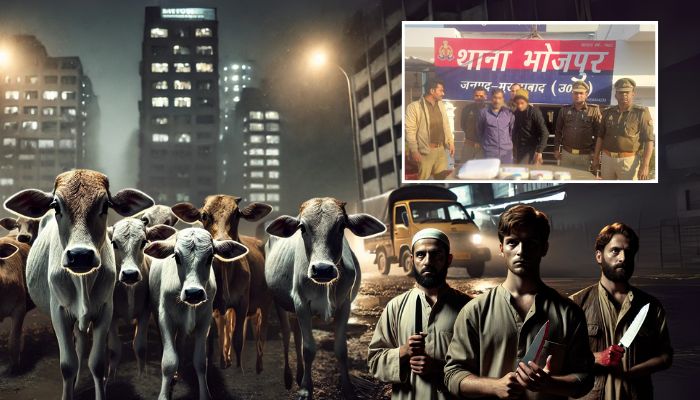
On the intervening night of 24th and 25th January, Bhojpur and Civil Lines police in Moradabad, Uttar Pradesh, arrested five individuals involved in illegal cow slaughter following two encounters. The accused have been identified as Mursaleen, Mohammad Hasnain alias Builder, Yameen, Zeeshan, and Junaid. Reports suggest that these individuals were operating a cow slaughter racket under the guise of daily wage labourers.

Reportedly, Mursaleen and Hasnain were apprehended in Bhojpur. On the other hand, the remaining three were arrested by the Civil Lines police. Two of the accused, Yameen and Zeeshan, sustained gunshot injuries during the encounters and were sent to hospital for treatment.

FIR registered under arms act and anti-cow slaughter laws

The FIR against the accused has been registered under Sections 109(1) BNS, 3/25/27 of the Arms Act, and relevant provisions of laws prohibiting cow slaughter. Police also invoked sections addressing criminal conspiracy, based on the accused’s confessions about their organised operations and involvement in supplying illegal meat.

The accused’s confessions reveal an organised racket

During interrogation, the accused told the police that they received specific orders for cow meat. They often supplied meat to cater for events such as weddings or private gatherings. The accused acted on such demand, targeting stray cattle during the night. They would take the animals to secluded jungle areas to slaughter them and then transport the meat to the specified locations using vehicles. The most recent slaughter was carried out on 19th January.

Mursaleen and Hasnain revealed that a man named Azizur Rahman, a resident of Mohalla Jama Masjid in Bhojpur, coordinated the operations. He was responsible for securing orders and directing where the meat needed to be delivered. The accused further admitted to using their daytime wage-labour activities as a cover to avoid suspicion.

Details of the encounters and arrests

The first encounter took place at around 10:30 PM on 24th January in the Civil Lines area. Yameen, Zeeshan, and Junaid were intercepted by the police. When asked to surrender, they allegedly opened fire at the police. One of the bullets hits a police officer but he was saved because of the bullet proof jacket he was wearing. The police retaliated, and as a result, Yameen and Zeeshan sustained bullet injuries in their legs. Junaid was apprehended unhurt.

The second encounter took place near the Chadda Bridge in the Bhojpur police station area after the police received an alert from the PCR. Both accused attempted to flee on a black Apache motorcycle but were cornered by the police. They opened fire in a bid to escape, prompting the police to retaliate. Both sustained injuries in their legs before being overpowered. Their accomplice, Farman, managed to escape into the jungle and is currently absconding.

Seizures and recovered items

During the operation, police recovered two country-made pistols (315 bore and 12 bore), live cartridges, blood-stained soil, and a black Apache motorcycle used by the accused. Items linked to the illegal cow slaughter racket were also seized.

Ongoing investigation and search for absconding accused

Speaking to the media, police stated that a manhunt is underway to apprehend Farman, who fled the scene. They confirmed that the racket is part of a larger operation targeting stray cattle for slaughter and illegal meat supply. Police teams are also tracking Azizur Rahman, the alleged mastermind behind the racket.

The arrested individuals were presented before a court and sent to judicial custody. Further investigation into the matter is underway.

Punjab ranks lowest in Niti Aayog’s Fiscal Health Index 2025, Odisha tops the list of 18 major states

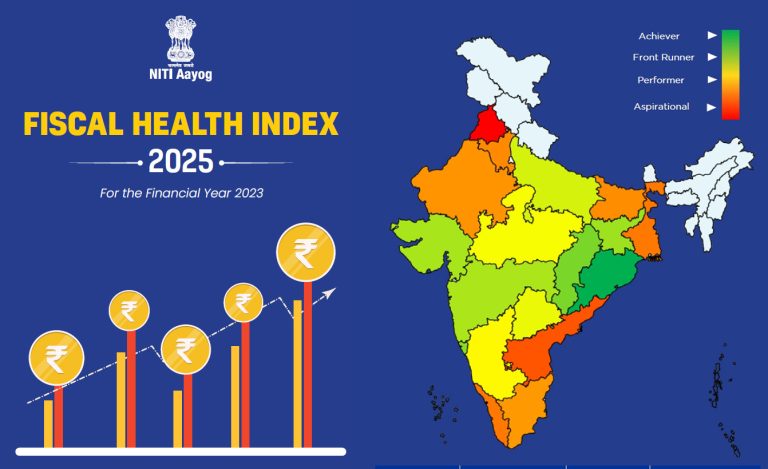
The NITI Aayog on Friday released the Fiscal Health Index of 18 major states. The index ranks the states in terms of their contribution to India’s GDP, demography, total public expenditure, revenues, and overall fiscal stability. The index based on analysis for the financial year 2022-23 ranks Punjab at the bottom, with Andhra Pradesh, West Bengal, Kerala and Haryana occupying the bottom 5 places.

The index includes 18 major states in the country, and it does not include eight north-eastern states, Uttarakhand and Himachal Pradesh. It also excludes all union territories like Delhi, Jammu and Kashmir, Ladakh etc.

Odisha tops the index with an FHI score of 67.8, while the lowest ranked Punjab’s score is only 10.7. Other states in the top five are Chhattisgarh, Goa, Jharkhand and Gujarat, followed by Maharashtra and Uttar Pradesh.

The Fiscal Health Index evaluates states on five indicators: Quality of Expenditure, Revenue Mobilization, Fiscal Prudence, Debt Index and Debt Sustainability. Each of these five indicators have sub-indices under them. The data used to calculate the Fiscal Health Index is sourced from the Comptroller and Auditor General (CAG).

Punjab’s score was lowest in terms of Quality of Expenditure, Fiscal Prudence, and Debt index, while it did marginally better in the fields of Revenue Mobilization and Debt Sustainability. Odisha topped in the fields of Debt Index and Debt Sustainability.

The report stated, “Odisha excels in fiscal health with the highest overall index score of 67.8. It tops the Debt Index (99.0) and Debt Sustainability (64.0) rankings with better than average scores under Quality of Expenditure and Revenue Mobilization. The state has maintained low Fiscal Deficits, a good debt profile, and an above average Capital Outlay/GSDP ratio.”

For Punjab and other low-ranked states, the report said, “Punjab, Andhra Pradesh, West Bengal and Kerala lie in the aspirational category, each facing significant fiscal challenges. Kerala and Punjab struggle with low Quality of Expenditure and Debt Sustainability, while West Bengal faces Revenue Mobilization and Debt Index issues. Andhra Pradesh has high Fiscal Deficits, and Haryana has a poor debt profile. While debt growth and rising interest payments present fiscal challenges, these regions continue to navigate their financial landscapes with varied strategies.”

The report noted that the top states witness good scores under the Debt Index and Debt Sustainability, reflecting that these states have effective fiscal management practices and may have no risk of default on debt. On the other hand, states like West Bengal and Punjab witnessed growing debt burdens, increasing debt-to-GSDP ratios and raising serious concerns about debt sustainability.

The report stated that Odisha, Chhattisgarh, Goa, and Gujarat have consistently been the top performing states across all time periods considered in the study. While Jharkhand has shown improvement in its fiscal health, Karnataka experienced a decline in rankings. States like Goa, Telangana, and Maharashtra reported strong Revenue Mobilization across all periods.

On the other hand, States like Punjab, Kerala and West Bengal have consistently faced fiscal challenges over the past nine years. These states face high debt, large interest payments, weak revenue generation, and inefficiencies in capital expenditure, with reliance on non-tax revenue impacting their fiscal health and rankings.