Amidst the ongoing Jama Masjid-Harihar Temple dispute in Uttar Pradesh’s Sambhal, a shocking revelation has been made about the Waqf Board’s land claims in the city. It has been reported that the Waqf Board has apparently laid claim on more than the entire city of Sambhal. 20 Waqf properties are being reported in Sambhal city. While the city’s total area is just 5 square kilometres, Waqf Board’s properties were found to be in more than 7 square kilometres.
Dainik Bhaskar reported that the shocking details emerged after District Magistrate Rajendra Pensia ordered an inspection of the relevant documents. Following this, a complaint has been lodged for making forged documents. The DM has also ordered an investigation into the matter. Meanwhile, Sambhal Police has registered an FIR based on the complaint lodged.
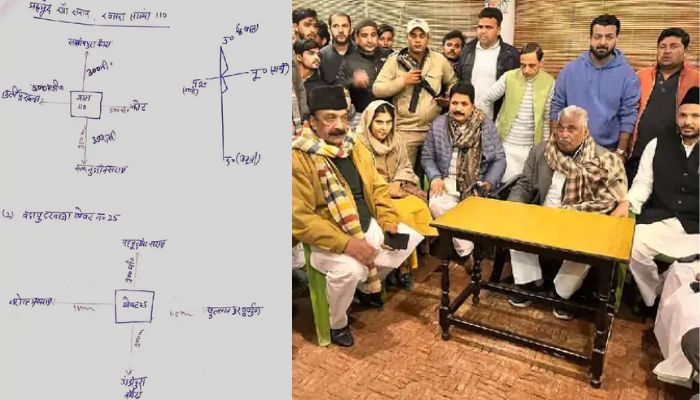
On 31st December 2024, a delegation of the Samajwadi Party led by Leader of Opposition Mata Prasad Pandey went to Sambhal. The delegation provided the documents of Waqf property to DM Rajendra Pensia. It was claimed in these documents that the land on which the police post is being constructed in front of Jama Masjid belongs to Waqf. In addition to this, there are 20 Waqf properties in Sambhal city.
According to these documents, the area of Sambhal police station, district hospital, tehsil, municipality, and post office also comes under the Waqf property area. Even the ancient Kalki temple which is mentioned in the Hindu scriptures is also a part of the Waqf as per these submitted documents.
Notably, Sambhal Police Station’s construction year is documented as 1905. In the papers, that land is shown to have been given to the Waqf in 1929. Not only this, the Satyavrat Police Chowki which is being built in front of Jama Masjid, has also been declared as Waqf property by All India Majlis-e-Ittehadul Muslimeen (AIMIM) leader Asaduddin Owaisi, Dainik Bhaskar reported.
संभल की जामा मस्जिद के पास जो पुलिस चौकी बनाई जा रही है, वह वक्फ की जमीन पर है, जैसा कि रिकॉर्ड में दर्ज है। इसके अलावा, प्राचीन स्मारक अधिनियम के तहत संरक्षित स्मारकों के पास निर्माण कार्य प्रतिबंधित है। @narendramodi और @myogiadityanath संभल में खतरनाक माहौल बनाने के…
Meanwhile, DM Rajendra Pensia has outrightly refuted the claims made by the Waqf Board and said that if the Waqf Board’s claims are factual, the person who gave the land to Waqf should come forward. DM Pensia said that he formed a 3-member committee and got the Waqf documents investigated. The committee comprised SDM, CO and Nagar Palika EO. The investigation revealed that Waqfnama was not registered.
“To date, no one has ownership rights on this land. It is written in the Waqfnama that Abdul Samad has given this property for building a madrasa. But it is not written anywhere where this madrasa will be built,” the DM said adding that there is no information about Abdul Samad or his heirs and that if the documents are correct Abdul Samad or his heirs should come to the administration with original documents.
Speaking about why the Waqfnama of the said properties is fake, DM Pensia said “A total of 20 properties have been shown in the Waqfnama, their boundaries (boundary walls) are not in that map. It is only mentioned that there is Waqf land in all four directions one kilometre from the mid-center. But, it is not told which is the mid-center. How will it be clear from this which is the Waqf land and till where is its boundary? The city of Sambhal is spread over a total area of 5 square kilometres, whereas the area of these 20 properties alone is more than that. This seems impossible.”
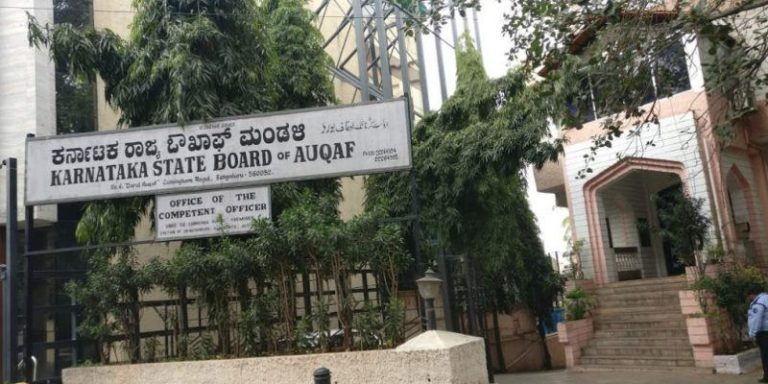
Months after outrage over the Waqf Board swallowing over 1,200 acres of farmland in Vijaypura, Karnataka, a similar kind of stunning claim is made for the government properties in the historic town of Srirangapatna, a report published in Star Of Mysore said.
More than 70 properties in Srirangapatna taluk, including government-owned lands, historic monuments like the iconic Tipu Armoury, and buildings under the jurisdiction of the Archaeological Survey of India (ASI) and the State Department of Archaeology, Museums, and Heritage, have been recorded as Waqf Board properties in official RTC (Record of Rights, Tenancy, and Crops) documents, the report said.
Interestingly, even the Department of Archaeology, Museums, and Heritage building — the Sri Chamarajendra Memorial Government Museum in Srirangapatna — has been listed as Waqf property. Besides, several agricultural plots owned by farmers in Srirangapatna town and taluk have also been listed as properties belonging to the Karnataka State Waqf Board, sparking concerns among farmers.
In addition to this, the Waqf Board has also laid claim to the Chikkamma Chikkadevi Temple in Mahadevpura village and a government school in Chandagalu village, not only raising eyebrows but also triggering serious discussions about how to tackle the menace.
The claims over heritage sites and government lands come months after farmers in Vijaypura, Karnataka, received notices stating that their lands belonged to the Waqf board. The controversy concerned 1,200 acres in Honwada village, Tikota taluk, with farmers claiming that officials were attempting to designate the area as the Shah Aminuddin Dargah, a religious institution.
“The notice claimed that the land belonged to Shah Aminuddin Dargah, but this dargah hasn’t existed for centuries, and our families have owned this land for generations. Around 41 farmers have received notices, asking them to provide ownership records, but we are the rightful owners. If the government doesn’t withdraw these notices, we will launch a massive protest,” Suneel Shankarappa Tudigal, vice president of Honwada gram panchayat, had said.
Following outrage by farmers, the Karnataka government was forced to write to all Regional Commissioners and District Commissioners related to the Waqf issue.
The letter warned of disciplinary action against officials, who alter land mutation records and issue eviction notices to farmers under the Waqf Act.
The order issued on November 9 asked to withdraw all notices served to farmers and to immediately take back the land mutation orders served by any authority and also to stop mutation work.
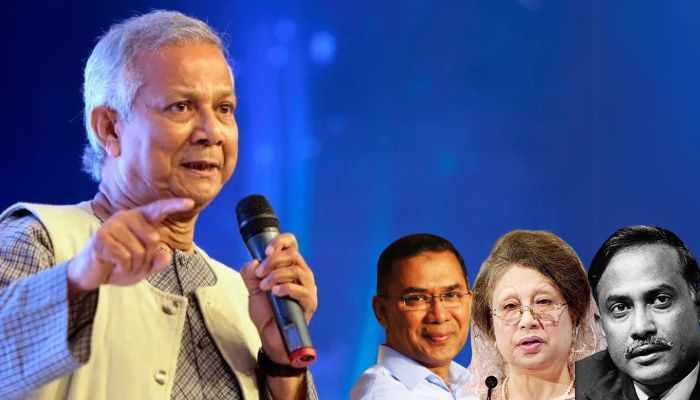
Muhammad Yunus, the chief advisor of the interim government of Bangladesh, has been furthering the agenda of Sheikh Hasina’s rival Bangladesh Nationalist Party (BNP).
Following the fall of Dhaka on 5th August 2024, the Chairperson of BNP Begum Khaleda Zia was released from prison.
Until then, she was in jail for embezzling $250,000 in donations meant for an orphanage. Yunus welcomed her warmly in November last year during the Bangladesh Armed Forces Day.
“Khaleda Zia, the wife of martyred President Ziaur Rahman, has come here. She did not get a chance to attend the event for almost a decade. We are proud to offer this opportunity to her,” he was heard saying.
One of BNP’s major allies happens to be Jamaat-e-Islami (JeI). Muhammad Yunus saw to it that the ban on the radical Islamic outfit and its student wing Islami Chhatra Shibir was lifted within days of coming to power.
Recently, he tried to re-invent the history of Bangladesh’s Independence movement to remain in the good books of the BNP.
The Yunus regime has introduced new textbooks for primary and secondary students which falsely claim that the first declaration of independence of Bangladesh was made by Ziaur Rehman, the founder of BNP.
The ‘Nobel laureate’ has made it clear that he is willing to distort the nation’s history to forge strong ties with the Bangladesh Nationalist Party.
The BNP is now pressing the Yunus regime to create a ‘conducive environment’ for the safe return of Tarique Rehman to Bangladesh.
For the unversed, Tarique Rehman is the son of Khaleda Zia and Ziaur Rehman. He has been the acting chairman of the Bangladesh Nationalist Party since 2018. He has been living in ‘self-exile’ in London for 17 years.
OpIndia reported on 4th August 2024 about the involvement of Tarique Rehman in the so-called student protests, which ultimately led to the undemocratic ouster of Sheikh Hasina.
Our sources in Dhaka have told us that Tarique Rehman will soon return to Bangladesh.
By facilitating the end of Tarique’s self-exile, the release of Khaleda Zia and the glorification of Ziaur Rehman, Muhammad Yunus is making the path clear for the revival of the BNP in the mainstream politics of Bangladesh.
The Islamist party, which was shoved into a corner during Sheikh Hasina’s tenure, is now strategically gaining ground in the country.
BNP leaders and Muhammad Yunus are ‘natural allies’
Muhammad Yunus and the Bangladesh Nationalist Party are united through their common dislike for Sheikh Hasina and the Awami League.
After Hasina fled Bangladesh, Yunus described the moment as ‘Second Liberation Day.’ BNP Chairperson Khaleda Zia had also hailed ‘brave children’ for their struggle that made the ‘impossible possible.’
Both the BNP and Yunus regime did not hold back from making their anti-India agenda clear. Prior to Hasina’s ouster, BNP was openly supporting the boycott of Indian goods and products.
Although Yunus couldn’t afford to openly endorse the ‘India Out’ campaign, he tried to temporarily placate the anti-India Islamists by not exporting Hilsa fish to India.
When Khaleda Zia was politically active, she would openly support insurgents in India’s North East by hailing them as ‘freedom fighters.’
Her anti-India sentiment was recently echoed by one of the advisors of the Yunus regime, Mahfuz Alam.
BNP has always promoted a ‘Bangladeshi identity’ based on Islam. Its politics centred around the majoritarian form of Islamic nationalism that had no place for Hindus and other religious minorities in the story of Bangladesh.
The party had also been involved in anti-Hindu atrocities. While Yunus has not directed Muslim mobs to run rampage, he has strategically remained tight-lipped on their activities.
There have been a few issues over which the Bangladesh Nationalist Party has publicly expressed a difference of opinion with the interim government led by Muhammad Yunus.
For instance, the BNP opposed the proposal of the interim government to ban the Awami League. Party’s secretary general Mirza Fakrul Islam had said, “Unlike Sheikh Hasina and the Awami League, we don’t believe in the politics of banning a political party to settle scores.
One of the public grievances against the Hasina regime was her alleged ‘undemocratic’ ways of running the government. The BNP, in its pursuit of winning over people, was trying to position itself as a democratic alternative to the Awami League.
It is with that motive in mind that the Islamist party opposed the ban on Awami League, knowing well that the latter would not be able to put up a fight in the absence of Sheikh Hasina.
Another bone of contention between the BNP and the Yunus regime was over the suggestion by the latter to reduce the minimum age for voting to 17 years. This has the potential to delay the national election process.
These issues are trivial at best in the background of the ideological similarity between the Yunus regime and the Bangladesh Nationalist Party.
According to our sources in Dhaka, BNP leaders and advisors to the interim government of Bangladesh are ironing out their differences through back-door meetings to ensure public spat in future.
Yunus has so far venerated both Khaleda Zia and BNP founder Ziaur Rehman.
It now remains to be seen how the political dynamics change with the potential arrival of Tarique Rehman in Bangladesh and the announcement of national elections in the near future.
28-year-old journalist Mukesh Chandrakar, who ran a YouTube channel called Bastar Junction in Chhattisgarh, had been missing since 1st January. Notably, his investigative work had revealed financial discrepancies amounting to Rs 120 crore in a road project within the Bastar region, an area known for its Maoist insurgency, which led to the initiation of a government inquiry.
After his elder brother Yukesh Chandrakar raised the alarm, police discovered his body in a septic tank in the compound of Congress leader Suresh Chandrakar’s residential premises in Chhatanpara Basti of Bijapur. The tank had been freshly sealed with a concrete slab. The authorities suspect his murder is linked to this expose.
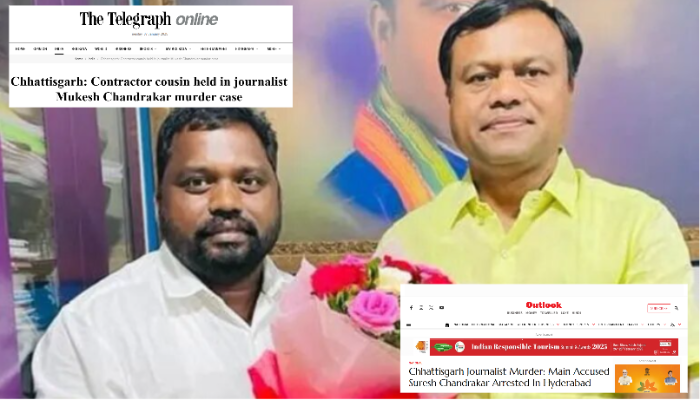
Meanwhile, Suresh Chandrakar who is also the victim’s cousin and a prime accused in the case was arrested on 5th January in relation to the murder after his brothers Ritesh Chandrakar and Dinesh Chandrakar were apprehended a day earlier. According to the police, Ritesh committed the crime with the aid of construction supervisor Mahendra and he further sought the assistance of his brothers in the disposal of the body.
“Ritesh was angry that despite being brothers, Mukesh was interfering in their work. This led to a heated argument,” a senior officer informed. “Ritesh was arrested in Raipur, while Dinesh and Mahendra were detained in Bijapur,” police stated. Sureshwas hiding at his driver’s home in Hyderabad and was nabbed by a Special Investigation Team (SIT) of the Chhattisgarh police from there. The police reviewed footage from 200 CCTV systems and tracked approximately 300 mobile numbers to track him.
Notably, the post mortem report of the deceased disclosed the severity of the brutality inflicted upon him. The doctors who performed the autopsy found four fragments of liver, five fractured ribs, 15 cranial fractures, a broken neck, and the heart ripped out. They remarked that they had never encountered a case of this nature in their 12 years of practice. According to them, the number of people involved in the murder must have been more than two people.
According to reports, the events unfolded on the evening of 1st January, approximately at 8 pm, when Mukesh received a call from Ritesh, asking him to join him for dinner at the farmhouse located in Chhatanpara Basti. The latter then voiced his discontent and criticized Mukesh for reporting on a road construction corruption case, despite their familial ties. The report addressed a scam related to road construction, implicating the Chandrakars as the contractors involved.
Mukesh, recognized for his courageous journalism in the conflict-ridden area, made significant contributions to various prominent television networks, including NDTV. A confrontation ensued between the two sides which soon turned into assault and Mukesh was struck several times with an iron rod, ultimately leading to his demise. At a recent press conference, Chhattisgarh Home Minister Sharma indicated that on 25th December, Mukesh had brought attention to substandard road construction, prompting the government to order a probe which upset Suresh who was one of the contractors.
An initial inquiry reportedly indicated that Ritesh along with Mahendra, assaulted Mukesh using an iron rod, resulting in his immediate death following a dispute that arose during dinner. Subsequently, the two concealed the body within a septic tank, sealing it with cement to hide their heinous act. They also discarded both his mobile phone and the iron rod utilized in the attack. Moreover, Dinesh oversaw the cementing of the tank, while Suresh was the mastermind behind the plan.
“In the aftermath of the murder, Chief Minister Vishnudev Sai decided to send a strong message against crime and criminals in the state. It was on his directive that the administration demolished a road construction plant of the main accused,” a senior official from the Chhattisgarh government conveyed. A high-ranking official from the district administration stated that the demolished property was owned by Suresh Chandrakar, who is involved in multiple road construction initiatives and holds tenders for three separate road projects.
The official added, “The razed property was a construction yard and was made by encroaching on forest land. The place was used to make materials used in road construction work. The property was spread across over 3 acres. There were several vehicles, sheds, hardware materials and a hot mix plant. It’s a joint action taken by forest and revenue officials. We are checking if he has more illegal property. We have frozen three of his bank accounts.”
Mukesh was instrumental in facilitating the release of a the Commando Battalion for Resolute Action (CoBRA) commando who had been taken hostage by Maoists following the Tekulguda massacre in April 2021, an incident that claimed the lives of 29 security personnel. He operated as a freelancer, partnering with media outlets like NDTV and News 18, while also managing a YouTube channel called Bastar Junction, which boasts a subscriber count of more than 171K.
Media downplays Suresh Chandrakar’s connection to Congress
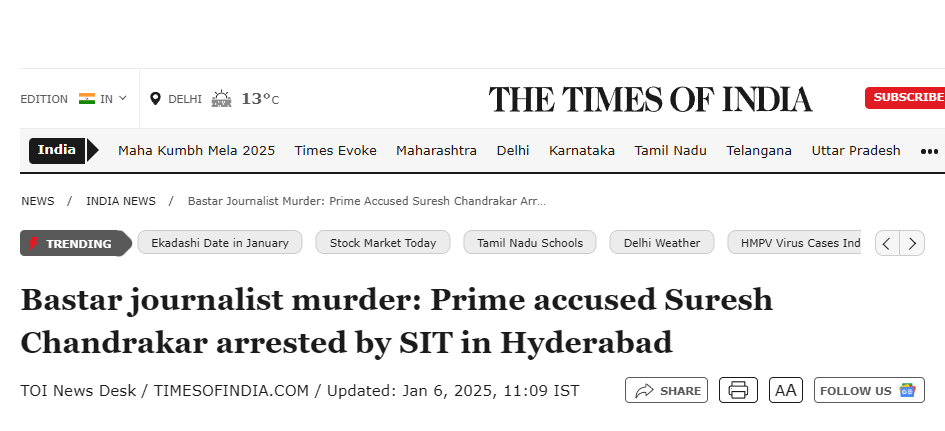
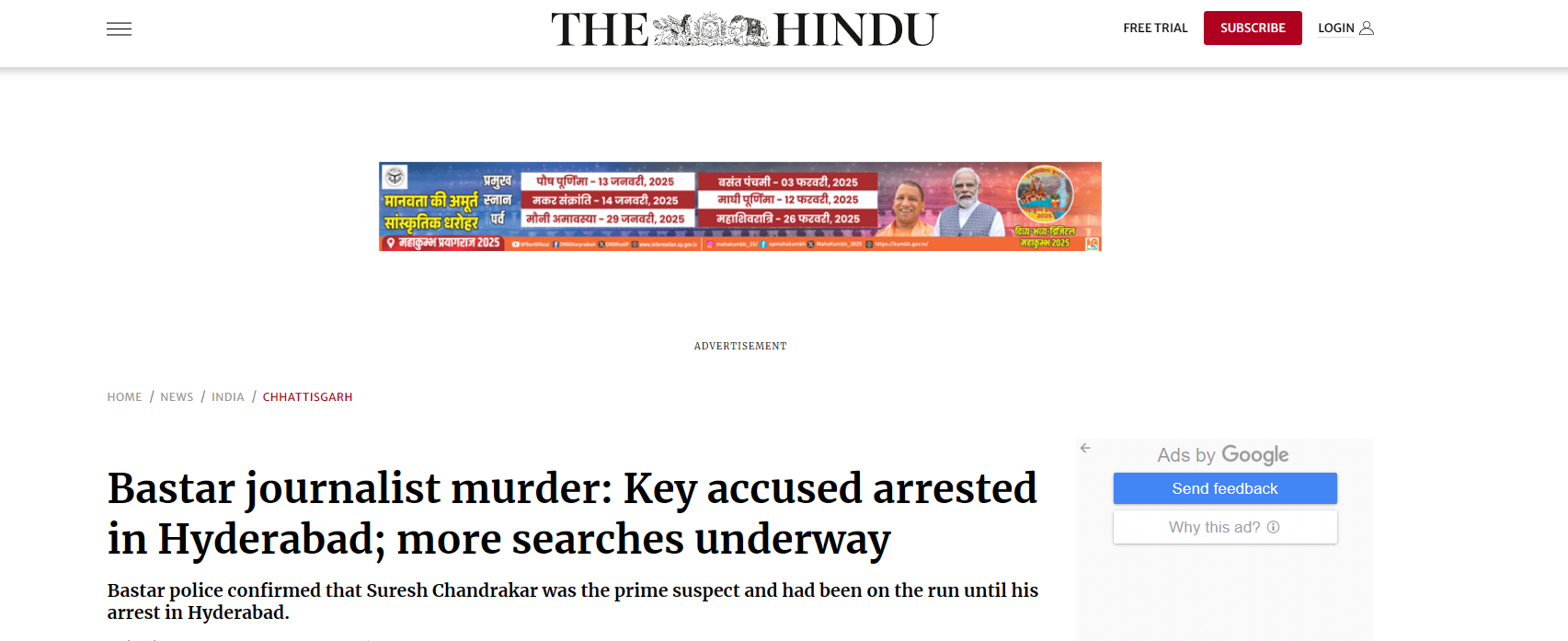
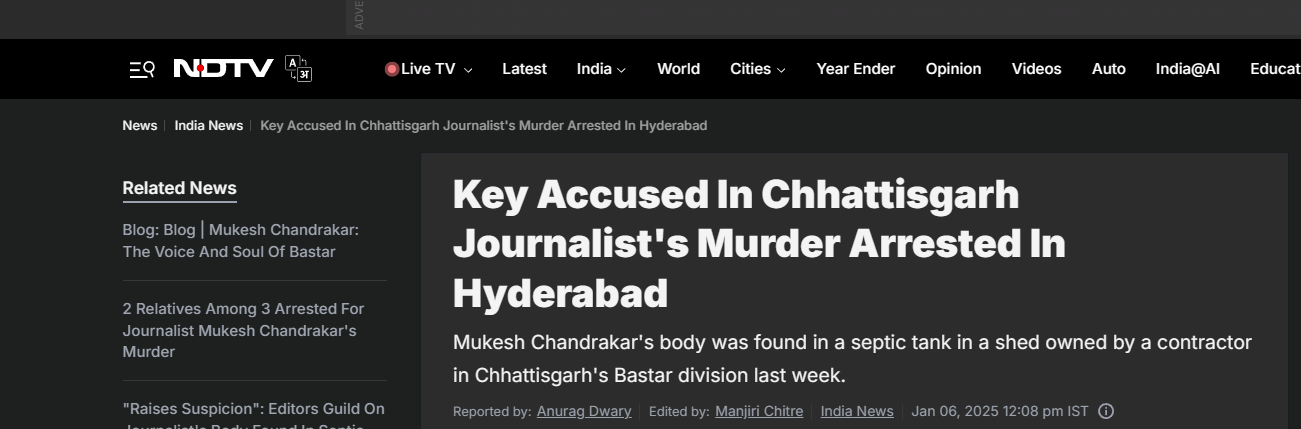
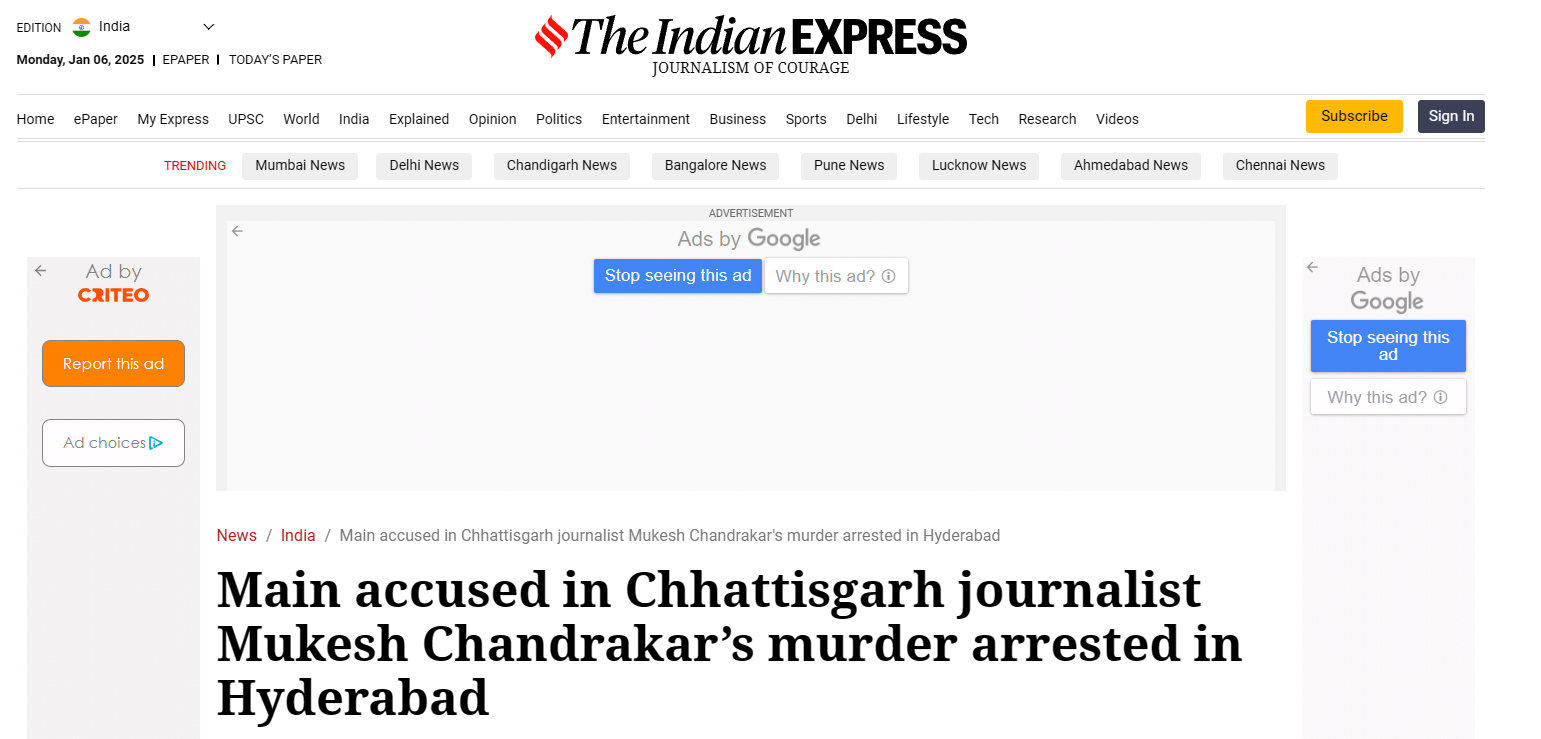
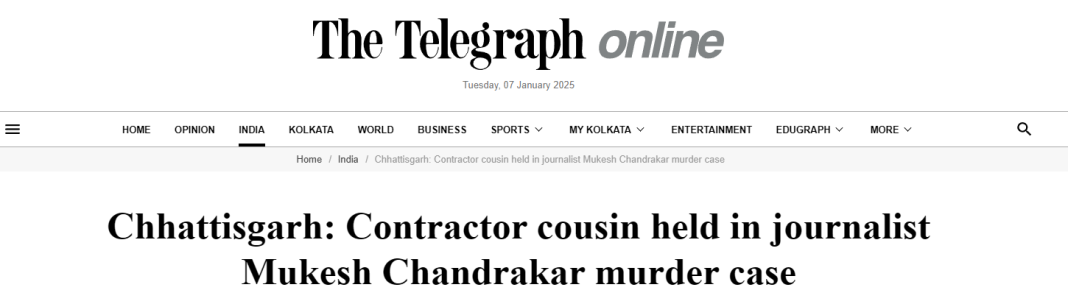
As the details of the horrific murder continue to emerge and the state government acts against the perpetrators, the Indian media is focused on downplaying the profound connection between Suresh Chandrakar and Congress. The prominent media outlets, such as The Times of India, The Hindu, NDTV and The Indian Express, among others notably omitted the fact that Suresh, the primary suspect, is also affiliated with the Congress party. He is identified as a contractor and even as a cousin, yet his significant political identity remained unaddressed. If one were to trust the mainstream media, it would seem that he possesses no political relationship with the Congress.
None of the aforementioned news articles included the term Congress in their coverage, nor did they reference the party in connection with Suresh, as if it were non-existent. On the other hand, others dismissed his associations as a mere claim put forth by the Bharatiya Janata Party, lacking any substantial evidence. They attempted to depict it as a political smear campaign between Congress and the BJP.
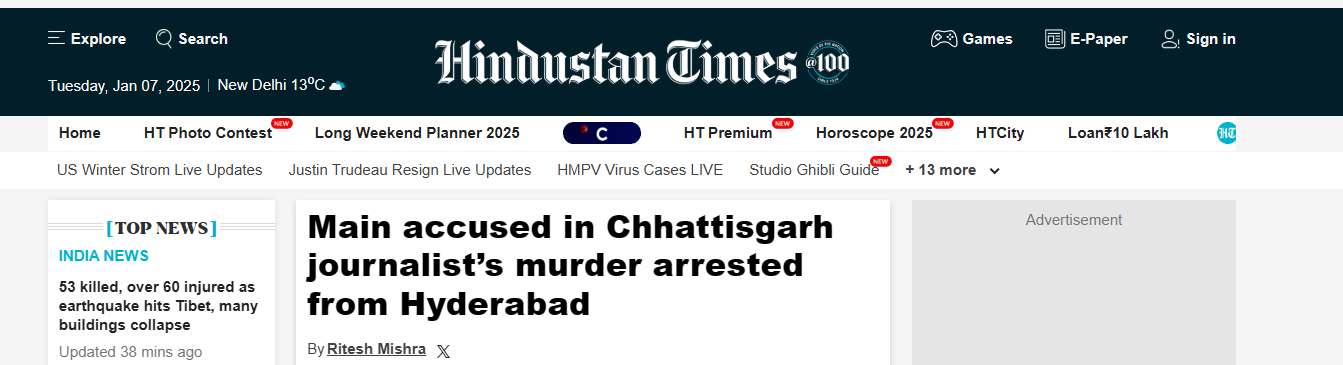
According to the Hindustan Times, the Bharatiya Janata Party’s claims about Suresh’s ties to the grand old party were described as simply allegations. The report included statements from Deputy Chief Minister Vijay Sharma, who confirmed that Suresh had been a leader and office bearer within Congress, however, it added a country from Congress leader Sushil Anand Shukla who denied this assertion, stating that he had joined the ruling party. A simple verification of the facts could have clarified the truth, however, the media organization opted to counterbalance instead.
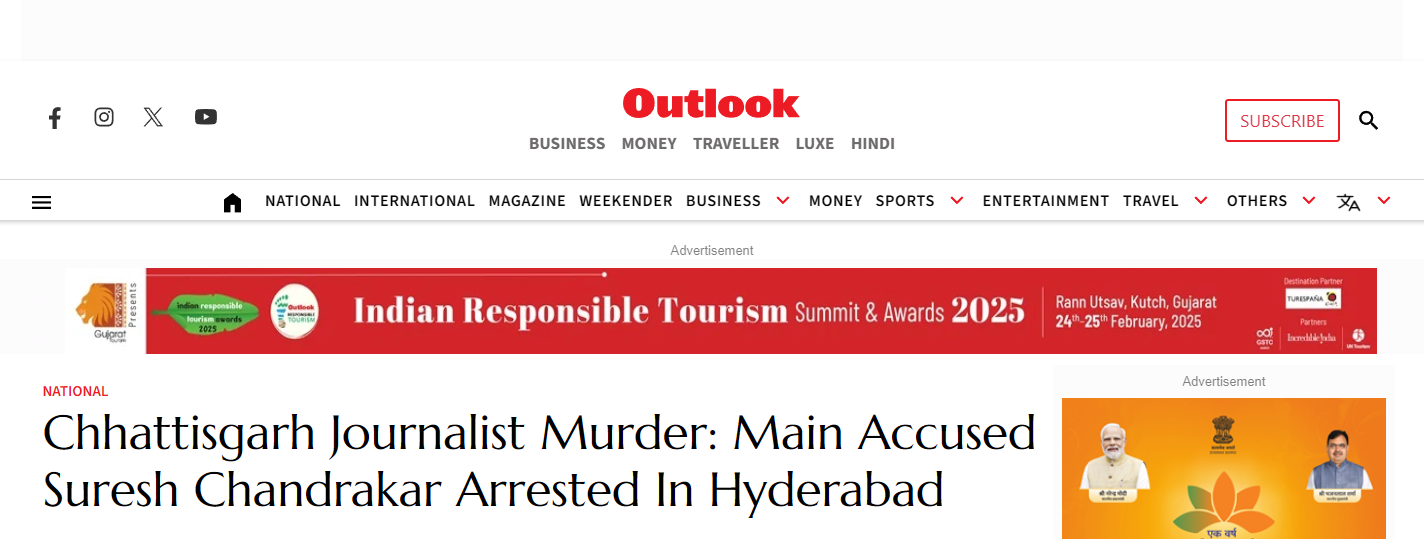
Likewise, Outlook stated, “Chhattisgarh Deputy Chief Minister Vijay Sharma claimed that Suresh Chandrakar was a Congress leader, while the opposition alleged that he had recently joined the ruling BJP,” in yet another attempt to undermine the truth that lies beneath the facade of political allegations.
The Indian media, known for its tendency to defend the Congress party and its integral role within its ecosystem, chose to highlight every trivial detail of the case, overlooking the most critical element, Suresh’s political background, due to obvious motivations.
Congress-Suresh relationship
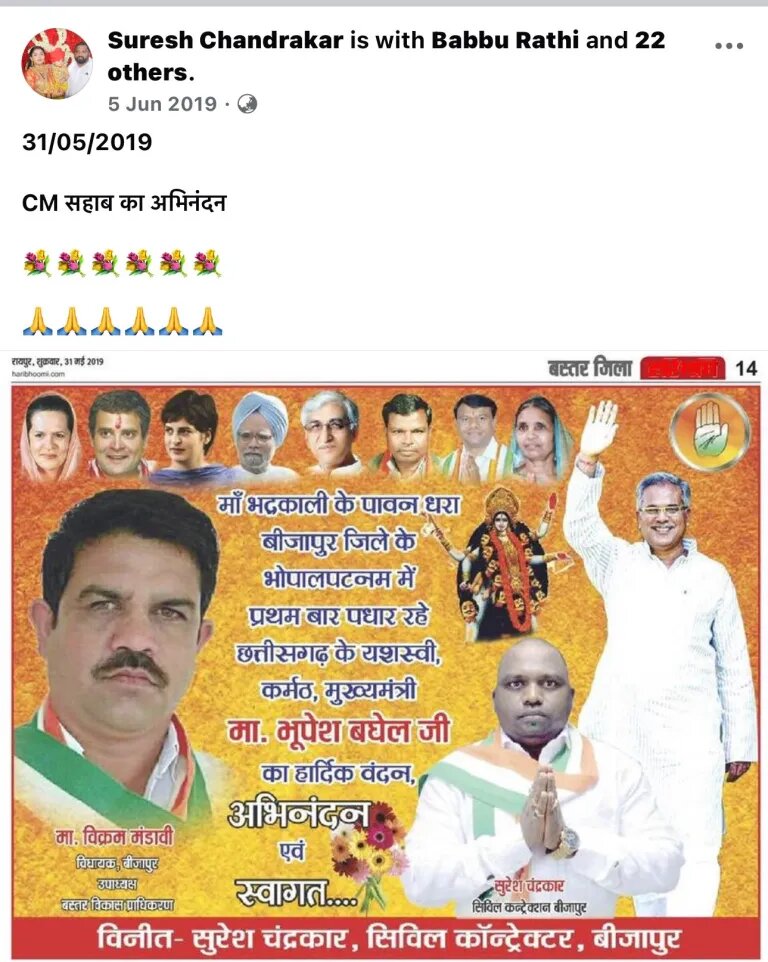
While the mainstream media might have sought to conceal the crucial link between Suresh and the Congress, OpIndia already brought this relationship to light, in an earlier report. A visit to his social media profiles uncovered various posts that established his ties to the Congress party. One significant Facebook post, dated 5th June 2019, showcased him adorned in a Congress scarf, alongside other party leaders, including Bhupesh Baghel, who was the Chief Minister of Chhattisgarh at that time, in a poster.
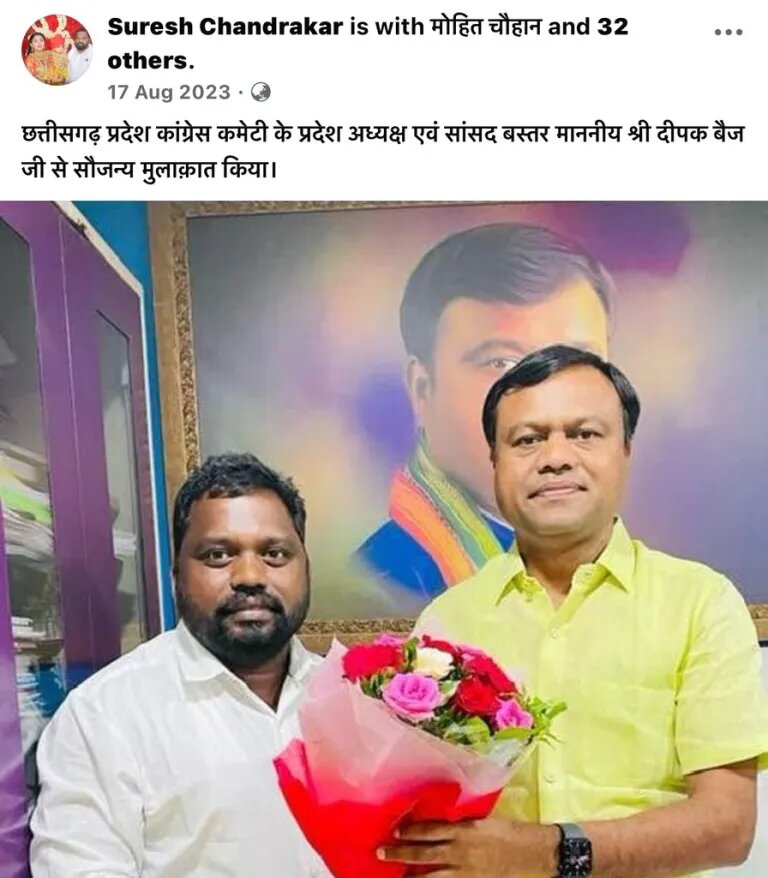
Suresh Chandrakar proudly shared his courtesy meeting with Deepak Baij, the head of the Chhattisgarh Pradesh Congress Committee, in another post.
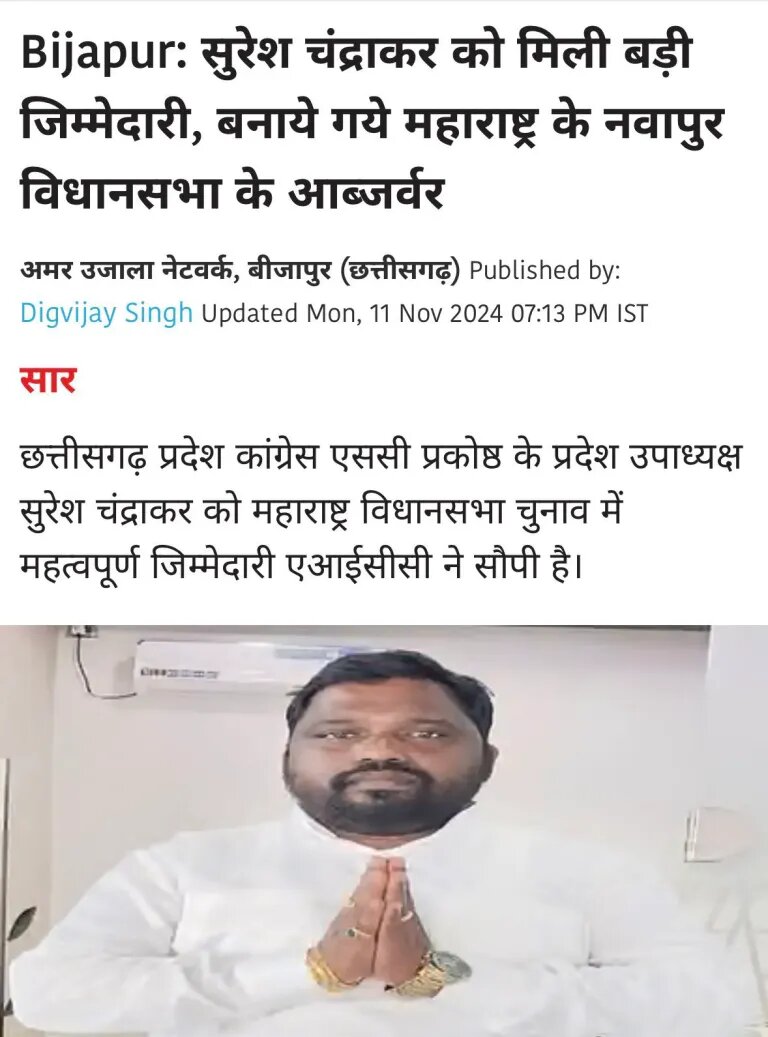
The Congress party contended that Suresh, had left the party to join the BJP, in light of the controversy. Nevertheless, a report from Amar Ujala, dated 11th November 2024, which he posted on his Facebook page, challenged this claim. It revealed that Suresh Chandrakar, serving as the State Vice President of the Chhattisgarh Pradesh Congress SC (Schedule Caste) Cell, was appointed as the observer for the Navapur assembly constituency during the Maharashtra assembly election.
Suresh consistently shared evidence of his connections to the Congress party on his social media platforms. However, the Indian media consciously decided not to explore the issue, thereby neglecting to inform its audience the complete truth. Interestingly, the same privilege is not extended to the saffron party. Notably, the Congress party is also trying to allege that he is no longer a member, however, the compelling evidence contradicts this claim.
Union Home Minister and Minister of Cooperation Amit Shah on Tuesday launched the BHARATPOL portal in the national capital and said that this initiative will take our country’s international investigations to a new level in the coming days.
“Bharatpol will take our country’s international investigations to a new era. The CBI was the only agency identified to work with Interpol, but with the launch of Bharatpol, every Indian agency and all state police forces will easily be able to connect with Interpol,” Shah said.
This portal will streamline all requests for international assistance through Interpol, including the issuance of Red Notices and other color-coded Interpol notices.
Home Minister Amit Shah praised the BHARATPOL portal, saying that through this, our country’s police departments will study and analyze various types of global crimes, enabling us to create a framework to prevent these crimes before they occur in our country.
“Through this, we will be able to bridge many gaps, obtain a lot of information, and, with precision, analyze various types of global crimes, enabling us to create a framework to prevent these crimes before they occur in our country,” he said.
He added, “With BHARATPOL, every agency and state police force in the country will be able to connect with Interpol to expedite their investigations.”
Amit Shah also said that BHARATPOL will facilitate not only the locating of criminals but will also help establish a system to locate international criminals in our country too.
“Through BHARATPOL, we will be able to locate our criminals and also establish a streamlined system to locate criminals from around the world in India. Additionally, with references from Interpol, covering 195 countries, providing and receiving international assistance for investigations through the Interpol channel will become much easier,” Home Minister Shah said.
At the event, Shah also presented Police Medals to 35 CBI officers/officials, who have been awarded the President’s Police Medal for Distinguished Service and Uthe nion Home Minister’s Medal for Excellence in Investigation.
(This news report is published from a syndicated feed. Except for the headline, the content has not been written or edited by OpIndia staff)
The conflict in Myanmar, which significantly escalated following the military coup in February 2021, is now entering its fourth year. The current situation is marked by rampant violence, a grave humanitarian crisis, and a sharp declining economy while the country experience profound instability.
The transition to military rule has encountered persistent resistance from armed groups and civilian networks. The recent surge in violence has resulted in nearly 3.5 million individuals being displaced within a single year.
The nation is currently confronted with significant challenges from various fronts which has exacerbated the hardships and persecution endured by its minorities, especially the dwindling Hindu population. The plight of Hindus in the country is only increasing with each passing day. On 31st December, a drone strike conducted by military junta targeted a Hindu temple in Phyu Township of Taungoo District in Bago Region, resulting in the deaths of seven civilians and wounding seven others, as reported by an official from the Phyu Township People’s Defense Force (PDF).
The incident transpired after several days of conflict in the vicinity of Zeyawadi town within Phyu Township, where hostilities between junta forces and resistance groups had been ongoing since 27th December. The PDF indicated that 19 junta soldiers lost their lives during these clashes. The drone attack specifically struck the temple situated in Ram Nagar village, within the Amae Khaung Village Tract, an area that had not previously experienced any fighting, according to the PDF representative.
An official stated, “This was a public area where Hindus live and worship. The junta dropped the first bomb by drone, and as people rushed to aid the injured, a second bomb was dropped, killing seven civilians on the spot.” Other reports said that the army conducted airstrikes and a drone assault in a minimum of five locations across the country during New Year’s Eve and New Year’s Day and claimed the lives of at least 20 persons, including those who died in the temple attack.
The Myanmar Hindu Union issued a statement on 1st January and said that the junta forces intentionally targeted a civilian region. The organization characterized the assault as a severe infringement of human rights and international humanitarian law, labeling it an act of inhumanity. The declaration called upon human rights organizations, the international community, and global religious leaders to take decisive action against the junta, highlighting the necessity of holding it responsible for the violations against religious and ethnic minorities.
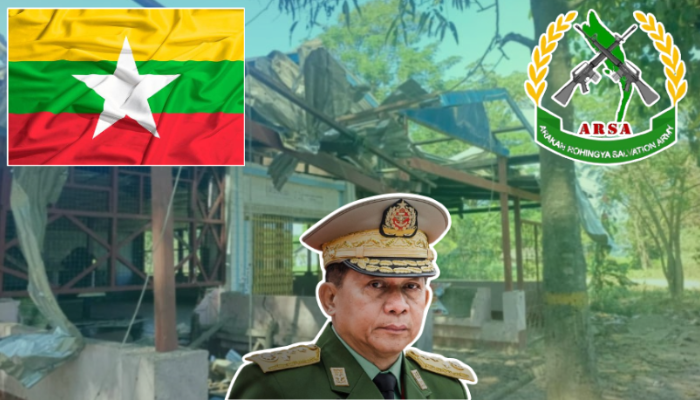
Meanwhile, Major General Alok Deb, former deputy director general of the Institute of Defense Studies and Analysis expressed, “One can only wait and watch to understand why this happened. This could have been a collateral damage inflicted in a war zone, but one is also reminded that the Arakan Rohingya Salvation Army (ARSA) had in 2017 massacred some 99 Hindus in Rakhine state.”
During the attacks on Hindu villagers, the ARSA reportedly asserted that they regarded the unarmed Hindu minority and the Arakanese or Rakhine population as “the same.” It consistently alleged that few Rohingya Islamist factions, some of which are believed to operate from Bangladesh, have engaged in combat against them on behalf of the Myanmar army, executing numerous terror strikes targeting civilians.
A small community of Hindus lives in Rakhine and other regions of Myanmar. The volatile Rakhine province of Myanmar shares its southern border with areas predominantly inhabited by the Burman majority, while to the north, it adjoins Bangladesh’s Cox Bazaar and Mizoram in India. The majority of Rohingya Muslims crossed over to Bangladesh, however, a large number have infiltrated India as well along with Arakanese (referred to as Marma) and Zo.
The Hindu community residing in Rakhine has largely refrained from participating in the conflict. However, analysts have pointed out the army’s documented history of human rights violations. Reports from human rights organizations released last year disclosed that churches, Buddhist temples, and monasteries have been consistently struck by the Myanmar Air Force, while civilians have been subjected to massacres by the military amid the ongoing warfare.
Regular attacks on Hindus in Myanmar
A Rohingya armed faction, equipped with guns and swords, is accused of at least one, and possibly a second, massacre that took the lives of up to 99 Hindu men, women, and children, in addition to other unlawful killings and the abduction of Hindu villagers in August 2017, confirmed Amnesty International. The Arakan Rohingya Salvation Army (ARSA) wanted to instill fear among Hindus and other ethnic groups through these violent acts. The incident received significant global attention and brought the atrocities against Myanmar’s Hindu community to the forefront.
On the morning of 25th August 2017, at approximately 8 am, ARSA launched an attack on the Hindu community residing in the village of Ah Nauk Kha Maung Seik, part of a group of villages referred to as Kha Maung Seik in northern Maungdaw Township. Armed individuals clad in black, along with local Rohingya villagers in civilian attire, targeted numerous Hindu women, men and kids. They proceeded to rob, restrain and blindfold the victims before escorting them to the hamlet’s outskirts, where they separated the men from the women and children. A few hours later, the terrorists executed 53 of the Hindus in a systematic manner.
Eight Hindu women and eight children were taken captive but spared after the assailants compelled them to consent to “conversion” to Islam. They were subsequently forced to escape with the terrorists to Bangladesh several days later, before being repatriated to Myanmar in October 2017 with the assistance of both Bangladeshi and Myanmar authorities.
Afterward, their condition deteriorated further as both the junta and the radicals targeted the marginalized community amidst the prevailing conflict. The unrest turned even more communal, with reports revealing that close to 5,000 houses owned by Buddhists and Hindus were burned in Buthidaung, a location just 25 kilometers from the Bangladesh border. The occurrence took place between 11th and 21st April, last year.
“These 5,000 houses were targeted as they belonged to Buddhists and Hindus. Most people had fled to safer zones so many houses were empty, but those who were left behind were pulled out and their houses looted and burnt in front of their eyes. Conscripts who include young boys from Rohingya camps in Bangladesh are being used for this exercise,” a source unveiled and added, “In 2018 census there were 3000 houses in Buthidaung. This number has increased more than threefold to 10000 as many people fled their homes from other areas to settle here. Over 50 per cent of residents are Muslims while the remaining are ethnic groups (Buddhists, Hindus).”
During the same month, a group of Hindus and Buddhists was taken hostage by Rohingya terror groups in Buthiduang, located in the Arakan state of Myanmar’s Rakhine region. A source conveyed, “With unrest and instability expanding to Buthidaung, the volatility has taken a new turn with Islamic terror groups working on behest of the military to kill and terrorise ethnic groups on the basis of religion. There are over 1600 Hindus and over 120 Buddhists who have been held hostage by them there at present.”
“Myanmar’s military regime provided basic military training to members of the Arakan Rohingya Salvation Army (ARSA) and Arakan Rohingya Army (ARA) to fight against the AA (Arakan Army),” the source highlighted as outbreak of riots driven by religious and ethnic divisions forced Hindus and other minority groups to escape in search of safety.
During May 2024, the Hindu and Rakhine populations found themselves confined in Buthidaung town due to severe clashes. A source mentioned, “The battles are intensifying on the ground in Buthidaung. Over 1,500 Hindus and 20 Rakhines are being prevented from leaving as the situation is unsafe there. Rohingyas are being trained as conscripts and they are being made to target people based on their religion and ethnicity.”
A joint letter was sent by two civil society organizations in Myanmar to the President and Prime Minister of India, in October 2024, urging prompt action in response to the “escalating difficulties” faced by Hindus in the neighbouring country. Their appeal included a call for the re-evaluation of the Overseas Citizen of India (OCI) regulations to encompass Hindus from Myanmar.
Alongside President Droupadi Murmu, the Myanmar Hindu Union (MHU) and India for Myanmar (IFM) communicated a letter dated 22nd August 2024, to Prime Minister Narendra Modi and the Indian ministries of External Affairs, Home and Defence. These organizations were established in 2021 in the aftermath of the coup and are dedicated to backing the National Unity Government (NUG), which operates in exile as a counter to the Myanmar military.
They requested, “As Hindus from Myanmar, we were born and bred in the country, but according to the Myanmar 1982 Citizenship Law, we are made to feel like aliens and second-class citizens. Furthermore, India’s OCI policy does not allow Hindus from Myanmar to become OCI holders. We urge the Indian government to reassess the OCI policy and include Hindus from Myanmar as eligible for this status, recognizing our historical and cultural connections to India.”
The Arakan Army, which gained control of nearly all of Rakhine state while countering the junta-led forces, also acknowledged the immeasurable sufferings experienced by Hindus and others, in December of last year. According to the outfit, terrorist factions were perpetrating violent acts near the Bangladesh border. Additionally, it suggested that a relationship has developed between the military junta and some of these radical groups.
A source from Arakan stated, “There are nearly 11 militant groups operating out of Rohingya refugee camps in Bangladesh which include the Rohingya Solidarity Organisation (RSO), Arakan Rohingya Salvation Army (ARSA), Arakan Rohingya Army (ARA). Hundreds of people have died due to their atrocities: killings, rapes, kidnappings and other kinds of torture.” Maungdaw and Buthidaung towns were most susceptible to such risk.
There were allegations that the RSO has ties with Al-Qaeda and Jamaat-e-Islami. A report by the Global Arakan Network (GAN) asserted that Islamists took advantage of the Muslim population in Maungdaw, using them as human shields and inciting them to combat the non-Muslim demographic, which included Buddhists and Hindus. The terrorists reportedly enlisted young orphans, some as young as six years old, from Rohingya camps in Bangladesh, with the intention of training them to engage in combat once they reach their teenage years.
The Arakan Army contended that Bangladesh allowed and neglected the rapid growth of these groups in its refugee camps. “Bangladesh’s support, both tacit and overt for Rohingya armed actors has facilitated the rise of militant groups at the expense of the moderate, non-violent Rohingya leadership.” There has been a surge in the actions of extremists factions targeting the local communities in the Rakhine region in the wake of the political turmoil in Bangladesh. Furthermore, there are allegations that the interim government led by Muhammad Yunus has been aiding them. Rakhine state shares a border of 270 kilometres with the country.
It is unsurprising that the new government of Bangladesh, which is complicit in brutal assaults on Hindus by in Bangladesh would intend to replicate the same against the Hindus of Myanmar. Bangladesh has experienced over 2,000 instances of violence, the majority of which have specifically targeted the minority Hindu community. The Hindus in Myanmar face a similarly bleak future, as they are oppressed by both the government and Islamist outfits.
Meanwhile, as Hindus in Myanmar are left to fend for themselves, the Rohingya Muslims have unlawfully relocated to India, where they exploit its resources and create more national security risks for the nation.
On 1st January, Times Now’s Group Editor Navika Kumar hosted a discussion with former Chief Justice of India, UU Lalit, and Senior Advocate Dushyant Dave, revolving around the notion of whether the Constitution of India and democracy are under threat. The debate touched on several topics, including constitutional inclusivity, justice, and equality; however, it was Dave’s comments on Hindu temples and history that sparked controversy on social media.
"Every Hindu Temple was built on top of a Jain Temple or a Buddhist Temple." Are you even serious Dushyant Dave Ji ? ? pic.twitter.com/SzwWToQlxK
During the conversation, Dave quoted dubious self-proclaimed historian Devdutt Pattanaik and claimed that Hindu temples were often built over Jain and Buddhist temples. The assertion was made while discussing religious and historical tensions prevailing because of petitions filed in different courts over conflicts arising from interpretations of the Places of Worship Act. Dave claimed that such issues are merely distractions and insisted that people and governments should focus on modern problems like poverty and unemployment. However, in doing so, he echoed claims familiar with Marxist rhetoric aimed at undermining Hindu traditions.
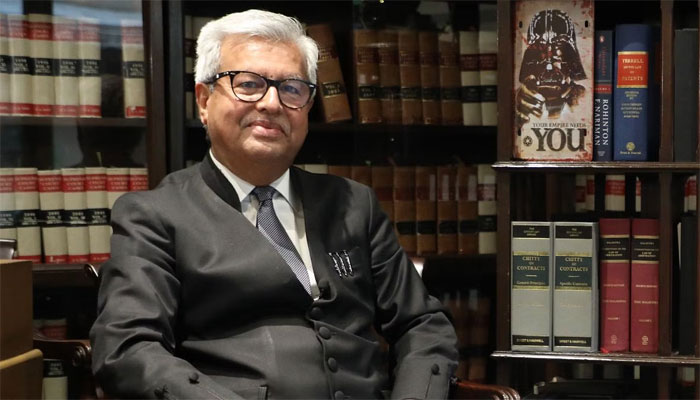
Dushyant Dave remarked, “I have no doubt that every Islamic monument perhaps was built on a Hindu temple, but then every Hindu temple was built on a Jain temple or a Buddhist temple, as Devdutt Pattanaik rightly points out. Are we going to start digging all this? Should we dig up the Taj Mahal or Red Fort? We don’t need it. This country has a larger role to play in the world, which is being derailed by such distractions.”
The temple narrative – Dave’s claim versus historical evidence
What Dave asserted, while referring to Pattanaik’s rhetoric, is a deeply flawed narrative often used to discredit Hindu history. The idea that Hindu temples were constructed over Jain and Buddhist sites lacks historical grounding. It mostly relies on ideological bias rather than evidence.
In fact, this rhetoric is not new. In 1986, Marxist historians like Romila Thapar dismissed reports about the Islamic destruction of Hindu temples, claiming it was a “communal” notion. They countered the facts of Islamic invasions and destruction with baseless claims about Hindu desecration of Buddhist and Jain sites. However, the claims, which lacked scholarly evidence, were demolished by historian Sita Ram Goel.
Goel sent a detailed questionnaire to historians like Thapar and demanded concrete proof of such claims. He asked for inscriptions, Hindu scriptures, or records of rulers celebrated for such acts. In return, he received only silence from the Marxist historians, and this silence has persisted for decades.
Goel, during his research, established that Hindu kings, while often reconstructing or renovating temples, did not engage in the widespread destruction suggested by Marxist historians as part of their propaganda against Hinduism or Sanatan Dharma. On the other hand, Islamic conquests left clear records of temple destruction. In fact, there is no documentation that exists for the so-called destruction carried out by Hindu rulers. Goel also highlighted how these baseless claims created psychological pressure by portraying Hindus as intolerant to avoid being labelled “communal”.
Dave, in his assertion, heavily relied on Pattanaik, who has a long history of distorting Hindu traditions and peddling false claims. He lacks credibility and mirrors the long-standing tactic of ideological intimidation by Marxist liberals. Interestingly, when someone counters Pattanaik on his claims on social media, he often replies with abuse or blocks the person instead of providing any proof for whatever fiction he presents in the name of “history”, or in his own words, “mythology”.
If such accusations were based on genuine evidence, they would withstand scrutiny—but decades of silence from their proponents suggest otherwise.
The broader debate – inclusivity, reservation, and governance
A major part of the discussion, however, revolved around inclusivity, reservation, and governance among other topics. Former CJI UU Lalit celebrated India’s journey towards inclusivity and said, “The Constitution has expanded its reach to uplift marginalised sections of society, from Scheduled Castes and Tribes to women and economically weaker sections. We are moving in the right direction.” He highlighted landmark constitutional amendments, such as the 73rd and 74th, which brought women into the democratic framework at the grassroots level, and newer provisions aimed at increasing their representation in legislatures.
However, Dave did not agree with him, stating that despite the measures taken in the past few decades, the reality is bleak. He gave the example of the government providing free grains to 85 crore people to support his argument. He said, “Can we call this progress when such large sections of society remain impoverished?”
Uniform civil code – an elusive reform?
While Justice Lalit supported the idea of a Uniform Civil Code, asserting it aligns with Article 14’s principle of equality, Dave expressed doubts about the feasibility of the UCC in the current political climate. He said, “The UCC has often been weaponised as a political tool rather than pursued as a genuine reform. It risks becoming more divisive than unifying if approached insensitively.”
Judiciary and justice delivery – an unfulfilled promise
Discussing the judiciary’s role, Justice Lalit emphasised its importance as a safeguard for citizens, stating, “The courts remain the ultimate refuge for those seeking justice. Even when errors occur, the judiciary has mechanisms to correct them.” Dave, however, criticised systemic inefficiencies, pointing out, “With over five crore cases pending, justice delayed is justice denied.” He accused the judiciary of being silent on alleged “human rights violations”.
Reservation versus merit
Justice Lalit acknowledged the need for affirmative action but stressed balance, saying, “Affirmative action must continue until marginalised communities achieve parity. However, integrating economic criteria into the framework can ensure fairness for all.”
However, Dave repeated the same “5,000 years of oppression” argument, claiming the marginalised communities were denied dignity and are still being denied the same. He asserted, “Reservations are not a favour—they are a necessity for justice. Yet, we turn a blind eye to the privileges of the wealthy, particularly in private institutions.”
Conclusion
Dave’s claim that Hindu temples were built over Jain and Buddhist sites, quoting Devdutt Pattanaik, is yet another example of Marxist propaganda aimed at undermining Hindu heritage. No credible evidence supports this narrative, as shown by historian Sita Ram Goel’s detailed research. Unlike the well-documented destruction of Hindu temples during Islamic invasions, there is no record of systematic destruction by Hindu rulers. By repeating such baseless claims, Dave distorted history and unfairly targeted Hindus while ignoring proven facts.
On Monday (6th January), the Supreme Court upheld the life sentences of 5 Communist Party of India (Marxist) members for the murder of 2 Rashtriya Swayamsevak Sangh (RSS) workers Sujeesh and Sunil in Kerala’s Thalassery in 2002. While rejecting the plea moved by convicts Panniyodan Sivadasan alias Sivatty, Edakandi Ashokan alias Kokkodan Ashokan, Vellora Pradeepan alias Eduppi Pradeepan and Badiyil Reneef, the court said that there was no error in the High Court’s decision to uphold the Trial Court’s judgement awarding life term to the CPIM members.
Another convict Ekandi Dinesan had died during the pendency of the petition challenging the Kerala High Court’s decision to uphold the sentencing of the convicts..
The Supreme Court bench, comprising justices Sudhanshu Dhulia and Prasanna B Varale, observed that there is a need to prevent such crimes, saying that their persistence undermines societal stability.
“Crime creates a sense of societal fear, and it affects adversely the societal conscience. It is inequitable and unjust if such a situation is allowed to perpetuate and continue in society. In every civilized society, the purpose of criminal administrative system is to protect individual dignity and to restore societal stability and order and to create faith and cohesion in the society,” the bench said.
On the midnight of the 1st of March 2002, CPIM workers attacked Sujeesh, Sunil, and others, after several CPIM workers in Melur joined the RSS. The RSS workers were sleeping in a shed near the Melur River. Sujeesh suffered serious injuries in the attack with an axe and a sword and was sent to Thalassery Hospital, where he succumbed. The prosecution told the court that the victims and nine others were attempting to flee a violent mob when the accused launched a lethal attack, killing them all.
In 2006, a trial court convicted 14 CPM members and sentenced them to life in prison for the killings. However, in 2011, the Kerala high court affirmed the conviction of five men, acquitted eight others, and noted the death of one accused Dinesan. Following this, the convicts filed a plea in the Supreme Court challenging the High Court’s decision contenting that the alleged contradictions in witness testimonies raise doubt on the involvement of the convicts in the murder.
The Supreme Court, however, noted that there were only minor contradictions and that does not undermine the prosecution’s case. “Only because there are some contradictions, which in the opinion of this Court are not even that material, the entire story of the prosecution cannot be discarded as false,” the SC bench said adding that the testimonies of eyewitnesses were “honest, truthful and trustworthy” and that the High Court’s reliance on these testimonies was “well-reasoned”.
Moreover, the court also rejected the argument that the convicts be acquitted due to alleged investigative lapses. “On account of defective investigation, the benefit will not inure to the accused persons on that ground alone. It is well within the domain of the courts to consider the rest of the evidence, such as statements of eyewitnesses and medical reports,” the bench said.
On 3rd January, a special National Investigation Agency (NIA) court presided by Additional District Judge Vivekanand Sharan Tripathi in Lucknow sentenced 28 accused in the Chandan Gupta murder case to life imprisonment under Section 302 of the Indian Penal Code (IPC) and other sections. Chandan was brutally murdered during violence that occurred during the Tiranga Yatra on 26th January 2018 in Kasganj, Uttar Pradesh. The accused were convicted on 2nd January 2025. In the judgment, the court raised concerns over the involvement of certain NGOs in the legal proceedings questioning their intentions and source of funding.
Notably, the court categorically stated that, based on legal precedents, it was evident that Muslims had perpetrated communal violence against Hindus. It further observed that seven members of the mob were armed with firearms and cartridges, while others engaged in stone-pelting and attacked Hindus with rods and sticks.
Concerns raised about the involvement of NGOs in communal cases in courts
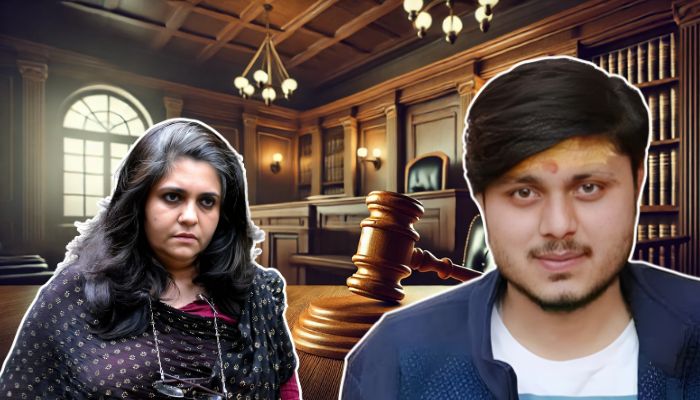
From points 185 to 188 of the judgment (pages 123 to 126), the court raised significant concerns about a specific report submitted by defence counsel Zia Ul Jilani titled ‘Truth Of Kasganj: Sham Police Probe Protects Hindus, Frames Muslims’, which was published on 29th August 2018 by Citizens for Justice and Peace, Mumbai. CJP is the same organisation that ran the notorious campaign against then-Chief Minister of Gujarat, Narendra Modi, claiming he and other BJP/Hindu organisation leaders were behind the Gujarat Riots 2002. CJP claims to have been founded as a response to the Gujarat Riots. Its founding members include Teesta Setalvad, her husband, Javed Akhtar and others.
The court pointed out that the defence counsel himself admitted that the report did not mention that any team had visited Kasganj to prepare the findings. The court observed, “Such reports attempt to exert undue pressure on the judiciary, and their content raises questions about the integrity of the investigative process.”
The court also expressed grave concerns over the influence of certain NGOs, including Alliance for Justice and Accountability (New York), Citizens for Justice and Peace (Mumbai), Indian American Muslim Council (Washington DC), People’s Union for Civil Liberties (New Delhi), Rihaee Manch (Lucknow), South Asia Solidarity Group (London), and United Against Hate (New Delhi). It stated, “The communal sentiment subtly infiltrates human activities at the ideological level and is often manifested through reports and interventions by such NGOs. This court has often observed that when accused persons involved in anti-national activities are brought for trial, certain advocates, reportedly linked to these NGOs, are already present with vakalatnamas to represent them.”
On the issue of legal aid, the court underscored that while every accused is entitled to free legal assistance under the Legal Services Authorities Act and the CrPC, NGOs cannot claim an independent right to provide such aid. The court remarked, “The state must provide free legal assistance to individuals unable to represent themselves. When an accused is represented by a state-appointed defence counsel or amicus curiae, it strengthens their trust in the judiciary and the Constitution. However, advocacy by communal NGOs risks shifting allegiance towards the organisations rather than the state.”
Referring to the role of NGOs like Jamiat Ulama-e-Hind, the court noted their claims of securing 400 acquittals in Indian courts by March 2019 through legal assistance. It stated, “If an accused is acquitted due to advocacy by a communal NGO, their allegiance tends to shift towards the NGO rather than the state. This fosters a narrow and dangerous perception of the judiciary, which undermines the faith in judicial processes.”
In a notable observation, the court questioned the intentions and funding sources of these NGOs. It stated, “What interest do NGOs like Citizens for Justice and Peace (Mumbai), People’s Union for Civil Liberties (New Delhi), Rihaee Manch (Lucknow), and United Against Hate (New Delhi), as well as foreign organisations such as Alliance for Justice and Accountability (New York), Indian American Muslim Council (Washington DC), and South Asia Solidarity Group (London), have in communal cases like Kasganj? Where does their funding come from, and what are their collective objectives?”
The court urged the Ministry of Home Affairs and the Chairman of the Bar Council of India to investigate these NGOs’ funding and activities and take necessary measures to prevent their undue interference in judicial processes. It further called for “all enlightened stakeholders, including the judiciary and bar associations, to reflect on the implications of such practices on communal harmony and judicial independence.”
Notably, the court mentioned eight NGOs in the judgment. OpIndia analysed the report submitted by the defence counsel and investigated the background of these NGOs.
The biased approach of ‘Truth Of Kasganj: Sham Police Probe Protects Hindus, Frames Muslims’
The report ‘Truth Of Kasganj: Sham Police Probe Protects Hindus, Frames Muslims’ mentioned by the court was released in August 2018 by Former IPS officer SR Darapuri, dubious activist Teesta Setalvad, Sandeep Pandey, advocate Shoaib Mohammad and The Wire’s columnist Apoorvanand. All these names have been associated with left-leaning organisations. OpIndia analysed the report and found that it was heavily biased against Hindus.
The authors of the report claimed that it provided an independent investigation into the violence that erupted in Kasganj, leading to the murder of Chandan Gupta. The report heavily criticised the police investigation into the violence and accused the investigation team of deliberate bias against Muslims while protecting Hindus involved in the violence. However, the court, in its judgment, categorically dismissed the report as an attempt to exert undue pressure on the judiciary and criticised its lack of credibility and failure to provide verifiable evidence.
The report claimed that the police split the investigation into two separate FIRs to frame Muslims in Chandan’s murder while protecting Hindus from accountability for their actions. It further asserted that the first FIR omitted critical details about the sequence of events, including the origins of the violence and the involvement of Hindu participants of the Tiranga Rally.
It also claimed that Muslims were disproportionately arrested and accused of crimes such as murder and rioting, while Hindus, despite evidence of firing, arson, and vandalism, were not subjected to comparable scrutiny. The report alleged that the police investigation was riddled with procedural flaws, delayed filings, and fabricated accusations aimed at vilifying Muslims.
The authors claimed that the police failed to investigate Hindus involved in the violence, including the leaders of the rally. They asserted that it was Hindus who instigated the violence and not Muslims, naming individuals such as Anukalp Chauhan as persons behind the violence. They further claimed that the testimonies of Muslims were ignored during the investigation.
The report’s tone and approach drew sharp criticism from the court, which observed that its findings lacked credibility due to the absence of on-ground investigation by the report’s authors. The court pointed out that the defence counsel representing the accused Muslims acknowledged that no investigative team had visited Kasganj to verify the claims made in the report. This admission undermined the report’s purported objectivity and lent credence to the court’s assessment that the document was an attempt to manipulate public opinion and judicial processes.
The report’s recommendations, including the withdrawal of charges against Muslims, fresh investigations, and the arrest of Hindus involved in the motorcycle rally, further reveal its overt partiality. The court noted that such recommendations, made without robust evidence, could encourage communal divisions and erode public trust in the judiciary. By presenting a one-sided narrative and selectively critiquing the police, the report appears to prioritise advocacy over accuracy.
In light of these shortcomings, the court’s criticism of the report as biased and lacking factual substantiation is justified. The document, while claiming to defend pluralism and justice, ultimately fails to provide an impartial or evidence-based account of the events in Kasganj. Instead, it serves as a contentious and polarising interpretation that undermines the judicial mandate to ensure fairness and accountability in communal violence cases.
After publishing the dubious report, Teesta and her fellow authors of the report organised talks and seminars to spread the disinformation. Video of the said seminar from August 2018 can be seen here and here.
NGOs mentioned by the court
Alliance for Justice and Accountability (New York)
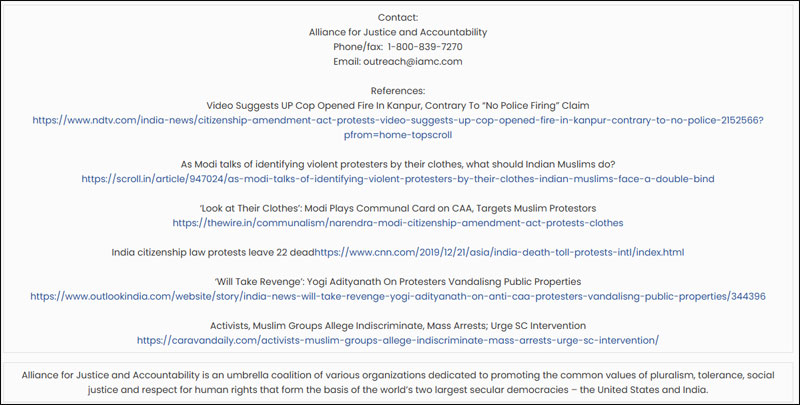
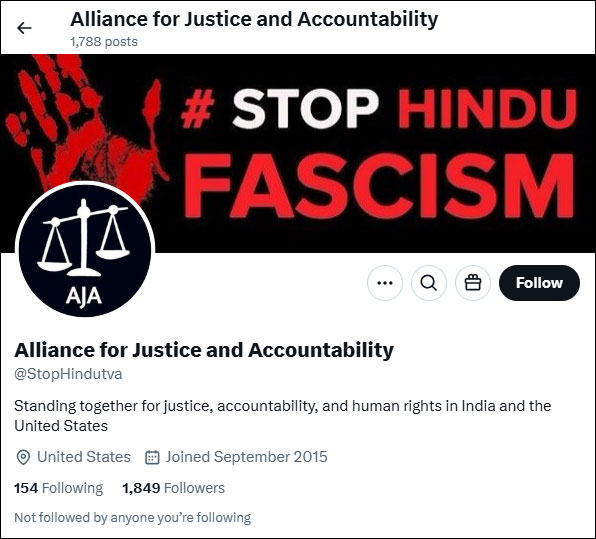
The Alliance for Justice and Accountability (AJA) is the first NGO mentioned in the list. According to various news reports and articles on platforms like Medium, AJA is described as an umbrella organisation comprising “progressive groups across the United States.” A 2019 article on the website of the Indian American Muslim Council (IAMC) stated that AJA “is an umbrella coalition of various organizations dedicated to promoting the common values of pluralism, tolerance, social justice, and respect for human rights that form the basis of the world’s two largest secular democracies – the United States and India.”
Source: IAMC
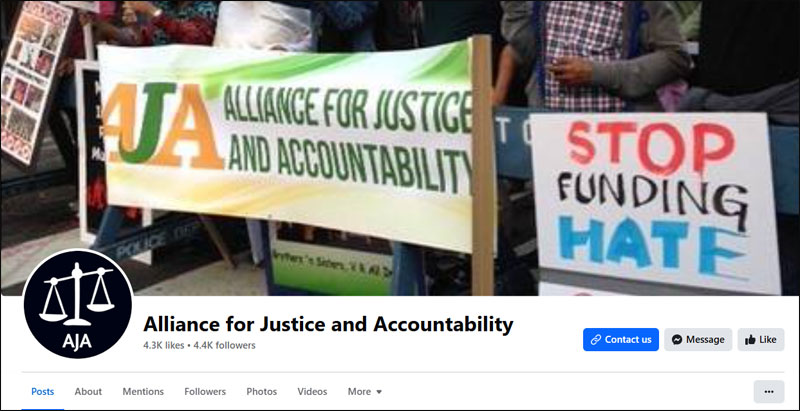
Several individuals linked to AJA were identified by OpIndia, including Ashwin Khobragade, Nesamani Rajamani, and Sana Qutubuddin. Notably, the contact information for AJA in the aforementioned IAMC report was the same as that of IAMC itself, suggesting that IAMC might be either a founding member of AJA or a significant part of its structure. The organisation has a Facebook page where the last post dates back to June 2021.
Source: Facebook
Additionally, AJA has not been mentioned in news reports for an extended period, raising questions about its current activity. On X (formerly Twitter), AJA operates under the handle “StopHindutva”, which clearly reflects its ideological stance.
Source: X
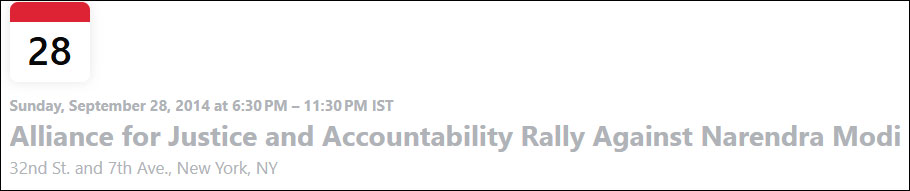
In September 2014, months after Prime Minister Narendra Modi assumed office for the first time, AJA organised an anti-Modi rally during his first visit as PM to the US.
Source: Facebook
Citizens for Justice and Peace (Mumbai)
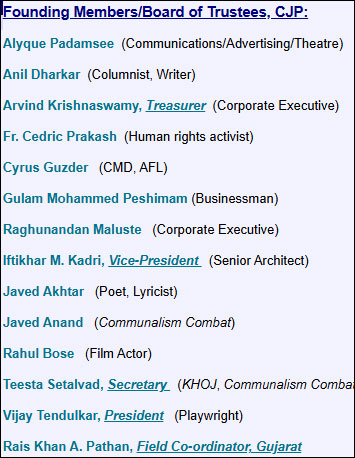
The Citizens for Justice and Peace (CJP) is a Mumbai-based organisation that claims to be a “human rights movement dedicated to upholding and defending the freedom and constitutional rights of all Indians.” Founded by activist Teesta Setalvad and her husband, along with individuals such as Father Cedric Prakash, Anil Dharker, Alyque Padamsee, Javed Akhtar, Vijay Tendulkar, and actor Rahul Bose, the organisation has positioned itself as a significant voice in human rights advocacy in India.
Source: Archived page of CJP
CJP gained notoriety for its aggressive campaign against then-Chief Minister of Gujarat, Narendra Modi, BJP leaders, Hindu organisations, and individuals, accusing them of orchestrating the Gujarat riots of 2002. The organisation played a central role in framing the narrative that placed disproportionate blame on Hindu leaders and groups, portraying the riots as a one-sided “genocide.” This portrayal, however, has faced extensive criticism for being selective and biased, as subsequent legal proceedings and investigations revealed a more complex reality behind the events of 2002.
While CJP’s current website emphasises its broader mission, its archived page from 2021 and 2017 explicitly points towards the fact that it was formed in response to what it referred to as the “Gujarat genocide.” This terminology has been widely criticised for being inflammatory and for promoting a polarised view of the riots. Critics have argued that CJP’s approach has often focused on targeting Hindu groups while overlooking other aspects of communal violence, raising questions about its impartiality.
The organisation’s involvement in legal battles and campaigns has also been marred by controversies, particularly surrounding its founder, Teesta Setalvad, who has faced allegations of misappropriation of funds meant for riot victims. These controversies have further undermined the credibility of CJP’s self-professed commitment to justice and human rights. By persistently framing incidents like the Gujarat riots through a narrow, one-sided lens, CJP has contributed to deepening communal divisions rather than fostering reconciliation or holistic justice.
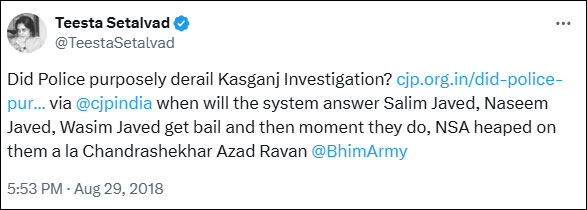
Teesta actively published posts to set a narrative against Hindus in Kasganj violence and claimed the police investigation was biased.
Source: X
Indian American Muslim Council (Washington DC)
Indian Americal Muslim Council is a radical Islamist group that has alleged links with banned terror organisations such as the Students Islamic Movement of India (SIMI) and has a long history of lobbying against India. The IAMC is a Jamat-e-Islami-backed lobbyist organisation claiming to be a rights advocacy group. In the past, it had reportedly collaborated with and even paid money to various groups in the USA to get India blacklisted by the USCIRF (United States Commission on International Religious Freedom).
IAMC founder Shaik Ubaid and member Abdul Malik Mujahid have headed the Islamic Circle of North America (ICNA), the US front for Jamaat-e-Islami, Pakistan. According to DisInfo Lab, ICNA has established links with Pakistan-based terror groups like the Lashkar-e-Taiba. Rasheed Ahmed, who heads the IAMC currently, was the former executive director of the Islamic Medical Association of North America (IMANA). IMANA’s Director of Operations is Zahid Mahmood, an ex-Pak Navy official. Besides, the Indian American Muslim Council has ties with Lashkar-e-Taiba (LeT) and Jamaat-e-Islami (JeI) through its founder Shaik Ubaid. A detailed report by Disinfo Lab has exposed its links with the terror outfit Jamat-e-Islami.
People’s Union for Civil Liberties (New Delhi)
People’s Union for Civil Liberties is a fraternal organization of the People’s Union for Democratic Rights (PUDR). The People’s Union for Civil Liberties is the same organisation that has extensive links to Maoists. ‘Urban Naxals’ who were arrested in the Elgar Parishad case and in connection with an alleged assassination plot against the Prime Minister are intimately linked with the PUCL. The PUCL and its associate organisations have a history of ties to Naxals and separatists in Kashmir as well as Manipur.
Over the years, numerous members of the organisations have been arrested for their links to Maoists. One of those raided in connection with the violence at Bhima Koregaon, Sudha Bharadwaj, is the General Secretary of the Chhattisgarh unit of the People’s Union for Civil Liberties (PUCL).
In September 2022, PUCL asked to lift the ban on the Popular Front of India (PFI). Notably, the ban was imposed on PFI for five years by the Union Home Ministry for its involvement in anti-India activities. A statement said that a dialogue with the PFI should be started. The organisation demanded that the authorities refrain from using their arrest powers arbitrarily to target Muslim youths based on their involvement or support of the PFI and its affiliates.
It urged that the Unlawful Activities (Prevention) Act (UAPA) and the NIA Act be repealed but that, in the meantime, the NIA Act be altered to guarantee that the State government concerned was contacted, and approval was obtained before the NIA conducted a search or arrest a resident of that State.
Furthermore, PUCL also condemned actions against dubious journalist Rana Ayyub who was accused of misusing money collected through donations during Covid, and former Amnesty India employee Aakar Patel and even the raids on The Wire’s office in November last year.
Rihaee Manch (Lucknow)
It is a political front that claims to resist repression. It was involved in an array of protests including anti-CAA and farmer protests.
South Asia Solidarity Group (London)
The South Asia Solidarity Group (SASG), a London-based organisation, identifies itself as an anti-imperialist and anti-racist group. Established in 1987 by Amrit Wilson and Kalpana Wilson, SASG includes notable members such as former LTTE member Nirmala Rajasingham, Keval Bharadia, Saunvedan Aparanti, Sangeeta Kalia, and Shruti Iyer. Despite its claims of advocating for justice, the group has faced serious allegations of engaging in anti-India propaganda. In February 2024, the Indian government revoked Amrit Wilson’s Overseas Citizen of India (OCI) status, citing her involvement in “multiple anti-India activities” and “detrimental propaganda” against the government, which were deemed inimical to India’s sovereignty and integrity.
SASG’s controversial activities include its stance on the 2022 Leicester violence. The organisation blamed Hindus for the unrest, portraying them as aggressors. However, this narrative was contradicted by extensive reporting by OpIndia, which uncovered the involvement of Muslim leaders and groups in orchestrating attacks against the Hindu community. This deliberate misrepresentation aligns with SASG’s history of pushing one-sided narratives and vilifying Hindu groups while ignoring evidence pointing to other actors.
SASG’s activities and its members’ associations with controversial figures and groups raise serious questions about its credibility and motives. Its portrayal of incidents like the Leicester violence not only distorts the truth but also exacerbates communal tensions, undermining efforts to foster genuine harmony and understanding. The Indian government’s decision to revoke Amrit Wilson’s OCI status reflects the growing concern over SASG’s activities that are perceived as undermining India’s sovereignty and promoting divisive agendas.
United Against Hate (New Delhi)
United Against Hate (UAH) is a Muslim organisation that was accused of being involved in the anti-Hindu Delhi Riots of February 2020. It was started in 2017 by the likes of Umar Khalid, Nadeem Khan, Khalid Saidi, Banojyotsana Lahiri, and lawyer Tamanna Pankaj. Several of its members were booked in the Delhi Riots case, out of which, Khalid is currently launched in jail awaiting trial. Its social media accounts have been inactive since 2022. The organisation also participated in Farmer Protests. In 2019, OpIndia found its links to appeal for protests against CAA.
Source: X
In early 2020, before the riots broke, OpIndia reported in January 2020 how their WhatsApp group was extensively used to mobilise protesters for anti-CAA campaigns. Even Home Minister Amit Shah had made a special mention of this organisation during the parliamentary debate on Delhi’s riots. Shah said in the parliament, “United Against Hate – the name sounds so pious but look what they advocated. They said, ‘(Donald) Trump is about to come, we should block the streets’.”
Jamiat Ulama-e-Hind (Legal Cell/Institute)
Jamiat Ulama-e-Hind has a notorious track record of defending individuals associated with numerous terrorist activities. They have provided legal aid to terrorists linked to organisations like ISIS, Al-Qaeda and Lashkar-e-Taiba. Reports suggest that the organisation’s legal cell, which was established by its chief Maulana Mahmood Asad Madani in 2007, has taken up cases and enlisted lawyers to defend terror accused in the courts across the country, a stance that poses a serious threat to national security and social harmony. In this case, too, JUT has provided legal aid to the accused.
In 2022, OpIndia published a report that explained how Jamiat Ulama-e-Hind has defended around 700 terror-accused individuals resulting acquittal of at least 192 since 2007. Most of the acquittals were due to technicalities, lack of evidence and poor police investigation rather than proof of innocence. High-profile cases, including the 7/11 Mumbai train blasts, the 2006 Malegaon blasts, the Aurangabad Arms case, and the 26/11 Mumbai terror attacks, highlight Jamiat’s legal interventions on behalf of terrorists.
Conclusion
The judgment delivered by the special NIA court in the Chandan Gupta murder case is not only a milestone in ensuring accountability for communal violence but also a significant commentary on the disruptive role of certain NGOs and individuals like Teesta Setalvad. The court exposed how organisations such as Citizens for Justice and Peace, led by Setalvad, manipulated narratives to exert undue influence on judicial processes and erode public trust. By raising concerns over their biased reports, dubious funding, and communal advocacy, the court underscored the critical need to prevent such entities from undermining justice. This verdict reaffirms the judiciary’s commitment to impartiality and strengthens the call for transparency in the role of NGOs in sensitive legal matters.
Last week, tech billionaire Elon Musk slammed the Prime Minister of the United Kingdom Keir Starmer over his utter failure to deliver justice to the grooming gang victims in the country. Musk said that Starmer failed to provide justice to the rape gang victims when he was the director of public prosecutions over a decade ago.
“Starmer was complicit in the rape of Britain when he was head of Crown Prosecution for six years. Starmer must go and he must face charges for his complicity in the worst mass crime in the history of Britain,” Musk posted on X. This comes amidst the Labour government’s decision to reject Oldham town council’s plea seeking a national inquiry into the grooming gangs scandal.
Musk also highlighted the police complicity in the prevalence of grooming gangs, inaction against them for many years, and the unfair arrests of victims and their family members. “So many people at all levels of power in the UK need to be in prison for this,” Musk said.
Starmer was the Director of Public Prosecutions at the Crown Prosecution Service between 2008-2013 which approves police requests to charge suspects in serious crimes like rape. Musk said that when the rape gangs were exploiting young girls, Starmer headed the CPS and allowed the crimes to take place.
The UK government replied to the event and said that Musk was misguided and misinformed. Responding to Musk, UK Health Secretary Wes Streeting said, “Some of the criticisms that Elon Musk has made, I think, are misjudged and certainly misinformed,” adding that the state was willing to work with him to tackle the issue.
“I think he’s got a big role to play with his social media platform to help us and other countries to tackle this serious issue. So, if he wants to work with us, roll his sleeves up. We’d welcome that,” Streeting said.
So many people at all levels of power in the UK need to be in prison for this. https://t.co/PtM39RGrFi
The issue once again caught public eye recently when Home Office Minister Jess Phillips denied Oldham Council’s plea for a government-led inquiry into historical child sexual exploitation. The issue of child sexual abuse at the hands of grooming gangs led by British Pakistani men has been a serious issue demanding attention for years. In the late 90s, young girls, a minimum of 11 were picked up, raped, beaten, sold, and even killed by grooming gangs or rape gangs for a full forty years. One of the exposures in a similar instance in Rotherham found that 1,400 children had been sexually abused over 16 years by British Pakistani men.
Notably, such incidents have been happening since the 1980s in various areas of the United Kingdom including Huddersfield, Rotherham, Rochdale, Oxford, Bristol, Peterborough, and Newcastle. However, the first such case that was documented in the records happened in the year 1991.
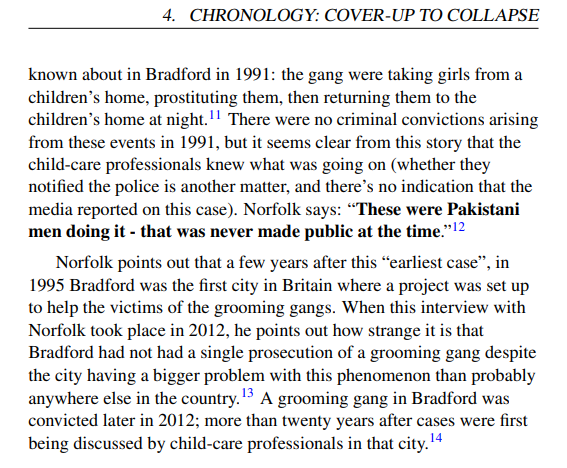
The book titled ‘Easy Meat-Multiculturalism, Islam and Child Sex Slavery’ by Peter McLoughlin states that the evidence of the members involved in the grooming gang never came out until one similar incident happened in the year 1991 in Bradford.
Screengrab from the book
The book says that the girls from the children’s homes were taken by the gangs, raped, thrown into prostitution, and returned to the children’s homes at night. “There were no criminal convictions arising from these events in 1991, but it seems clear from this story that the child-care professionals knew what was going on (whether they notified the police is another matter, and there’s no indication that the media reported on this case),” the author says adding that it was never made public in the past that the grooming gangs were led by the Pakistani men and that they had been sexually assaulting the girls.
In an exclusive interview with the Sikh Awareness Society, Andrew Norfolk, the Times Journalist revealed that the first pattern he studied of such cases was in the year 1991, when there was much evidence that Pakistanis were raping the girls and throwing them into prostitution.
“When this interview with Norfolk took place in 2012, he pointed out how strange it is that Bradford had not had a single prosecution of a grooming gang despite the city having a bigger problem with this phenomenon than probably anywhere else in the country. A grooming gang in Bradford was convicted later in 2012; more than twenty years after cases were first being discussed by child-care professionals in that city,” McLoughlin said in his book.
As per the document, the defining features of this crime are the ethnic and cultural homogeneity of the gang members, and the refusal of other members of their community to speak out about them or to condemn their behavior. “The gangs are often made up of brothers and members of their extended family, who take part in the grooming and/or rape of the schoolgirls,” the book reads adding that the gangs in Britain were basically operating with impunity between 1988 and 2009.
Meanwhile, globally renowned author JK Rowling known for her advocacy of women’s gender rights emphasized that grooming gangs should be called ‘rape gangs’ and also called the allegations of police complicity in the horrific crimes against women and girls in the UK ‘beyond belief’.
“The details emerging about what the rape gangs (why call them ‘grooming’ gangs? It’s like calling those who stab people to death ‘knife owners’) did to girls in Rotherham are downright horrific. The allegations of possible police corruption in the case are almost beyond belief,” Rowling wrote on X.
The details emerging about what the rape gangs (why call them 'grooming' gangs? It's like calling those who stab people to death 'knife owners') did to girls in Rotherham are downright horrific. The allegations of possible police corruption in the case are almost beyond belief. https://t.co/0SVoxuqw6K
It is notable that the school girls targeted by these gangs are non-Muslims and the gang members are predominantly Muslims. The gang members lure the girls and trick them into relationships. The girls are trapped by giving gifts, flattered by fake compliments, and asked to engage in ‘romantic relationships’. Once the sexual relations are established these girls are then forced to have relations with the other gang members including the family members of the Muslims. By the time the victims realize that they are being tricked, they are thrown into prostitution.
These ‘grooming’ crimes continue to haunt the United Kingdom as the National Society for the Prevention of Cruelty to Children (NSPCC) reported in 2023 that there has been an 82% increase in online grooming offenses against youngsters over the past five years. All these years, the grooming gangs in the UK were shielded by the media and pro-Islamist politicians by passing them off as “Asian” or “South Asian grooming gangs”. However, now the state is being questioned for its failure to provide justice to the rape victims.