Home Blog Page 6028

Uttar Pradesh: Truck drivers wearing ‘lungi’ and vest will now be fined Rs 2000

Within days of imposing heavy fines under the amended Motor Vehicles Act for traffic violations, the Uttar Pradesh government has now decided to impose fine of Rs.2000 for truck drivers and their helpers if found flouting dress code and wearing ‘lungi’ and ‘banyan’, reports Times of India.

Reportedly, under the new provisions added to the amended Motor Vehicles Act, which imposes heavy fines for violating the law, dictates that drivers wear full-length pants with a shirt or t-shirt. They must also wear closed shoes whenever driving the vehicle.

The new law also dictates mandatory proper dress code for drivers of school vans and government vehicles.

Speaking to media ASP (Traffic) Lucknow Poornendu Singh explained that the dress code has been a part of the MV Act since 1939. “A fine of 500 rupees was introduced when the Act was amended in 1989 for violation of the dress code. Now a fine of 2000 rupees will be imposed under section 179 of MV ACT 2019 on those who will be found violating the dress code,” he said.

Additional Transport Commissioner (UP) Gangaphal stated that that the new law gives powers to the states to introduce safety rules and impose hefty fines in case of violation. He said that “lungi-vest” will be unacceptable in view of the dress code. “Under the law, driving trucks, tractors and other such heavy and light commercial vehicles wearing lungi and vest is not permitted. One must wear full pants, proper shirt and closed shoes. The rule will be for everyone, even if it is a government vehicle driver,” he added.

It is notable here that Section 28 of the MV Act gives state government power to make some other provisions like mandating the drivers of transport vehicles to wear badges or uniforms. UP government is using this provision to impose dress code for truck drivers and school bus drivers.

Two witnesses ready to depose against senior Congress leader Kamal Nath’s alleged role in 1984 Sikh genocide

Delhi Sikh Gurdwara Management Committee president and Shiromani Akali Dal’s Delhi MLA, Manjinder Singh Sirsa has today announced that two witnesses are ready to testify against Congress’ Kamal Nath’s alleged role in 1984 Sikh genocide. He added that they are willing to depose before the SIT whenever they are called to record their statements.

He further urged the Congress President to seek the immediate resignation of Madhya Pradesh Chief Minister Kamal Nath and oust him from his post so that the Sikhs get justice.


Sirsa in his Tweet mentions that SIT has re-opened the case (601/84) against Congress Kamal Nath’s alleged involvement in the 1984 Sikh massacre and will consider fresh evidence against him.


MS Sirsa had in June 2019 released a press note, hailing the Home Ministry and asserting that the reinvestigation would mean Kamal Nath, Congress leader and Madhya Pradesh CM will now be brought to book.

Sirsa said that this order means that Kamal Nath would surely go to jail like Sajjan Kumar who was enjoying Z+ due to the Gandhi family. He said, “his involvement in 1984 riots will be proved in the court after completion of fresh enquiry against him”.

He had said then that the Delhi Sikh Gurdwara Management Committee (DSGMC) had approached the SIT for an FIR against Kamal Nath but due to technical reasons, it was not lodged. He had also claimed that senior journalist Sanjay Suri and retired DSGMC employee Mukhtiar Singh could be witnesses in the case.

The Home Ministry had given a nod on April 9, 2019, to the SIT constituted, to investigate afresh a case against Madhya Pradesh Chief Minister and senior Congress leader Kamal Nath for his alleged involvement in a 1984 anti-Sikh riots case.

The order had said that the SIT should reinvestigate serious criminal cases which were filed in the National Capital Territory of Delhi in connection with the 1984 riots case and have since been closed. For this purpose, the SIT shall examine the records afresh.

The order also says that the order has been passed in consideration of the representation made on 24th December 2018 received from the General Secretary, Delhi Sikh Gurudwara Management Committee. The order says that the SIT may investigate even cases where the accused have been discharged if any fresh information or evidence comes to light.

The representation that the order refers to was made by MS Sirsa. The representation spoke about the attack on Rakab Ganj Gurudwara in which Kamal Nath is said to have led the mob.

In his representation, Sirsa had said that there was clear evidence that Kamal Nath was present at the Rakab Ganj Gurudwara inciting the mob in 1984 but unfortunately the police had failed to investigate the case properly. Sirsa had said that the five people who were discharged for the crime cannot be tried in the court of law, but the real culprit was never charge-sheeted and thus, it is the duty of the police and the SIT to proceed against these culprits and bring them to book.

He had said that Kamal Nath was an active participant in the mob and should be investigated. Sirsa had alleged that Kamal Nath’s name was deliberately not mentioned in the FIR registered on November 1, 1984, for the killing of two Sikhs at Gurdwara Rakab Ganj Sahib. The representation had specifically asked the Home Ministry to direct the SIT to inquire into the role of Kamal Nath.

There is an opportunity to reshape the distressed Indian auto sector, which is facing structural problems

There is a flurry of news around the slowdown of the auto and the logistics sector, with a lot of inexplicability surrounding the economy. Imitating their Western counterparts, Indian analysts have been using this sector as a measure of the performance of the overall economy. They are partly correct. With a slump in this sector, some are predicting an inevitable recession, while others are terming it to be a cyclical effect of the industry. There is more to it than people are wanting to look.

The automobile industry follows a cycle, and we’ve heard it several times. Yet this time it’s different. While the auto industry seems to be shrinking, the mobility ecosystem is expanding. What are the core factors at the heart of this change?

The Indian Economy, especially the auto sector, has been facing certain structural issues since a long time. But what has acted as a catalyst to the auto sector, is the NBFC crisis.

Much to the chagrin of economists, capitalist economies exist in financial cycles. The larger financial cycle of the economy is based upon the credit growth cycle – the amount of credit available in the economy determines this cycle. After 2014, India has been shifting faster towards a capitalist style of economy, with the auto sector being highly credit-sensitive. The NBFC crisis of India has led to the bankers as well as consumers developing an aversion to risks in selling or purchasing loans. Such crises have after-effects and issues linger on – and the auto sector is credit-sensitive, which makes it difficult for the auto firms to deal with the prevailing economic conditions, that we discuss as structural issues in this article.

Let us first understand the depth of the structural issues at hand.

Traditional industries, starting from the West, have watched in near horror, how the advent of platform economies around the world have essentially changed the way business is done today. High competition has led to the commodification of technology and products, leading to services taking a front seat for the consumers. Those not fast enough to change, are either dead or on their last remaining limbs.

The automobile ecosystem in India has been disrupted. According to a recent report by The Economic Times, the Automakers have halted the production to clear off inventory worth nearly 35,000 Crore Rupees, and ET’s analysis shows that the shutdowns are likely to reduce the industry output by 20-25% in the May-June period, which in turn will ease the pressure on the cramped stockyards at factories as well as dealerships. The sector seems to have tanked, but is that all there is?

At the core of this change are multiple such structural issues, that is, if you exclude the cyclical nature of the automobile sales in India as displayed over the last decade. These factors can be clubbed under two umbrella trends – the rapid rise of Shared Mobility platforms and the radical changes in the EV policy of the Indian Government, and the industry’s snail-paced attitude regarding BS-VI and EV technology adoption in the face of a catch-22 situation.

In the face of scarcity, people tend to share resources without realising that they’re doing it – that’s basic economics. The rise of Ola and Uber have heralded a new era of mobility in India. The nation today has a burgeoning middle class, and they are more wealth savvy than their older generations. With focus on wealth creation, fixed deposits as preferred earlier, are getting been replaced by SIPs, Equity investments and insurances. In line with the same, this generation of shared mobility consumer doesn’t want to be stuck in traffic in his/her vehicle during heavy traffic during peak hours.

From personal rides to shared rides, India has only begun its journey into high-end Shared Mobility. India is expected to become a leader in Shared Mobility by 2030. Start-ups offering options of renting two-wheelers such as Rapido, electric vehicles such as Yulu, shared bus rides such as Shuttl, sharing car rental such as QuickRide among other personal driving options, in addition to shared car and personal auto, car and bike renting services from Ola and Uber across major cities in India. Ola and Uber alone operate approximately 3.65 Million daily rides, although their numbers are slowing down. Cheaper options like the now expanding Metros, and other apps like Shuttl are gaining traction among the work commuters.

Over the last two years, Delhi Metro has expanded further into Faridabad, Gurugram, Noida and Greater Noida. A lot of other Tier-1 and Tier-2 metro cities also have started their metro operations. Following in the steps of Mumbai, Hyderabad and Bengaluru, the Lucknow Metro, has been declared a success with its ridership having crossed 1 Crore in a year on a single route.

If all this is true, is it true that technology, especially platform economies, are killing jobs? Not really. Statistics suggest that every time a ground-breaking technological innovation has emerged in the world – the unemployment rates have actually gone down. But analysts are arguing that the Auto sector seems in disarray – the spillover effect seems to have caught onto the steel industry and the logistics sector.

A major chunk of the Government’s spending goes into plugging the fiscal deficit, and the subsequent interest rates. Add to this, the oil purchases from the Middle East. Some Economists argue that a fiscal deficit under a certain percentage is perhaps okay – but is debt ever really a good thing to have?

The fiscal deficit should ideally be negative – that’s how the Government balance sheet should ideally look. PSU divestments are not really helping, because the sick PSUs are getting bought by LIC – that is just hogwash on the balance sheet. The Babus are beyond clever to not letting go of their personal cash-cows – the Air India divestment deal is a glaring example of how an unaccountable bureaucracy can kill a deal. But that’s a story for another time.

This brings the issue to two sub-issues – the adoption of BS-VI norms, followed by putting EVs on the Indian roads. The switch to BS-VI isn’t a rapidly bulldozed move. The Government had intimated the industry, that they would be switching directly from BS-IV to BS-VI fuel, as early as January 2016, with the Supreme Court informed later that the sales of BS-IV vehicles would be stopped by April 1, 2020.

Even though NDA-I relinquished control over the Petroleum prices, what more must the NDA-II do to eliminate any further expenses in this area? That’s when the ingenious yet incomplete push for EVs comes in. The EVs are the future. At least the Government is planning in accordance with the same. As per the statistics, EVs adoption, and the surrounding ecosystem, is coming in at a decently fair pace, now poised to accelerate.

India plans to develop at least 6 mega Tesla-styled Battery manufacturing units, with a potential 50,000 Crore Rupees worth of investments. The Government has also slashed the GST rates on EVs and chargers to a mere 5%. As per reports, Finance Minister N. Sitharaman wants the cab operators to make a phased, and complete switch to electric by 2030, and Ola has announced that they intend to introduce 1 million electric vehicles on Indian roads by 2021 under Mission Electric. Under the FAME-2 Scheme by the Government, approximately 10,000 Crore Rupees have been sanctioned as incentives and investments to boost Hybrid models and EVs, and charging stations in India over a period of 3 years, starting 2019.

On the one hand, there is gradual growth in clarity over these new developments in EV, and on the other, the BS-VI emission standards are being enforced by an iron-willed Government. This has left the Auto-makers in a fix about the capital expenditures they have already invested in upgrading to BS-VI technology, which is the first priority for them, versus scaling up EV manufacturing at the same time, given the push by the regulators, or allow it a very clear second priority due to changing consumer preferences and government regulations.

Considering all this, at looking at the credit crisis, the Government has decided to borrow from foreign agencies, leaving room for liquidity in the already stressed domestic lending sector, while clearly more requires to be done. The consumers though are in a fix, as new consumption patterns are emerging amidst the credit crisis.

They are thus turning to Shared Mobility for the meanwhile – because, for the middle class, a car is a long-term purchase decision. These trends are clearly reducing the marginal utility of a petrol or diesel vehicle, while the resale value gearing towards an all-time low in the process. In the world of EMIs, the consumer seems to be waiting and watching than put money into something that would turn junk sooner than expected. What happens to the existing industry in the meanwhile? Well, as per the data, technology advancement always reduces unemployment while boosting productivity. We need to be assured that it is not a long-term crisis, but a reshaping of the economy, and both, the industry, and the consumers ought to keep up, instead of living or thinking as luddites.

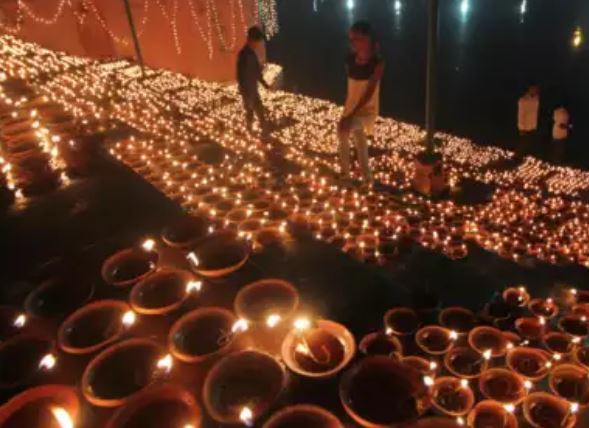
Today, the Government is on its toes for pushing significant land, labour and capital reforms, that they have been struggling to pass because of legislative strength in the Rajya Sabha. Too many industrial regulations still exist, so does an absence of a consistent policy structure in significant areas. The Government needs to handle all of it in consultation with the stakeholders from the industry. Indeed, with Nirmala Sitharaman announcing a flurry of economic reforms to revive the economy, one sees hope, but the critical demand around the waiver of GST over cars is still pending. Considering the April 2020 deadline, one way to unclog the automobile supply chain and eliminate the 35,000 Crore Rupees worth of inventory lying with the car dealers, will be to eliminate GST to push sales on these BS-IV cars – which would essentially have low resale values anyways. Otherwise, this inventory is going to be a quagmire for the industry – and hamper the EV sales due to locked capital of the industry, which could otherwise be used to develop the EV ecosystem going forward. The struggle of the auto sector is real, but if handled deftly by the Government, will herald a new era for the auto industry in India. Nirmala Sitharaman should remember, Deepawali is around the corner.

ISRO chief Kailasavadivoo Sivan is not on social media platforms, ISRO issues statement

0

The Indian Space Research Organisation has issued a clarification Monday that the ISRO Chairman K Sivan has no personal accounts on any social media platform.

In a statement, ISRO said, “It has been noted that social media accounts in the name of Kailasavadivoo Sivan (along with photographs of K. Sivan) is operational and active on social media platforms. This is to clarify that K. Sivan, Chairman, ISRO does not have any personal account on any social media platforms. Hence all the information on all such accounts are not authentic.”

The Indian Space agency’s alert came after several fake social media accounts operating with K Sivan’s name emerged in large numbers, especially after the Chandrayaan-2 mission. Several social media users were seen following these fake accounts including on Twitter, Facebook and Instagram.

Various Twitter accounts became operational in Sivan’s name and it garnered thousands of followers within no time.

While most users have now figured out that the ISRO chief does not have an account on the platform, some have fallen for the fake account in his name that is reportedly spreading false information and causing confusion on social media.

K Sivan has emerged most sought after especially in the last few days, as he has been the official voice of ISRO for most of the announcements regarding the Chandrayaan-2 mission.

In the wee hours of Saturday, the Lander of Chandrayaan-2 – Vikram – lost contact with the mission control at an altitude of 2.1 km from the lunar surface. New reports suggest that the Vikram Launcher has been located on the lunar surface and it is intact. Efforts are on to establish connection.

While the entire country stood in support and lauded ISRO and its scientists for Chandrayaan-2, a video showing the ISRO chief breaking down, after the moon landing glitch, surfaced, which swept everyone’s heart. The Prime Minister was then seen consoling Sivan who had, along with his team, worked tirelessly for months to ensure Vikram lands on the lunar surface.

‘Liberals’ equating Hong Kong with Kashmir do so because of their hatred towards India

This is an excerpt from Ravish Kumar’s speech on receiving the Ramon Magsaysay Award.

Untitled.png

Did you see what he did there? He put Hong Kong and Kashmir in the same sentence. As if the two situations are somehow comparable.

It’s not just Ravish Kumar. Liberals are now routinely doing this. Taking advantage of the fact that both issues in both Hong Kong and Kashmir carry the same label of “special status.”

Now, Indian liberals have always benefited from running India down as a nation, as a people and as a civilization. While one Abrahamic religion looks to harvest our souls and another Abrahamic religion regards us an unfinished chapter in their conquests, the global market for making Hindus look bad is always hot and happening.

And when PM Modi won power in 2014, this liberal machinery, stung by irrelevance on the domestic front, went into the highest gear. But putting the democratically elected Govt of India with the scary Chinese dictatorship is a frightening new chapter in defaming India that liberals are trying to write here.

If you notice, their objectives and incentives are very similar to those of Pakistan. The Pakistanis know they cannot win one on one with India, which is why they strive to make Kashmir an international issue instead of a bilateral one. Indian liberals understand that their days of colonizing India are now over: they can’t win on the domestic front. They are trying to internationalize Kashmir as well; make Indian people ashamed of breathing, ashamed of voting and ashamed of trying to integrate their country.

Not to mention that they are trying to wipe out all memory that Hindus ever lived in Kashmir. Or that the lives of people in Jammu and Ladakh matter.

And so you get the typical liberal reportage on Kashmir. Everyone who is hit by a pellet gun just happens to be a studious school topper on their way to or from tuition classes. Every terrorist killed by the Army is the ‘son of a headmaster.’

Because these stories sell on the international stage. And now comparisons with China are being brought in to make India look even worse.

There are many layers to this hypocrisy though. Observe that your typical garden variety liberal will never engage in standalone criticism of China on any issue. So what if China is throwing millions of Muslim minorities into “re-education camps”? Liberals rarely mention that. Two reasons: first, liberals have a sense of nostalgia for Communist symbolism that the Chinese govt insists on still using. Second, liberalism makes money by assuaging people’s sense of guilt. The Chinese govt won’t let anybody guilt trip the Chinese people. And so liberals don’t set up shop there.

As if this needs mentioning, when you look under the hood of the term “special status,” it is immediate that Hong Kong and Kashmir are completely different situations.

The special status of Hong Kong refers to the right of citizens to express themselves freely. A fundamental human right that other Chinese citizens do not have.  The Chinese government is now trying to force the people of Hong Kong to give up their freedoms.

In contrast, the special status of Kashmir refers to a form of apartheid that was practised towards other human beings. The special status of Kashmir was about keeping other Indian citizens out. The special status of Kashmir was about denying all rights to people of Jammu and Ladakh, by rigging the seat distribution in the state assembly. It was about denying property rights to women, reservation to tribal people and backward castes, putting homosexuals in jail. There are no words to describe the barbarism that was practised towards Valmiki people, who were not allowed to work as anything other than safai karamcharis. Shame!

Hong Kong is fighting for its own rights. Protesters in Kashmir want to take away the rights of other people. There is no comparison.

The protesters in Hong Kong are heroes. Like Martin Luther King facing the might of the state, demanding that all people should be equal. The protesters in Kashmir are more like the Ku Klux Klan. No comparison.

I am sure most liberals understand this concept easily. However, their interests are served by pretending that they don’t get it. That it’s all just special status.

Because, ultimately, their real target is always Hindus. When 44 of our jawans died in Pulwama, so many liberals made gaumutra jokes. Some made the mistake of openly cheering with “HowstheJaish”. They got caught. How many more were smiling in secret? When ISRO failed to achieve a soft landing for the Vikram rover, liberals mocked the Tirumala temple where scientists had prayed before the mission.

Are you seeing the common theme here? It is always Hindus who are on target.

Do you know what bothers our liberals? That despite everything, Hindu majority of India has remained a democracy. When it was created, the Muslim majority state of Pakistan was similar to us in every way except for one. But Pakistan became a failed state. Liberals always had a soft corner for Communists. But Communism collapsed in a heap and left millions of people dead.

Yet somehow, the Hindus of India have managed to keep their Republic together. Despite the many contradictions that liberals hoped would tear us apart. So many nations were decolonized and became independent after World War 2. Who is the most robust democracy of them all? India.

Liberals see this. India’s success is a rebuttal to all their prejudices against Hindus. That’s why they nip at our heels, calling up friends in Western publications to tell them that our democracy should be downgraded.

The need of the hour is to counter this. India’s global economic clout means that foreign governments won’t go against us on the face of it. But beneath the surface, liberals are fighting the narrative war for public opinion. And fighting very well. Let’s recognize this. We have the hard power on our side. But we are not doing well in the soft power game.

Off the top of my head, I can think of two basic things that we can do concretely. The first is to tap into the power of the Indian diaspora. On the people to people level, it is the diaspora which has the power, money and the reach to tell India’s story the way we Indians want it. For this, we need a synthesis between Indian diplomatic groups and NRI organizations to create lobbies that can influence everyone. Organizations that can show up to protest each time some human rights media loon wants to tell lies about Kashmir.

The other is to prop up a globally powerful media organization of the standard of BBC or CNN. Every major country in the world gets to tell its story their way. The French have France24 and the Germans have Deutsche Welle. Even Turkey has TRT world! And the tiny state of Qatar is able to influence the world through Al Jazeera. What is our answer?

The media battle is now as important as the diplomatic battle. It’s the new reality of our modern world. What are we doing to fight it?

Hold the SPs and Collectors by their collar and become a ‘big Neta’ like me: Congress minister in Chhattisgarh tells schoolchildren

Chhattisgarh Congress MLA Kawasi Lakhma was seen giving a rather surprising piece of advice to school children in his Konta assembly constituency, Sukma district in Chattisgarh.

In a video which has been doing the rounds on social media, Kawasi, during an interaction with school children on the occasion of Teachers’ Day, is heard saying to a child who fancies of becoming a politician when he grows up: “One needs to grab the collars of SPs and Collectors to become a successful Neta like me”. The child had apparently asked the MLA as to what needs to be done to become a successful politician?

[youtube https://www.youtube.com/watch?v=SY_YBmwOfh4]

The video was reportedly shot in Pavaras government school, Sukma on Teachers’ Day where Lakma was invited as a chief guest.

This is, however, not the first time Kawasi Lakhma has been caught issuing controversial statements. During the Chhattisgarh Assembly elections, the Election Commission of India had issued a notice to Congress MLA Kawasi Lakhma for his controversial comment on the functioning of the Electronic Voting Machine (EVM) misleading voters. The five-time MLA from Konta seat in Sukma district had then allegedly said that voters will suffer electric shock upon pressing the second button of the EVM.

“Press the first button, pressing the second button will give you an electric shock,” said the state excise, and commerce and industry minister while speaking at an election rally at Korar in Chhattisgarh’s Kanker district in April this year.

It is pertinent to note here, that Lakhma is the same MLA who had in February written to CM Bhupesh Baghel claiming that an incident in Bastar, where a woman was killed and another was injured after allegedly being caught in a crossfire between Naxals and security forces, was a deliberate act by security forces to target and kill innocent adivasi villagers.

Lakhma has reportedly written that incidents like this would make the Adivasis ‘lose their confidence’ in the government. He has also asked for action to be taken against the CRPF personnel involved in the shooting.

This was, however, not the first incident where the Congress MLA had alleged a fake encounter. In August 2018, Congress, then in the opposition, had claimed that the Sukma encounter by CRPF, where 15 Naxals were allegedly killed, was a fake encounter too. Congress had even formed an 18-member team to look into the encounter where Lakhma was a member too. They had claimed that the BJP government in the state is against the tribals of the state and is creating ‘fake encounters’ to paint innocent villagers as Naxals.

Over the years, Lakhma has been involved in many such teams and his stand over anti-Naxals operation has remained the same, that the CRPF is targeting innocent Adivasis.

In 2013, almost the entire top brass of Chhattisgarh Congress was wiped out when over 250 Naxals had ambushed a convoy of Congress leaders in the Jiram ghat area near Jagdalpur. 27 people were killed, mostly senior Congress leaders from the state. Interestingly, Kawasi Lakhma, the MLA from Konta, was the only one who has managed to survive. Lakhma was even suspected of involvement and was also questioned later, but was cleared in the NIA probe for lack of proof.

Vikram Lander ‘in one piece’ on the lunar surface, internal damage suspected: Reports

0

The Vikram Lander is believed to be in a tilted position on the moon but is still in one piece, ISRO officials are reported to have said. ISRO lost contact with the Lander when it was only 2.1 kilometres above the ground.

“It had a hard-landing very close to the planned (touch-down) site as per the images sent by the on-board camera of the orbiter. The lander is there as a single piece, not broken into pieces. It’s in a tilted position,” an ISRO official associated with the mission reportedly stated. “We are making all-out efforts to see whether communication can be re-established with the lander,” the official said. “An ISRO team is the on the job at ISROTelemetry, Tracking and Command Network (ISTRAC) here.”

The officials also state that orbiter images of the Lander aren’t enough to ascertain whether the Land has suffered any internal damage although its highly likely that the high-velocity landing caused some internal damage.


ISRO is yet to make any official statement on the matter. There has been no official communication yet on the damage that may have been caused. ISRO was earlier able to locate the Lander through images sent by the Orbiter.

The Lallantop and Rajdeep Sardesai spread lies on NRC in Assam, inflate number of people excluded

0

As the debate rages over the recently published National Register of Citizens in Assam, India Today group’s The Lallantop talked about discussed it with controversial journalist Rajdeep Sardesai. And as the trend of coverage of the NRC by the national media, the discussion was full of misinformation and completely fake data.

At the beginning of the show, host Saurabh Dwivedi says that the final NRC has excluded 40 lakh names, and with an additional exclusion list of around 1 lakh people published on 31st August, now total 41 lakh names have been excluded from the NRC. Saurabh says his Lallantop team reported on NRC for 5 days, and he gets the basic numbers wrong. Because 41 lakh names are not excluded from the NRC, the final NRC published on 31st August excludes 19 lakh applicants.

Saurabh Dwivedi used the numbers from the second draft and an exclusion list published earlier to deliberately inflate the number of people excluded. On 30 July 2018, the second draft was released with 40 lakh names excluded, and in June this year, an exclusion list of 1 lakh people was published, bringing the number of people excluded from draft NRC to 41 lakh. But all these people were allowed to appeal the exclusion, and after hearing of all appeals and objections, the final NRC was published. This final register supersedes the earlier 2 drafts and 1 exclusion list, and their numbers are irrelevant now. But still, The Lallantop used old numbers.

Another interesting detail to note is that when Rajdeep Sardesai started the discussion by saying that 19 lakh people have been told they are not citizens, Saurabh ‘corrects’ him that is should be 41 lakh, and Rajdeep agrees to that. He says, ‘yes after addition now it is 41 lakh, but the last list published had 19 lakh names, after that new additions are being made’. This shows how serious research Mr Sardesai had done on NRC before coming to the discussion, his correct figure was ‘corrected’ to a wrong figure, and he accepts it, and wrongly claims that new additions are coming out. Which means he is not confident about his own data and believes whatever number his host feeds him.

From NRC the discussion naturally moves to Citizenship Amendment Bill, and on that topic, Rajdeep makes a shocking claim. He outrightly rejects religious persecution on Hindus and other minorities in Bangladesh, claiming all Bangladeshis, Hindus and Muslims, are migrating to India only for economic reasons. News of attacks on minorities by Islamic fundamentalists in Bangladesh appear almost daily, but one of the most senior journalists in India chooses to deny that fact.

Rajdeep Sardesai also claims that BJP did the NRC in Assam as a part of vote bank politics, which is another big lie. NRC was the demand of people of Assam for last 3 decades, and finally, in 2013 the Supreme Court of India had ordered it to be updated, responding to petition filed in 2009 by an organisation named Assam Public Works. Following the apex court order, the work on updating the NRC started in 2015, when Congress was in power in Assam. Moreover, the entire process was done by NRC administration under the supervision of the Supreme Court, over which the state government didn’t have any control. Therefore, it is completely wrong to credit or blame BJP for the NRC.

While talking about CAB keeping illegal Muslim immigrants out, Rajdeep Sardesai says think what Mahatma Gandhi would have done to illegal Bangladeshis. Using Gandhi’s name is an easy way to escape from questions, and Rajdeep makes smart of the same. Moreover, Mahatma Gandhi’s views accepting Muslim supremacy is well known. He had said, “Even if the Muslims want to kill us (Hindus) all we should face death bravely. If they established their rule after killing Hindus we would be ushering in a new world by sacrificing our lives”. Therefore, the question of what Gandhi would have done to illegal immigrants have only one answer, and everyone, including Rajdeep Sardesai, knows that.

Pakistan uses belly dancers to attract investors at an investment summit in Azerbaijan

Parody nation Pakistan has now employed the services of ‘Belly dancers’ to salvage its ailing economy by trying to woo investors participating in the Pakistan Investment Meet held at Baku, Azerbaijan.


According to the Pakistani journalist, in the Investor Summit that was held between September 4 to September 8 in Azerbaijan, belly dancers from Pakistan were the main attraction to lure investors into investing money into Pakistan and revive its collapsing economy.

The video shared by Gul shows how belly dancers were used to luring the investors in the summit titled ‘Khyber Pakhtunkhwa Investment Conference’.

As soon as Gul shared the video on Twitter, soon it became viral among netizens and Twitteratis started taking potshots at Pakistan and it’s debilitating economy for stooping down to such levels to draw investments in their country.

One Twitter user quipped that it is good that at least belly dancers are used or else PM Imran Khan would have had to dance to keep the investments flowing in.


Others asked whether it is the idea of ‘Naya Pakistan’ that PM Imran Khan and his party have been telling about.


Pakistani users also expressed their embarrassment over the cheap tactics.


Cash-strapped Pakistan has been in the throes of its worst economic crisis with no tangible and effective solution in its sight to rescue itself from the deepening financial calamity. The annual fiscal deficit of Pakistan rose to the highest in the last three decades at 8.9 per cent for the financial year 2018-19. The IMF review team which was supposed to visit Pakistan in November has now decided to send an SOS(Save our Soul) mission to Pakistan in mid-September to assess the widening fiscal deficit.

Tamil Nadu: ‘This is not North India’, DVK protests against Ganesh Chaturthi celebration, accused BJP of trying to disrupt harmony

0

The Dravidar Viduthalai Kazhagam (DVK) in Tamil Nadu on Sunday staged a protest against a procession carried out on the occasion of Ganesh Chaturthi. Several people gathered with black flags, a statue of Buddha and posters which read, “this is not North India” and raised slogans, reports ANI.

The members of DVK, which is a splinter group of Periyar Dravidar Kazhagam in Tamil Nadu accused RSS and BJP of disrupting religious harmony in the state by organising such events.

“We have conducted a Buddha statue procession to protest against the Vinayaka statue procession carried out by some Hindu outfits. RSS and BJP are orchestrating this procession to disrupt religious harmony in the state,” DVK member, Danvu Danashekhar said on Sunday.

On one side the party members opposed the procession and on the other hand, it clarified that they were not against any particular culture. The protesters said that they support religious harmony but alleged that the procession was being used by political parties for their ulterior motives.