Home Blog Page 6029

In opposing Narendra Modi, progressives at Washington Post reveal they are a mirror image of the ‘AltRight’

I am afraid the Western Progressives are at it again. This time, they are protesting against the decision of Gates Foundation to present Narendra Modi with an award for the Swachh Bharat Abhiyan. They are in staunch opposition of the decision to abrogate Article 370 and also the NRC and are accusing Narendra Modi of committing gross human rights violations.

Suchitra Vijayan and Arjun Singh Sethi, writing for the Washington Post, argue that the Indian Prime Minister’s “Hindu nationalist party has incited violence against minorities, silenced dissent and curtailed freedom of expression.” They add, “In light of Modi’s record, including promoting repressive policies in the past month in Kashmir and the northeastern state of Assam, he should not be given the award.”

It’s a broken record we have been hearing over and over again. But liberals appear to have made it a habit to charge full speed at an issue they have very little clue about. It’s quite obvious that despite their considerable work in the area of ‘human rights’, they hardly have any idea about the complexities of Kashmir and Assam.

The authors state, “India has imposed an unprecedented communication blockade on Kashmir. Landlines, mobile phones and the Internet have been suspended. Many Kashmiris remain cut off from their families, and a strict curfew is still in place in many areas. In the days leading up to the blockade, 38,000 troops were moved into the Kashmir Valley, putting the total troop count at more than 500,000 in what was already one of the world’s most militarized regions.”

They further assert, “The reports that have emerged from Kashmir since the blackout are frightening. Thousands of Kashmiris, including human rights advocates, elected officials and even young students, have reportedly been arrested in raids. The local prisons are full, according to a local magistrate, and many detainees have been flown out of the region. Family members wait in anguish, fearing that their loved ones may be forcibly disappeared, as an estimated 8,000 Kashmiris were before them. There have been reports of torture and police violence. Compounding this is a humanitarian crisis, as patients in Kashmir can’t access medicine and life-saving treatment.”

It appears that the authors have absolutely no knowledge about the Radical Islamic nature of the Kashmiri separatist movement. The authors have refused to address the giant elephant in the room despite its many trumpets. On that note, if they had spent more time actually listening to POTUS Donald Trump instead of yelling at him all the time, perhaps they could have learned a thing or two about the Kashmir issue.

Progressives claim to hate ethnonationalism, that is, nationalism based on one’s ethnicity. That is the very reason why they claim to hate the so-called ‘AltRight’ or ‘White Nationalism’ and yet, when it comes to Kashmir, they support the very ideology they claim to hate when in America. Kashmiri Nationalism is nothing more than a racist toxic ideology along the lines of German Fascism that needs to be utterly crushed. And yet, like the AltRight they claim to hate, Progressives love ethnonationalism when it comes to Kashmiris.

It is not a secret that the Kashmir issue is driven by the same ideology that inspires ISIS to commit the most horrific atrocities. It’s not a surprise that ISIS flags are regularly spotted in Kashmir. And yet, progressives support this very ideology without any shame or guilt. It’s for a reason that Ilhan Omar and Linda Sarsour are so popular among progressives, they are in love with Radical Islam.

When it comes to Assam, they take the polar opposite stand with respect to Kashmir. Quite clearly, their arbitrary stance changes frequently depending upon the religion of the population concerned. For progressives, Kashmiri Muslims have an undisputed claim to Jammu & Kashmir despite the fact that the demographic advantage was acquired through genocide but the Hindus in the Northeast don’t have such a right merely because they are Hindus and not Muslims.

Illegal Immigrants are running over Assam and changing the demography of the state at a remarkable pace. The duty of the Indian state is primarily towards its own citizens. Progressives may not believe in borders when its convenient for them but Indians do and they voted accordingly in the recently held General Elections. The sole duty of the Indian state is to protect its own citizens. The interests of Indians come first.

It might be difficult to understand for Americans whose leaders tend to do precisely the opposite they promised to do during their campaigns but this is how Democracy is meant to function. If the party promised something during elections based on the concerns of the citizens of this country, then it’s their duty to fulfil their promises when in power. The current Indian government is trying to do the same in Assam.

It’s perfectly legitimate to demand that our homeland is not overrun by illegal immigrants. It’s the duty of the Indian state to protect its citizens against a demographic invasion. Security of our countrymen is the government’s foremost duty and it’s this duty the administration is trying to fulfil both in Kashmir and in Assam. Progressives in America may not like it but this is precisely how a rational state acts.

The authors also raise the Gujarat bogey. They claim that Modi as Chief Minister “failed to protect” minorities and even went on to say that “reports suggest that he might have even been complicit.” They conveniently forget to mention the fact that the Indian Judiciary cleared Narendra Modi of all accusations. The authors do not permit all the evidence contrary to their claims to get in the way of their narrative.

Most amusingly, the authors accuse Narendra Modi of the very sin they are committing. It is, once again, a classic case of projection. They say, “When Modi was elected, many chose to overlook his murky past — but India’s vulnerable could not. He has used both state power and the bully pulpit to further his ethnonationalist agenda.” Narendra Mod has always emphasized on the agenda of ‘Vikas’ (Development). It is the authors who are supporting the Jihadist ethnonationalism of Kashmir. And yet, they accuse the Indian Prime Minister, and by extension, the millions of Indians who elected him to that position.

In their article, the authors also came out in support of the arrested ‘Urban Naxals’. The same ones who are accused of inciting violence at Koregaon Bhima and are alleged to have been involved in an assassination plot to murder the Prime Minister. It’s not surprising considering the fact that the authors already support Jihad.

The authors conclude their propaganda article with the lines, “Giving the award to Modi would betray that promise and everyone who has suffered under his rule.” It appears the authors live in la-la land. India is not a perfect country and Narendra Modi is not perfect. They have relied on propaganda peddled by Modi’s enemies here in India, some of whom are rabidly communal like Rana Ayyub, to further their own preferred narrative.

It’s understandable that progressives don’t like Narendra Modi. He is an antithesis to everything they claim to believe in. And that’s alright but relying on Fake News propaganda and supporting Jihadists in the process while shaming Indians for believing in national borders is rather nauseating to put it blindly. The authors, quite clearly, have no stakes in the matters they are meddling in and they do not have adequate knowledge about ground realities either.

It’s only because they are completely aware that they shall not suffer the consequences of their advocacy that they continue to advocate such crazy ideas without any hesitation. It also demonstrates that progressives do not care much about values or virtues. All they care about is power. They could go to any extent to accumulate more power, even supporting Jihadist ethnonationalism.

Odisha: 23-year-old Anupriya Lakra becomes first female pilot from left-wing terror hit Malkangiri

The dreams of Anupriya Lakra, a 23-year-old girl from Maoist-hit Malkangiri district – one of the remotest corners of Odisha, becoming a pilot has become a reality seven years after she quit engineering studies midway and joined an aviation academy in 2012. Lakra, who hails from the tribal-dominated district, is all set to join a private airline as a co-pilot.

Daughter of Mariniyas Lakra, a Havildar in Odisha Police and Jamaj Yashmin Lakra, a homemaker, Anupriya completed her matriculation from a convent in Malkangiri, a moist hit area and higher secondary from a school in Semiliguda.

Belonging to the Santal community, Anupriya is the eldest of three children. She had a passion for becoming a pilot and quit her engineering studies in Bhubaneswar midway to prepare for the pilot entrance test in Bhubaneswar.

“I am very proud of my daughter. Since childhood, she wanted to make it big in life and today she has succeeded in doing so. All the credit goes to her hard work and to her mother who stood by her through thick and thin,” Anupriaya’s father Mariniyas Lakra said.

In 2012, Anupriya joined the Pilot Training Institute in Bhubaneswar, he added. “We are very happy that her dream of becoming a pilot has now become a reality. She will be working as a co-pilot in a private airline,” Mariniyas said.

She has been selected as a co-pilot in a private airline and is likely to fly abroad shortly. “It is a big achievement for somebody from a backward district like Malkangiri. Her success has come after seven years of hard work,” he said.

Jubilant over Anupriya’s success, her mother said “I am very happy. It is a matter of pride for the people of Malkangiri. Her success will inspire other girls.” Anupriya was always encouraged to make efforts to translate her dreams into reality, her mother said.

Odisha Chief Minister Naveen Patnaik has also congratulated Lakra for the rare feat achieved through dedication and grit and said it will set an example for others to emulate.

The success story of Anupriya Lakra is one among those many such inspiring stories, especially coming from those Maoist-affected tribals areas. Following the Modi government successive fight against the menace of the ‘Left-wing-terror’, there has been a considerable improvement in the lives and aspirations of the tribal people, which is being reflected through success stories like Anupriya Lakra.

Many youngsters, especially girls are aspiring to come out in the open to pursue their passion, without giving any credence to the left-wing terrorists anymore, who otherwise controlled thoughts, the actions of these deprived tribals in the past.

In a bid to eradicate the radicalization of the young people, who are often the targets of the Left-wing terror groups, the governments and security forces with effective state-based interventions, are keen to utilize the energy of the youngsters into a positive outcome.

Last year, in Kondagoan of Chhattisgarh, amidst of all the violence, girls have picked up hockey sticks to fight the left-wing terror in the state. Apart from building a girls hockey team, ITBP has also started to train girls, to build the first girls football team in the Bastar region of Chattisgarh.

The security forces, along with state government have also devised rehabilitation initiatives so that the Naxals can give up guns and join the mainstream without any violence. This approach is considered to be one of the successful initiatives of the government, as many Naxals have come out of the camps and is part of the social life now.

The government has also backed up this with the massive financial outlay for developing the basic infrastructure like roads, railways, schools, electricity in the region. Access to technology and mobile network has brought major changes in the region, as it has brought success in providing health care and educational benefits and has helped the locals to take advantage of government schemes to enhance their livelihood opportunities.

Addition to that, the security forces have carried out extensive and targeted operations in the strongholds of the Naxals and have succeeded in eliminating the terrorists.

Recently, few Naxals had surrendered before the security forces, after security forces gunned down eight Naxals in forests of Timinar and Pusnar during Anti-Naxal operation, along Dantewada-Bijapur border. In a major breakthrough for the internal security of India, Pahad Singh, the senior leader of the banned Communist Party of India (Maoist) who had Rs.1 crore bounty had surrendered to the Chattisgarh Police the last year.

The Left-wing terror is on the verge of extinction in the country has been trying extremely hard to survive with often using terror to keep their grip on the tribal areas. But it seems, the tribal people who were earlier manipulated to be sympathetic to their cause are now deserting them for better lives.

Dangerous reporting with use of Hindu-Muslim binary fanning religious polarisation: Kashmiri Americans write a scathing letter Washington Post

Angered by the pro-Pakistan propaganda peddled by its communally coloured reports after the abrogation of the special status of Jammu and Kashmir, members of Kashmiri Pandits on Saturday shot a letter to the Editor of Washington Post over their ‘biased reportage on Kashmir.

In a tweet, journalist Aditya Raj Kaul shared the scathing written by group of overseas Kashmiri Pandits under the banner of ‘Global Kashmiri Pandit Diaspora’ (GKDP) to the editor of the Washington Post calling out their biased reportage.


Letter by Global Kashmiri Pandit Diaspora (image: @adityarajkaul)

The Kashmiri Americans hit out at Washington Post for biased reportage on the Kashmir issue, alleging that the controversial media did not take into account the terror perpetrated by Pakistan in Kashmir.

“In the historic first, many Kashmiri Americans demonstrated peacefully outside your office against the biased news coverage on Kashmir following the removal of Article 370, a temporary provision governing the Federal state Constitutional relationship of Jammu and Kashmir,” read the memorandum submitted to Martin Beower, the executive editor of Washington Post.

The Kashmiri Pandit group also respectfully requested the Washington Post to publish the contents of this press release to ensure that their readers get a fair and balanced reporting of what has transpired.

“Your coverage has not addressed the dejure lawlessness that existed in the State of J&K due to Article 370 accompanied by Article 35A which supposedly granted special status to the State,” the Global Kashmiri Pandit Diaspora said in a memorandum submitted to the Washington Post.

“Nowhere in the Washington Post media narratives is their mention that in this lawless State the most heinous genocide was committed against the aboriginal people, the Kashmiri Pandits, resulting in their virtual exile,” the organiser said.

The Global Kashmiri Pandit Diaspora also accused the daily of fanning religious polarisation in the region through their reporting. “The most dangerous framing of the issue is your reporting in fanning religious polarisation with the use of Hindu-Muslim binary,” said GKPD in its memorandum.

“Washington Post’s biased reporting ignores the inconvenient truth that Article 370 and Article 35A…have denied democratic rights to minorities, women and weaker sections of the society while throttling Kashmir’s economy…(and) Kashmir Valley became breeding ground for rampant corruption, separatism,” said Mohan Sapru, the chief coordinator of the rally.

On Saturday, the group of overseas Kashmiri Pandits had also protested outside the office of The Washington Post in the US capital city Washington DC. The protest was organised against the “unbearable series” of articles published in the newspaper following the scrapping of Article 370 and Article 35A in Jammu and Kashmir by the Narendra Modi government.

The protesters alleged that the prominent US daily has been giving “one-sided and biased coverage” after the Indian government withdrew Jammu and Kashmir’s special status under Article 370 of the Constitution and divided the state into two Union Territories last month.

The peaceful gathering in the US capital on Saturday was to intended to send out a strong message to the daily as well as many other Western media houses for their “one-sided” reportage on Kashmir.

“Why Choose Jihadi news?,” asked the protesters as they challenged the Washington Post to “Hear our Voices. Tell our Stories.”

Justifying its coverage, Washington Post Foreign Editor Douglas Jehl said, “The Post’s coverage of India’s actions in Kashmir since the August 5 crackdown has been fair, accurate and comprehensive at a time when India has imposed tight restrictions on the flow of information and has severely limited access by our journalists trying to cover this important story.”

Iranian authorities take down anti-India posters outside Pakistan consulate in Tehran, call them ‘Undiplomatic tactics’

On 15th August, the Iran authorities removed the anti-India banners put up outside Pakistan consulate in Mashhad, Iran, reports DNA. The anti-India banners were reportedly put up ahead of the so-called ‘Kashmir Solidarity Day’ which were removed by Iranian authorities from the walls of Pakistan’s consulate.

Tehran authorities referred to Pakistan’s actions as ‘undiplomatic tactics’ and said that putting up such banners against a third country goes against diplomatic norms. As per report, Pakistan raised the matter with authorities, which Tehran termed ‘unfortunate’. Tehran questioned Pakistan will it allow the diplomatic office of Iran in Pakistan’s Islamabad to put up banners against Saudi Arabia.

Pakistan, however, reportedly remained adamant that they were within their rights to display the anti-India message. To that, Iran said that while it considers Pakistan a brotherly country, India is not an enemy and their stand on Kashmir has not changed.

Prior to this, two anti-India protests were held in Iran by Pakistani mission without permission.

Pakistanis across the world have been clutching to straws to oppose Indian government’s move to abrogate Article 370 in Jammu & Kashmir and bifurcating the state into two union territories. Last week, British Pakistani goons had created a filthy mess outside Indian High Commission in Britain where protests had taken a violent turn. In a symbolic move, the British Indians’ community sent the Sadiq Khan, Mayor of London, a cleaning invoice after volunteering and cleaning the area.

Feroze, ‘The Forgotten’ Gandhi, finds no mention by grandchildren Rahul and Priyanka on his death anniversary

Firoze Jehangir Gandhi was born on 12 September 1912 and had died on 8 September 1960. He was the husband of Indira Priyadarshini Nehru and the reason  Indira and her progeny got the Gandhi surname.

It is not the first time either. The Twitter handles of Rahul Gandhi and Priyanka Gandhi, Nehru’s descendants who owe a lot of their political relevance and power to the Gandhi surname, have shown no acknowledgement of their grandfather’s memory. It is as if the family that ruled India for decades, almost does not want to even remember the man.

The official Twitter handle of the Congress was busy deriding the Modi government with their usual rants about the economy, communal tensions and such yesterday. Today, on 9th September, they have remembered to honour the late Verghese Kurian on his death anniversary and Paramveer Chakra Captain Vikram Batra on his birth anniversary, but there has been no mention of Feroze Gandhi, who was an active Congress leader who had participated in the Quit India movement, been a Congress Lok Sabha MP after independence and was the publisher of Congress mouthpiece National Herald too.

Feroze Gandhi was regarded by many as the original anti-corruption crusader who had raised his voice against corruption happening under the Nehru government. He was one of the first leaders to speak against the financial misappropriations of the Dalmia-Jain group and LIC.

However, Rahul Gandhi, usually very active on Twitter when he is not enjoying a holiday somewhere abroad, made no mention of his grandfather on his death anniversary either.

Priyanka Gandhi Vadra shared a poem slamming the Modi government yesterday. She lamented about the economy but did not acknowledge her own grandfather’s death anniversary.

It would have been understandable had the Congress scions been reclusive and preferred to keep their family events private. But Rahul and Priyanka are very vocal about their grandmother Indira, they mention her often and share messages on how she inspired them and encouraged them. But their grandfather Feroze, unfortunately, finds no mention in their messages, speeches or tweets.

Feroze Gandhi’s ashes were interred in the Parsi cemetery in Prayagraj after his cremation in 1960. A memorial plaque commemorates Feroze’s tombstone in a corner of the Parsi cemetery at Stanley Road in Prayagraj-Lucknow highway. The Cemetery lies in a neglected state and is hardly ever visited by anyone in the Gandhi family.

Rahul, Priyanka make no mention of their grandfather Feroze, the forgotten Gandhi
Feroze Gandhi’s tombstone at Parsi cemetery in Allahabad, image via Twitter

As per reports, Rahul had visited the tombstone only once in the last decade, in 2011. Before that, he had visited once in 2008. Priyanka had been there once in 2009. Their mother Sonia Gandhi had been there back in 2001.

Uttar Pradesh: Woman dies after being admitted in critical state, husband Naeem Baig and family beat up doctor

0

In Ramnagar’s Hardaspur area, a doctor was attacked and beaten up by a mob of family members of a woman after she died on Saturday, 7th September. As per reports, the family members’ attack was so vicious that they dragged the doctor away from the police van and started beating him again.

As per a report in Amar Ujala, Gulshan, the wife of Naeem Baig in Hardaspur, Ramnagar had given birth to a baby girl on 4th September at their home. After the birth, as it was at their home and not in a hospital, Gulshan had lost a lot of blood and was critical. 2 days later, on Friday evening, when her condition deteriorated further, Naeem Baig brought his wife to the Lilavati General Hospital in Hardaspur.

Naeem has stated that when one Dr Manoj at the Leelavati Hospital sent Gulshan’s blood for a lab test, it was found that her Haemoglobin level was at 3.9. Following which Dr Manoj advised the family to admit Gulshan immediately and prepare for urgent blood transfusion. The hospital demanded Rs 36,000 from which Naeem had reportedly paid Rs 25,000.

On Saturday morning when Gulshan was being given blood, her condition allegedly deteriorated further and she expired. Following Gulshan’s death, Naeem and his family members, along with hundreds of people allegedly arrived at the hospital and started creating a ruckus. The mob alleged that Gulshan had died after being given the wrong type of blood. The mob allegedly dragged Dr Manoj to the street and beat him up badly.

As the news spread, police officer Sanjay Garg arrived at the spot and rescued Dr Manoj from the violent mob. But the mob was so enraged that they allegedly dragged Dr Manoj from the police vehicle and started beating him again. As the mob grew more violent and began attacking police personnel too, an extra force was called from Aliganj, Bhamora, and Bisharatganj stations. The SDM and CO rushed to the spot and managed to bring Naeem’s family and the doctors to the police station where they were told to talk and clear things up in a peaceful manner.

As per the report, Ram Prakash, the CO of Anwla has informed that both sides were encouraged to hold a peaceful discussion where Naeem’s family and the doctor agreed not to press any charges on each other.

Rohtak: 4,000 earthen pots used to store drinking water at PM Narendra Modi’s rally, replaced nearly 2 lakh water bottles

On Saturday, Prime Minister Narendra Modi’s election rally in Rohtak, Haryana turned out to be an environmental awareness programme as various eco-friendly measures were taken up to ensure that there was no use of plastics in the rally.

To achieve it, the district administration of Rohtak had arranged nearly 4,000 earthen pots to store drinking water, ahead of the rally. The step was taken after PM Modi urged the citizens to stop using single-use plastic and save the environment.

The district administration had appealed to the public not to use the plastic mineral water bottles at the rally venue.

A Haryana cadre IPS officer Pankaj Nain has informed that as many as 3000 earthen pots were used for the first time in Prime Minister Modi’s rally in Rohtak. The move is likely to replace 2 lakhs plastic bottles, he said.


In the rally, PM Modi also appealed to the public to help conserve water by adopting rainwater harvesting techniques.

Rajiv Jain, media advisor to Haryana Chief Minister Manohar Lal Khattar as quoted in an ANI report said, “Use of plastic is harmful to humans and the environment. Several lakhs of people will be participating at the PM’s rally. These earthen pots have been arranged for them. We have bought these pots from Rohtak and nearby districts.”

The Prime Minister in his Independence Day speech had urged citizens to eliminate the use of single-use plastic, besides suggesting that shopkeepers should provide eco-friendly bags to customers. In his Independence Day speech, PM Modi also spoke about launching a new mass movement against single-use plastic from October 2, the birth anniversary of Mahatma Gandhi.

In his monthly “Mann Ki Baat” address too, Modi had said that the time had come for the citizens to join hands in curbing single-use plastic.

Pakistan ‘secretly’ releases terrorist Masood Azhar from jail, plans ‘big action’ in Sialkot-Jammu-Rajasthan region: Reports

Pakistan has released its most dreaded terrorist Jaish-e-Mohammad chief Maulana Masood Azhar from the jail, hoping that the Islamic terrorist could plan ‘big action’ in Sialkot-Jammu-Rajasthan region, reports Hindustan Times.

As per the report, the Intelligence Bureau (IB) has now received the information regarding the additional deployment of Pakistani troopers along the India-Pakistan border near Rajasthan as Islamabad is planning “a big action” and has released dreaded terrorist Maulana Masood Azhar to plan these terror operations.

According to the input, Pakistan is considering attacks in Sialkot-Jammu and Rajasthan sectors in the coming days in response to the Narendra Modi government’s decision to abrogate Article 370 which had given Jammu and Kashmir a special status. The input warned that Pakistan has started deploying additional troops near the Rajasthan border as part of the plan.

The information has been conveyed to the respective Border Security Force and army field formations in Jammu and Rajasthan sectors to avoid any surprise attacks from the Pakistani army and the troops have been asked to remain alert, the officials cited above said.

Earlier, Pakistan Prime Minister Imran Khan had threatened “fullest possible response” to India’s moves in Jammu and Kashmir. Khan added the global community would be responsible for any “catastrophic” aftermath as he continued his rhetoric amid rising tensions with New Delhi since the government abrogated Article 370 and bifurcated Jammu and Kashmir into two Union Territories.

The comments by Khan, who last week said there was a risk of India-Pakistan war, came on a day Pakistani army chief General Qamar Javed Bajwa had said they were prepared to “go till any extent”. Bajwa added they were ready to “give sacrifices for our Kashmiri brothers, fulfil our duty till the last bullet, last soldiers and last breath”.

Amid rising tensions between the two countries, the IB input has said Pakistan has “secretly” released Jaish-e-Mohammad (JeM) chief Maulana Masood Azhar to plan terrorist operations along with other terror organisations which are working openly in Pakistan. There were reports that Maulana Masood Azhar was taken into protective custody after the February 14 Pulwama attack in Jammu and Kashmir.

The Jaish-e-Mohammad had taken the responsibility for the cowardly attack in which 40 paramilitary troopers were killed and prompted India to carry airstrikes on the group’s camp in Pakistan’s Balakot on February 26. Amidst rumours of his death, he had resurfaced in August after abrogation of Article 370 and in a message to his followers had reportedly said, “One chapter of Ghazwa-e-Hind and of Jihad Kashmir has been complete. Alhumdulillah the the Mujahideen of Kashmir got victory in Kashmir.”

Reportedly, the officials speaking to Hindustan Times has said that Pakistan’s spy agency, Inter-Services Intelligence (ISI), had no inkling that the Indian government would revoke Article 370 on August 5. “It is being considered the ISI’s biggest intelligence failure in history and now they are under pressure to act,” the official said on condition of anonymity.

The official also added that while the Pakistani army will try to play mischief, militants like Azhar have been unleashed to carry out terror attacks in India. “Pakistan may try to use the current situation and the Indian government’s focus in Jammu and Kashmir to target somewhere else.”

Azhar, who is wanted in India for several attacks, including the 2016 Pathankot airbase attack, was among four people declared as individual terrorists on September 4 under a new anti-terror law passed in August.

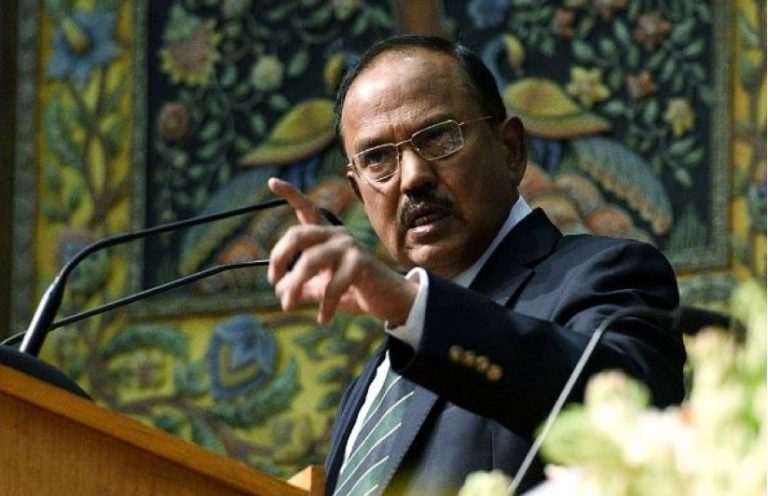
On Saturday, in a wide-ranging interaction with journalists in New Delhi, National Security Adviser Ajit Doval had said that Indian Army would do everything to protect the lives of Kashmiris from Pakistani terrorists even if we ‘have to impose restrictions’. He had added that Pakistan is trying to create trouble and some 230 terrorists have been spotted across the border.

Retired IAF officer commits suicide, blames P Chidambaram for economic slowdown

A retired IAF (Indian Air Force) officer committed suicide in Allahabad and wrote a suicide note addressed to Prime Minister Modi. In his suicide note, he has blamed former Finance Minister P Chidambaram for the current economic slowdown.

As reported by India Today, Bijan Das in his suicide note has blamed the UPA government for the scams and financial mismanagement due to which he has not been able to find employment after retirement. He added that the effects of financial mismanagement and scams is seen after a few years and while GST and demonetisation may have temporarily effected the economy, the current slowdown cannot be blamed on it.

In his letter addressed to the Prime Minister, he said that the current state of economy is due to the financial scams from UPA era. He specifically blamed former finance minister P Chidambaram who is currently lodged in Tihar jail for his alleged involvement in INX Media scam.

He further requests the PM to help his son Vivek Das, who had once participated in a music reality show, in his singing career. He had reportedly also asked Allahabad administration to not hand over his body to the family as he did not want his son to see him like that. However, the authorities have reached out to the family for further investigation.

A tribute to Ram Jethmalani: The 95 Year old Young Man

0

Who says that old age is a second childhood? Ram Jethmalani was still a young man at 95, who believed that the older you grow, the younger must be your company.

Eklavya, ace archer from the Mahabratata, made a statue of Guru Dronacharya from the mud Drona walked upon, and worshipped it as his guru. Though he never had formal interaction or training under Dronacharya, he considered him as his guru and was later known for his exceptional ability and dedication towards his teacher. In the internet era, Ram Jethmalani became the Drona of the law student, and internet the mud statue. His speeches, lectures and debates became a source of legal knowledge and information for thousands of students across India. Ram Jethmalani was the reason why people across generations, including myself, chose to study law.

A child prodigy, Jethmalani completed his law degree at the age of 17 and was admitted to the Bar at the age of 18 after a special resolution was passed for him as the age to start practicing law at that time was 21. In 1947, this 24-year-old lawyer came to India with a pair of clothes and a toothbrush from Sindh after partition and lived in the refugee camps in Pune. And a decade later he was on the front page of national newspapers. The young Jethmalani shot to fame after his involvement in the landmark Nanavati Murder Trial in 1959. Ever since, the man didn’t look back and continued to be the top criminal lawyer of the country till he hung his boots in 2017. The man defied the notion of generation gap. No lawyer has been as famous as him.

Jethmalani donned many hats. Apart from being the ace criminal lawyer, he was also the Chairman of the Bar Council of India for four tenures both before and after the infamous emergency, during which he had exiled himself to Canada. And it was during his tenure as Chairman, Bar Council of India, country’s topmost law school, the National Law School of India University, Bangalore was established. He also served as Union Minister in the Cabinet headed by Prime Minister Vajpayee. In 2010, he was elected as the President of the Supreme Court Bar Association.

Ram Jethmalani was the founding Vice President of the Bharatiya Janata Party when it was formed in 1980. Mr. Jethmalani was one person who believed in the leadership of Narendra Modi and stood with him despite all odds. He even defended him boldly in media and on public platforms. In 2012-13 he said in public gathering, “I’m firm on my statement that Narendra Modi is the Best PM India candidate from BJP and is the best person to lead the country.” He had very critical views about Rahul Gandhi, who was then being projected as the Prime Ministerial candidate. In an interview with Rajat Sharma of India TV he said, “If Rahul become PM, thousands will migrate out of the country. I would not employ Rahul Gandhi even as a clerk in my office.”

Ram Jethmalani had his fair share of controversies every time he took up a case. He has defended in court, people from every sphere of life, from scamsters like Harshad Mehta and Ketan Parekh to the assassins of Indira Gandhi and Rajiv Gandhi, from BJP patriarch Lal Krishna Advani and current home Minister Amit Shah to Congress leader Ajit Jogi and Delhi Chief Minister Arvind Kejriwal. Ram Jethmalani was everyone’s friend. No one could question his loyalty for India and the rule of law. Jethmalani considered himself a patriotic Indian, next a lawyer, and after that a politician who was trying his best to use whatever space is available within his range to protect constitutionalism, the rule of law, and the socio-economic interest of India. On this score, even his worst detractors could not make any charge against him.[1]

In the famous interview with CNN-IBN, where Ram Jethmalani slammed Sagarika Ghose for asking “idiotic questions”, Jethmalani boldly said, “I decide according to my conscience who to defend. A lawyer who refuses to defend a person on the ground that people believe him to be guilty is himself guilty of professional misconduct. And mind you, I have a conscience that many people would be proud of.”

People would often ask him why he took up the cases of the infamous or the damned, Jethmalani, with his acerbic wit, would reply, “All the milestones of law haven’t been created in the cases of good people, they have been created in the cases of bad people. Good law is not made in cases of good people, but bad people.”

Jethmalani had a penchant for finer things in life- he loved his Mercedes Benz, his Black Label Scotch whiskey and his morning game of badminton. He was also called ‘the ladies’ man’, but he never shied away from it. In one of the TV interviews he laughingly said, “Aashiq toh main bachpan se hi hoon!” He was also very fond of youngsters and student and he continued to teach them till his retirement from the bar. Every month/weekend he would go to Pune to teach at the Symbiosis Law School where he was also an Emeritus Professor. Citing this as the reason behind his lean schedule on Mondays and Fridays, the veteran lawyer told a bench of Supreme Court, “I am the only lawyer who gets no work on Mondays and Fridays.” With these two days being the busiest days in the Supreme Court, Jethmalani’s comment was a gentle jab at lawyers who make a killing on these two days. But the judges seemed to share no sympathy with this comment. Aware of the heavy price tag that comes with hiring Jethmalani, the judges remarked, “Your one matter a week is sufficient to cover the entire week for other senior lawyers.”

I grew up reading about Mr. Jethmalani and listening to him on TV and over the internet. Ten years ago, when I was doing my undergraduate degree in arts at TISS, I had memorized one of the speeches of Ram Jethmalani by heart. The more you listened to Ram Jethmalani, the more you liked him, and the more you wanted to emulate him. This man had something which no other lawyer in the country had. I’ve been lucky to have seen him in action at various occasions at the Bar in Delhi.

Ram Jethmalani survived on conviction. History might take a long while to come to terms with conviction, but in the end, it rarely has any other choice. Jethmalani always believed that conviction should be more important than convenience in life. How else would he have ruled the bar for nearly seven decades?

“He doth bestrode the narrow world like a Collosus and we petty men walked under his huge legs ….” The man we all aspired to become is no more of this world. His memory will live in our hearts forever.

With the demise of Ram Jethmalani at the age of 95, a golden chapter in the legal history of India comes to an end. There can never be another Ram Jethmalani. Om Shanti!


(The author is an Advocate, practicing primarily in the Supreme Court of India and is Chamber Junior to the Additional Solicitor General of India.)